
One of the many revolutions brought by the nineteenth century was the development of psychology, and the insights it and the early neurosciences started to give into perception. This blossomed during the twentieth century, and visual artists started to understand why painterly images rich in brushstrokes could be even more effective than those constructed in fine detail.
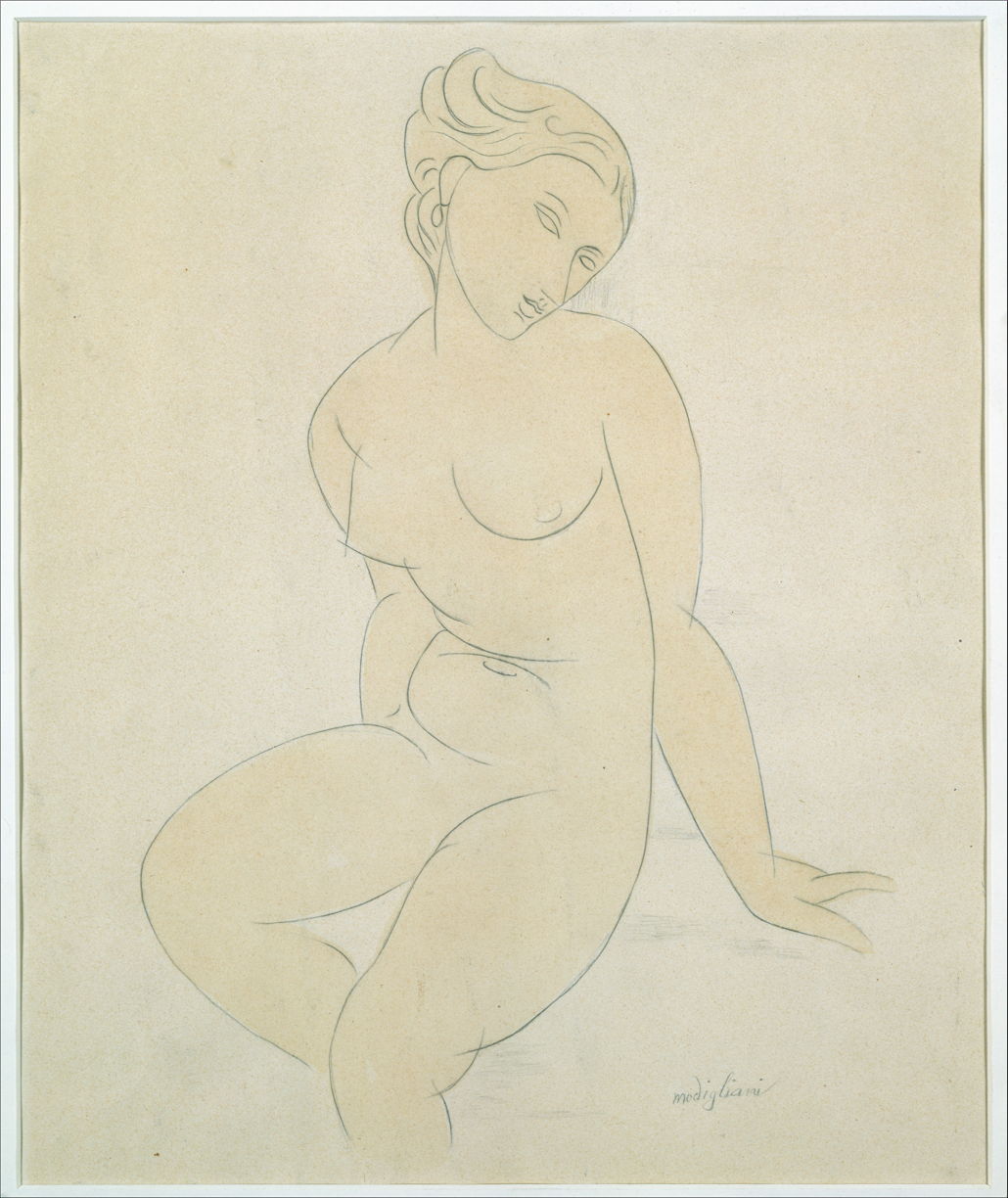
Longstanding disputes over the relative importance of form against colour melted away with graphite drawings such as Amedeo Modigliani’s Seated Female Nude from about 1917. This consists of a sparse arrangement of faired curves, and lacks the sophisticated cues for three-dimensional form, depth or texture, yet expresses this figure clearly with great economy of detail. Such drawings weren’t novel, but they proliferated and became appreciated far more.
Avant-garde oil paintings came to look more like other media, typically watercolour, as seen in the works of Karl Isakson.

A century earlier, Isakson’s Portrait of the Painter Karl Schou from about 1911 wouldn’t even have passed as a hasty sketch. Although the figure’s face and head have been formed and filled sufficiently to show how he looks, his body and the background have been completed using scribbled brushstrokes of dilute oil paint.
From 1900, the Kodak Brownie camera put photography into the hands of the masses, allowing almost anyone to make their own detailed images of the world around them. Although it was another thirty-five years before Kodachrome film made colour photographs practical, paintings were no longer the established means of making a visual record.

Isakson’s landscapes seem to have been painted in front of the motif, and simplify while remaining thoroughly realist. Graveyard, Christiansø from 1911-13 shows the small cemetery on that island.
Neither was fine detail required to tell most stories in images.
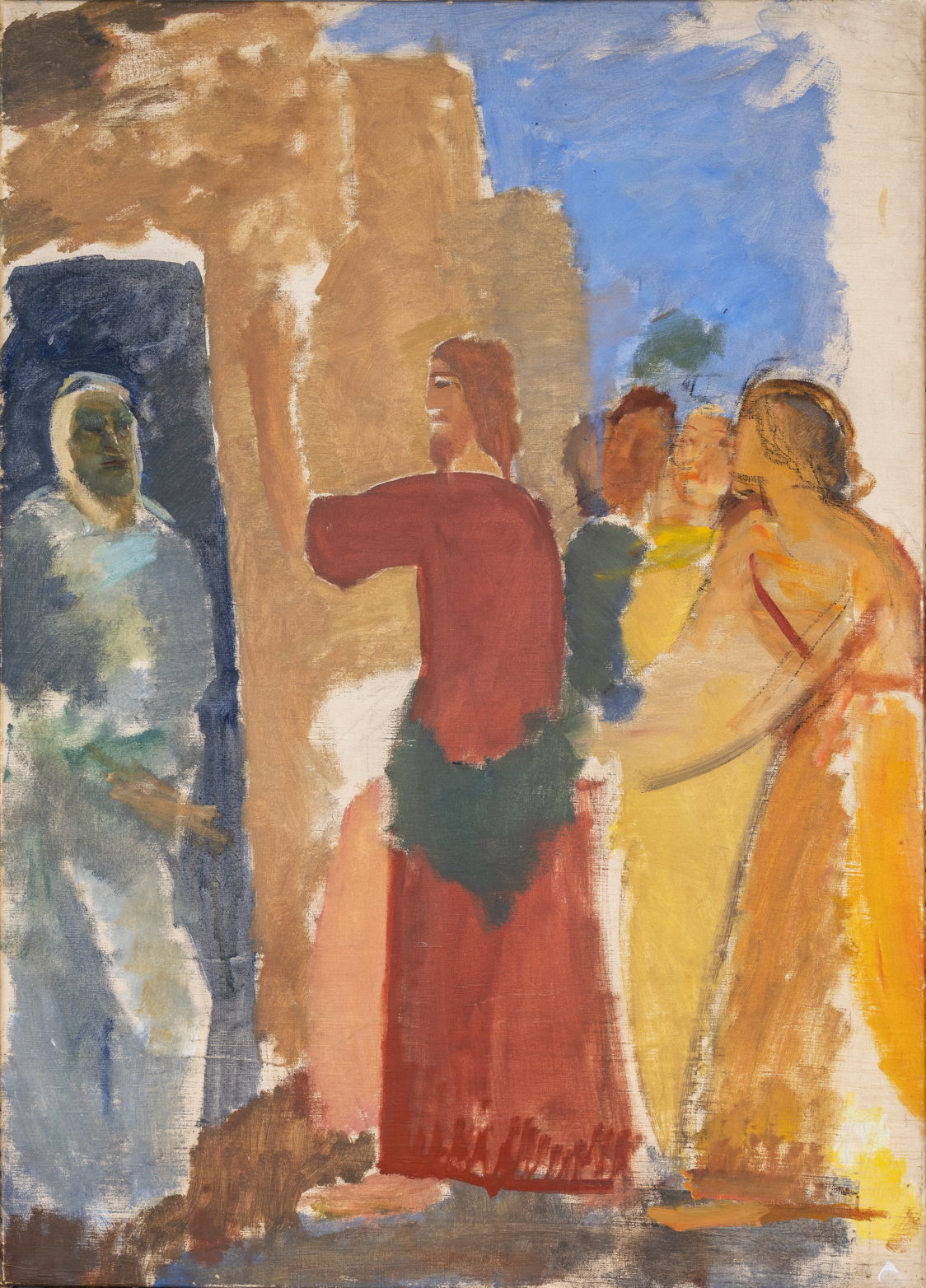
The Raising of Lazarus from 1920-21 is one of Isakson’s religious paintings from his final years. The story of Lazarus is one of the more popular miracles in the New Testament, and he chooses the moment that Lazarus (left) emerges from his tomb at Jesus’ command, still covered in linen burial cloths.
Among the most skilled in turning inchoate brushstrokes into a vivid reality was John Singer Sargent, particularly in his informal watercolour sketches. The first of my two examples of his approach comes from a sketch he made of an Arab Woman in 1905-06.
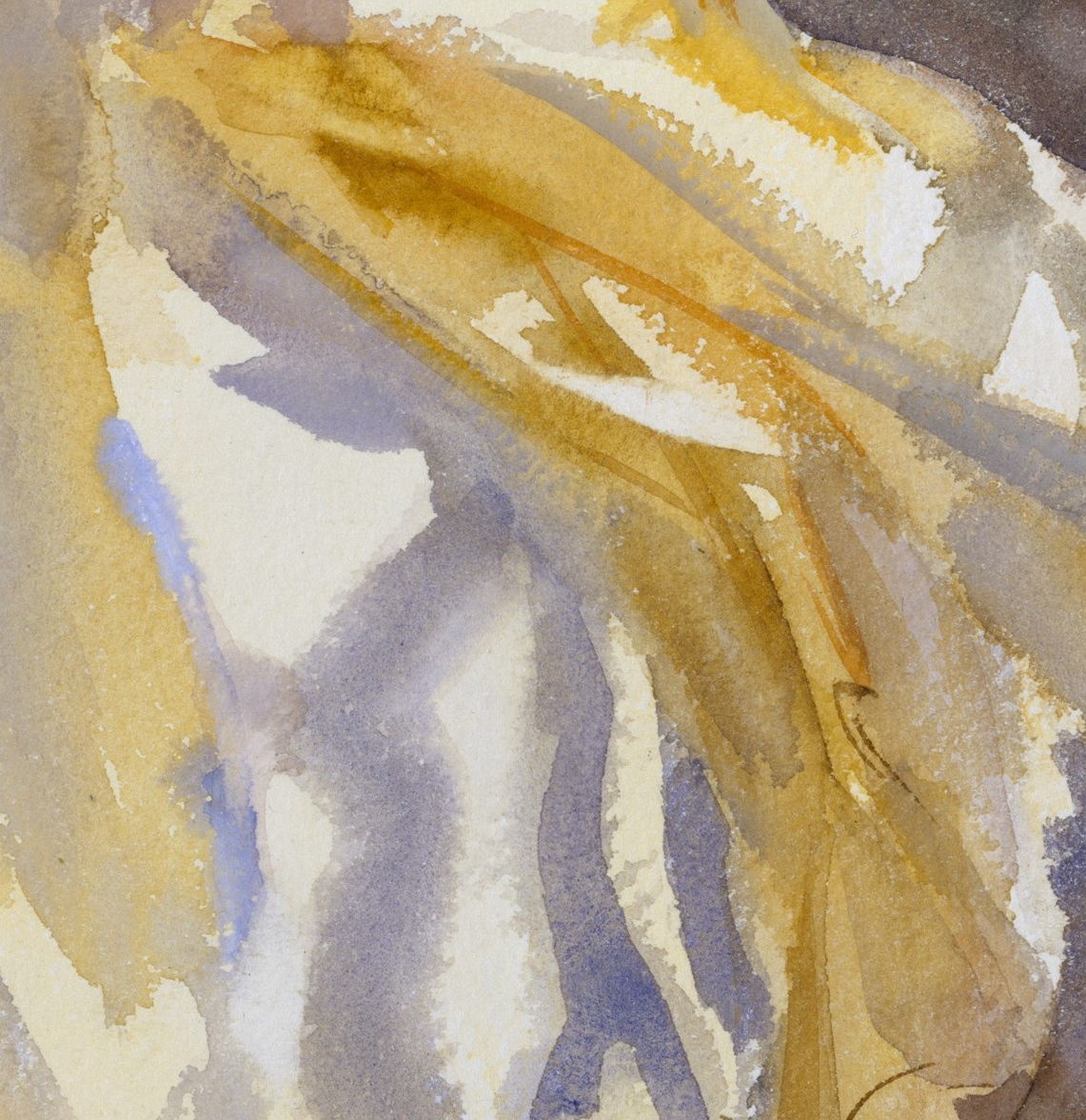
This close-up view is about 12 cm (5 inches) across, and shows Sargent’s rich watercolour technique, founded on marks made using a brush loaded with pigment suspended in water. There are reserved areas of unmarked paper, strokes painted onto wet paper, those applied when the paper was essentially dry, superimposed strokes, varying density of pigment and loading of the brush. At this level it looks thoroughly abstract.
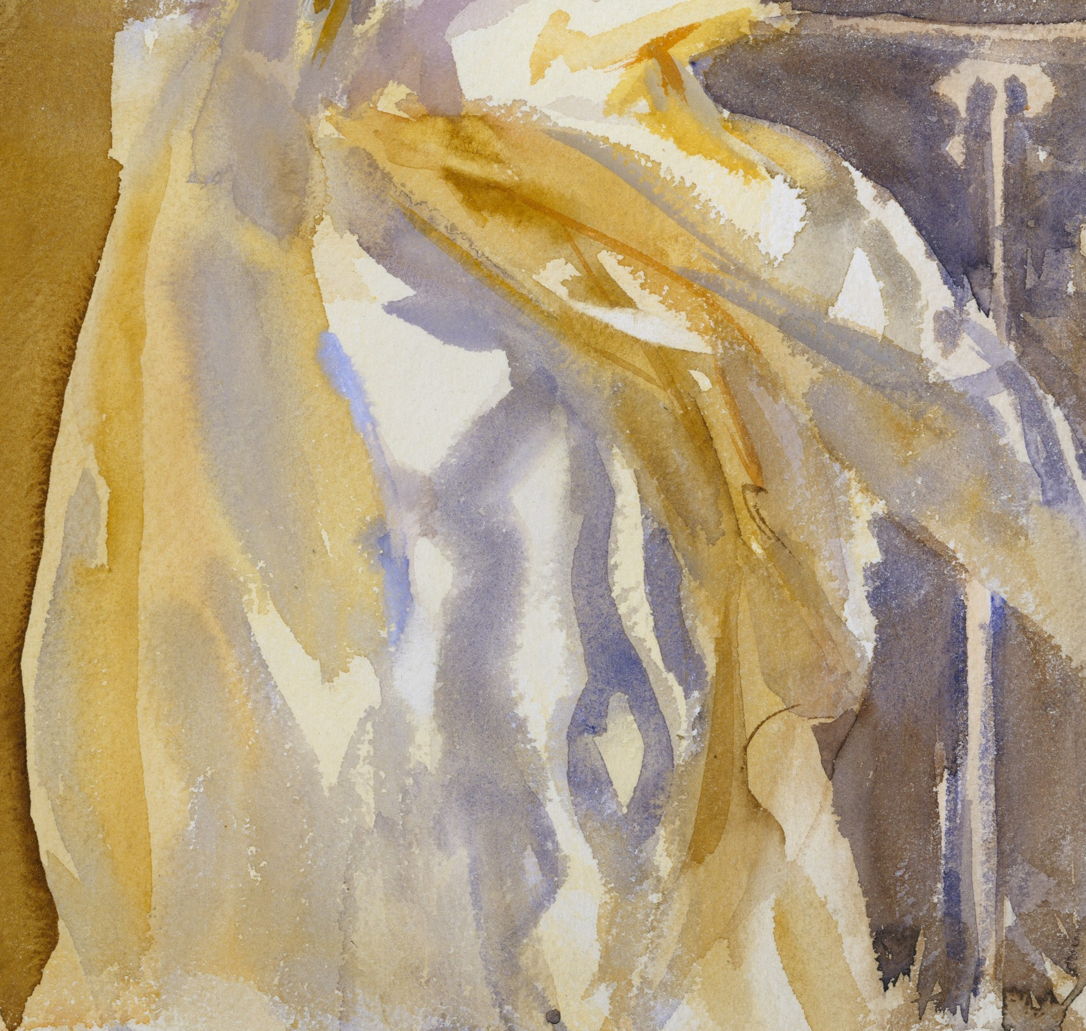
Form starts to emerge in a larger detail, although it’s still hard to guess what he has painted here.

Once our brain has this whole image, it suddenly pops into a convincing and three-dimensional figure, and its reserved space and brushstrokes form a white chador.
Five years later, when he was travelling in the Alps, Sargent demonstrated how a more detailed image could be assembled from an even richer range of brushstrokes and marks.
In the summers of 1909-11, Sargent stayed with friends in the Bellevue Hotel at the top of the Simplon Pass, enjoying the cool mountain air when much of the rest of Europe would have been stiflingly hot. While his family and friends whiled away their days in leisure, Sargent got them to pose for informal portraits. Among the finest is his Simplon Pass: The Tease from the summer of 1911.

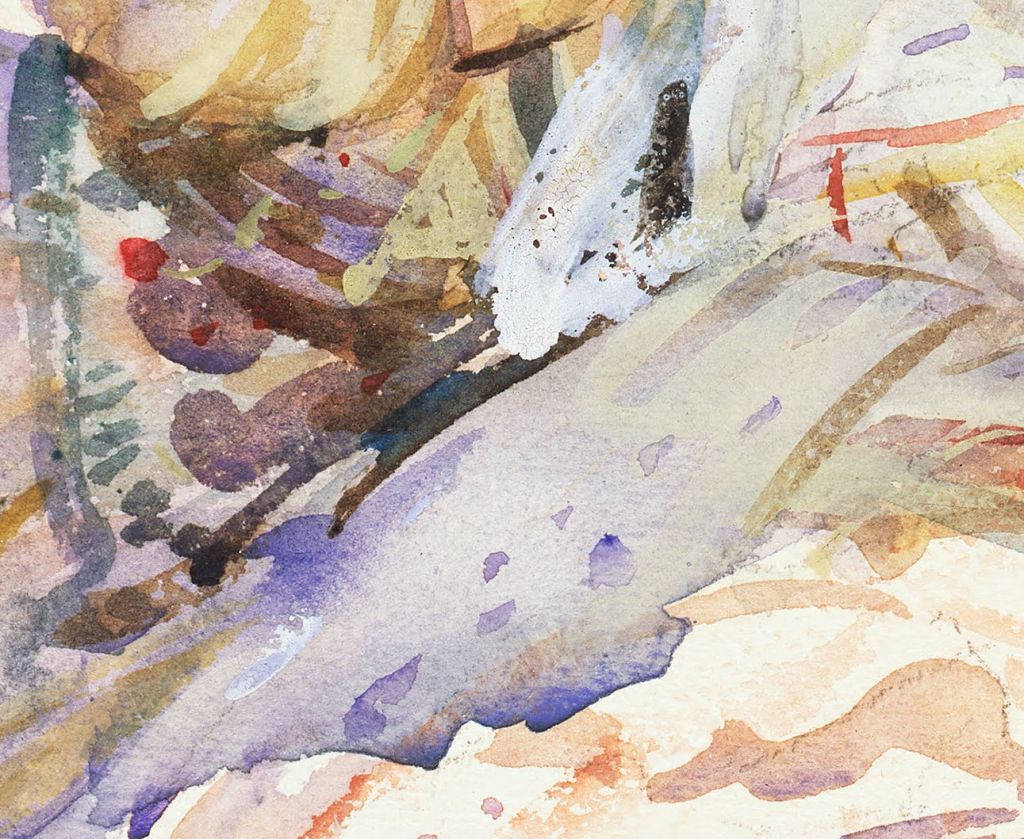
In this passage, he used wax resist. Before applying paint, Sargent scribbled over areas intended to be vegetation, using a soft wax crayon, probably made from beeswax. On a fairly rough paper, the wax is deposited unevenly, and when painted over using watercolour it shows the white paper through. This creates disruptive patterns of near-white in the midst of the greens.

Most of the paint used here is transparent watercolour, applied as a wash in small areas, and in gestural marks elsewhere. In the upper third of this detail, he has applied white gouache (opaque watercolour) sufficiently thickly for it to now have fine cracks. The large pale blue area crossing the middle appears to have been rewetted and some of its colour lifted to reduce its intensity, although most of his applications of paint over existing paint have been made wet on dry.

Complex details such as the faces and hands of the figures have undergone multiple repainting, starting with the palest flesh of the face, and progressively darkening to near-black. In most cases, the clean edges of the marks demonstrate they were applied wet on dry, with as many as six different layers in the hair.

In the midst of this complex assembly of layers, Sargent still keeps to the lines of his original graphite sketch, which he uses to give the parasol form, and maintains small reserved areas, here forming the spectacle frames in the white of the paper.

Like Rembrandt and others before him, Sargent demonstrates how a masterful image can be created from an underlying chaos of brushstrokes and marks.

