
When Heracles returned to King Eurystheus with the mares of Diomedes, he should have had just two remaining labours to complete, making a total of ten. The next he was assigned was to acquire a belt from the Queen of the Amazons, Hippolyta, quite a change from his previous tasks.
Steal the belt of Hippolyta, Queen of the Amazons
Although sometimes referred to as a girdle, this was a war belt given to Hippolyta by her father Ares, god of war. Eurystheus wanted it for his daughter Admete, and Heracles was a convenient means to achieve that. After a couple of misadventures in transit, on the island of Paros and at the court of Lycus, requiring a few gratuitous killings, Heracles reached Themiscyra where the Amazons lived. When he first met their queen they got on so well that some accounts claim they had sex before she handed over the precious belt.
Once again, this was ruined by the intervention of Hera, who spread a rumour that Heracles was intending to abduct the queen, resulting in the Amazons attacking Heracles’ ship. He found the Amazon warriors easy to beat, and overpowered their queen, in some accounts killing her, before making off with her belt.
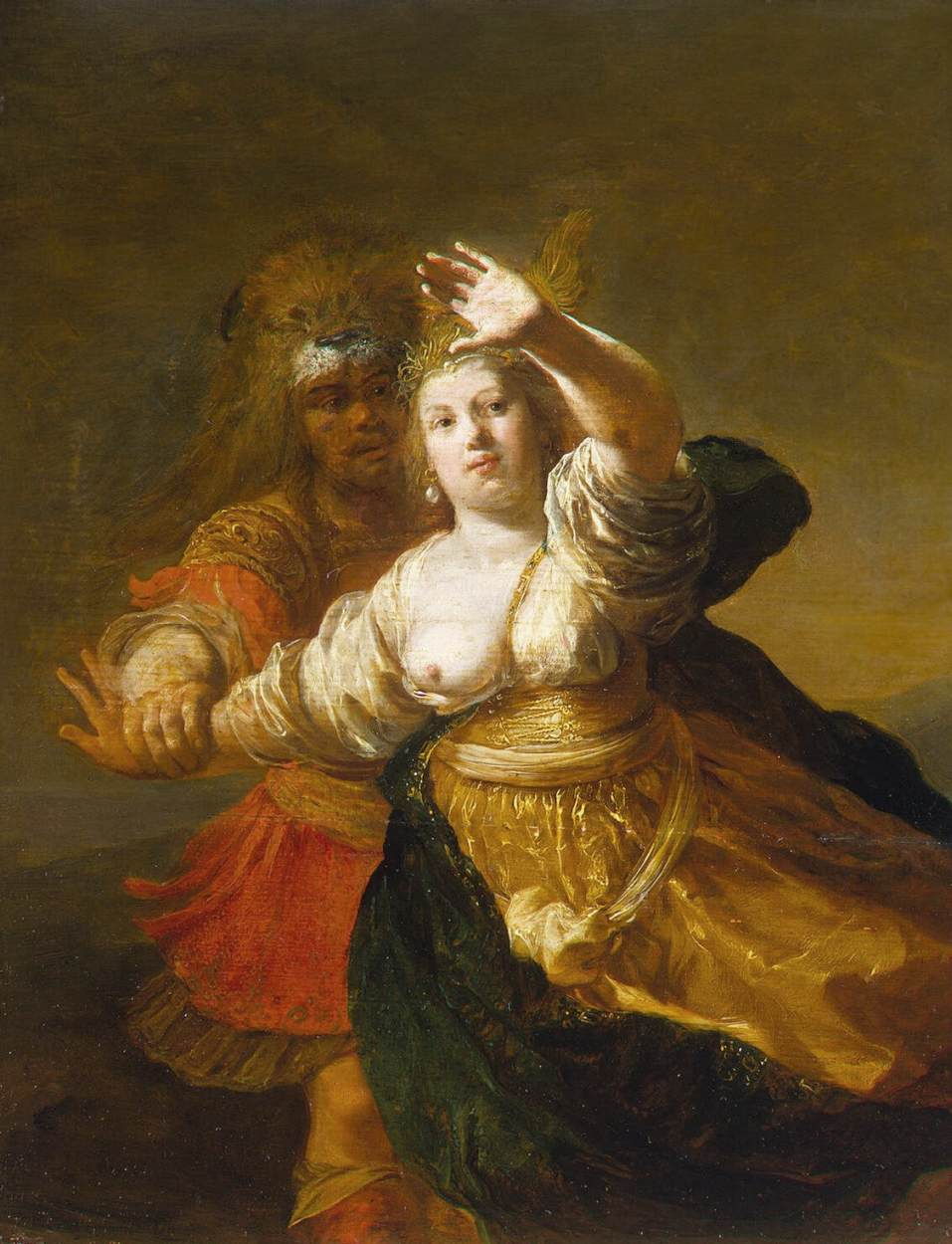
Nikolaus Knüpfer’s Hercules Obtaining the Girdle of Hippolyta, from the first half of the seventeenth century, shows the hero restraining the Amazon’s arm, as she tries to move away from him. As convention dictated, her right breast is bared quite incongruously, but she lacks the bearing of a fierce warrior.
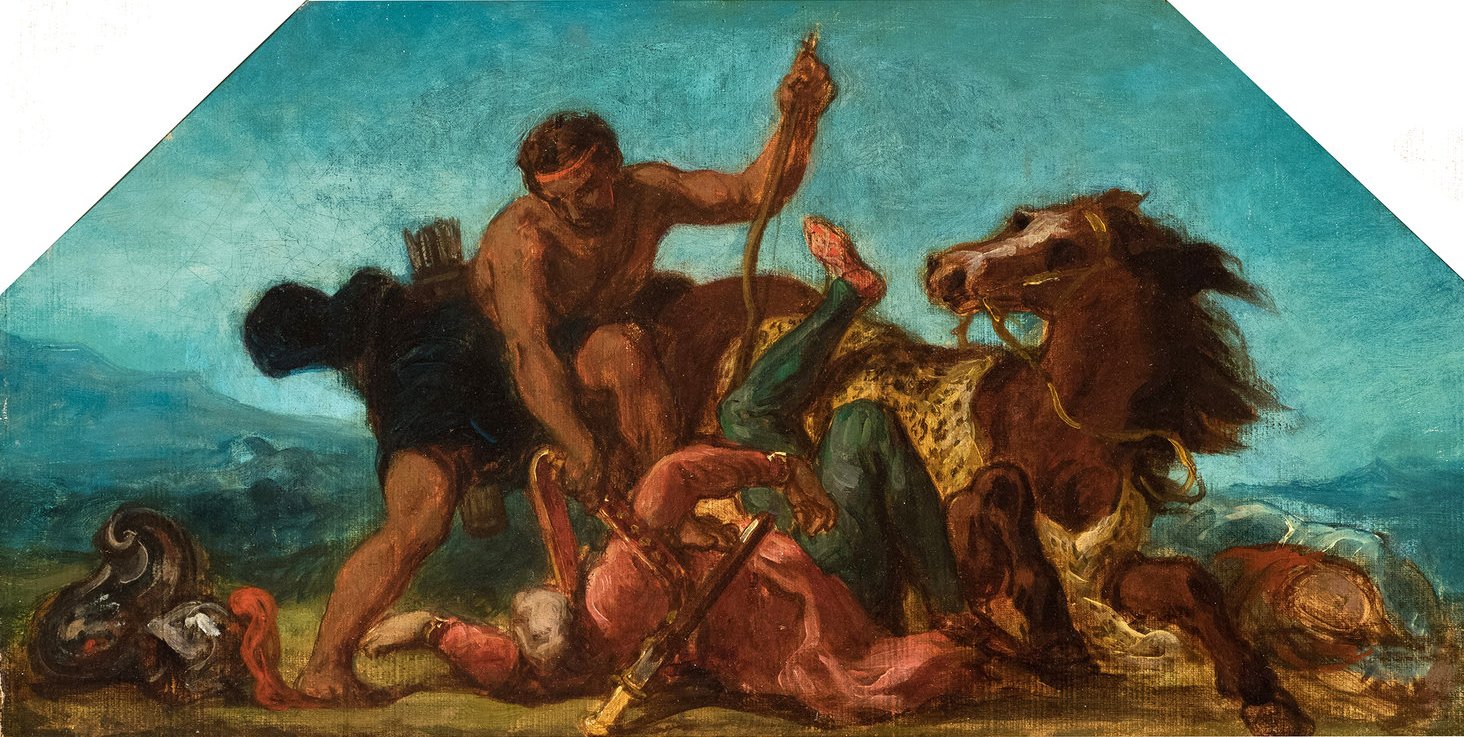
Eugène Delacroix painted this undated study of Hercules and Hippolyta for a lunette in the Salon de la Paix (the Hall of Peace, of all places). It shows the hero removing the queen’s belt as she lies on the ground, fallen from her horse. Delacroix was commissioned in 1852, but the finished works were all destroyed when the Hôtel de Ville in Paris, where they were displayed, was burned down during the Commune in 1871.
Steal the cattle of the monster Geryon
In what should have been his final labour, Heracles was to capture the herd of cattle belonging to Geryon, a fearsome giant with three heads and one body, and possibly with as many as six arms. He was the grandson of Medusa the Gorgon, making him the nephew of Pegasus, the winged horse, in the sort of family that could only exist in Greek mythology.
To reach this herd Heracles had to cross the Libyan desert, where he became so angry at the heat that he shot an arrow at the sun Helios, who in return lent the hero the golden cup he used to sail across the sea each night. Heracles used that to reach Erytheia and find Orthrus, the two-headed dog who guarded the cattle. It took Heracles just a single mighty blow from his club to kill the dog, and he next dispatched Eurytion the herdsman when he came to help protect the herd.
Geryon was a greater challenge, but fell to an arrow whose tip bore the poisoned blood of the Hydra. Heracles then drove the herd back to Eurystheus, who had them sacrificed to Hera.
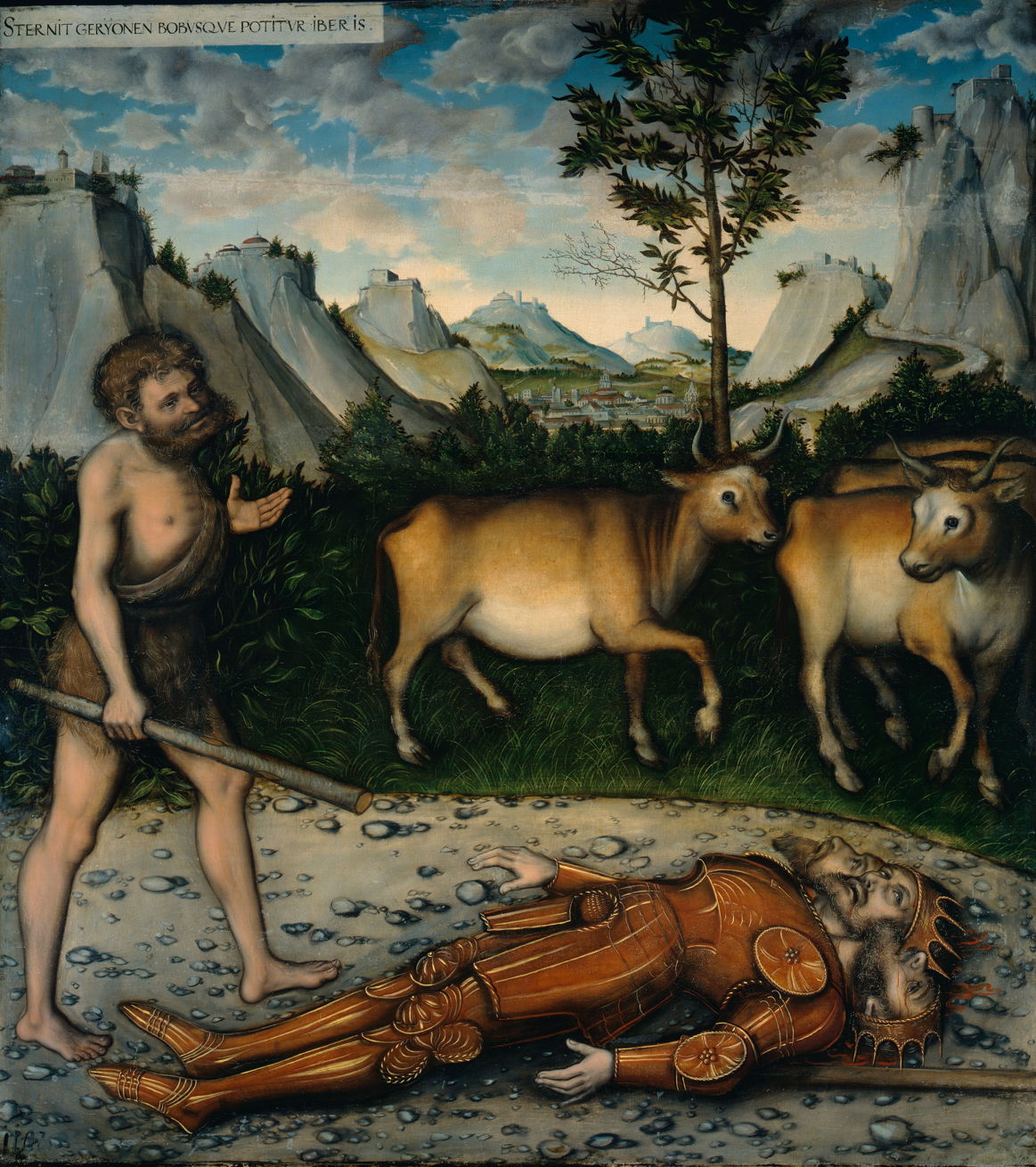
In this painting by the workshop of Lucas Cranach the Elder of Hercules and the Cattle of Geryon (after 1537), the giant lies dead in his armour with the cattle behind, and an inventive landscape stretching into the distance.
With the completion of that tenth labour, Heracles should have satisfied the demands of King Eurystheus, but like all tricksters he found excuses to extend them to twelve. The king claimed that cleansing the Augean stables didn’t count, as Heracles would have profited from it, and the assistance provided by Heracles’ nephew in the killing of the Lernaean Hydra disqualified that as well. Heracles was then set two further tasks as compensation.
Steal the golden apples of the Hesperides
Trees growing in the garden tended by the Hesperides were sacred to Hera, and bore golden apples. For his eleventh labour, Heracles had to locate this garden and steal those apples, which were guarded by a dragon with a hundred heads, Ladon.
Heracles caught the Old Man of the Sea first, and it was he who directed the hero on his journey to the garden. As he was travelling, Heracles came across Prometheus, who had been bound in punishment for stealing fire from the gods, with an eagle feeding on his liver. Heracles killed the eagle that had been tormenting the Titan, and in return Prometheus provided assistance through his brother Atlas.
Accounts then become confused and contradictory, but it’s most likely that Heracles relieved Atlas from his task of holding the heavens up, to allow the Titan to steal the golden apples. Atlas tried to trick Heracles, though, so was tricked back, leaving Heracles to return to King Eurystheus with the apples.
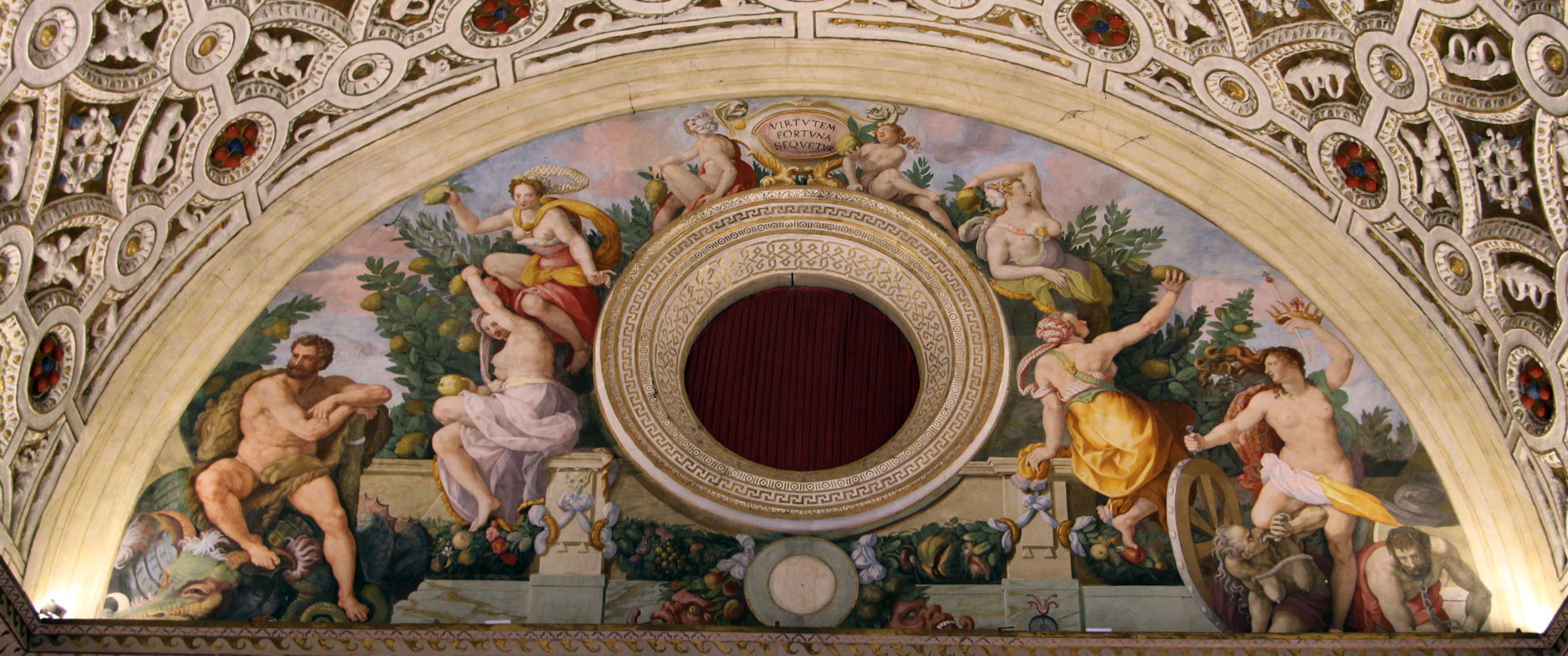
Alessandro Allori’s fresco, in the Medici Villa in Poggio a Caiano, shows Heracles at the lower left of The Garden of the Hesperides (1578-82). Below the inscribed motto Virtutem fortuna sequetur, or luck follows virtue, are seven Hesperides brandishing their golden apples.
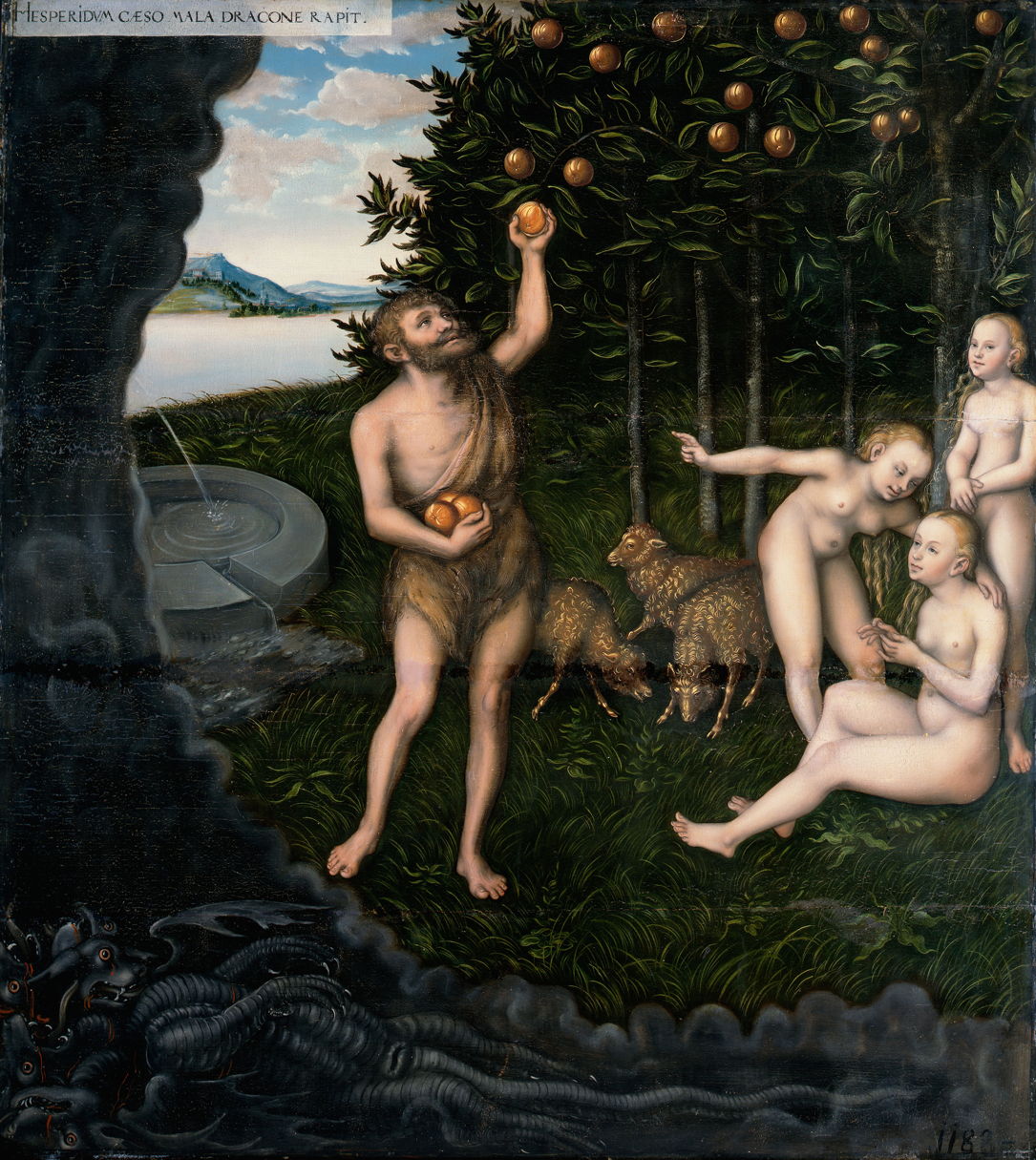
Lucas Cranach the Elder’s workshop painted Hercules Steals the Apples of the Hesperides after 1537, mixing several different myths together. Here it’s Heracles who is picking golden apples, as three Hesperides look on passively. Ladon is laid out in the foreground, with plenty of heads and eyes, instead of being a snake. Behind the figures are three sheep, from alternative myths about the Hesperides. Indeed, Boccaccio’s account of these myths concludes that the Hesperides were the owners of sheep rather than guardians of golden apples.

Giuseppe Nicola Nasini’s undated fresco in the Biblioteca Moreniana in Florence of Hercules in the Garden of the Hesperides also brings together fragments of several myths. Heracles is in the centre, surrounded by seven Hesperides. In the sky is Pegasus, the winged horse, a flying god accompanied by an owl, and in the foreground a couple of Muses serenading them all.
Capture Cerberus
Heracles’ twelfth and last labour was intended to be the most impossible of them all, requiring the hero to enter the underworld and abduct the ferocious three-headed dog guarding its gates. To prepare for this task, Heracles had himself initiated into the cult of the Eleusinian Mysteries, and was accompanied during his visit by Hermes and Athena.
When he was in the underworld, Heracles met Theseus and Pirithous, who had been imprisoned there for trying to abduct Persephone, wife of Hades. Heracles managed to get Theseus released, and possibly his companion, then asked Hades if he could take Cerberus as well. The god of the underworld apparently agreed, on the condition that he didn’t use any weapons to subdue and remove the monster of a dog. Accounts differ as to how he achieved that, but most involve his lion-skin in some way, and extreme force on the part of Heracles.
The triumphant Heracles took Cerberus back to King Eurystheus, who commanded the dog to be returned. Once that was complete, Heracles was free to go.
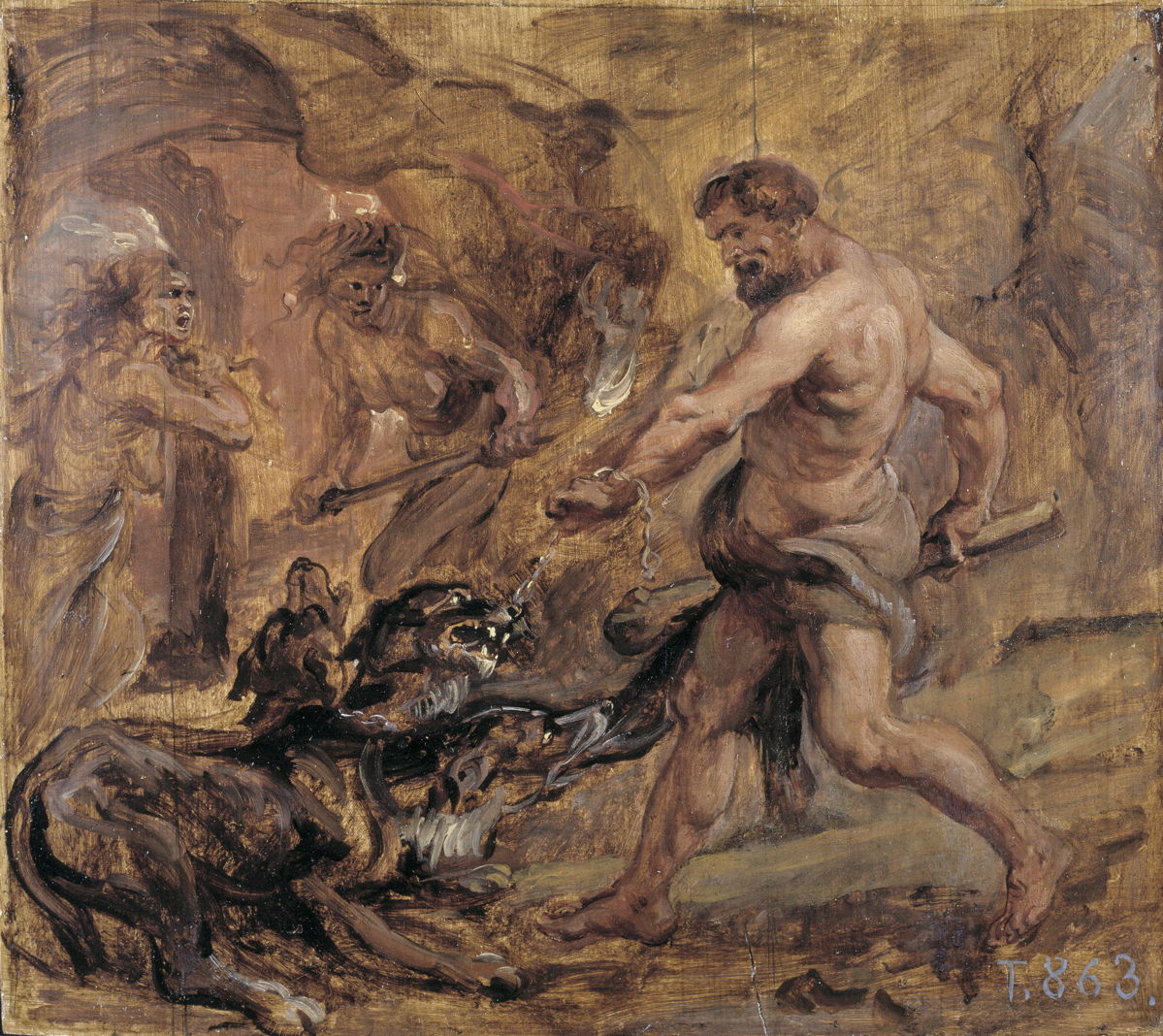
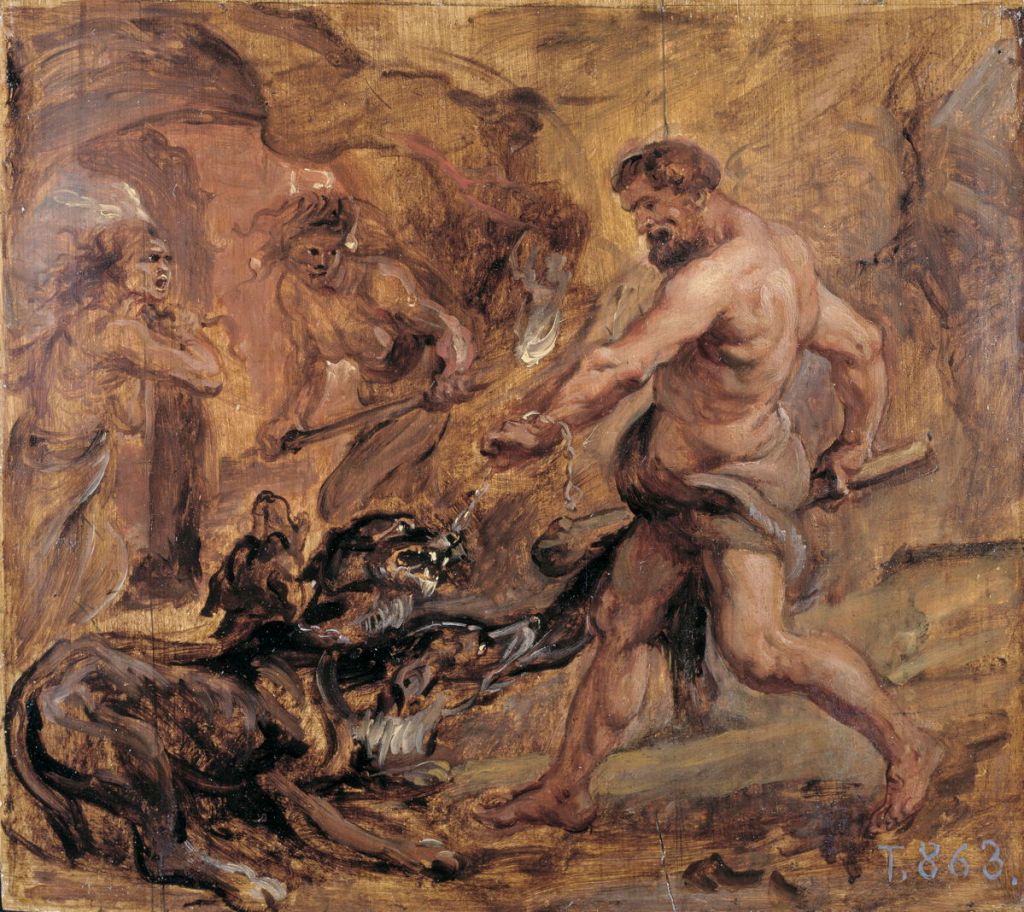
Peter Paul Rubens’ late oil sketch of Hercules and Cerberus from 1636 shows him holding chains in his left hand, while his right hand still holds his club.
Heracles then moved on to his next adventures.

