
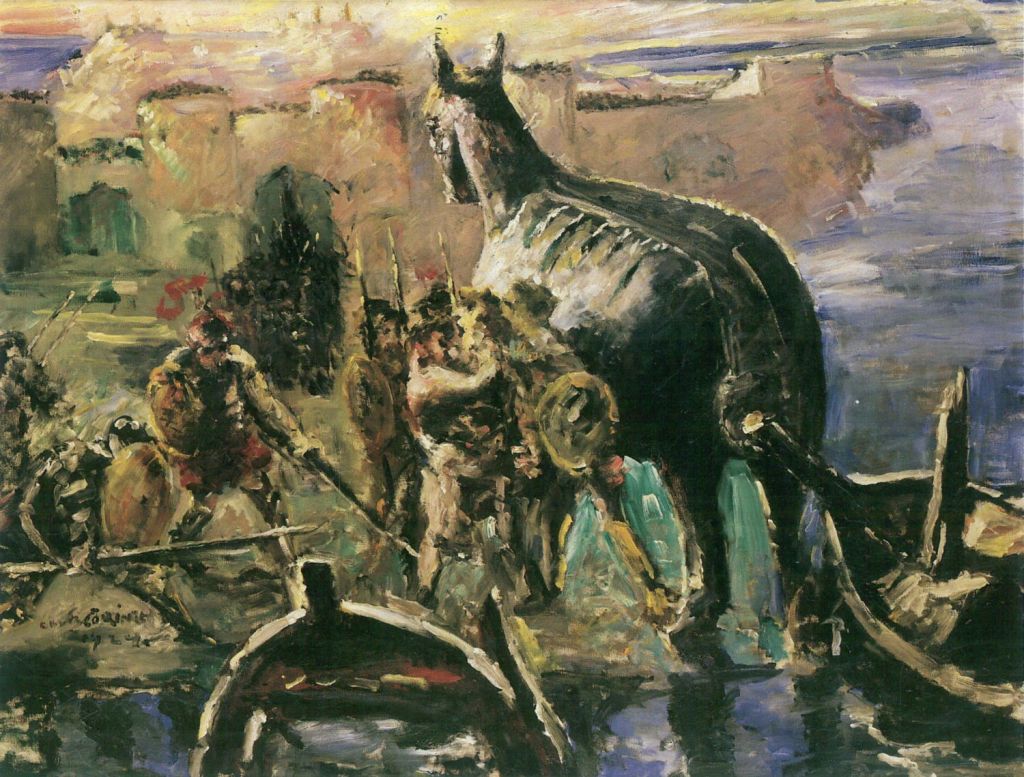
While landscape painters were racing through Impressionism, Neo-Impressionism and Post-Impressionism, those who painted figures in narratives, like Lovis Corinth (1858–1925), were negotiating their way into more Modernist styles, where brushstrokes and gestures came to dominate. Corinth is of particular interest because of the effects of the severe stroke he sustained in late 1911, which most affected the arm he painted with (in all probability), and the controversy as to whether that determined any change in his style.

His early facture is demonstrated well in the two versions of Susanna Bathing (Susanna and the Elders) he painted in 1890: that above, now in the Museum Folkwang, and that below, thought to be in a private collection. Although both show abundant brushstrokes, that above contains more and looser passages. Neither is as painterly as were the leading landscapes of the day.


The Deposition (Descent from the Cross) (1895) is one of his major paintings from this time in Munich, and won a gold medal when exhibited in the Glaspalast in Munich that year. It’s a thoroughly modern approach to its traditional theme, in its framing, composition, and faces. Its close-in cropped view suggests the influence of photography, and the faces shown appear contemporary and not in the least historic. It does so while retaining the detail then deemed necessary to tell its story with clarity.

Corinth’s second version of Salome from 1900 remains more finished to show finer detail, as shown below.

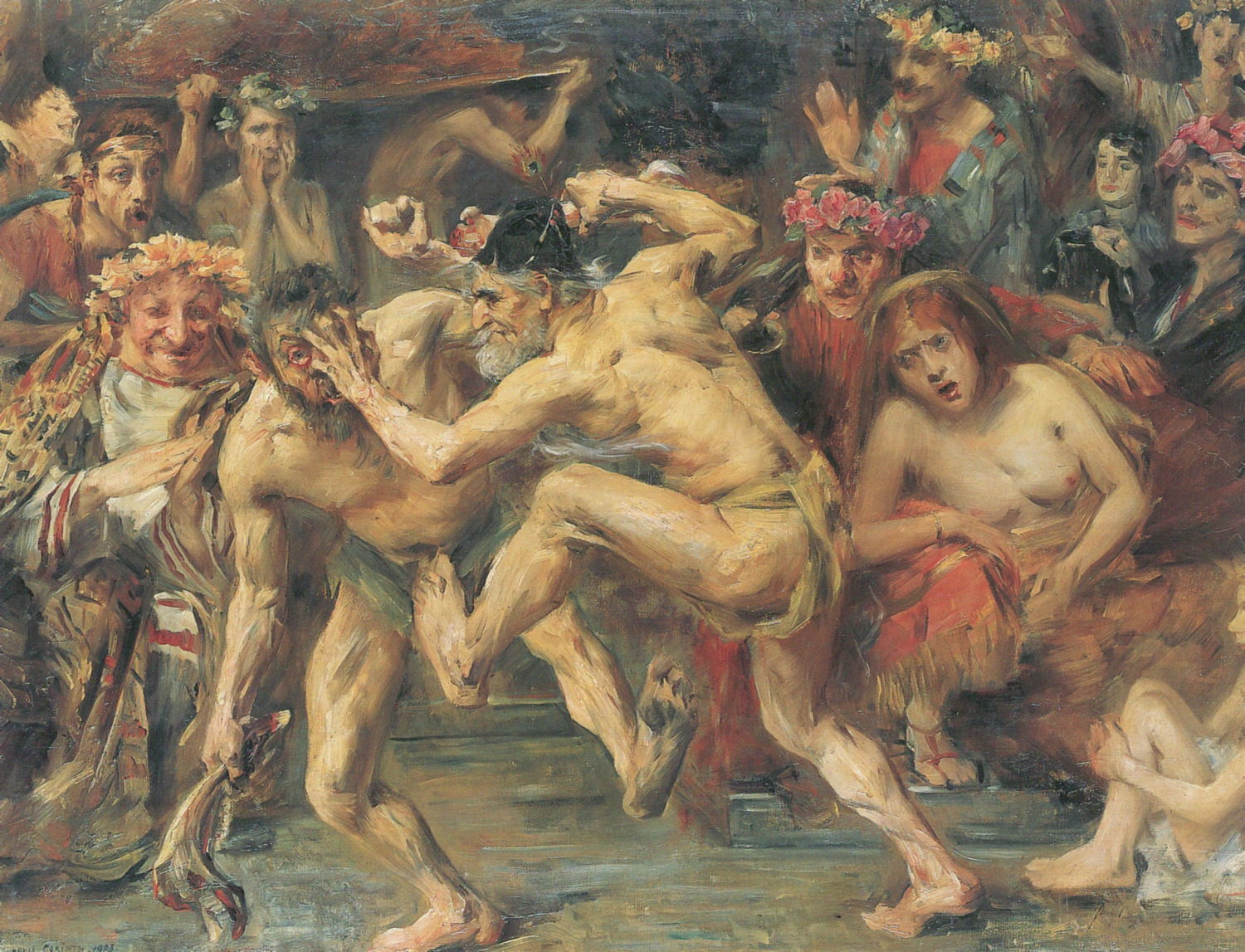
Marked change is apparent just three years later, in his Ulysses Fighting the Beggar (1903). Although painted more loosely, Corinth has taken care to give each face its own expression, ranging from amusement to apprehension, to produce a raucous collage of human emotion.

This trend continued in The Temptation of St Anthony after Gustave Flaubert, completed by the end of March 1908, and shown at the Berlin Secession’s exhibition from April to June. This was so well received that it was among Corinth’s works representing Germany at the thirteenth Venice Biennale fourteen years later, in 1922.
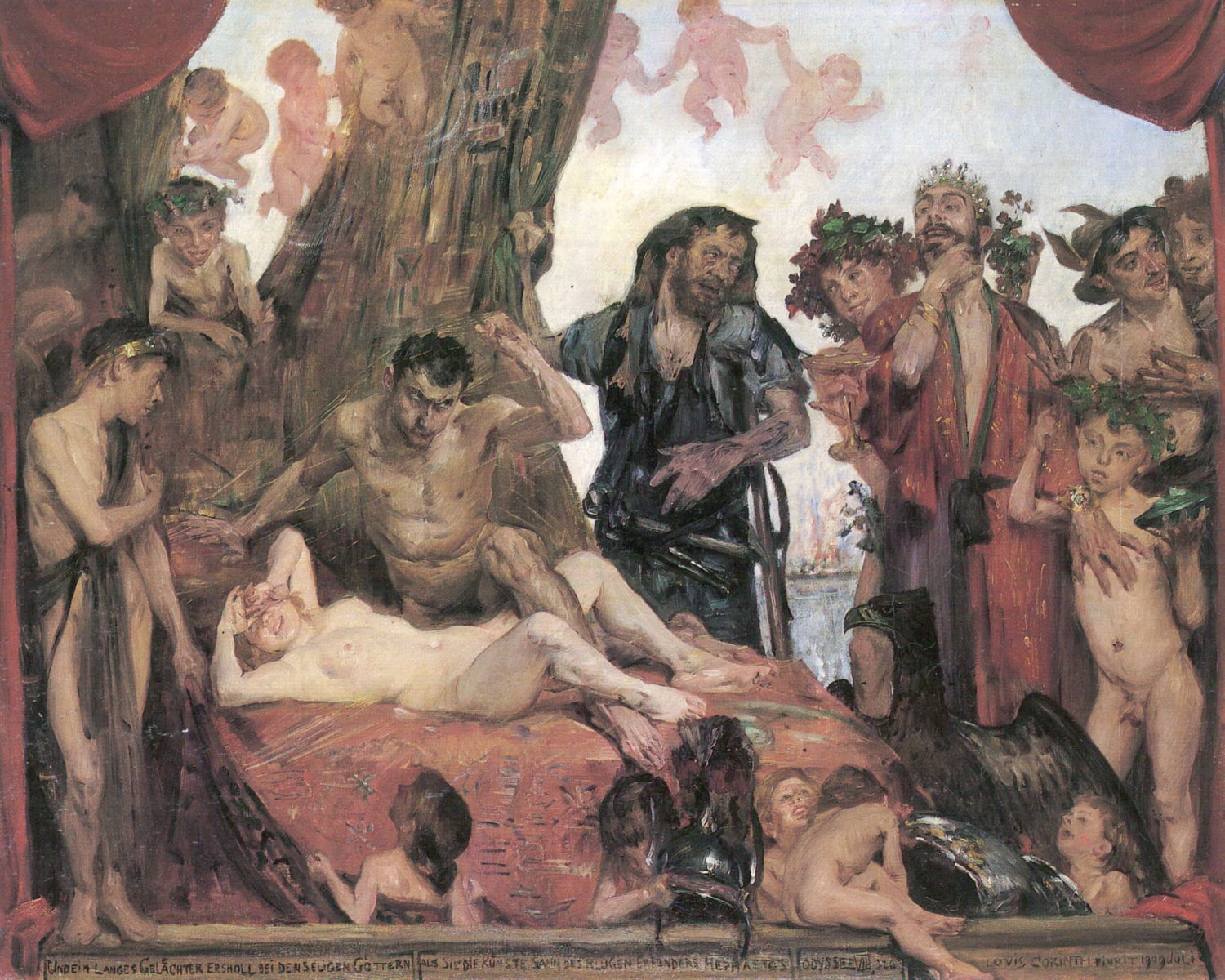
Homeric Laughter (1909) is one of Corinth’s more complex paintings of classical myth, and continues to become more sketchy with obvious brushstrokes.
In December 1911, when he was 53 and at the peak of his career, Lovis Corinth suffered a major stroke. When he regained consciousness, he couldn’t even recognise his wife Charlotte, and his left arm and leg were paralysed. As he had painted his entire professional career with his left hand, it looked as if that career might have come to an abrupt and unexpected end.
(There is some uncertainty over which hand Corinth had painted with prior to this catastrophe, and which side was paralysed as a result. Although the consensus appears to be that he had painted with his left hand, and that was his paralysed side, some sources claim the opposite.)
Thankfully he made a rapid recovery over the following weeks. His left arm remained weak for some time, and he needed a stick when walking, but by February 1912 he had completed his first self-portrait since his stroke, and was painting actively again.
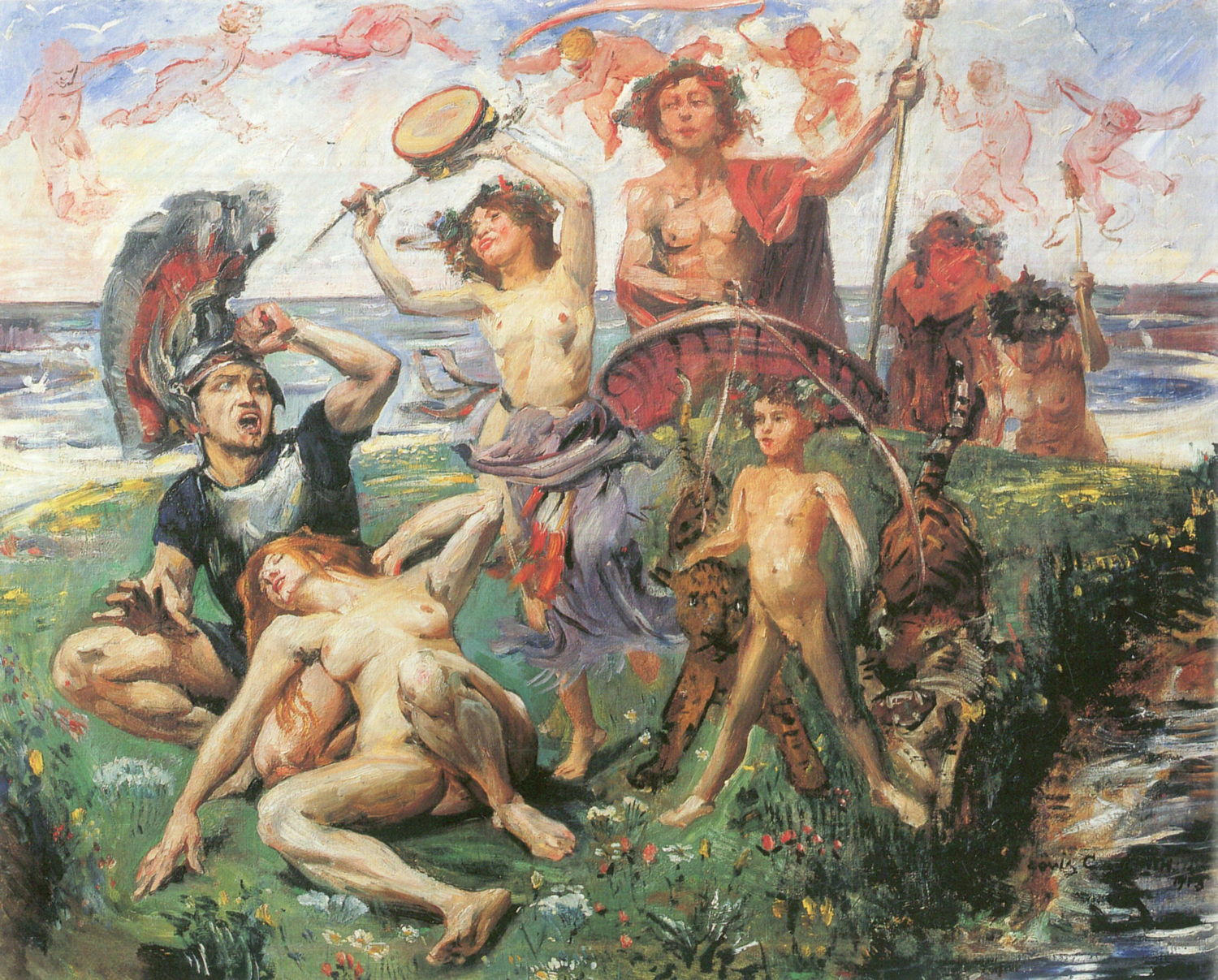
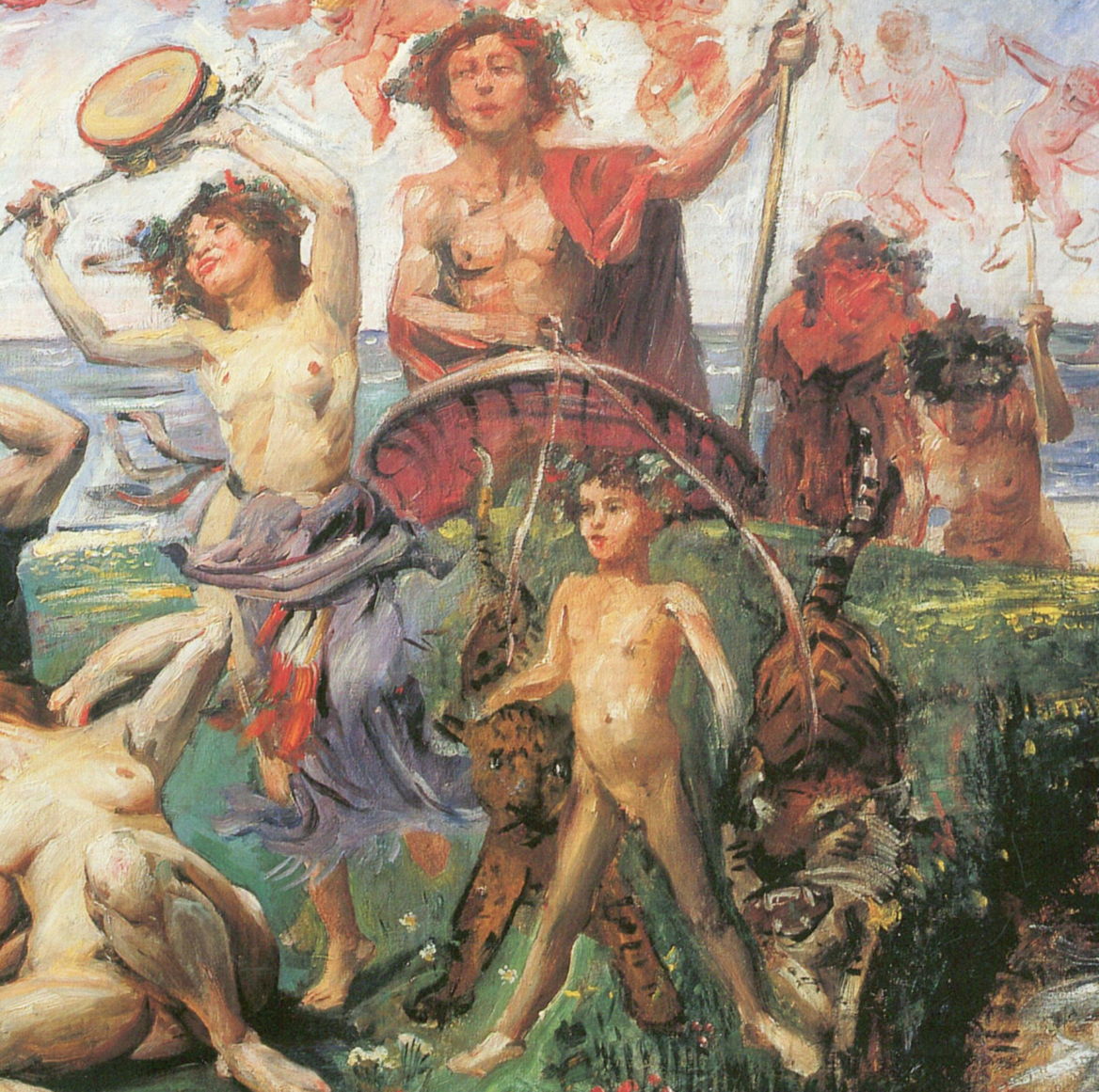
Less than two years after his stroke, Corinth tackled one of his most challenging mythical paintings, of Ariadne on Naxos (1913). There is no evidence of an abrupt change in his facture, though, and the putti decorating the sky are not that different from those in his Homeric Laughter above.
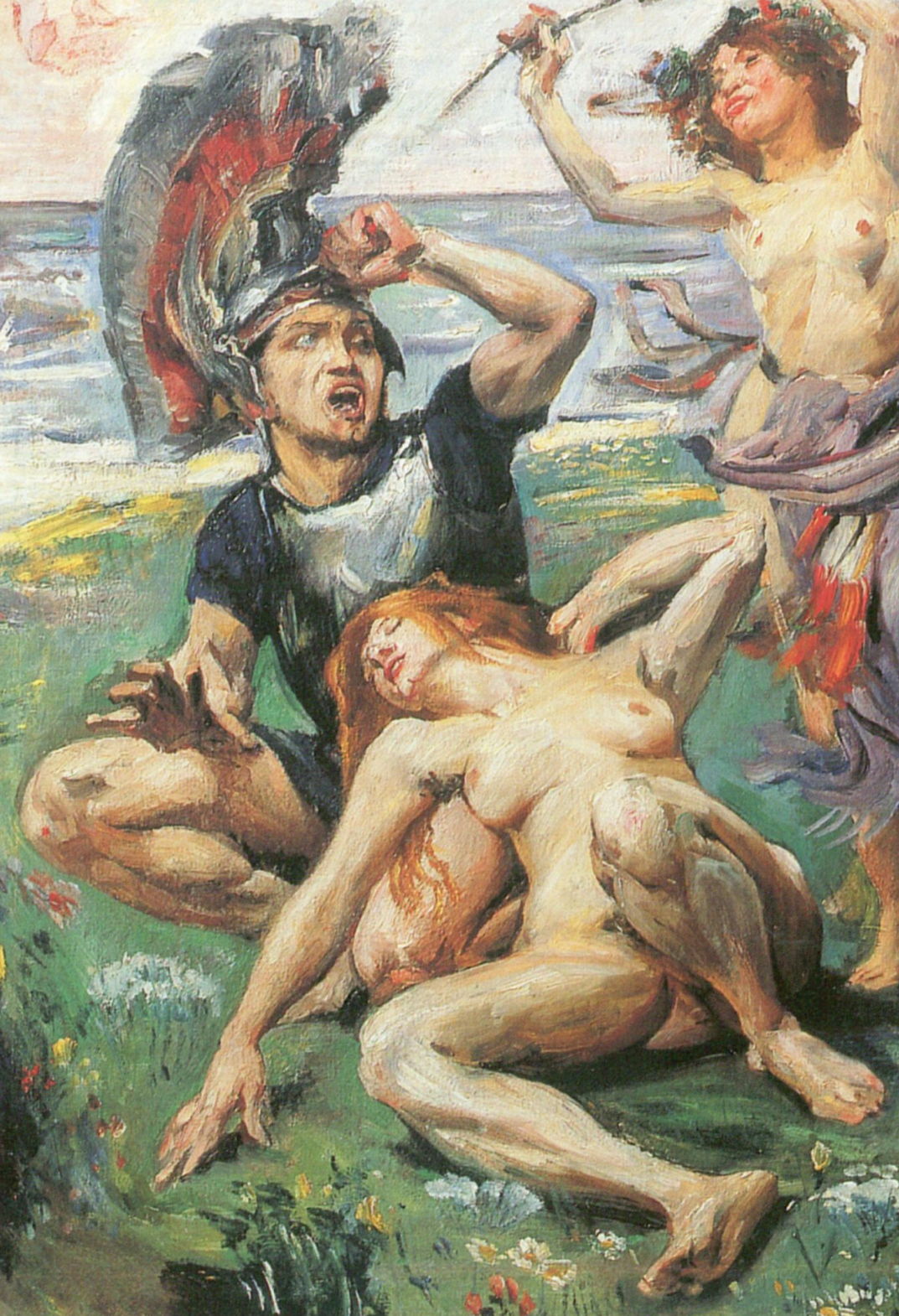
Two details, above and below, demonstrate his greater use of marks, and sketched passages away from the principal figures, for example in the two big cats towing the chariot of Dionysus.

Rather than his style become tighter and more detailed, as he continued to recover from his stroke it became even looser. Ten years after Ariadne on Naxos Corinth’s Susanna and the Elders (1923) revisits his early successes of 1890 as if to demonstrate how far these changes had come in those thirty-three years.
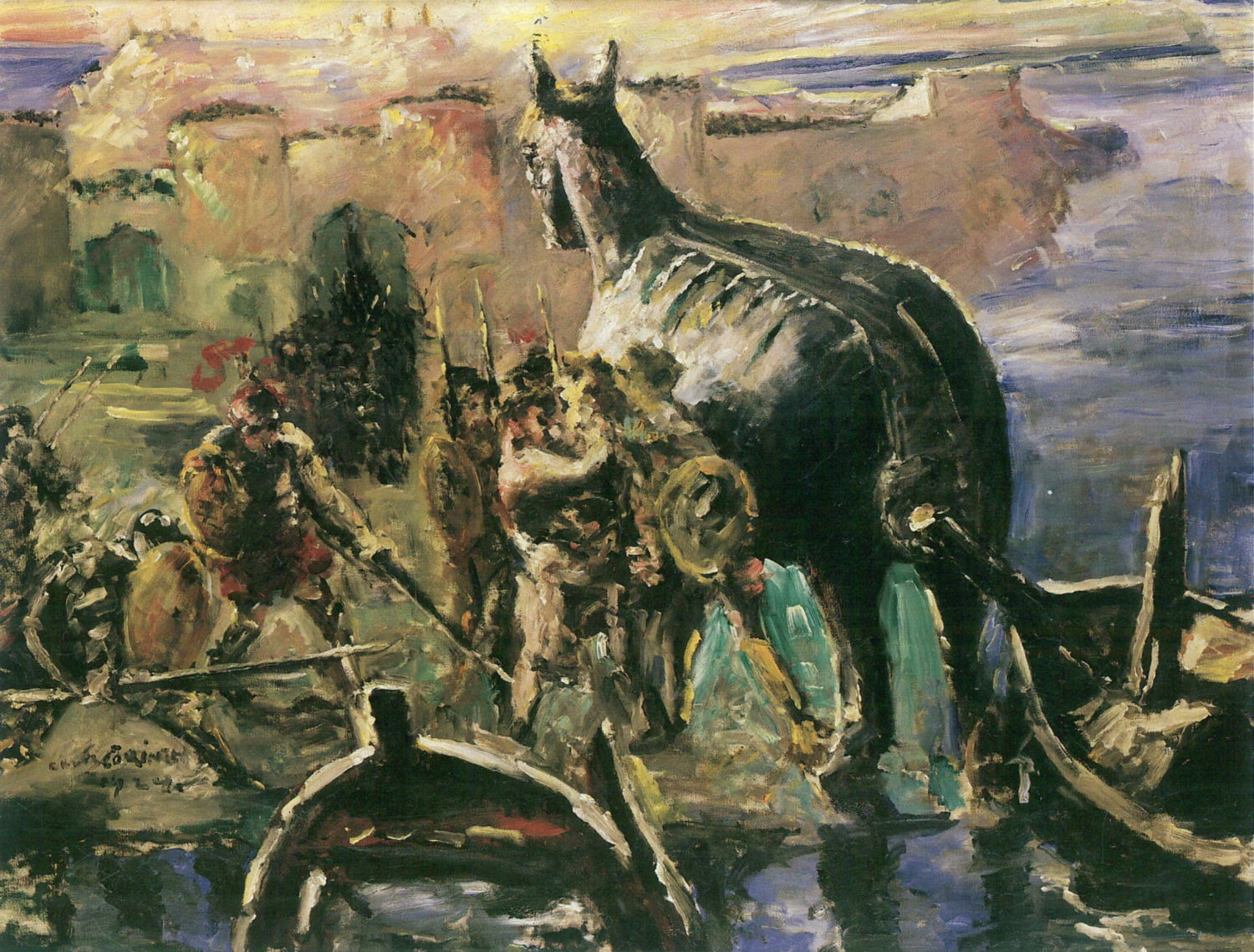
The Trojan Horse (1924) is Corinth’s last major painting from classical myth, showing the wooden horse made by the Greeks in order to gain access to the city of Troy, so they could sack and destroy it. It consists entirely of brushstrokes and marks, with essentially no finished passages, yet tells its story effectively.

Corinth painted Ecce Homo in just four day at Easter, 1925, as an act of meditation to mark the festival. Perhaps its most finished passage is the right hand and sleeve of the man in the white coat at the left.
Lovis Corinth’s paintings provide an account of changes that became widespread in European art over this period from 1890 to 1925, and how brushstrokes and marks gained prominence.

