
After the infant Heracles astonished his parents Amphitryon and Alcmene by strangling a couple of serpents in his crib, the seer Tiresias told them that he would vanquish numerous monsters, so it was only a matter of time before that was to occur in the labours he was set. These were inevitably the result of another intervention by Hera, who drove him into a fit of madness, during which he killed his wife and children.
Hera continued to intervene, and steered the Oracle of Delphi to direct Heracles to serve King Eurystheus for a period of ten years as his punishment. The king first assigned Heracles ten tasks, but on their completion cheated him by adding a further two, forming the Twelve Labours of Heracles, the centrepiece of the Heraclean/Herculean myths, whose reward would be the hero’s apotheosis to an immortal god.
Kill the Nemean lion
This fearsome lion had been terrorising the people of Nemea when Heracles was sent in search of it. Initially he tried to kill it with his bow and arrows, only to discover that his arrows bounced off its golden fur. He then blocked one of the two entrances to the lion’s cave, and attacked the lion from the other entrance. He stunned it with his trademark club before strangling it with his bare hands.
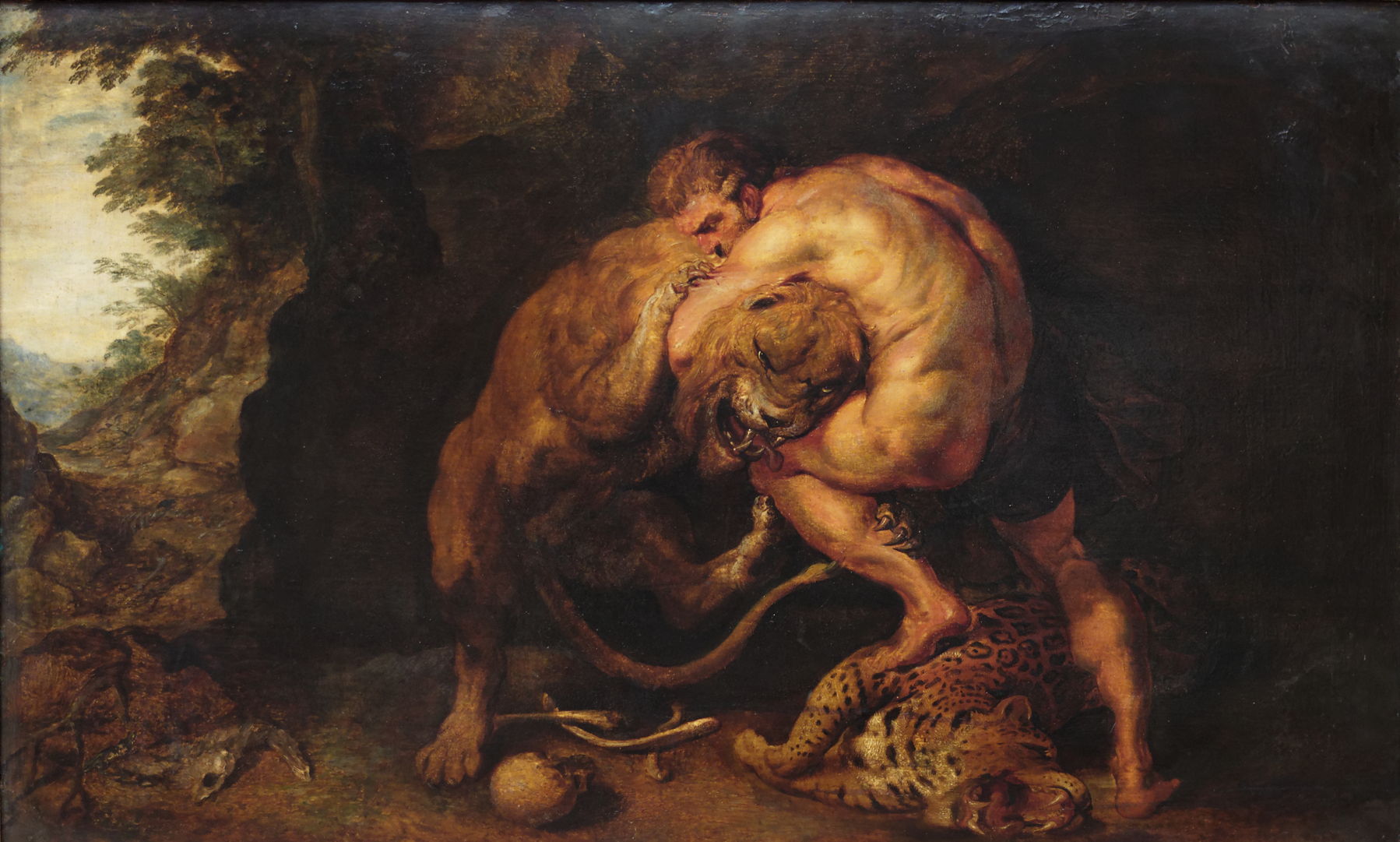
Peter Paul Rubens’ undated Heracles and the Nemean Lion shows the hero wrestling with the grimacing lion near the entrance to its cave, with a human skull and the body of a leopard on the ground.
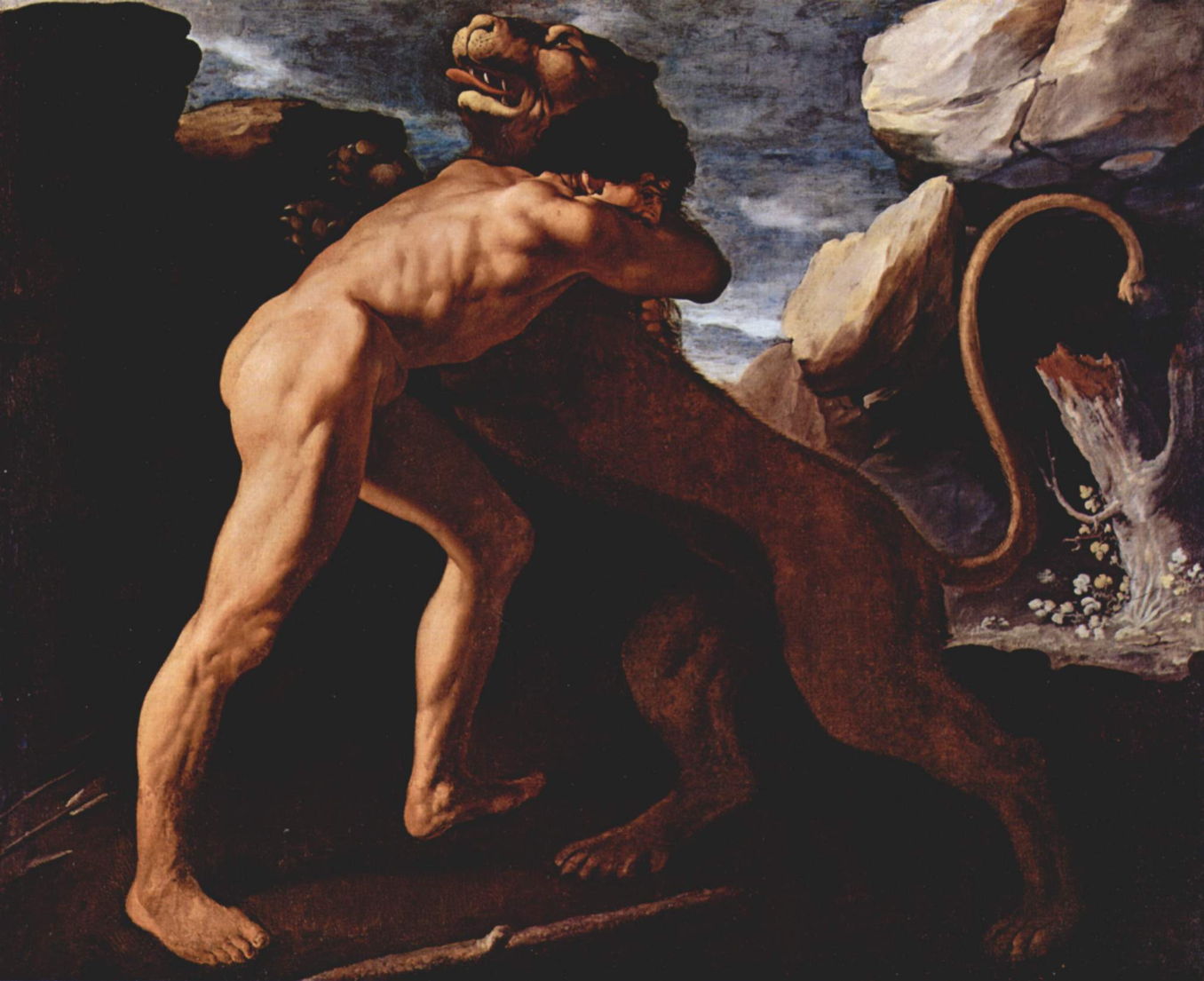
Francisco de Zurbarán moves his Hercules Fighting the Nemean Lion (1634) outside the cave, where Heracles is strangling the beast. By his feet is a modest club, seemingly insufficient to have stunned the lion.
When it was dead, Heracles tried to skin the lion, but it was only on the advice of Athena, his tutelary goddess, that he had success using the lion’s own claws. He then returned to King Eurystheus bearing the carcass on his shoulders. That terrified the king, who banned him from entering the city as a result, and refused to communicate with him except through an intermediary. Heracles, clad in his lion skin, was then dispatched on his second labour.
Kill the Lernean Hydra
The Hydra was a poisonous monster with the body of a dog and multiple serpent heads, whose breath alone could kill. It had been created by Hera with the sole aim of killing Heracles. According to surviving written accounts, Heracles covered his mouth and nose with a cloth for protection from the deadly fumes, fired flaming arrows into the Hydra’s lair to awaken it, then set about trying to kill it.
When he discovered that cutting off its heads with a sickle or sword only resulted in two more growing back, Heracles enlisted the help of his nephew Iolaus, who cauterised the wounds with a firebrand to prevent regrowth. Heracles then cut off the Hydra’s one immortal head using a golden sword given to him by Athena. He also took some of the Hydra’s blood to use later as poison on his arrows.
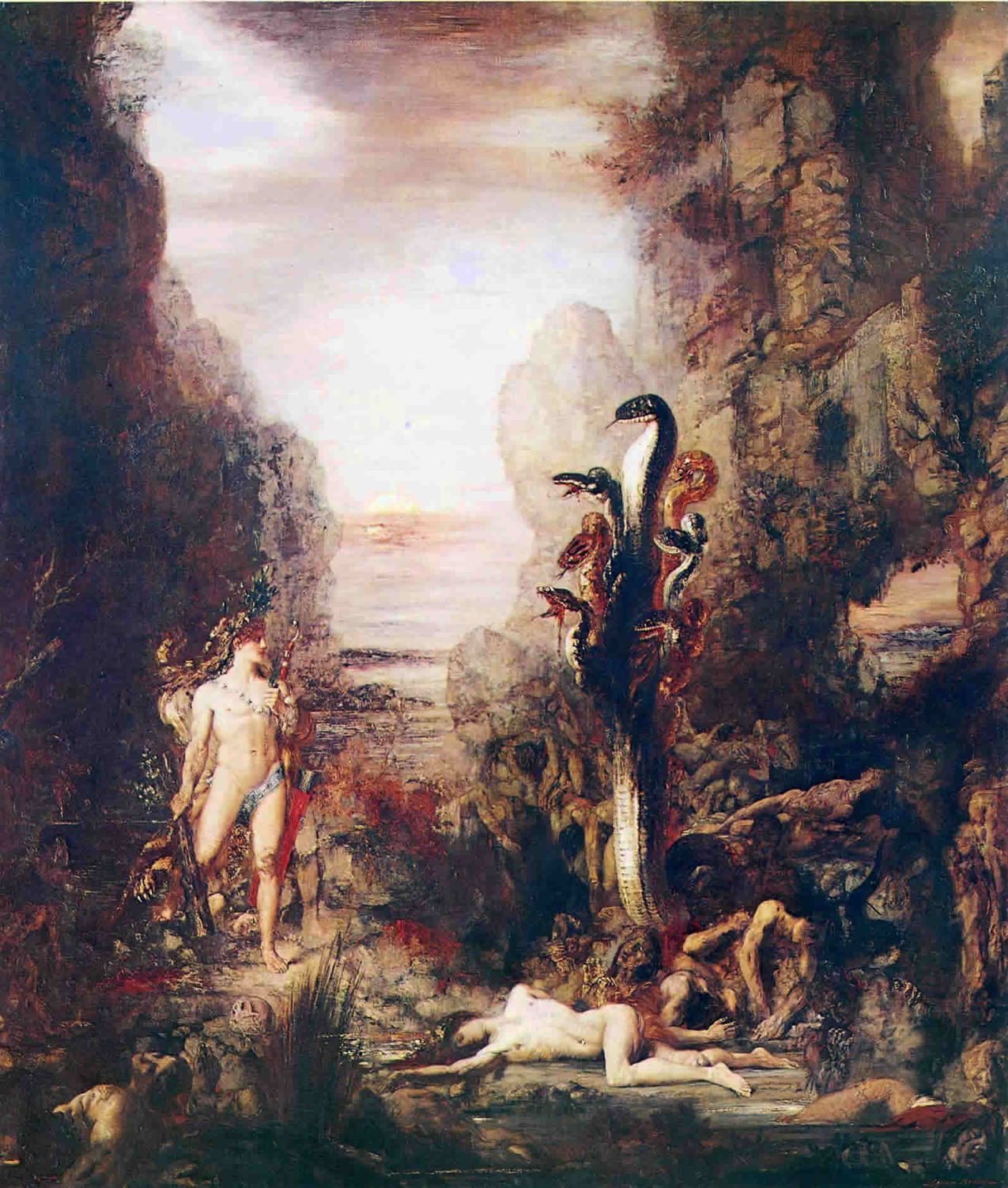
Gustave Moreau puts his canvas into its portrait orientation to emphasise the Hydra towering over Heracles, who is fully armed, with club, bow and arrows, and more. The moment chosen is the initial confrontation, with the hero staring steely-faced at the Hydra. This is consistent with Moreau’s aversion to a more theatrical treatment of narratives.
This was well-received and extensively debated at the Salon, even generating a long-standing controversy over its possible political connotations. It was suggested at the time that the Hydra represented the forces of anarchy behind the insurgency of the Commune in 1871. Others preferred instead that the Hydra represented Bismarck and the German princes behind the Franco-Prussian War of 1870.
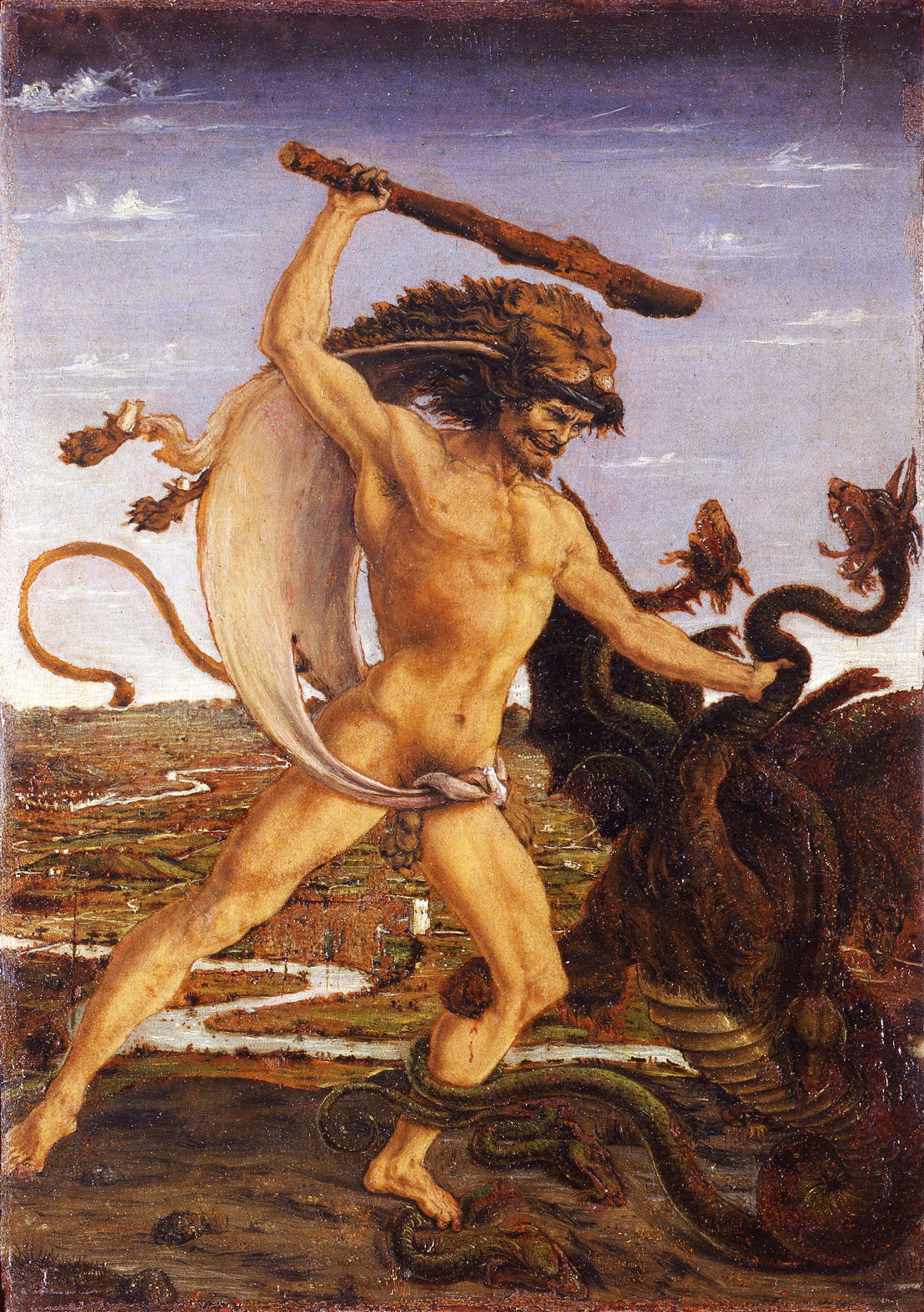
In Antonio del Pollaiuolo’s tempera painting of Hercules and the Hydra from about 1475, Heracles is proudly wearing his hard-earned lion skin and attacking one of the Hydra’s heads with his club, rather than severing it with his sickle or sword. The landscape behind them has many meandering rivers to imply that it’s marshy, as expected for Lerna.
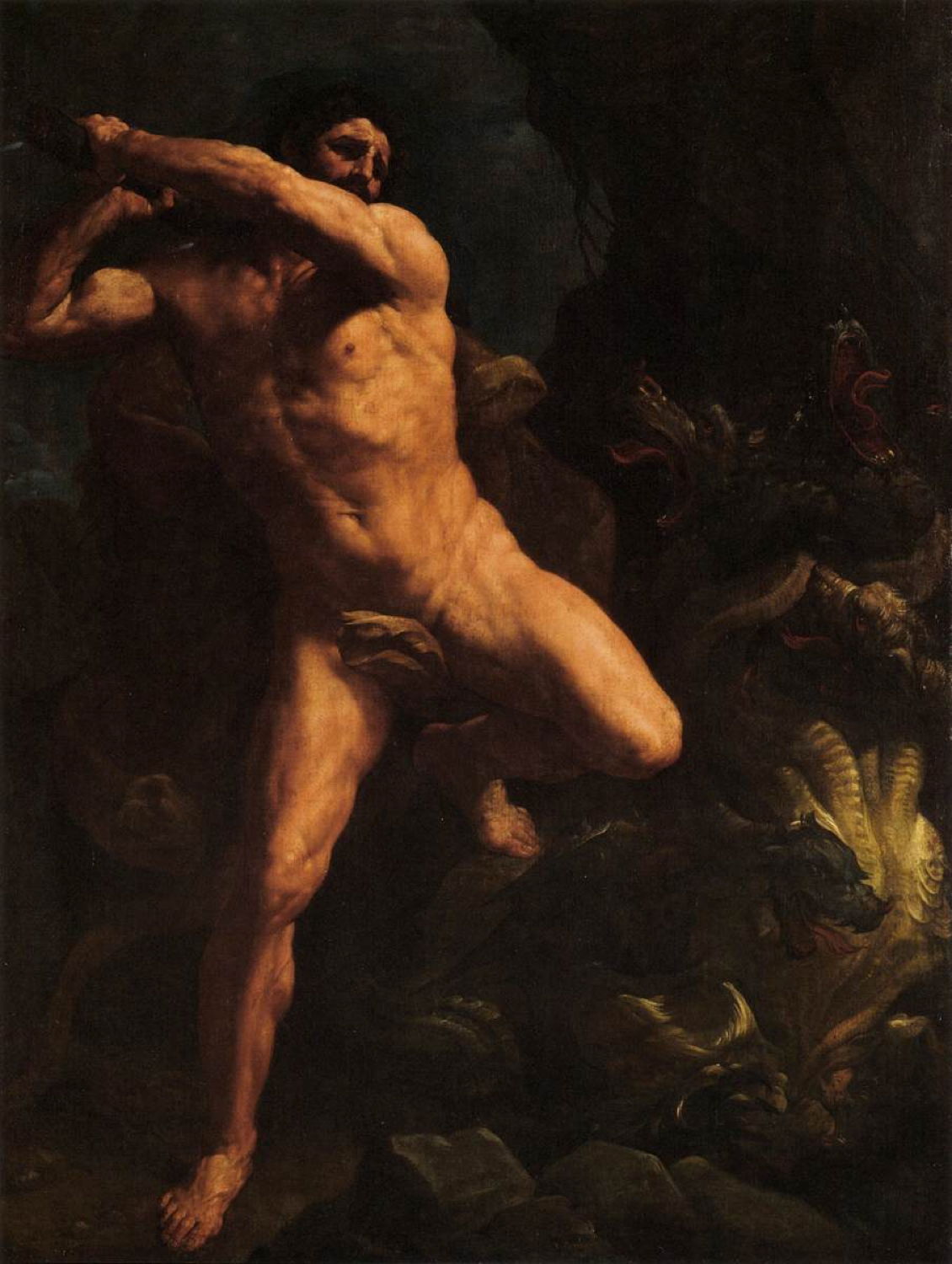
Guido Reni’s Hercules Vanquishing the Hydra of Lerna from 1617-20 is darker, making it harder to read its details. Heracles is still working alone, apparently wielding his club at the Hydra, shown at the right.
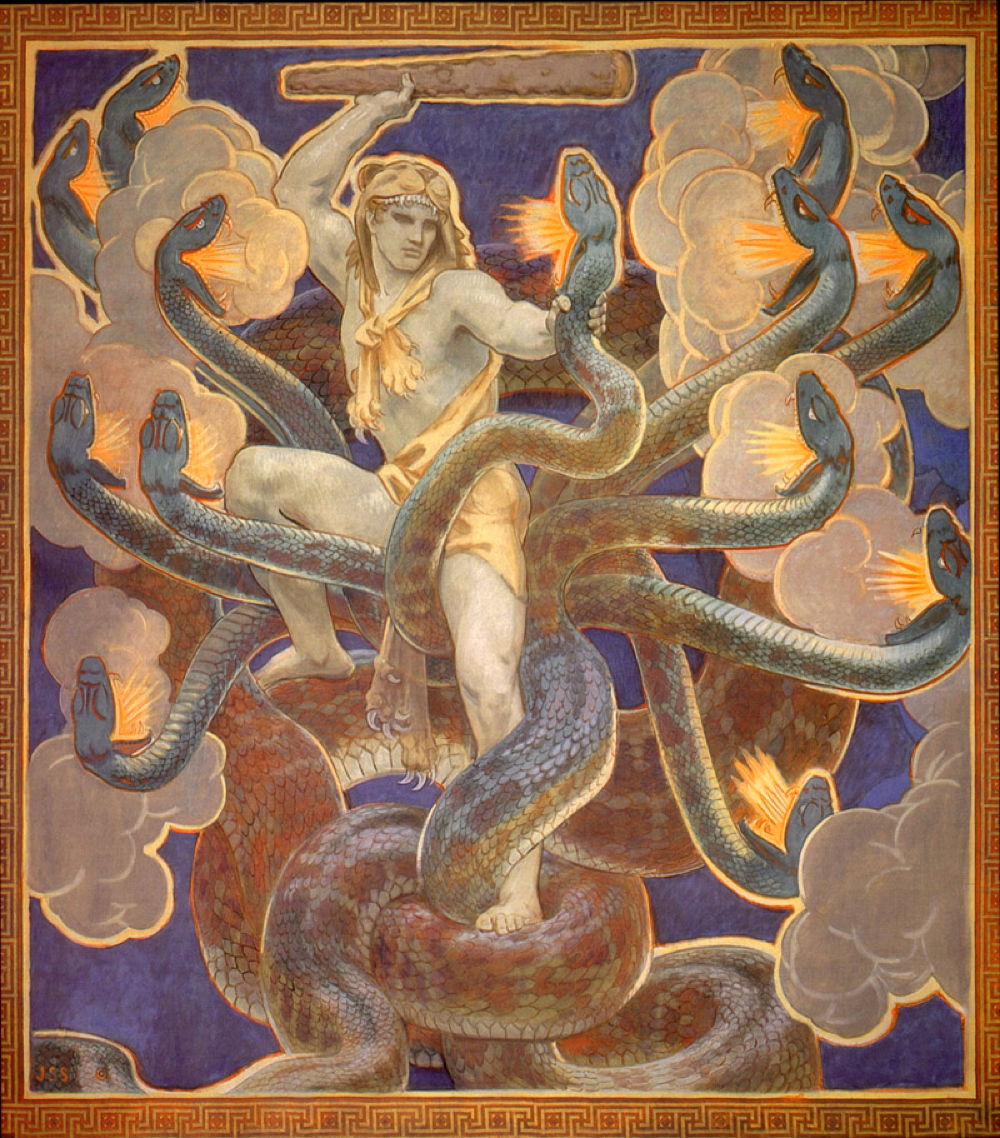
John Singer Sargent’s Hercules and the Hydra from 1921 is one of relatively few more modern depictions of this labour. He shows an early moment, as Heracles confronts the first of the Hydra’s heads with his club. There is no sign of Iolaus, and no head has been severed yet.
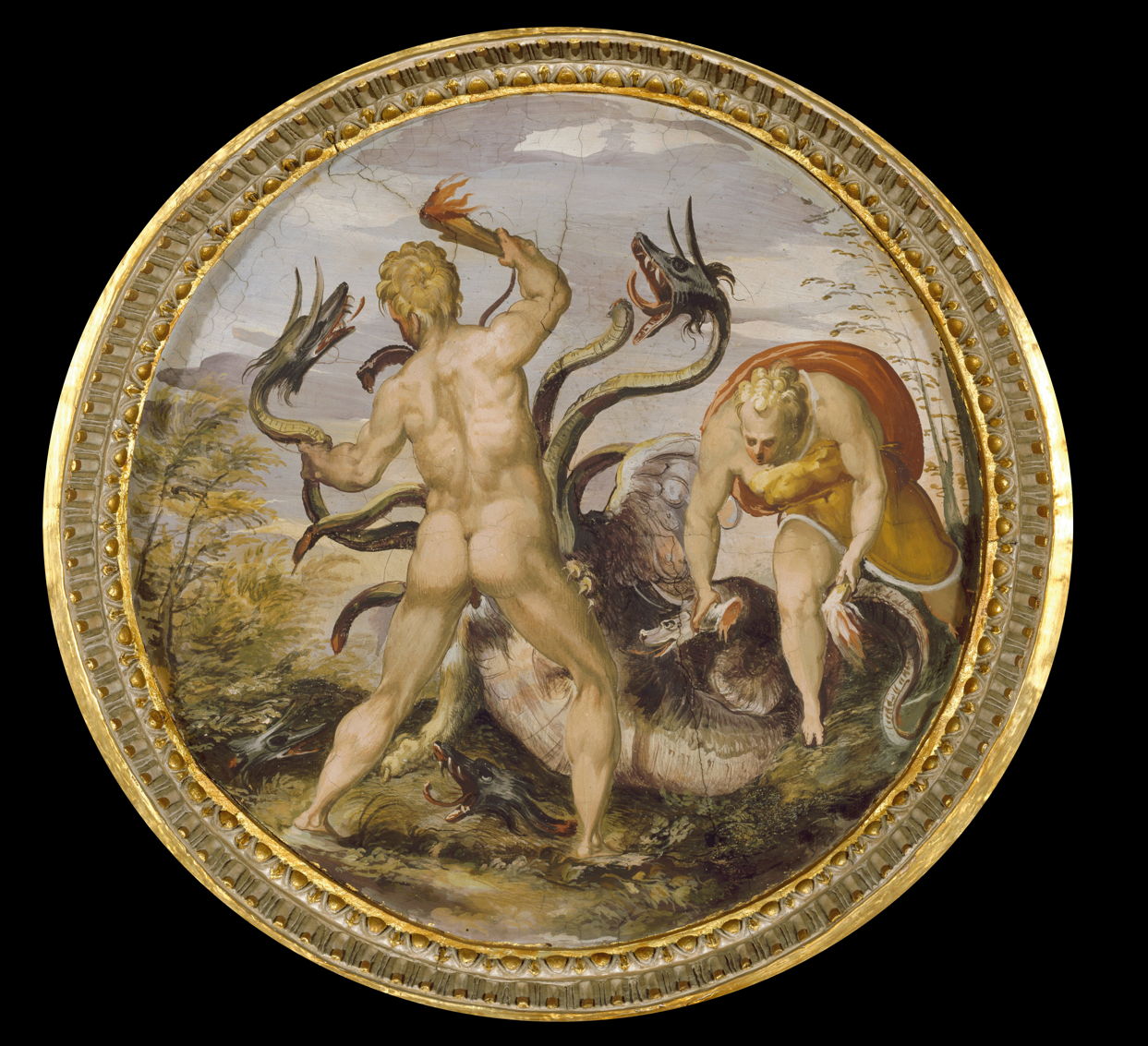
Marco Marchetti chooses a later moment in the story, in his Hercules and the Hydra from Lerna from 1555-56. Heracles, his back to the viewer, is using a burning brand to sear the Hydra’s heads, while his nephew appears to be gathering severed heads at the right.
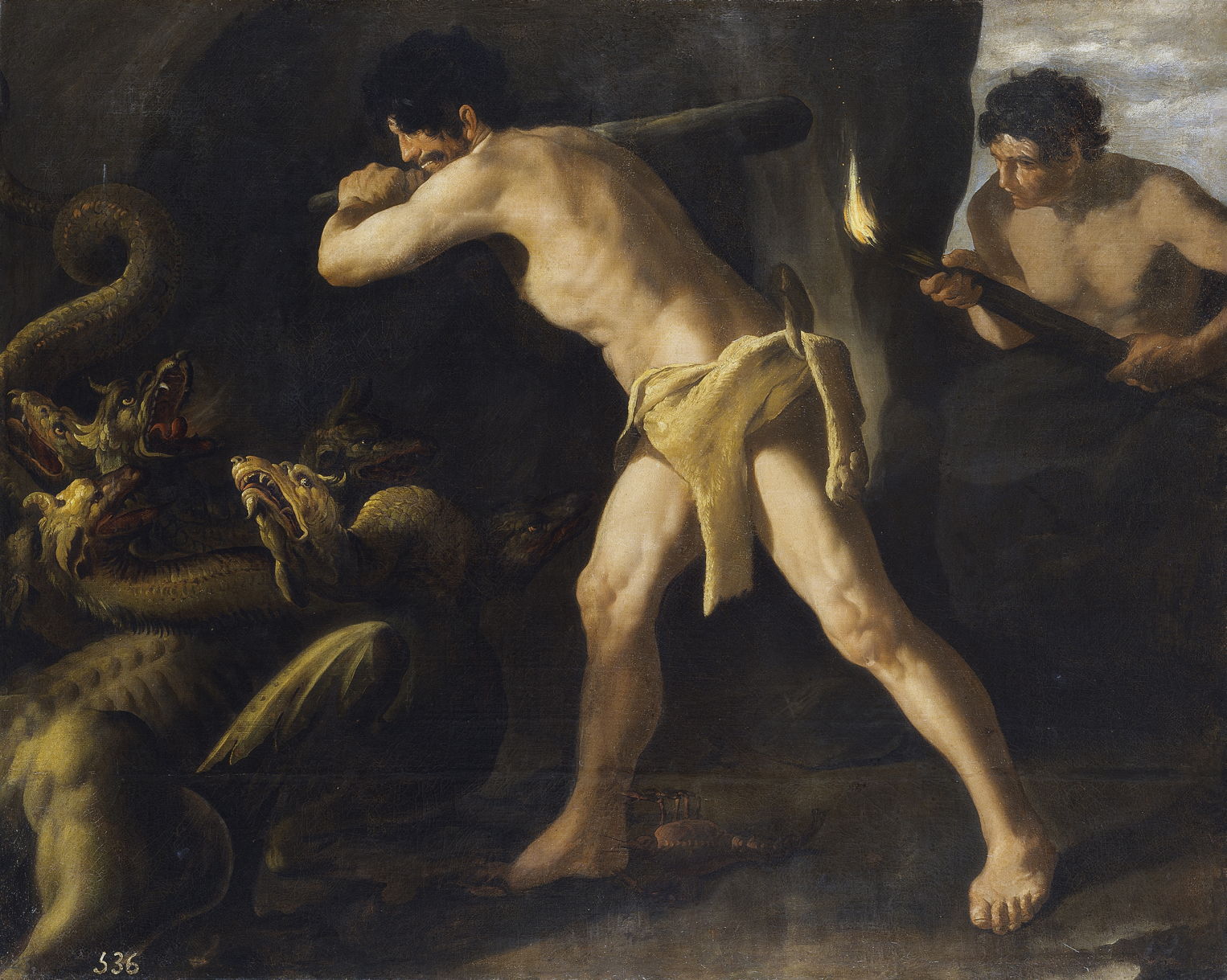
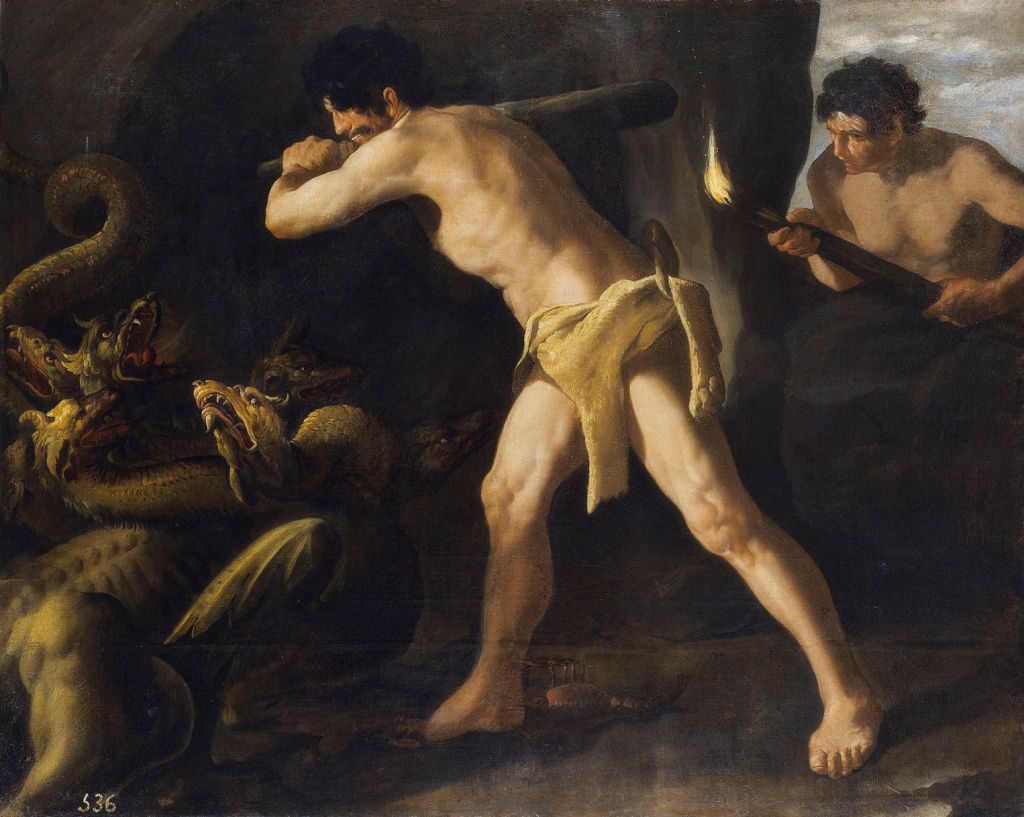
Francisco de Zurbarán also opts to include the pair working together in his Hercules and the Hydra from 1634, although their actions aren’t as well-coordinated, as Heracles is still trying to club the Hydra’s heads, while Iolaus is holding the firebrand ready to cauterise those removed by sickle or sword. The hero’s lion skin is more of a skimpy loincloth.
Capture the Ceryneian Hind
The third labour assigned to Heracles by Eurystheus was to capture alive an enormous hind, bigger than a bull and with golden antlers like a stag, near Ceryneia. Additions to the description of this fearsome beast include details such as hooves of bronze or brass, and that it snorted fire.
Because this hind was sacred to the goddess Artemis, Heracles hunted it for over a year before finally capturing it near the river Ladon. He then took it alive to King Eurystheus, so completing this challenge.
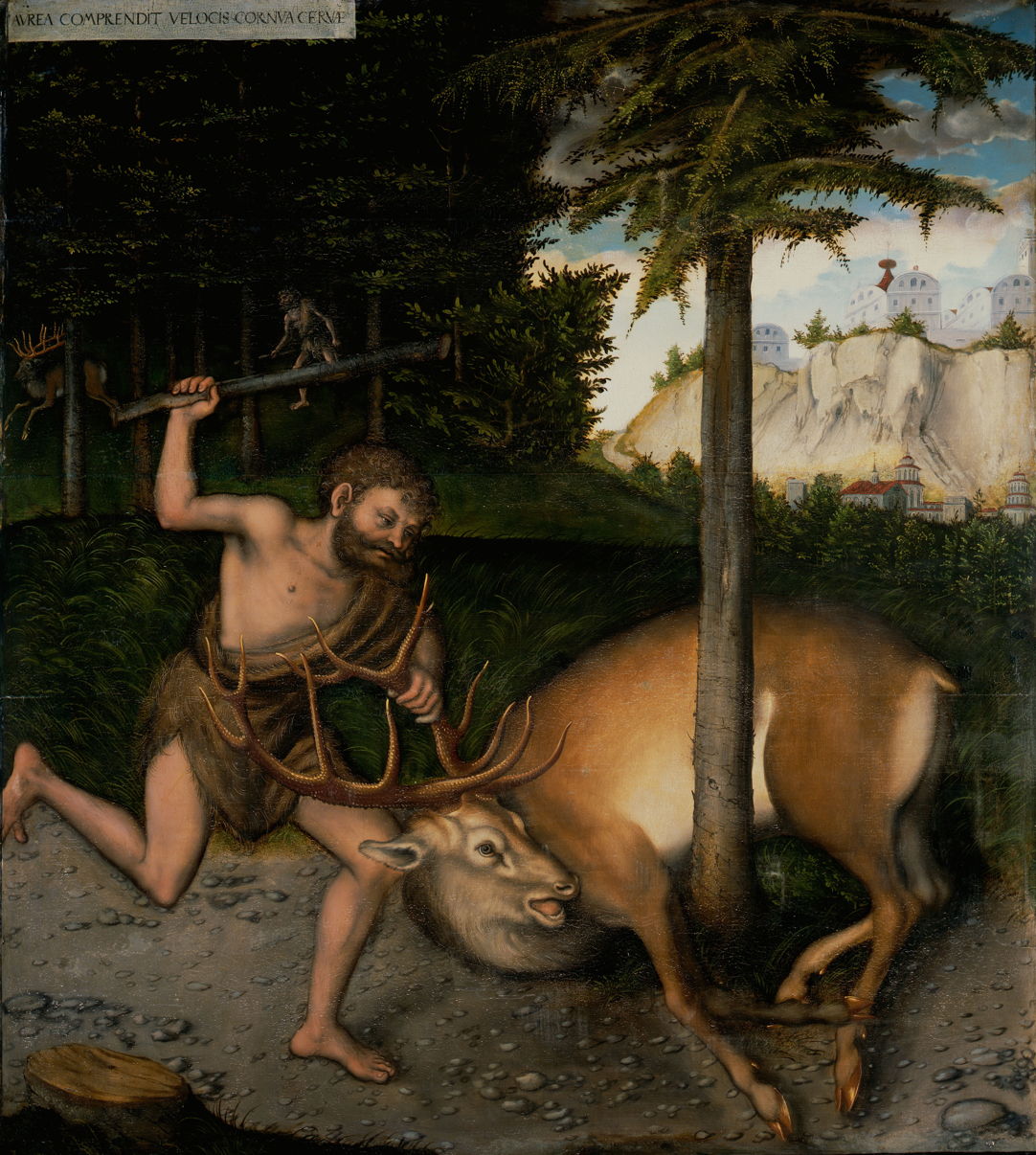
Although the title given to this painting by Lucas Cranach the Elder’s workshop is Hercules and the Arcadian Deer, this appears to show Heracles capturing the Ceryneian Hind, depicted using multiplex narrative technique. The first image of the hero shows him pursuing the hind in the dark wood, behind at the left. The second shows the two in the foreground, as Heracles swings his club at the captive animal.
The king next set Heracles his fourth task, to capture the Erymanthian boar alive.

