
We’re on the Isle of Wight, roughly half way along the northern coast of the English Channel, on our journey from Land’s End in the far west, to North Foreland at the extreme east. Here we’ll takea brief detour up the Solent to the centre of yachting at Cowes, due south from the major port of Southampton.
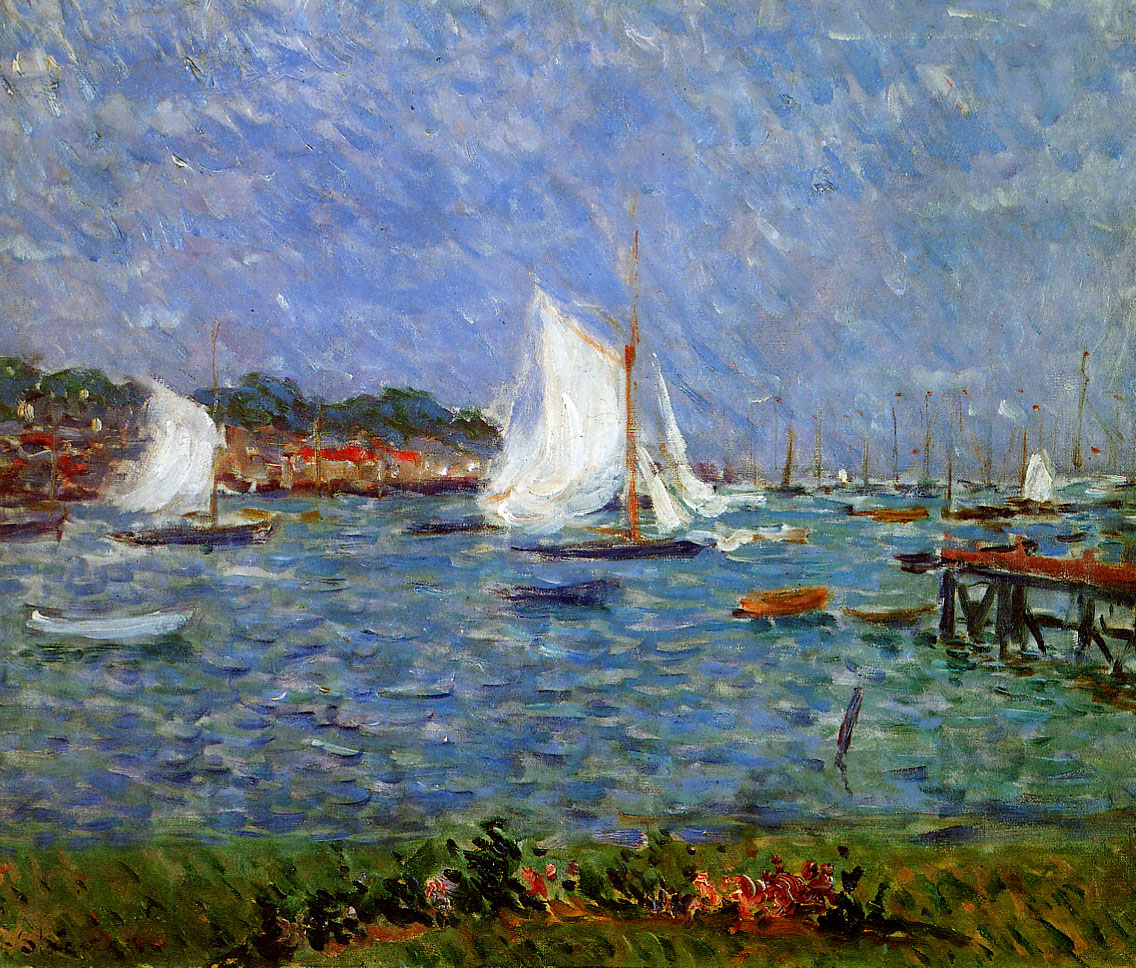
Yachting became a popular theme among British Impressionists. Philip Wilson Steer’s Summer at Cowes from 1888 is a fine early example, and looks west from what is now the ferry port of East Cowes, across the mouth of the River Medina towards the town of Cowes, by then the centre of English yachting.

When William Dyce was on the island painting a fresco at Osborne House, Queen Victoria’s holiday palace there, he took a few hours off to paint this fine watercolour sketch of a view across Sandown Bay to another chalk landmark, Culver Cliff, here seen from low on the beach at Shanklin.

Richard Burchett’s View Across Sandown Bay, Isle of Wight also shows this more popular but less scenic south-east coast of the Isle of Wight, where its chalk spine drops away into the Channel.
Travelling east along the mainland coast again, there’s a series of major resorts such as Bognor Regis, Worthing, and Brighton, known appropriately as London-on-Sea from its popularity with those living in the capital.

Walter Sickert spent much of the summer of 1915 visiting Brighton, where he made studies for Brighton Pierrots. This is a commissioned copy of his original, which remains in a private collection, and like that was painted following his return to his London studio. It shows a small group of entertainers who performed daily on a temporary stage set up on the beach, which Sickert observed and sketched over a period of about five weeks.
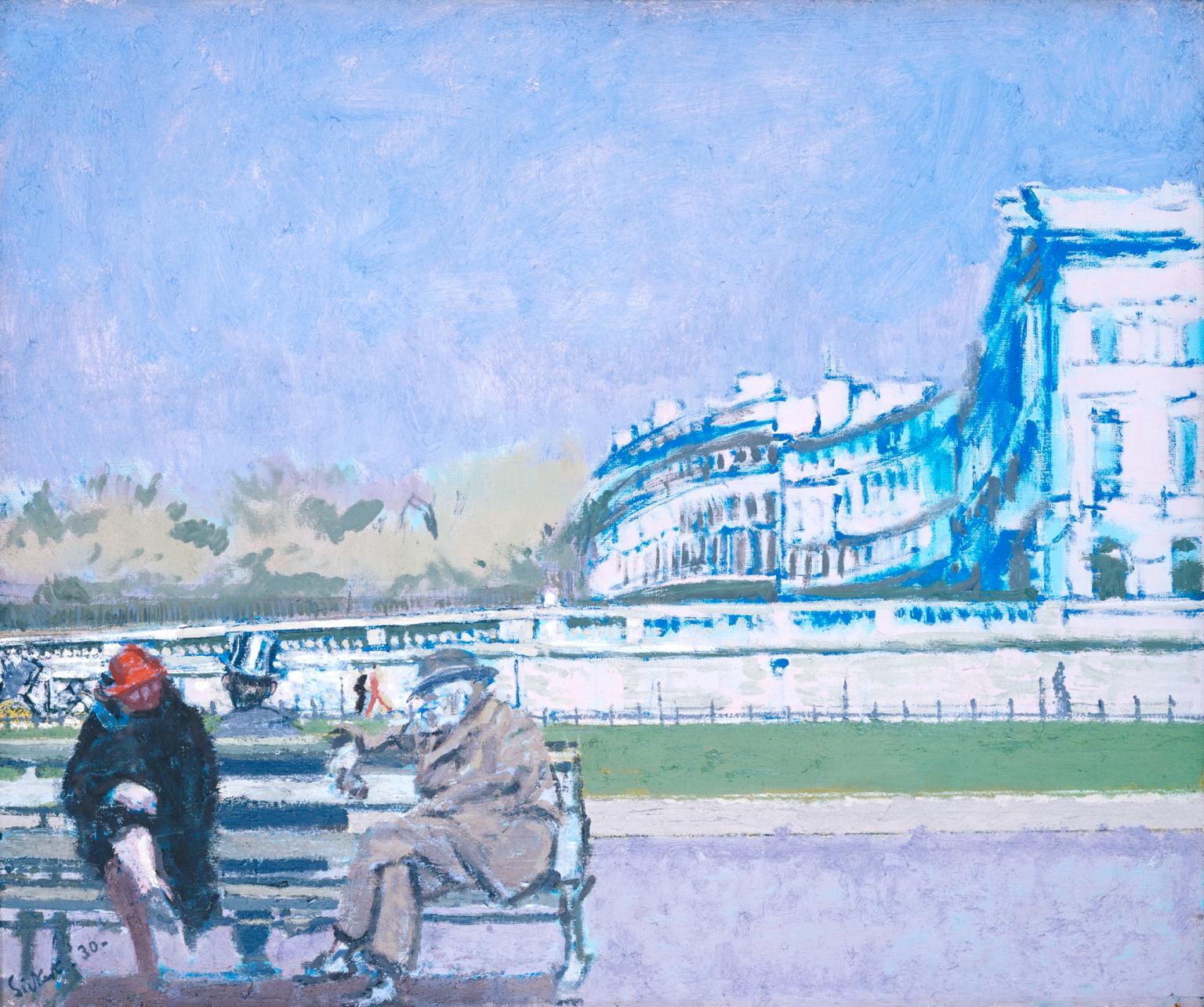
Sickert continued to visit the south coast of England after the war. In 1932, he painted this late view of the adjacent town, The Front at Hove (Turpe Senex Miles Turpe Senilis Amor), apparently based on sketches that he had made during a visit in 1926. This shows the Brunswick area, looking from the sea towards the Regency façade of Adelaide Crescent, in Hove. Its Latin sub-title is a quotation from Ovid’s Amores, generally translated as An old soldier is a wretched thing, so also is love in old age, and is reflected in the decay of those once grand houses, as much as in the figures. Sickert probably intended the bearded man in a brown coat and hat, on the right, as a self-portrait.

Much of the coast to the east of the Isle of Wight is flat and has had limited attention from major landscape painters. This is shown well in Paul Nash’s aerial view, The Shore (1923), one of the many strongly geometrical paintings and prints he made of the south Kent seafront and coastal defences. Stark straight lines of concrete divide the canvas up into a series of flat planes; even the sea, caught in a moment of calm, forms a plane.

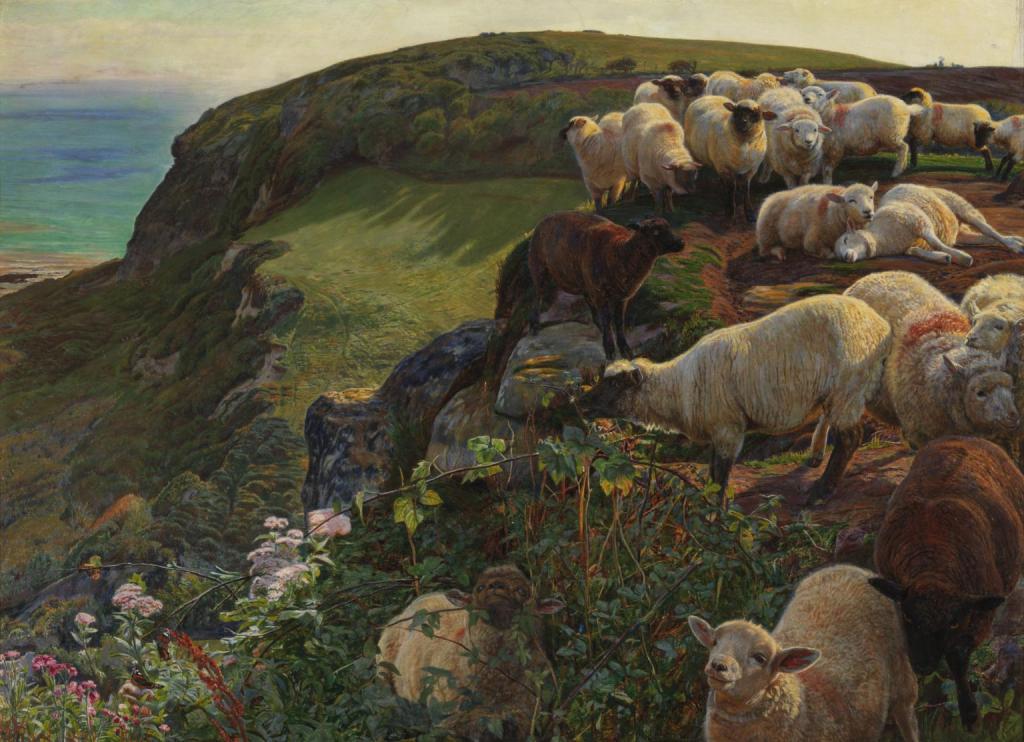
Further to the east, the coast rises again in a succession of cliffs, where William Holman Hunt’s Our English Coasts, 1852, was painted that year. Although this doesn’t quite depict a real view, Hunt based it on the Lovers’ Seat, overlooking Covehurst Bay, near Hastings. It was near here the Norman king William ‘the Conqueror’ landed in 1066 to win the crown of England.
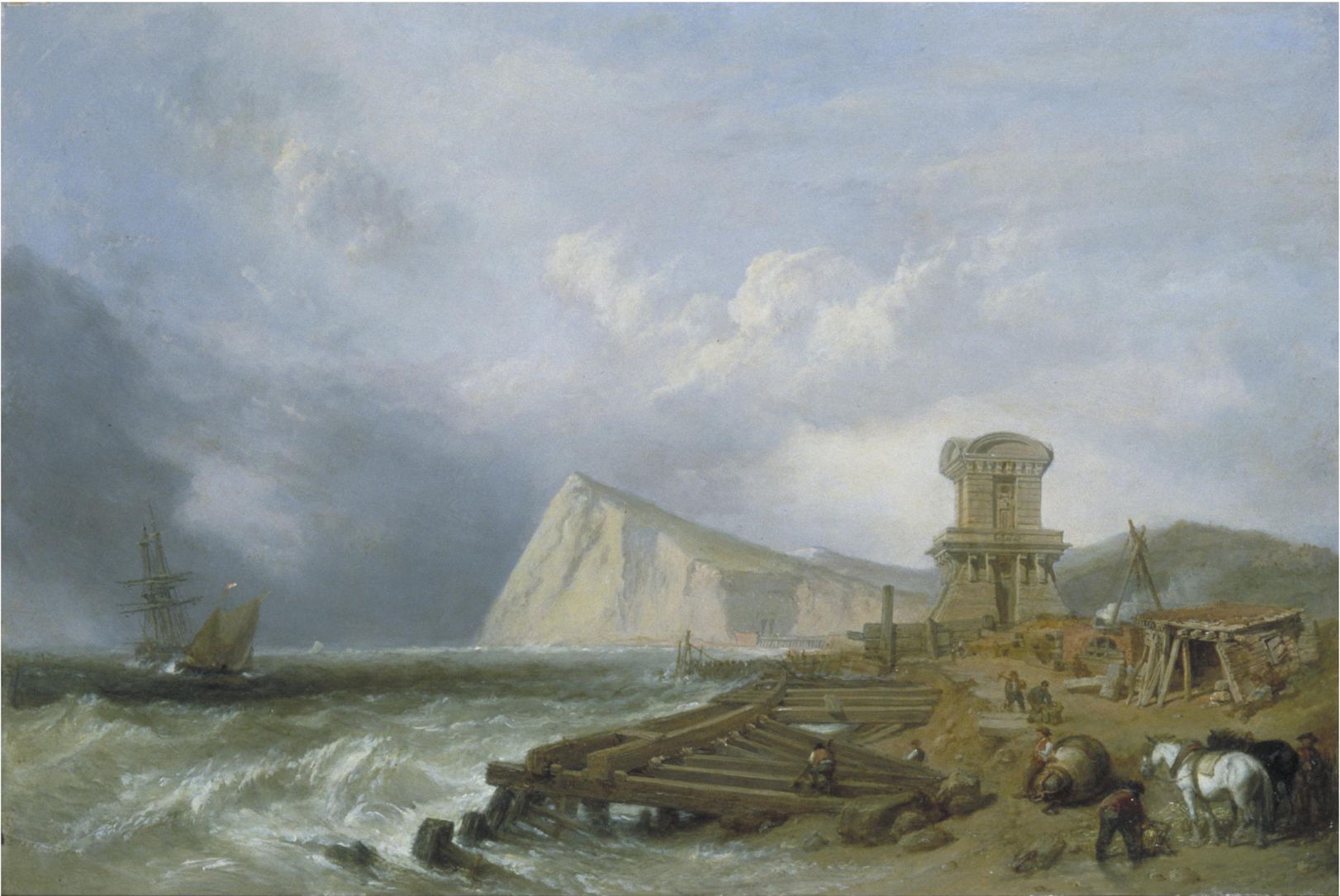
Clarkson Stanfield painted two versions of The Seashore at Dover in about 1849, one which is now in the National Maritime Museum in London, and this slightly smaller version. It’s a windy day, with scattered and blustery showers. The famous white cliffs of Dover rise high in the distance, as the wind blows the tops off the small waves in the foreground. The construction work in the foreground relates to the final section of the London to Dover railway, which made travel from England to France far quicker and more convenient.

This is William Dyce’s finely detailed view of Pegwell Bay, Kent, out of season at the end of a fine day in early October. Visitors to the beach are wrapped for warmth as well as modesty. In the distance, a group of donkeys are being taken to graze for the night, after the day’s work being hired out for children to ride. In the foreground, at the left, a child holds a spade, although there is precious little sand suitable for sandcastles.
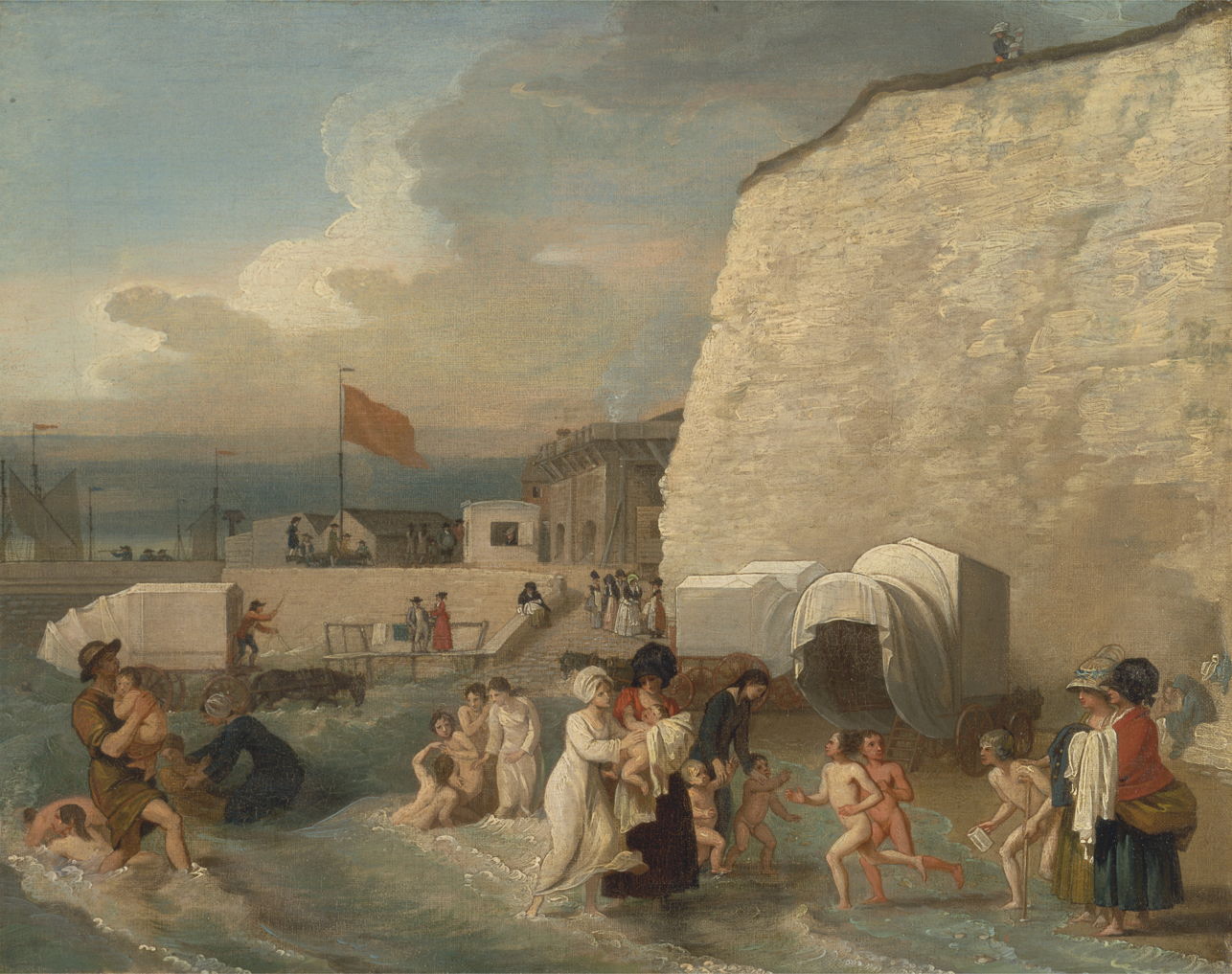
Benjamin West’s painting of The Bathing Place at Ramsgate, from about 1788, appears to have been commissioned by William Russell Birch (1755-1834) for a collection of engravings of British landscapes, published in 1790 under the title Délices de la Grande Bretagne. West shows the novel experience of bathing in the sea from one of the covered horse-drawn ‘bathing machines’, at the nascent resort on the Kent coast at Ramsgate. This had been growing in popularity following its adoption by members of the royal family and nobility, despite the typical English weather seen here.
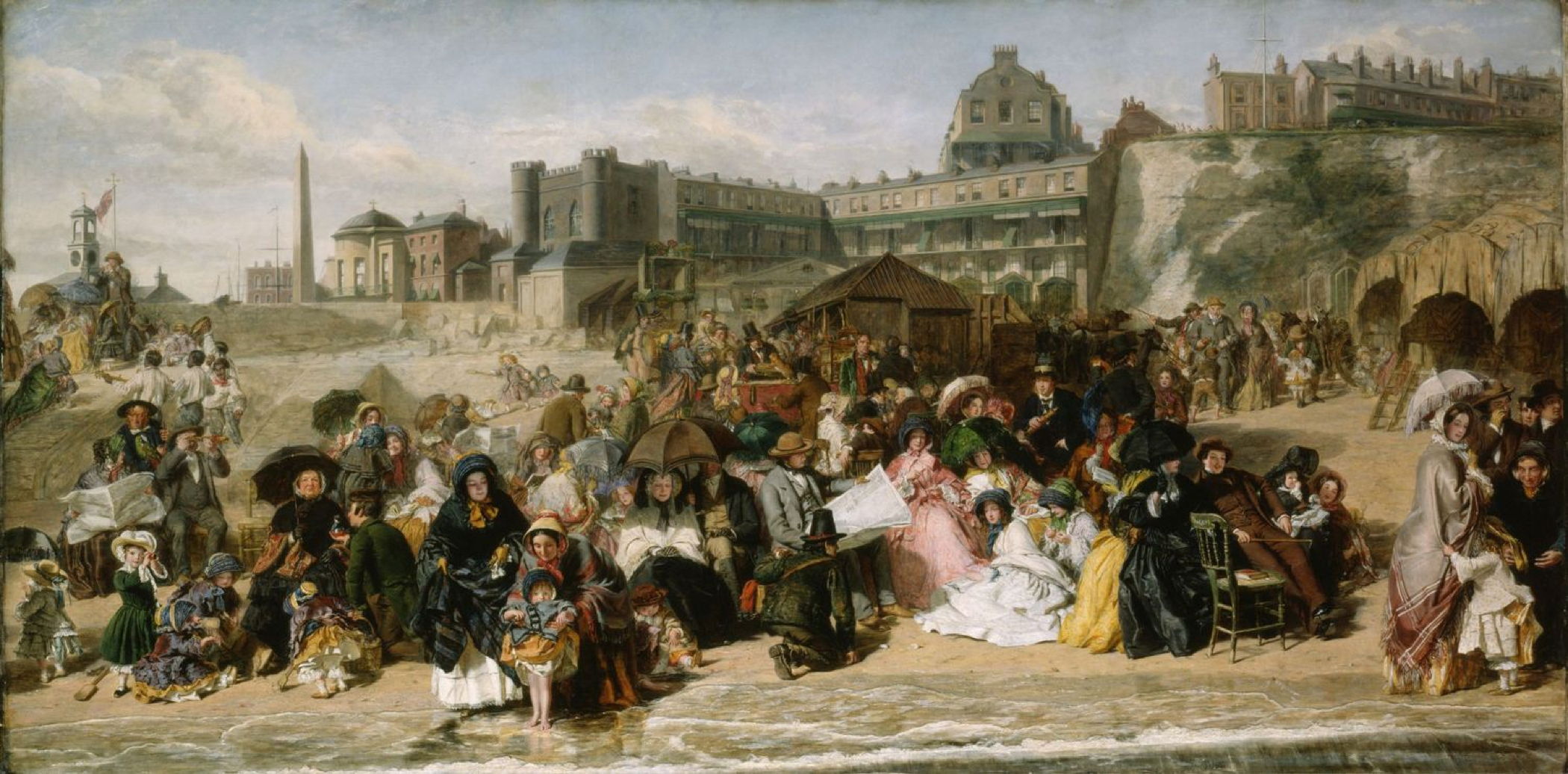
The railway reached Ramsgate in 1846, and with it came crowds from London in search of a ‘cure’ from its waters. William Powell Frith holidayed there in 1851, when he made his first preparatory sketches. On its beach is an eclectic mixture of different classes, reflected in their clothing and activities. Many of these are stereotypes who became stock characters in his paintings, and Frith included himself as the man behind the group at the far right.
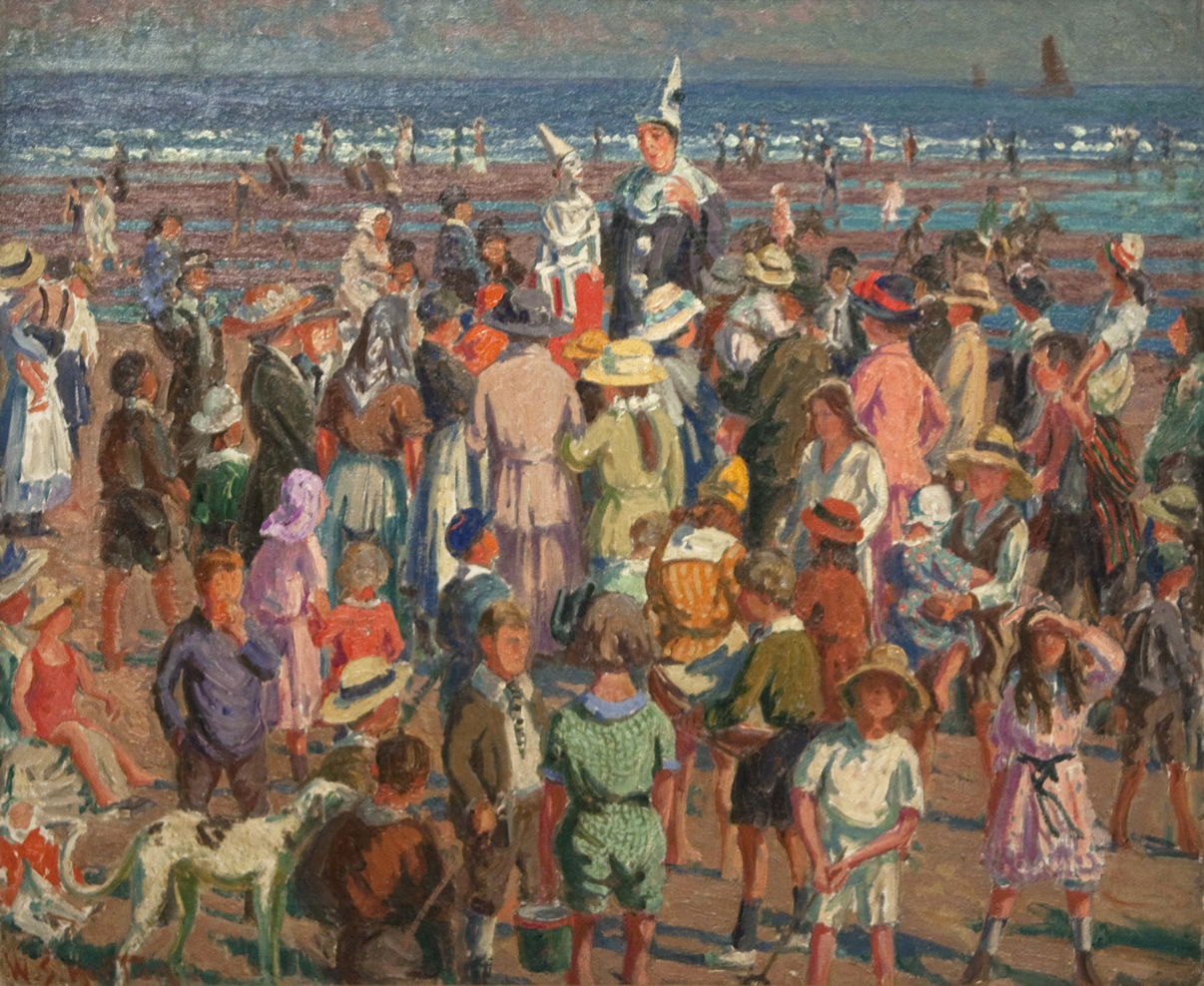
In 1920 William S Horton painted this Punch and Judy show taking place on the beach at Broadstairs, Kent, a traditional family beach resort at the extreme eastern tip of the south-east coast of England. Most if not all are visibly well-dressed and hardly working class.
With that comes our journey’s end.
 The Eclectic Light Company