

Painterly styles with visible brushstrokes and other marks continued in European painting right up to the changes brought by Impressionism. Although these remained centred on Venice, in the north they were adopted by portrait painters of the eighteenth century, but were generally avoided in landscape and history painting.
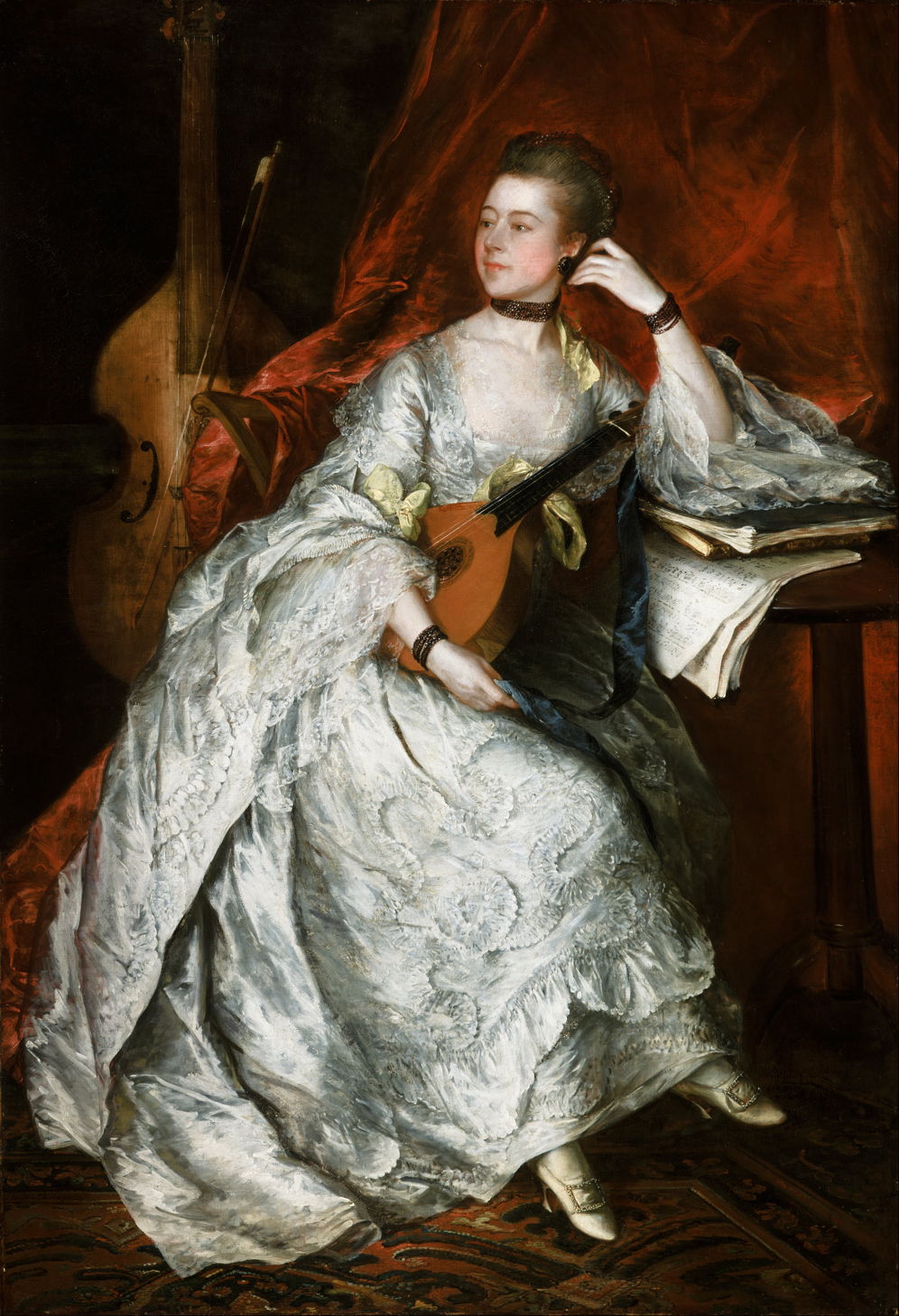
Thomas Gainsborough’s portrait of Ann Ford (later Mrs. Philip Thicknesse) from 1760, above and detail below, shows plentiful brushstrokes, particularly towards the lower edge of her dress.
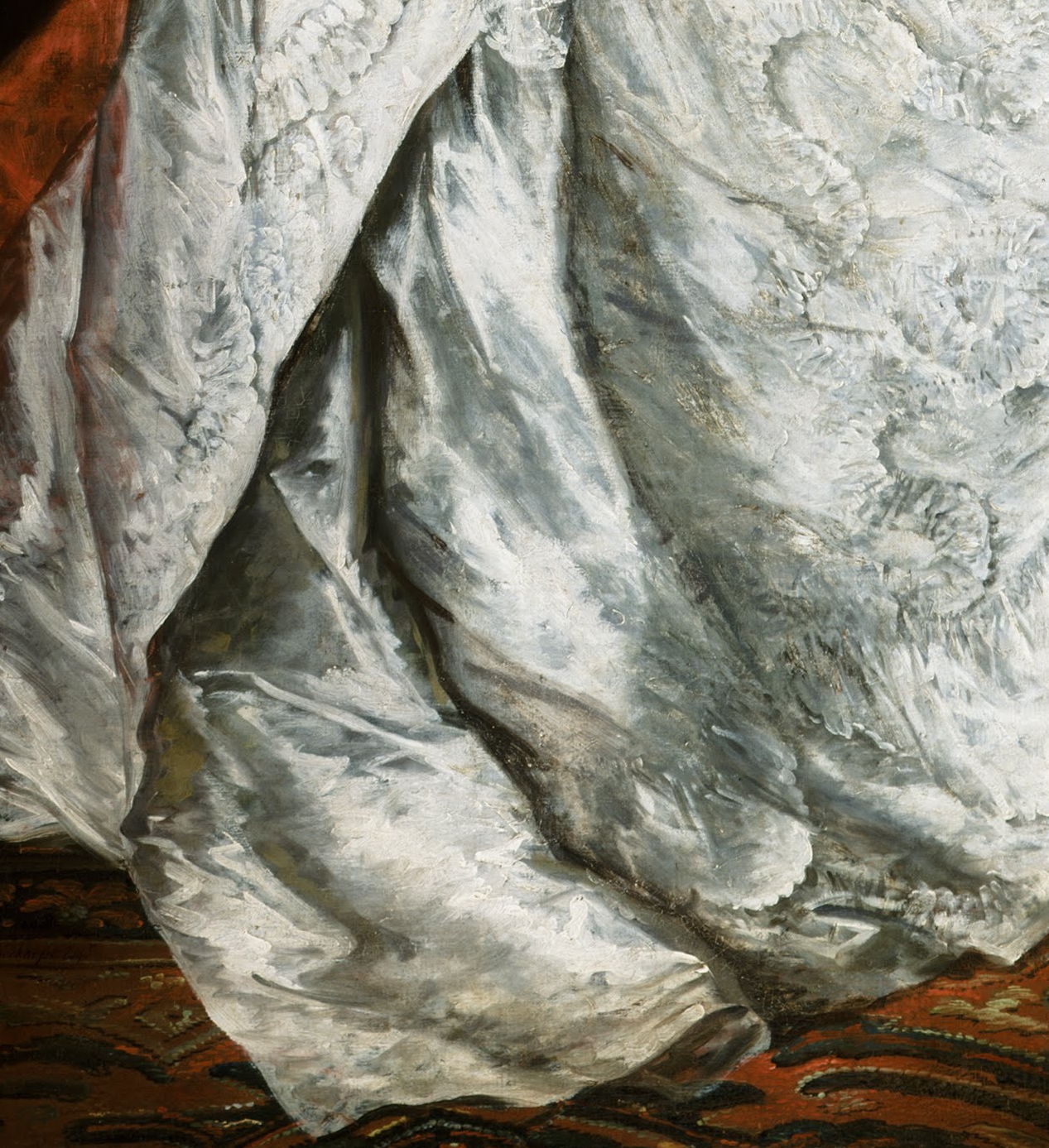

His portrait of Mary Little, Later Lady Carr (c 1763) is similarly painterly in her dress. Despite these, Gainsborough’s reputation was for painting in thin layers, and for the fine detail in his landscapes, not this Venetian boldness.
His contemporary Joshua Reynolds set out to excel in his painterly style. Alexandra Gent’s chapter in Davis & Hallett (2015) makes it clear that Reynolds was influenced in his painting technique by the late Rembrandt and by Titian’s bravura brushwork. She writes: “Over his career Reynolds became a masterful handler of paint. Vigorous, textured brushmarks are frequently visible in thick passages of paint and testify to his often dynamic painting style.” “Reynolds frequently used stiff paint, laid on in swift brushstrokes, to produce textured effects and broken lines, in a technique that surely reflects his admiration for Titian’s rapid paint application.” (pp 46, 47.)

In his portrait of Lady Elizabeth Delmé and Her Children (1777-9), above and detail below, Reynolds does just that, and not only in the clothing, but in their hair, and the background.


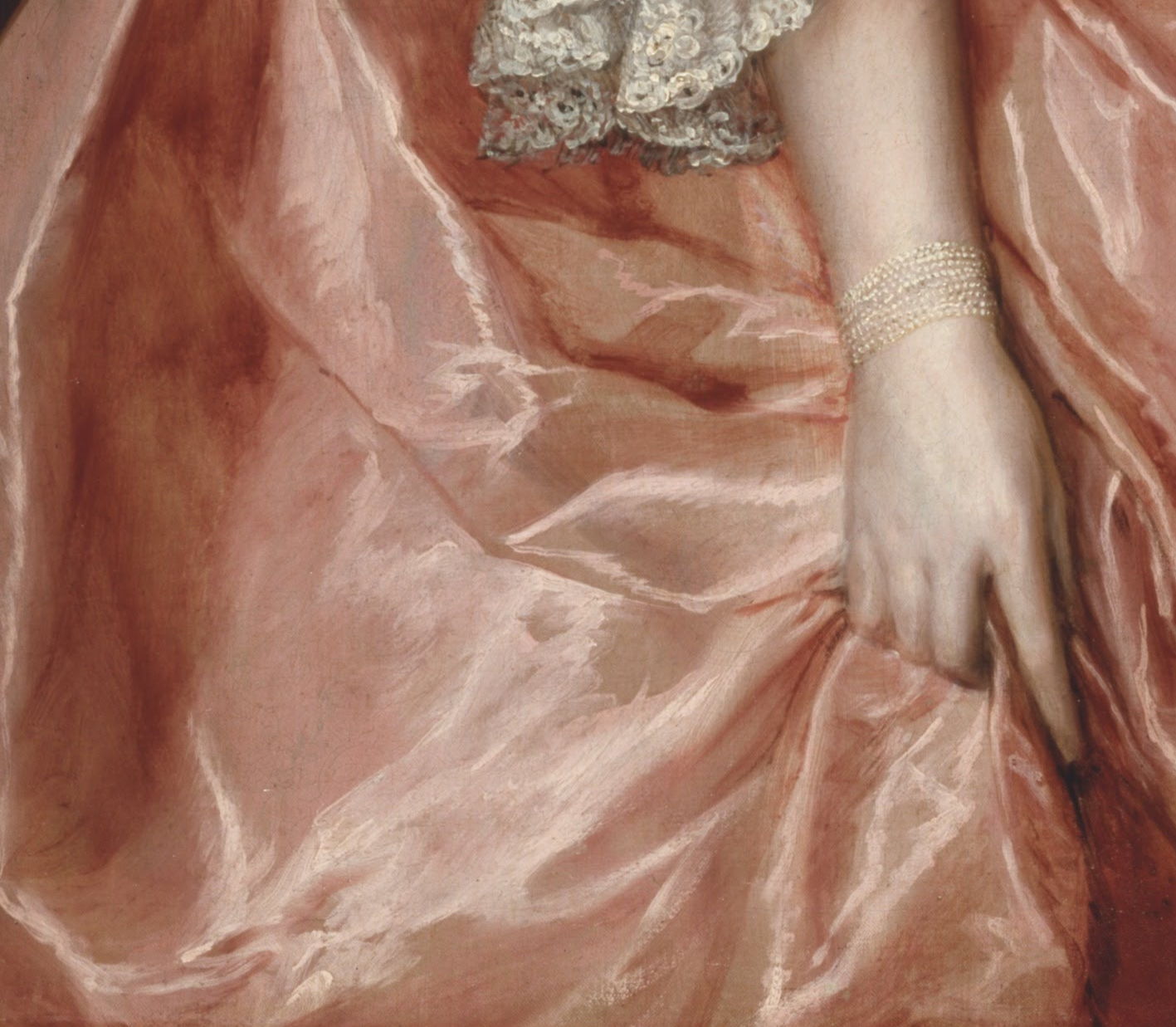
So too in Elizabeth, Countess of Warwick (c 1780), above and detail below, in her hat and its extraordinary ribbons and feathers.
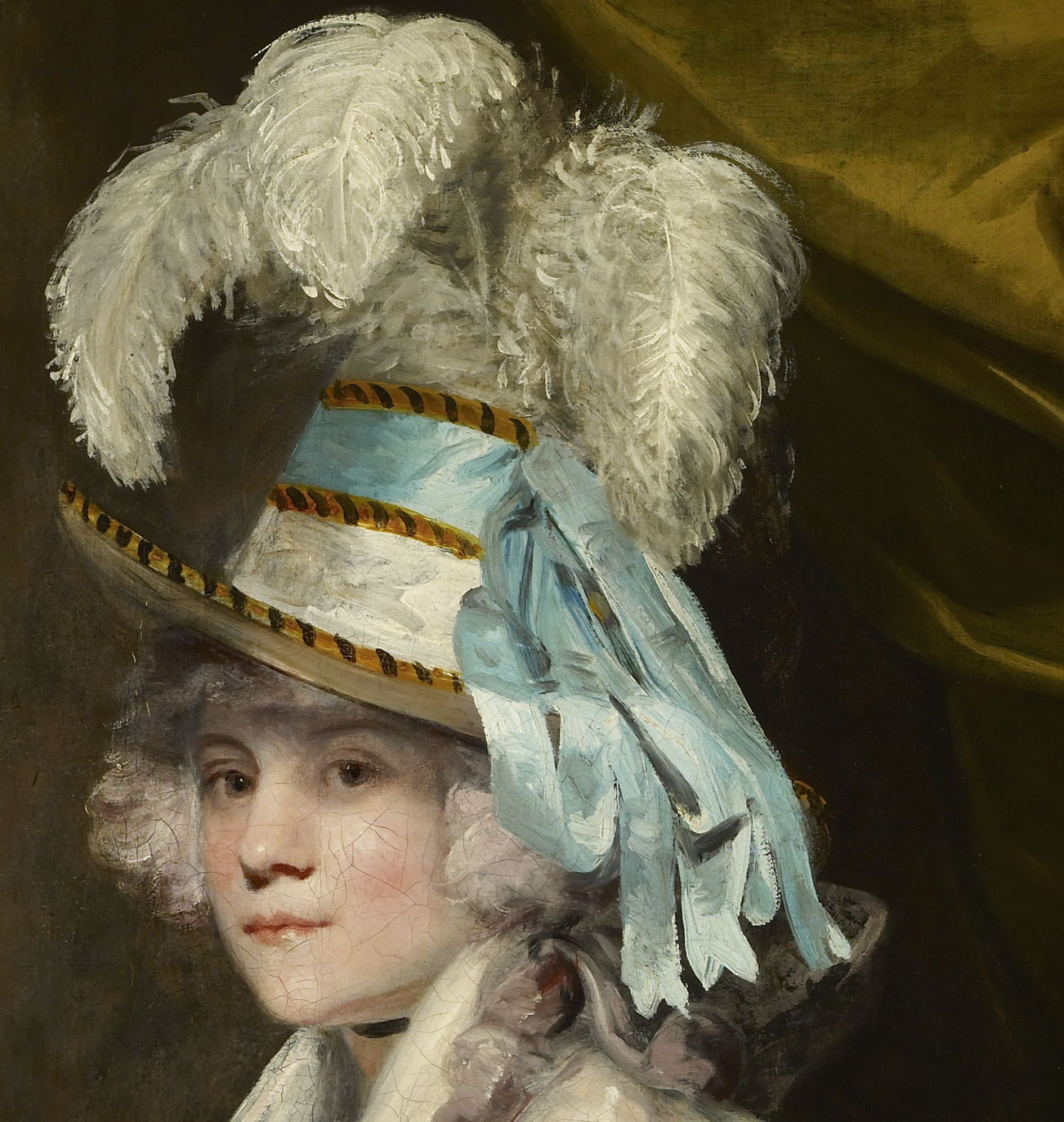
However, accounts of how Reynolds’ portraits were made suggest this brushwork may not be entirely his own. While Reynolds undertook the painting of the face and other key parts of the subject, clothing may have been painted from a model by one of his pupils, Giuseppe Marchi his studio assistant, or by Peter Toms, whom he employed as a specialist drapery painter.
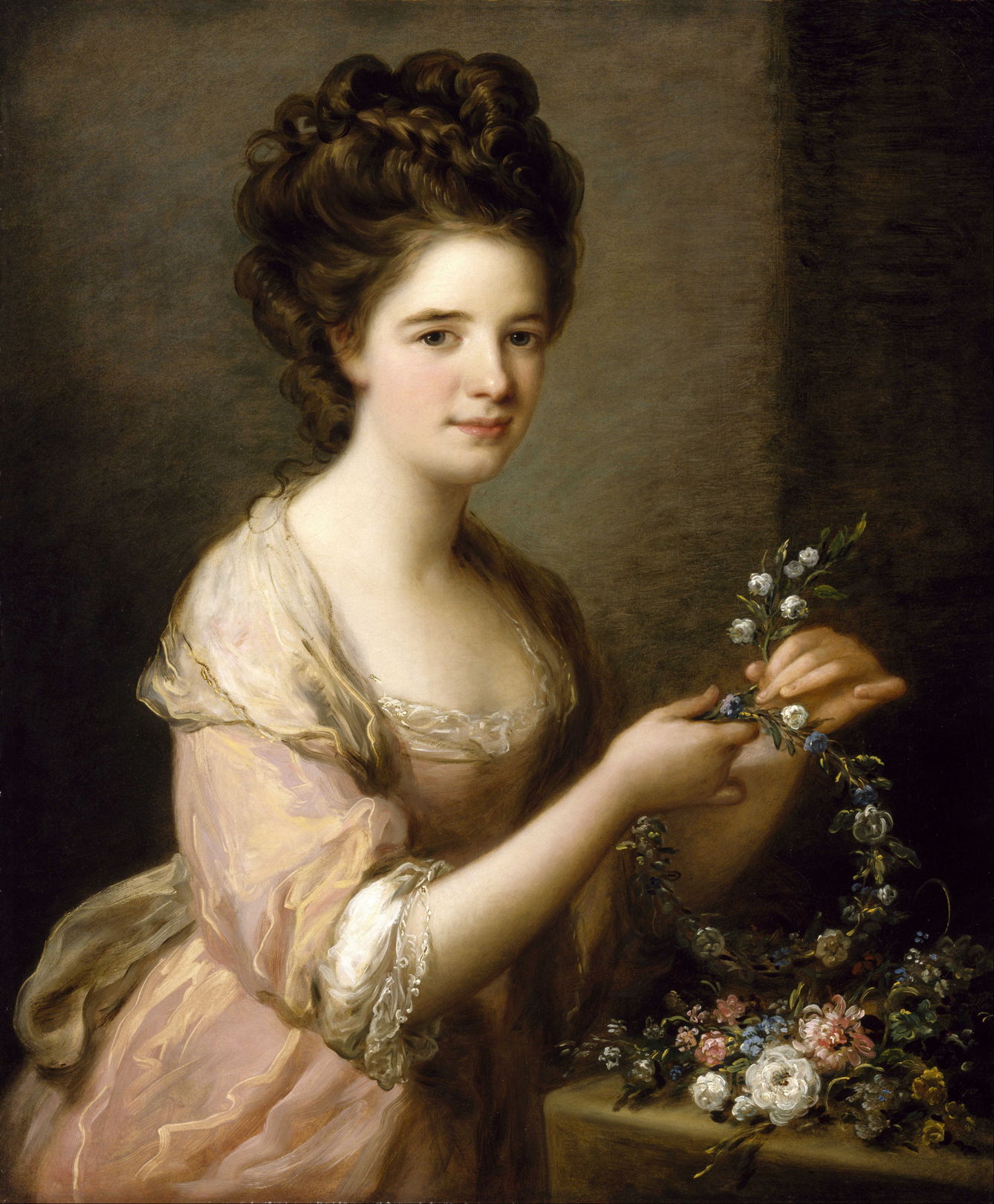
Another hugely popular portrait painter of the day, Angelica Kauffmann was Swiss by birth, but took Europe by storm from London. Her Portrait of Eleanor, Countess of Lauderdale (c 1780-1) is contemporary with Reynolds’ work, and if anything is even more painterly in her treatment of the clothing, but only in her portraits, never in her history painting.
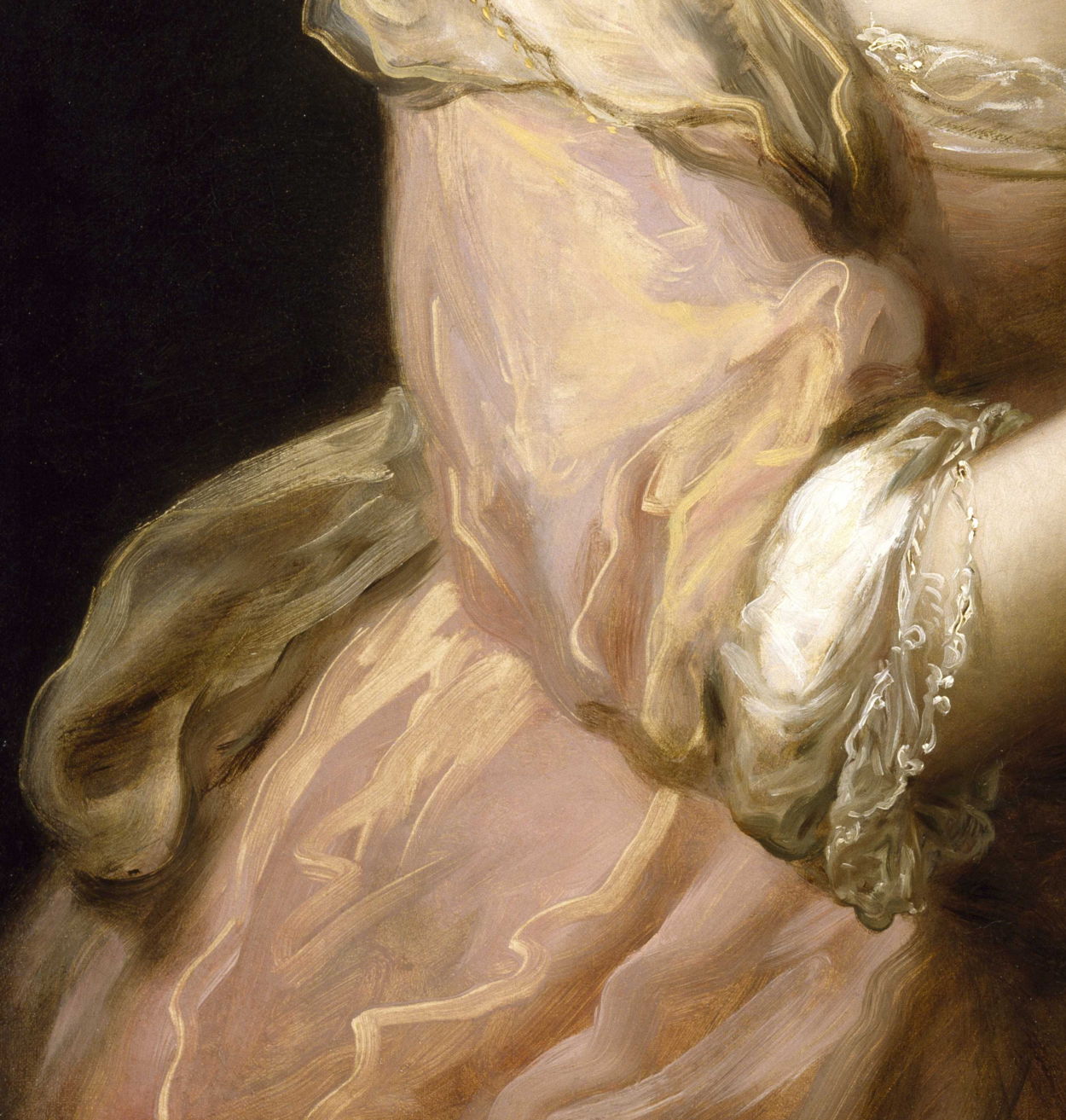
The arrival of Neo-Classicism didn’t change this either.

Looking at Jacques-Louis David’s paintings, he showed no tendency to the painterly in his history and other narrative works, but brushstrokes start to appear in the hair of Suzanne Le Peletier de Saint-Fargeau (1804).

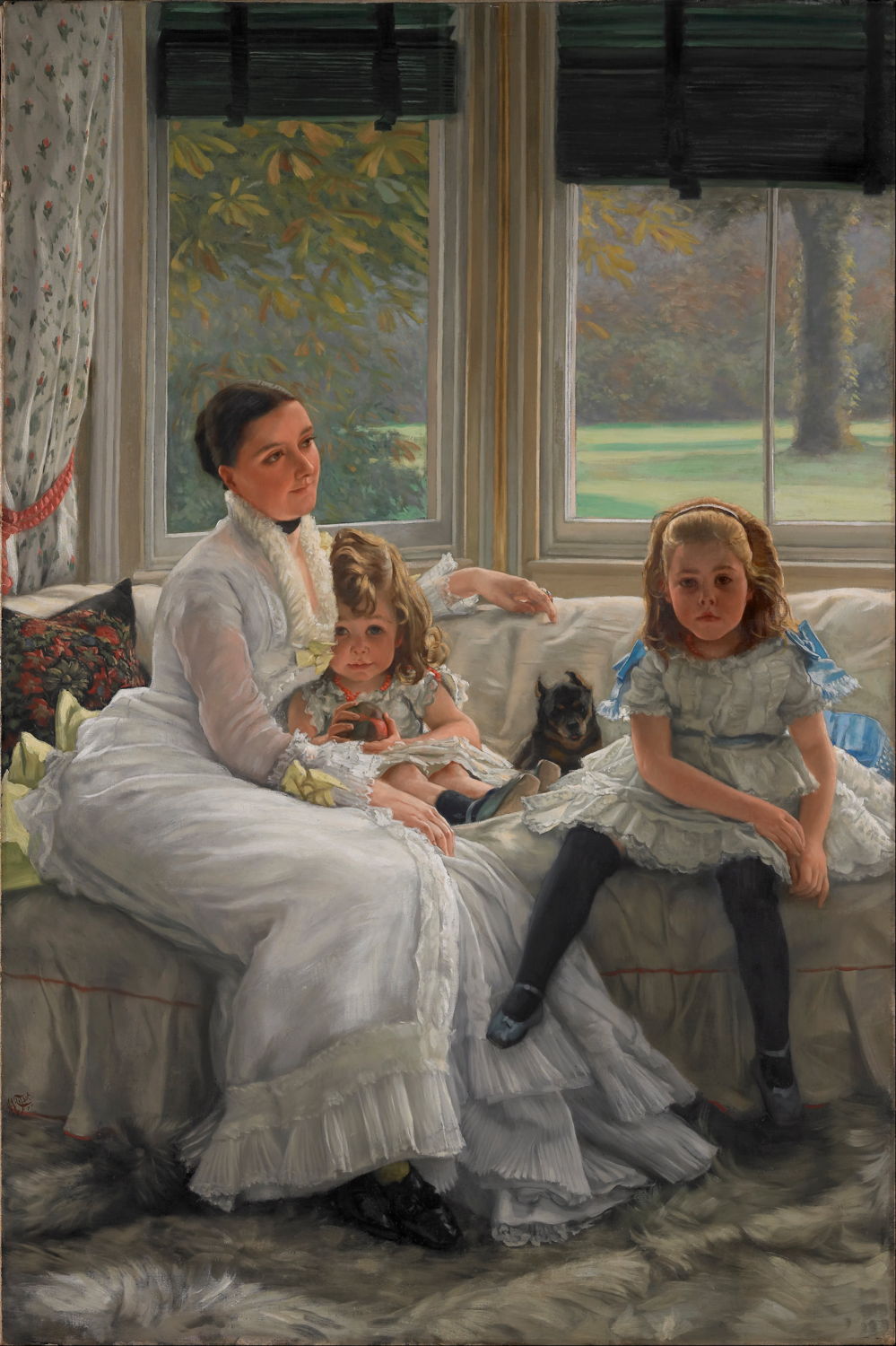
This practice continued well into the early years of Impressionism, when James Tissot’s Portrait of Mrs Catherine Smith Gill and Two of her Children (1877) shows how painterly were his textiles, hair, and background.

References:
Davis L & Hallett M (2015) Joshua Reynolds: Experiments in Paint, The Wallace Collection and Paul Holberton. ISBN 978 0 9007 8575 7.
Hollander A (2002) Fabric of Vision. Dress and Drapery in Painting, The National Gallery Company. ISBN 1 85709 907 9.

