

For Berthe Morisot 1874 was a turning point. After years of modest success exhibiting in the Salon, her submission that year was rejected. Instead she joined the first Impressionist Exhibition, and in December married Eugène, brother of her close friend and mentor Édouard Manet.
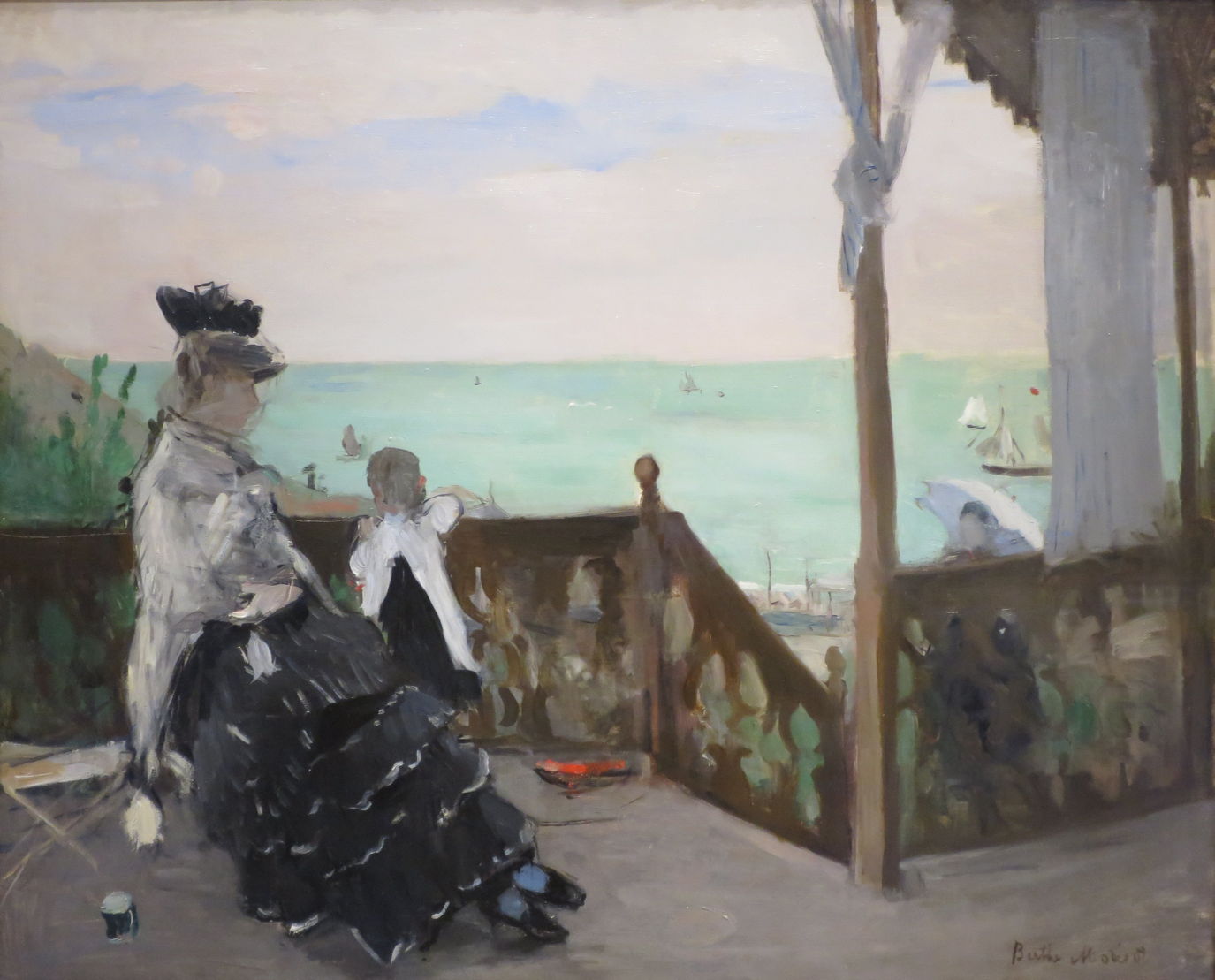
That summer she holidayed by the sea, where she painted In a Villa at the Seaside (1874), presumably using members of her family as models.

The following summer the Manets stayed in Cowes on the Isle of Wight, where she painted many oil sketches of the yachts in its harbour, and this portrait of her husband Eugène Manet on Isle of Wight (1875).

Morisot’s Hanging the Laundry out to Dry, from the same year, shows a communal drying area at the edge of a town. These women have a large black cart which they use to transport the washing, and are busy putting it out on the lines to dry in the sunny spells. Next to that area is a small allotment in which a man is growing vegetables, and in the distance are the chimneys of the city.
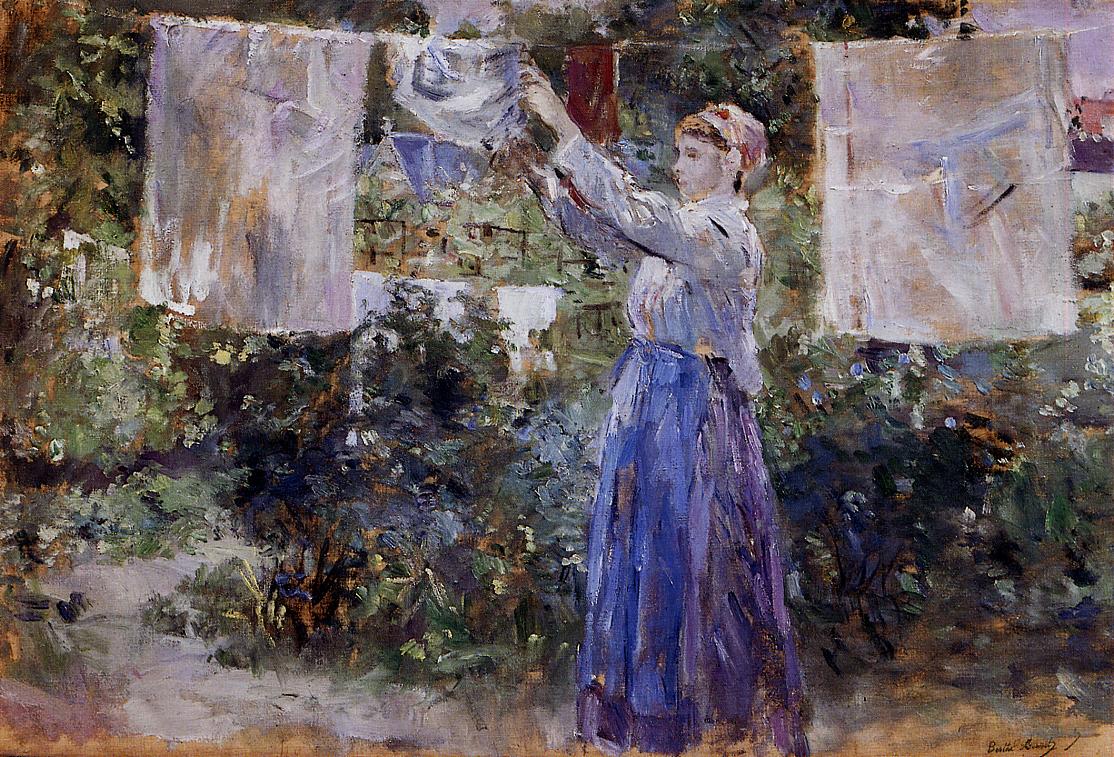
Painting had a strangely ambivalent place in the lives of affluent women of her age. Considered a social grace that was an important part of the education of young ladies, with role models such as Queen Victoria (who painted many watercolours), becoming a professional painter was quite unusual and radical. Morisot and the other women Impressionists helped change society’s attitudes, and themselves became role models for more women from the end of the nineteenth century, long before many women in Europe were even able to vote, when the most many could aspire to was as a Woman Hanging the Washing (1881).
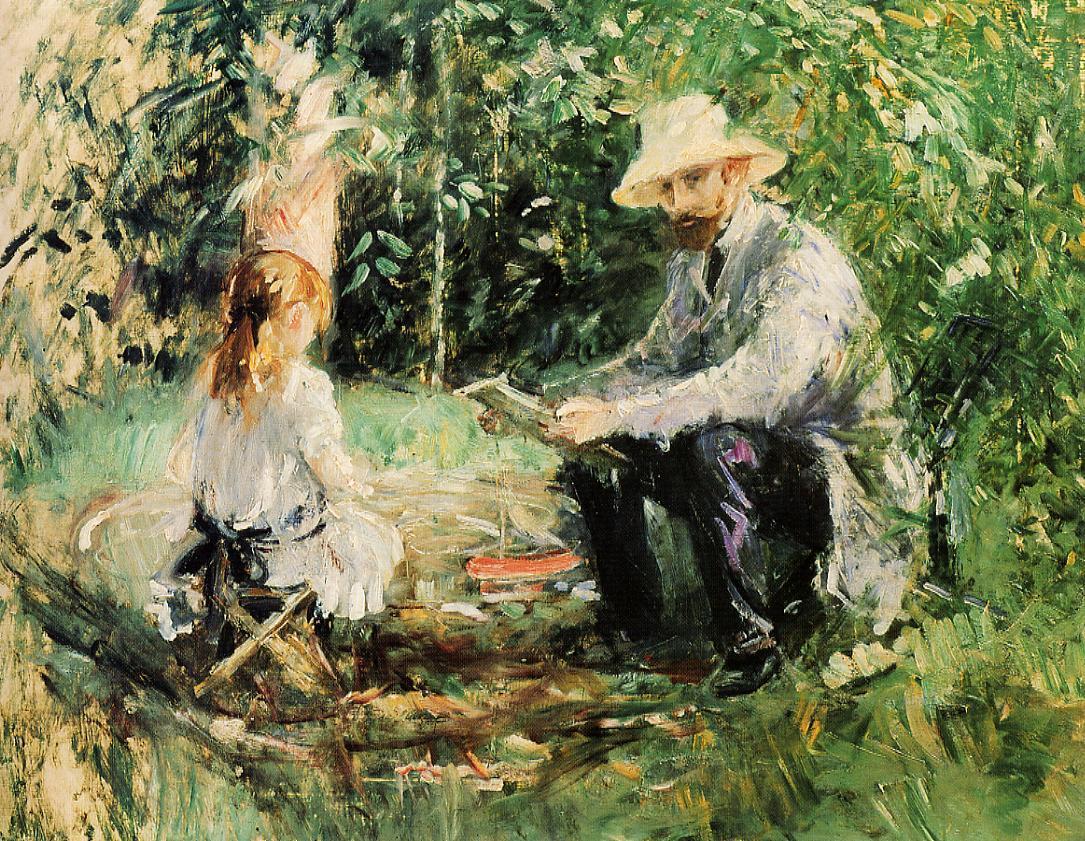
Morisot’s daughter Julie was born on 14 November 1878, so by 1883 when she painted Eugène Manet and his Daughter in the Garden their girl would have been five years old. Julie’s mother continued to paint under her own name.
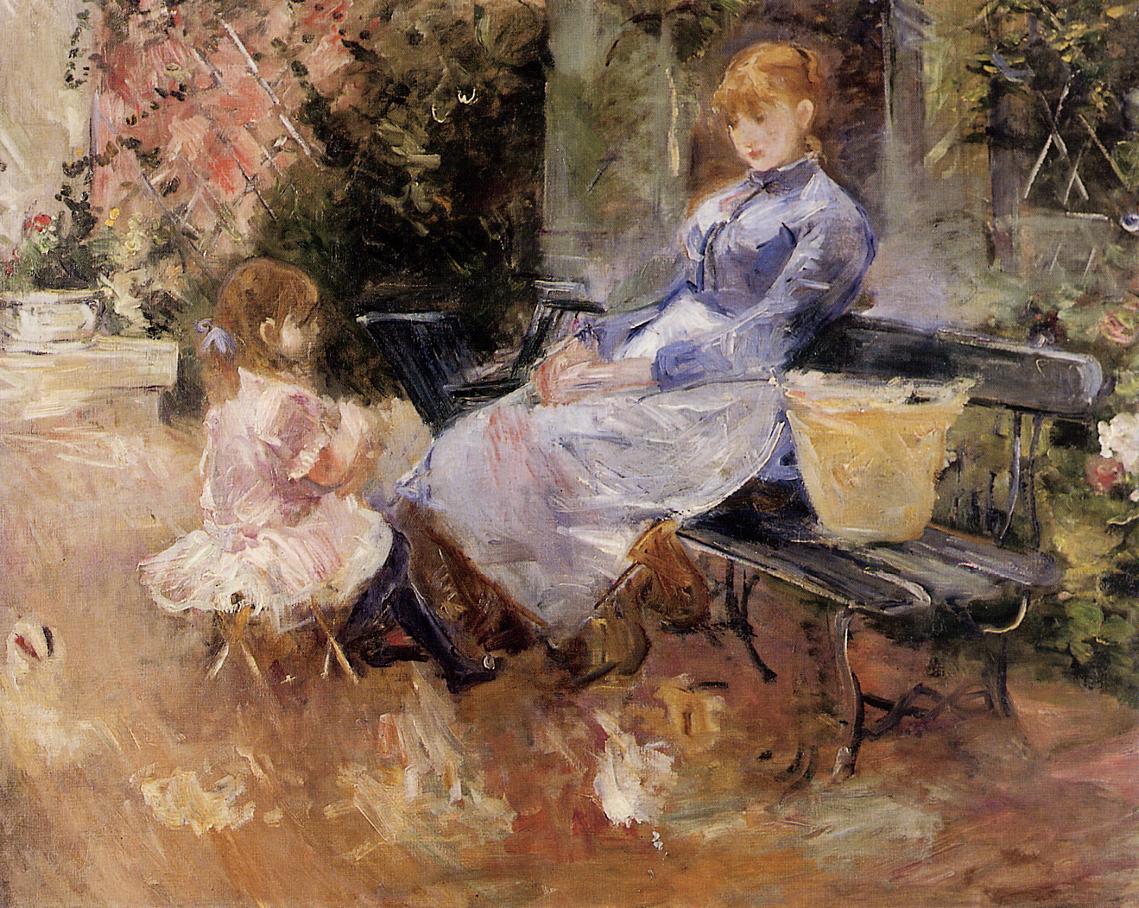
Her emphasis on domestic scenes was an important part of the Impressionist agenda to paint the world as it is, and broadened the appeal of their paintings. While Renoir continued to paint nude women to satisfy the desires of traditionally affluent males, the appeal of Morisot and the other great ladies of Impressionism reached out to women and families, and continues to do so today in this timeless double portrait The Fable (1883).
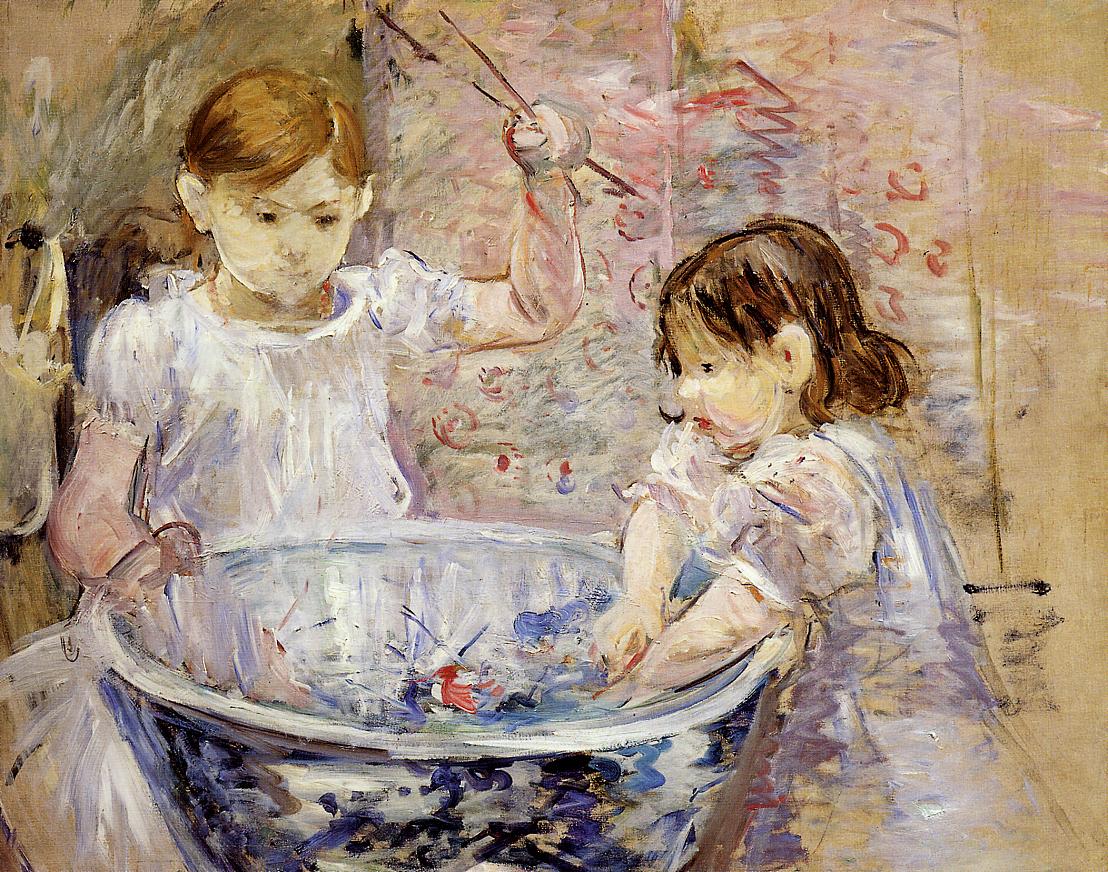
Morisot was more than just one of the women in Impressionism. Together with Mary Cassatt, she developed what was in effect a new genre of painting, depicting the intimate moments of everyday family life, particularly activities involving mothers and their helpers, and children, here Children with a Bowl from 1886.

Among her greatest paintings is this timeless classic Reading from 1888. This young woman sits reading in a conservatory. Her head is slightly bowed as she looks intently at the book she holds in both hands, just above her lap. Cropped at the left edge is a large birdcage with golden bars. Behind her are the low wall and large windows of the conservatory, the vertical of a window frame passing upwards to the top of the painting from the right edge of the chair back. Outside are rich green palms above low trellis, with further foliage and blue flowers behind them.
Abundant brush strokes are visible, forming the folds in the woman’s clothes, the palm fronds, and giving a sketchy, spontaneous feel to the work. Although many of her paintings feature her daughter Julie, the model in this case was Jeanne Bonnet.

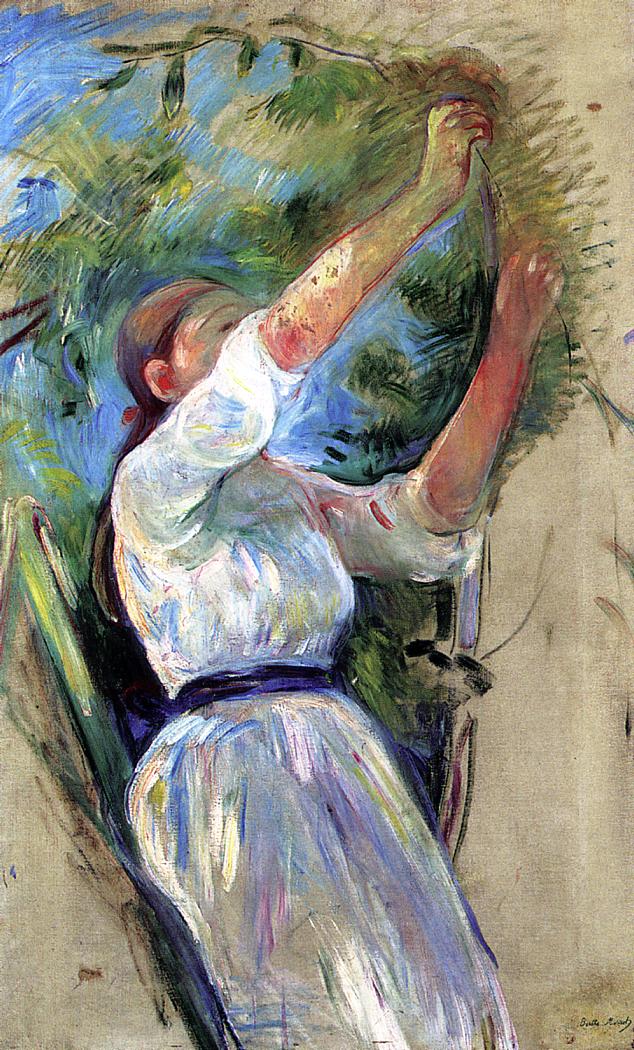
Although Morisot’s health had suffered during the Franco-Prussian War and Commune of 1870-1, and she appeared to age prematurely, she continued to paint, here The Cherry Tree from 1891, and below a close-up view of a Girl Gathering Cherries from the same year.
At the end of the winter in early 1895, Morisot’s daughter fell ill. Mother caught the same infection and developed pneumonia, from which she died on 2 March.
In 2013 she became the highest priced woman artist, when a portrait of hers sold for nearly $11 million.

