
When the first Impressionist Exhibition opened in Paris in 1874, there was but a single woman artist represented there, Berthe Morisot. This article traces her career and art prior to that, and next week’s will complete her story for the remaining years, when she became one of the four great ladies of Impressionism.
She was born into an affluent family with an artistic heritage: her mother was related to the Rococo painter Fragonard (1732–1806), and ensured Berthe and her two older sisters, Yves and Edma, received an art education. After her family had moved to Paris when she was eleven, Berthe was introduced to the Louvre Gallery in 1857, and the following year started copying paintings there. She made friends with Manet, Monet, Camille Corot and other artists. Corot encouraged her to work en plein air, and she studied under Oudinot, another of the Barbizon School.
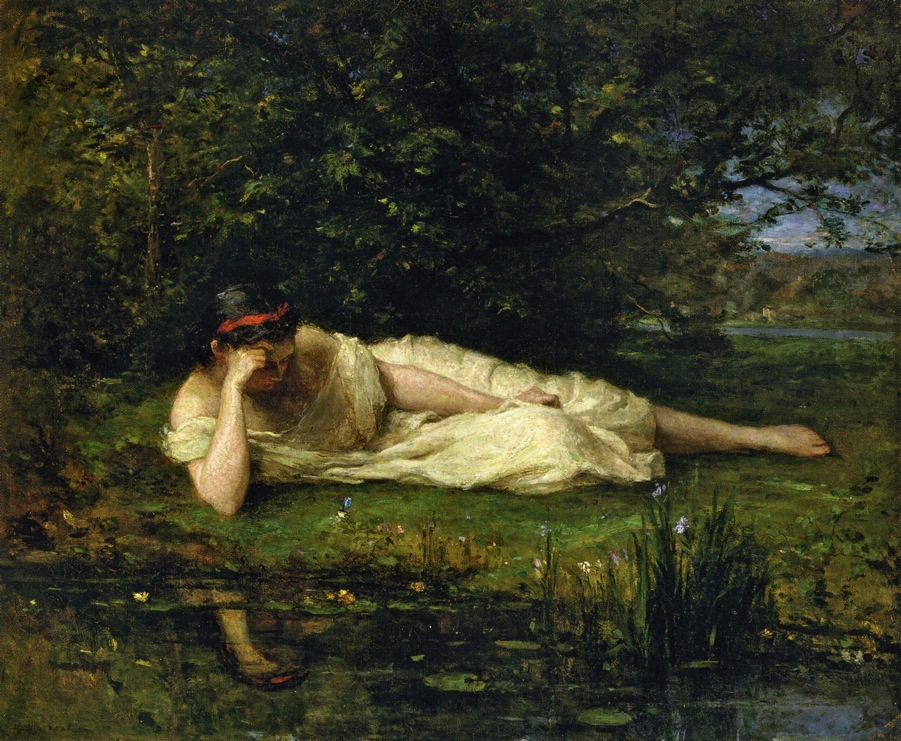
Two landscapes of hers were accepted for the Salon of 1864, following which she exhibited regularly there until 1873, although she initially seems to have painted few in oils, including this Study, the Water’s Edge (1864).
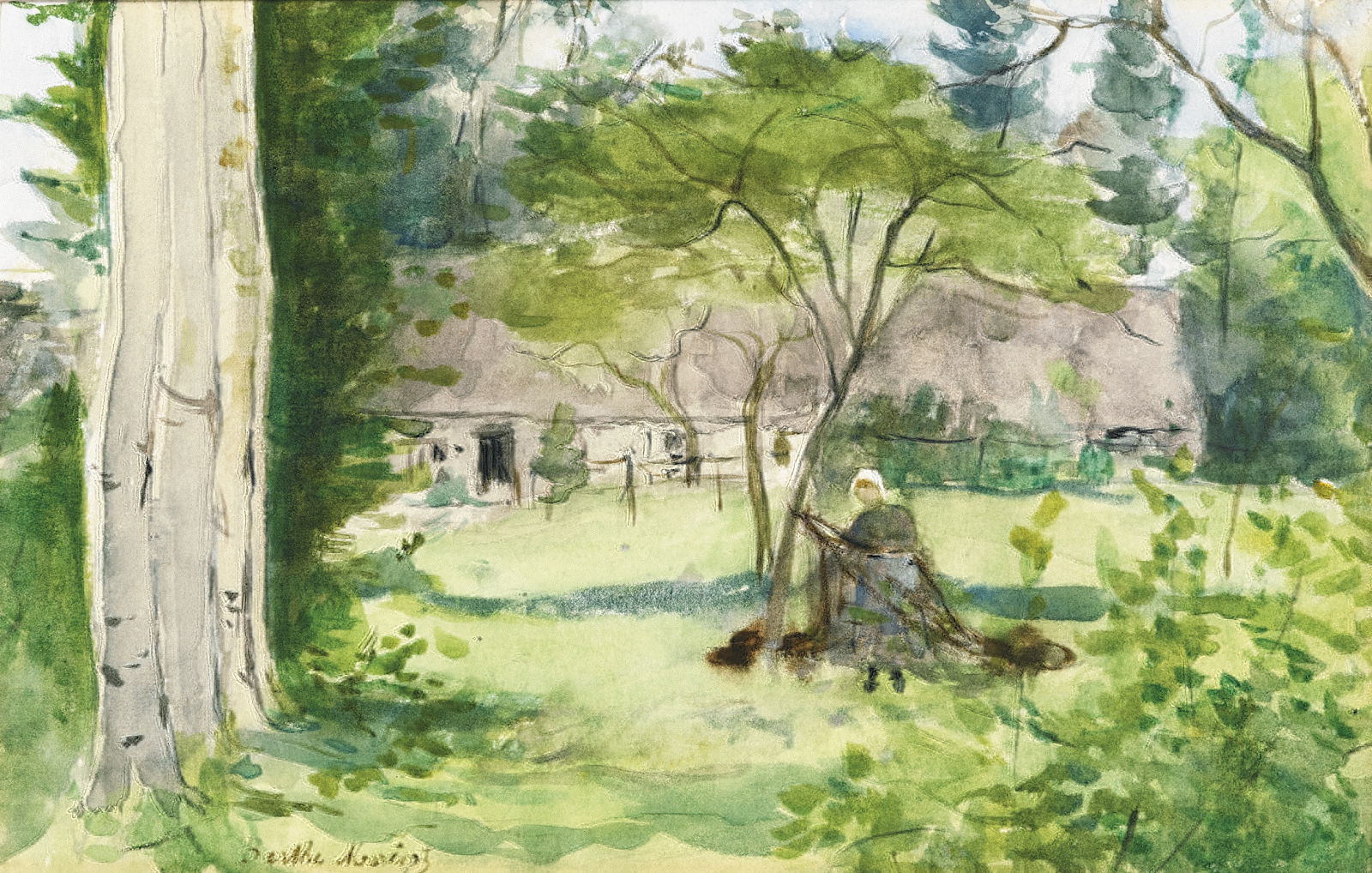
She is said to have been more comfortable making plein air sketches in watercolour, such as her Landscape from 1867, and working in pastels.
In 1868 Morisot modelled for and became friends with Édouard Manet, introducing him to plein air painting and influencing his style and composition.
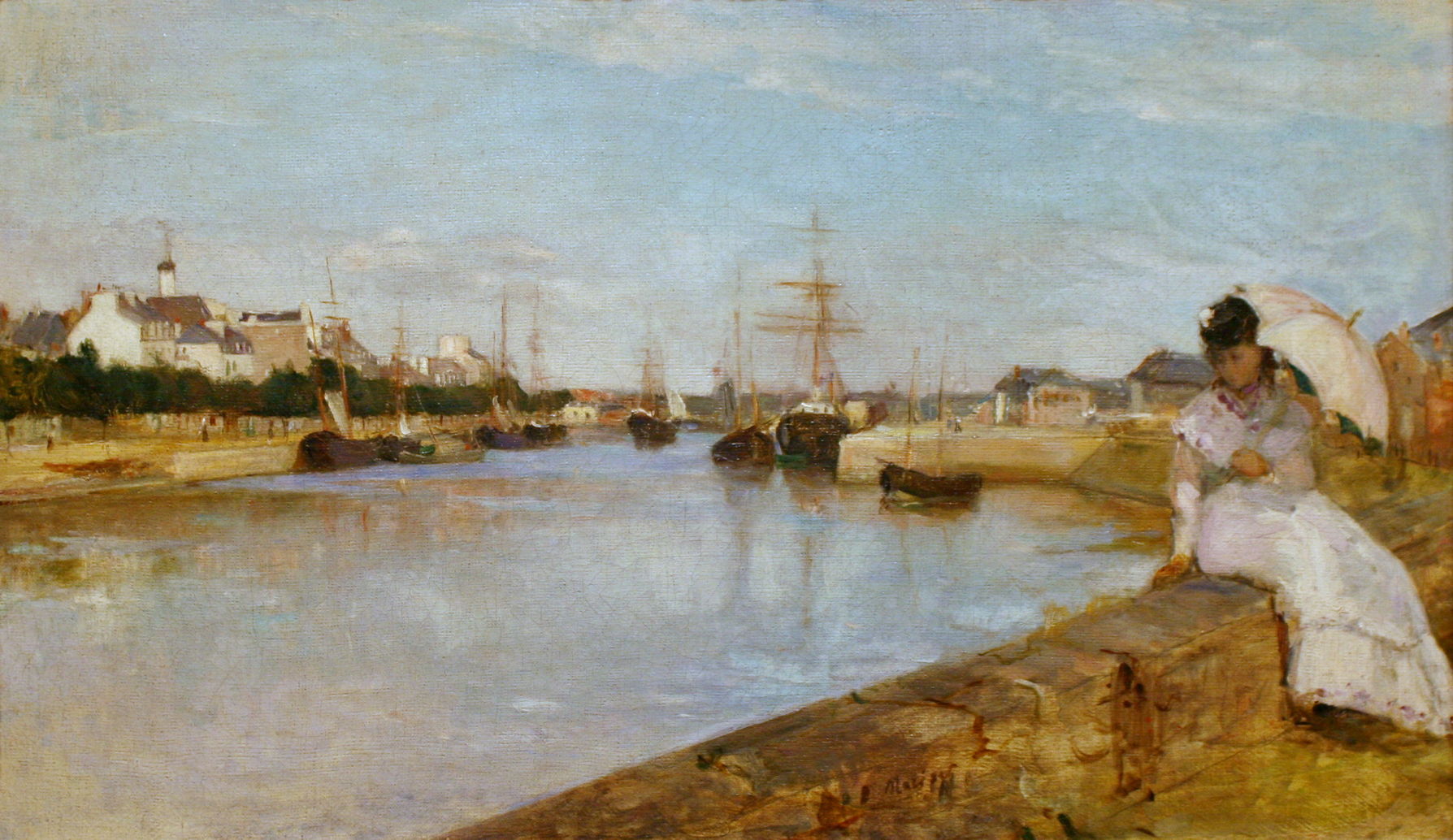
Her older sister Edma, with whom she was particularly close, married in 1869, and moved to Cherbourg on the north French coast. During the summer of that year, the two sisters were together on the south coast of Brittany, where Berthe painted Edma beside The Harbour at Lorient (1869).
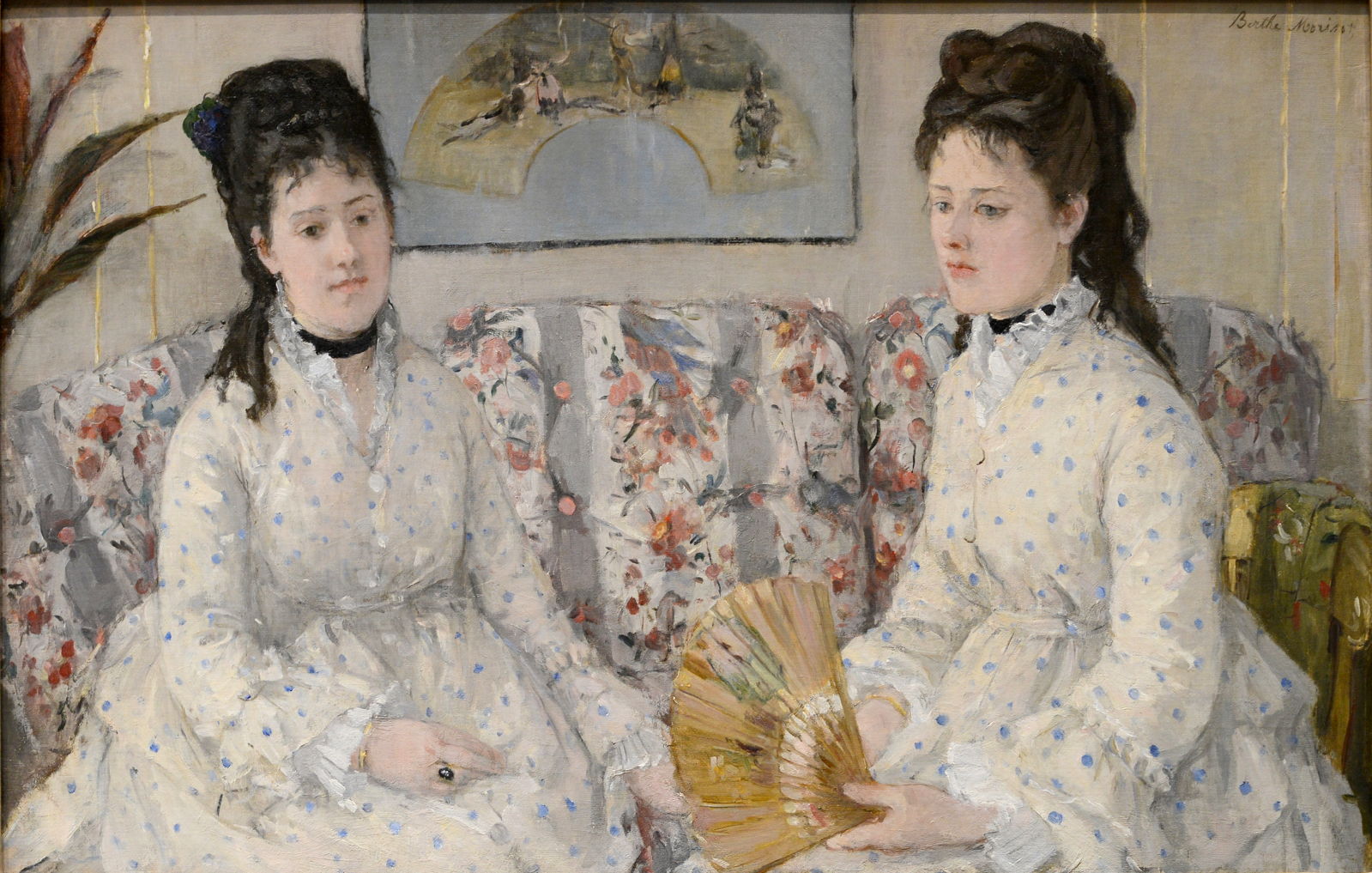
That same year, Berthe painted their double portrait as The Sisters. This is unusual for showing two painted fans, one open in the hands, the other on display in a frame behind them.
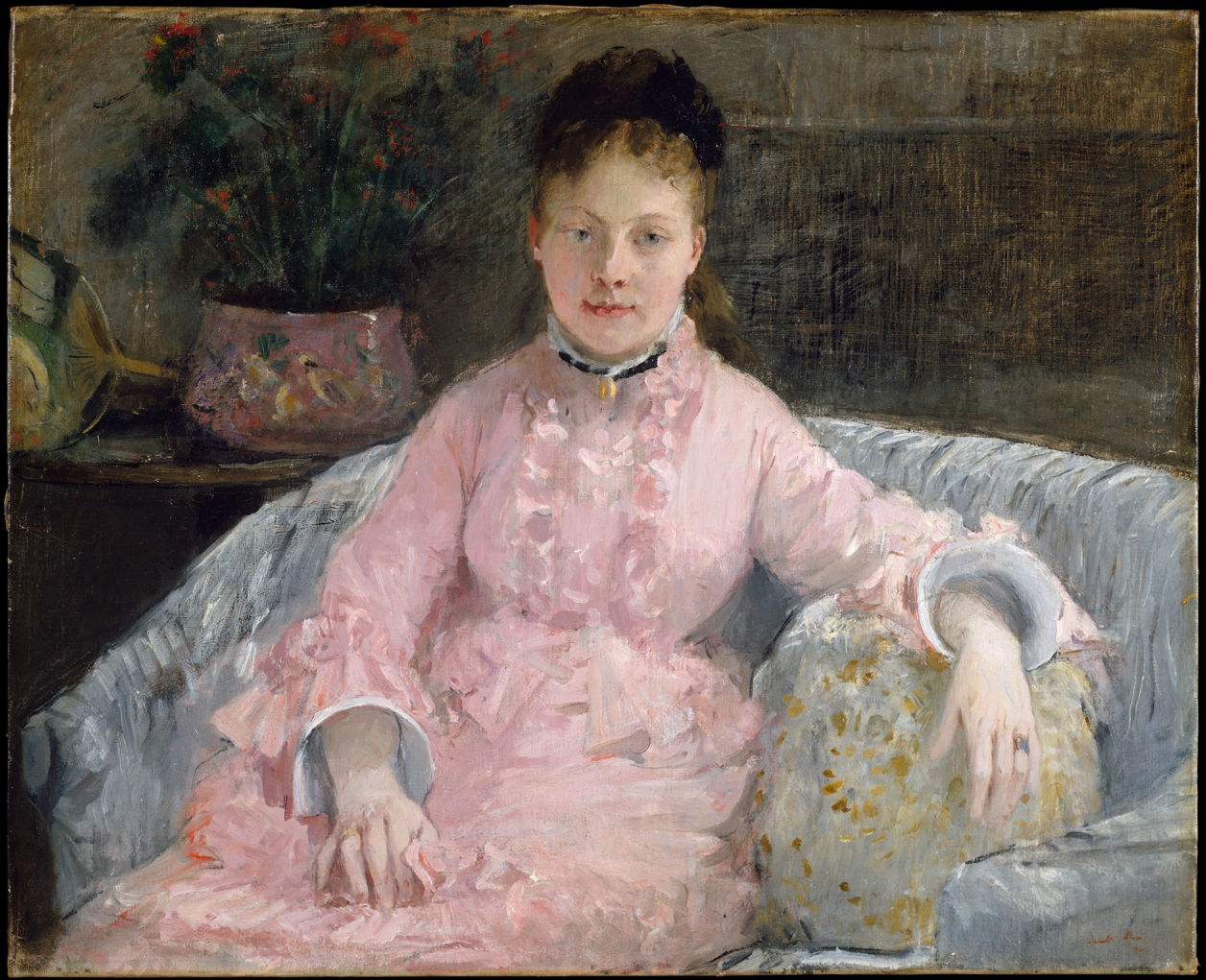
Morisot painted fine portraits, mainly of women, including The Pink Dress (Albertie-Marguerite Carré, later Madame Ferdinand-Henri Himmes, 1854–1935) from about 1870.
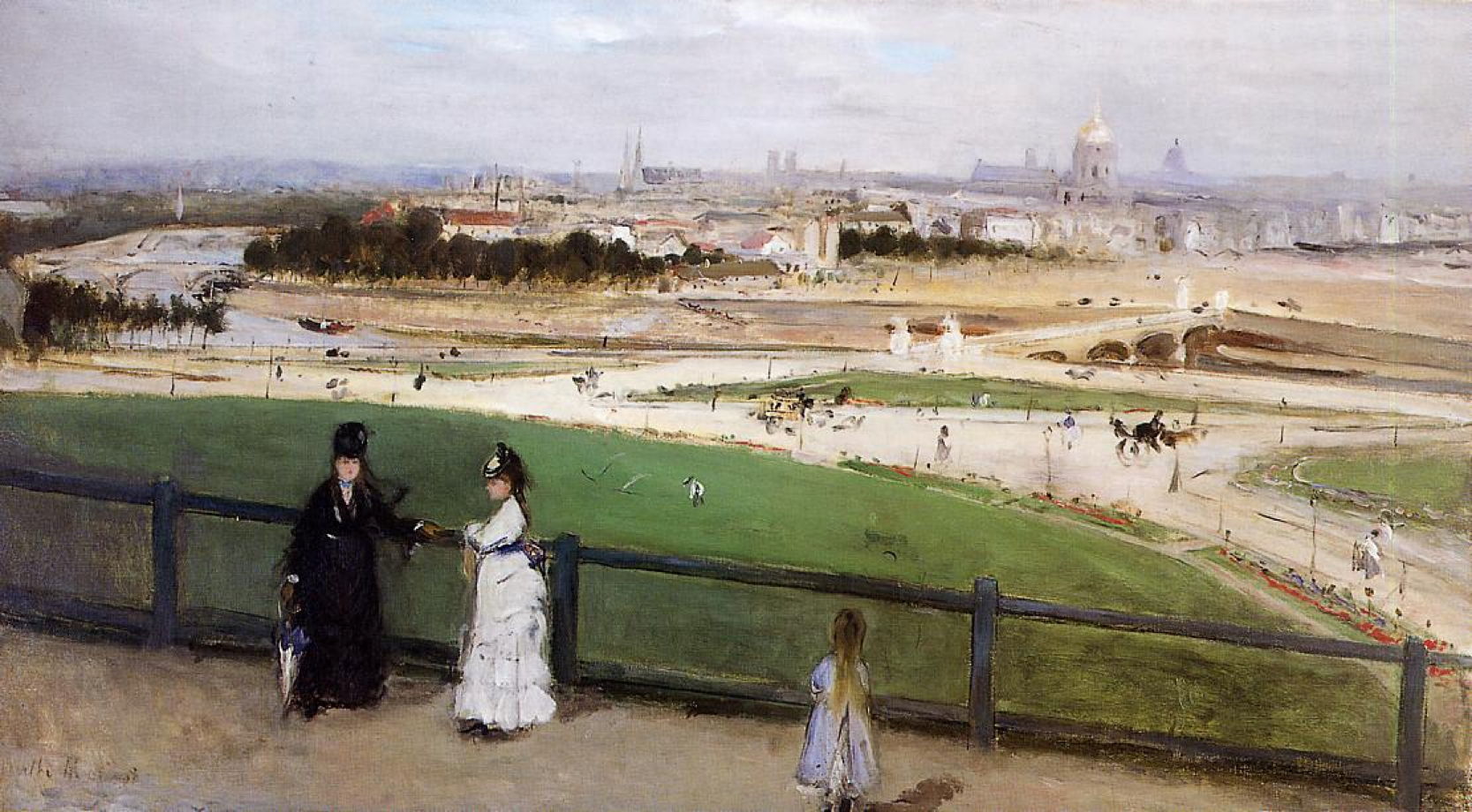
She continued to paint landscapes, including this unusual oil sketch View of Paris from the Trocadero (1871-73).
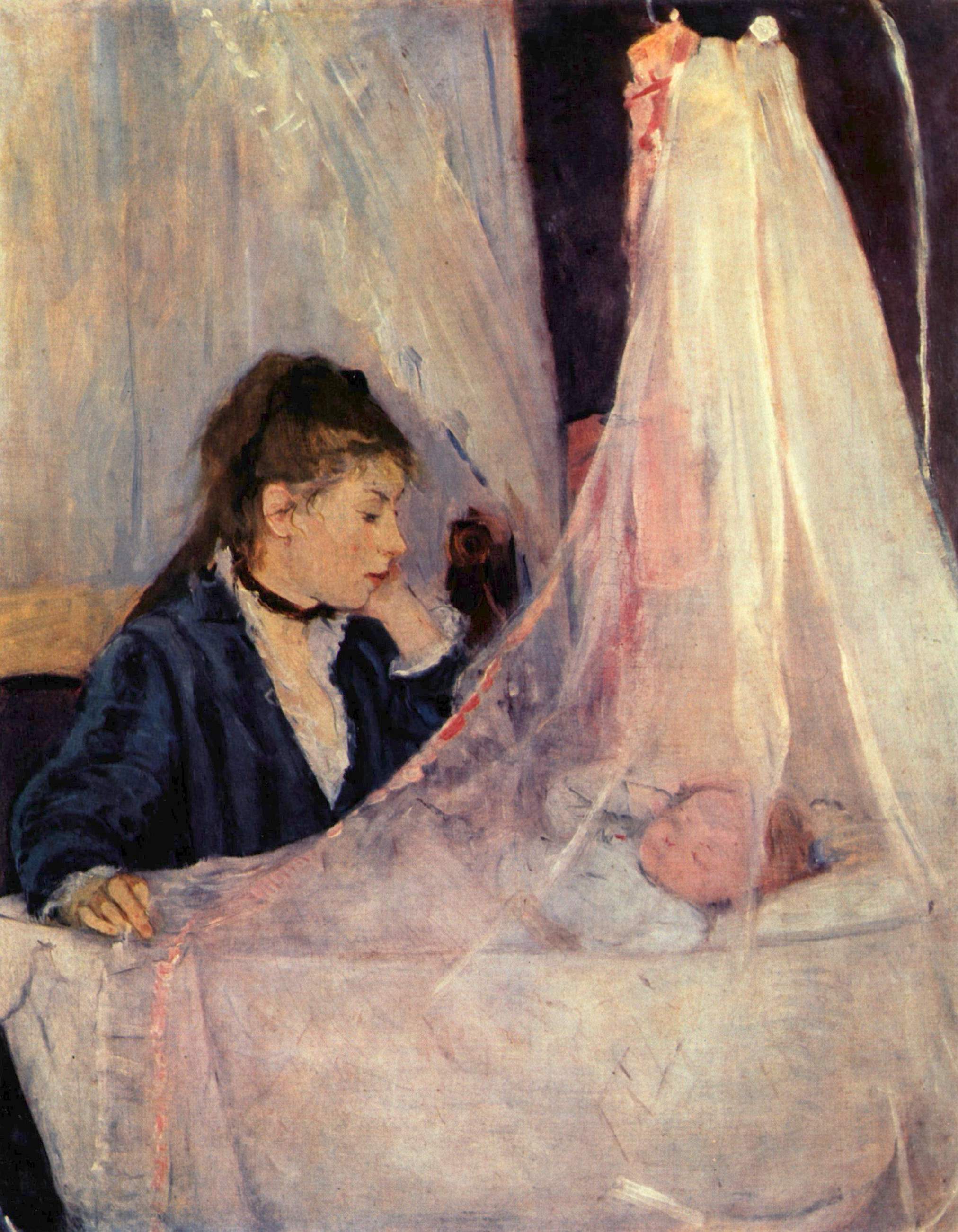
She steadily made her mark painting themes for the other half of the population, who had for so long been largely ignored by male artists. The Cradle, painted in 1872, shows Edma and her young infant Blanche in a fashionable cradle. One of the nine paintings she exhibited at the First Impressionist Exhibition two years later, it failed to receive the reception it deserved, and didn’t sell.

Morisot had been one of her brother-in-law Édouard Manet’s models for his famous painting of The Balcony in 1868-69. She painted her own Woman and Child on a Balcony in 1872, using the balcony primarily to combine full-length portraits of the two figures with an aerial landscape of Paris. On the skyline just to the left of the woman is the dark mass of Notre Dame.
That year the dealer Durand-Ruel, who sold most Impressionist works and was a key figure in the success of the movement, bought paintings from her, and she started to receive critical acclaim.
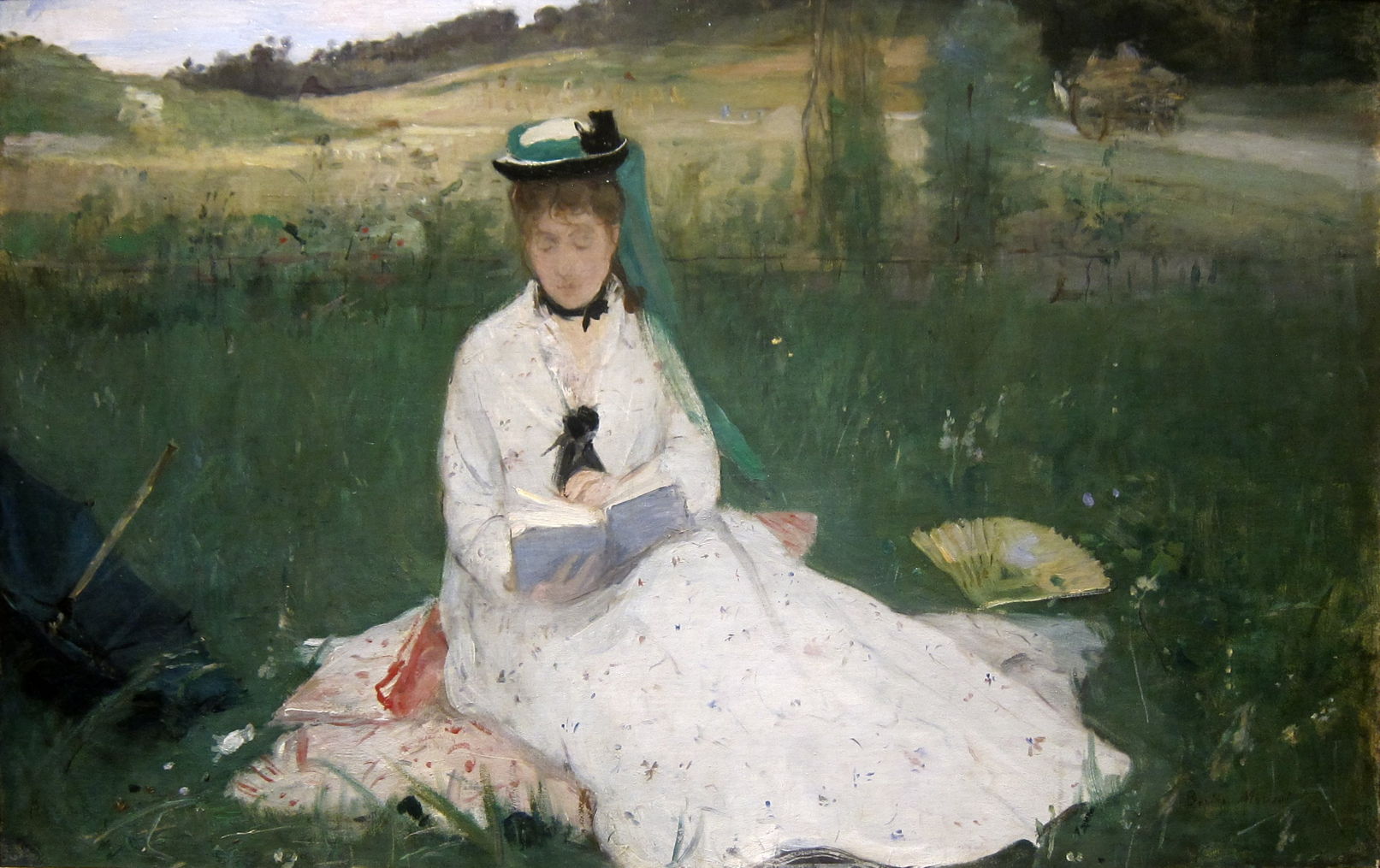
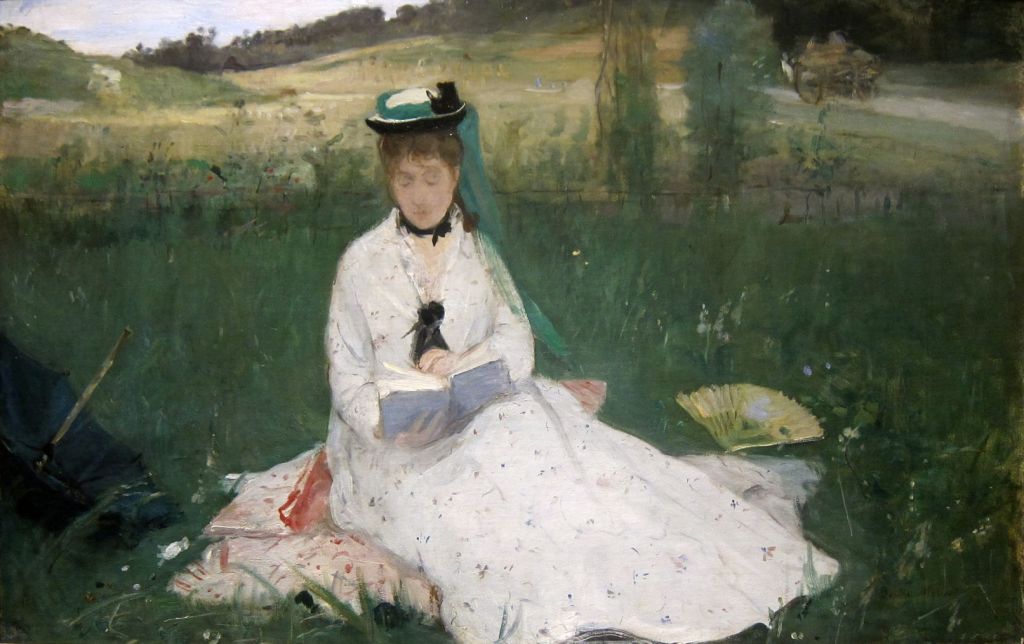
In 1873, she painted Reading or The Green Umbrella, which is likely to have been another of her paintings exhibited the following year. It too features a painted fan, carefully opened and placed on the grass.
Morisot showed a total of nine paintings at the First Impressionist Exhibition in 1874.

