

A century ago today, on 14 June 1926, the American woman Impressionist Mary Cassatt died, at the age of eighty-two.
In April 1880, Edgar Degas had withdrawn from a major project in which he, Cassatt, Pissarro, and others were to publish a joint print journal. Cassatt was naturally upset by this, and for a while her relationship with Degas cooled. She continued to develop her print-making, but her paintings moved on from her previous motifs of women at the theatre.
During the mid-1880s, she moved away from Impressionism, and concentrated on simpler work with emphasis on line and form. In her print-making, she seems to have worked hardest on developing her drypoint technique, and combining it with subsequent methods for incorporating colour.
Drypoint involves cutting the image into a plate, traditionally of copper, later of zinc, using a tool with a fine point of metal or diamond. Because using that tool, or needle, is similar to drawing, artists already highly experienced in drawing normally find this quicker to master than normal engraving.
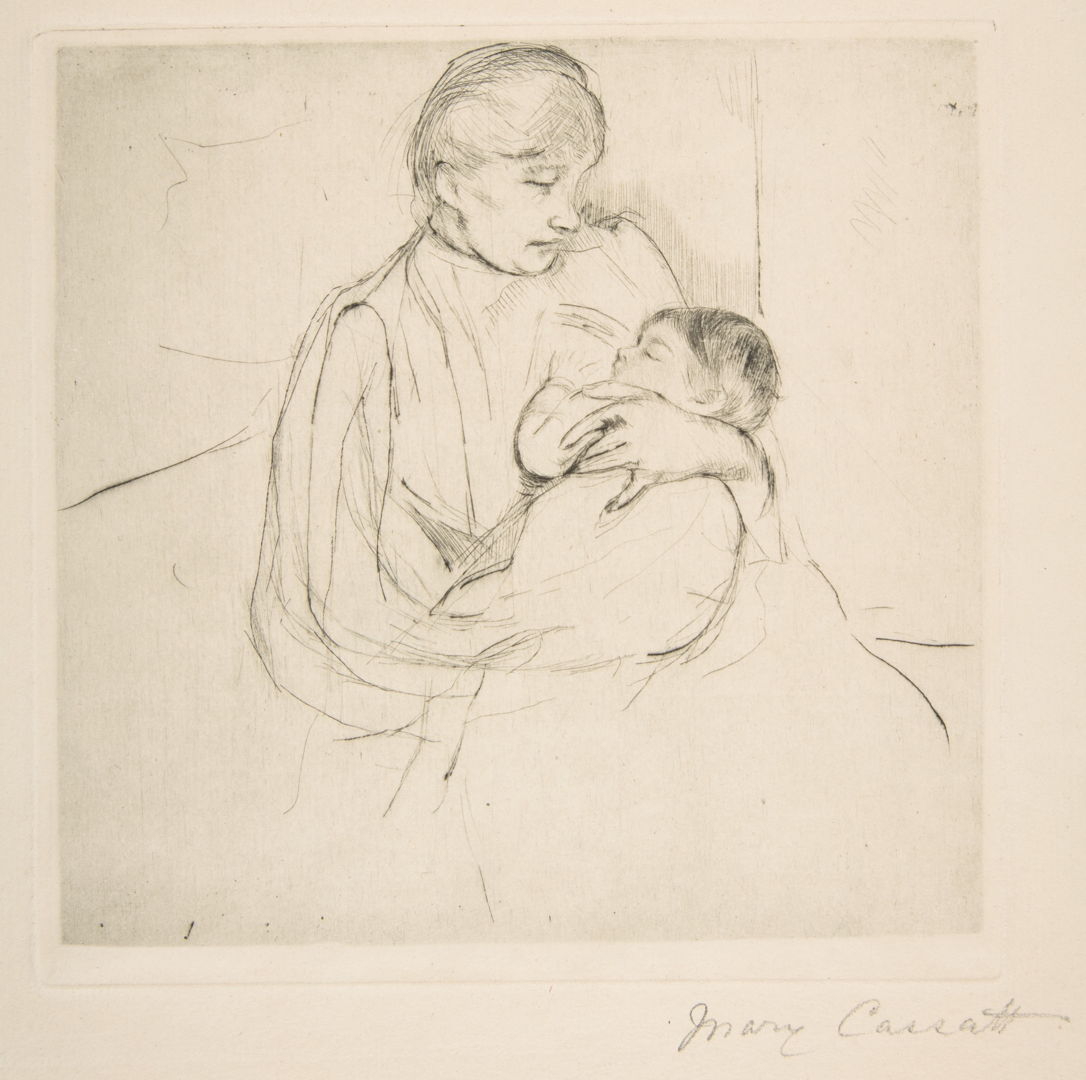
Cassatt’s first task was to master drawing with the needle on a copper plate, shown well in her drypoint of Baby’s Lullaby from about 1887. This looks like a drawing, but is in fact the second of four prints or states made from the plate.
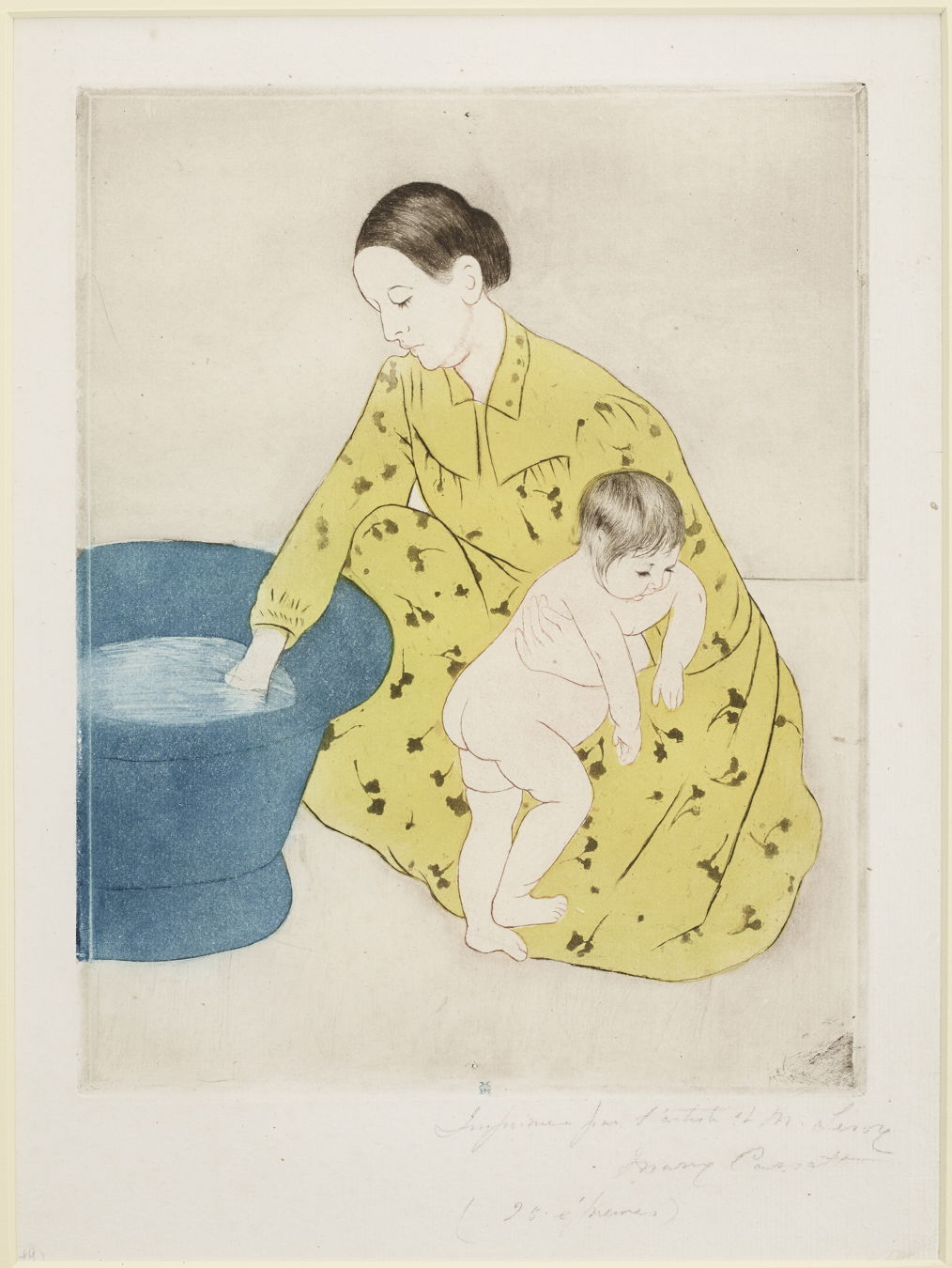
Within just a few years, Cassatt was producing magnificent work such as her famous The Bath (c 1891). For this, the plate was worked using drypoint, and aquatint, a form of etching, was used to add the two colours. For aquatint, acid-resistant ground is applied, and sticks to the plate, for example aided by careful heating. The plate is then exposed to mordant, an acid which etches into parts of the plate that are free of ground. The plate is finally used to print areas of colour.

In La Toilette (1889-94), Cassatt has used drypoint and aquatint to print multiple colours, including fine details. This requires precise printing technique to ensure registration of the plate and paper.
Her choice of motif for these two works is interesting, given Degas’ long series of works, mainly painted with pastels, showing women getting out of baths and at their toilet. Cassatt’s two prints explore exposed flesh much less than Degas’, and her work appears to have been more influenced by Japanese woodcut prints, which by this time had become popular in Europe.
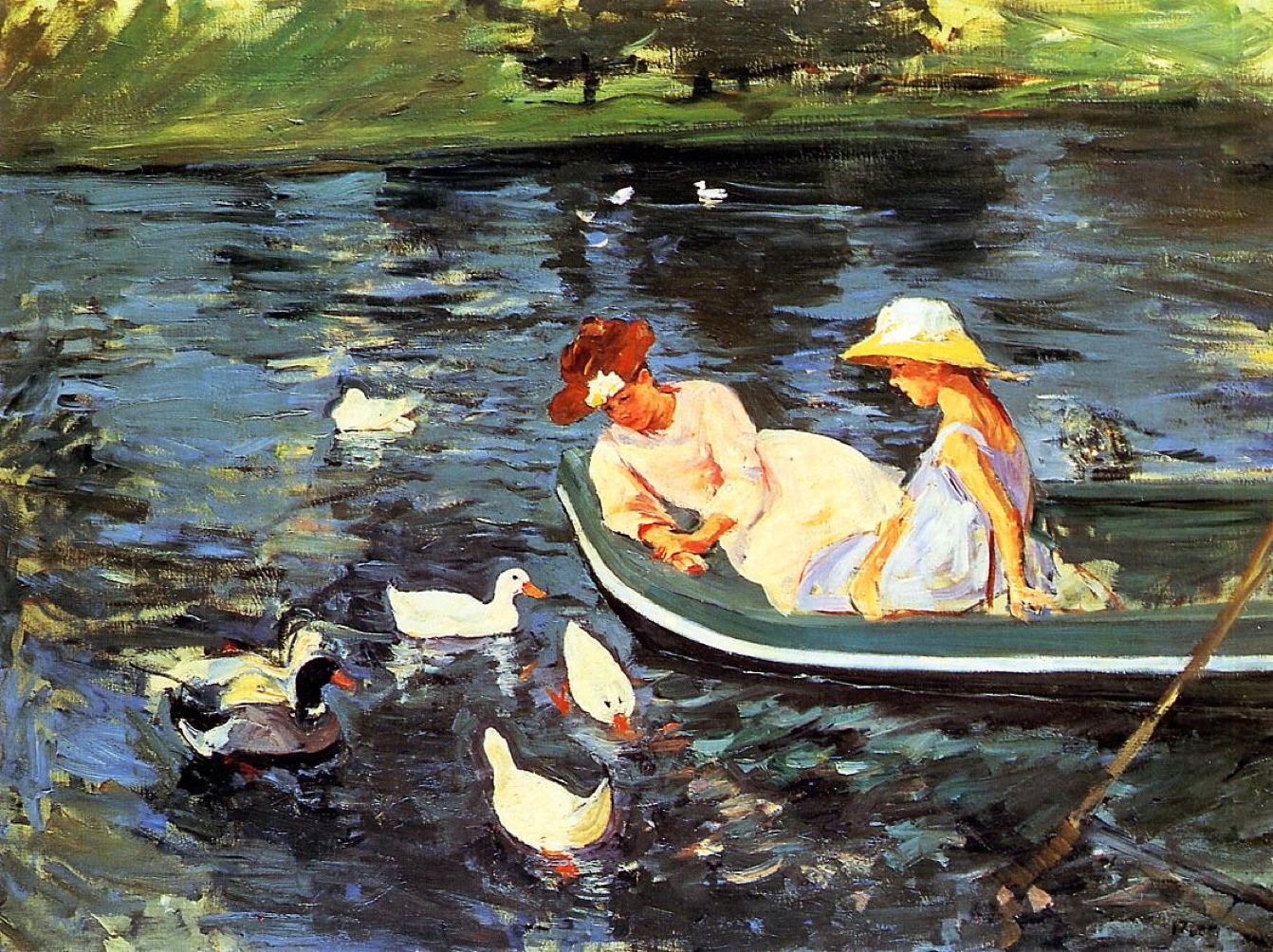
Cassatt hadn’t stopped painting in oils, and concentrated more on portraits and scenes of motherhood and families, such as this loose painting of a mother and daughter feeding ducks from a boat in Summertime (1894). I believe this was the source for another sophisticated print, called perhaps more appropriately Feeding the Ducks (c 1894), below.
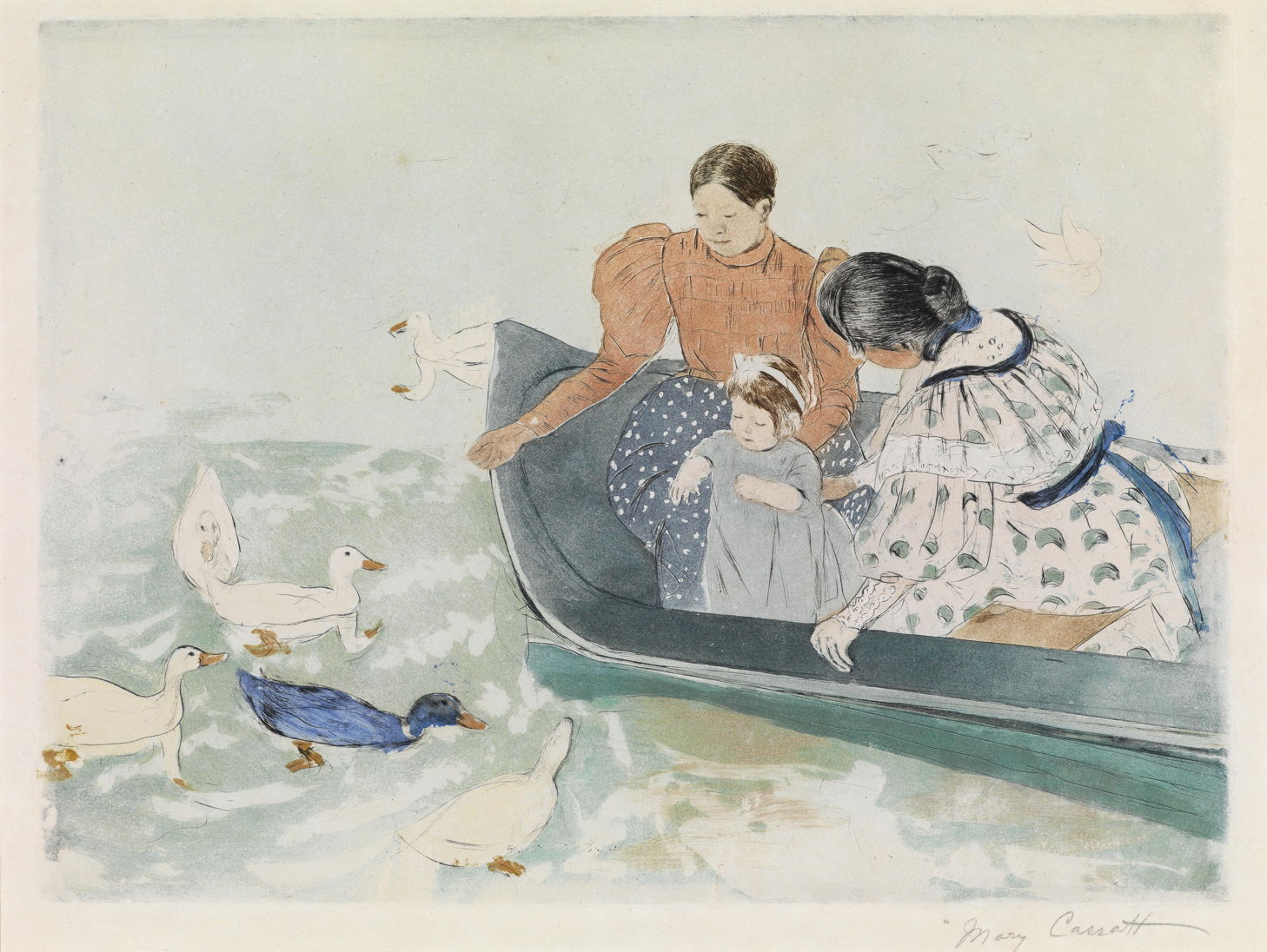
For this she again combined her mature drypoint with aquatint, to which she added monotype. In monotype, the artist lays down an image on a plate using printing inks, then makes a single impression of that on the paper. Once again, this demands meticulous technique, and usually results in one completed print for each image made in ink; second prints can be made sometimes, but are usually of low quality.
Cassatt’s use of monotype was almost certainly the result of Degas’ influence and involvement. Degas had revived the art of the monotype in the 1870s, and it had also been used by Pissarro.
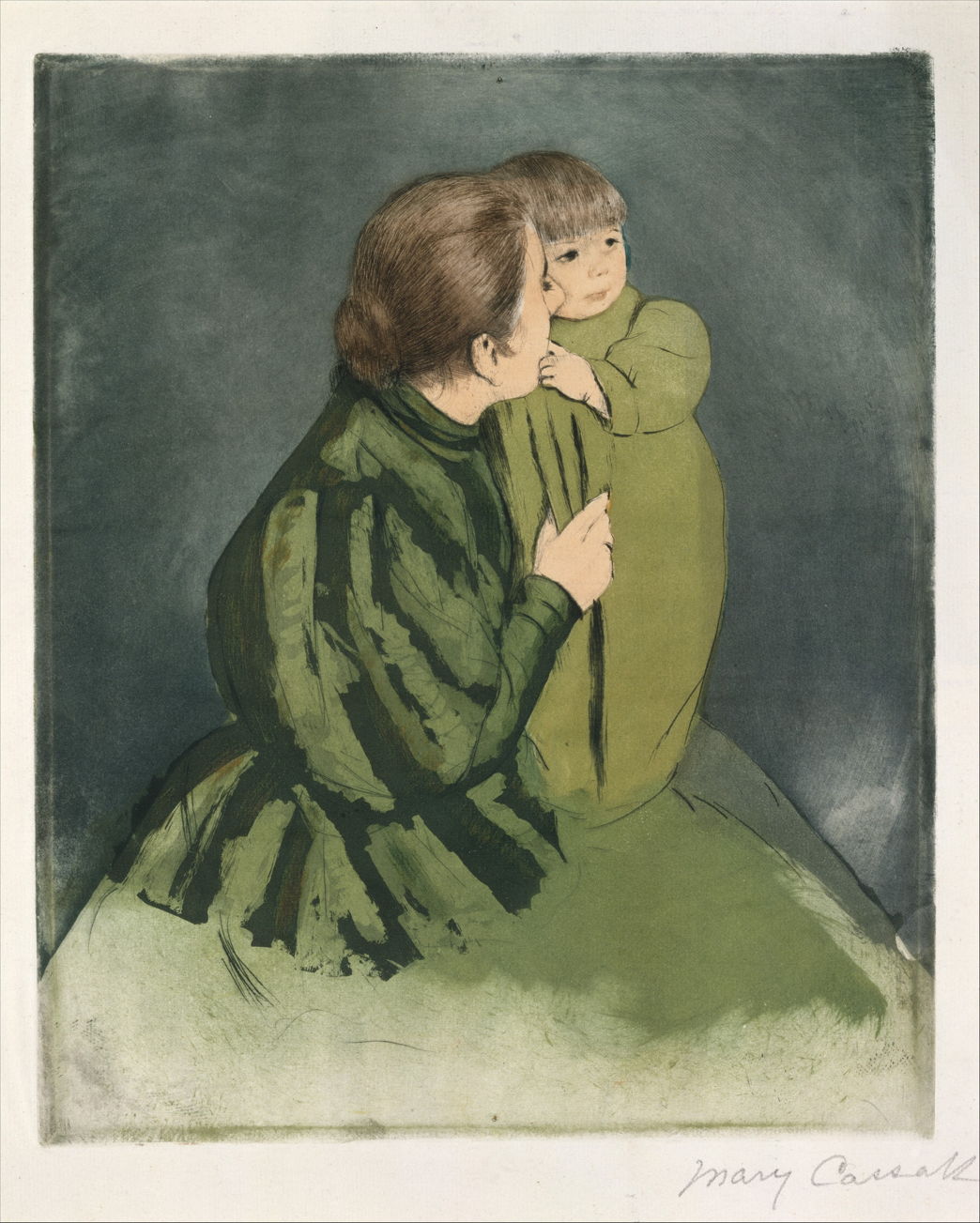
Over the same period, Cassatt made some prints with multiple plates, such as Peasant Mother and Child (c 1894). This used the combination of drypoint and aquatint, with colours applied from three plates. The benefit from such a complex method is that the yield increases: in this case, she was able to obtain ten states, compared with a single print from monotype.
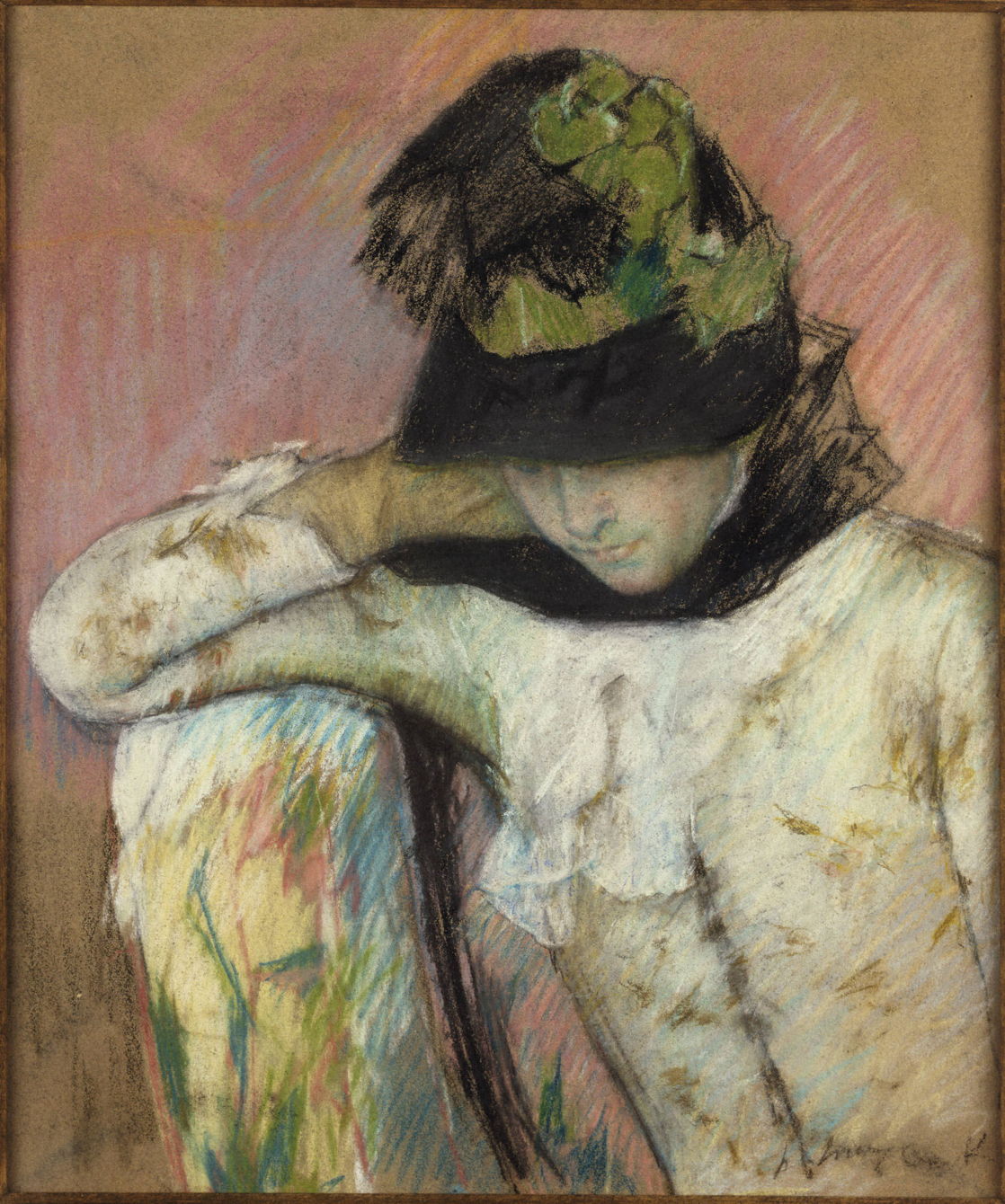
She continued to paint frequently in pastels. Young Woman in a Black and Green Bonnet, Looking Down dates from around 1890, and shows the rich range of marks she used, and their apparent spontaneity. Although in her print-making she had to work hard to give surfaces depth and texture, she had no such limitations in her pastel paintings.
Her motif makes for interesting comparison with those of Degas. Cassatt’s model shows no evidence of being posed, and appears relaxed and natural. Her eyes are covered by the brim of her hat, allowing her privacy and self-respect. Degas and Cassatt shared many of their techniques, but their choice of motifs and their composition remained distinct.

Cassatt’s art never grew bland. This superb pastel painting of Margot in Orange Dress (1902) is as vibrant in colour as the works of many of the post-Impressionists of the day.
At the end of 1894, Degas and Cassatt grew further apart as a result of the Dreyfus Affair, a national political scandal in France centred on the conviction for treason of an officer in the French army, a relative of Cassatt’s patron and friend, Moyse Dreyfus. As he had grown older, Degas had become more overtly anti-Semitic, which must have angered Cassatt. She actively supported women’s suffrage, but by 1914 deteriorating eyesight and increasing infirmity forced her to stop painting. She died in 1926, the last of the great ladies of Impressionism.
Reference

