
In its strict meaning, a tapestry is a decorated textile woven by hand on a loom, although some famous embroideries including the Bayeux Tapestry have become misleadingly termed. Fragments have attested to their ancient origins, and in Europe they were a popular medium of visual art between 1350-1800, and were revived in the late nineteenth century. Although many tapestries were apparently designed without the involvement of established painters, some of the great European painters of those periods were commissioned to paint studies or cartoons for prominent tapestries.

A few tapestries have proved influential on painting, among them the wonderful cycle of The Lady and the Unicorn from the end of the fifteenth century. In that cycle, The Sense of Touch shows the common figures of the lady and a unicorn, surrounded by animals and objects amid the mille-fleurs.
Among the most prominent painters who designed major tapestries is Raphael. Soon after Pope Leo X was elected, probably later that year or in 1514, he commissioned Raphael to supply a set of cartoons for a series of ten tapestries to be hung in the Sistine Chapel. Raphael is thought to have worked on these with his workshop during 1515, and possibly into the following year.
The cartoons were painted on paper using a glue tempera or gouache, and on completion were sent to Pieter van Aelst’s renowned tapestry workshop in Brussels, where they were woven. The completed tapestries arrived in Rome between 1517-19. By the end of 1519, seven of them hung on the walls of the Sistine Chapel, with the remaining three arriving probably during 1520.
The cartoons were painted by Raphael himself, together with his studio assistants Gianfrancesco Penni and Giulio Romano. When they were in Brussels, the cartoons were cut into strips to facilitate their weaving. Once the tapestries were complete, those strips were already heavily worn, and entered the art market until they were bought for the collection of Charles, Prince of Wales, in 1623. Rubens may have facilitated that transaction. They remain in the UK Royal Collection, and are now exhibited in the Victoria and Albert Museum in London.
The tapestries had more of an adventurous life. By 1521, seven were in pawn. Shortly after the Sack of Rome they were looted and sold into private collections. By 1544 seven of them had been repurchased by the Vatican, and the series was complete again in 1553. They were stolen again in 1798, and only recovered in 1808.
The Brussels workshop subsequently wove at least four sets of copies, one for Federigo Gonzaga’s Palazzo Ducale in Mantua, another for the Royal Palace in Madrid, a third for King Henry VIII which were destroyed by fire when in Berlin during the Second World War, and a fourth for the French monarch, which have been lost. These sets all appear to have omitted the tapestry of Saint Paul in Prison. Later copies, woven in England after 1619, are more numerous.
Raphael’s cartoons form two cycles, which are arranged opposite one another, and intended to be read starting from the chapel’s altarpiece. They tell the lives of the two saints most involved in early Christian ministry: Saint Peter the Apostle, and Saint Paul.
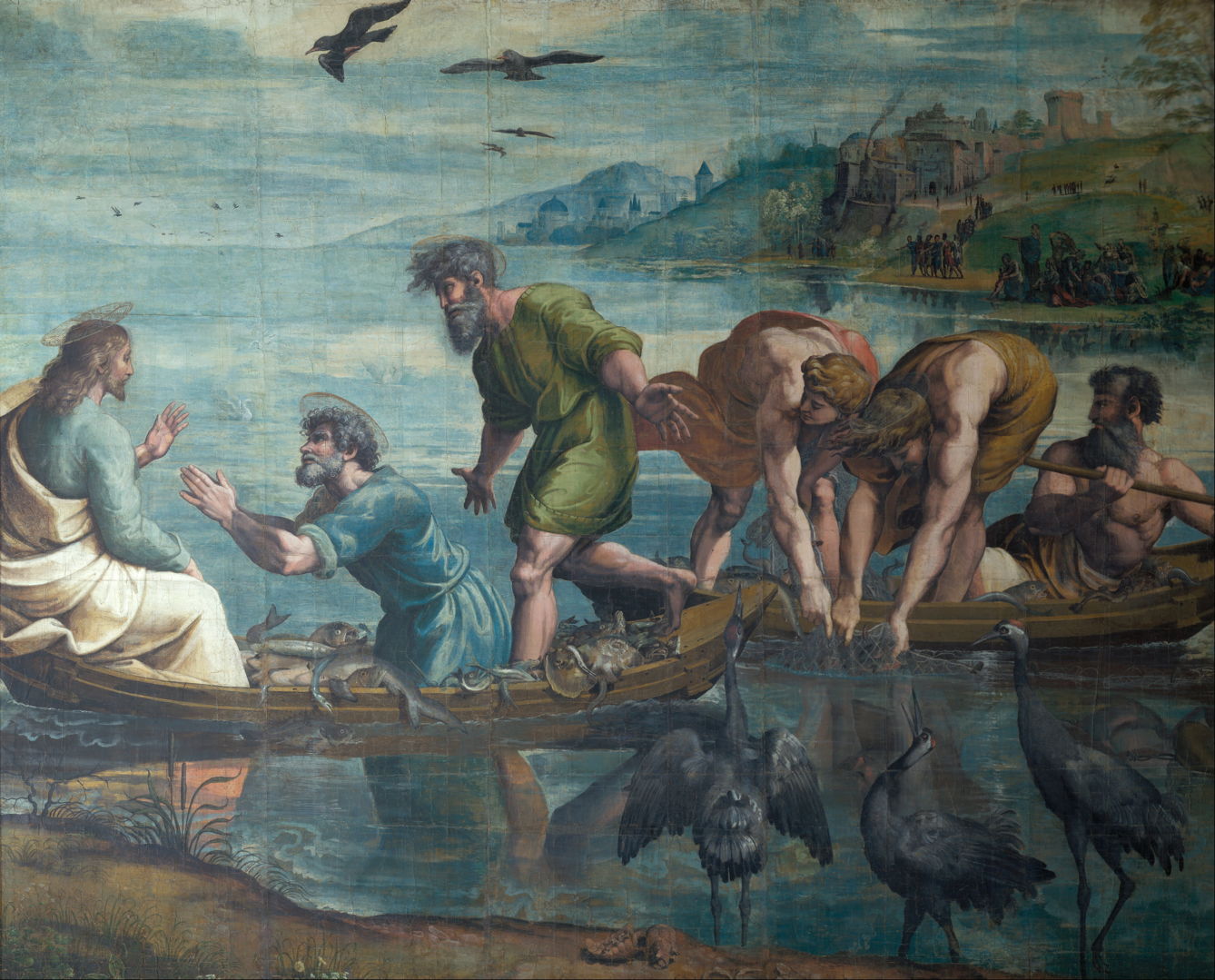
Best known among the cartoons is The Miraculous Draft of Fishes, based on the Gospel of Luke Chapter 5, verses 1-10, which shows the calling of Saint Peter the Apostle. Peter, then known as Simon, was a fisherman who worked the Sea of Galilee with his brother Andrew and the two sons of Zebedee. Jesus called Simon and his brother to become “fishers of men”.
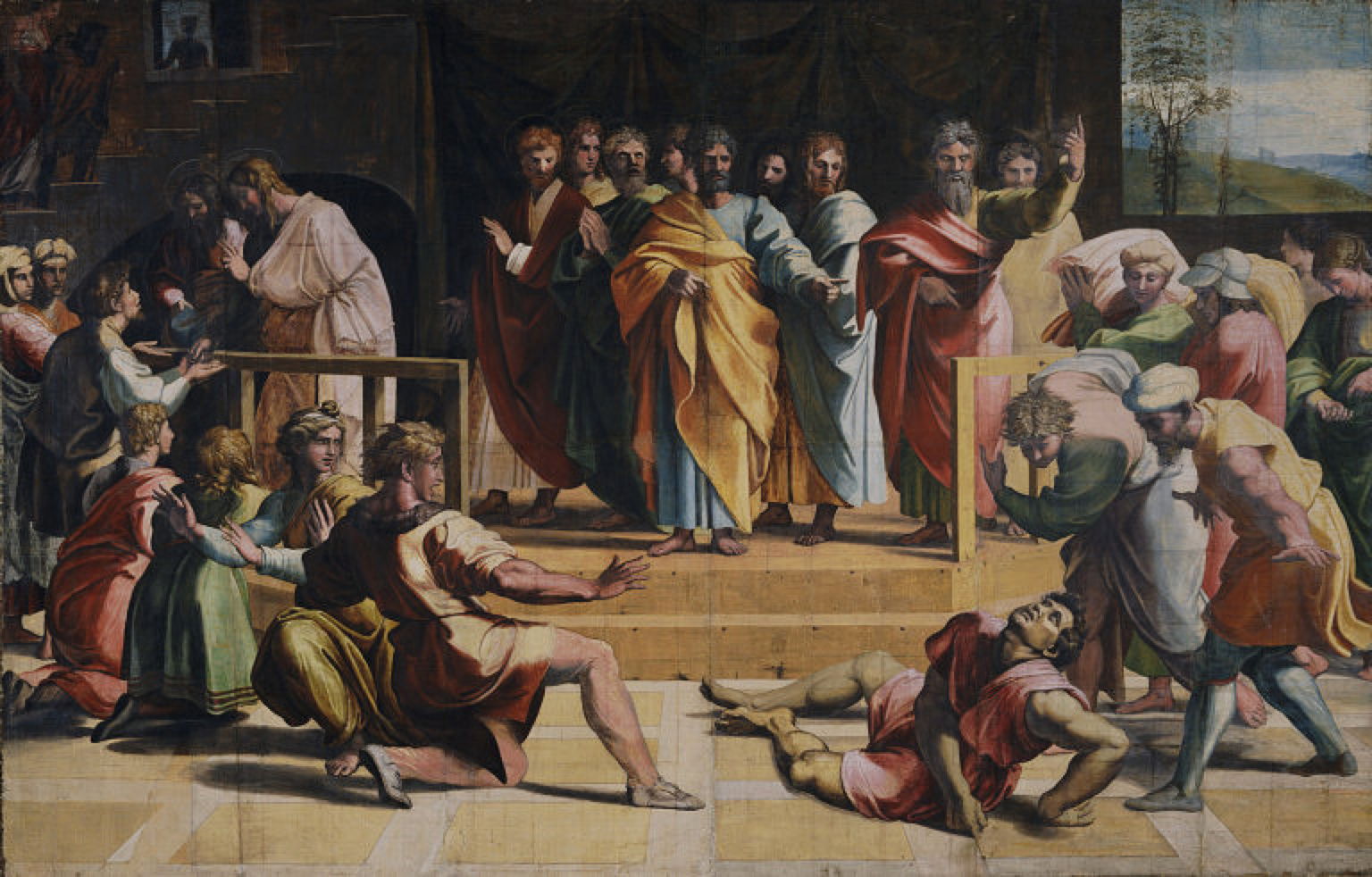
The final cartoon in the cycle is The Death of Ananias, based on the Acts of the Apostles Chapter 5, verses 3-5. Ananias had followed the example of the Cypriot Barnabas, and sold a plot of land to raise money for the early church. However, Ananias had secretly withheld some of the proceeds for himself. Peter drew attention to the lie that Ananias had made to God, whereupon the man fell dead where he was.
Raphael’s cartoon (above) is reversed on the tapestry (below), and the latter’s borders are enhanced with a frieze, the emblem of the Pope, and additional vignettes. When they were new, these tapestries must have been magnificent.

Paintings of Peter Paul Rubens and Jacob Jordaens were also used as designs for tapestries, but perhaps the most prolific well-known painter of cartoons is Francisco Goya. In early 1775, he was summoned to the royal court in Madrid, to work on his first commissions for nine cartoons of hunting scenes to be turned into tapestries by the Royal Factory in Santa Bárbara. They were delivered in two batches, in May and October 1775, and were to prove the first of many such cartoons he made for the accommodation of the Prince and Princess of Asturias, heir apparent to the Spanish throne. In this case, the tapestries were to decorate their dining room in El Escorial.
The chosen theme was ideal for Goya, who was a keen hunter, and already had his own hunting dogs. His technical knowledge and insight into the real world of hunting shine through in these paintings.
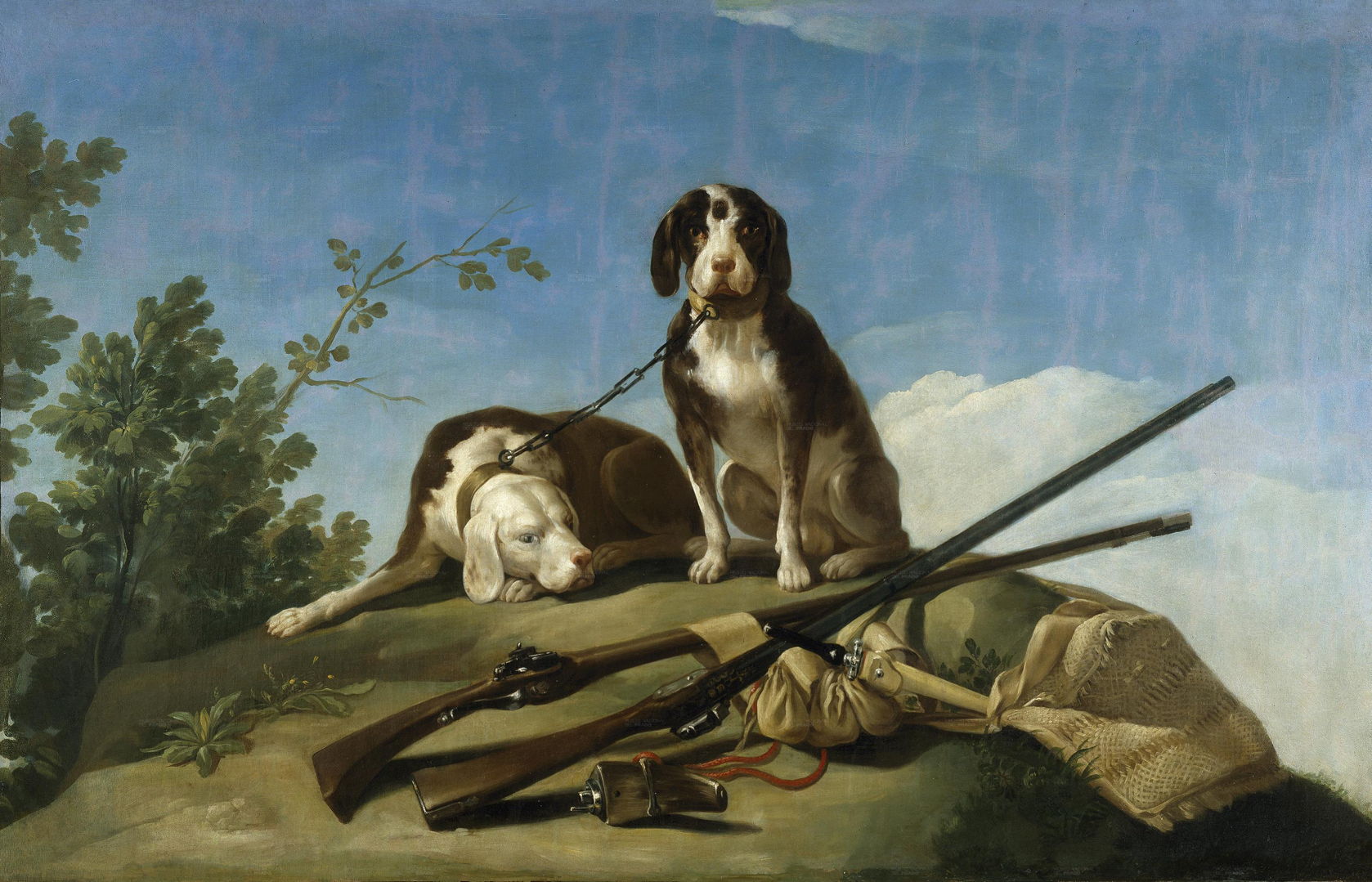
Dogs and Hunting Gear, delivered in May 1775, shows a fine pair of dogs, guns and the other equipment used by the hunter of the day. The dogs are lifelike, and Goya captures the glinting metal excellently. Throughout these paintings, the landscapes used as backdrops appear comparatively antiquated.
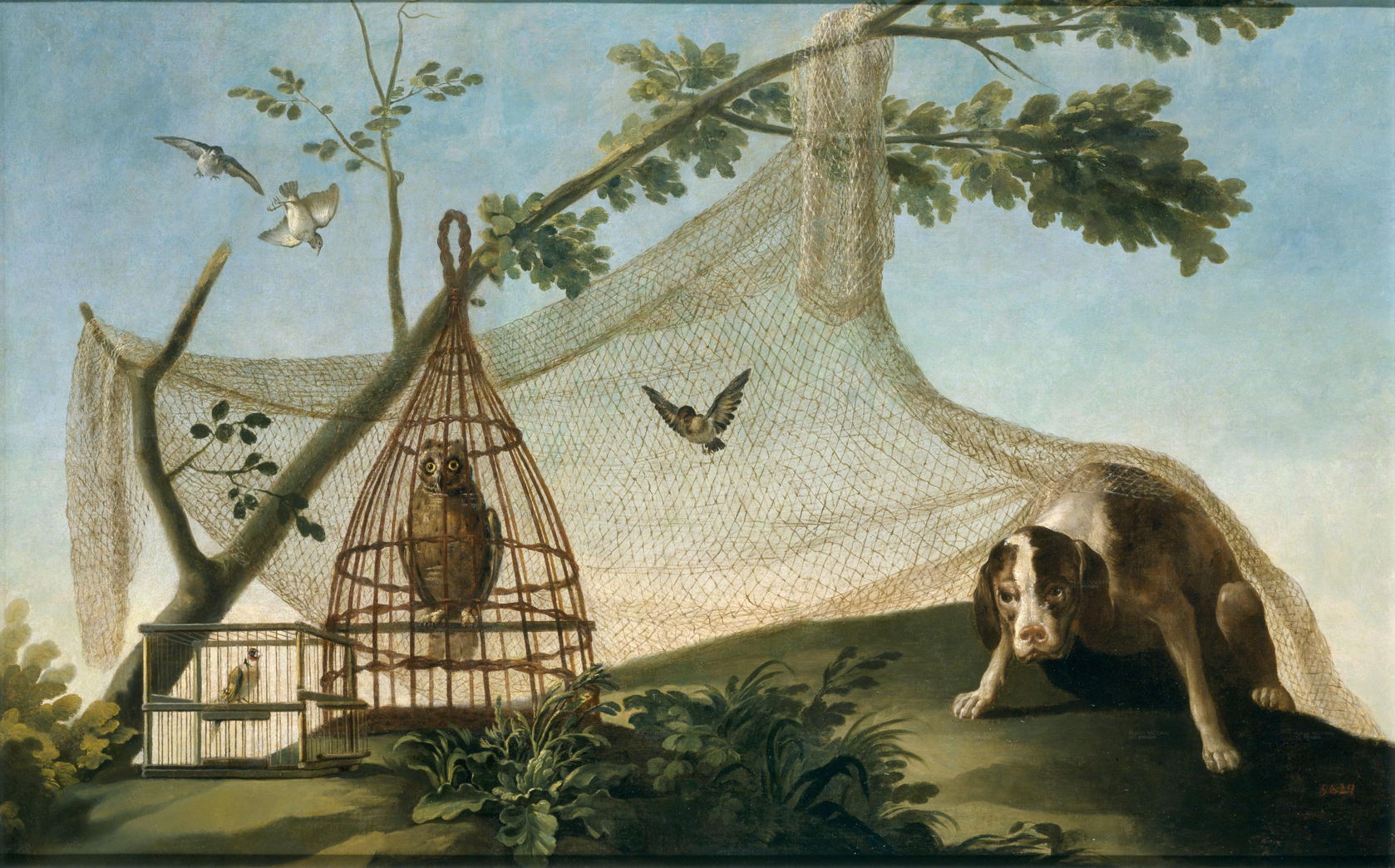
Hunting with a Decoy, another of the first batch delivered in May 1775, includes a fine portrait of a dog, together with five different birds. At the upper right, an owl and another bird are shown in flight, with a different owl and a small bird in cages below.
In July 1786, Goya was at last appointed Painter to the King, and held that position until the death of King Carlos III in December 1788. His first substantial commission was to provide a set of thirteen cartoons to be turned into tapestries for the dining room at El Pardo. The Royal Tapestry Factory was being reorganised, and was in need of work for the king.
Goya presented his sketches for these in the autumn of 1786, and the completed paintings were delivered the following year. They consist of a central series of the seasons, rightly recognised today as one of Goya’s finest series of paintings, together with some more social realist images.
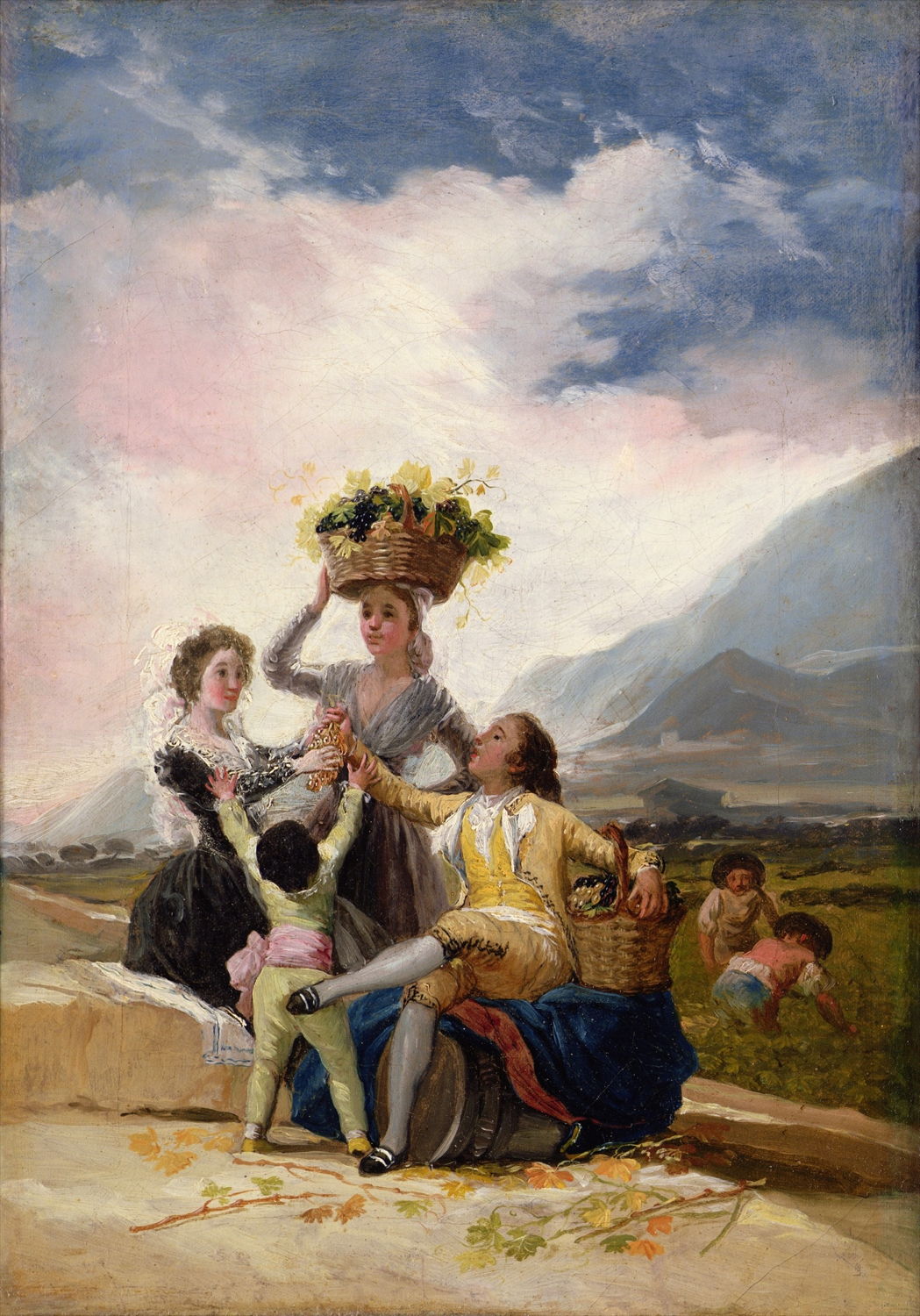
His sketch for Autumn (1786) shows Majas and Majos receiving grapes being picked by the hard-working labourers behind them.
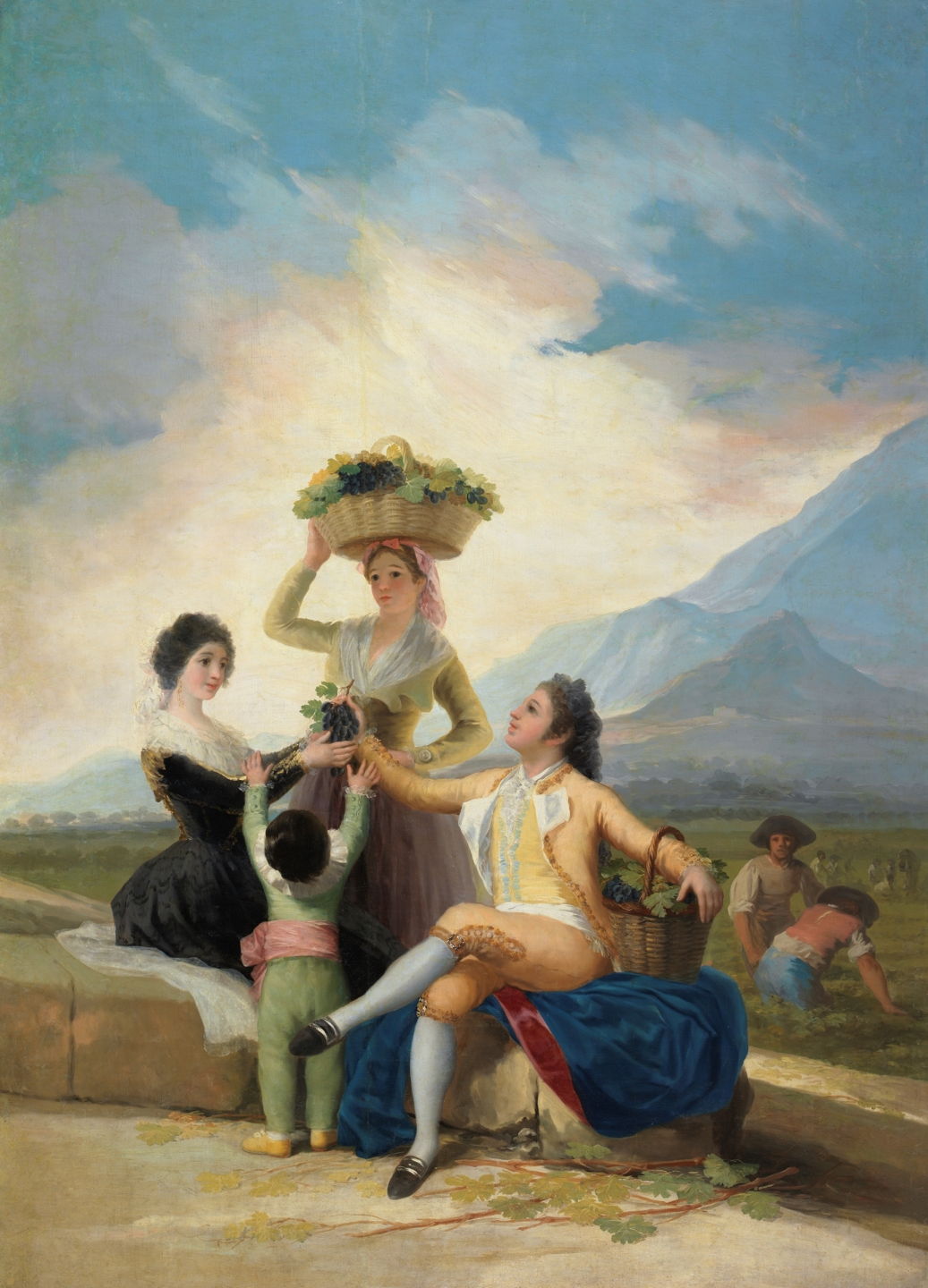
The finished cartoon, Autumn: The Grape Harvest (1786-87), uses the same composition but refines the bright sky.
Tapestry manufacture went into decline in Europe during the final years of the eighteenth century, and almost became extinct with Napoleon’s empire. It was revived by William Morris and the Arts and Crafts movement associated with the Pre-Raphaelites in Britain.

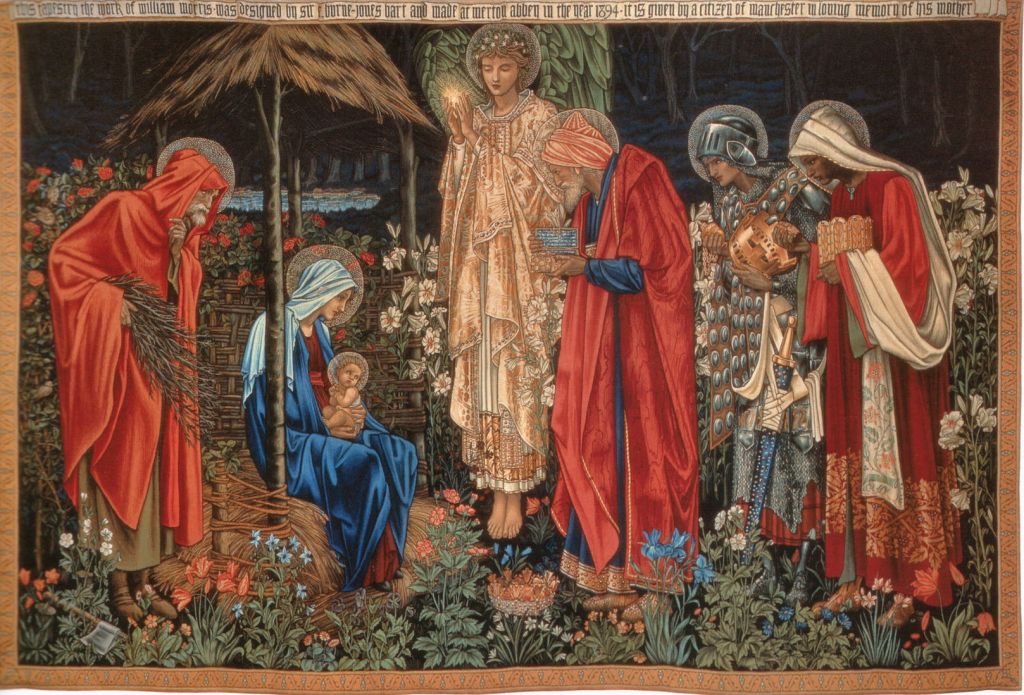
This exquisite tapestry of The Adoration of the Magi was designed in 1888 by Edward Burne-Jones, William Morris and the lesser-known John Henry Dearle. This version was woven six years later for the Corporation of Manchester, and is one of ten known examples. The composition was taken from a watercolour by Burne-Jones from 1887, photographically enlarged into cartoons, and coloured and decorated with flowers by Morris and Dearle.
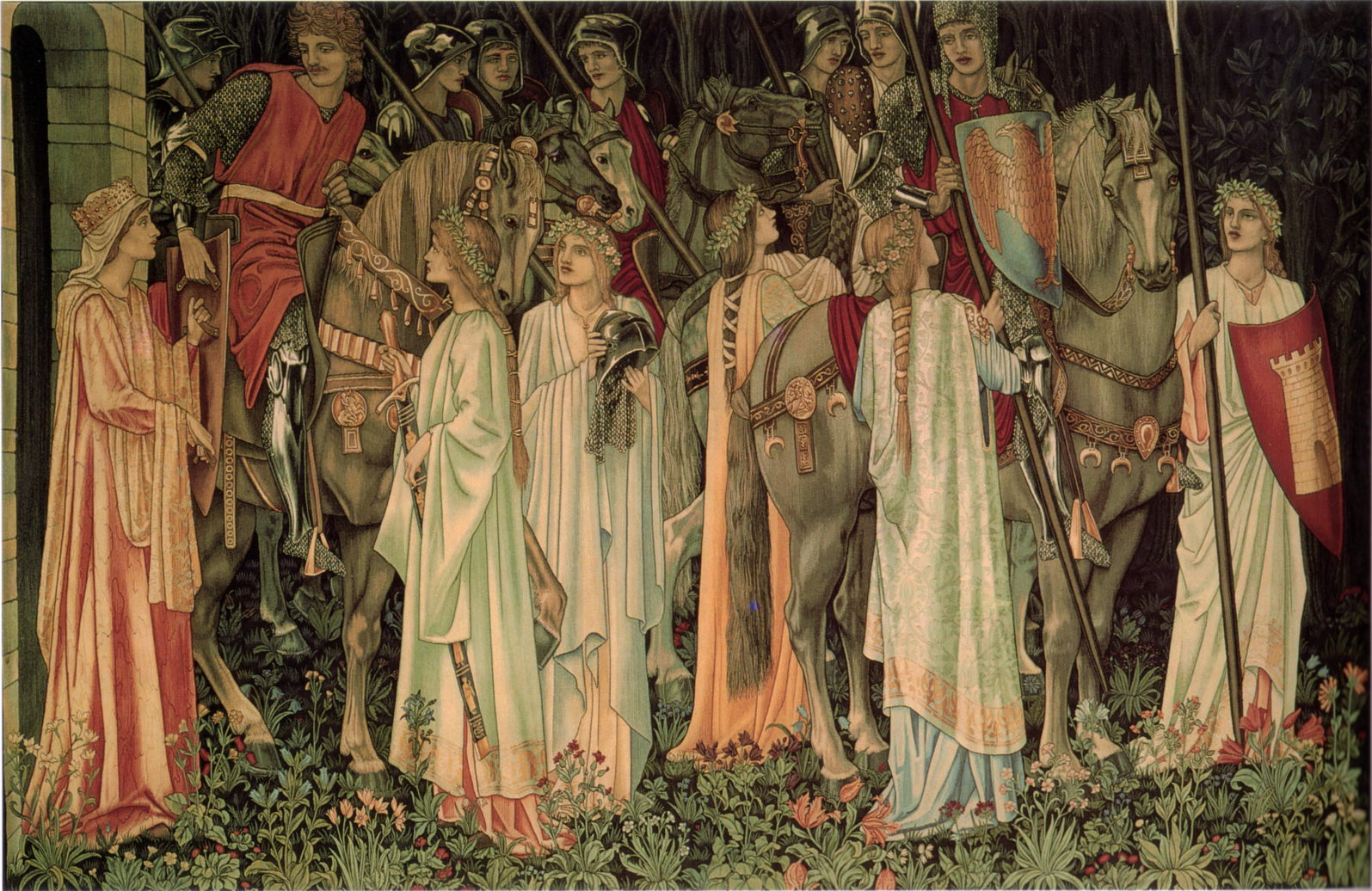
In the 1890s, William Morris’s company created sets of six tapestry panels telling the story of the quest for the Holy Grail. Much of the artistic work was performed by Sir Edward Burne-Jones, with Morris mainly concerned with the design, and the younger John Henry Dearle responsible for floral and other details. The first set was made for Stanmore Hall in Shropshire. This image of The Arming and Departure of the Knights shows the panel made for the second set in 1895-96.
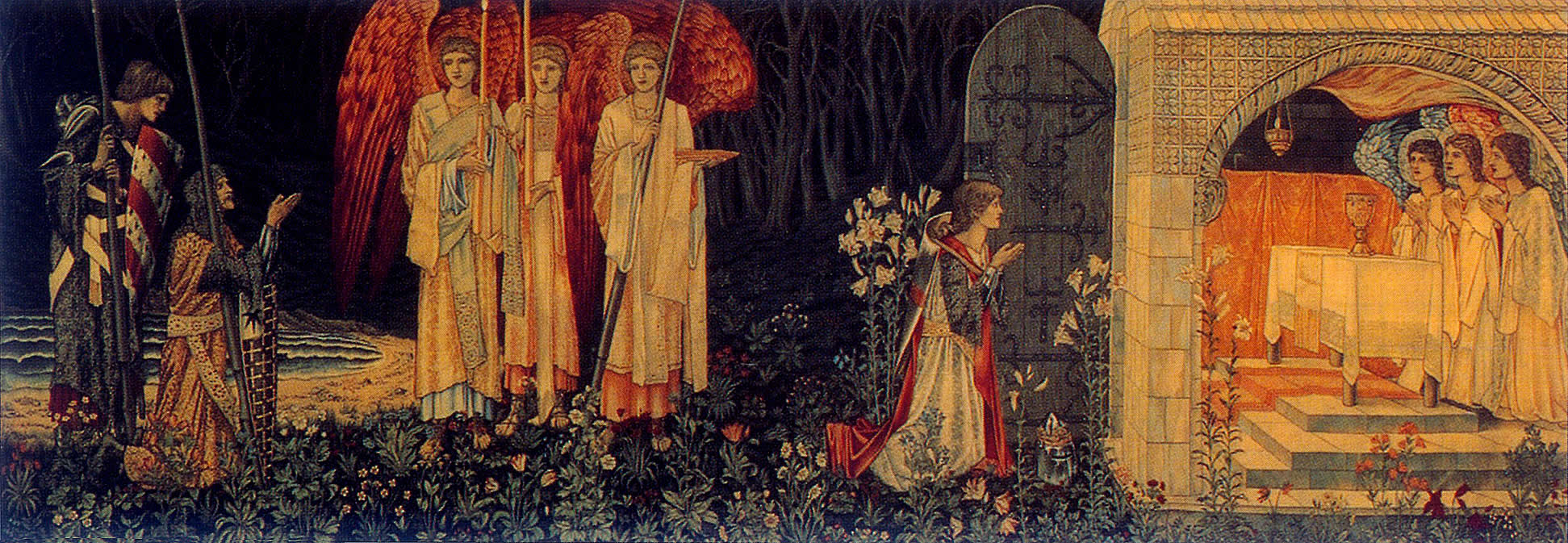
This section of the tapestry shows The Attainment: The Vision of the Holy Grail to Sir Galahad, Sir Bors, and Sir Perceval, and was made in 1895-96.
A few subsequent painters have created designs as well.

The Nabi painter Maurice Denis became more interested in decorative arts, and in 1898 made this design model for a tapestry showing a Cavalry Legend, or Three Young Princesses.

