
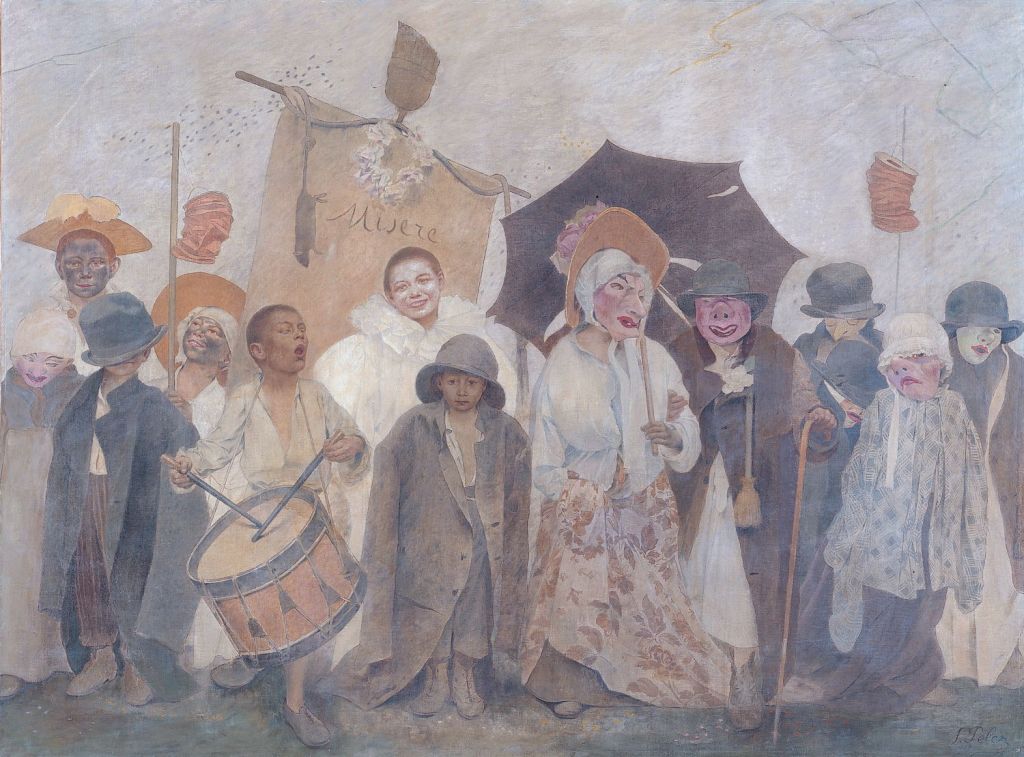
A mask is a cover worn over part or all of the face. Covering the face more generally has been considered in this previous article. Here I’ll concentrate on masks that represent the face, and those used in the theatre, carnivals and masked balls.
Masks have been associated with acting and the theatre since ancient times, and can be seen as symbolic of drama and the stage.
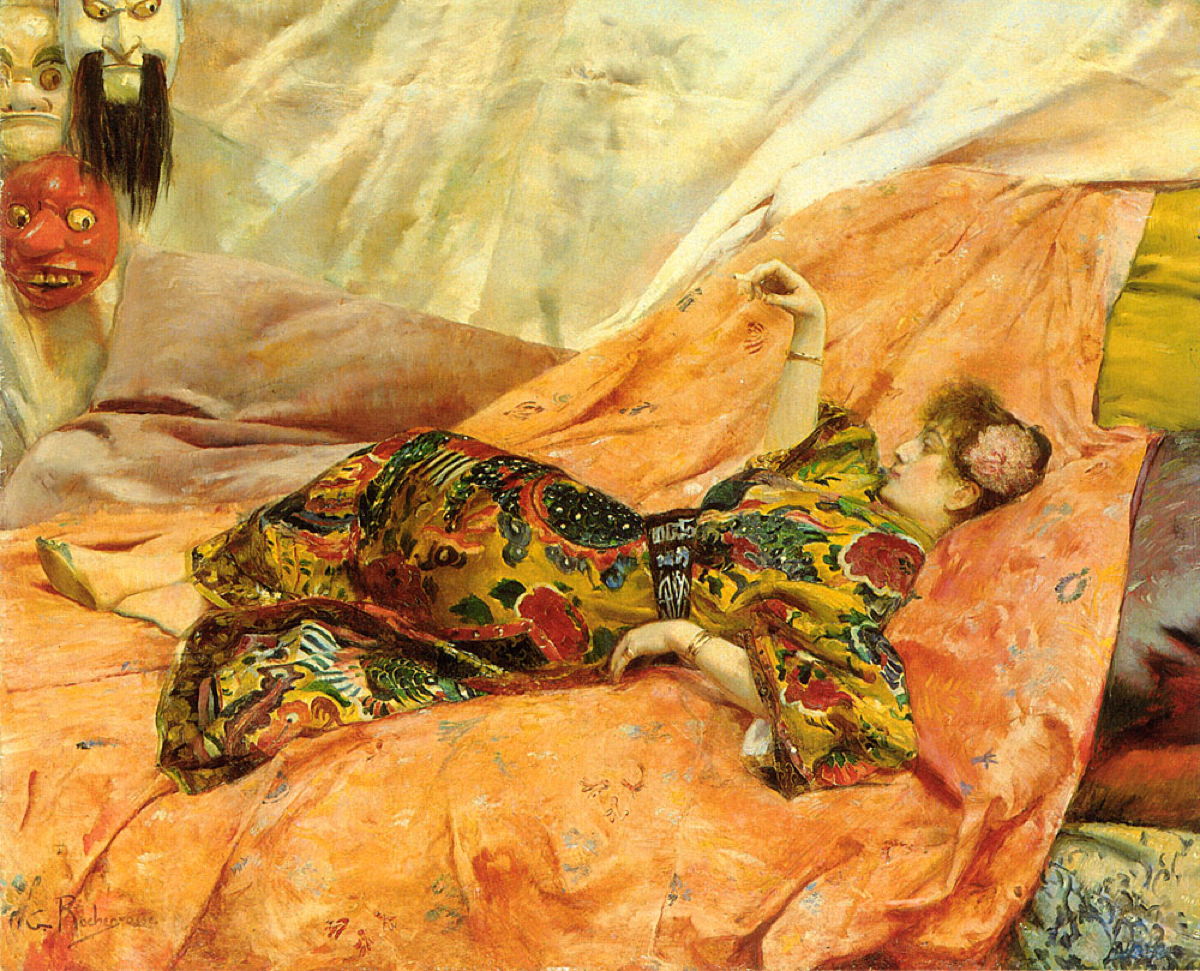
Georges Rochegrosse painted this Portrait of Sarah Bernhardt in about 1900, including three masks taken from Japanese Noh theatre at the left edge. Bernhardt was one of the most famous actresses of this period.
Some of the most remarkable archaeological discoveries of the late nineteenth century were unearthed at Tanagra in Greece around 1874, and included numerous painted terracotta figurines that Jean-Léon Gérôme featured in several of his paintings.
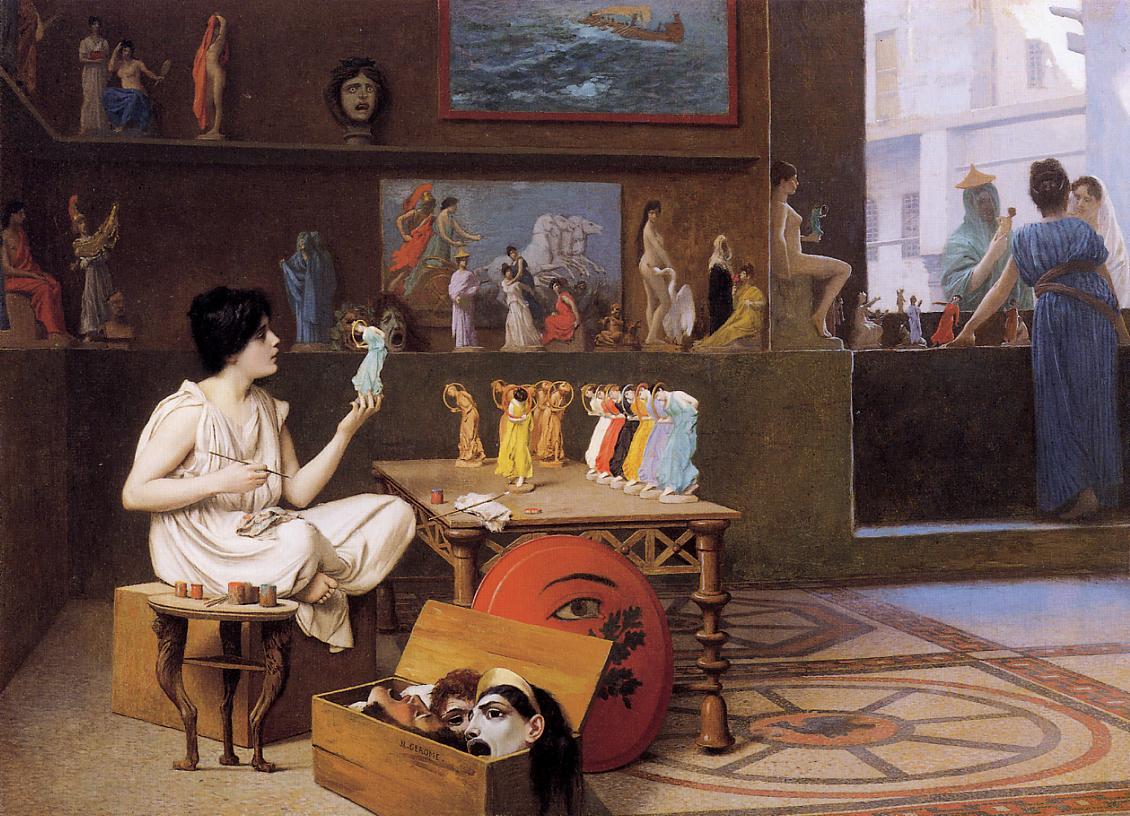
Sculpturae Vitam Insufflat Pictura (Painting Breathes Life into Sculpture) (1893) is a combination of a manifesto for Gérôme’s own polychrome sculpture, and a celebration of those discoveries at Tanagra. In addition to painted figurines, there’s a wooden box of masks in the foreground, and some on the shelves behind.
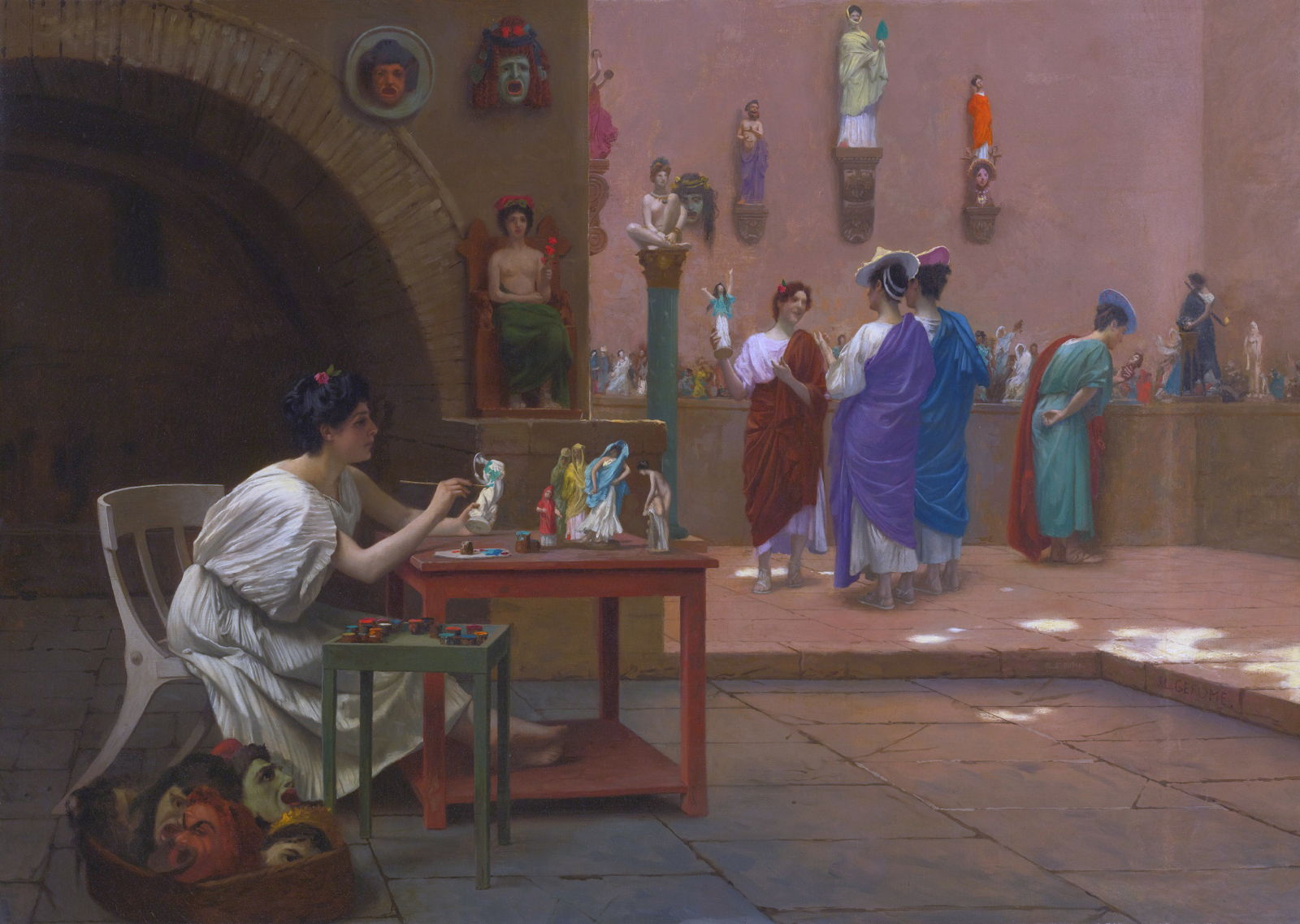
Gérôme’s Atelier of Tanagra from the same year includes a wider range of figurines and masks in a similar setting. These are typical of classical masks, where the face with mouth agape stands for tragedy, and the smiling face for comedy.

If his painting of The Artist’s Model from 1895 is to be believed, Gérôme kept several masks as props in his own studio, where he’s working on full-size sculpture of his model Emma.
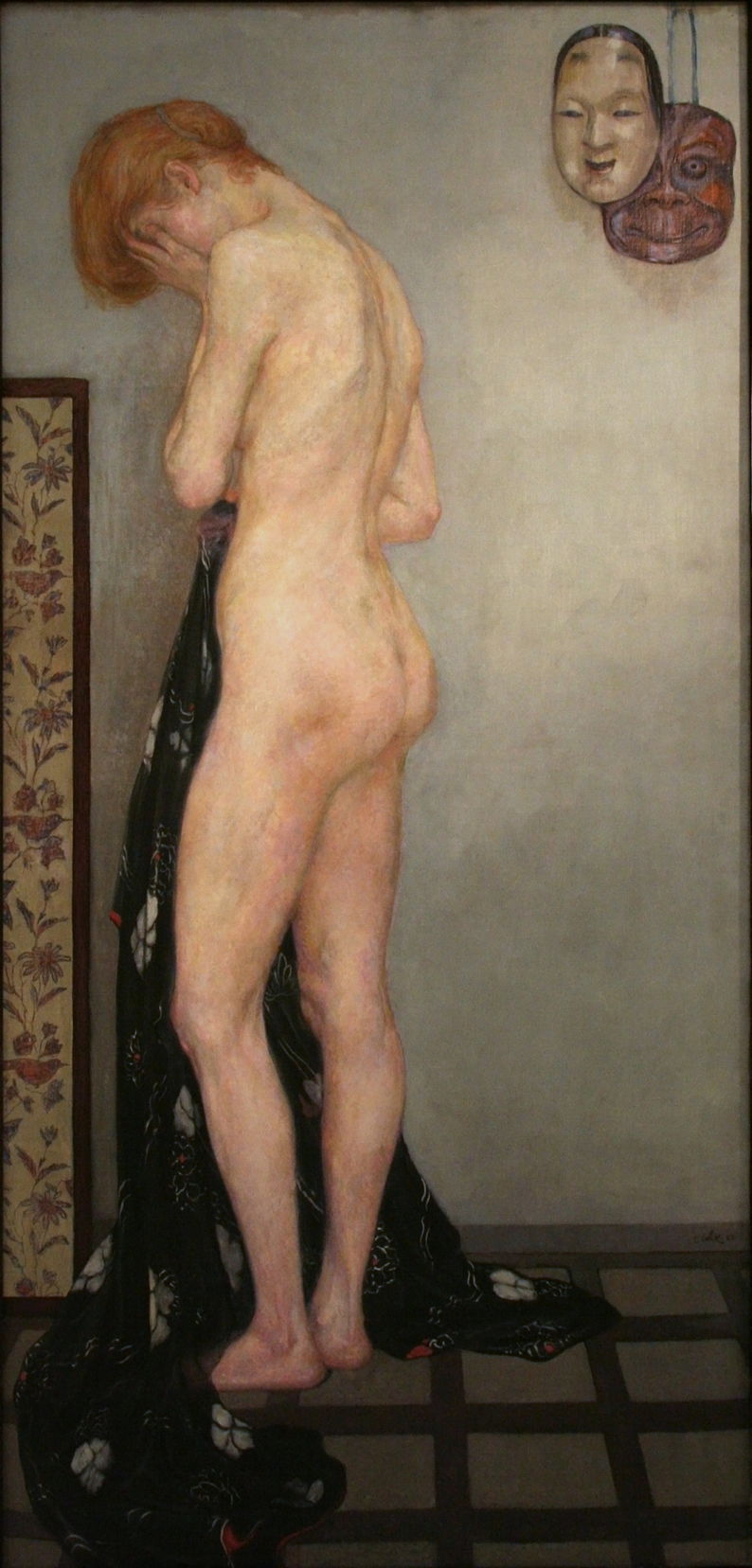
Emil Orlík painted this unusual Model in 1904. She appears to have become shy or distressed. Her gown, screen, floor and hanging masks are evidence of the artist’s Japonisme.
Masks worn for balls seldom covered the whole face, and their primary purpose has been to disguise identity, thus to encourage extra-marital relationships, even promiscuity.
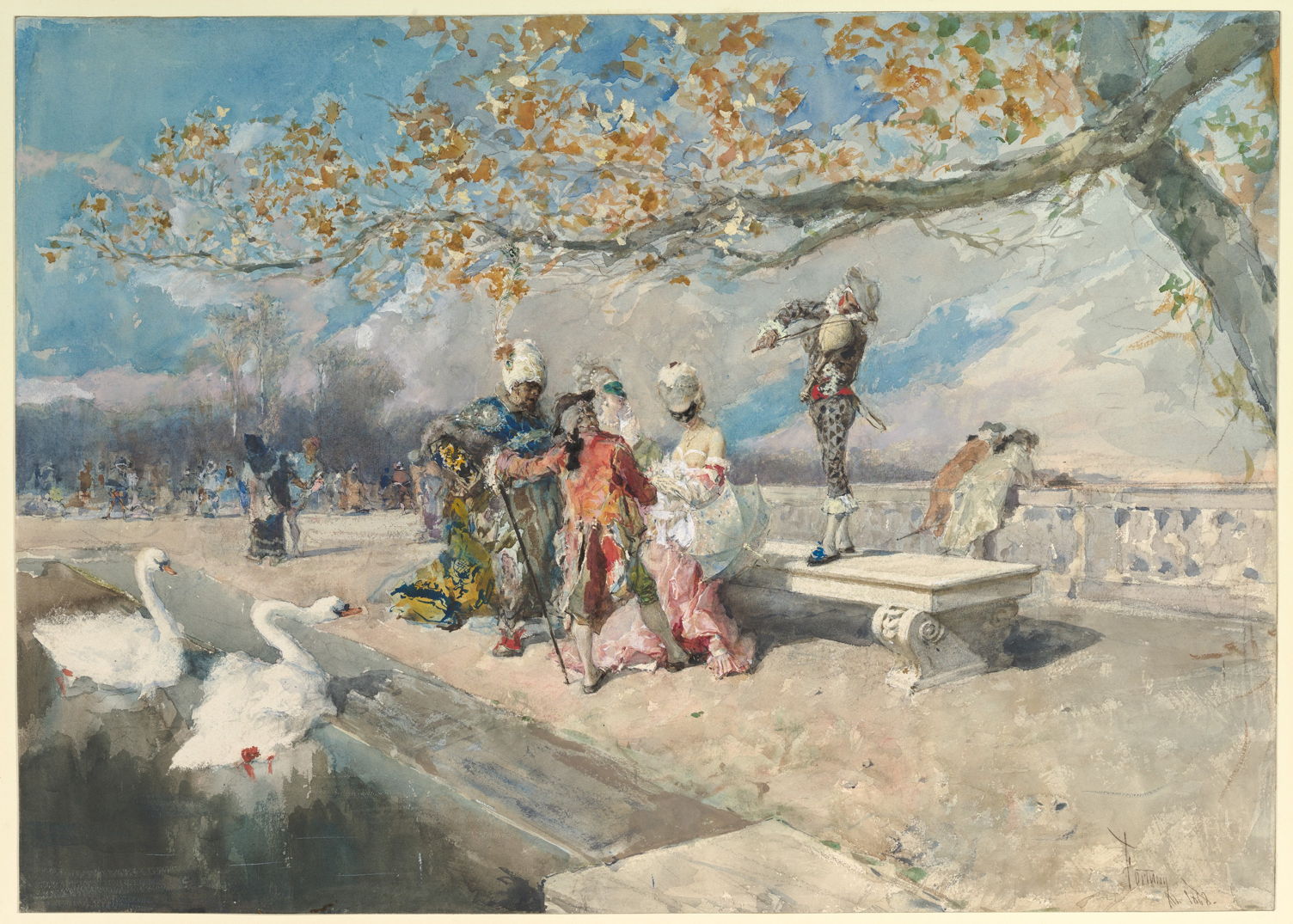
Marià Fortuny’s Masquerade (1868) is a marvellously loose watercolour showing an open-air masked ball, presumably held in Italy in the autumn, which is arousing the interest or bemusement of two swans. Dress is liberal to say the least, with the masked woman in the centre baring her breasts and holding a parasol.

Despite its title, Lovis Corinth’s Witches (1897) isn’t a depiction of sensuous rites taking place in a coven. Instead the women are preparing a younger woman to attend a masked ball. Their subject has just got out of the wooden tub in the foreground, has been dried off, and is about to don the fine clothes laid over the chair at the left, including the black mask.

Fernand Pelez’s La Vachalcade (The Cow-valcade) from 1896 shows young revellers taking part in a carnival procession, perhaps one of those in Montmartre at the time. Several are wearing full masks.

