
Although Naturalist painting had originated in the countryside among the rural poor, it soon came to record changing times in science. One of the more prominent painters of science and scientists was Léon Lhermitte, now known almost entirely for his rural paintings.

Claude Bernard (1813-1878) was a pioneering physiologist whose writings were of great influence to Naturalists, including Émile Zola. Following Bernard’s death, the Sorbonne (where he had taught) commissioned Lhermitte to paint his portrait in 1886. This is a faithful anonymous copy of Claude Bernard and His Pupils, which was exhibited at the Salon in 1889. This shows Bernard in the midst of performing an experiment on a rabbit, his students discussing its results, and one writing the experimental observations in the laboratory daybook.
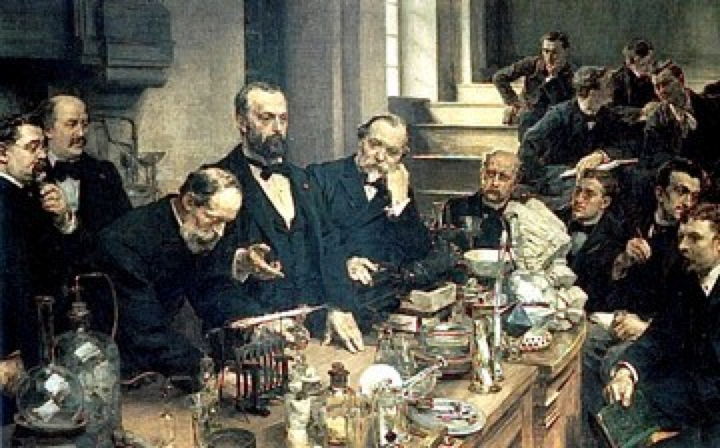
Lhermitte’s painting of The Chemist Henri-Étienne Sainte-Claire Deville, Lesson on Aluminium from the following year was also commissioned by the Sorbonne in Paris; I apologise for the small size of this image. Henri-Étienne Sainte-Claire Deville (1818-1881) was responsible for many significant discoveries in chemistry, the most important being a method for the industrial manufacture of aluminium. He’s shown here surrounded by objects made from this new material, which quickly came to transform manufacturing and to invade every home.
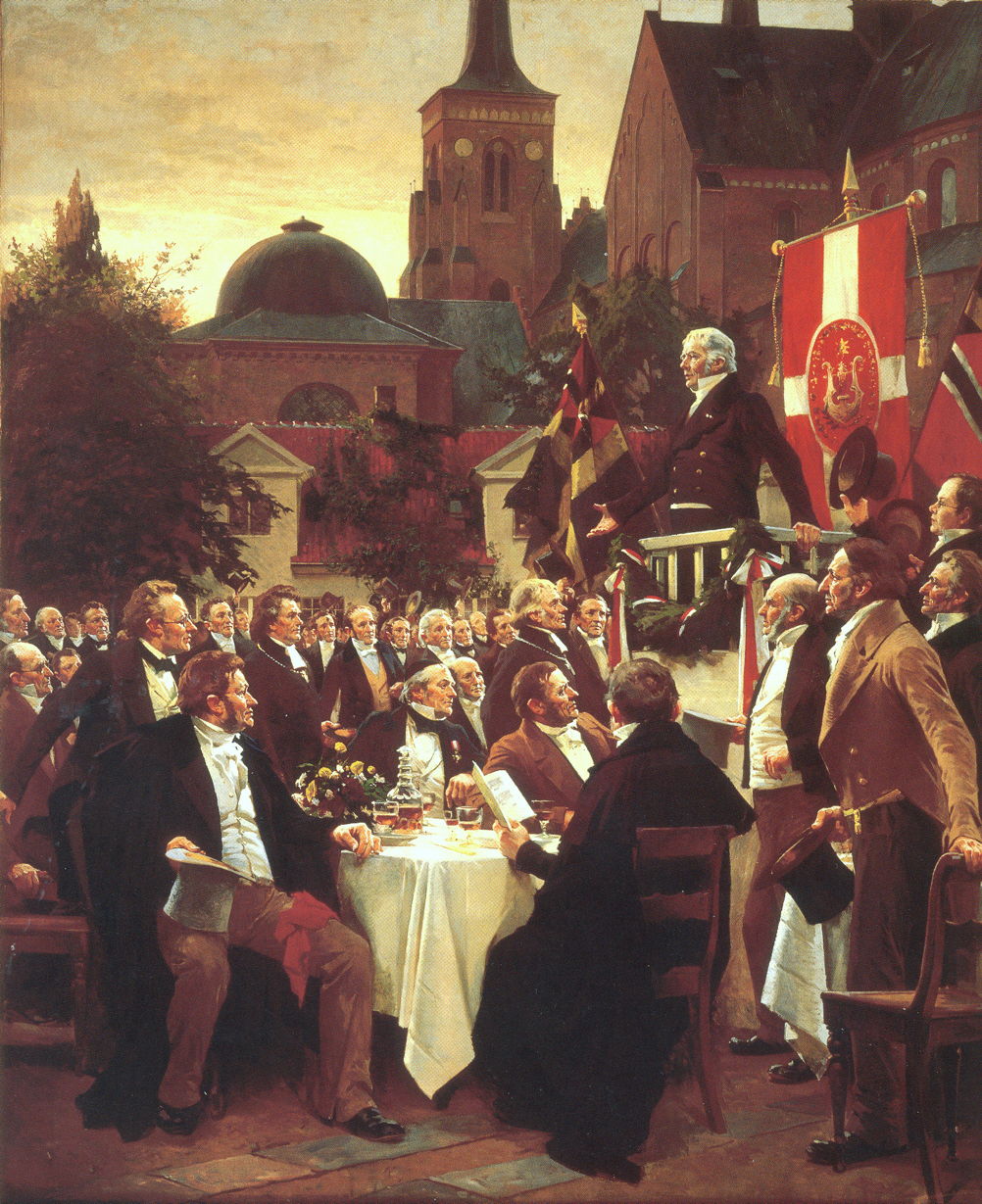
Several Naturalist painters were commissioned to paint murals depicting scientific events for universities. Among them is Erik Henningsen’s The Nordic Natural Science Research Meeting 14 July 1847, completed in 1895 for the Aula of the University of Copenhagen. Presiding over this scientific meeting was the great Danish physicist and chemist Hans Christian Ørsted, who was nearly seventy at the time.
Technology was also becoming commonplace at work.

Charles Frederic Ulrich painted a young apprentice drinking during a moment’s pause in his work in The Village Printing Shop, Haarlem (1884). In the background is a large and relatively modern printing press.

Another Naturalist artist, Jean-Eugène Buland, in his Un Patron, or The Apprentice’s Lesson from 1888 shows a young boy being trained to make a cogwheel. This was part of the French industrial recovery following its defeat in the Franco-Prussian War.

The subject of Louis Muraton’s The Photographer, painted before 1901, is rocking a glass plate in a bath of developer, in his improvised darkroom, another sign of the times.
Major innovations in medical procedures and care were introduced, and duly recorded in Naturalist paintings.
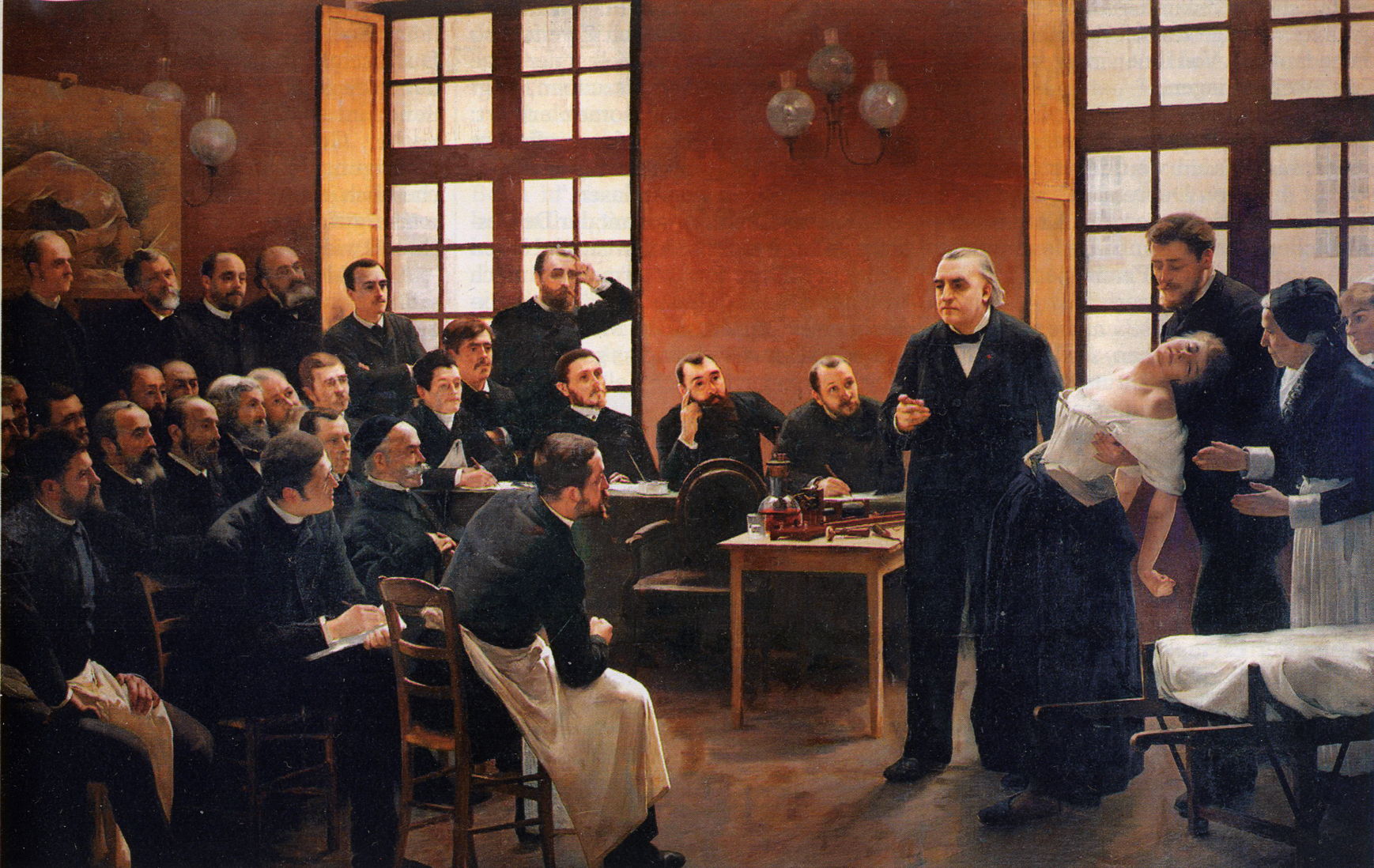
In André Brouillet’s A Clinical Lesson at the Salpêtrière Hospital (1887), an eminent neurologist Jean-Martin Charcot is demonstrating how he could hypnotise Marie “Blanche” Wittman, the ‘Queen of Hysterics’, into suffering hysterical collapse. Charcot and Wittman were a renowned partnership in this ‘act’, who performed in front of Sigmund Freud when he visited the hospital.
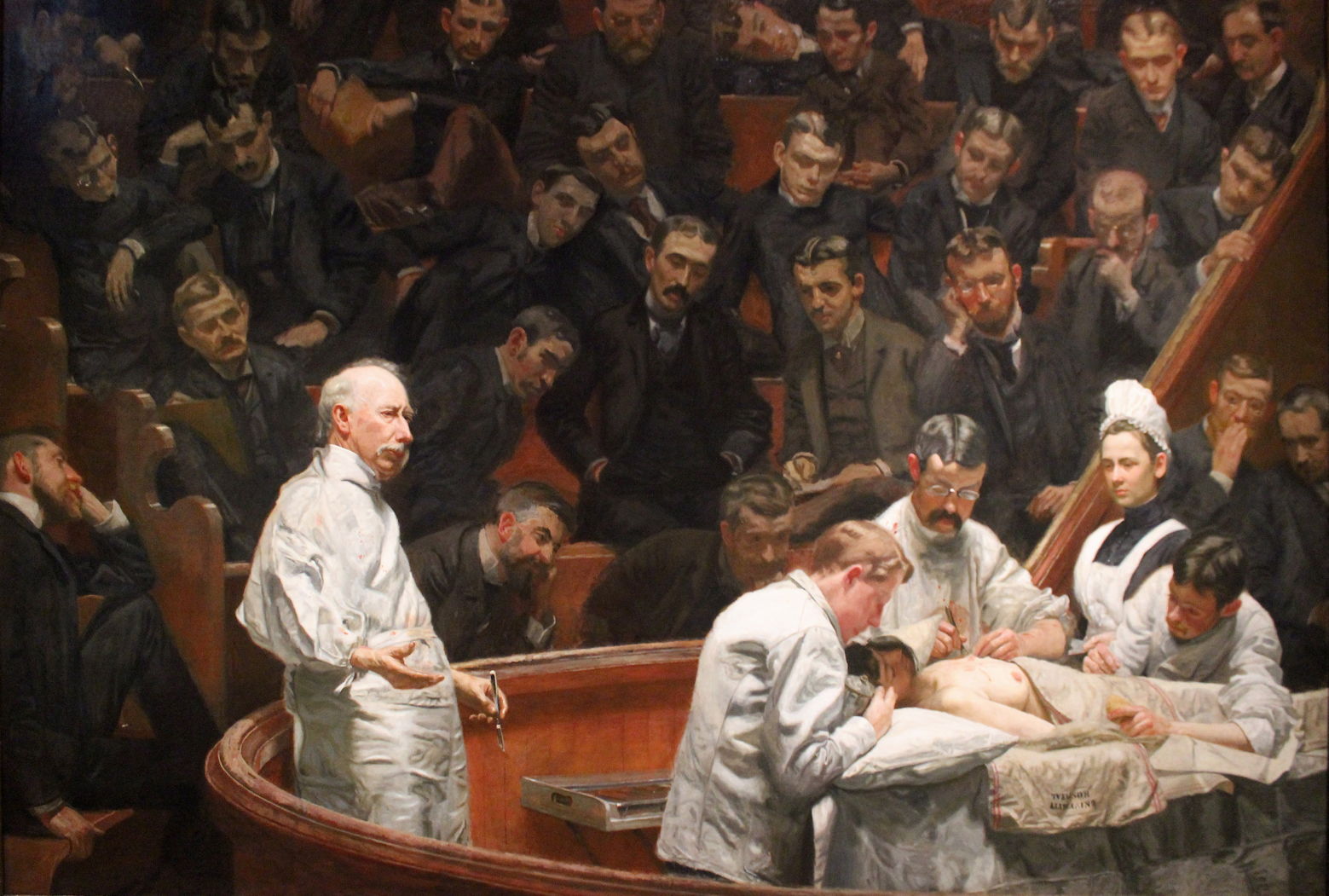
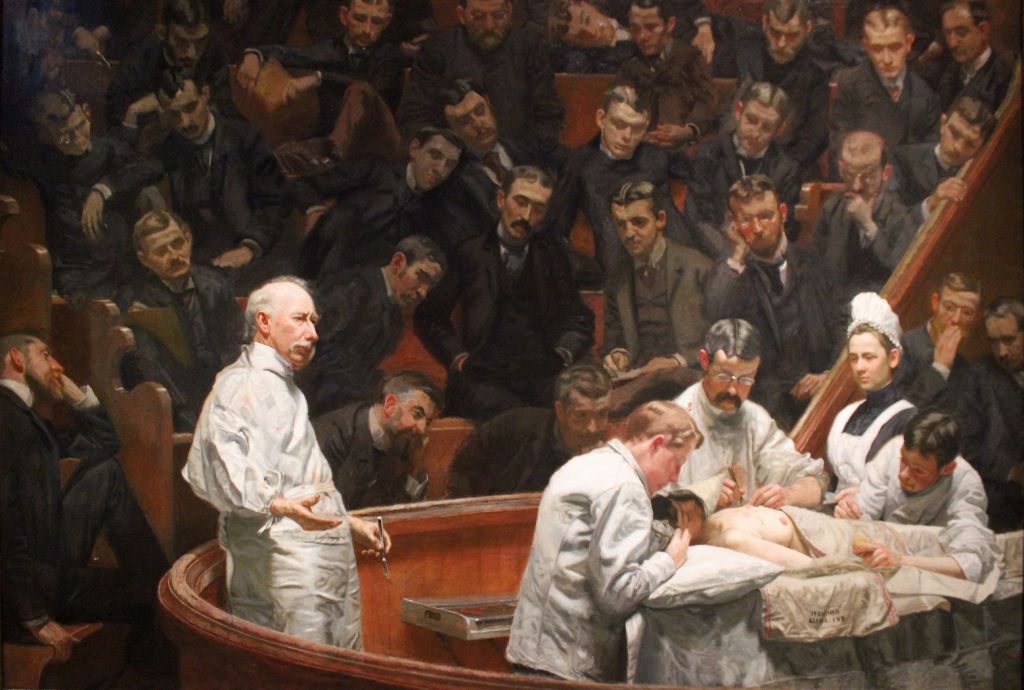
In the USA, Thomas Eakins painted the retiring professor of surgery, Dr. David Hayes Agnew, at work in the University of Pennsylvania School of Medicine. The patient is unconscious thanks to a volatile liquid general anaesthetic administered via a mask. Bright surgical lighting puts six figures literally in the limelight, including that of Agnew, holding a scalpel at the left.
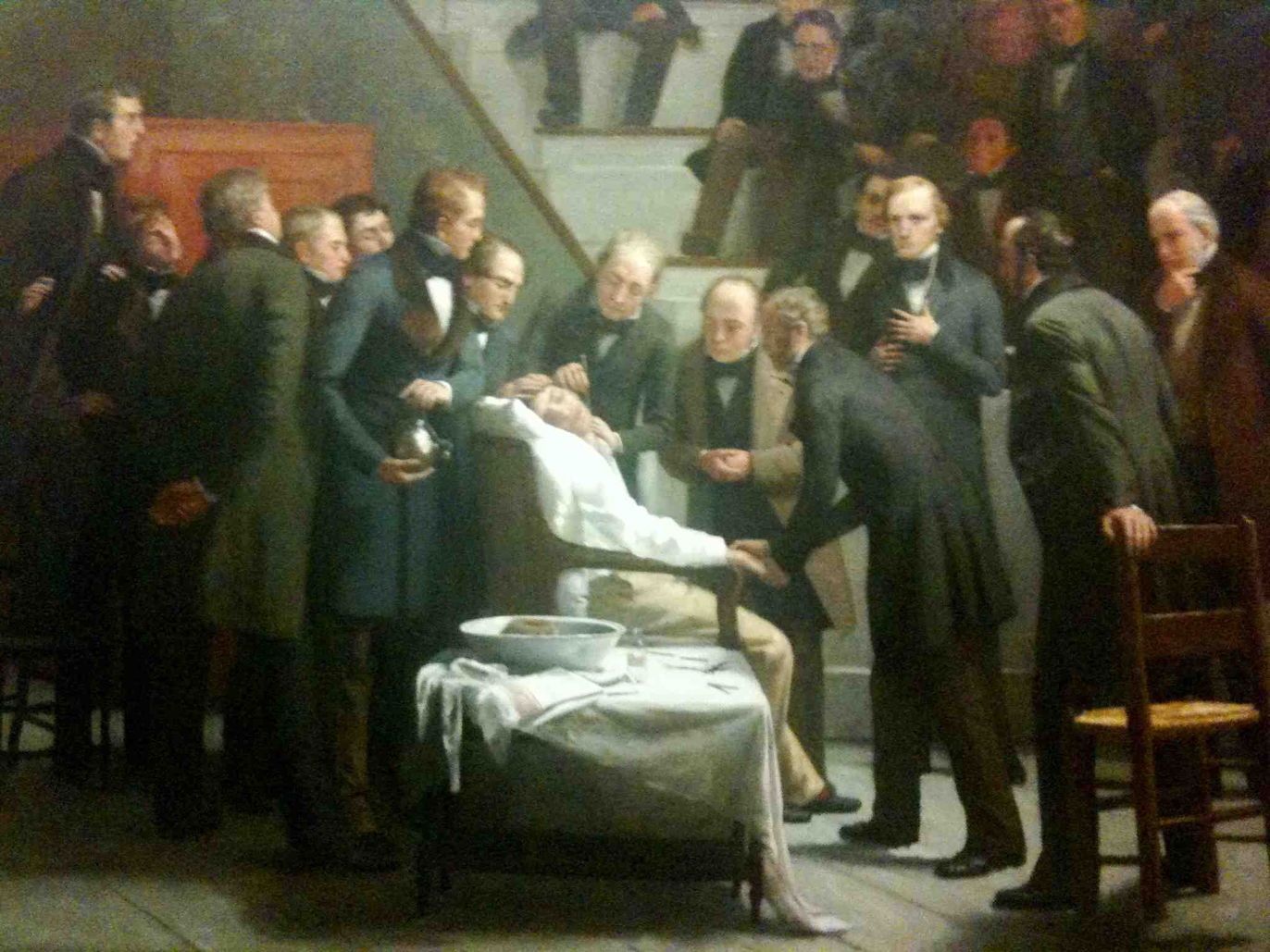
Robert C. Hinckley’s Ether Day, or The First Operation with Ether, painted between 1882-93, recreates the scene on 16 October 1846 in what is now known as the Ether Dome in the Massachusetts General Hospital, Boston, MA. Here John Collins Warren is removing a tumour from the neck of a local printer, Edward G Abbott, who was anaesthetised using ether, in its first recorded use for a general surgical procedure; I apologise for the poor quality of this image.

Finally, Anna Sahlstén’s Surgery in Hospital from about 1893 shows the dazzling whiteness of the modern hospital, with a smart professional nurse caring for a child patient in the background. On the wall is a large radiator for the hospital’s modern heating system, which replaced the old stoves seen in so many earlier images of hospital wards.
 The Eclectic Light Company