

There are only two ways a painter can depict reflections on water in accordance with optical reality: they can paint exactly what they see when in front of the motif, or they can understand optical principles sufficiently to recreate what they would have seen. This article looks at how those worked out in landscape paintings to the end of the eighteenth century.

Look in the landscape behind Jan van Eyck’s Madonna of Chancellor Rolin (c 1435) and you’ll see one of the earliest examples of the meticulously accurate depiction of reflections on water. These could only have resulted from careful studies made in front of the motif.
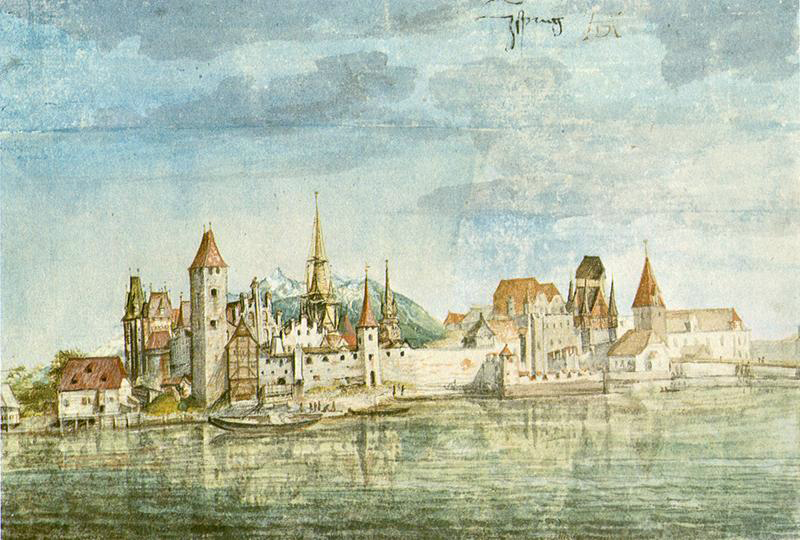
For Albrecht Dürer painting this View of Innsbruck in about 1495, this watercolour is evidence that he both recognised the challenge, and went to the trouble to paint what he actually saw, even though the overall geometry isn’t perfect, with its downward slope to the left.
Following the Northern Renaissance, other landscape painters continued this tradition, into the Dutch Golden Age.

Although Aelbert Cuyp’s View on the Rhine from about 1645 isn’t optically perfect and must at least have been finished in the studio, it demonstrates his care in trying to be faithful in its reflections.
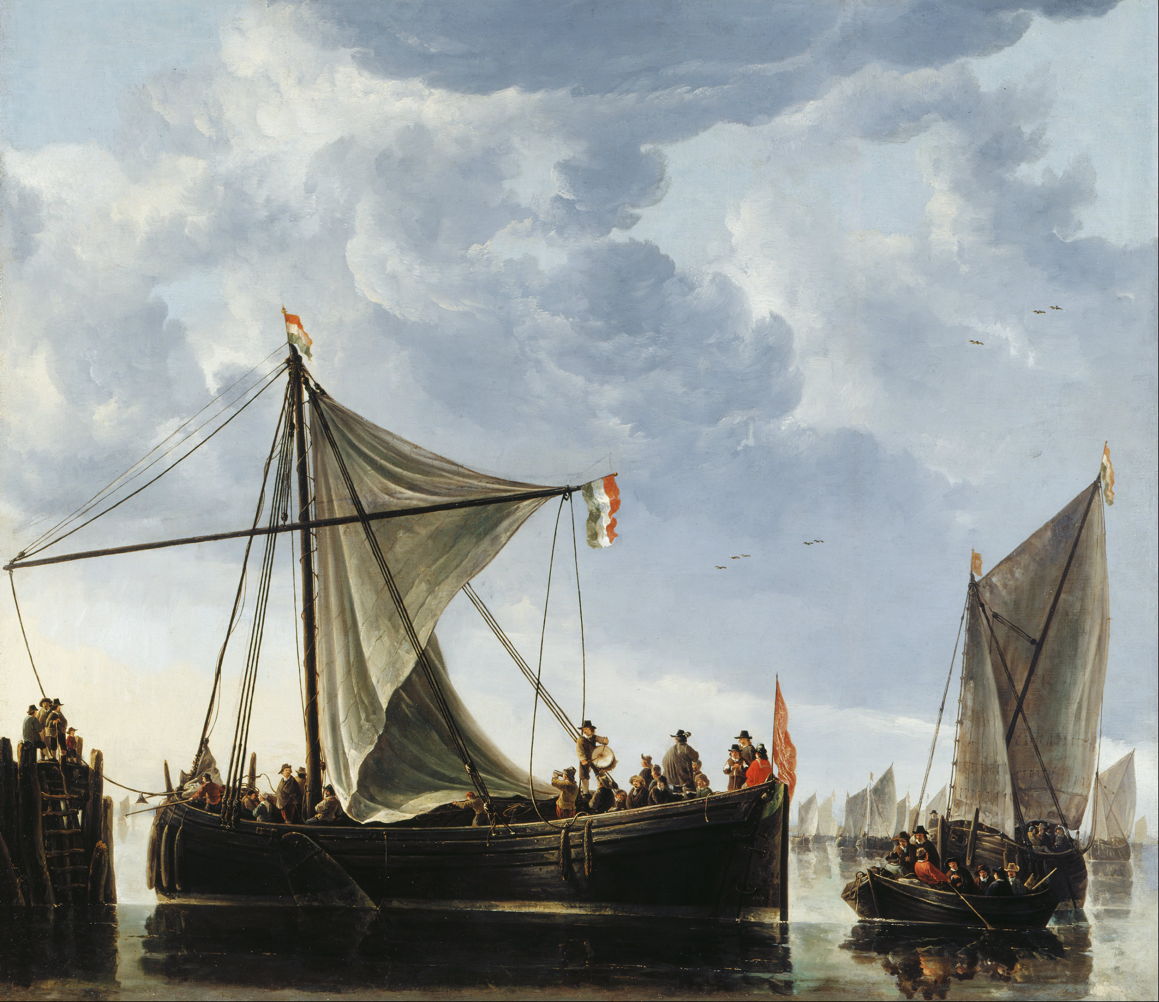
Cuyp’s larger and more detailed painting of The Passage Boat from about 1650 is similarly attentive, implying the use of careful studies made in front of the motif.

Cuyp’s grand view of The Valkhof at Nijmegen from about 1652-54 is a fine example from later in his career.
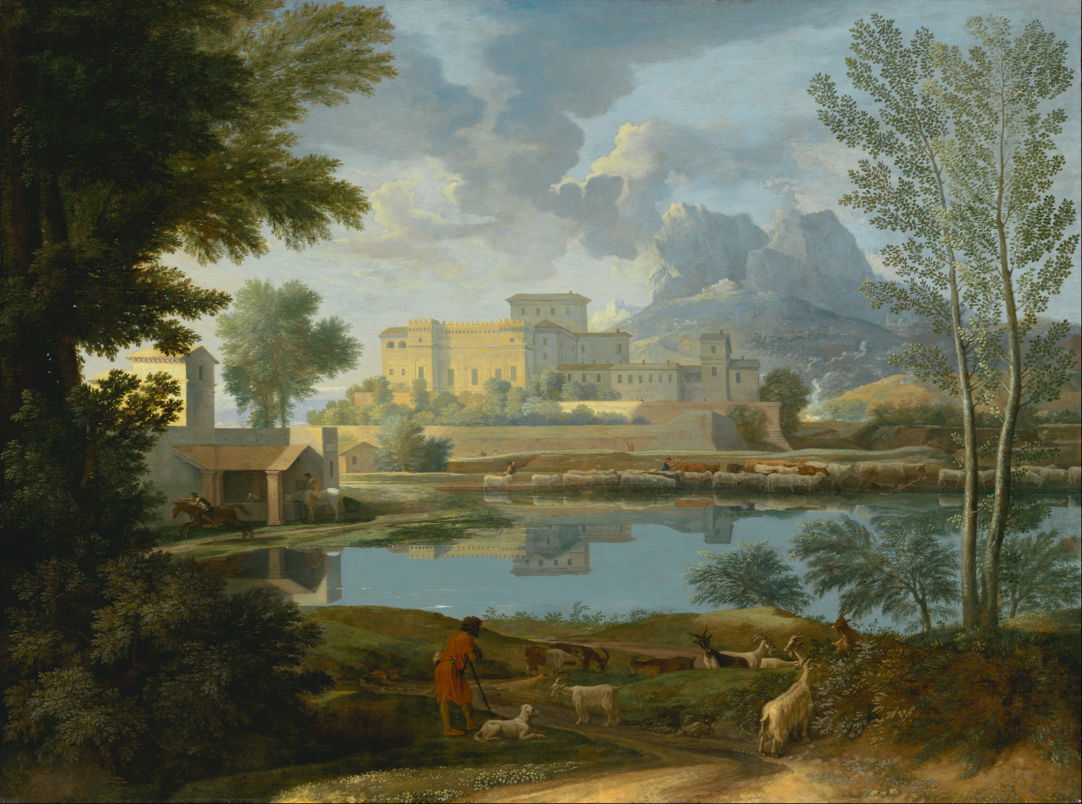
At about the same time, Nicolas Poussin used extensive reflections to augment the placid atmosphere in his idealised Landscape with a Calm (c 1651). The upper parts of the Italianate mansion, together with the livestock on the far bank of the lake, are painstakingly reflected on the lake’s surface, telling the viewer that there isn’t a breath of breeze to bring ripples to disturb those reflections.
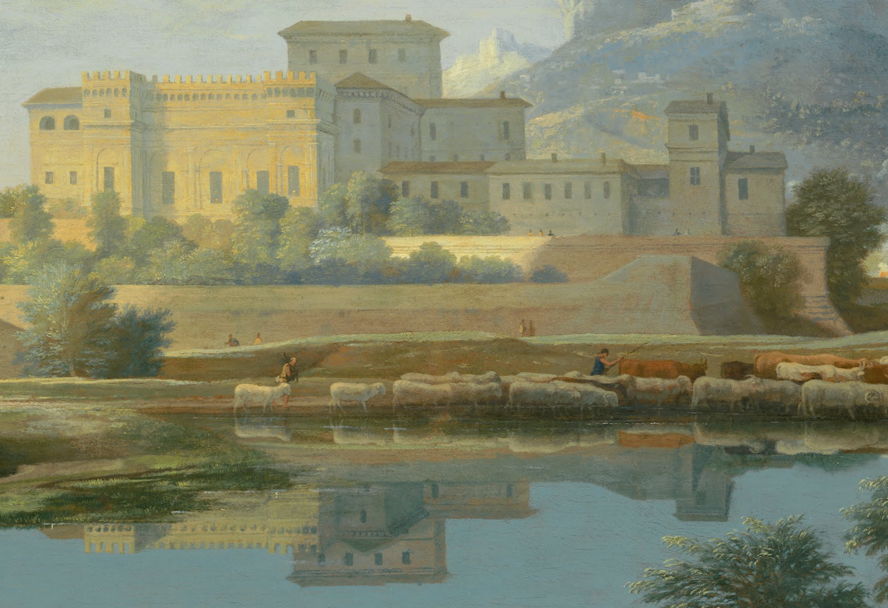
Closer examination of the reflections reveals small disparities, though. Poussin has broken the rule of depth order in painting the brown reflection of one of the cattle that is well behind the sheep at the edge of the lake, and there are inaccuracies obvious in the reflection of the villa. Those may well be the result of his assembling passages from the original plein air studies he used to build this composite.

His reflections appear most accurate in the passage showing horsemen at the left end of the lake. These make interesting comparison with Poussin’s contemporary Claude Lorrain, who appears to have avoided tackling the problems posed by reflections.
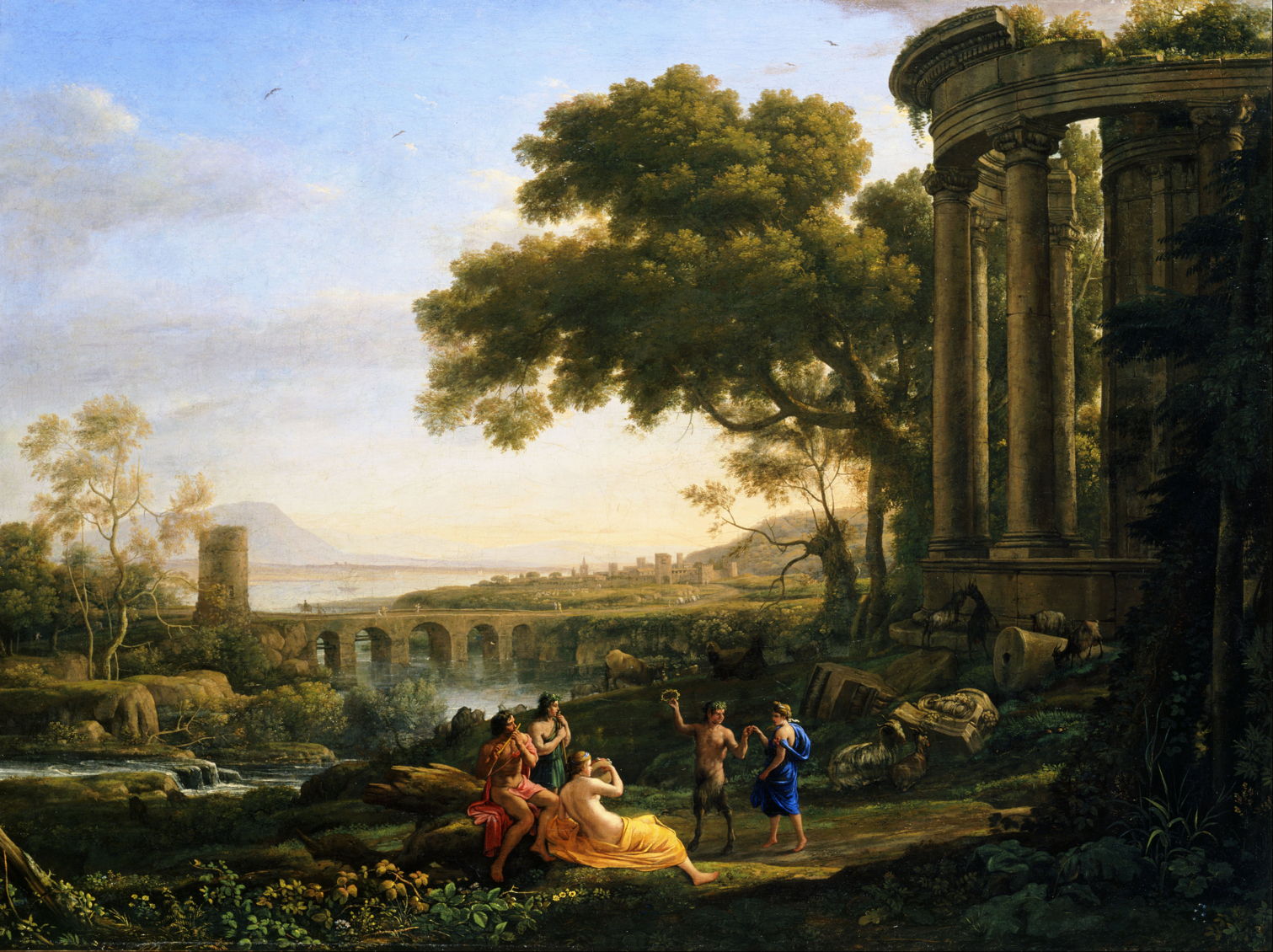
In Claude’s Landscape with Nymph and Satyr Dancing from 1641, another idealised composite assembled from the artist’s library of sketches, little attempt is made to depict the reflection of the prominent viaduct. What has been shown is unaccountably darker than the original, and vague in form. Most of Claude’s other paintings that could have included reflections show water surfaces sufficiently broken to avoid tackling the problem.
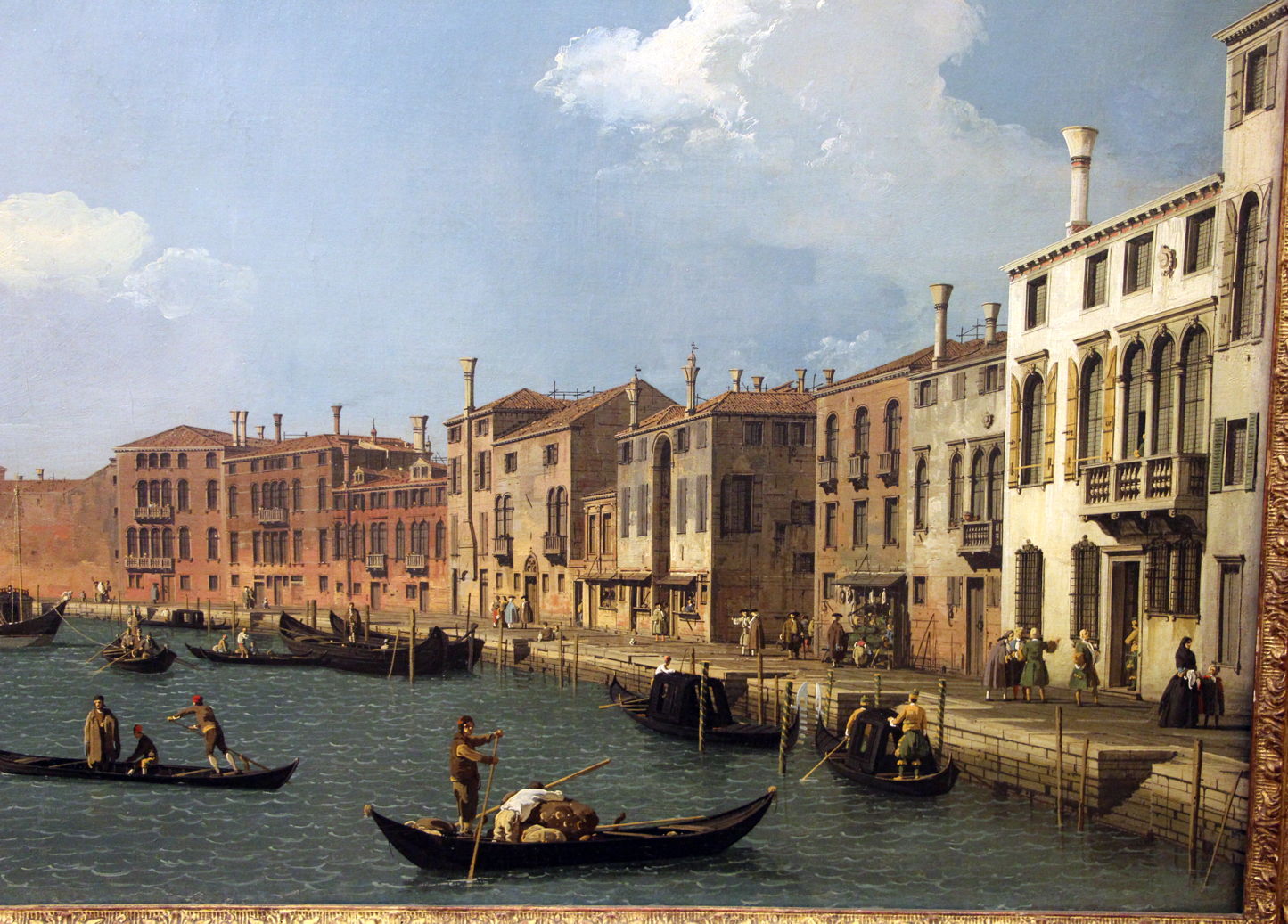
Paintings of Venice and London by Canaletto in the eighteenth century are also largely devoid of reflections. In his Canale di Santa Chiara, Venice from about 1730 the gondola in the left foreground has no reflection at all, and its three figures are similarly absent from the surface of the water.
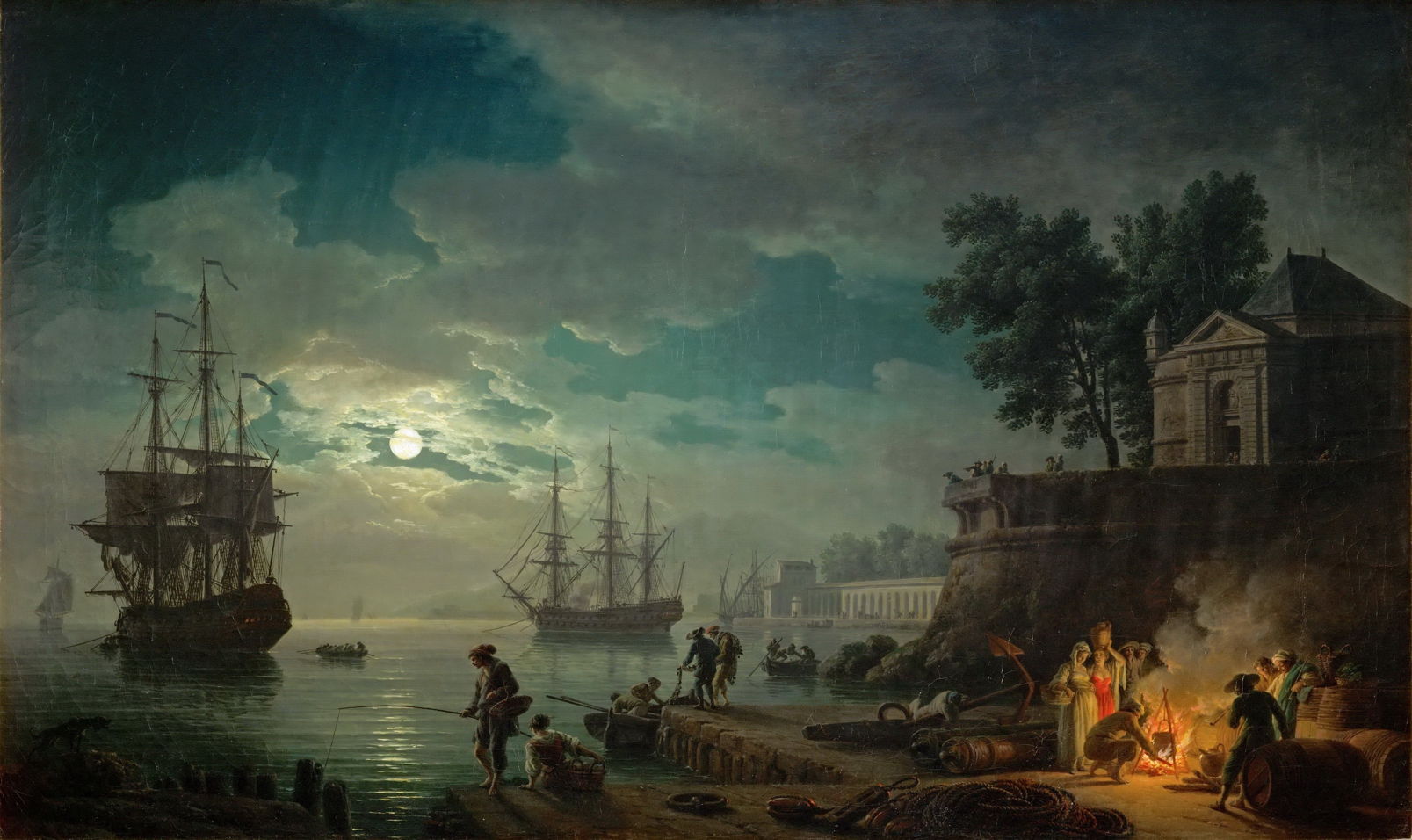
Reflections return in the studio paintings of those whose sketches made in front of the motif were sufficiently detailed to include them. Among them is Claude-Joseph Vernet, whose Seaport by Moonlight from about 1771 appears faithful. Sadly, none of his preparatory drawings or sketches appear to have survived, although they were a key influence on the next generation of landscape artists.
 The Eclectic Light Company