
Most figurative art, both painting and sculpture, is the product of a partnership between the artist and their model. This weekend I celebrate the contributions made by the latter, always seen but never credited. The partnership often extends beyond art into their personal lives, but is seldom acknowledged by either party. Ironically, we come to know the faces and bodies of those models far better than those of the artist, so at least the long-suffering model achieves some kind of immortality.
In many circumstances, models are called on to hold certain postures for uncomfortably long times.

Kirsty Whiten‘s models have had to be lithe, nimble, and patient to give her the time to capture such dynamic poses.

But they are momentary in comparison with marathons spread over several months, as required by Ellen Altfest‘s highly detailed realism. In order to achieve this, she enforces a five minute break every thirty minutes of posing, but even then models may have to drop out because of the number of days required posing for each of her paintings.
Some artists have pondered their relationship with their models visually,

Jean-Léon Gérôme’s The Artist’s Model (1895) is one of a series of works considering the artist – here, Gérôme in the role of a sculptor – the model, and the art work. Behind his model Emma Dupont is a completed polychrome statue of her putting her head through a hoop.
Like so many others, Emma Dupont arrived in Paris with her lover at the age of seventeen, only to be abandoned by him. Penniless, she was introduced to modelling by Alfred Stevens, and it was Fernand Cormon who first persuaded her to pose nude. She worked for several other artists before catching Gérôme’s eye, and quickly became his favourite. Over a period of about twenty years, she was frequently to be found naked in Gérôme’s studio, from which she made a comfortable living. No one knows if she had any closer relationship with him, or with any other artist.
One of the most famous of all artists’ models was a young Irish woman, Joanna Hiffernan, who appears in some of Whistler’s and Courbet’s paintings, and was a lover to both. Hiffernan seems to have been born in about 1843, and first met Whistler in 1860. She travelled with him to France in 1861, and posed there in a studio in Boulevard des Batignolles for one of his greatest paintings.
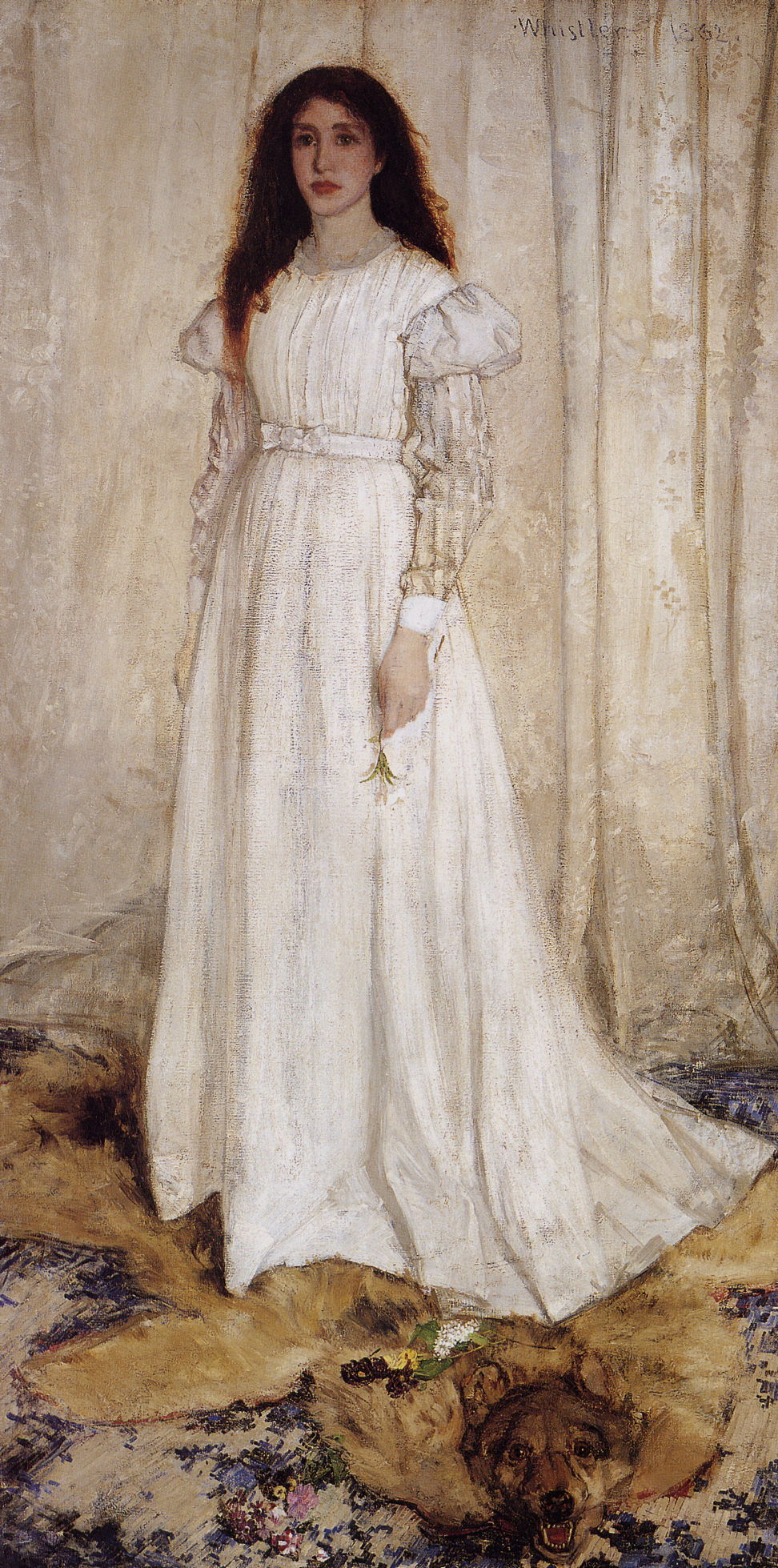
Whistler’s remarkable Symphony in White no 1: The White Girl (1862) shows her great beauty. But there was more to her than her looks: those who knew her remarked on her intelligence, the sympathy that she gave people, and the companionship that she provided the artist.
Attitudes towards artists’ models at the time weren’t even ambivalent: they were seen as little more than common prostitutes. When Whistler’s mother visited in 1864, Hiffernan had to be secreted away from her sight. At some time around 1865-66, she met Gustave Courbet, and when Whistler went off to Valparaiso for seven months in 1866, she returned to Paris and posed for Courbet.
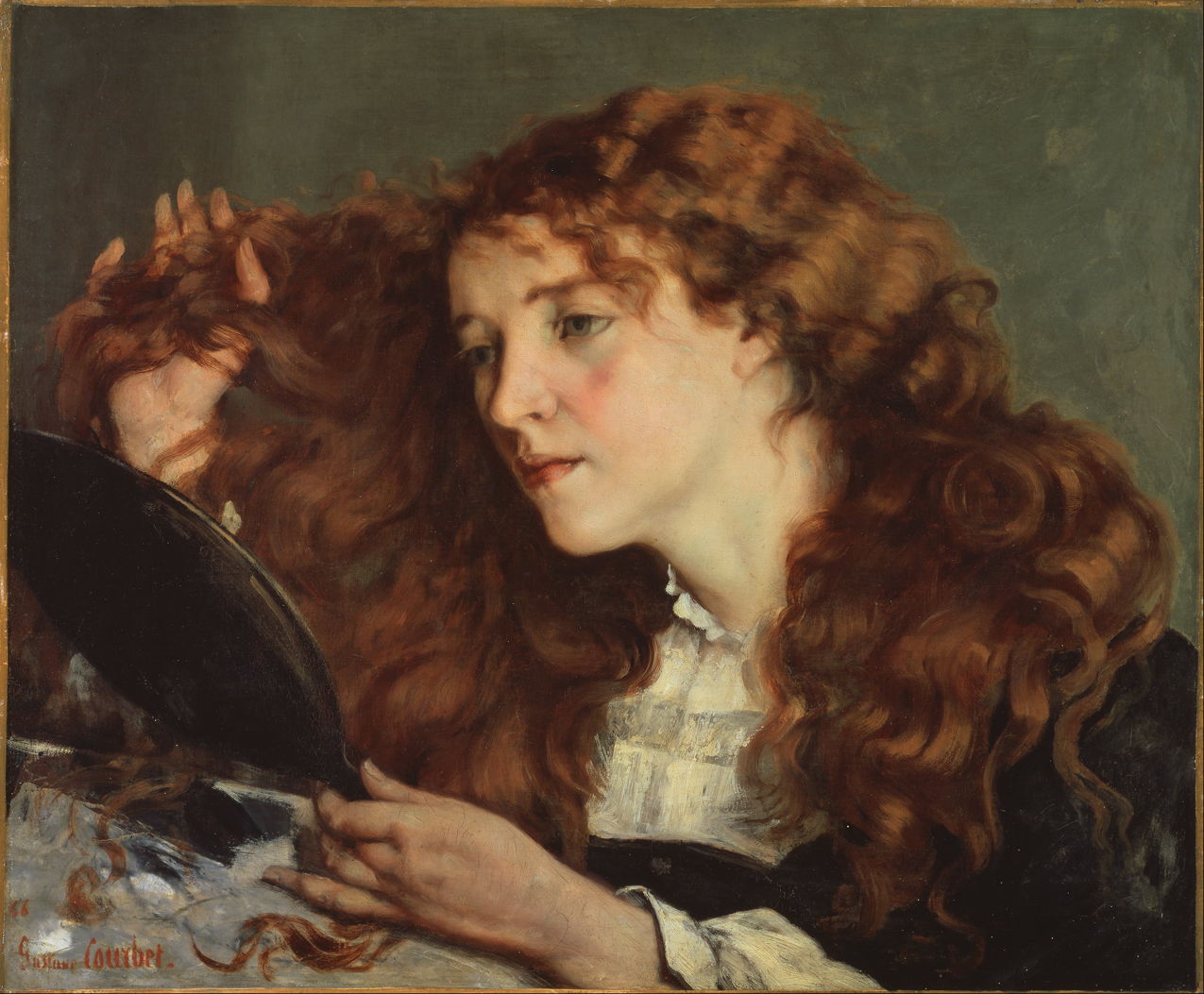
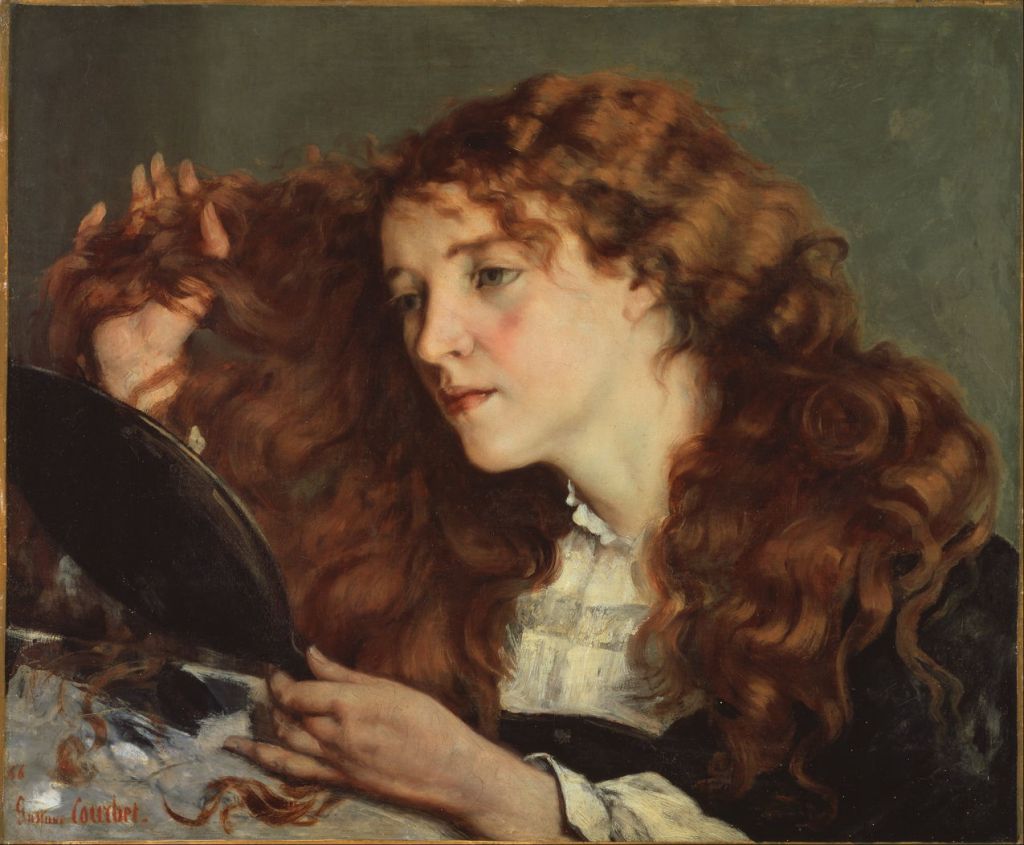
Courbet’s initial modest portrait of Jo, the Beautiful Irish Girl (1866) was a harbinger of more to come.

Next she is the erotically-charged nude in Courbet’s Woman with a Parrot (1866), then in a lesbian embrace in The Sleepers (1866), and possibly even the explicit headless nude of The Origin of the World (1866). After they had separated, Hiffernan raised Whistler’s illegitimate son by another lover, and re-appeared to pay her last respects at Whistler’s funeral in 1903.
Less known but as well-featured is Lise Tréhot, born in 1848, who moved as a child to Paris, as the daughter of a shopkeeper selling lemonade and tobacco. An older sister became the lover of a now-forgotten artist Jules Le Coeur, who in turn introduced Lise to the young painter Pierre-Auguste Renoir in 1865, when he was twenty-four, and she was only seventeen.

Renoir started painting Lise the following year, when she had just turned eighteen. Within another year, she posed nude for Renoir’s Diana as Huntress (1867), which was rejected by that year’s Salon. Over the next five years, she modelled for at least twenty paintings, and was in effect his only model for female figures during this formative period in his career. She also appears in two of Frédéric Bazille’s paintings.

One of Renoir’s best portraits of Tréhot is In the Summer (The Bohemian), painted in 1868 when she would have been twenty.

Later, Renoir posed her in an imaginary Algerian harem in his Odalisque (1870), another of those popular faux-Orientalist paintings.
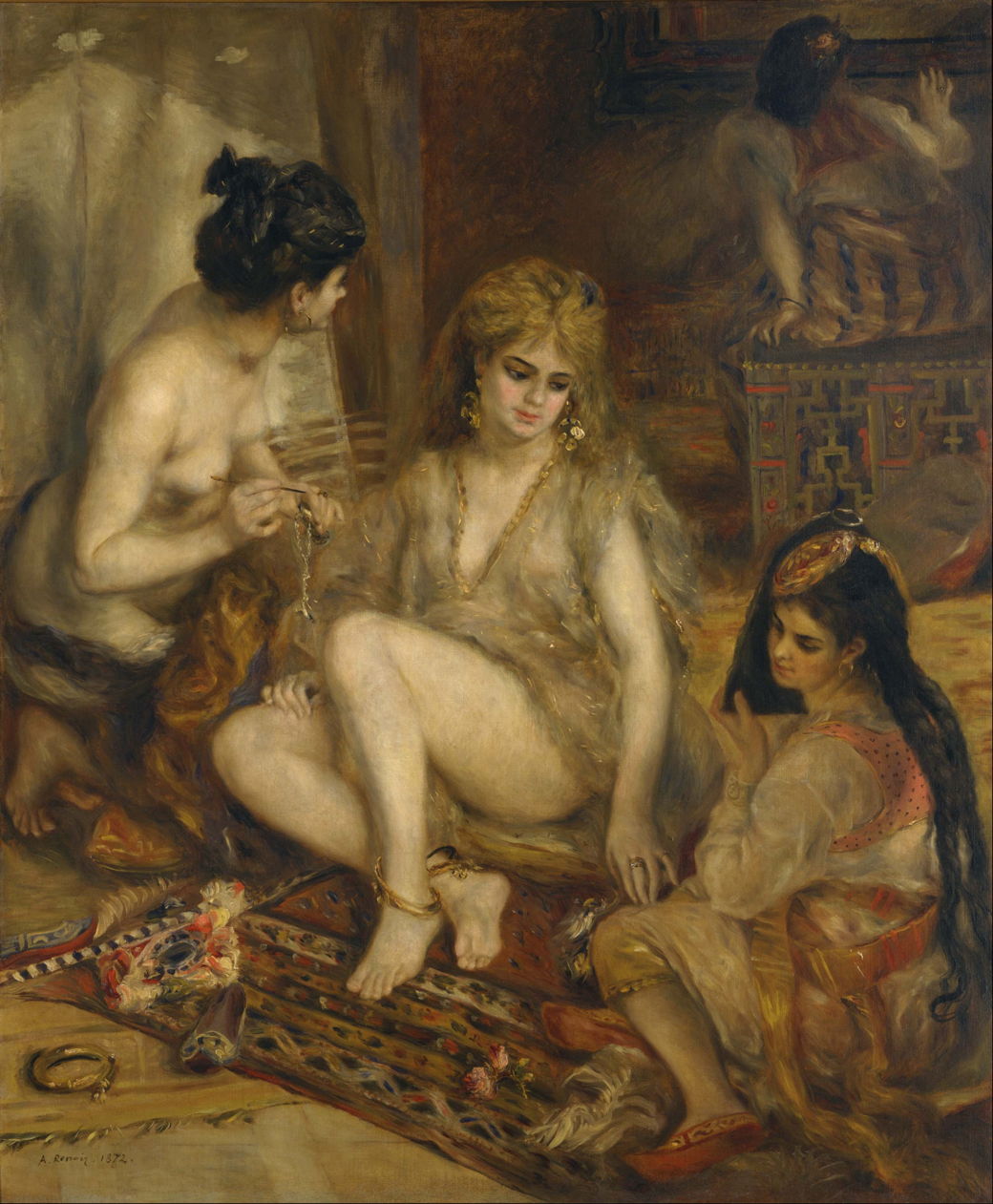
Probably the last of Renoir’s works to feature Tréhot is his Parisiennes in Algerian Costume, or Harem from 1872, where she appears as the woman at the right.
Renoir never mentioned her in any recorded source, but she’s thought to have given birth to their son at the end of 1868, and is recorded as having their daughter in the summer of 1870. Renoir supported her financially throughout the rest of his life, and Ambroise Vollard his dealer continued to do so after his death.
Renoir and Tréhot seem to have separated suddenly in 1872, and it’s thought they never met or spoke again after that. She married in 1883, raised her own family with her architect husband, and died in Paris in 1922.
Reference
Susan Waller’s superb article in Nineteenth-Century Art Worldwide.
 The Eclectic Light Company