
This weekend I’m touring the cathedrals and abbeys of Britain in the company of some of their finest artists. Today I concentrate on the best of them, whose life was cut short when he died at the age of just twenty-seven as a result of asthma. Thomas Girtin was a contemporary, friend and competitor of JMW Turner, but when it came to painting cathedrals there was no contest.

Girtin was just fifteen when he painted the fine sky and effective aerial perspective in his view of Rochester, Kent: from the North (c 1790), although some have argued that he might have been a couple of years older. The cathedral shown here was built between 1079-1238, and its central tower was raised in 1343, just before the Black Death struck.

Although he had possibly travelled to paint earlier, Girtin’s first major painting tour with his employer James Moore was of the Midlands in 1794. They visited Warwick, Stratford, Lichfield, Peterborough, and Lincoln; this fine view of Lichfield Cathedral (1794) was one of its successes, and already secured him a place alongside the better watercolour landscape painters of the day. This cathedral was built between the early thirteen century and 1330, and underwent extensive renovation following damage during the English Civil War.

Girtin’s skills of composition were well in advance of his experience and time. This view of Glasgow Cathedral from 1794-5 shows one of the lesser-known cathedrals in Britain, most of whose structure dates from its rebuilding during the thirteenth century, making it the oldest cathedral in mainland Scotland, and the oldest building in the city.
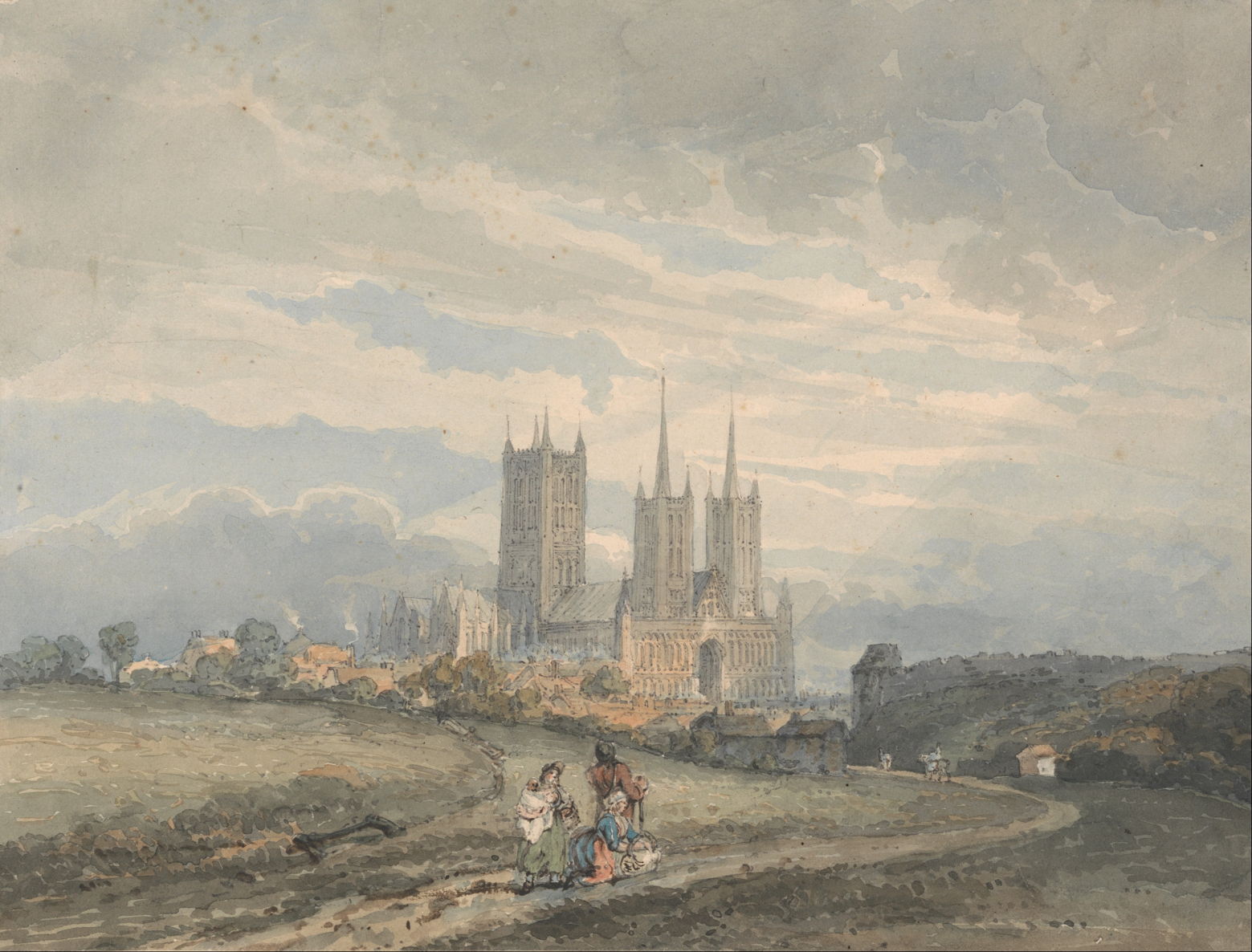
Painted in the same tour, this view of Lincoln Cathedral from about 1795 marks his transition from topographic illustration to pure watercolour, with the last vestiges of ink almost gone. This cathedral had first been built in 1092, but was badly damaged by an earthquake in 1185, following which it was rebuilt, and largely completed by 1311.

A century later, it was visited by the American skyscraper artist Colin Campbell Cooper. The Interior of Lincoln Cathedral shows the area of the organ, which had only recently been installed by the classical organ-builder Henry Willis. Cooper captures particularly well the lofty and distinctive vaulted ceiling and incoming shafts of light.
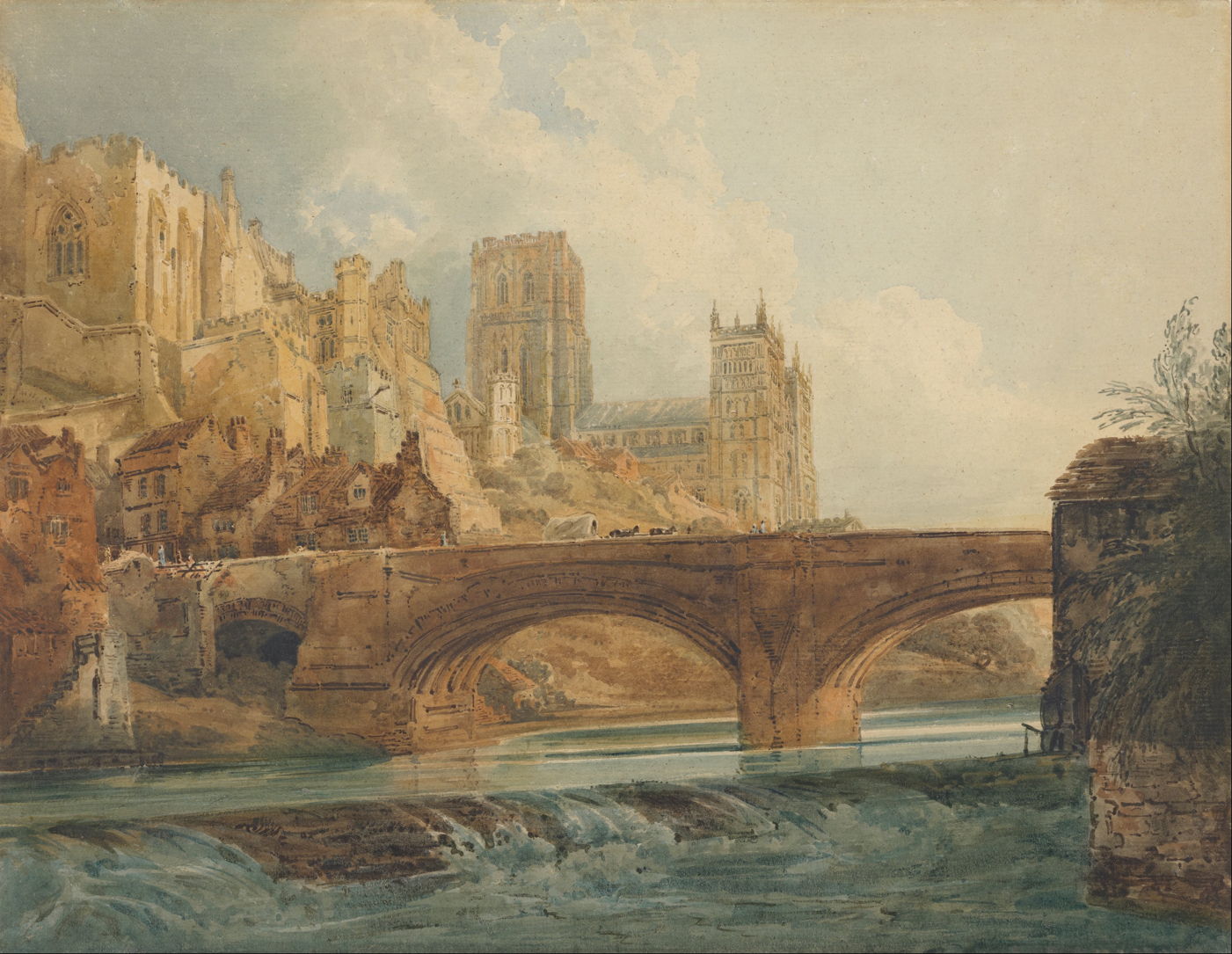
Girtin’s wonderful view of Durham Cathedral and Castle from about 1800 contains as much detail as his earlier views, but is better integrated into the whole instead of competing for the viewer’s attention. The cathedral is the more distant of the two massive buildings overlooking the River Wear. Much of it was constructed between 1093-1133, with further additions made until 1490.

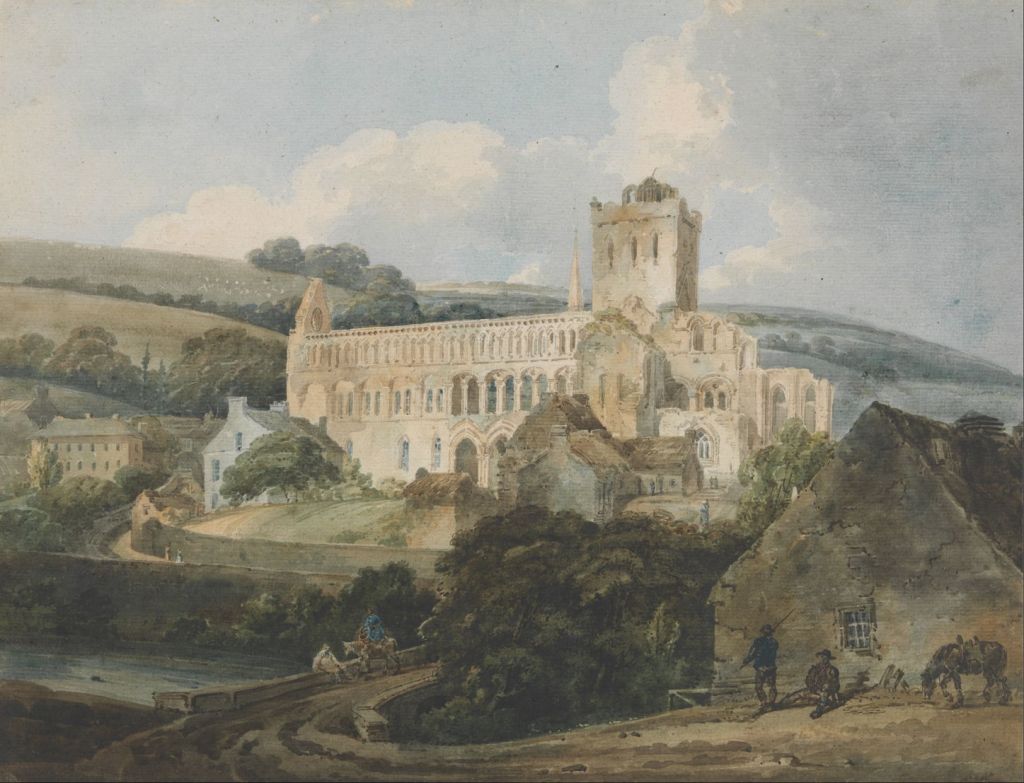
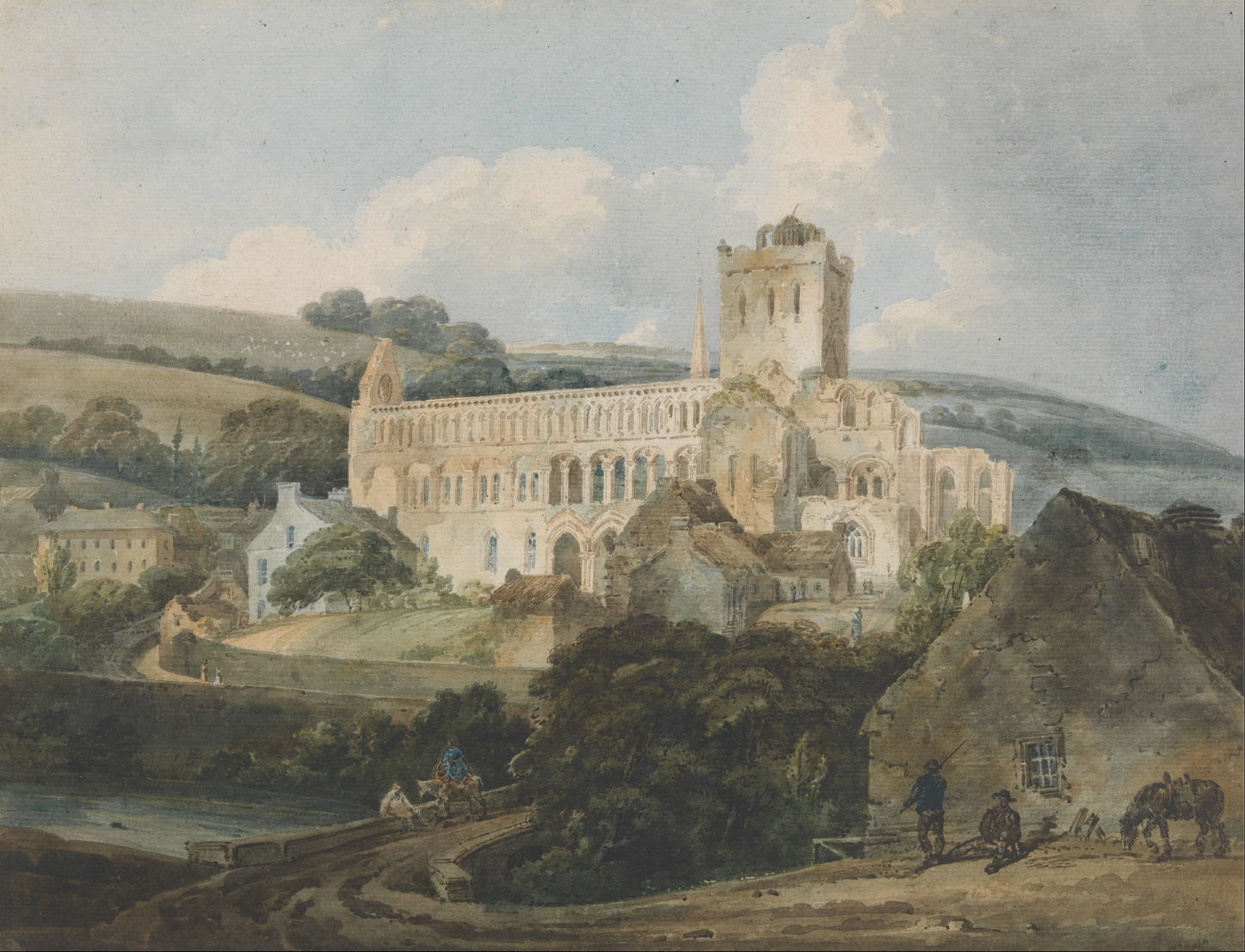
These two paintings of Jedburgh Abbey show how Girtin’s art matured during those years. He painted Jedburgh Abbey, Roxburghshire above in about 1793, when he was just eighteen, and Jedburgh Abbey from the South East below in 1800, when he had reached twenty-five. This is a former Augustinian abbey just north of the border between Scotland and England. Much of it was built between about 1153-1285, and it was disestablished and largely abandoned in 1560, with the Scottish Reformation.
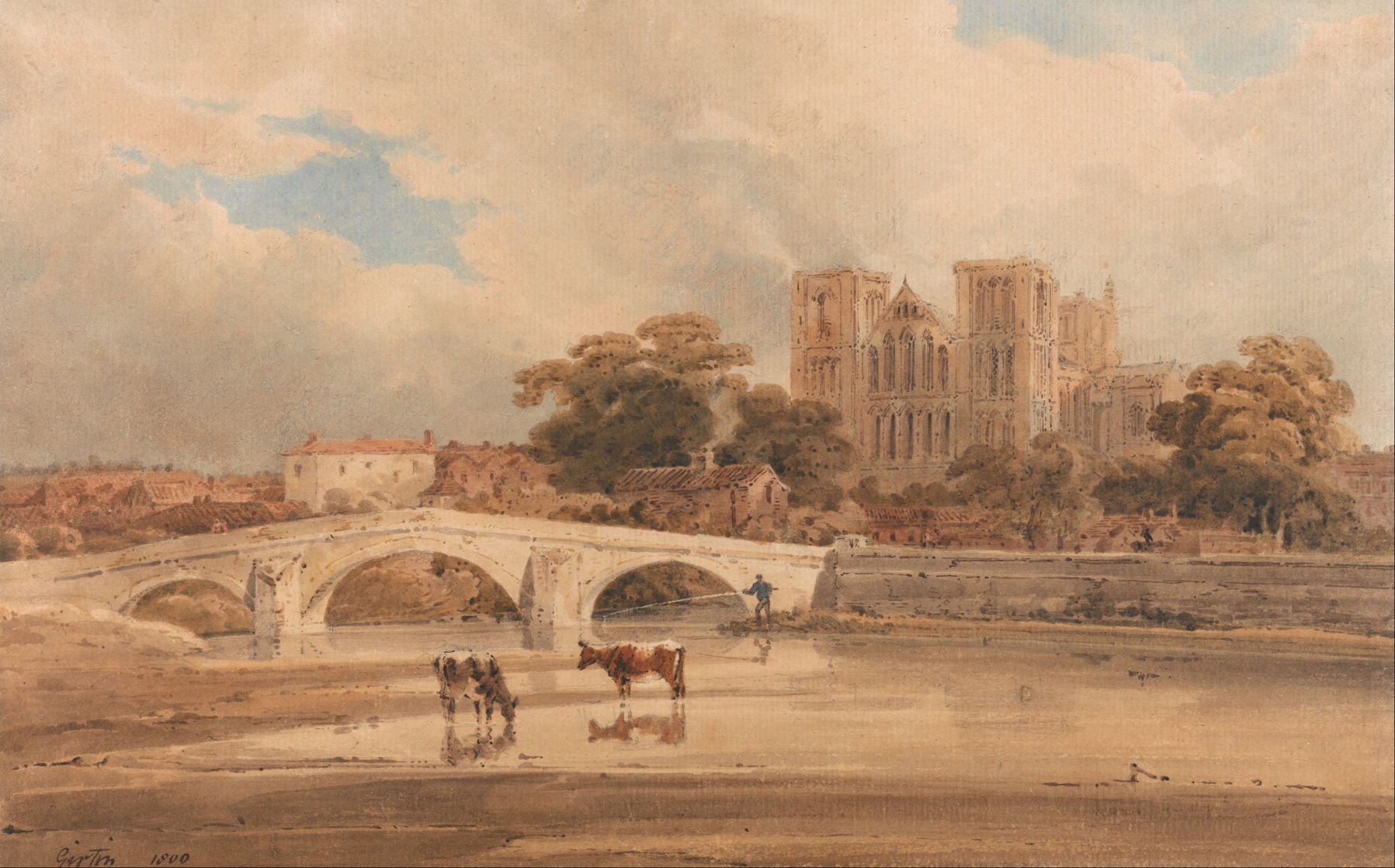
In Girtin’s Ripon Minster, Yorkshire (1800), it’s the features of the river, its bridge, cattle, and a single angler, that steal the gaze, rather than the bulk of the minster behind. Now commonly known as Ripon Cathedral, this was a minster util 1836. The present building was started in 1160, and progressively modified and expanded until 1547.
 The Eclectic Light Company