
By the outbreak of the Franco-Prussian War in 1870, the city of Amsterdam had a population of almost 280,000, and was growing even more rapidly than it had at the height of the Dutch Golden Age.

When Claude Monet moved to the Netherlands in 1871 after sheltering in England for the Franco-Prussian War, there were still boats active in the Canal at Zaandam, on the northern outskirts of Amsterdam.

Monet’s second visit to the Netherlands in 1874 ensured that The Windmill on the Onbekende Gracht, Amsterdam (1874) became part of the history of Impressionism. This shows a windmill known as Het Land van Beloften, De Eendracht or De Binnen Tuchthuismolen, which was built in the late seventeenth century, and was moved to Utrecht just a couple of years after Monet painted it on the banks of the River Amstel.
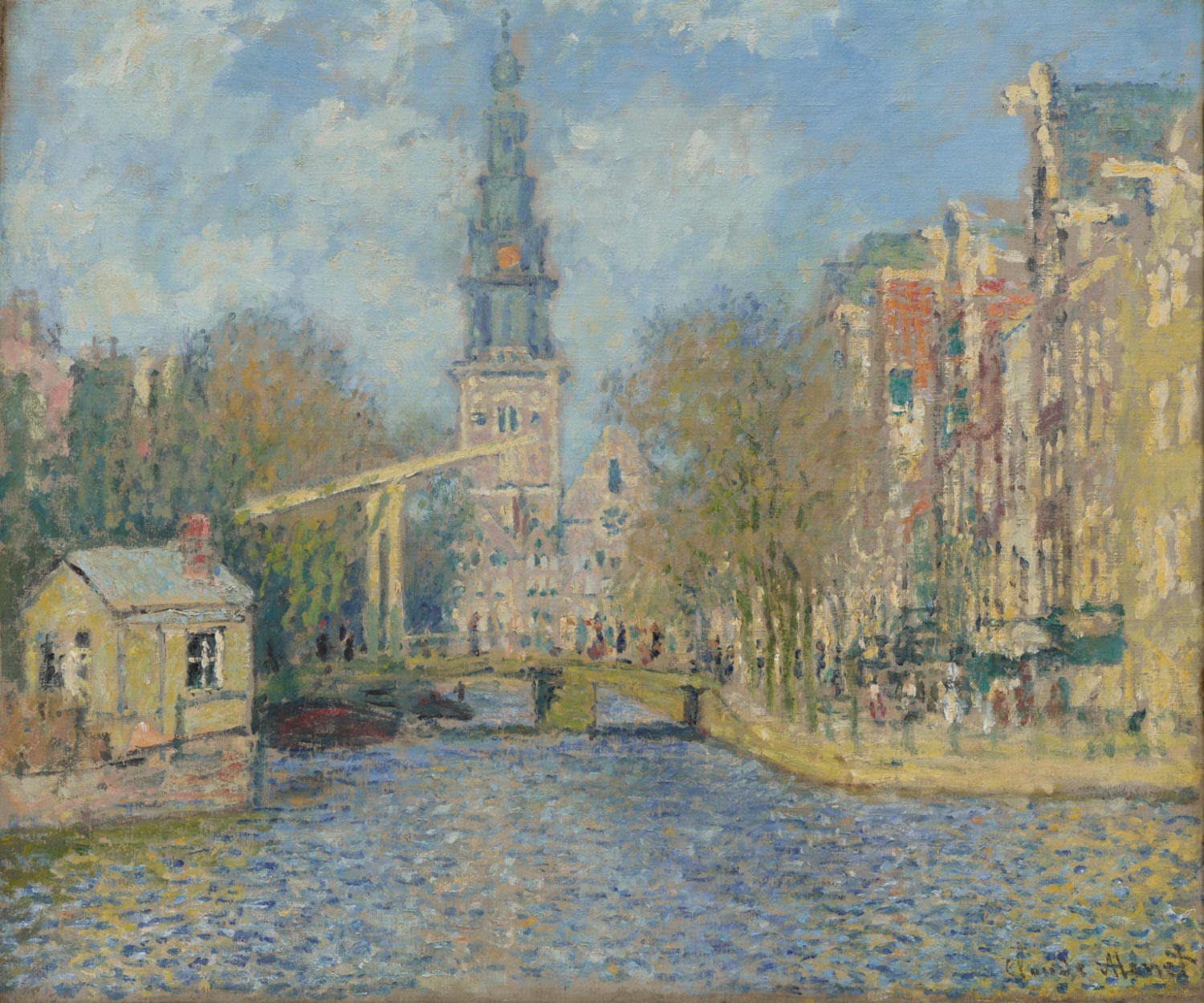
Another of Monet’s dozen views painted during that visit shows The Zuiderkerk, Amsterdam (Looking up the Groenburgwal) (1874). This was the first church built in the city specifically for Protestant services, between 1603-11. Rembrandt lived close by, and three of his children were buried here.
In the late nineteenth and early twentieth centuries, George Hendrik Breitner (1857–1923) was a well-known artist in the Netherlands. He painted with Vincent van Gogh, was an early adopter of photography as an aid to his painting, and an innovative photographer in his own right. Although at first associated with the Hague School of landscape art, he drew away from that and today is normally termed an Amsterdam Impressionist, alongside Isaac Israëls, Jan Toorop and others.

This undated Ground Porters with Carts is one of Breitner’s watercolours showing the rough side of life in the city. He appears to have been influenced at this time by the Naturalist literature of Émile Zola, and was inspired to depict the common people and their lives.
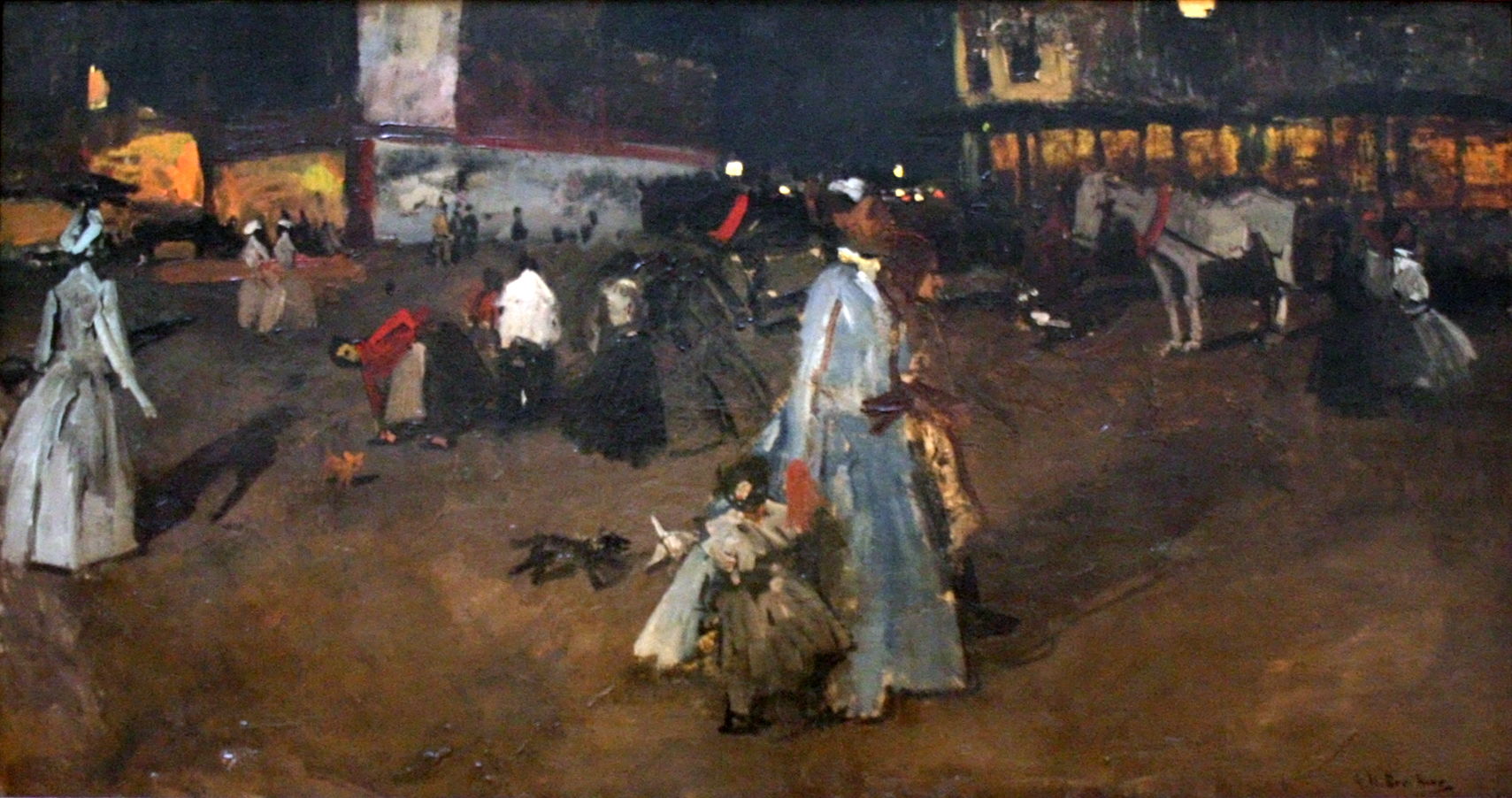
Breitner entered the Rijksakademie in Amsterdam in 1886, but by that time had progressed well beyond anything it could offer him. He went out onto the streets of Amsterdam sketching discreetly, as shown in An Evening on the Dam in Amsterdam (c 1890). The Dam is the city’s central square flanked by the Royal Palace, originally its City Hall, and Nieuwe Kerk.
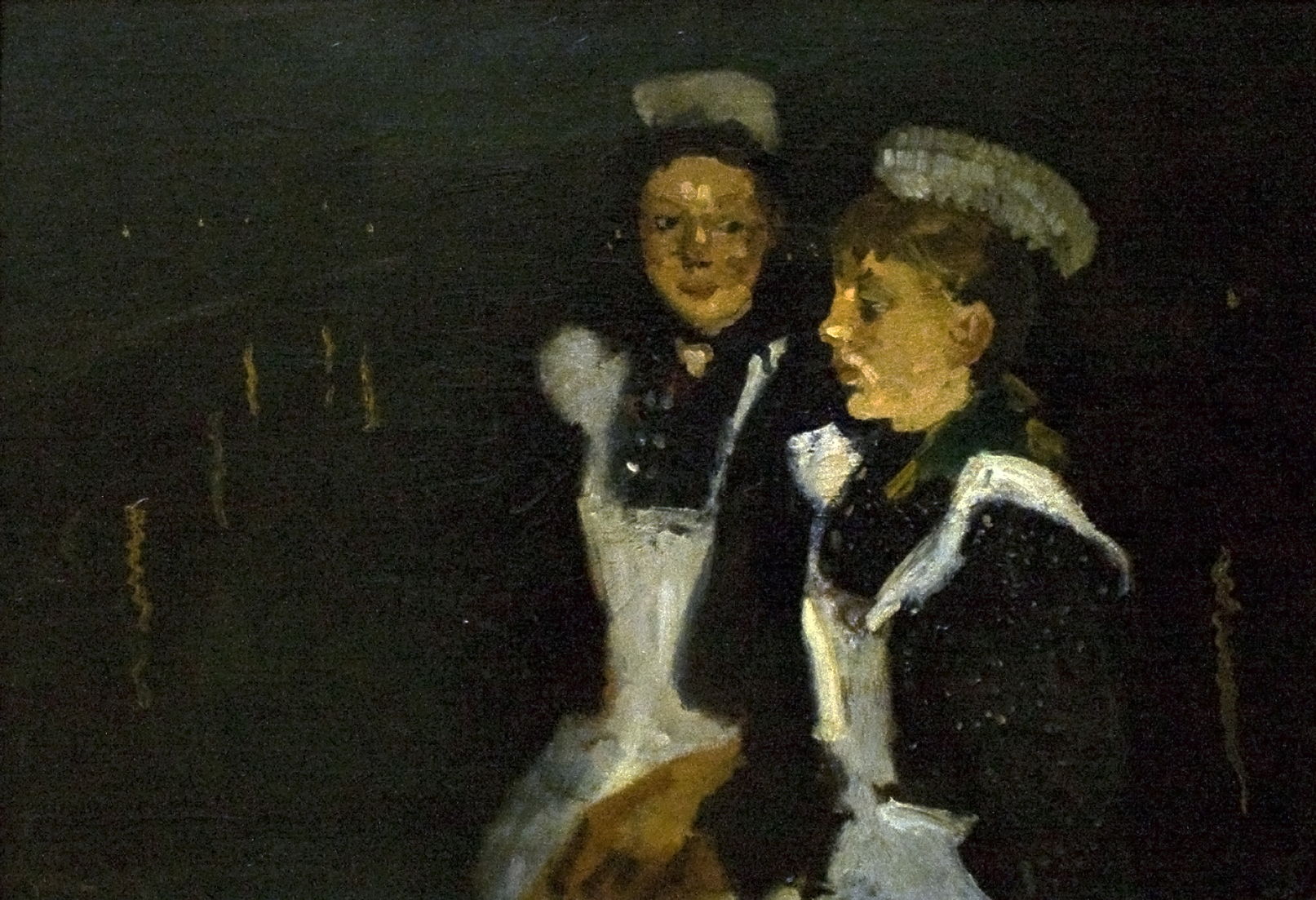
Two Servants on an Amsterdam Bridge at Night (1890) is another nocturne showing some of the people Breitner met on the streets.
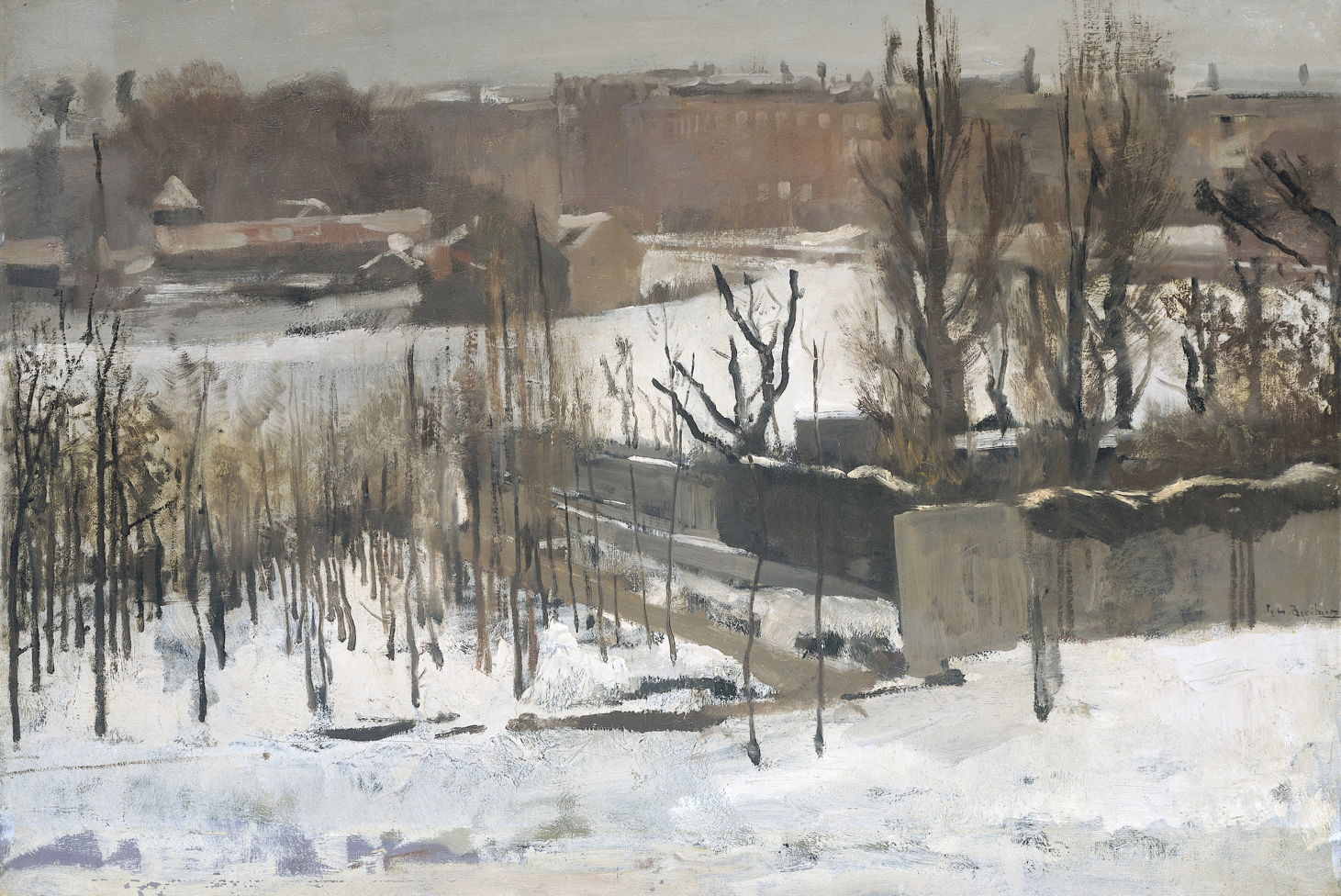
Through the 1890s, Breitner established his reputation with those atmospheric oil sketches, and some larger studio paintings such as this View of the Oosterpark in Amsterdam in the Snow from 1892. This is a relatively modern urban park that now contains a monument to commemorate the abolition of slavery in 1863.

Breitner continued his paintings of the common people, including those working on this Building Site in Amsterdam. His plein air sketching wasn’t confined to fine and sunny weather. One of the reasons that many of his paintings appear muted in colour is that so many were made outdoors when the sky was overcast. It has also been suggested that the sepias and dull colours used in contemporary monochrome photography were another influence.
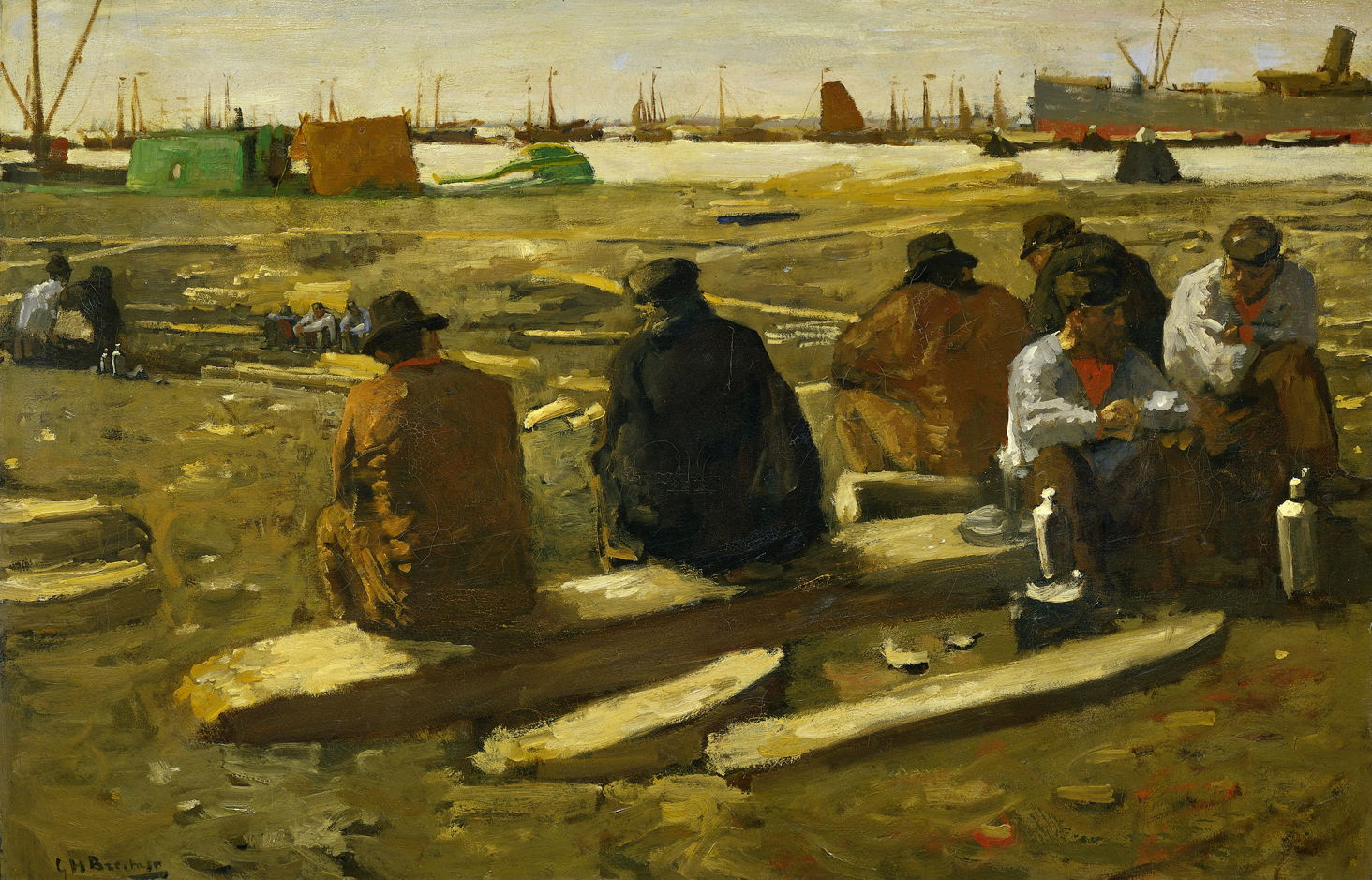
Lunch Break at the Building Site in the Van Diemenstraat in Amsterdam (1896-1900) seems to have been painted on a brighter day, as construction workers sat outside during their brief lunchtime.
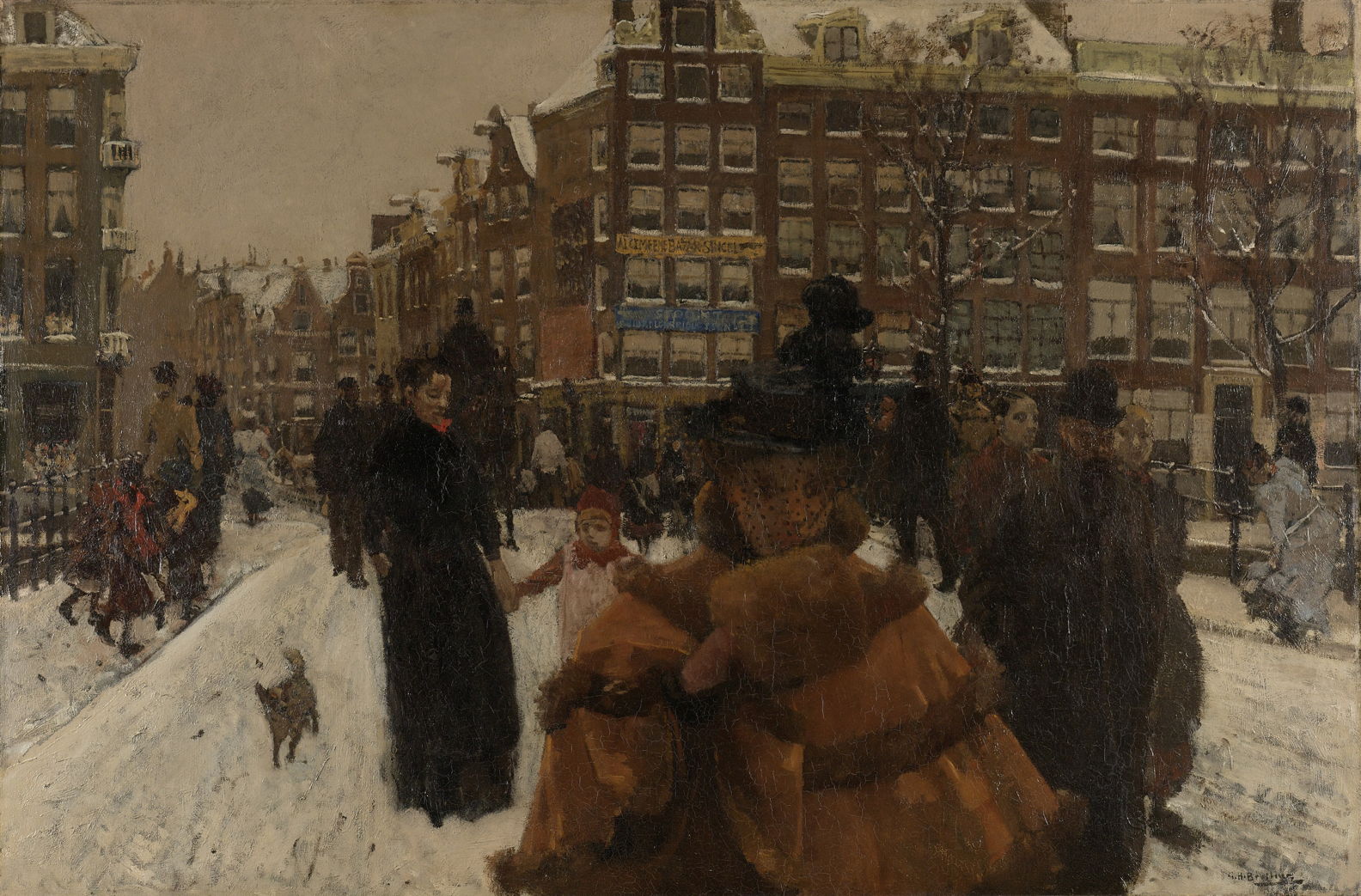
Breitner took hundreds if not thousands of photos of street scenes in Amsterdam, and made many paintings of them too. Among the best-known is The Singelbrug Near the Paleisstraat in Amsterdam from about 1897, which has the look of a photo, with those passing by frozen in their motion.
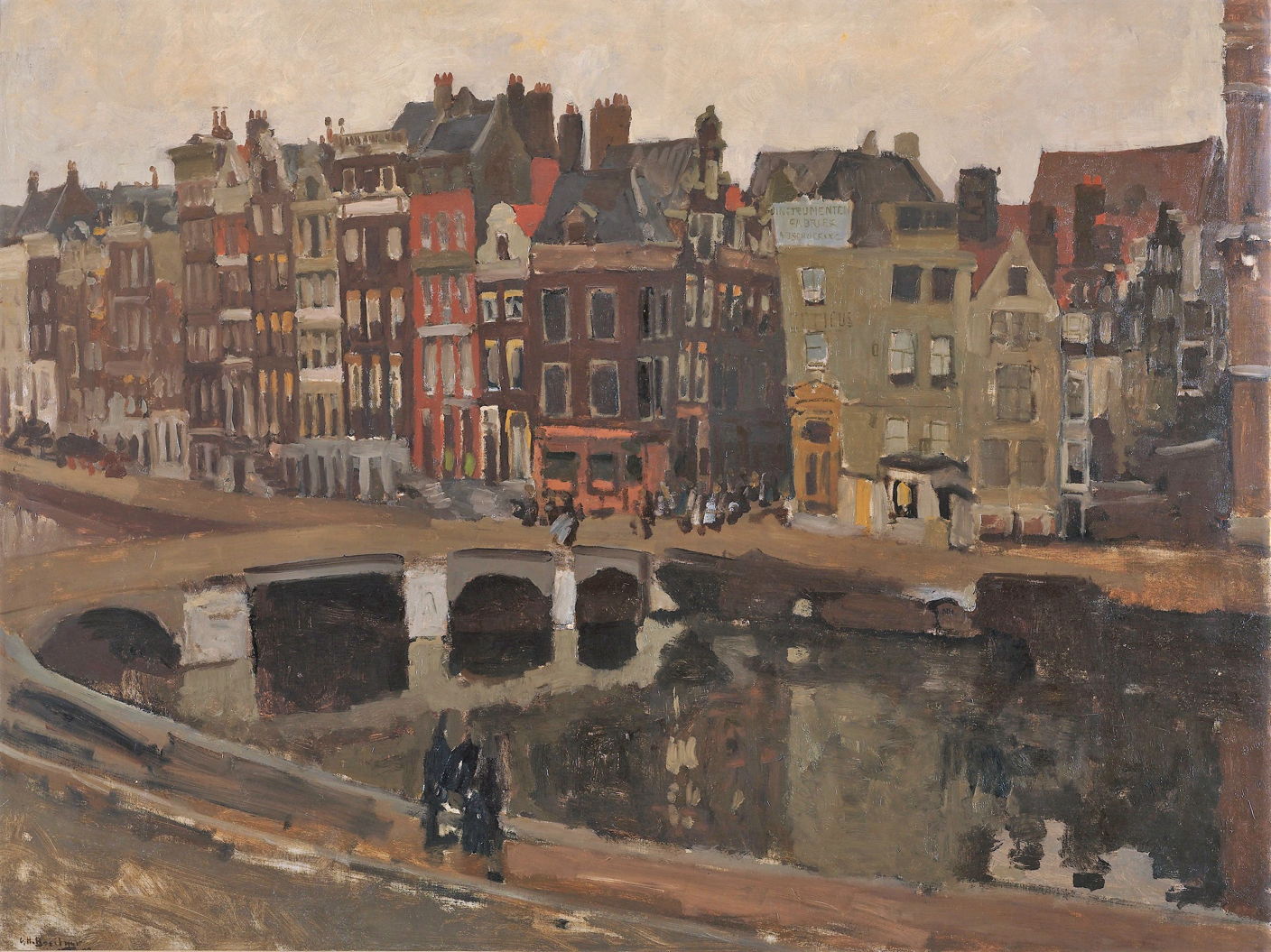
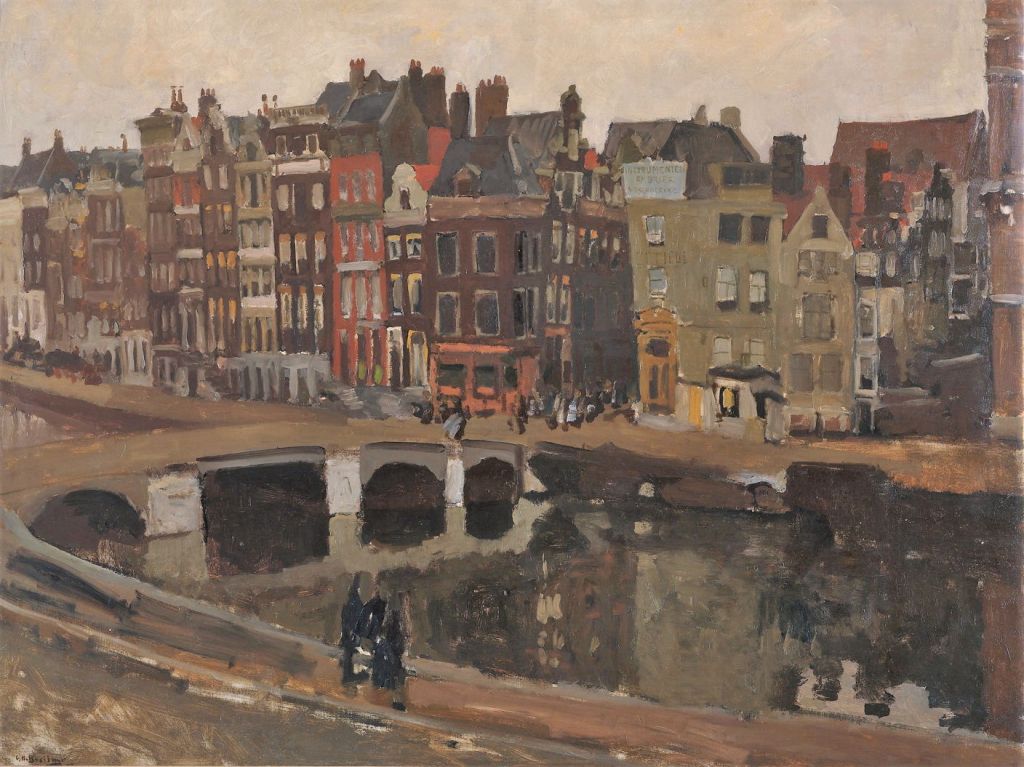
The Rokin in Amsterdam (1897) is a canal and street in the centre of the city that was a particular favourite of Breitner. Originally a stretch of the River Amstel, its section near the Dam was filled in 1936, to turn it into a street.
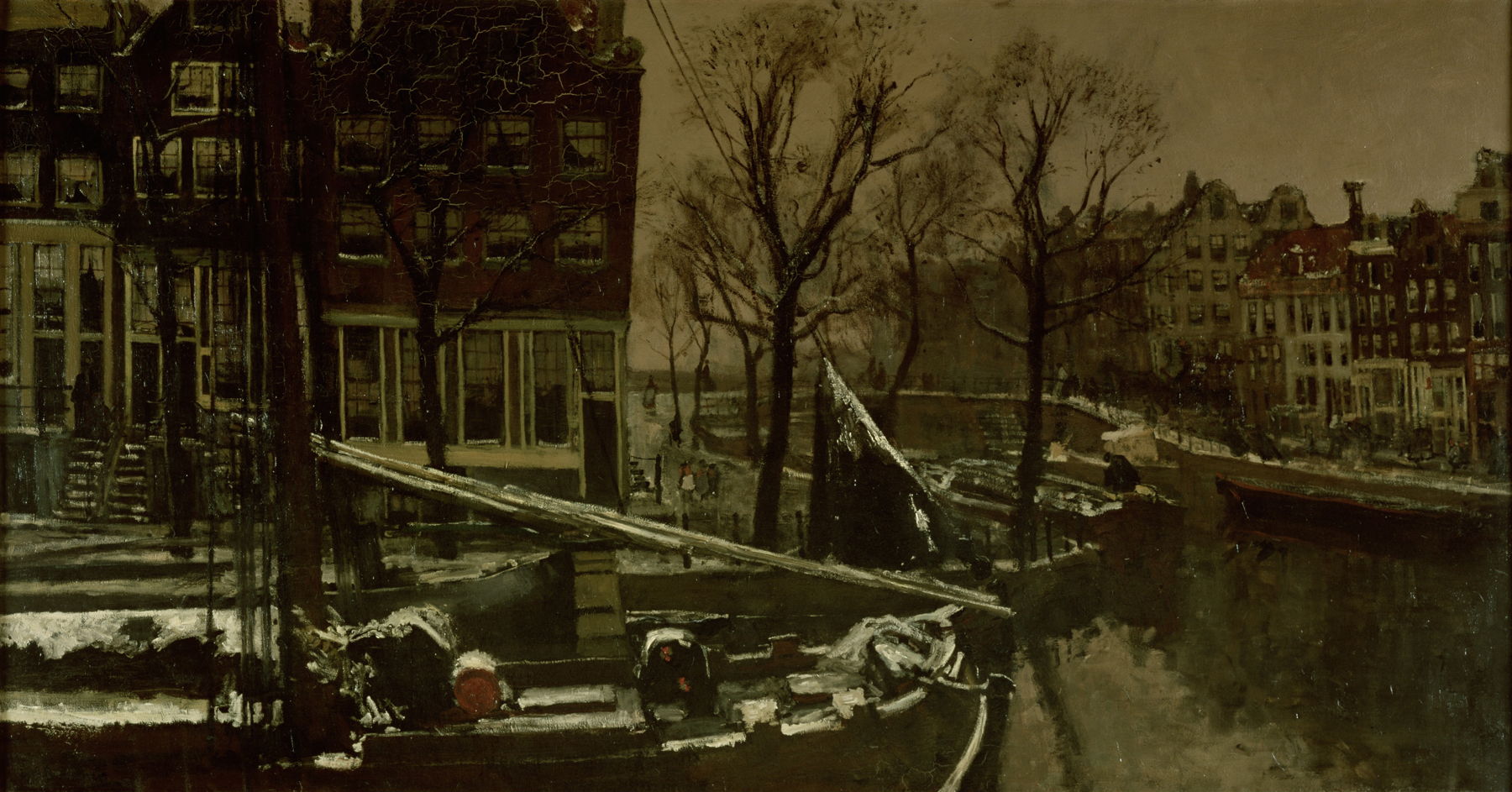
His Winter in Amsterdam (c 1900-01) is quite dark, as it would be on a typical overcast day during the middle of winter, but his snow highlights on the boat in the foreground give it an unusual effect of eerie stillness.
By this time, Amsterdam’s population exceeded half a million, and was still growing strongly.
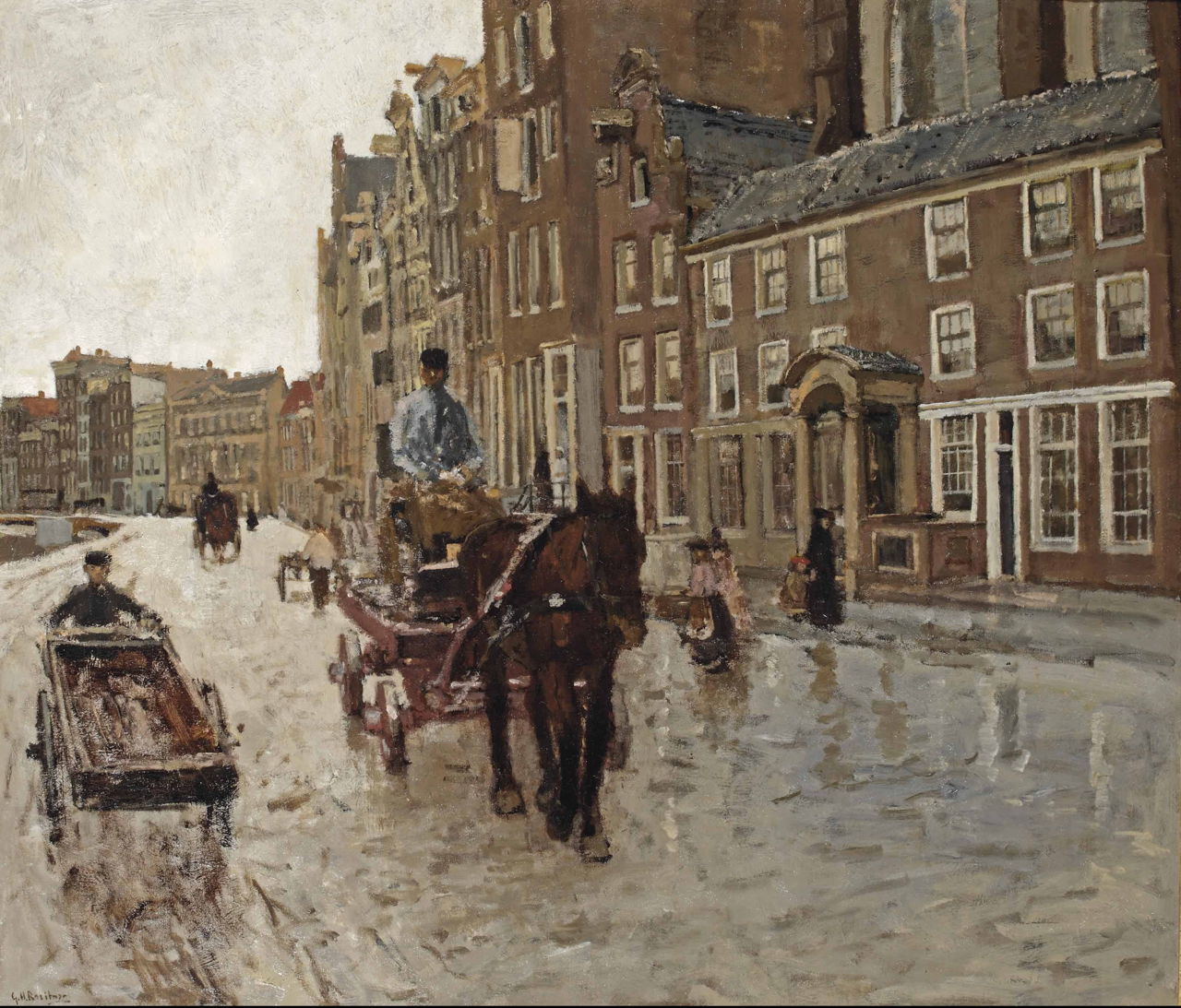
Breitner relied quite heavily on photography when painting the city in rain and wet conditions, as in The Rokin with the Nieuwezijdskapel, Amsterdam from about 1904.
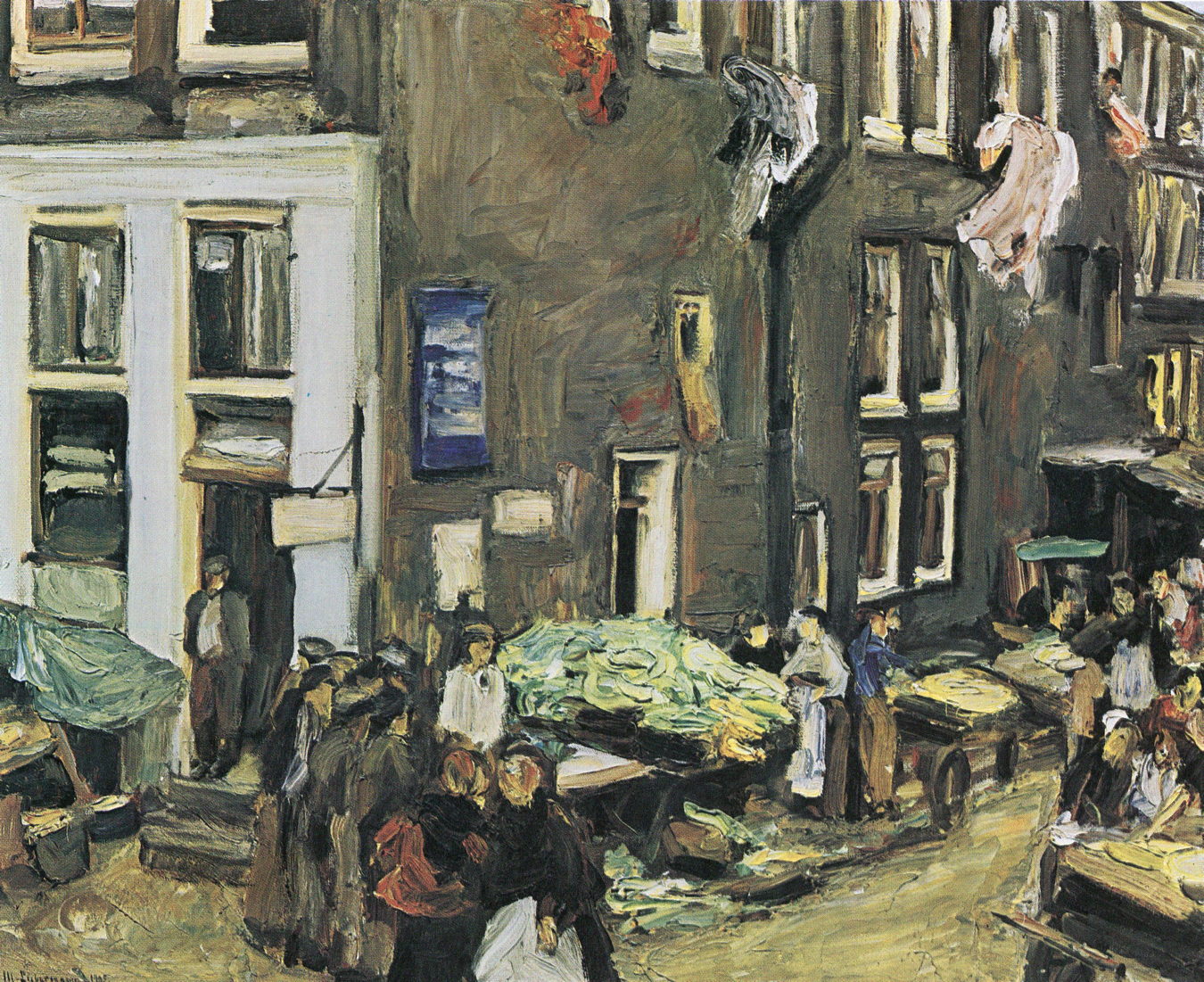
The German artist Max Liebermann painted extensively in the city’s historic Jewish quarter, referred to as Judengasse, meaning Jewish alley, during this period. Among his paintings is Judengasse in Amsterdam from 1905 showing a market squeezed into this narrow street.
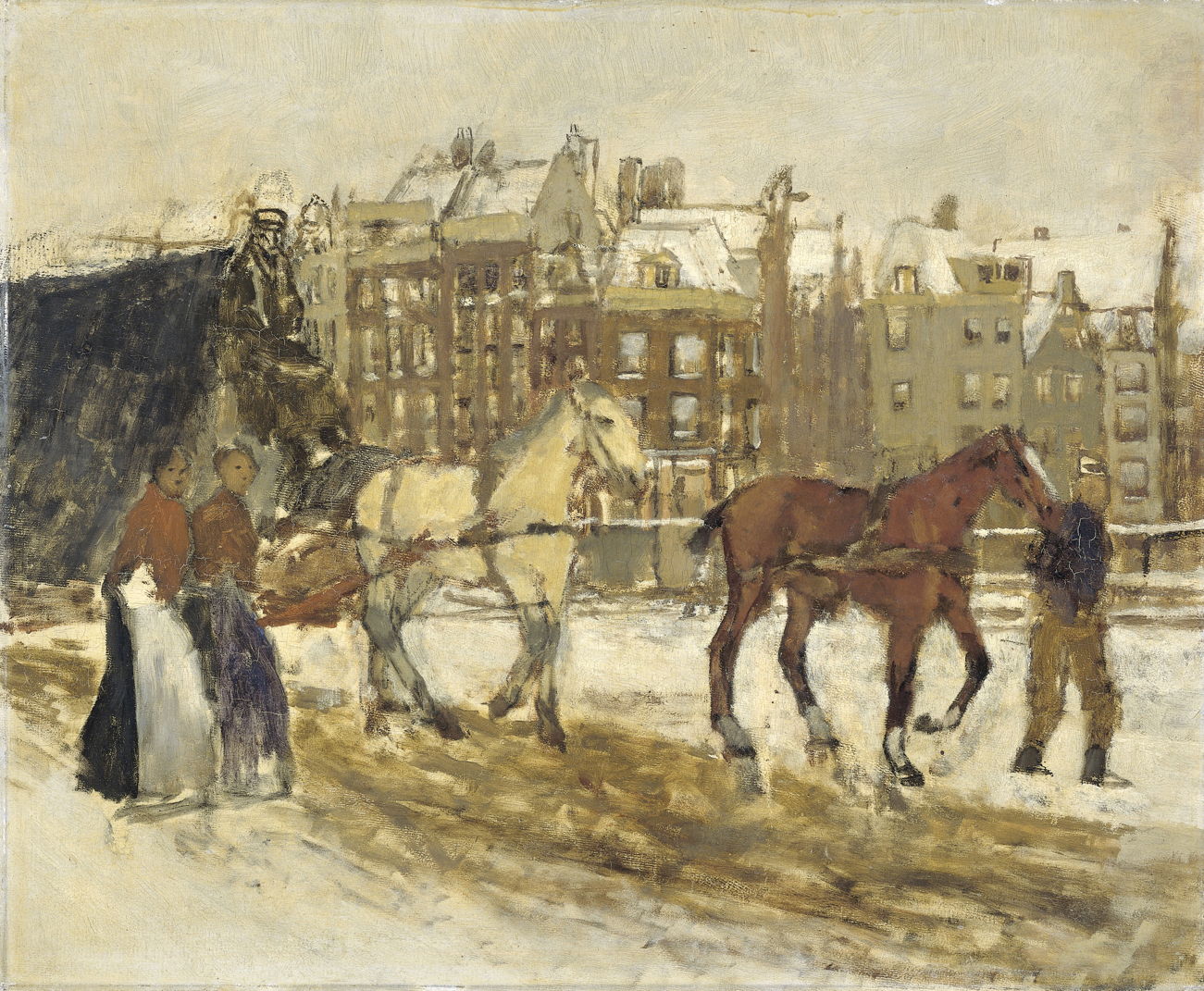
Breitner painted The Rokin in Amsterdam in early 1923, probably one of his last works, as he died in the city on 5 June that year. Many of his photographs weren’t discovered until 1996, when it became clear how talented and innovative a photographer he had been. Most appropriately, his name has entered the Dutch language, at least among those in Amsterdam, who still refer to dull and overcast weather as weer typisch Breitner Weer, typical Breitner weather again.
 The Eclectic Light Company