
Apelles of Kos is one of the most renowned of the great painters of ancient Greece. Claimed to have been active around 330 BCE, he has been attributed at least eight major works. Among these are Aphrodite Anadyomene, in which the goddess Aphrodite rises from the sea. This achieved fame in part because his model for Aphrodite was Campaspe, a former mistress of Alexander the Great, according to the writings of Pliny the Elder. Another was a great allegory of Calumny, he also painted several myths and legends, and portraits of both Alexander the Great and his father Philip.
The only trouble with Apelles’ paintings is that none survive.

Although several were taken to Rome, and it’s claimed at least one survived as a copy in the ruins of Pompeii (above), all that remains of Apelles’ works are the verbal descriptions in classical writings. Nevertheless, on the strength of that limited evidence, it has long been accepted that Apelles was a great Master, and there are many paintings either depicting Apelles at work, usually painting Campaspe, or revisiting the allegory of Calumny.
Apelles and Campaspe
The story of Apelles and Alexander’s former mistress (or concubine) is straightforward. When Apelles was sketching or painting Campaspe, he fell in love with her. Alexander, in his generosity and as a mark of appreciation of Apelles’ work, presented Campaspe to Apelles. She is claimed to have been the model for his famous painting of Aphrodite, and much later the inspiration to Botticelli for his Birth of Venus, below.

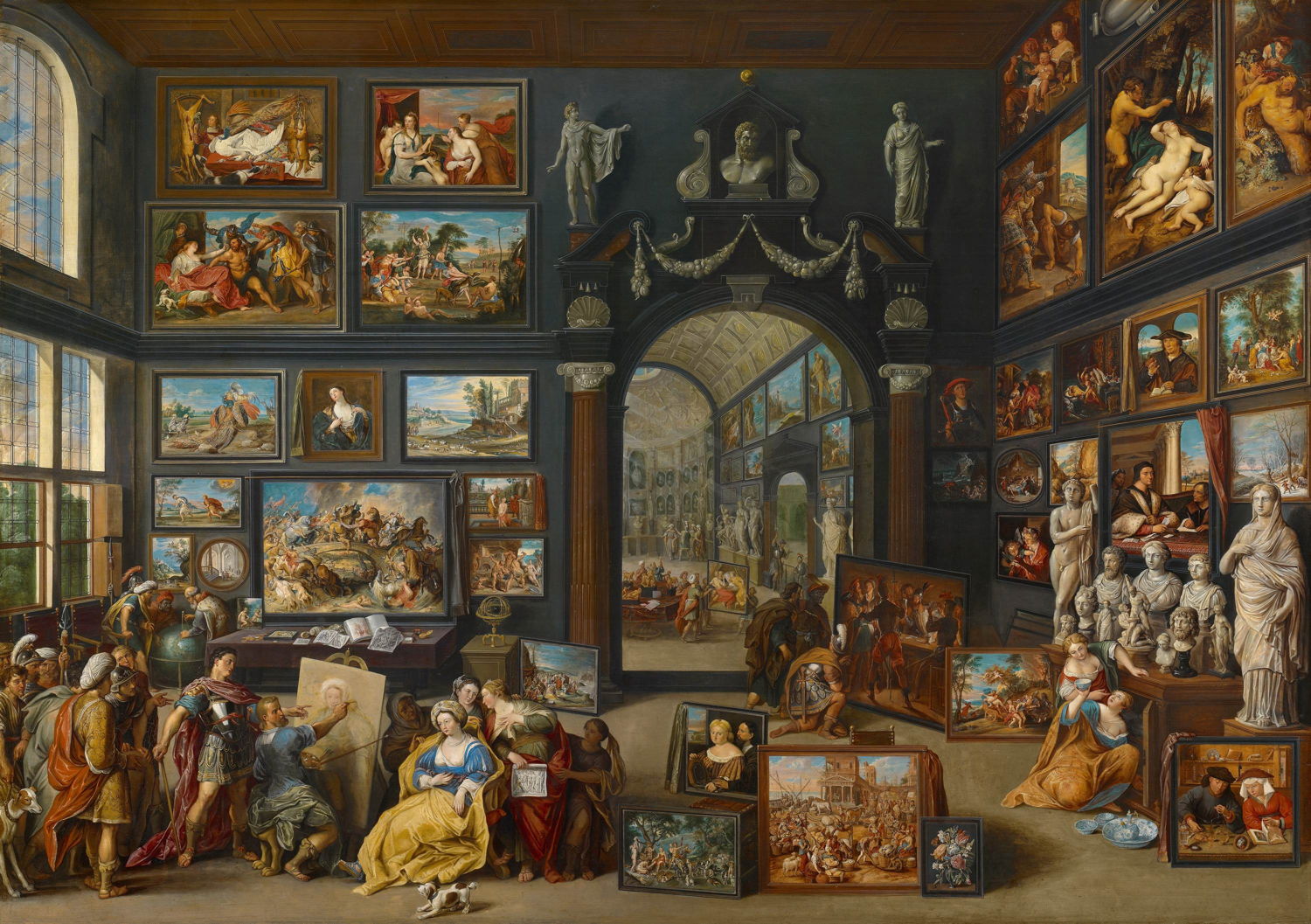
Willem van Haecht’s extraordinary Apelles painting Campaspe (c 1630) tucks the story down in its lower left, where Apelles is shown painting a rather bored Campaspe while Alexander, wearing distinctive armour, looks on. That’s set in a painted account of the subsequent history of painting, with miniature versions of nearly forty paintings in that room alone, and more in further rooms beyond. Although an enormous anachronism, it develops the core narrative into something more worthy.
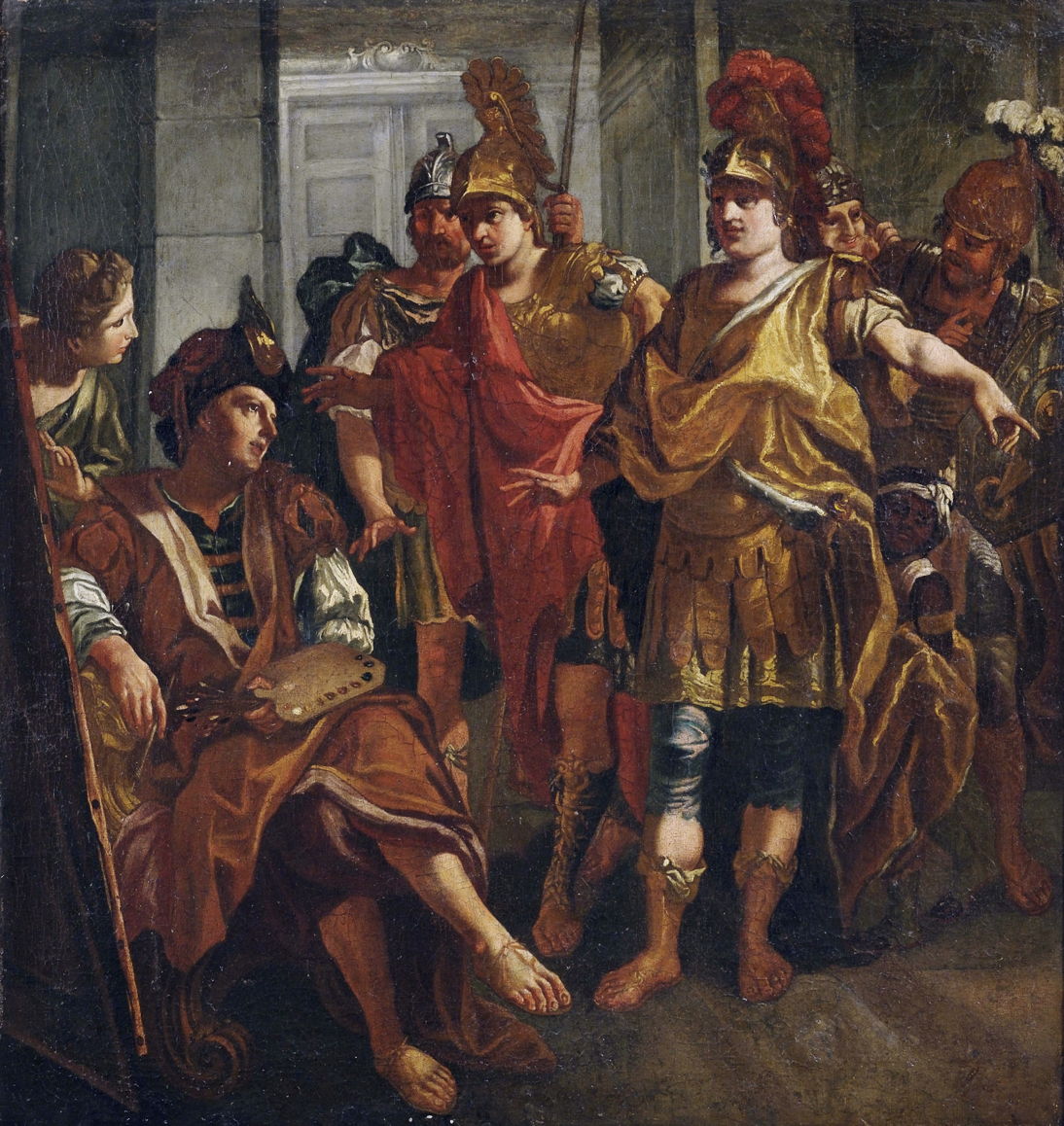
A member of the circle of Antonio Balestra painted an even simpler story, in their Alexander the Great in the Painter Apelles’ Studio (c 1700), by omitting Campaspe altogether. Although their faces show emotion in their expressions, and there is good body language, it’s hard to assemble those into anything more than their astonishment at how faithful Apelles’ painting is.
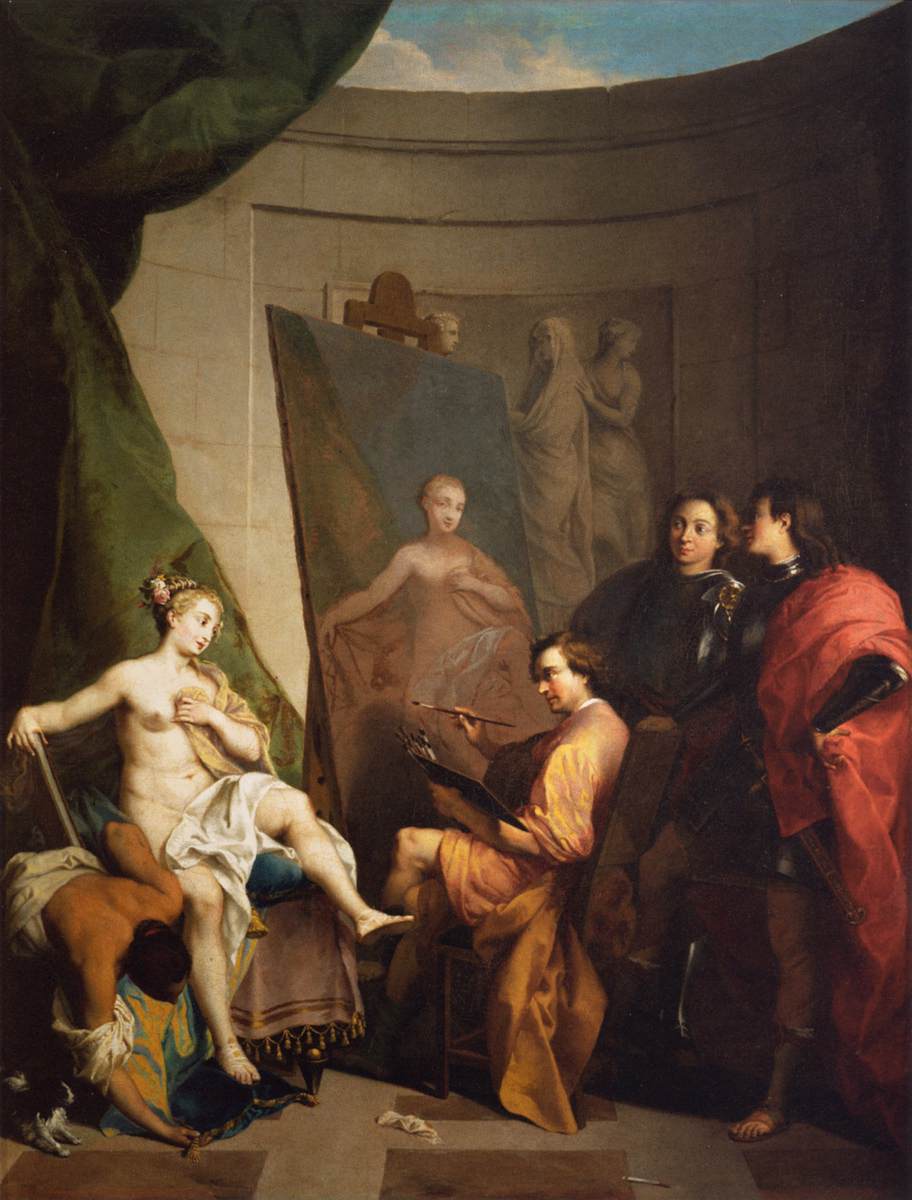
Nicolas Vleughels’ Apelles Painting Campaspe from 1716 is perhaps a little closer to any underlying truth in the story. A servant leans down to adjust a cushion on which Campaspe’s right foot rests. Apelles concentrates on the painting in progress, while Alexander and one of his colleagues watch, whispering to one another. However, Vleughels has interesting ideas as to how Apelles would dress when working in his studio.
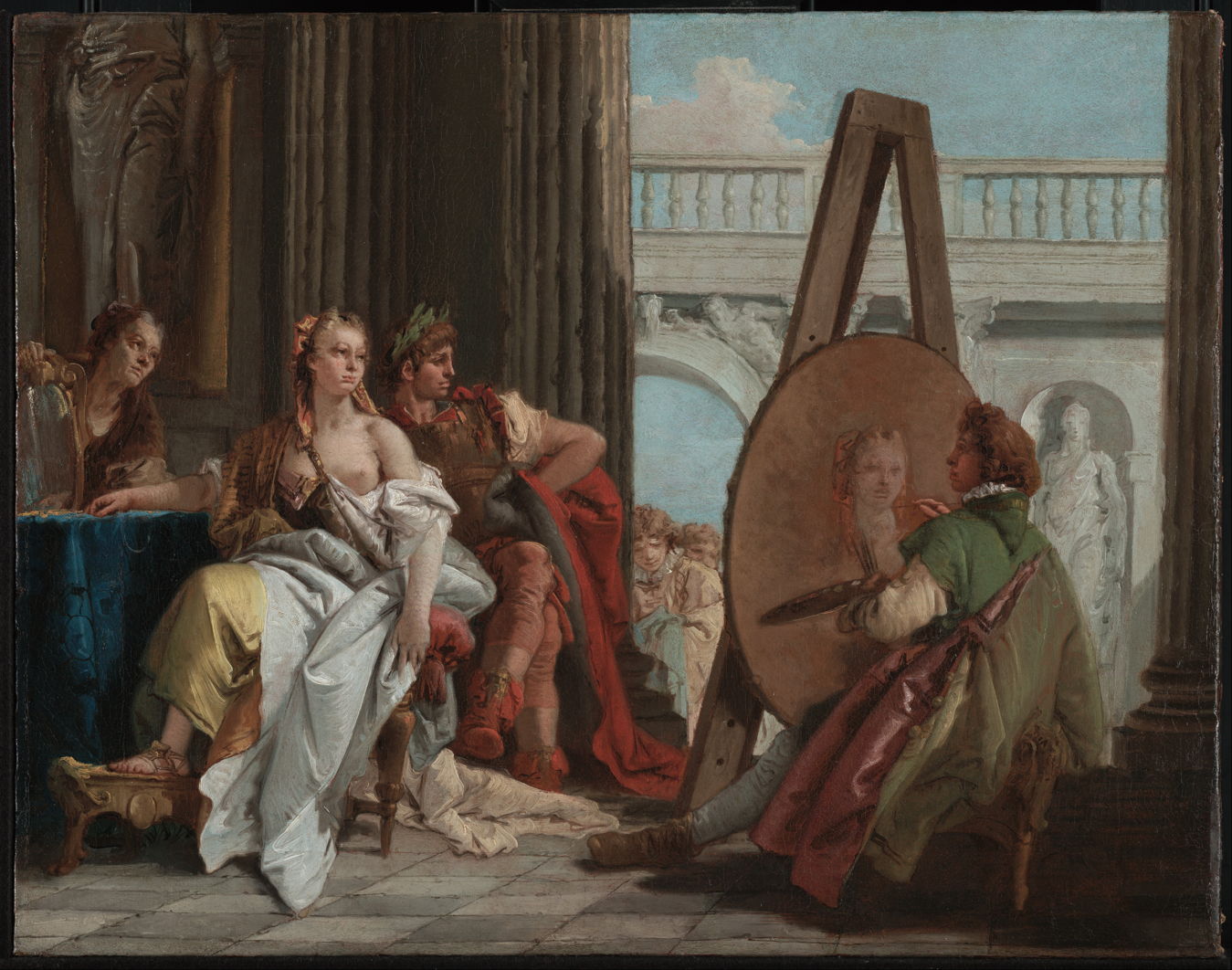
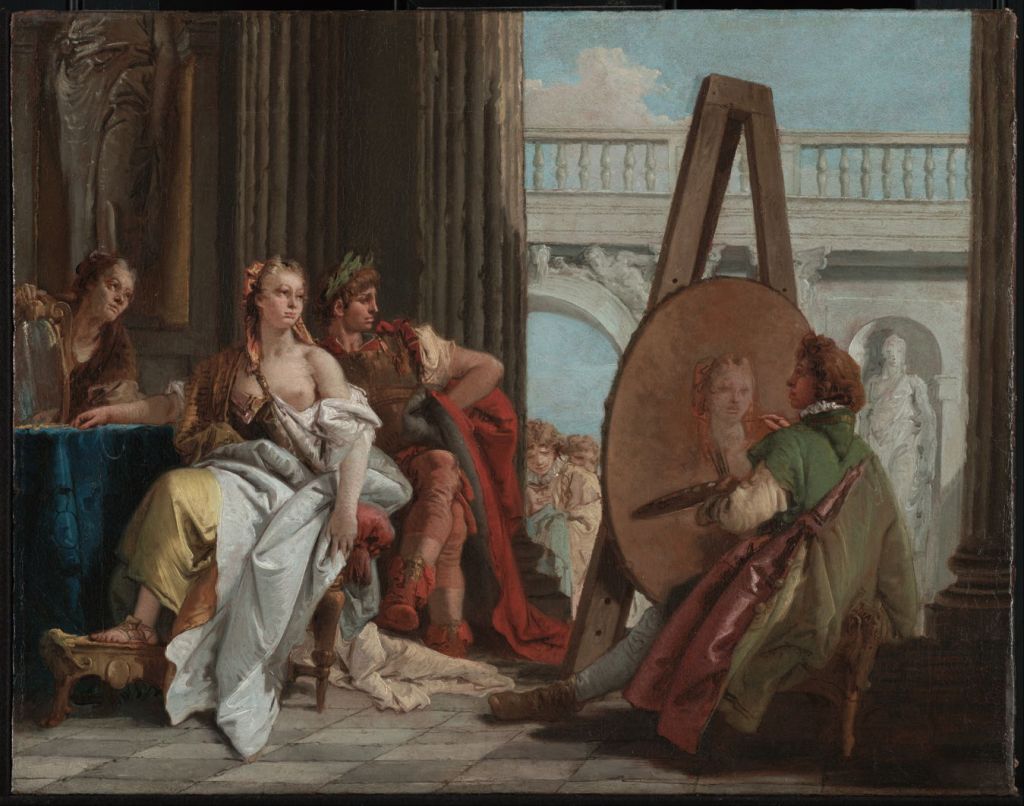
Tiepolo’s Alexander the Great and Campaspe in the Studio of Apelles (c 1740) perhaps reflects his own troubles with ennui among his models, with Campaspe, her maid, and Alexander looking thoroughly unimpressed with the artist’s slow progress, working at an anachronistic tondo.
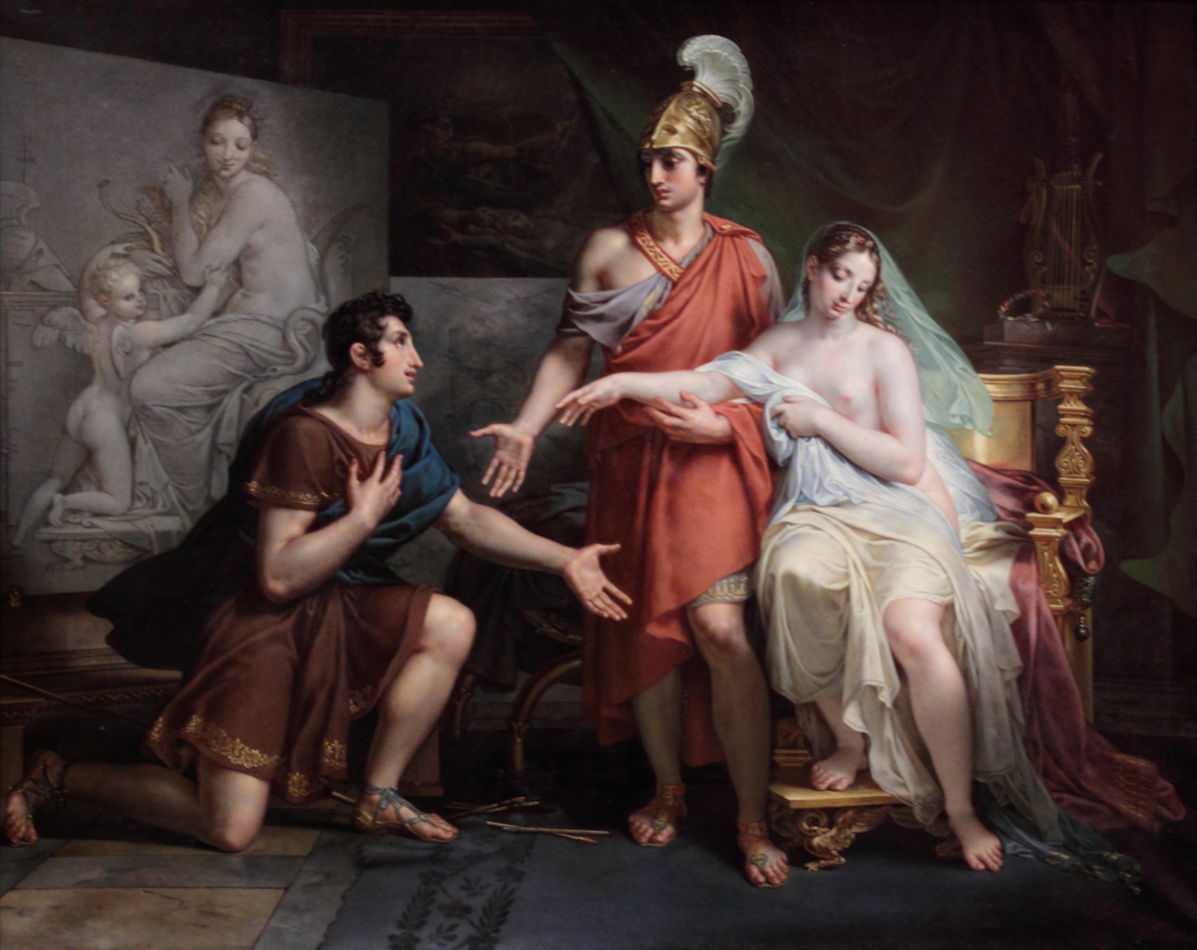
Charles Meynier, in his Alexander the Great Gives Campaspe to Apelles (1822), is one of the few painters to have taken the story to its conclusion, as Alexander gives Campaspe to a supplicant Apelles, his right hand clutching his breast to express his love for her, and his brushes scattered in symbolic disarray on the carpet.
The Calumny of Apelles
Rivalry between painters in Apelles’ day could become intense, and at times underhand methods were called into play. One of Apelles’ rivals accused him of taking part in a conspiracy against Ptolemy, one of Alexander’s generals. This almost led to Apelles’ execution, but the artist instead expressed himself in his painting of Calumny, in which an innocent youth is falsely accused by Ignorance, Envy, Treachery, and Deceit.
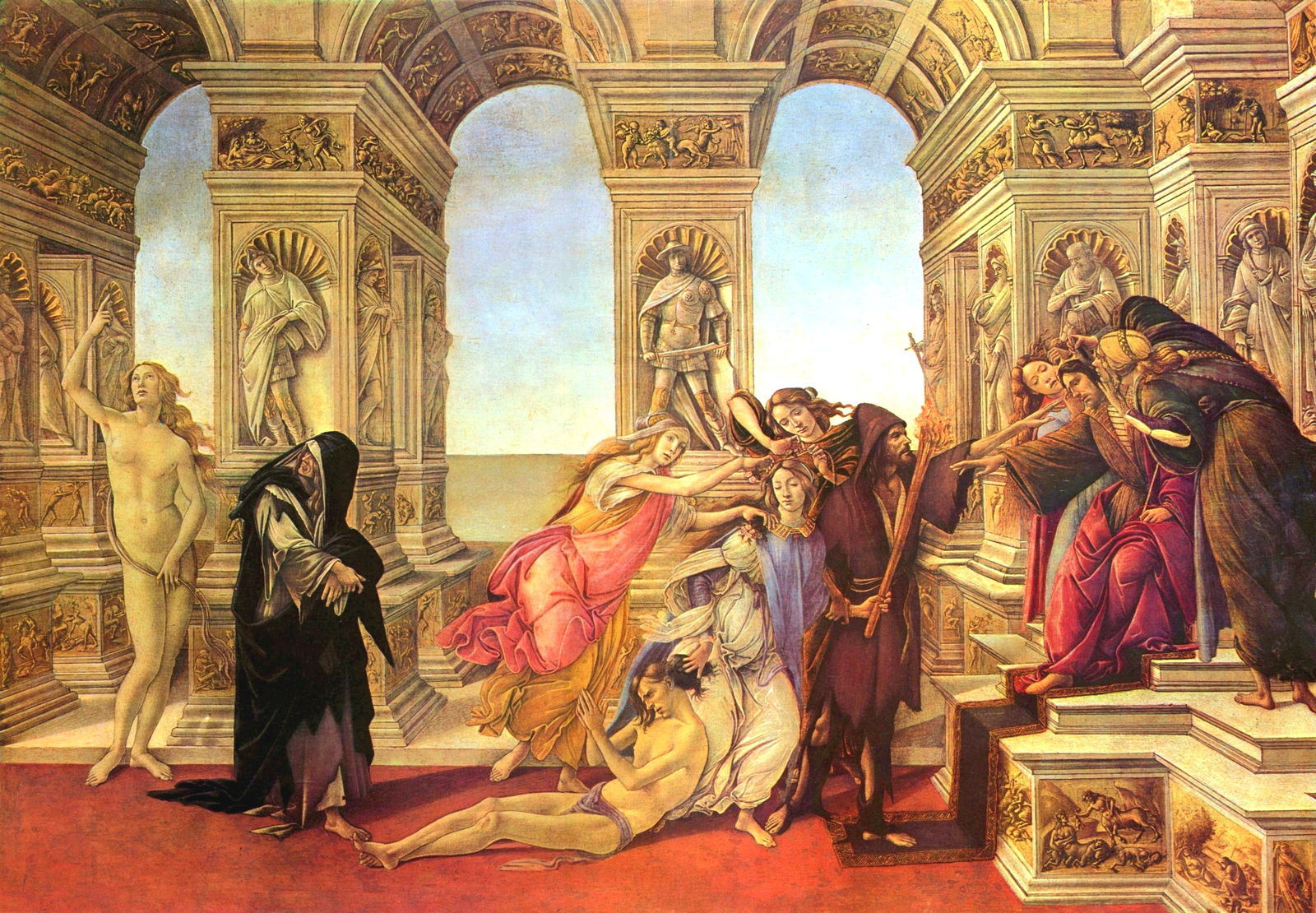
Inspired by Lucian’s description of the painting, in his ekphrasis, Botticelli’s intricate Calumny of Apelles (c 1496-7) tries to reconstruct the allegory.
The youth who is the victim of the calumny is being dragged by his hair, clad only in a loincloth, with his hands pressed in prayer. On the throne at the right, perched on a dais, sits Midas with his ass’s ears, extending his right hand towards the distant figure of Slander. On either side of Midas are Ignorance and Suspicion, speaking simultaneously into those ears.
Slander is shown as a beautiful woman, holding a blazing torch in her left hand, and the accused’s hair in her right. At her left, between Slander and Midas, is Envy, who reaches his left hand out towards Midas’ eyes. The two women attending Slander are Fraud and Conspiracy. To the left is Repentance, dressed in deep mourning, her clothing in tatters. She glances back at the naked Truth, who looks up to the gods.
References
Wikipedia on Apelles.
Wikipedia on Botticelli’s Calumny of Apelles.
 The Eclectic Light Company