
At the outbreak of war in 1914, the former Nabi painter and print-maker Félix Vallotton had turned to painting unusual landscapes showing transient atmospheric effects like fog, with the simplification of prints. He volunteered for the army, although he was rejected as he was almost fifty.

Vallotton’s The Sheaves from 1915 is one of his moving and symbolic images of the Great War. It’s late summer, harvest time, and the ripe corn is being cut and stacked in sheaves. But where are those farmworkers, whose rakes rest against the sheaves, and whose lunch-basket sits on the ground ready to be eaten? Where is the wagon collecting the harvest, and why is the white gate in the distance closed?
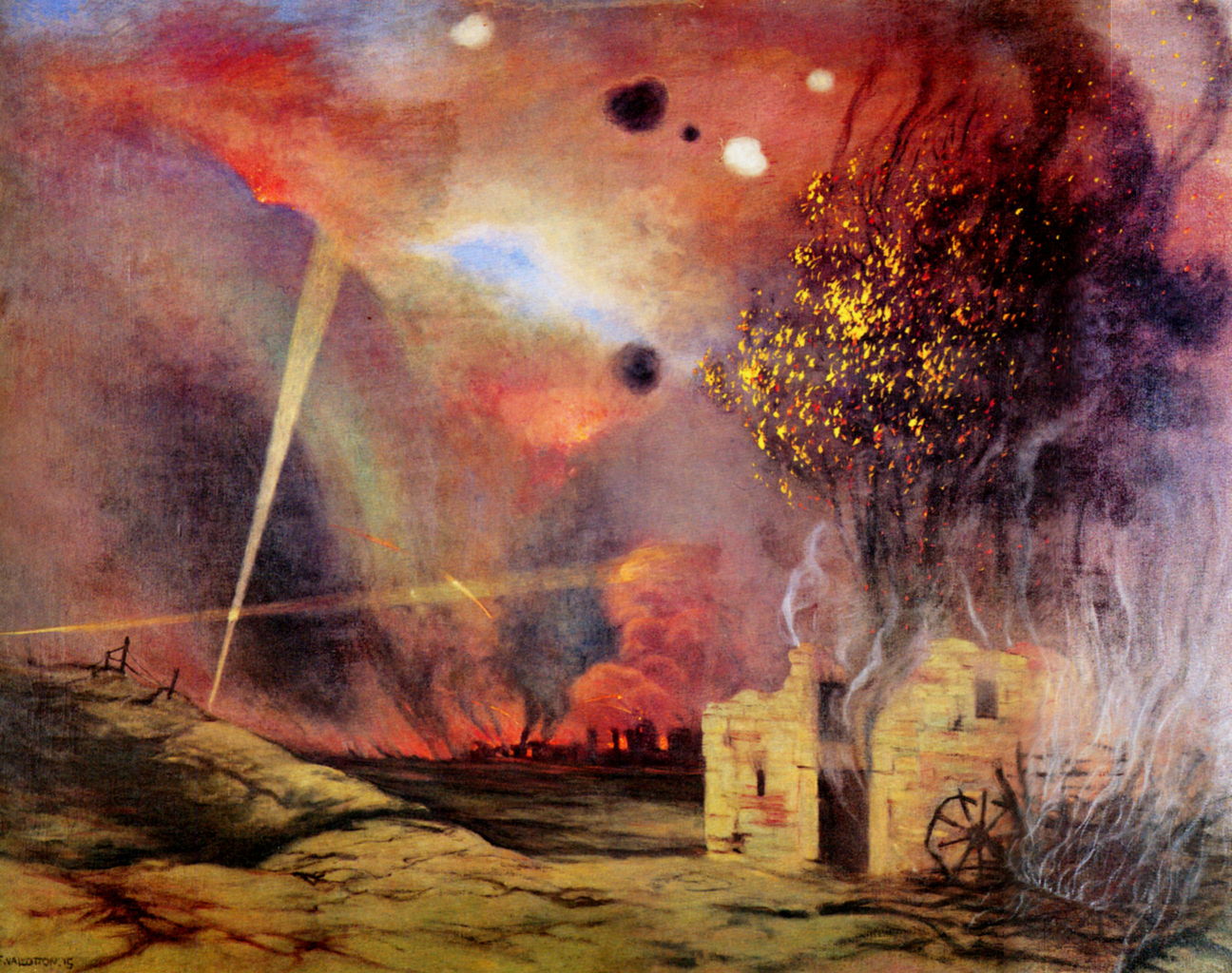
Then followed images of war itself. Landscape of Ruins and Fires from 1915 captures the utter destruction on the ground and surrealist displays in the sky. He returned to making woodcut prints, which he assembled into his last print series titled This is War.
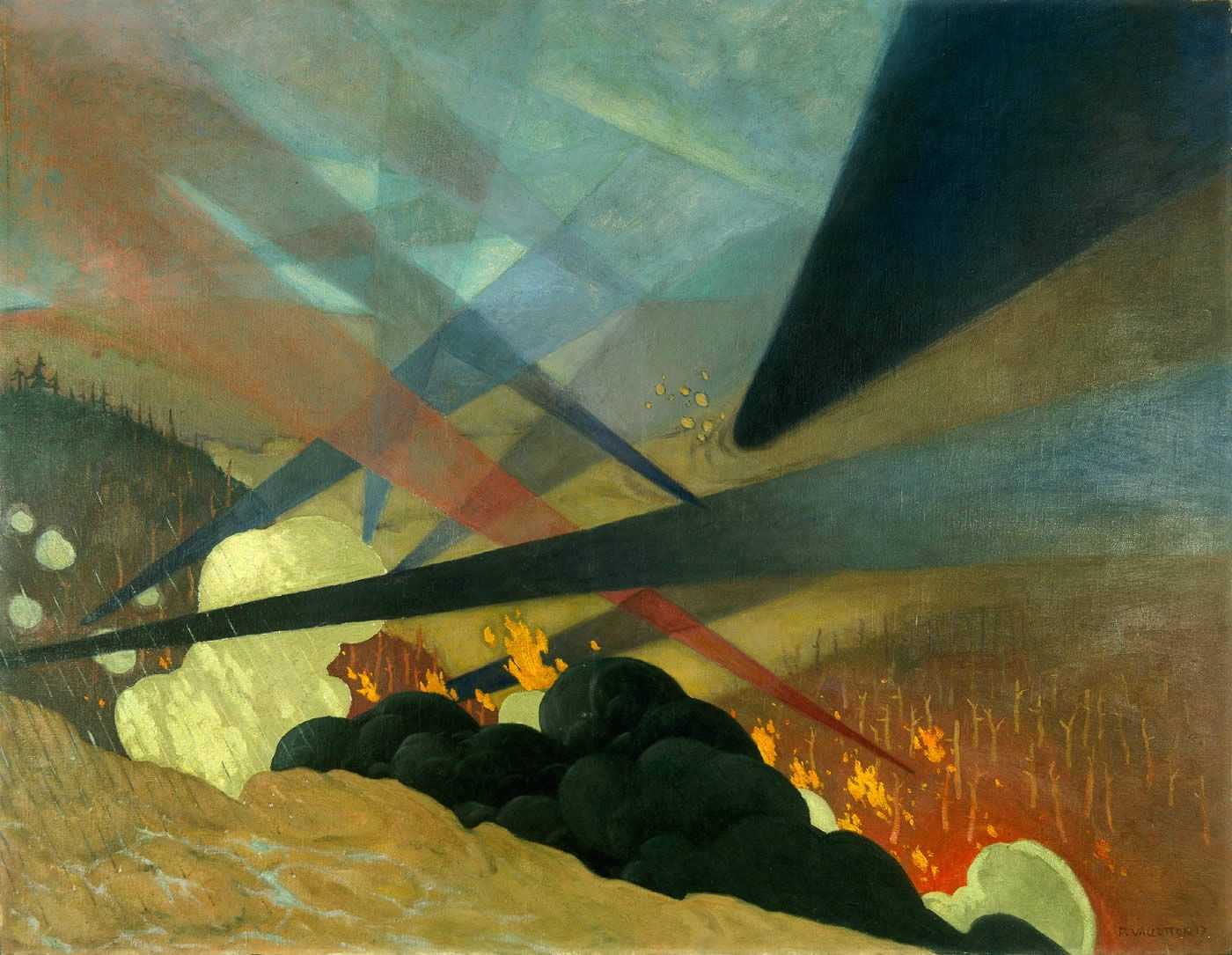
In 1917, he was commissioned as a War Artist to tour and paint the front line in Champagne, in the north-east of France. Verdun (1917) is one of the paintings he made as a result, where he shows the land burning under beams of coloured smoke, reversing their more usual appearance as beams of light. The Battle of Verdun, fought on the banks of the River Meuse, was the longest battle of the war, ending just before Christmas in 1916 with over 300,000 dead.
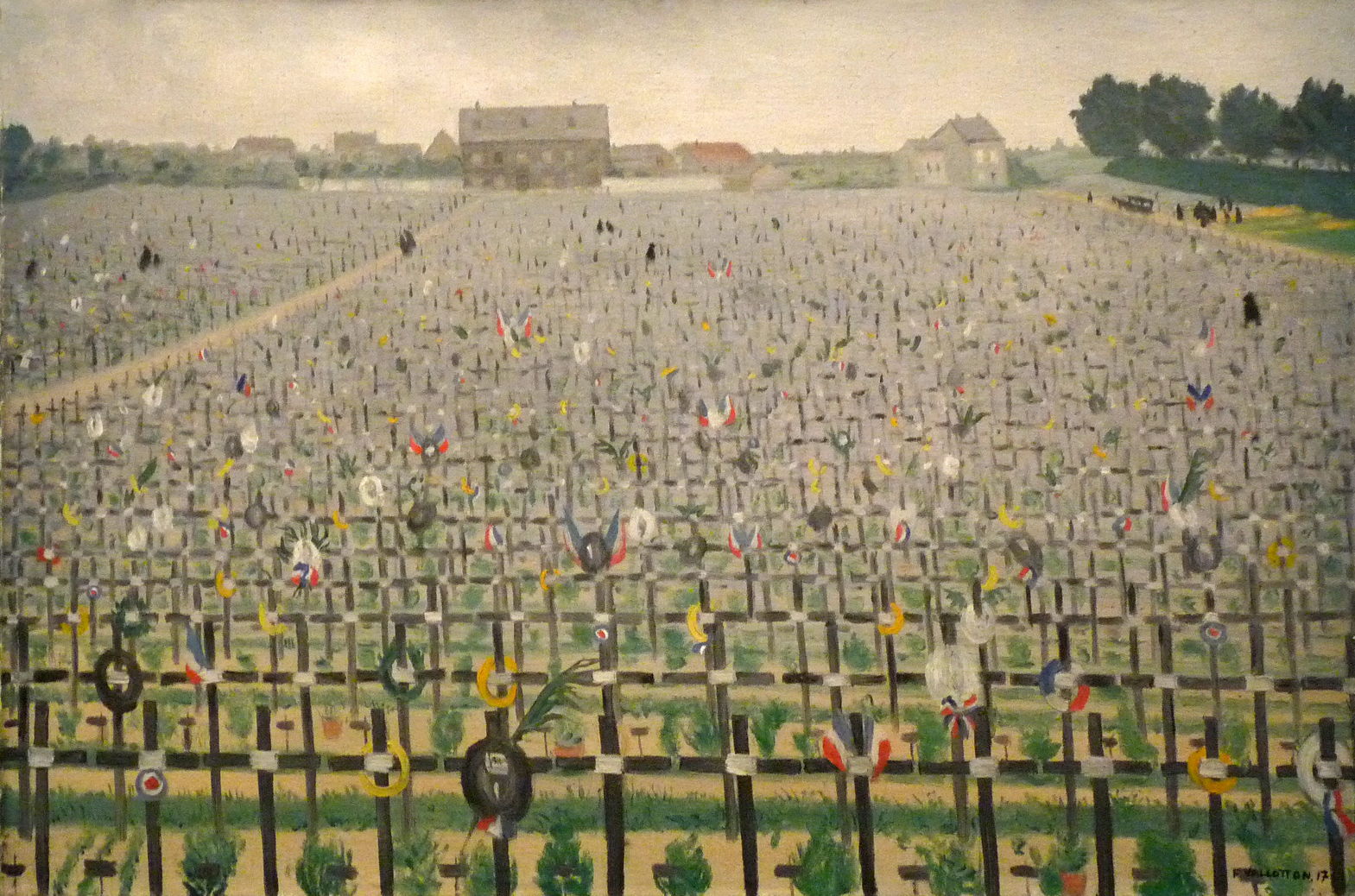
Perhaps Vallotton’s most moving painting of the First World War is his view of Châlons War Cemetery from 1917, with its countless rows of crosses receding into the town of Châlons-en-Champagne. There are a total of more than 4,500 French war graves from the First World War here, with other nationalities, and even more were added from the Second World War.
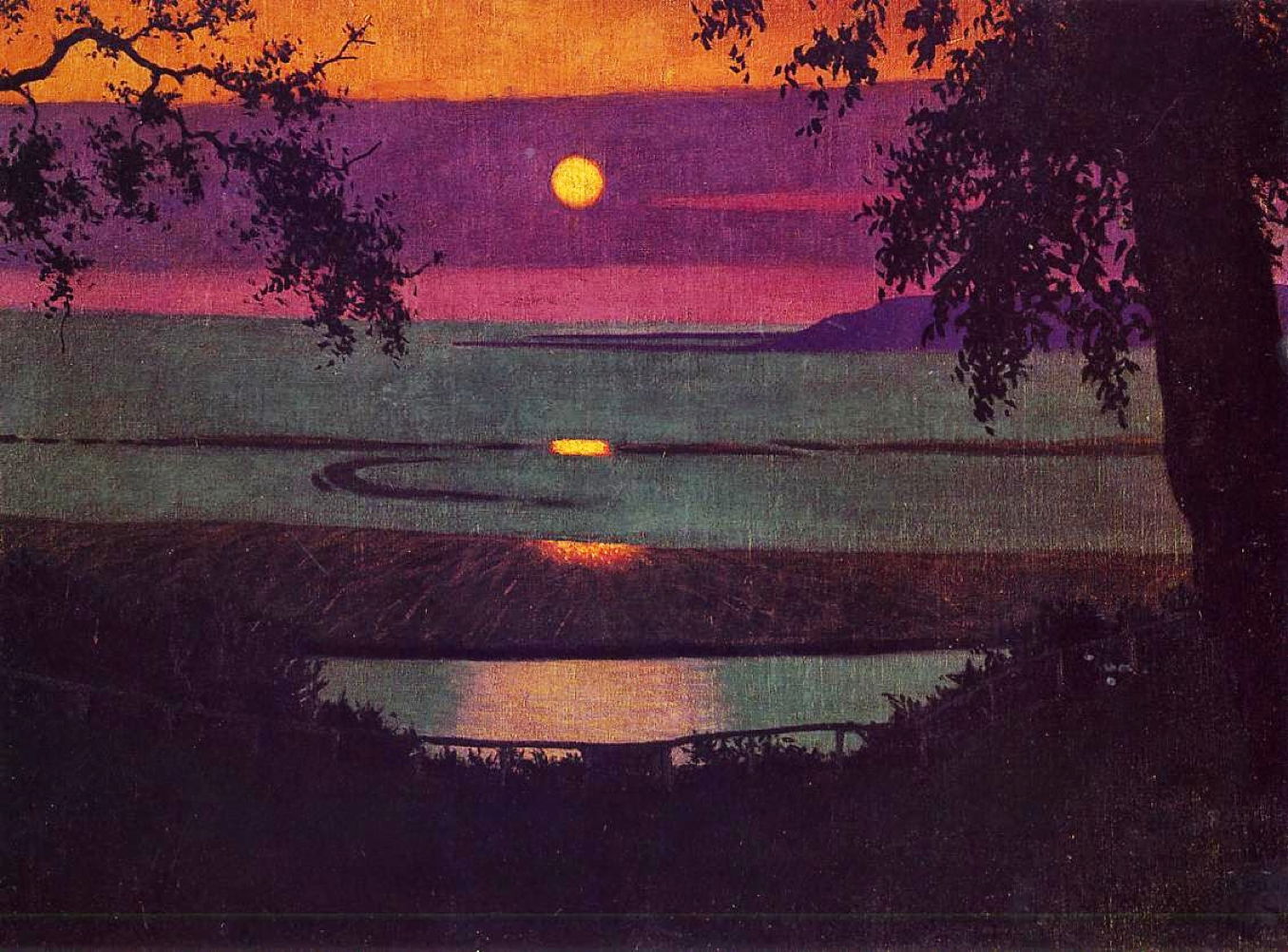
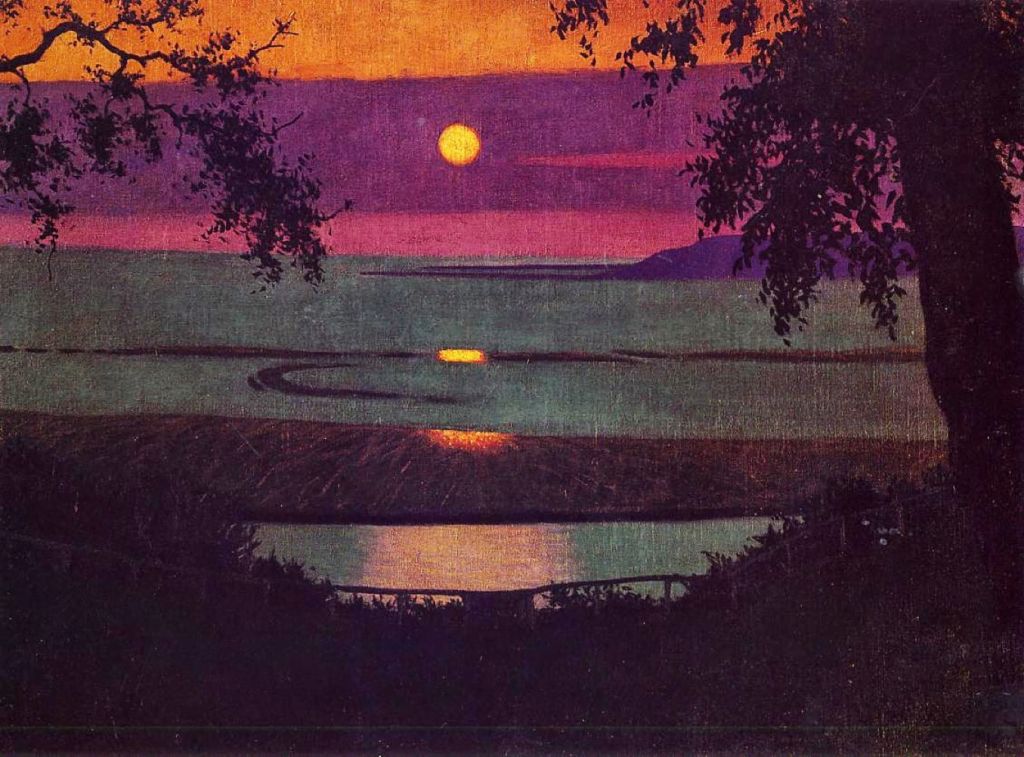
Like Pierre Bonnard, Vallotton visited the town of Grasse, in the hills north of Cannes on the Mediterranean coast of France. In 1918, as one of a series of sunset views, he painted Sunset at Grasse with its saturated colours.
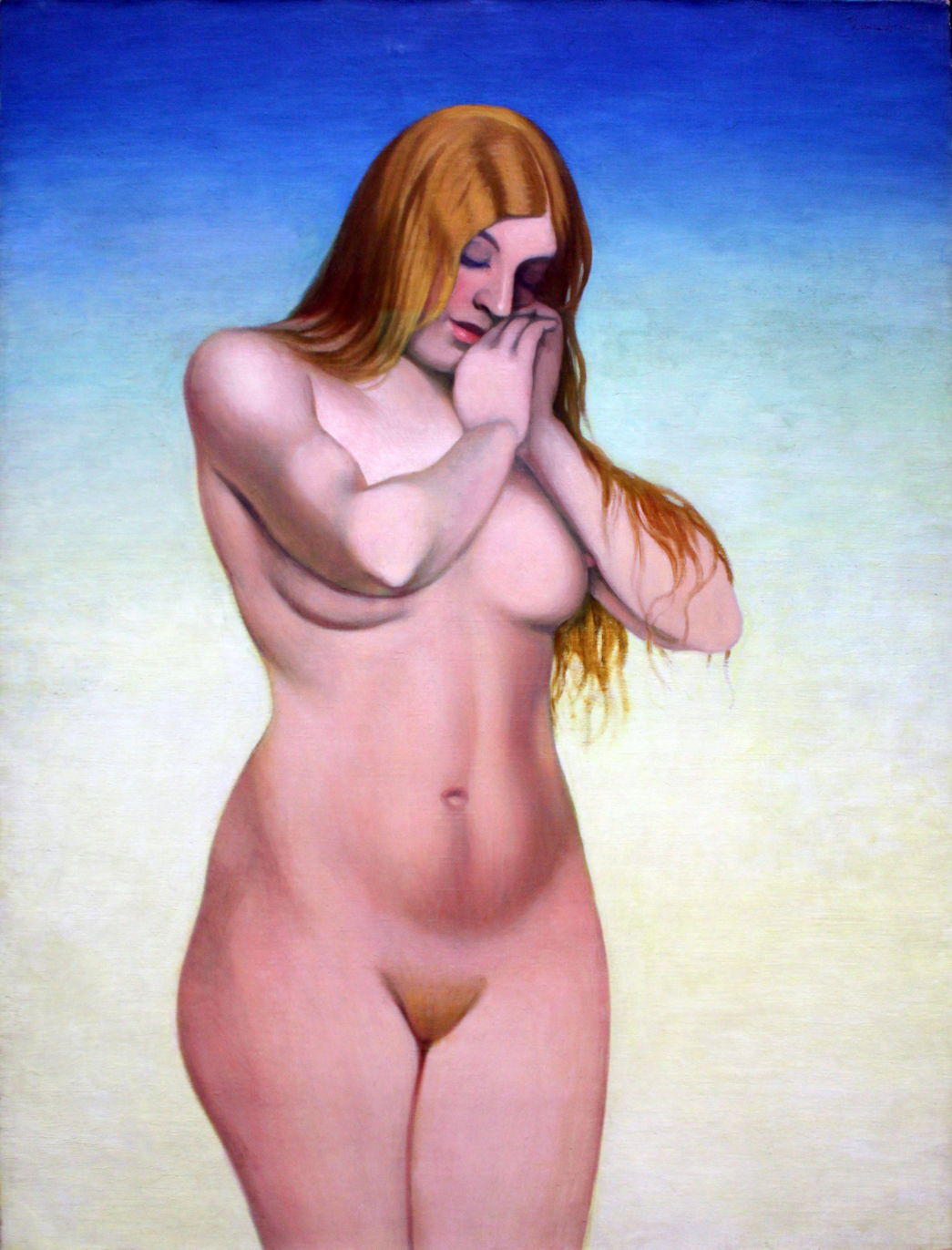
He continued to make some figurative paintings after the war. His Blonde Nude from 1921 develops the sleek, modern look from that of Le Bain turc in 1907.

He still painted some narrative works too. When I first saw his Chaste Suzanne from 1922, I was puzzled as to what its story could be, but I think that this is a modern retelling of the Old Testament tale of Susanna and the Elders, where the two men are trying to blackmail Susanna into being unfaithful.
In the last few years of his life, like some other artists, he turned to landscapes. Unlike Ferdinand Hodler, he couldn’t paint these from his balcony, but seems to have gone back to his notebooks and sketches and painted composite views, similar to the ‘reminiscences’ of earlier landscape artists like Corot.

The Old Olive Tree from 1922 could be almost anywhere in southern Europe, although the stack of cut reeds resting against the tree adds a slightly surreal effect. In the distance, the terraced fields on the hillsides are brown and parched from the summer heat.
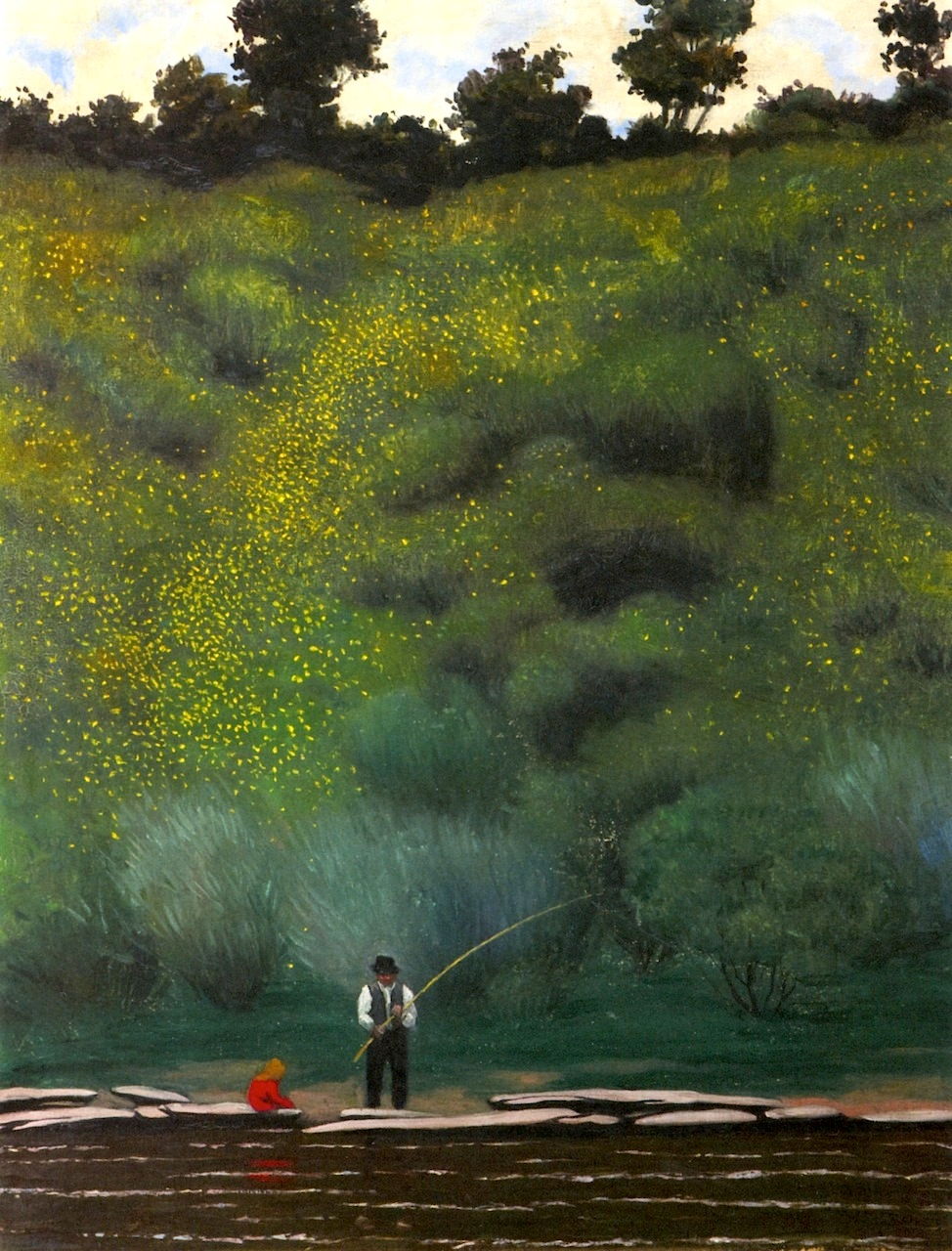
Broom in Bloom, Avallon from 1923 shows an idyllic scene of fishing beside the river near the appropriately-named Avallon, which is south-east of Paris, towards Dijon and the Alps.

Vallotton painted this view of Château Gaillard at Les Andelys in 1924. The ruins of this mediaeval castle tower above this village in northern France. Les Andelys was popular with landscape painters during the nineteenth century, and was famous as Nicolas Poussin’s birthplace.

The last of these wonderful print-inspired landscapes shows The Dordogne at Carennac, in the south-west of France, and dates from 1925.
By this time, he had completed over 1,700 paintings and some 200 prints. He then fell ill with cancer, and died that year, the day after his sixtieth birthday. His last novel, which he had started in 1907, was published posthumously.
I will conclude this short series with a summary after Christmas, to mark the centenary of his death.
 The Eclectic Light Company