

This weekend we travel to what used to be a small village of around six thousand on the bank of the River Oise, to the north-west of Paris. Pontoise was the centre of early Impressionist landscape painting in front of the motif, and appears in hundreds of works painted there from the late 1860s. It’s where Camille Pissarro lived and developed his skills, Paul Cézanne learned to paint en plein air, and others including Vincent van Gogh and Charles Daubigny painted.
The country around Pontoise has also been painted extensively. In these two articles, I include some from Auvers-sur-Oise, a little upstream, but exclude those from Ennery to the south, Éragny down river, where Pissarro settled later, and Osny to the north-west, all names you’ll see in the titles of significant Impressionist paintings.

We start in 1867, in the early days of the development of Impressionism, with Camille Pissarro’s Côte de Jalais, Pontoise. This realist view shows the hill of Les Jalais at l’Hermitage, where Pissarro lived at the time, viewed from the Chemin des Mathurins in Pontoise.

The year after he painted these Apple Trees at Pontoise, the House of Père Gallien (1868), the Pissarro family moved to Louveciennes, also to the north-west of Paris, where they intended to settle down in a large rented house. It was here that Pissarro first got to know Alfred Sisley well, when they painted in company, and alongside Monet and Renoir, all four of them starving and fighting off despair from their lack of sales.

The forgotten Impressionist Édouard Béliard may well have painted Boulevard de Fossés in Pontoise alongside Pissarro, Cézanne and Guillaumin in 1872.

Béliard’s Pontoise, View of the Lock (1872-5) was probably among his paintings shown at the first Impressionist Exhibition in 1874. Its composition is reminiscent of Sisley’s The Canal Saint-Martin, Paris from 1872, and its style is similar to those of Pissarro and Sisley at that time.
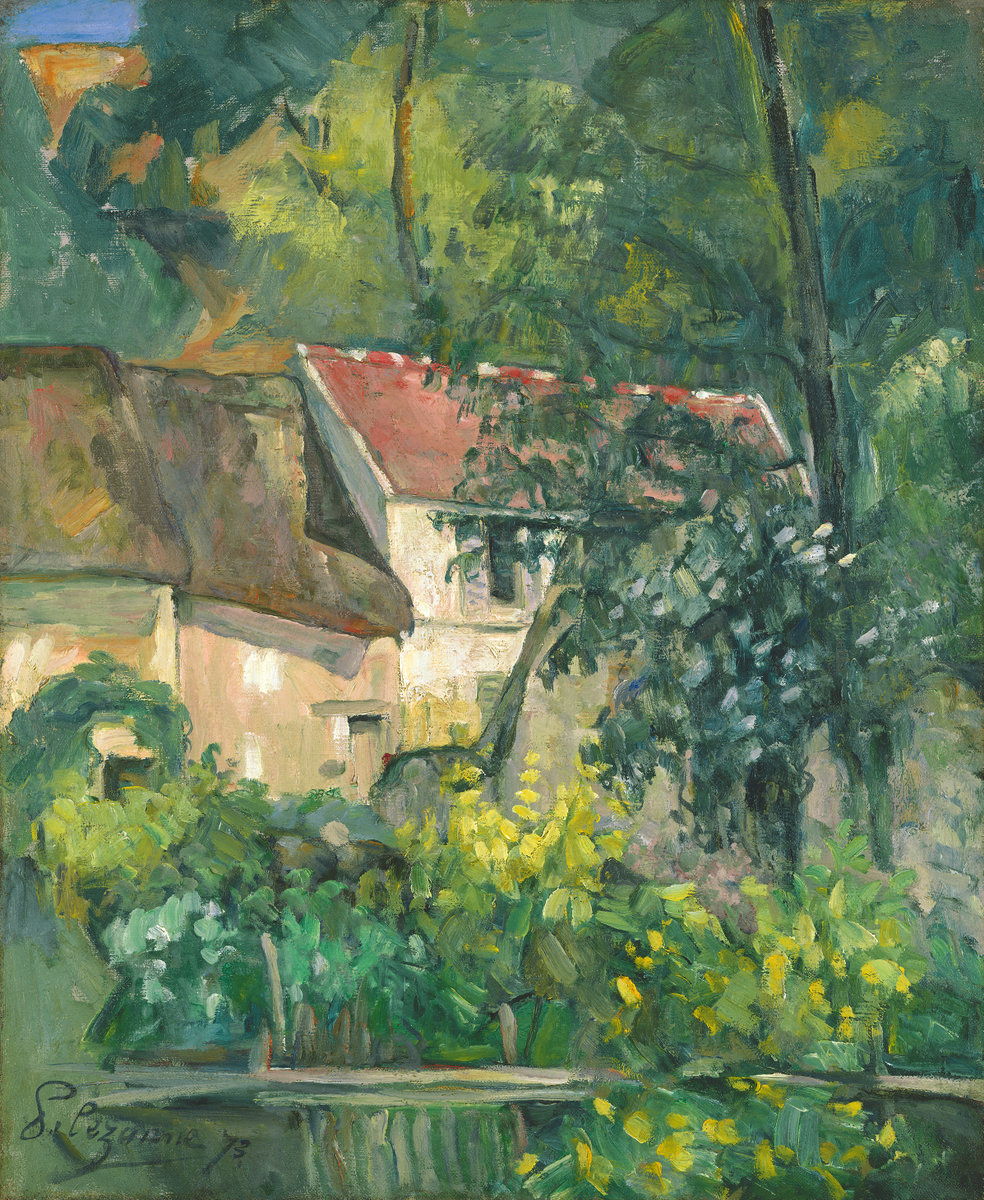
Paul Cézanne started learning to paint en plein air alongside Pissarro’s easel in 1873, when he painted this view of the House of Père Lacroix, Auvers-sur-Oise. As with all beginners, he took a long time getting the painting to look right, so different sections of the roof were painted several hours apart, as reflected in the orientation of the shadows here.

This view from Cézanne’s first campaign along the River Oise shows the northern bank near the hamlet of Valhermeil, slightly up-river from Pontoise.

Of all the paintings shown at the first Impressionist Exhibition in Paris in 1874, Cézanne’s The Hanged Man’s House, Auvers-sur-Oise (1874) was among the most successful, as he sold it to the collector Count Doria for three hundred francs.

Béliard’s Pothuis Quay in Pontoise, Effect of Snow from 1875 may have been exhibited at the second Impressionist Exhibition in 1876, and is similar in subject and style to the winter scenes painted around Louveciennes by Pissarro and Sisley from 1870 onwards.

In February 1875, with snow still falling, the Pissarros returned to their house in Pontoise, for Camille to paint there again. Effect of Snow at L’Hermitage, Pontoise (1875) strikes a fine balance between an impression captured in haste, and sufficient detail to make it more than just a passing moment.

That year a few of Pissarro’s paintings appear to have been influenced by Cézanne. Perhaps the best example is The Small Bridge, Pontoise, which could easily be mistaken for one of Cézanne’s views in the woods of northern France.

View of the Côte des Gratte-Coqs, Pontoise from the same year is also less distinctively one of Pissarro’s works.

In 1876, Pissarro painted this large view of one of the gardens in Pontoise: The Garden of Les Mathurins at Pontoise, belonging to the Deraismes Sisters. In fact, the sisters were only renting this large and impressive property, just down the road from where the Pissarros lived, in the Hermitage district of Pontoise. It had formerly been a convent until the French Revolution.
 The Eclectic Light Company