
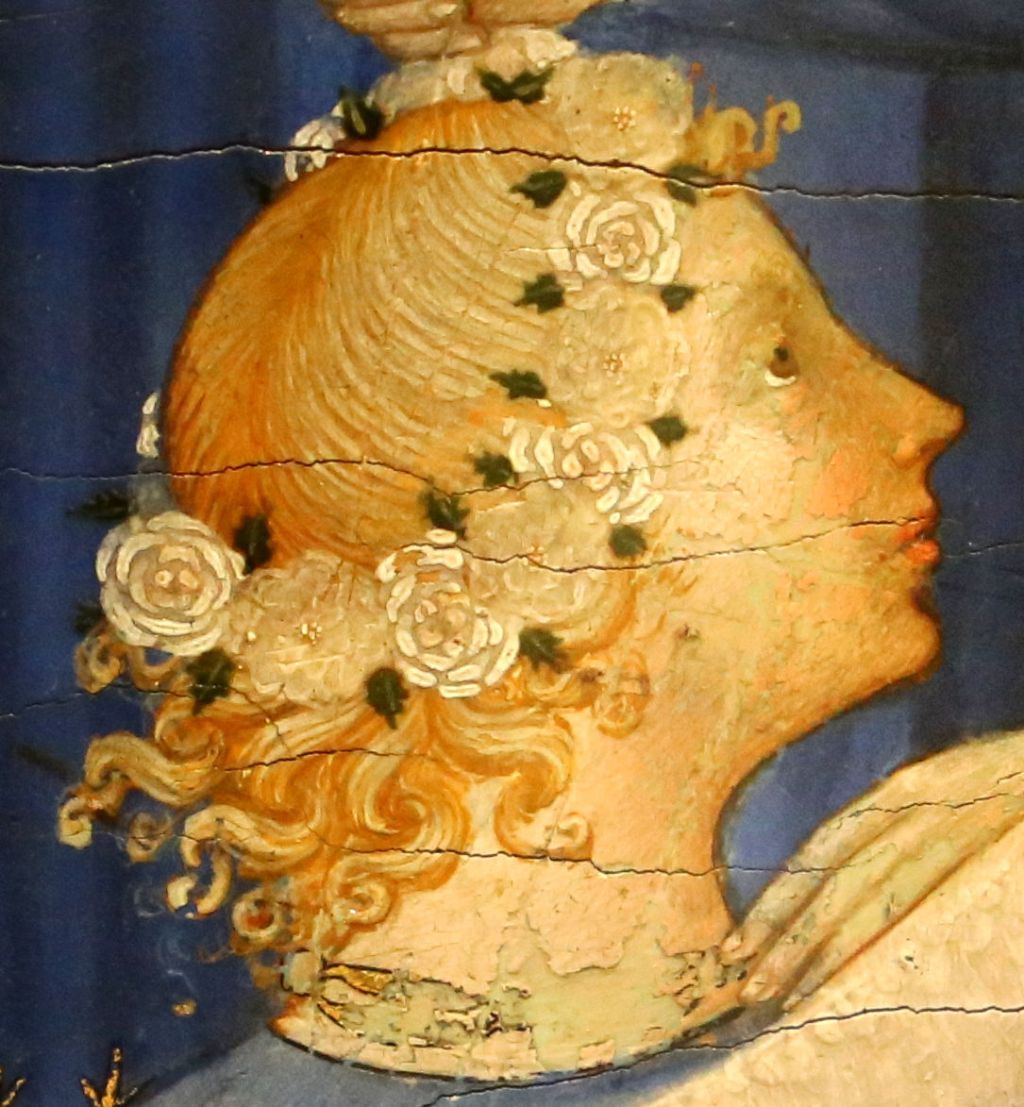
In the last decades we have become used to having unprecedented access to high resolution images of tens of thousands of major paintings. Although they’re an invaluable resource that I rely on in these articles, there’s a great deal more to paintings than you can see in all those JPEGs. Some of that information is recorded in the caption to each image here.
To start with, the date of a painting tells a great deal you might never see in its image.

Jan Vermeer’s small and modest canvas of A Young Woman with a Water Pitcher painted in around 1662-65 is an example of his masterly work from the Dutch Golden Age. What’s unusual here is its crisp focus in the upper chest of the figure, at the edge between the split in her white mantle and the underlying deep ultramarine clothing. In contrast, the reflections on the pitcher and bowl are quite blurry, as is the window.

At first sight William McGregor Paxton’s Woman with Book might appear to have come from the same brush or school, until you know it was painted 250 years later in another continent. A woman who even resembles one of Vermeer’s models stands reading a large book, with a painting on the wall behind her. Here the optical focus seems to be in the purse she holds high against her left shoulder, with blurry bright reflections below the arm of the chair in the left foreground.
For each painting I also try to identify the media used, both the paint and the material used to support its paint layers, and its size.

Adam Elsheimer is famed for his often tiny oil paintings made on copper, among them Jupiter and Mercury with Philemon and Baucis from 1609-10. This shows a moment in Ovid’s retelling of the myth of Philemon (right) and Baucis (centre right), as they give hospitality to Jupiter (left) and Mercury (centre left), in their tiny, dark cottage. Nothing about that image tells how small it is, at 16.5 x 22.5 cm, or 6.5 x 9 inches.

At the other end of the scale is Raphael’s fresco of Parnassus painted between about 1509-11, as a fresco on the wall of the Stanza della Segnatura in the Vatican Palace. This measures 6.7 x 7.7 metres, or 22 x 25 feet, as might be implied by the relative size of the door below.
This new series of articles looks at some of more important features of paintings that are difficult to discern when looking at images of them.
Scale has great visual impact, with large paintings dominating even quite large rooms.
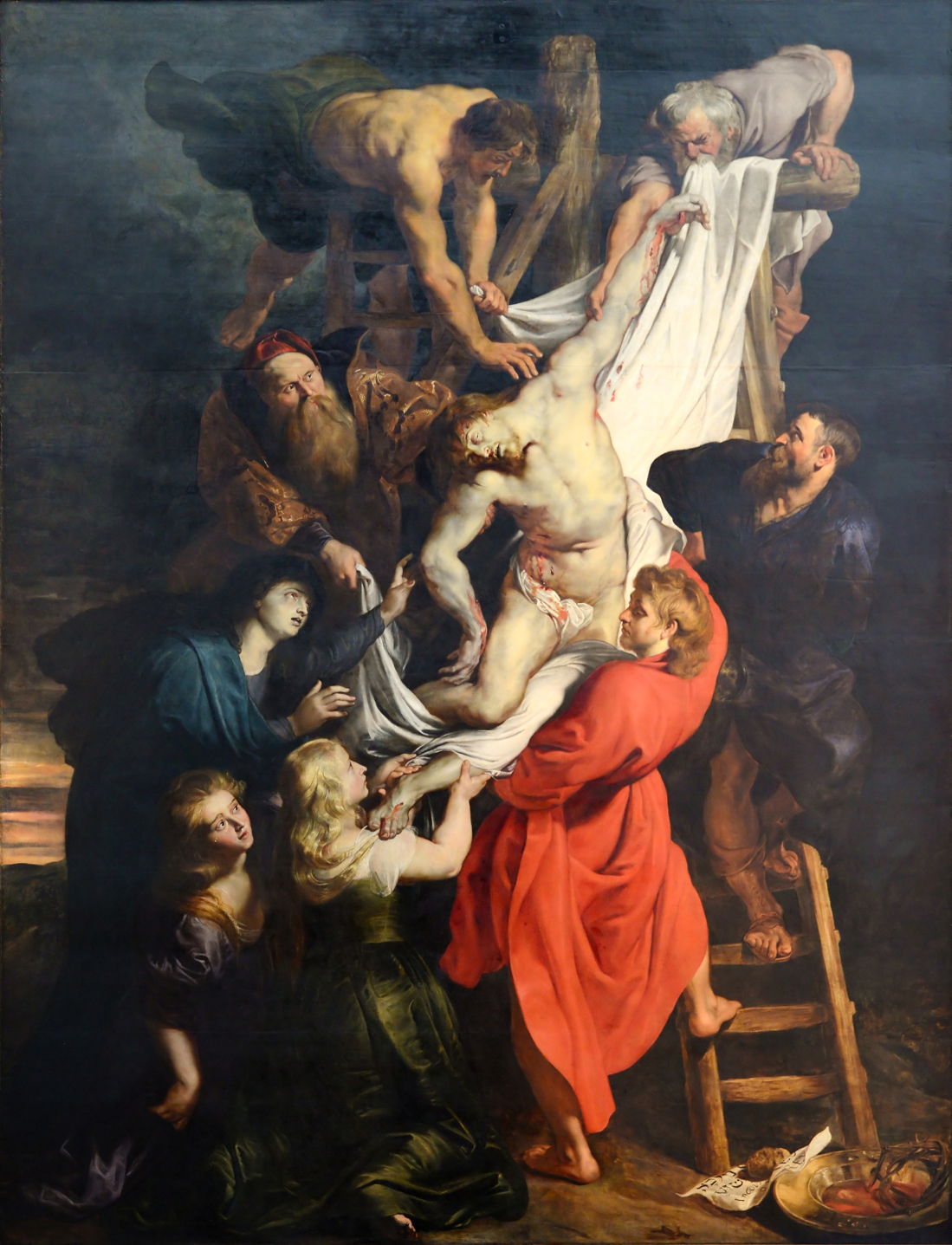
The centre panel in Peter Paul Rubens’s triptych for the Cathedral of Our Lady (Onze-Lieve-Vrouwekathedraal) in Antwerp is painted on an unusually large panel of wood, over four by three metres or 13 x 10 feet in size. He could of course have painted that on canvas, which was first used for such large paintings in Venice, because its damp air so rapidly damaged large wood panels.
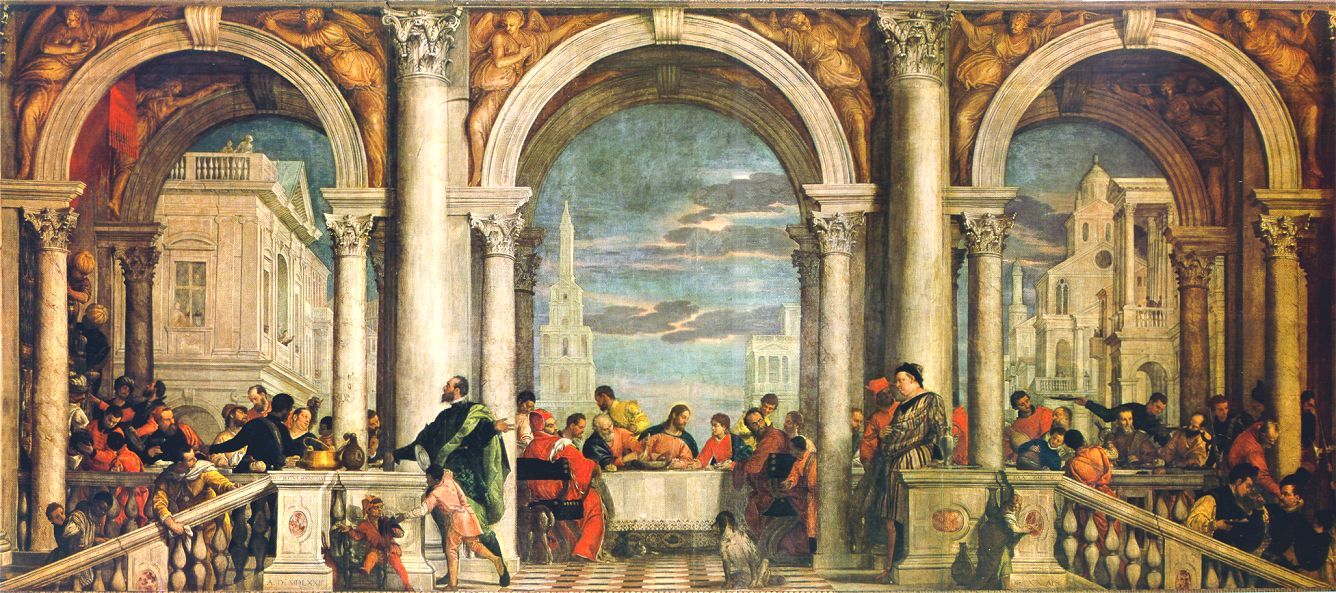
Paolo Veronese’s largest canvas paintings exceed 5 x 12 metres (16 x 40 feet) in size, including The Feast in the House of Levi from 1573.
Painting media look quite different when seen in the flesh.

The anonymous Wilton Diptych now in London’s National Gallery is thought to have been painted in egg tempera on a panel in France at the end of the fourteenth century. Its exquisite detail would have been painted in multiple thin layers using fine brushes, much like the miniatures painted on vellum in the previous centuries.

Some exponents of watercolours, including Marie Spartali Stillman, developed elaborate layered techniques that are still not fully understood. In this particular painting, Love’s Messenger from 1885, she has also incorporated tempera and gold paint, together with more opaque technique. Apparently her use of layers was painstaking and prone to failure, and sometimes forced her to abandon paintings.

The grain of the canvas is apparent in this image of Arnold Böcklin’s Sirens (1875). Yet this was painted not in oils, but in egg tempera on canvas covered with the thinnest of ‘oil’ grounds composed of lead white oil paint.

It would be easy to assume that Jean-Etienne Liotard’s portrait of The Chocolate Girl (c 1744-45), also shown below in detail, was just another academic oil painting made on canvas. In fact he painted it entirely using pastels on parchment, which are responsible for its fine detail.

Mere images may struggle to even tell you whether a painting was dashed off as a lightning sketch, or worked on over months.

As you might suspect, Robert Henri’s Landscape Sketch at Escorial (1906) was painted thickly on a wooden pochade panel, almost certainly in a single short session outside the city of Madrid, in the hills near the Escorial.
A popular myth about the origin of Claude Monet’s Grainstacks series is that they depict transient effects of season, weather, and light, as they were painted en plein air over the course of the winter. Look carefully at them, though, and they reveal that Monet spent several months prior to their exhibition making changes to them.

Looking at Grainstacks, End of Summer, considered to be one of the earliest in the series and numbered 1266, the trees behind the two grainstacks are still in full summer leaf, with no indication of the advent of autumn. Yet Monet’s signature gives the year as 1891. Looking at its paint surface in detail (below), some has been applied wet-in-wet and blended with underlying and adjacent paint, but many other brushstrokes have clearly been applied over dry underlayers.

The blue-grey shadow of this grainstack was applied with relatively dilute paint wet-on-dry over thicker off-white paint with marked surface texture. However, that off-white paint has itself been applied wet-on-dry over a pale green layer. This couldn’t have been achieved in the same day, even when the ambient temperature was warmer during the early autumn, but probably reflects at least three sessions with drying time in between them.
These are some of the topics I will cover in this new series looking beyond the painted image, at what the media can tell us about paintings. I hope you will join me.
 The Eclectic Light Company