
In the first of this pair of articles about the reading of candles in paintings, I showed examples of them as symbols. This article concludes by considering them primarily as sources of light with attractive effects.

Rembrandt’s very early painting of The Operation from 1624-25 shows a barber-surgeon and his assistant performing surgery on the side of a man’s head, by the light of a commonplace candle on a candlestick holder, normally used to move the source of light around the house, in particular to take it to light the bed.
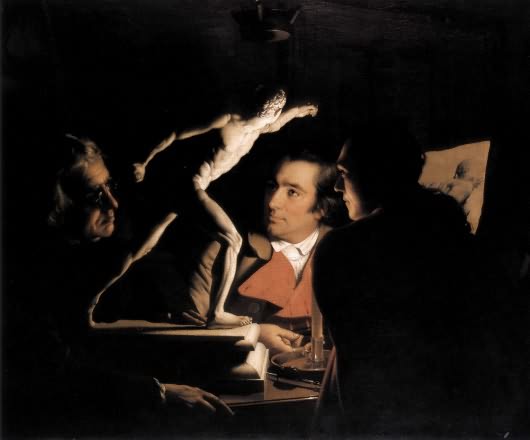
Three Persons Viewing the Gladiator by Candlelight (1765) was Joseph Wright of Derby’s first exhibited painting, and shows three men studying a miniature replica of the Borghese gladiator sculpture as a canonical classical work of art. The two younger men are Wright himself on the right, and Peter Perez Burdett, a Derby man who was a cartographer and progressive spirit, inspiration for more of Wright’s paintings. It has been proposed that Wright’s frequent use of such deep chiaroscuro wasn’t just stylistic, but reflected the influence of John Locke’s metaphor of the mind as a darkened room into which the eye lets in images to be reflected upon and stored.
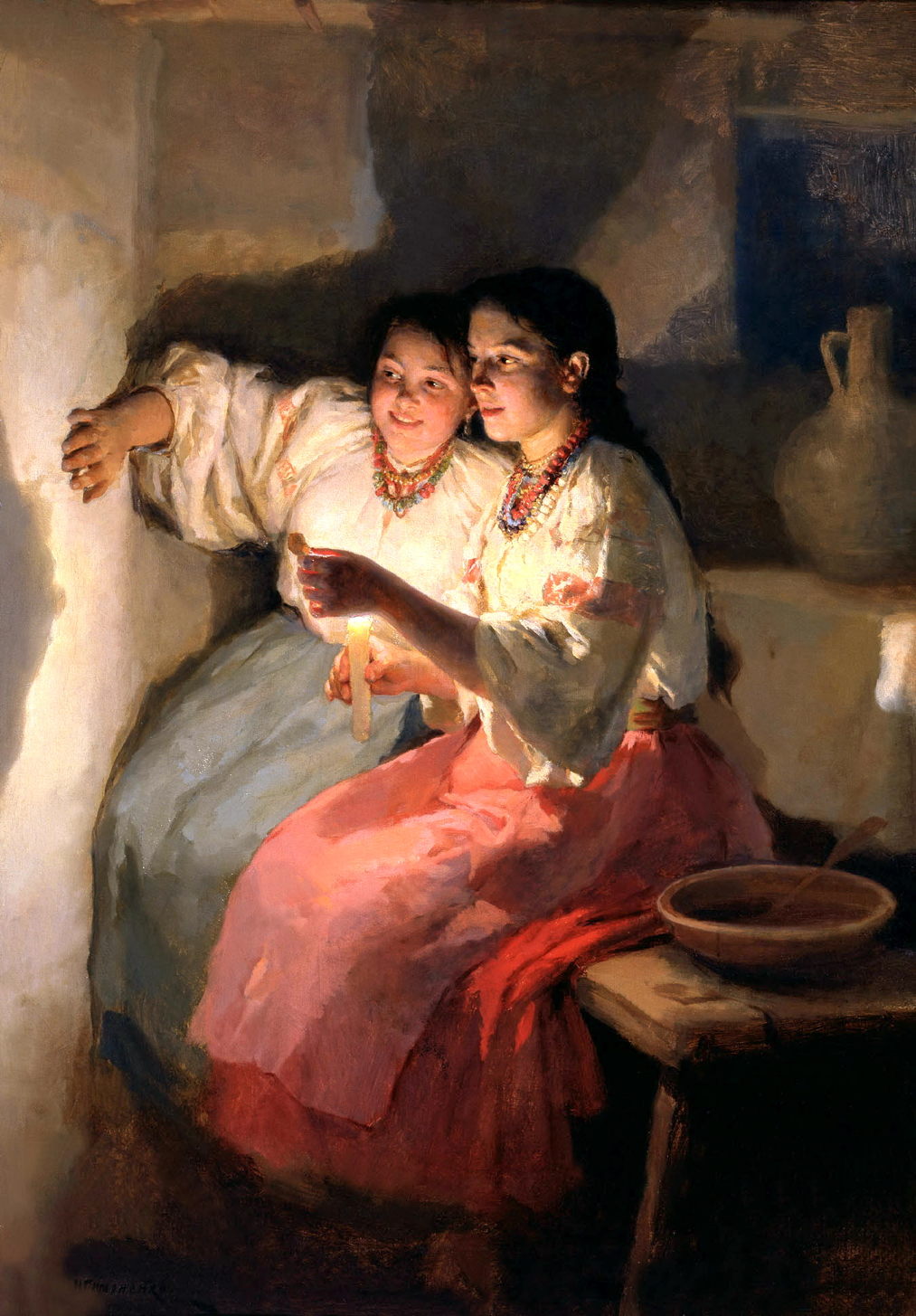
Mykola Pymonenko’s Yuletide Fortune Tellers from 1888 shows two young women playing a shadow game with a candle, which brings its own shadowplay in the magnified head and shoulders cast on the wall behind them.

Well into the latter half of the nineteenth century, the soft warm light of candles was still widely used in markets, as seen in Petrus van Schendel’s Market by Candlelight from 1865.

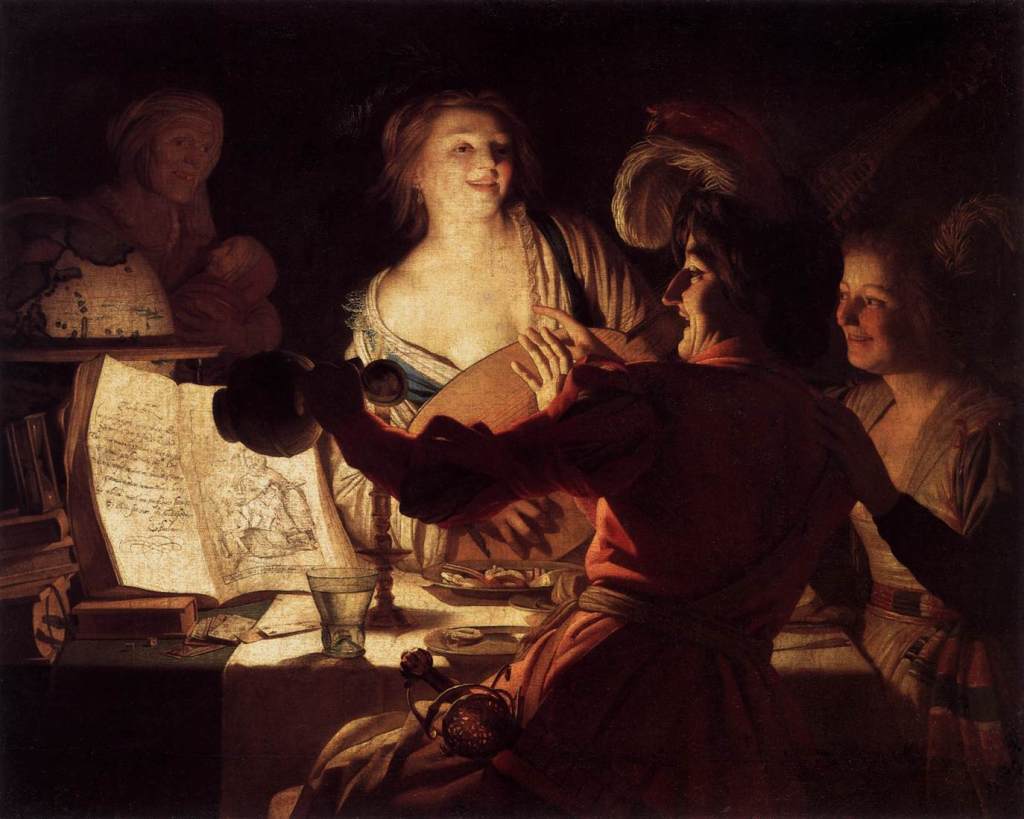
For Gerard van Honthorst, sometimes referred to as a Utrecht Caravaggist, dimly lit indoor scenes were associated with pleasures, often fairly sinful ones, as in his Merry Company from 1623. He also shows us how directional lighting can transform appearance, turning quite ordinary or ugly faces into caricatures.

Van Honthorst’s The Soldier and the Girl from about 1621 is another good example, where the young woman is lighting her candle from a burning coal.
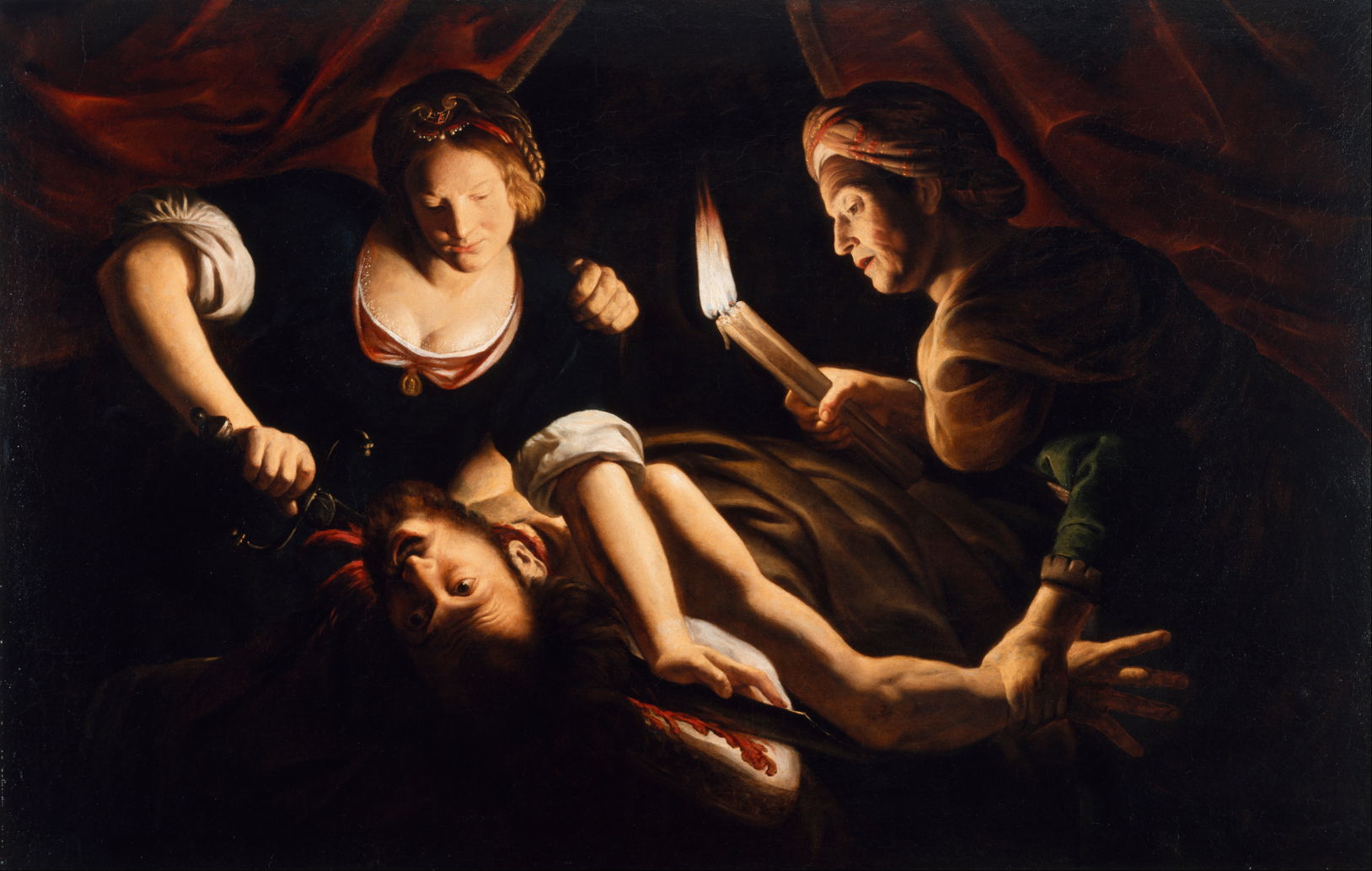
Trophime Bigot’s Judith Cutting Off the Head of Holofernes from about 1640 shows an even darker scene, lit only by a bundle of candles held by the maid. Composed in a triangle, Judith (left) is seen using both hands to force the sword through Holofernes’ neck. Much of the blood and gore is obscured in the blackness, apart from a runnel of blood just under the blade.
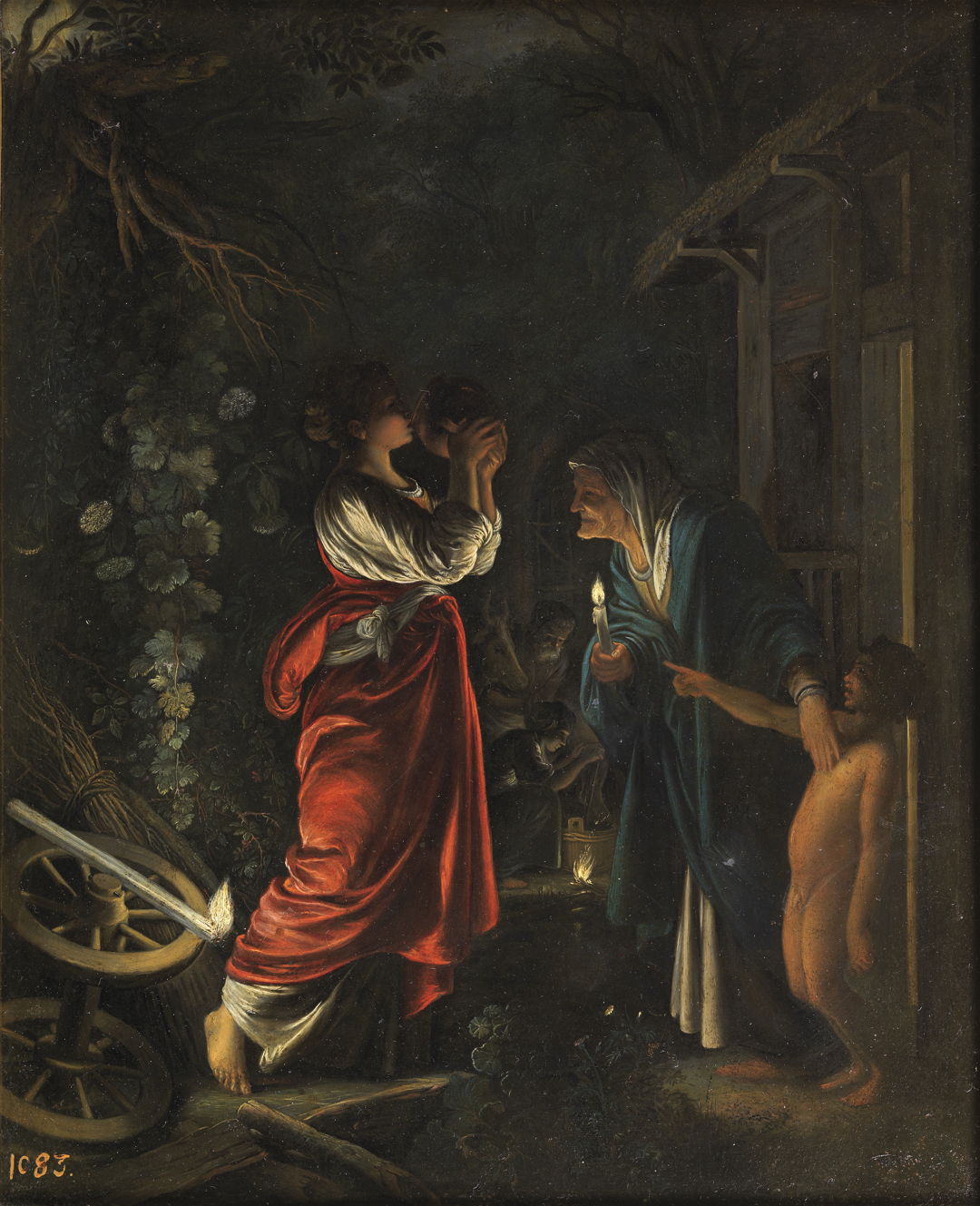
Many of Adam Elsheimer’s exquisite oil paintings on copper use very strong chiaroscuro, showing stories which are set during the night, such as that of Ceres at Hecuba’s Home from about 1605. Being a goddess, Ceres has a huge candle compared to the smaller domestic version held by the old Hecuba.
For royalty and nobility, single candles in holders couldn’t suffice, and they had to have large candelabras to light their rooms.

When you’re King Friedrich II of Prussia (Frederick the Great) and you want to play your flute to your court, why not get the composer CPE Bach to accompany you on the harpsichord, and your flute teacher, Johann Joachim Quantz, to listen at the far right? Adolph Menzel’s Concert for Flute with Frederick the Great in Sanssouci (1850-52) re-imagines this royal concert, which must have taken place about a century earlier. The artist’s attention to detail extends to the costumes and candlelight.
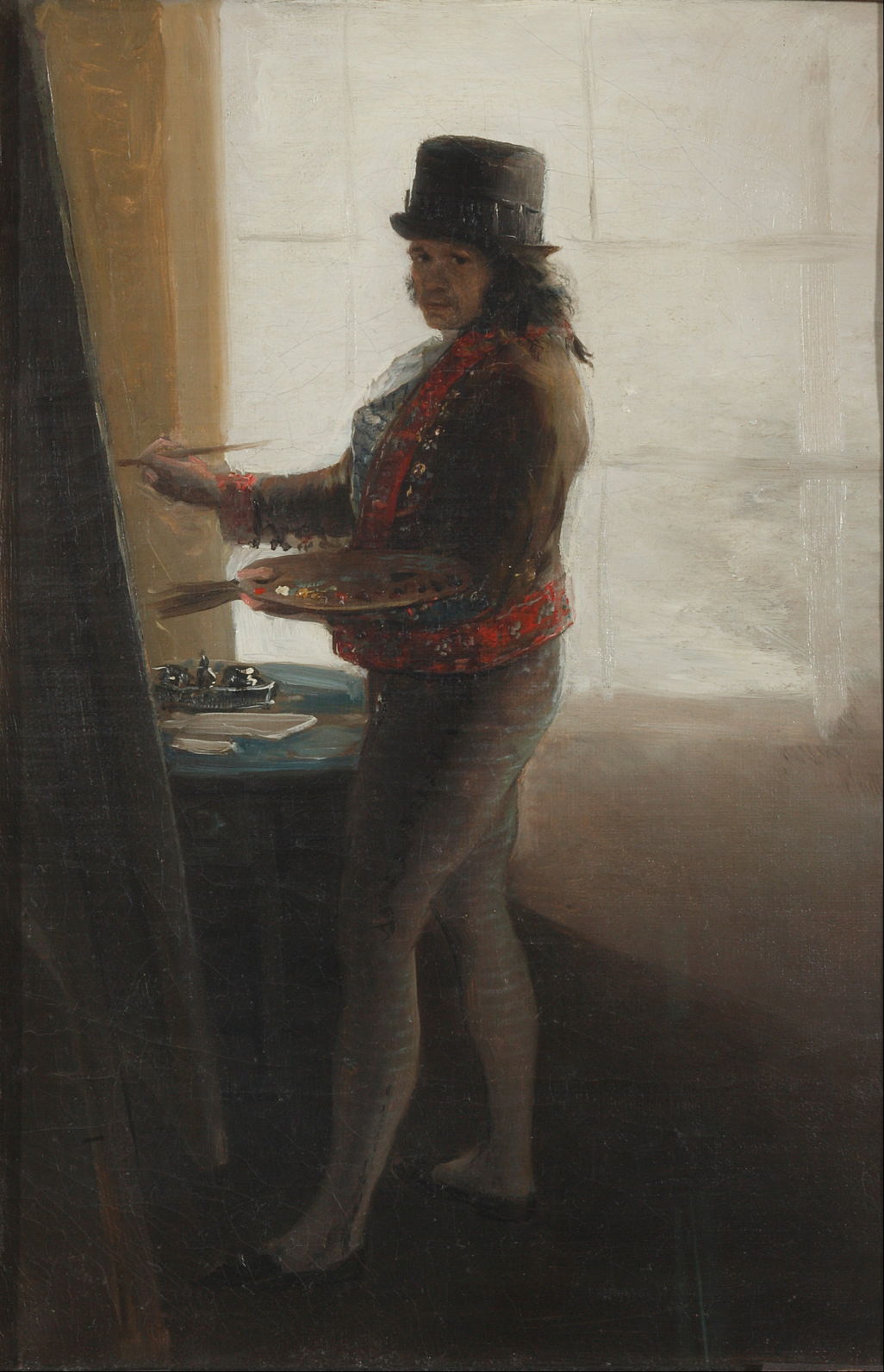
Finally, even painters used candles to light their work. Francisco Goya’s self-portrait from anywhere between 1785-95 shows him working in the studio wearing a special hat. Around its brim are several metal clips that he used to hold candles so that he could work well into the evening.
 The Eclectic Light Company