
In the first of these two articles providing context for Théodore Géricault’s masterwork The Raft of the Medusa, I had reached 1850 and Eugène Delacroix’s obsession with shipwrecks.
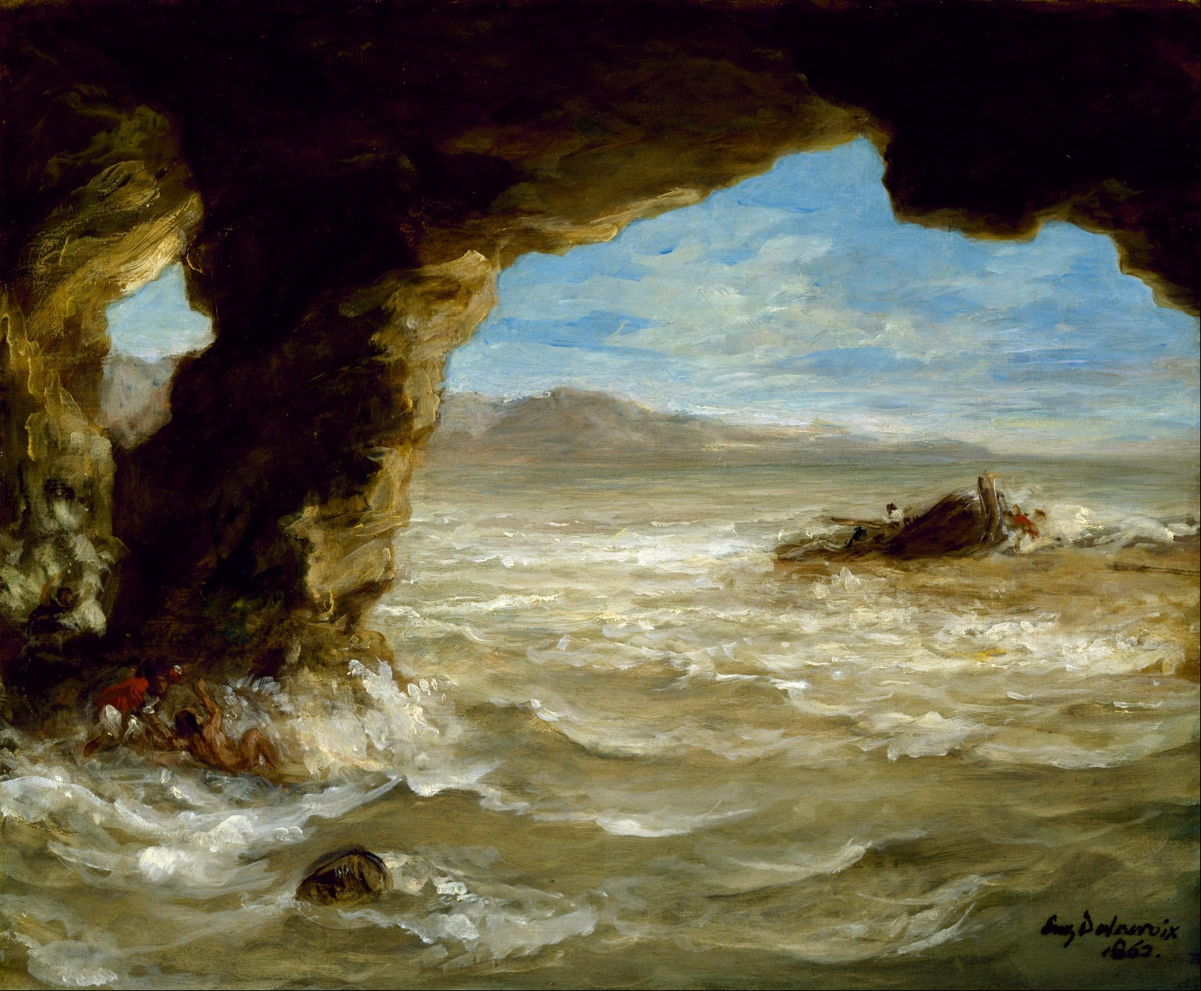
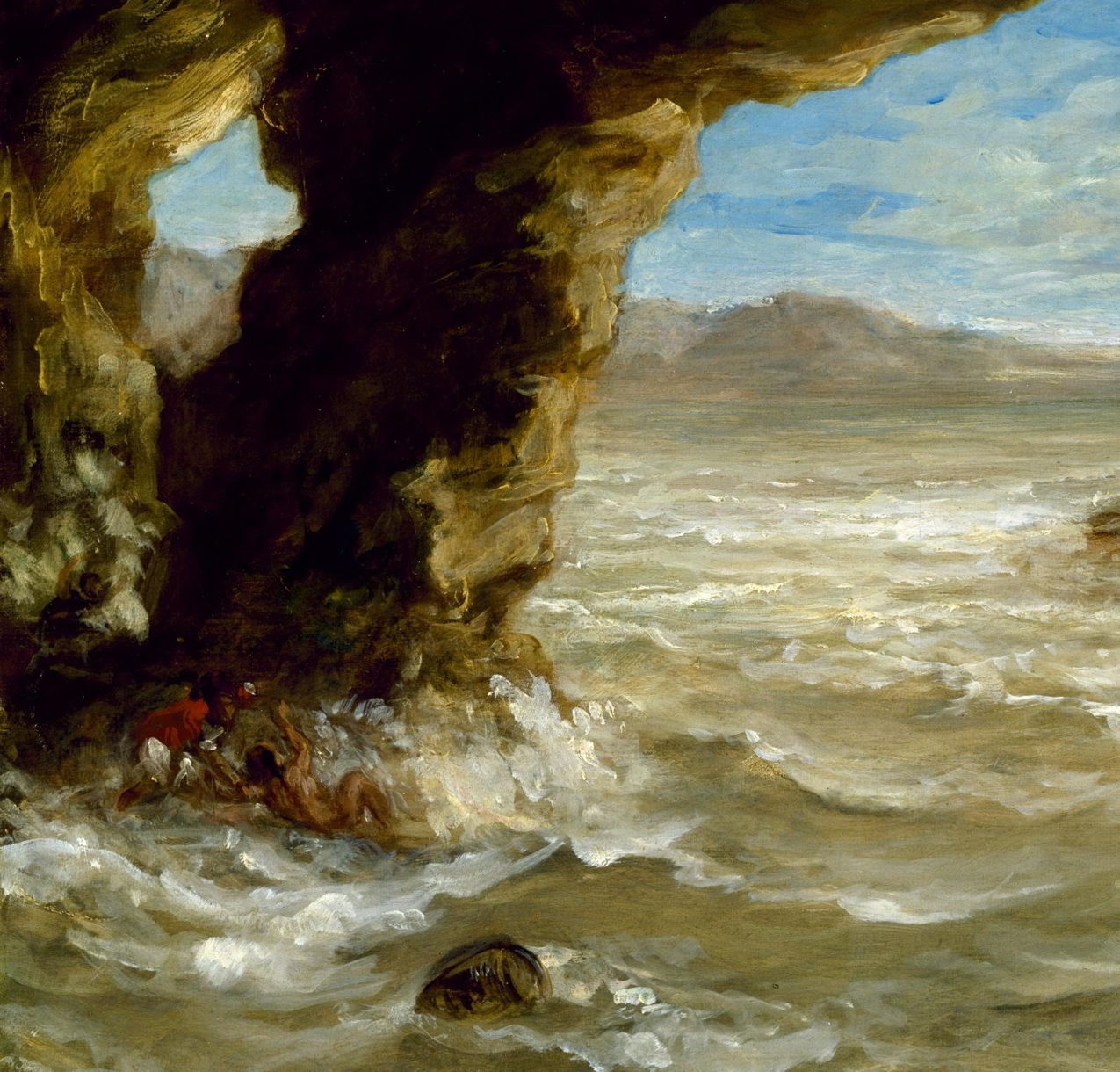
The year before his death, Delacroix brought an end to his series of paintings of shipwrecks in Shipwreck off a Coast (1862). At last the survivors of the Don Juan have made landfall and one of them is being rescued in the left foreground (below), amid extremely loose brushstrokes.
I make no apology for showing three paintings by Ivan or Hovhannes Aivazovsky, the greatest and most prolific marine artist of the nineteenth century.

The Ninth Wave (1850) is Aivazovsky’s best-known painting, and one of the classic depictions of shipwreck alongside Géricault’s Raft of the Medusa, although not in this case as a social or political statement. Its title derives from the belief that waves occur in trains of nine, progressively increasing in size to the ninth wave. Some nautical traditions claim that the number is seven rather than nine, and although there is some underlying evidence to support wave trains, inevitably real life is not as regular.

This detail demonstrates how Aivazovsky refers to Géricault’s pyramidal form of the survivors, but has borrowed little else.

The crew of Aivazovsky’s wrecked sailing ship are abandoning it in his Moonlit Seascape With Shipwreck from 1863.
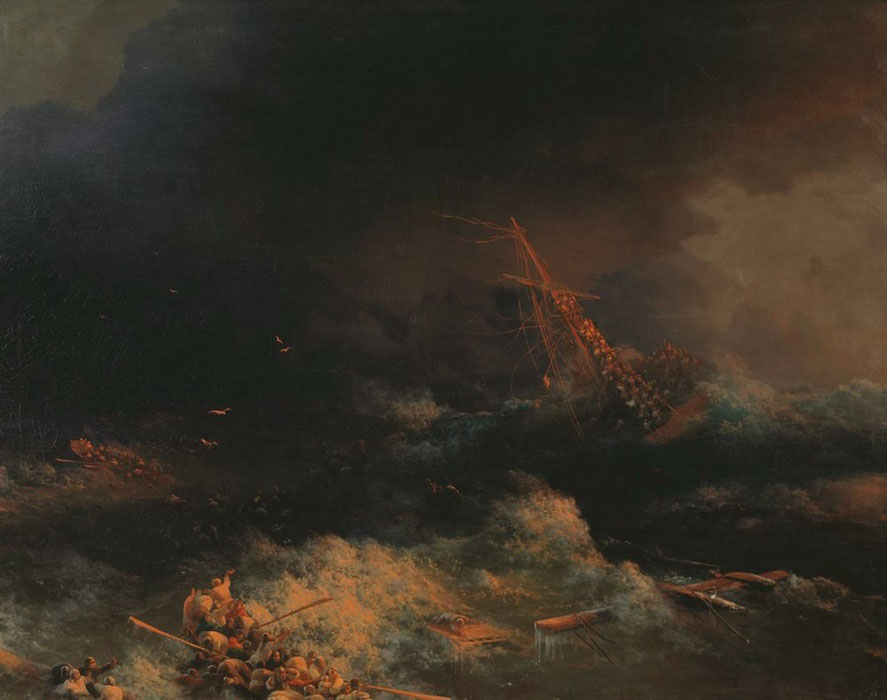
Aivazovsky also painted reconstructions of naval battles and notable peacetime wrecks, including the Loss of the Ship “Ingermanland” in the Skagerrak on the Night of 30 August, 1842 (1876).
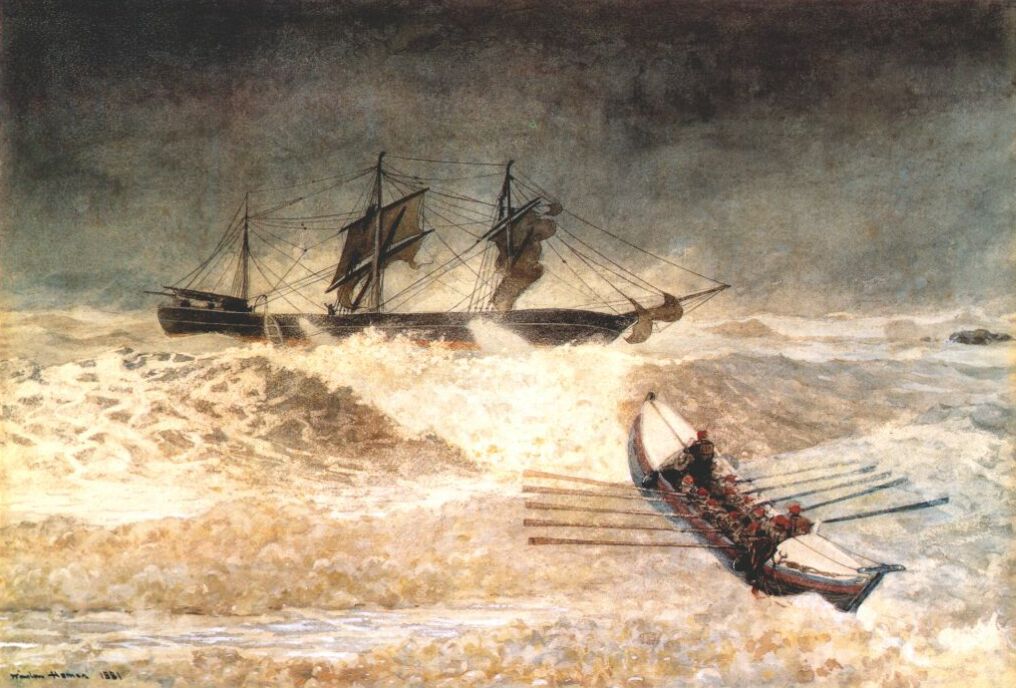
Winslow Homer’s Wreck of the Iron Crown from 1881 may have been painted in response to a real-life wreck which Homer witnessed when he was living at Cullercoats, on the north-east coast of England. In the early morning of 21 October 1881, the thousand-ton barque, the Iron Crown, was driven aground in a storm. In the next hours, the ship’s crew were rescued, following which the derelict broke up. Homer later painted a watercolour showing the rescue, probably constructed from sketches, witness accounts, and photographs. The moment that he shows is the second and final pass of the lifeboat, required to rescue the last member of the crew on board.
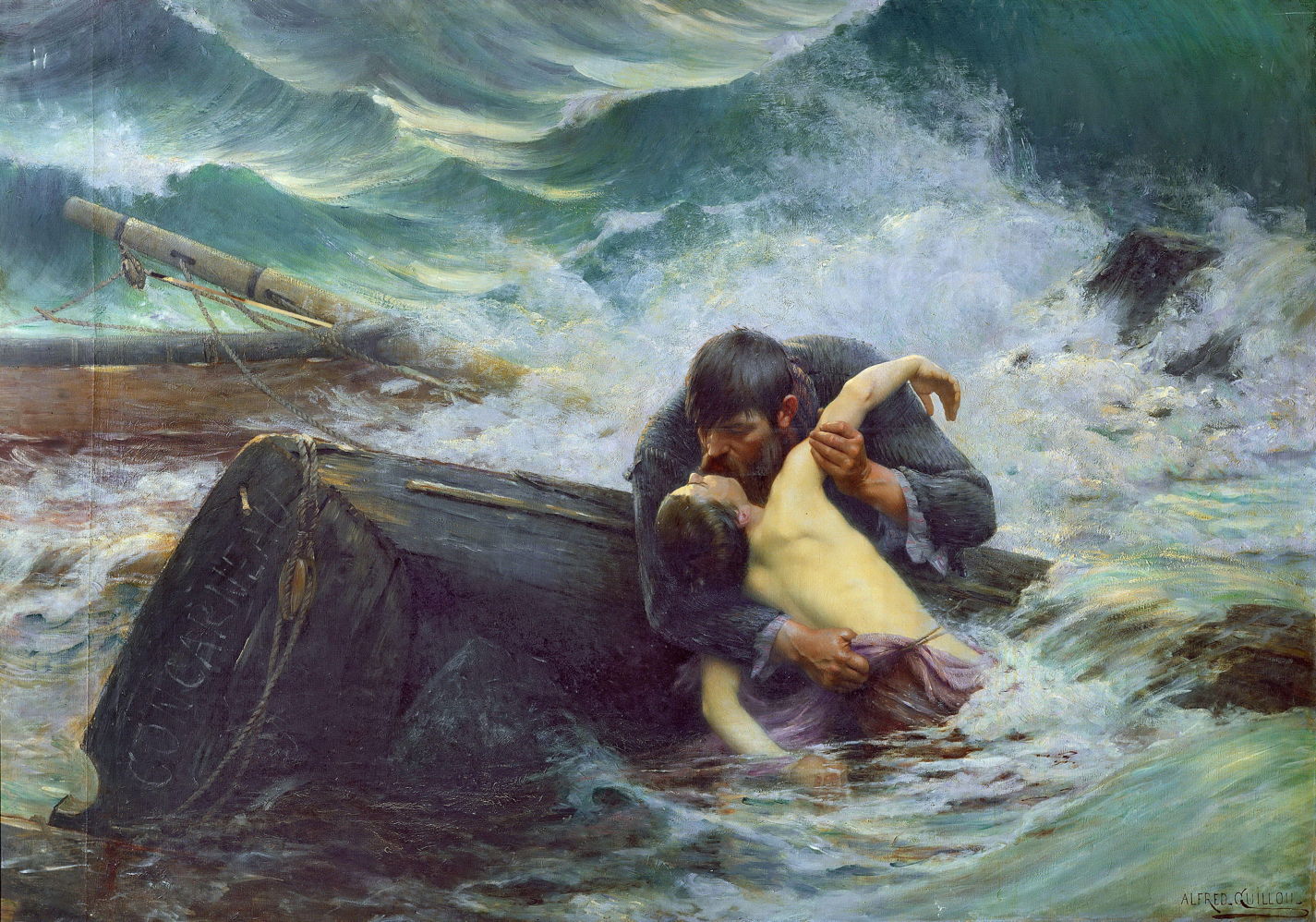
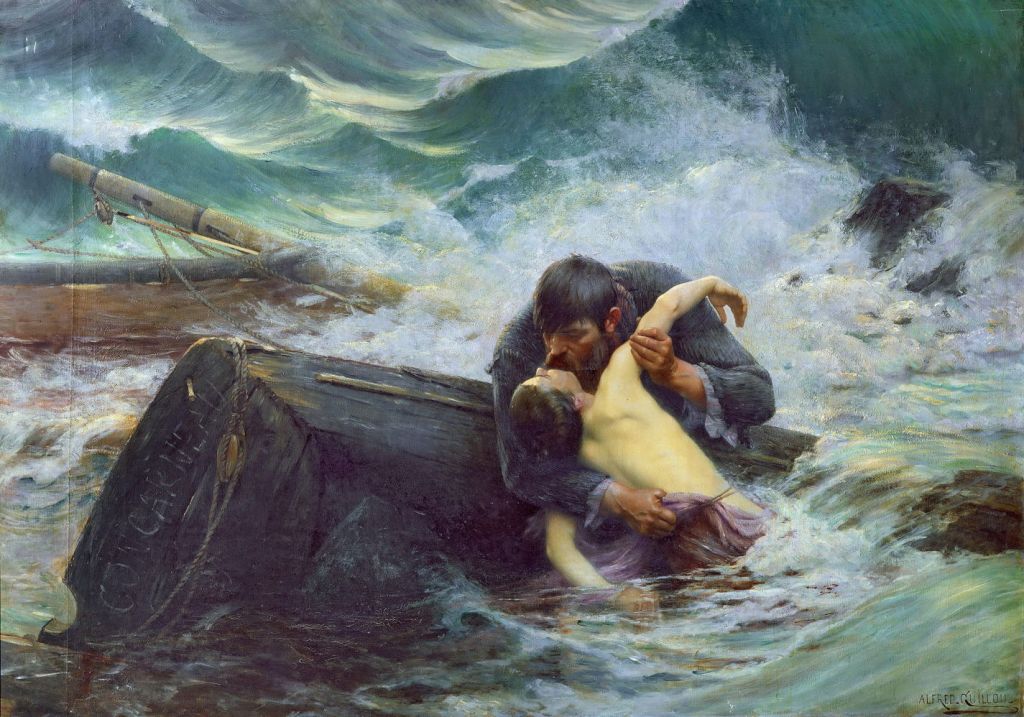
Later in the century artists got closer in to consider the human consequences of shipwrecks more vividly. Alfred Guillou’s Adieu! (1892) shows a survivor from a wreck embracing a boy, probably his son, who wasn’t so fortunate. The name across the stern of the ship’s boat, Concarneau, places the scene on the wild coast of Brittany.
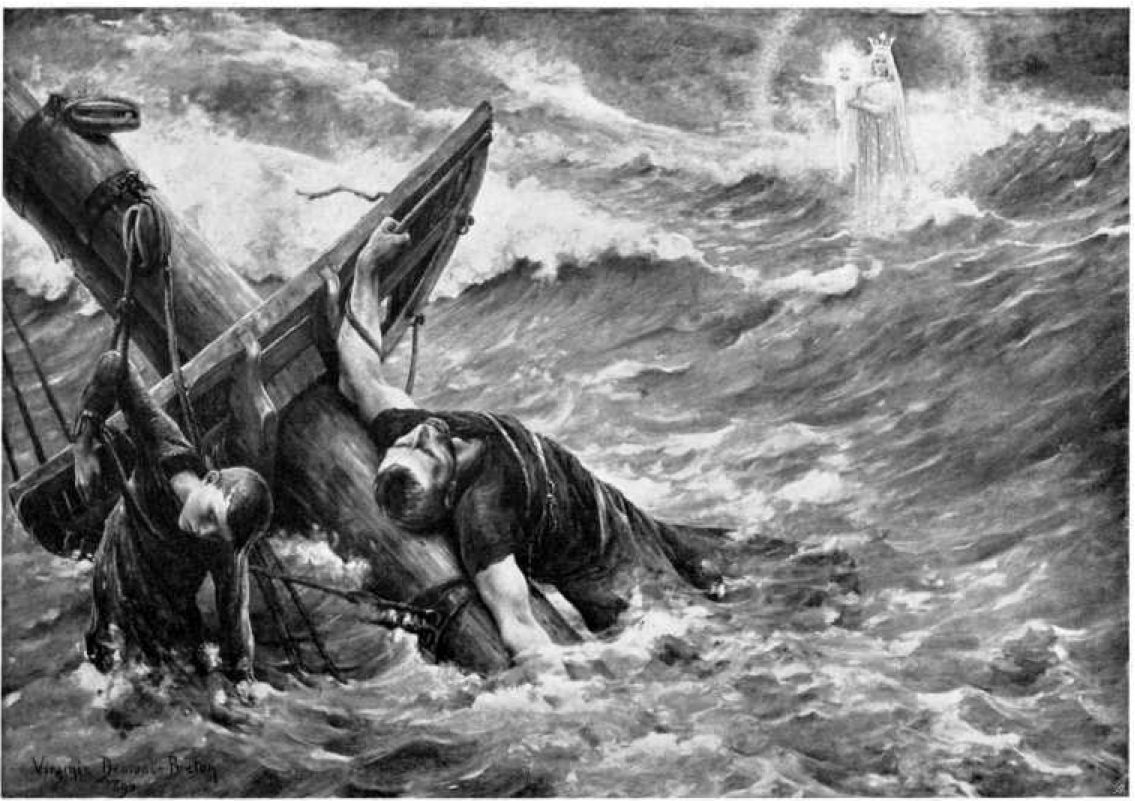
Virginie Demont-Breton’s moving Stella Maris (1894) (here in a monochrome photo) has multiple interpretations. Stella Maris is a popular name for Polaris, the Pole Star, used since ancient times for celestial navigation, but is also a traditional synonym for the Virgin Mary, shown here as a distant vision, and bearing the infant Jesus in her arms.
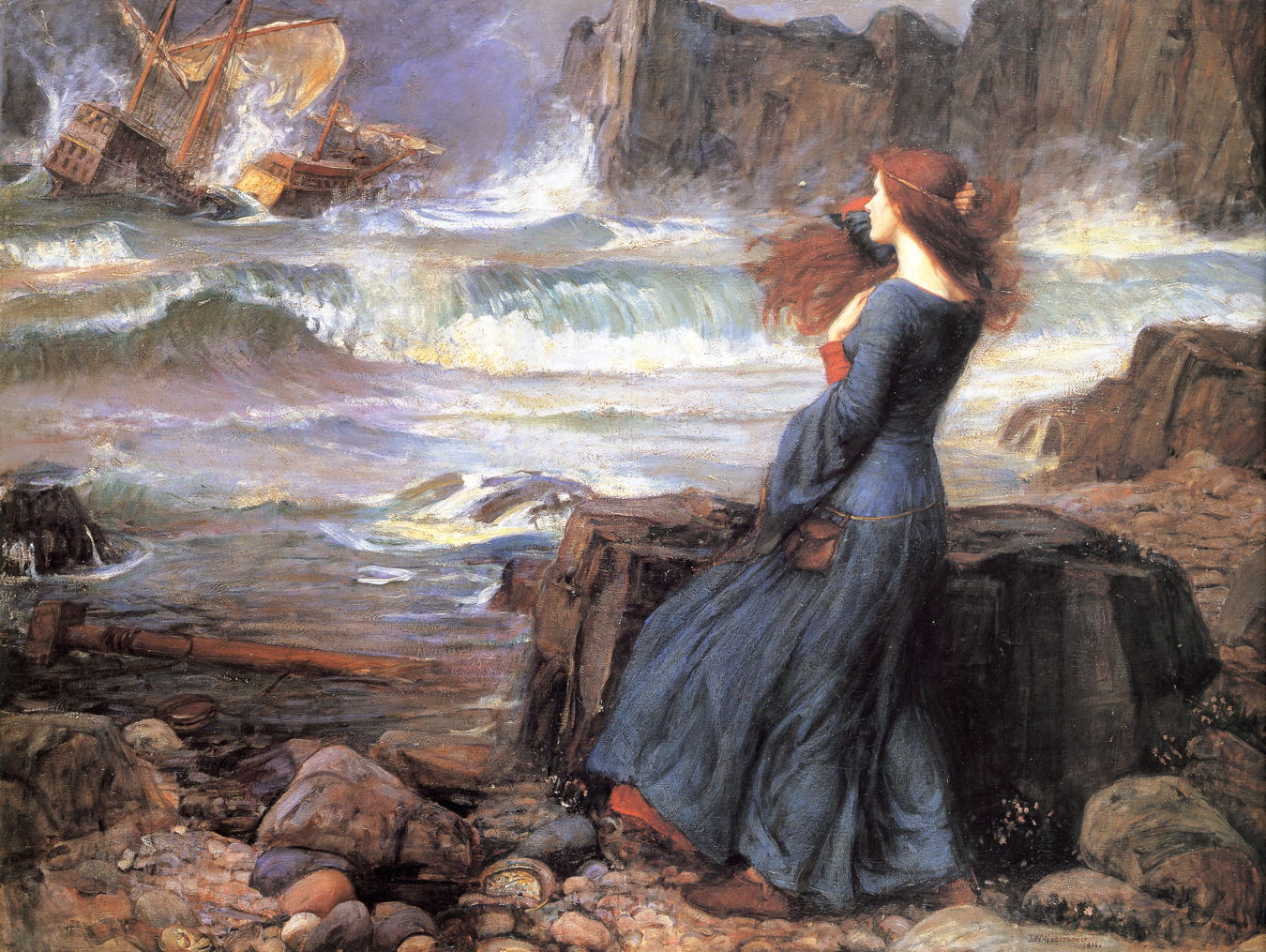
Finally, John William Waterhouse’s painting of Miranda (1916), made in the last year of his life, returns to the plays of William Shakespeare, this time for the opening scene from The Tempest.
 The Eclectic Light Company