
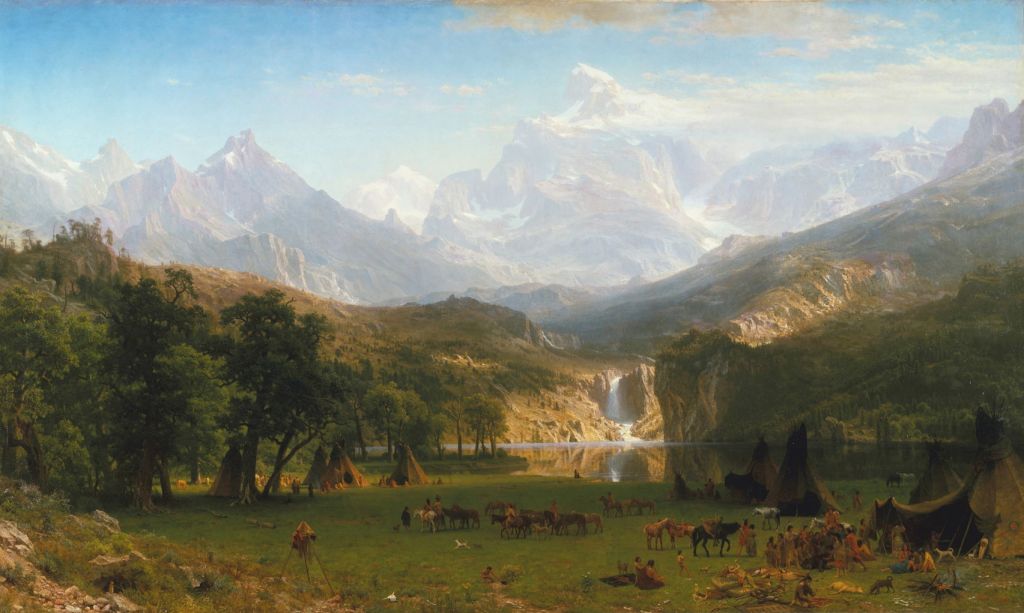
As the northern section of the mountains forming the spine of the Americas, the Rocky Mountains are effectively a continuation of the Andes, which had been painted most notably by Frederic Edwin Church in the late 1850s. By that time, Albert Bierstadt had already established his preference for painting grand views of mountains.
He first travelled west towards the Rocky Mountains in 1859, in the company of Frederick W Lander, who was surveying for the US government. He established a pattern of sketching and photographing spectacular scenery, then returning to his studio in the Tenth Street Studio Building in New York and turning that material into large finished oil paintings. Bierstadt had learned this traditional landscape technique based on drawing and sketches in front of the motif. It contrasted with the growing enthusiasm for plein air oil sketches as developed by the likes of Camille Corot in the Roman Campagna, and inherited by the Impressionists.
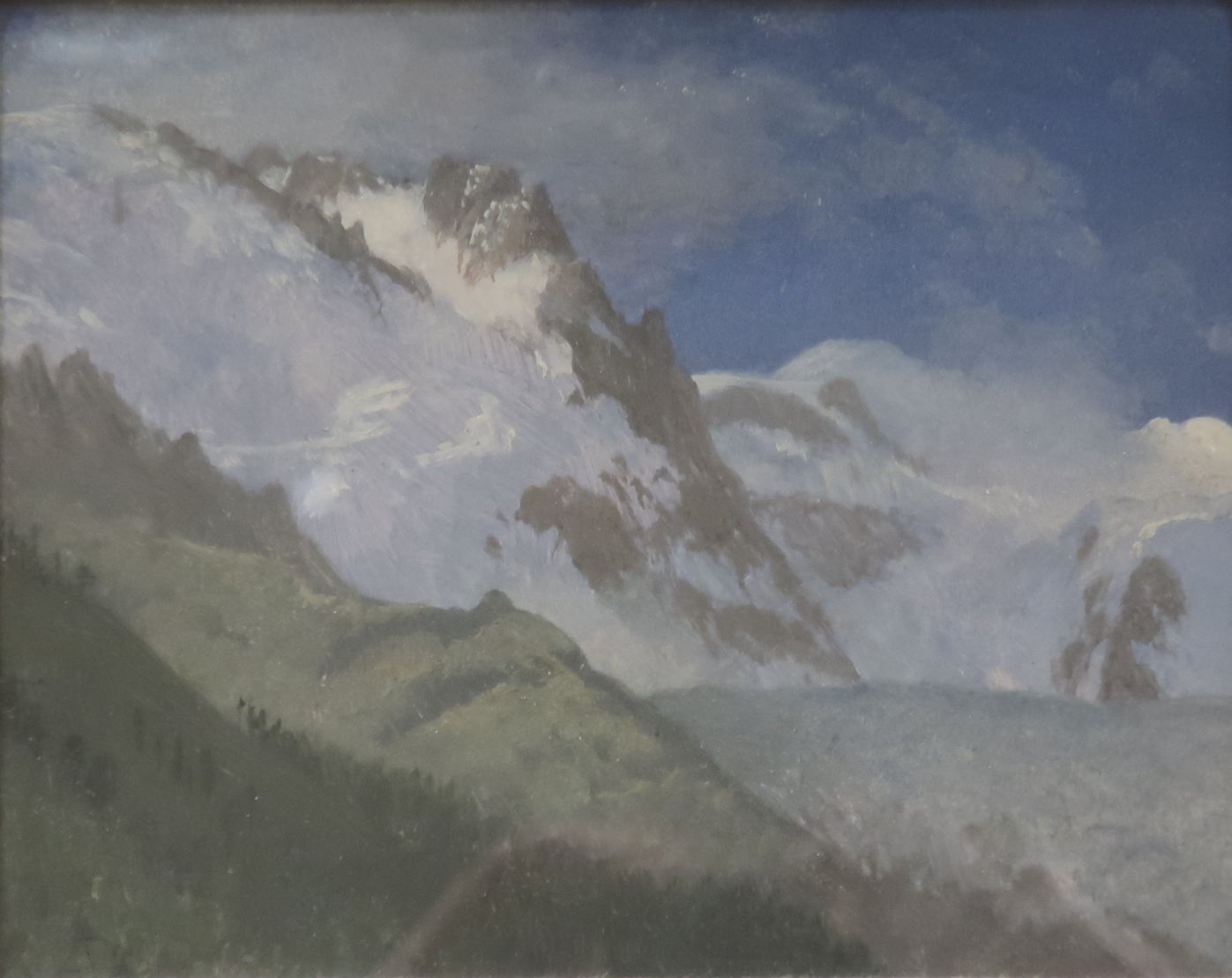
He also made painterly oil sketches such as this undated view of Snow in the Rockies on paper on board.
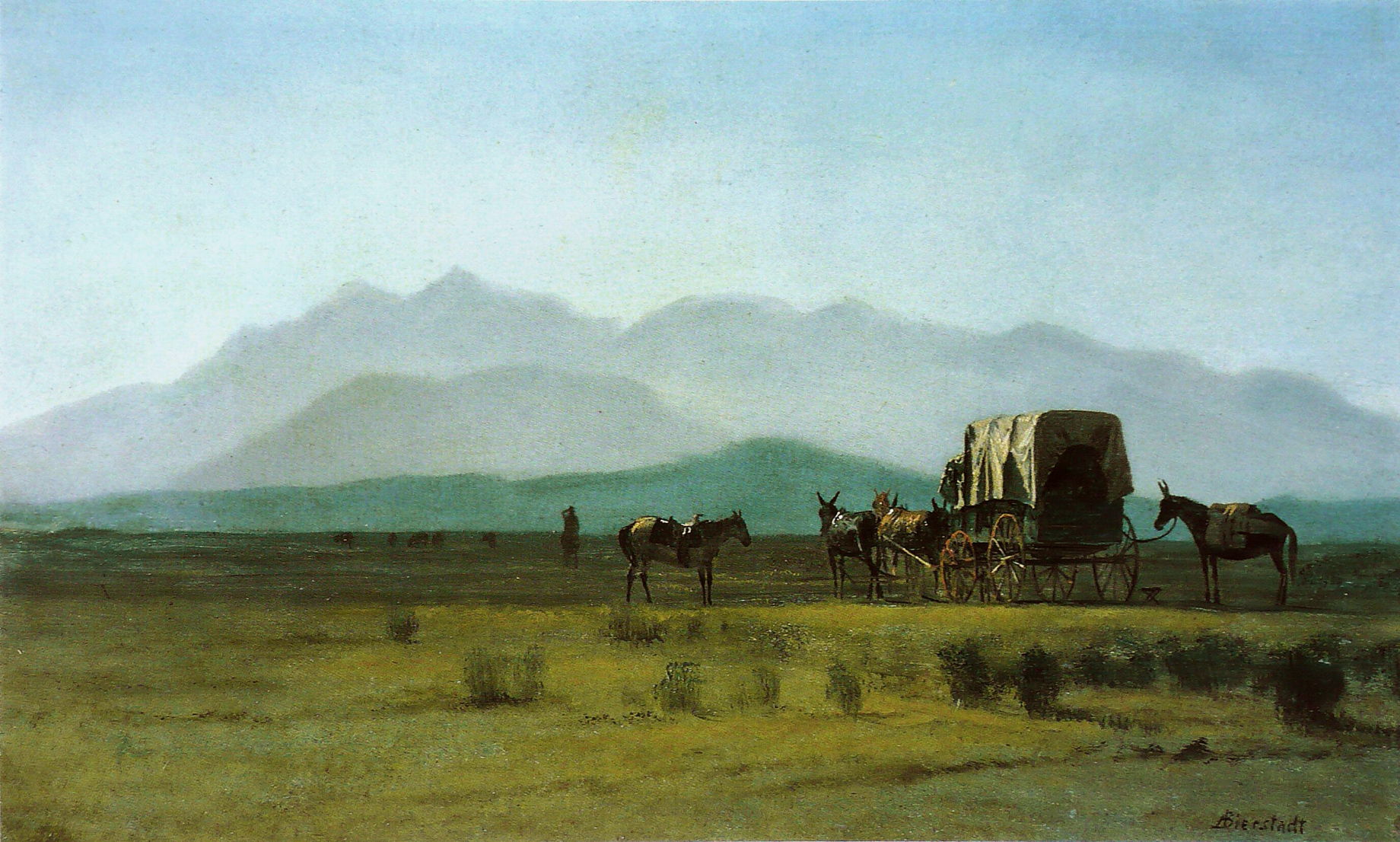
Some of his paintings made in the field, such as this Surveyor’s Wagon in the Rockies from 1859, were worked in greater detail. This gives a good idea of travelling conditions when he was with Lander’s survey team.
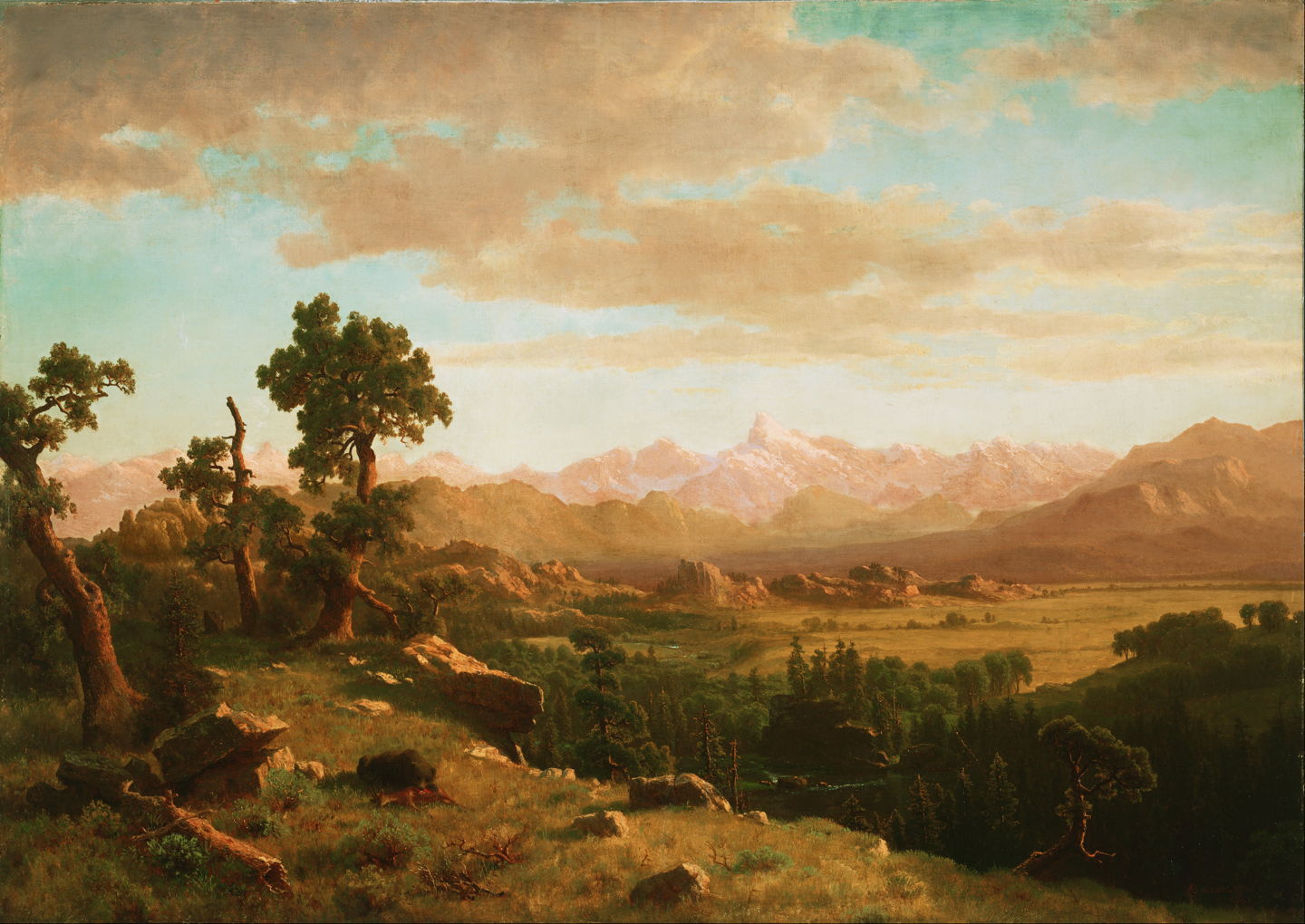
Once he was back in his New York studio, he assembled drawings and sketches into more idealised landscapes, such as this from 1860, showing Wind River Country.
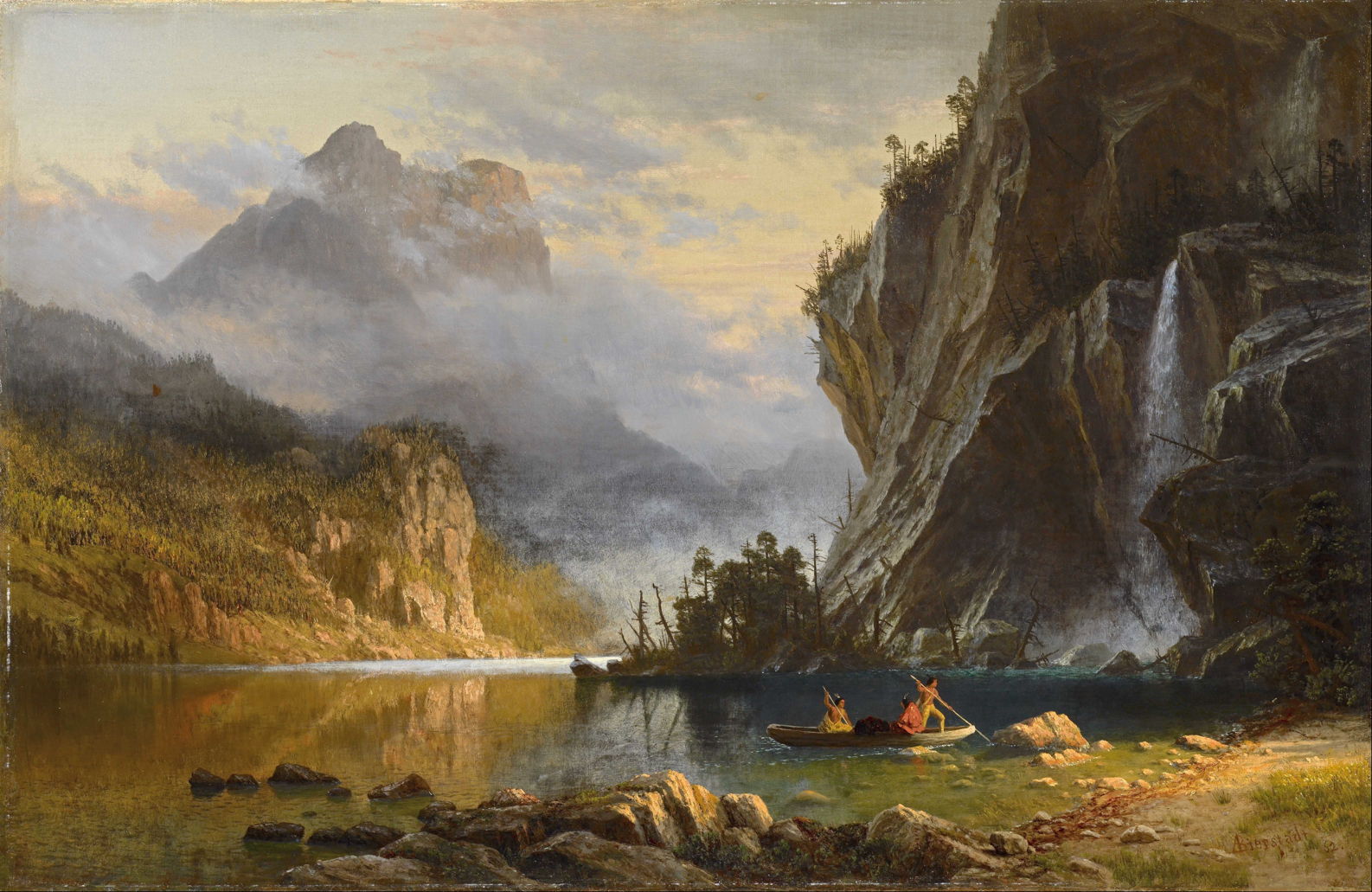
Even his smaller finished canvases, such as this view of Indians Spear Fishing from 1862, contain an astonishing amount of detail, and inspire disproportionate awe.
In 1863, Bierstadt was drafted to serve in the Civil War. As was not uncommon practice at the time, he paid a substitute and travelled west with the author Fitz Hugh Ludlow to amass more material for subsequent studio paintings.
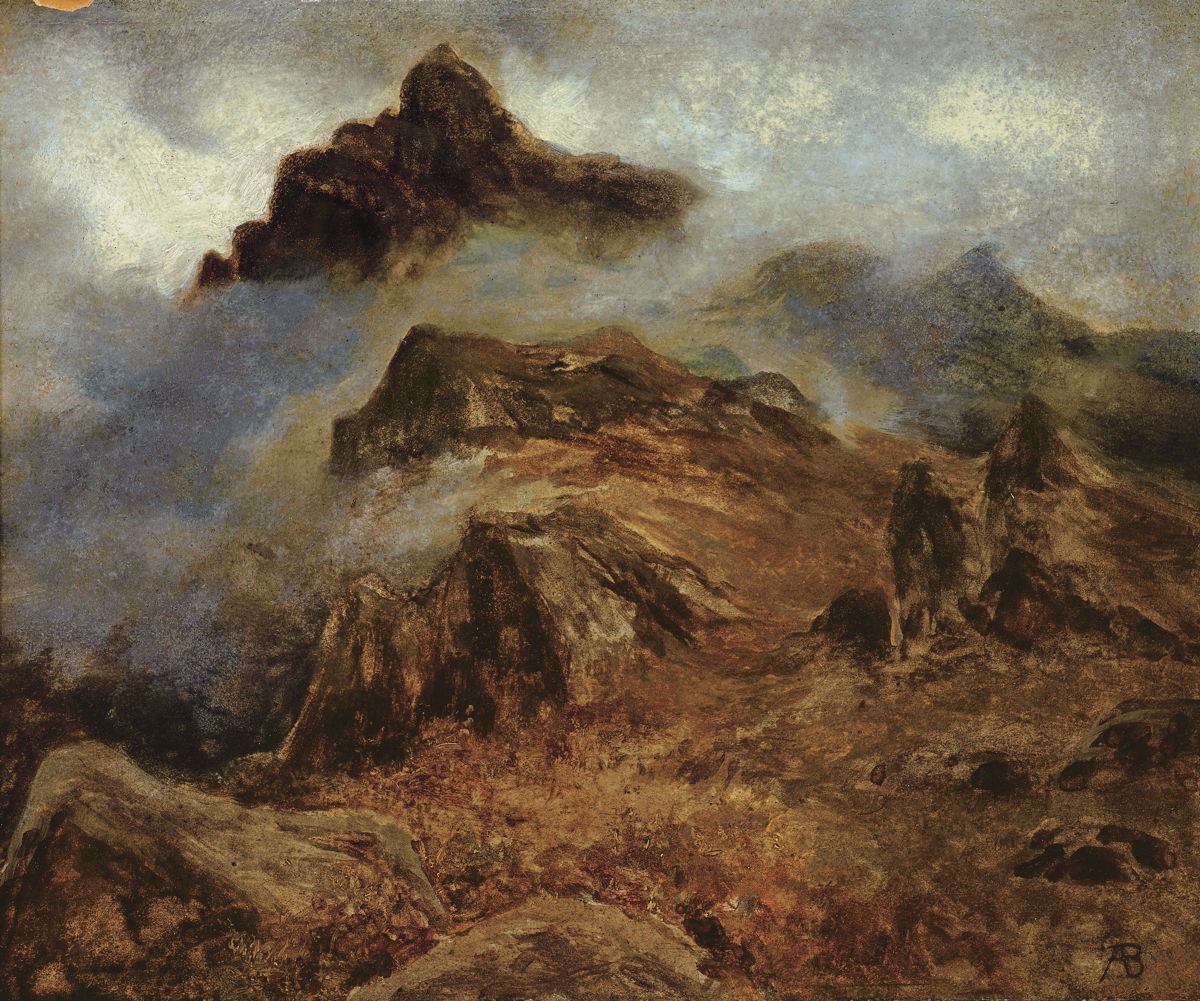
He painted this Study of Rocky Mountains on paper in 1863, almost certainly in front of the motif. It has been suggested that this was one of several oil sketches he used when composing The Rocky Mountains, Lander’s Peak below, although I can’t see any passage in the finished painting matching this.

Bierstadt’s The Rocky Mountains, Lander’s Peak (1863) was one of his most successful paintings based on the studies from his first (1859) visit to the west. This shows a summit of 3,187 metres (10,456 feet), which the surveyors named after a general who died in the Civil War. The First Nation people shown are Shoshone, who Bierstadt recognised would soon only be known in history. He sold this painting in 1865 for the sum of $25,000, at the time a record and in today’s values probably towards half a million dollars.

Three years later in A Storm in the Rocky Mountains, Mt. Rosalie, he used his full array of skills and sketches from his second expedition to the west in 1863, to express the sublime, and fill the viewer with awe. The foreground shows a pastoral valley floor with a First Nation camp, in mottled light. Some people and their animals are seen making haste to return from the pastures to the shelter of the camp. A small rocky outcrop has trees straggling over it, that are silhouetted against the brilliant sunlight on the lake behind, in the middle distance.
Behind the lake the land rises sharply, with rock crags also bright in the sunshine. In the background the land is blanketed by indigo and black stormclouds. Those clouds are piled high, obscuring much of Mount Rosalie (named by Bierstadt after his wife), but its ice-clad peaks show proud, high up above the storm, with patches of blue sky above and beyond them. A single large bird, an eagle perhaps, is seen in silhouette, high above the lake.
In 1867, Bierstadt travelled to London, where he was honoured with a private reception by Queen Victoria, who viewed two of his landscape paintings.

While travelling in Europe, Bierstadt continued to work in a series of rented studios. When in Rome during the winter of 1867-68, he painted Among the Sierra Nevada, California. This was first exhibited in London, won a gold medal in Berlin, and itself toured Europe on a wave of critical acclaim. This was based on his visit to the Sierra Nevada in 1863, and in 1873 was purchased for Helen Huntington Hull, the granddaughter of William Brown Dinsmore, to grace a wall in The Locusts, the family estate in Dutchess County, New York.

Later Bierstadt turned his attention to the West Coast, with this detailed oil sketch View of Donner Lake, California in 1872, painted on paper.
His pioneering paintings of the Rocky Mountains inspired successors, of which I show one, by John Ferguson Weir.

Weir retained a similar detailed realism until late in the nineteenth century, as shown in his impressive depiction of A Rocky Mountain Peak, Idaho Territory from 1882.
 The Eclectic Light Company