

In the first of these two articles on markets in paintings, I concentrated on those trading farm crops and livestock. This article concludes by looking at fish markets, and some outside Europe.
Most fish are caught at sea, landed on the beach or in a small port, then need to be transported to a town or city where they can be sold to the consumer. Early fish markets were often ad hoc affairs conducted where the catch was brought ashore.
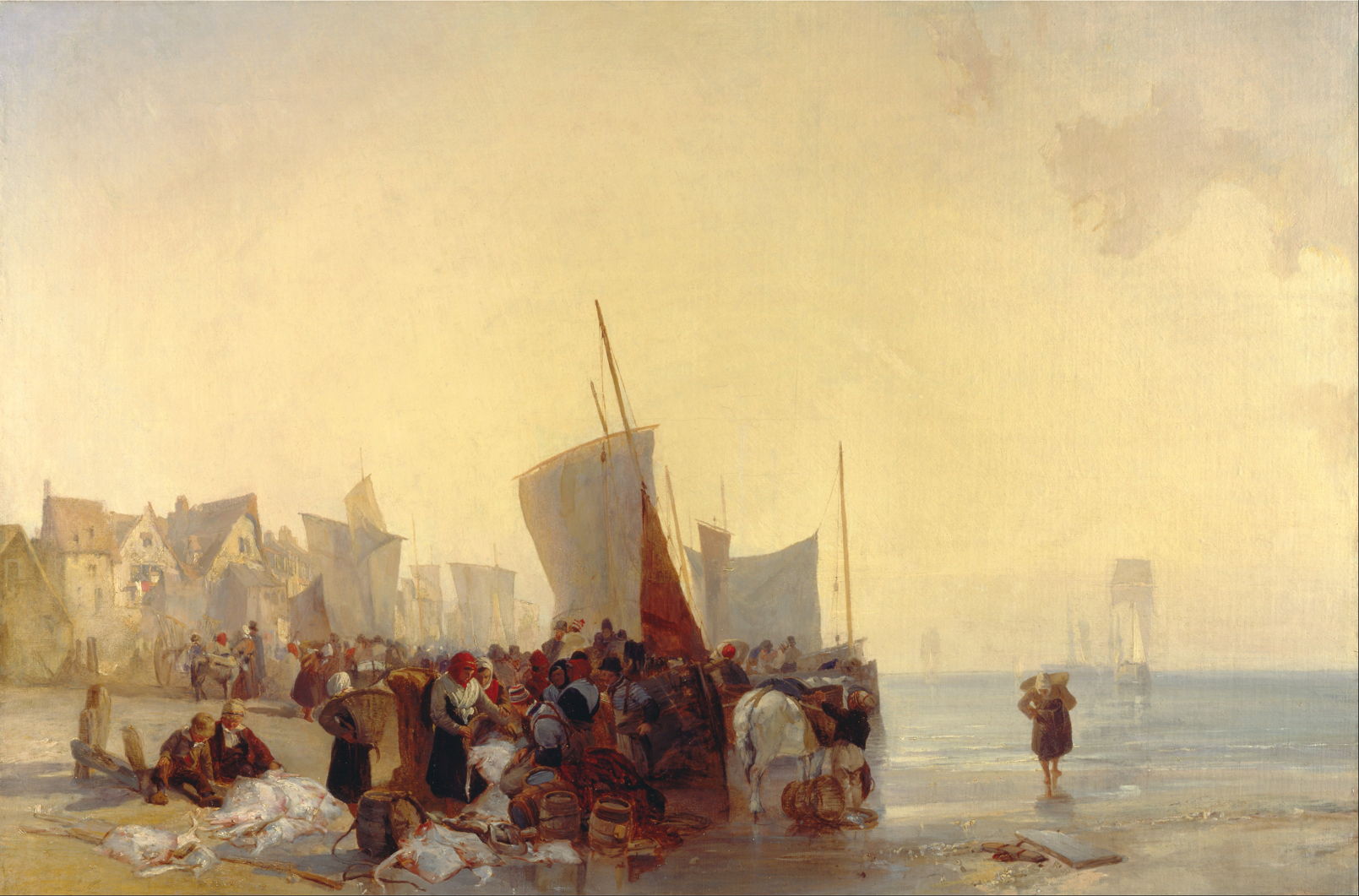
Richard Parkes Bonington’s A Fishmarket near Boulogne from 1824 shows this first step on the north coast of France. As the catch is unloaded by the wives and families of the fishermen, they sort the fish and sell it in small lots to dealers, who transport the fish in bulk to sell on to customers.
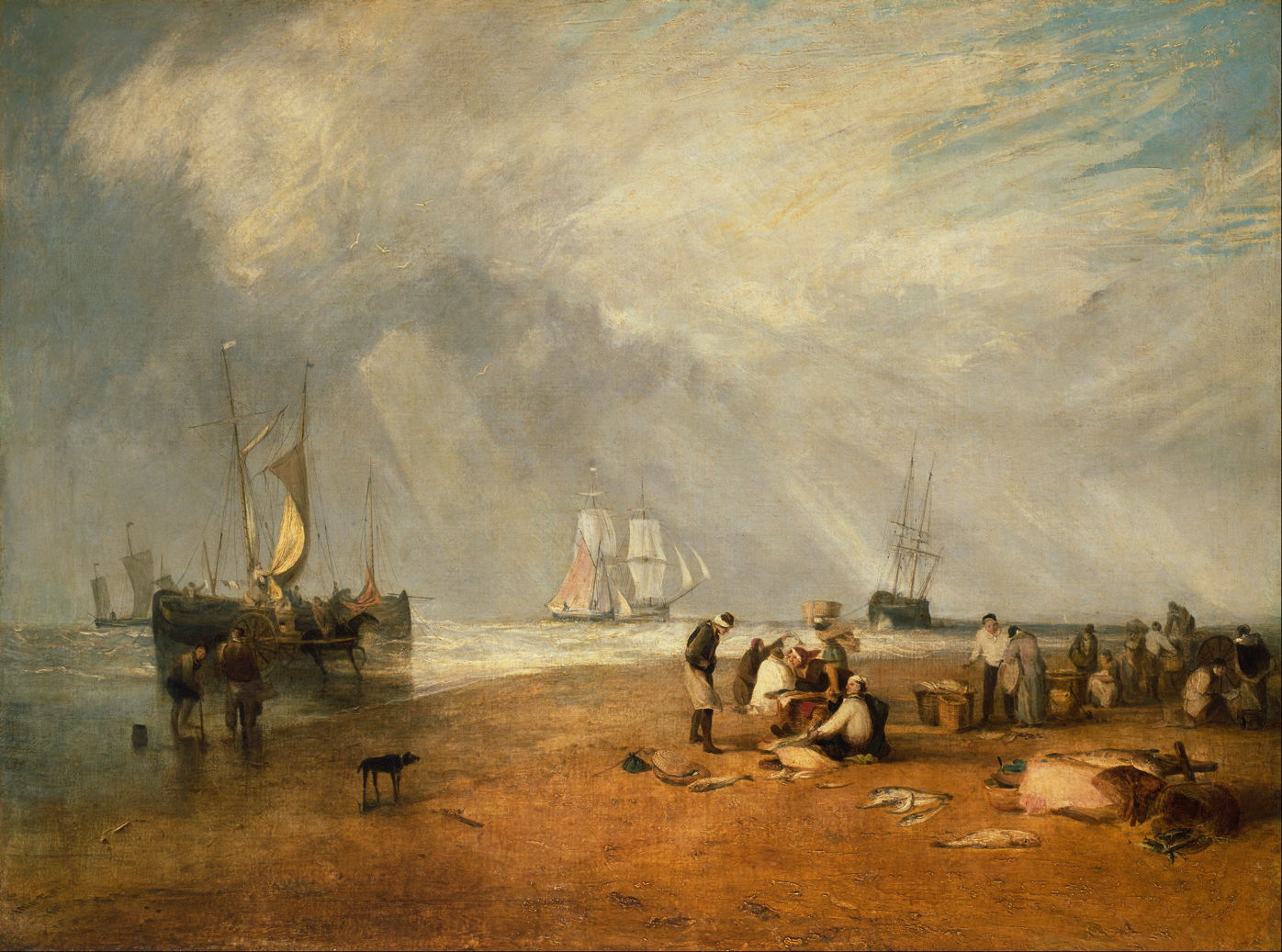
JMW Turner shows the steps in detail in The Fish Market at Hastings Beach from 1810. Here the fishing boats approach the beach at the left, a horse and cart collects their catch, and the wet fish is laid out for sale in the right foreground.
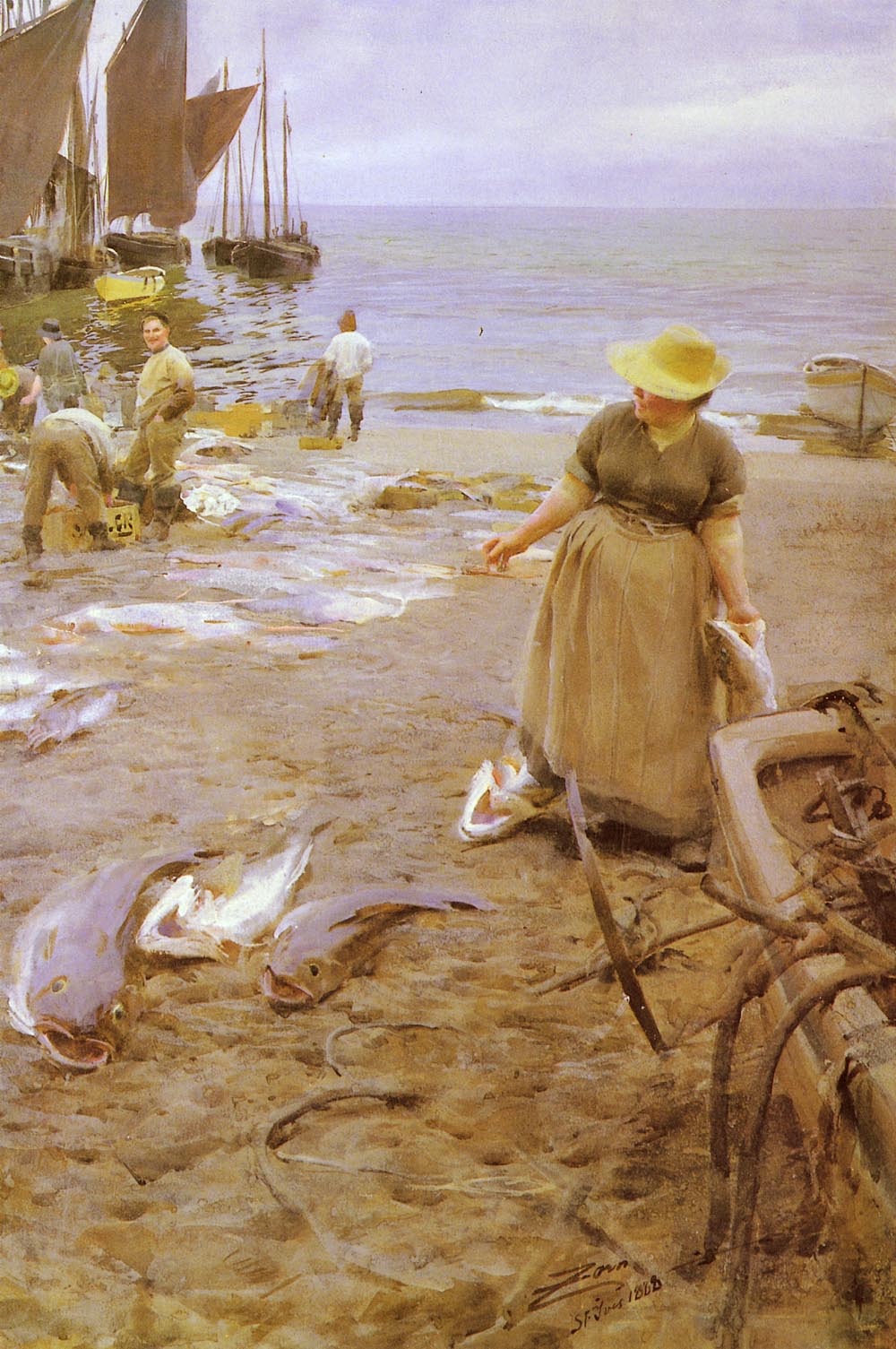
When Anders Zorn visited Cornwall in 1888, he become fascinated by this “plump fisherman’s wife” shown dragging some of the catch of fish around as it’s being sold off on the beach, in the Fish Market in Saint Ives.
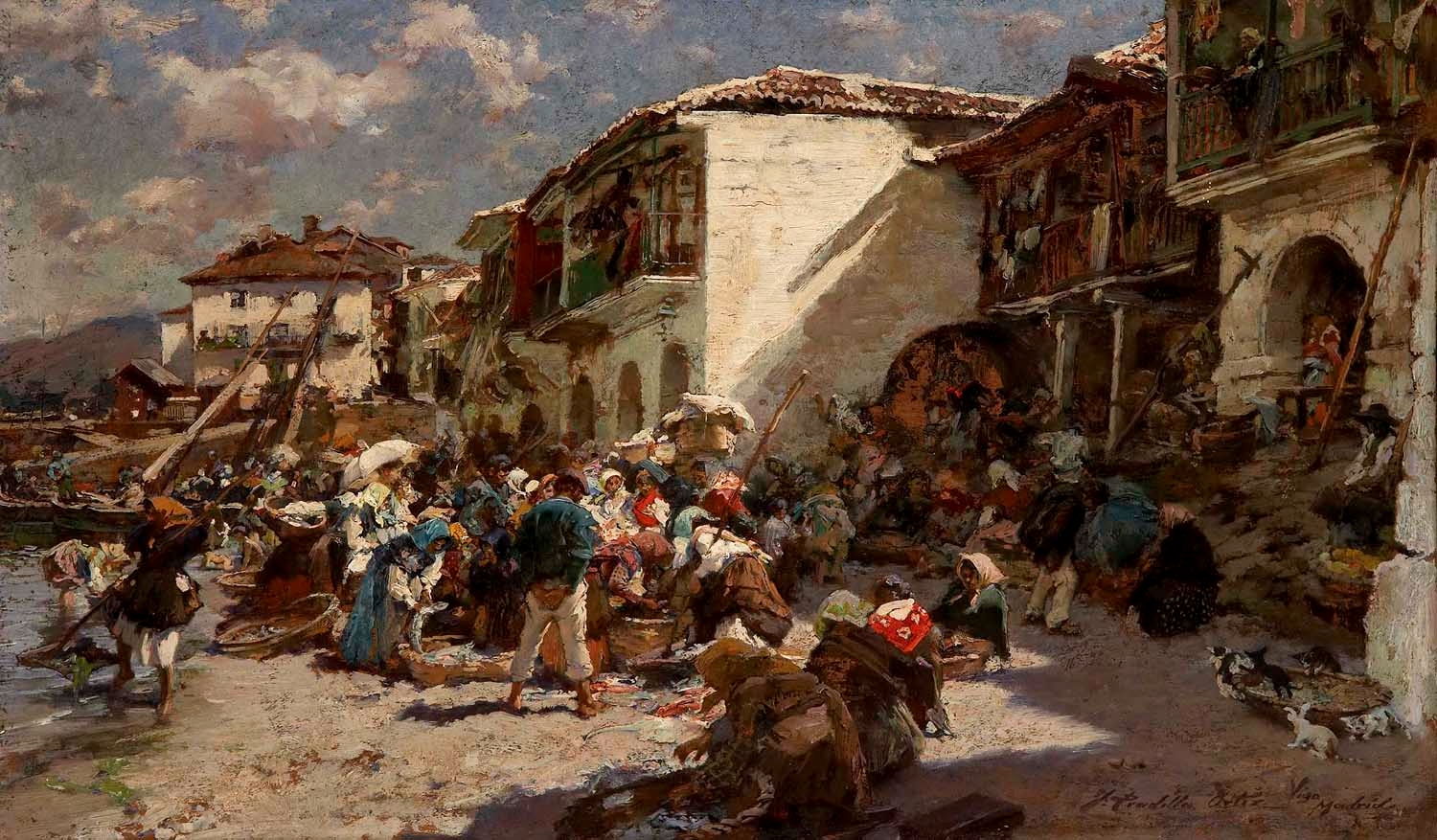
This practice remained common well into the twentieth century, when it was painted by Francisco Pradilla Ortiz in this Fish Market on Vigo Beach in 1916. Vigo is a city in the north-west of Spain, just to the north of Portugal.

Joaquín Sorolla, who had grown up in the midst of the fishing industry of Valencia, painted the tuna market in the town of Ayamonte, Spain, in this section of his series of views of Spain, made for the Hispanic Society of America in 1919.

In larger fishing ports like Dieppe, these ad hoc markets grew into a Wholesale Fish Market, painted here by Jacques-Émile Blanche.
European artists also visited markets further afield, particularly those in Turkey, the Middle East and North Africa.
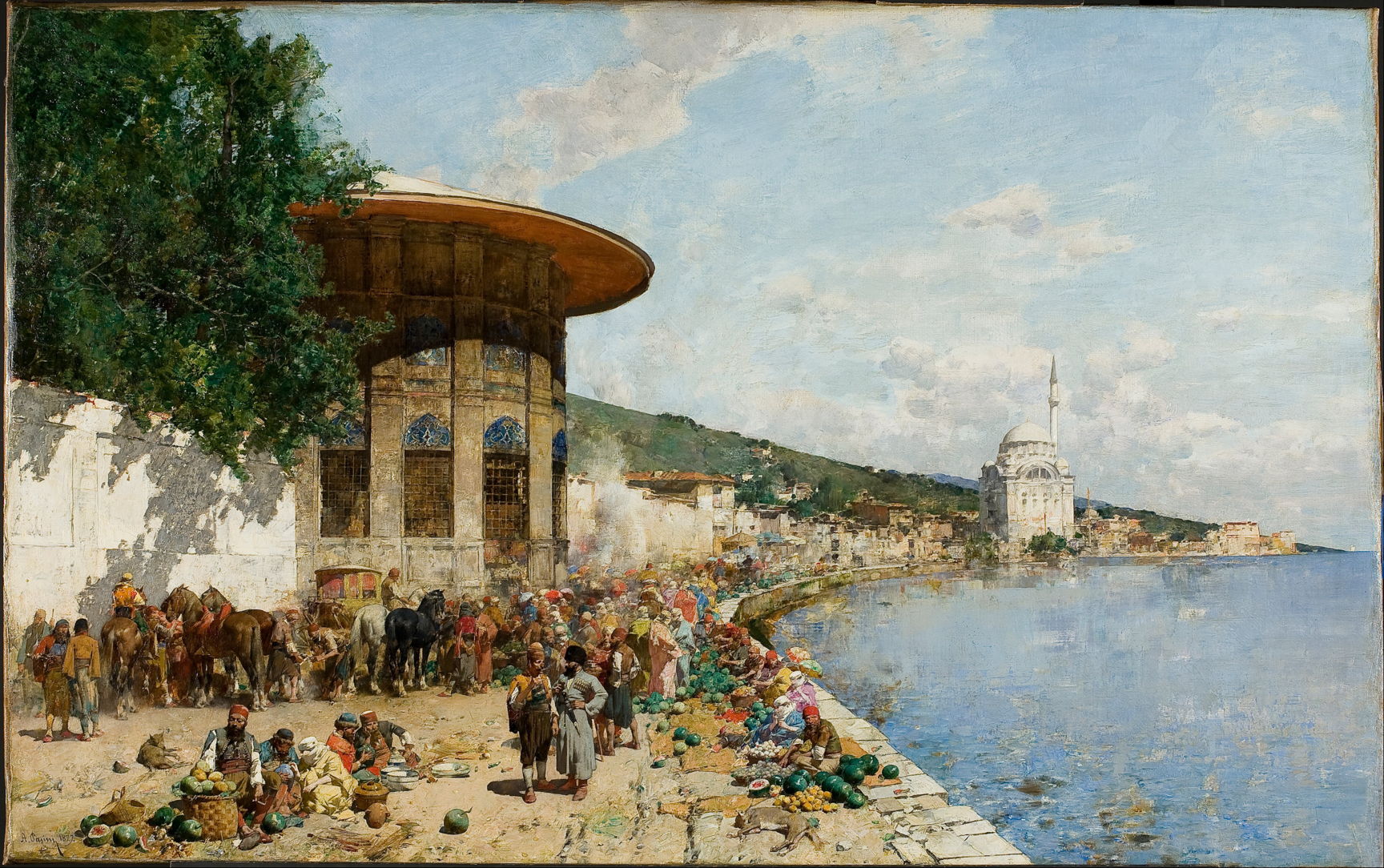
Alberto Pasini’s Market Day in Constantinople from 1877 is a broad if not cinematic view as the quay sweeps gently away into the distance. The artist is meticulous in the detail of his closer figures and produce, including his signature group of melon sellers with their great green globes glistening in the sunshine.
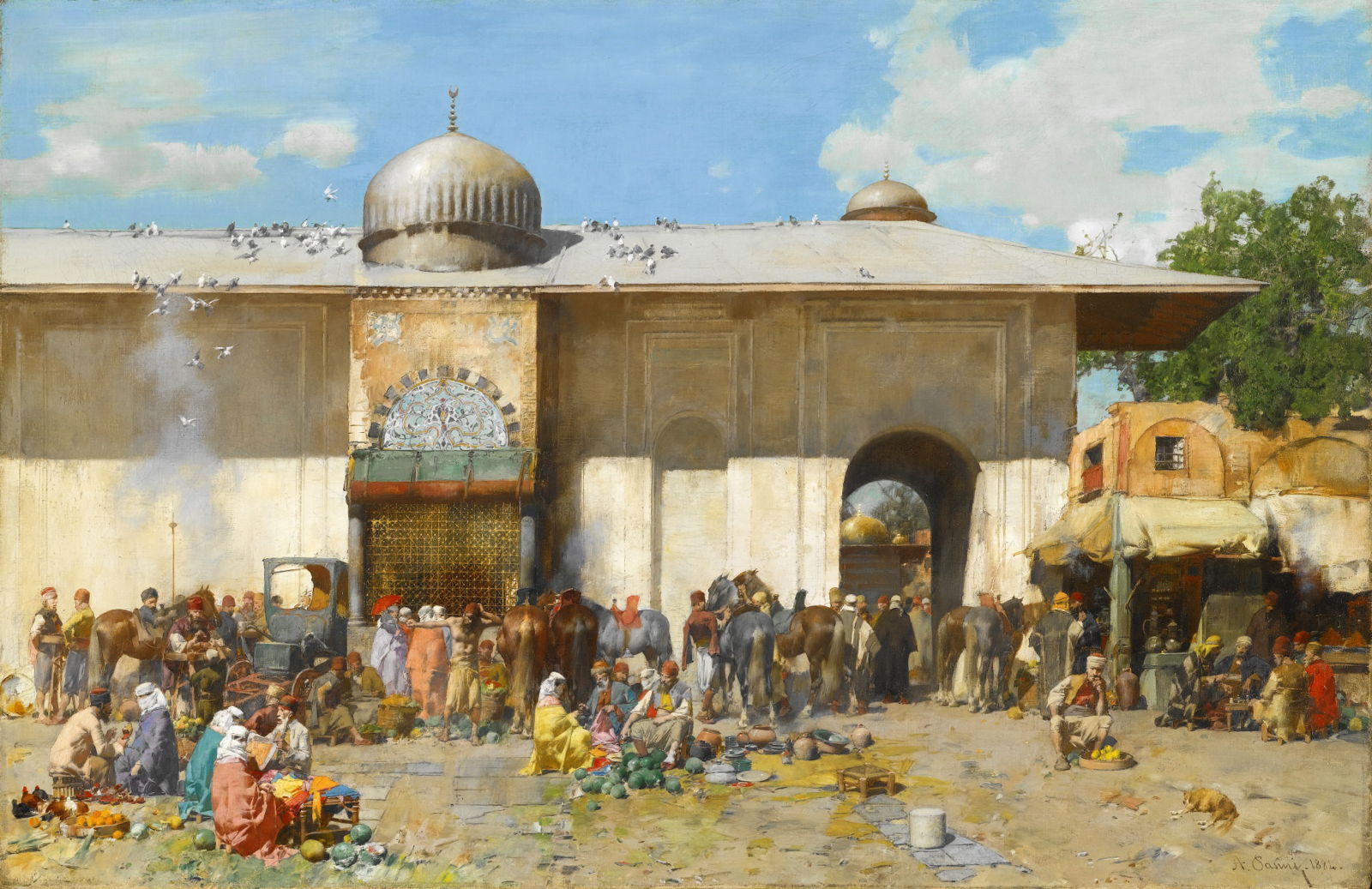
Seven years later, probably in Turkey, Pasini painted A Market Scene showing an eclectic mixture of produce, ranging from live chickens to pots and the ever-present melons. To the left of centre is a ramshackle horse-drawn carriage.

Théo van Rysselberghe was visiting Morocco at the end of 1887, as he was making the transition to Divisionist style, as shown in his dazzling view of Morocco (The Great Souq).

When Nicholas Chevalier visited the island of Tahiti in 1869, he probably sketched this scene, and turned it into a finished painting in 1880, giving it the title of Race to the Market, Tahiti.
Now, what makes you think that something invented in around 1930 might in any way be super- to these markets that had fed the many millions in the growing cities over the previous few millennia?
 The Eclectic Light Company