

Having established why some artists have chosen to blur some edges in their paintings, it’s worth understanding how they could have achieved that. When painting in watercolour, it’s only too easy to lose sharp edges.

This is demonstrated in Charles Demuth’s The Jazz Singer from 1916. Where the artist has applied wet paint to wet paint, the colours merge, as seen at the upper left. There he has also blurred what had previously been a black line, by re-wetting that black paint using water, with or without pigment in it. Where he has preserved sharp edges, for the outline of the woman singer, these had to be made with care to avoid losing the figure’s fine black outline. These are possible because the gum binder in watercolour paint never ‘sets’ permanently; when water is added, old paint can be reworked even centuries after it had first been applied.
Advanced watercolour techniques are trial and error even in the hands of specialists. Painters such as Marie Spartali Stillman are known to have discarded many paintings that didn’t work right. Egg tempera has other problems, in that it dries very quickly, and within a few minutes, freshly applied paint can’t be modified in any way.
The ideal medium for edge control is oil paint, with its relatively long periods during which wet paint can be reworked, and fine control over paint viscosity and drying time. Once oil paint has dried, though, it forms a tough polymerised paint layer that can only be scraped off with difficulty.
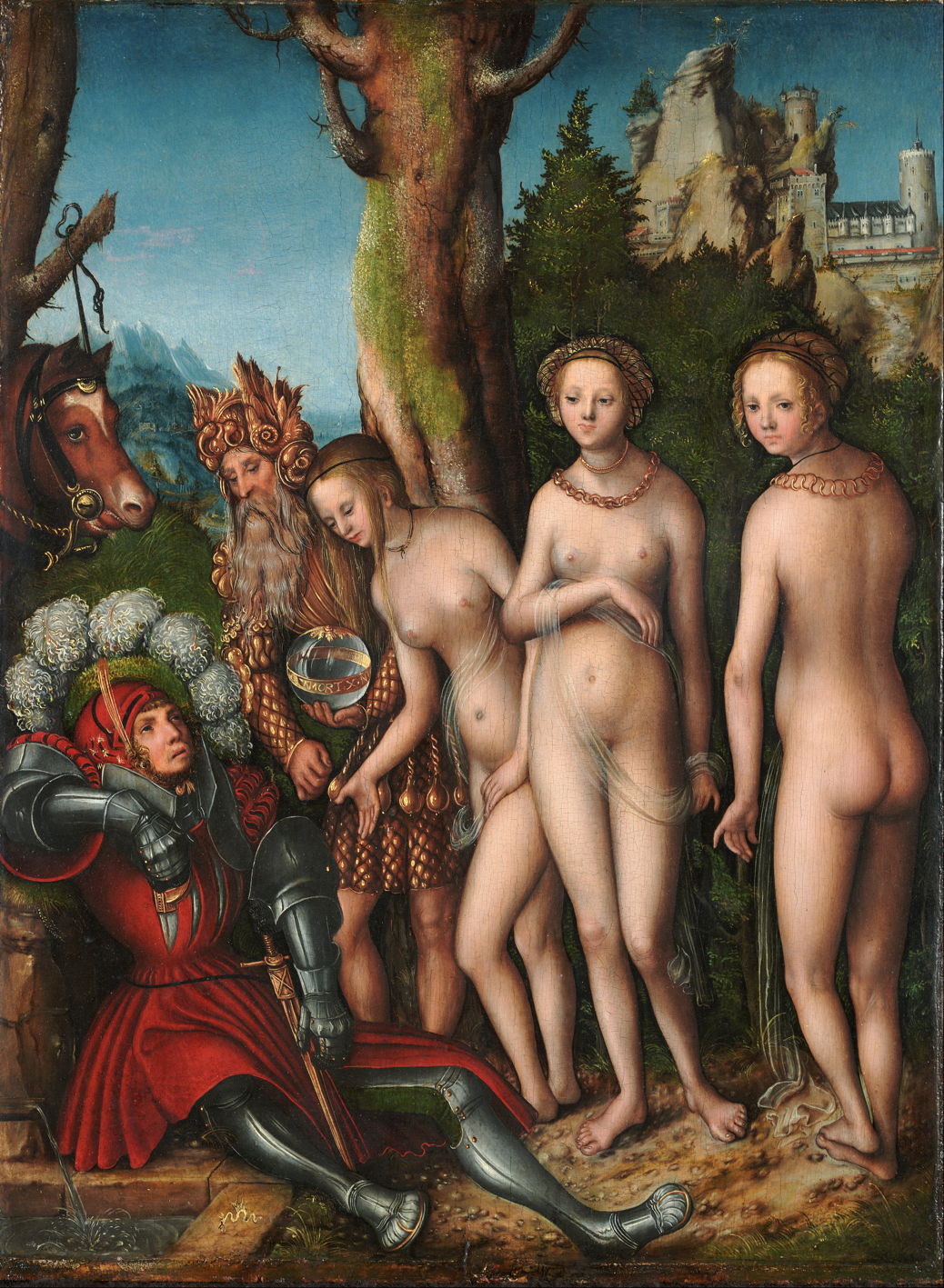
Lucas Cranach the Elder’s exquisite painting of The Judgment of Paris from about 1512-14 is a fine example of how the properties of oil paint can be used. Painted in the artist’s workshop over a period of several weeks or longer, it was created in multiple layers, most applied as fresh wet paint on the dry paint of the previous layer.
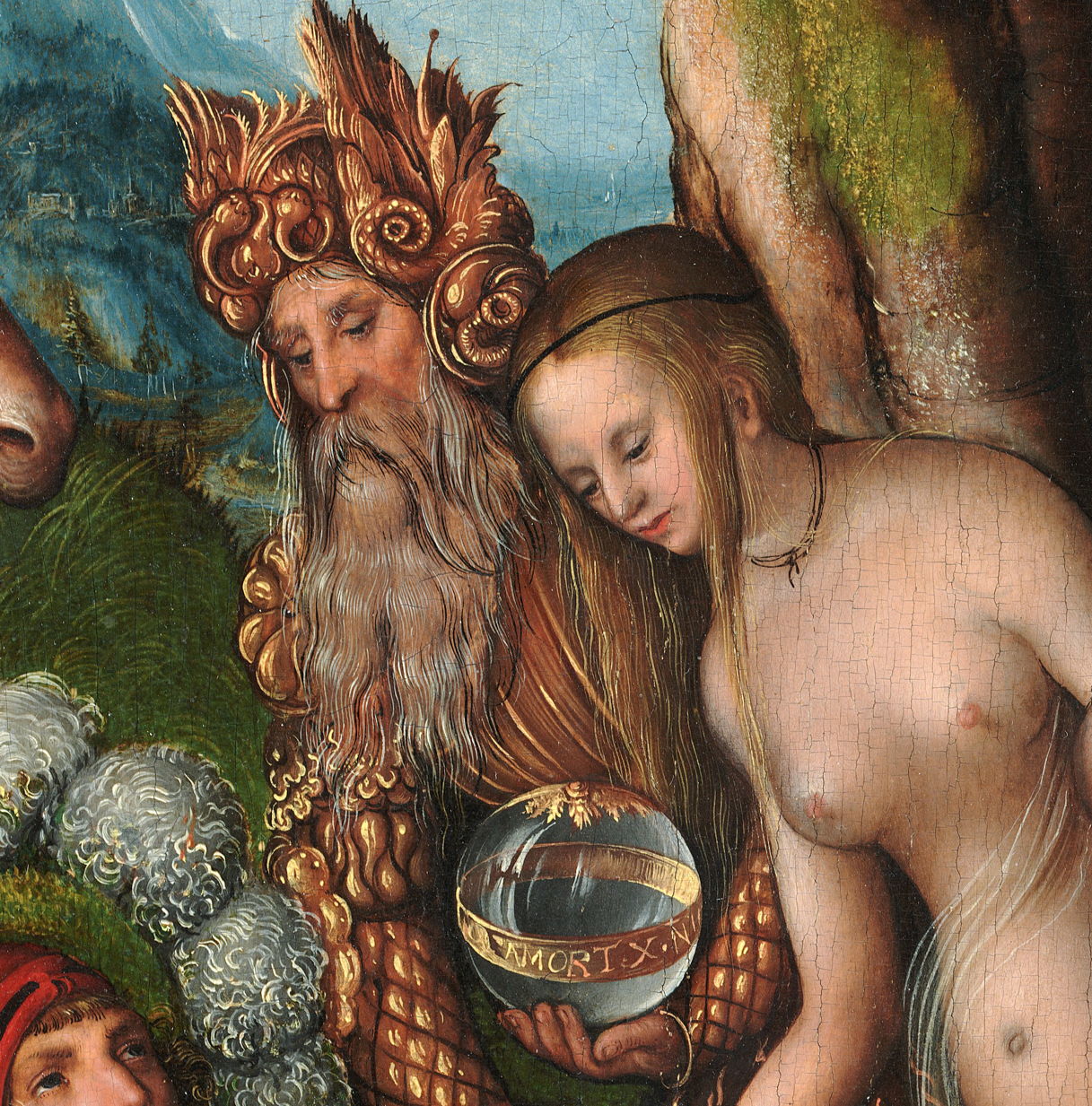
Lighter paint, such as the hairs in Mercury’s beard and on the head of Venus, were painted last, onto a dry paint layer, and retain their crispness. Cranach has also outlined some of the edges of Venus’s body with thin lines of dark shadow, to emphasis their sharpness. But in the flesh of the three faces, and the body of Venus, he has skilfully blended colours to create soft tonal transitions.

These contrasts are clear in the face of Cranach’s Salome with the Head of Saint John the Baptist (c 1530) shown in the detail below. But, as with the great majority of painters, he paints crisp edges where you’d expect them to be sharp, and soft transitions where skin tone changes more subtly.

Advances in the control of paint viscosity came rather later, particularly in the paintings of Peter Paul Rubens.
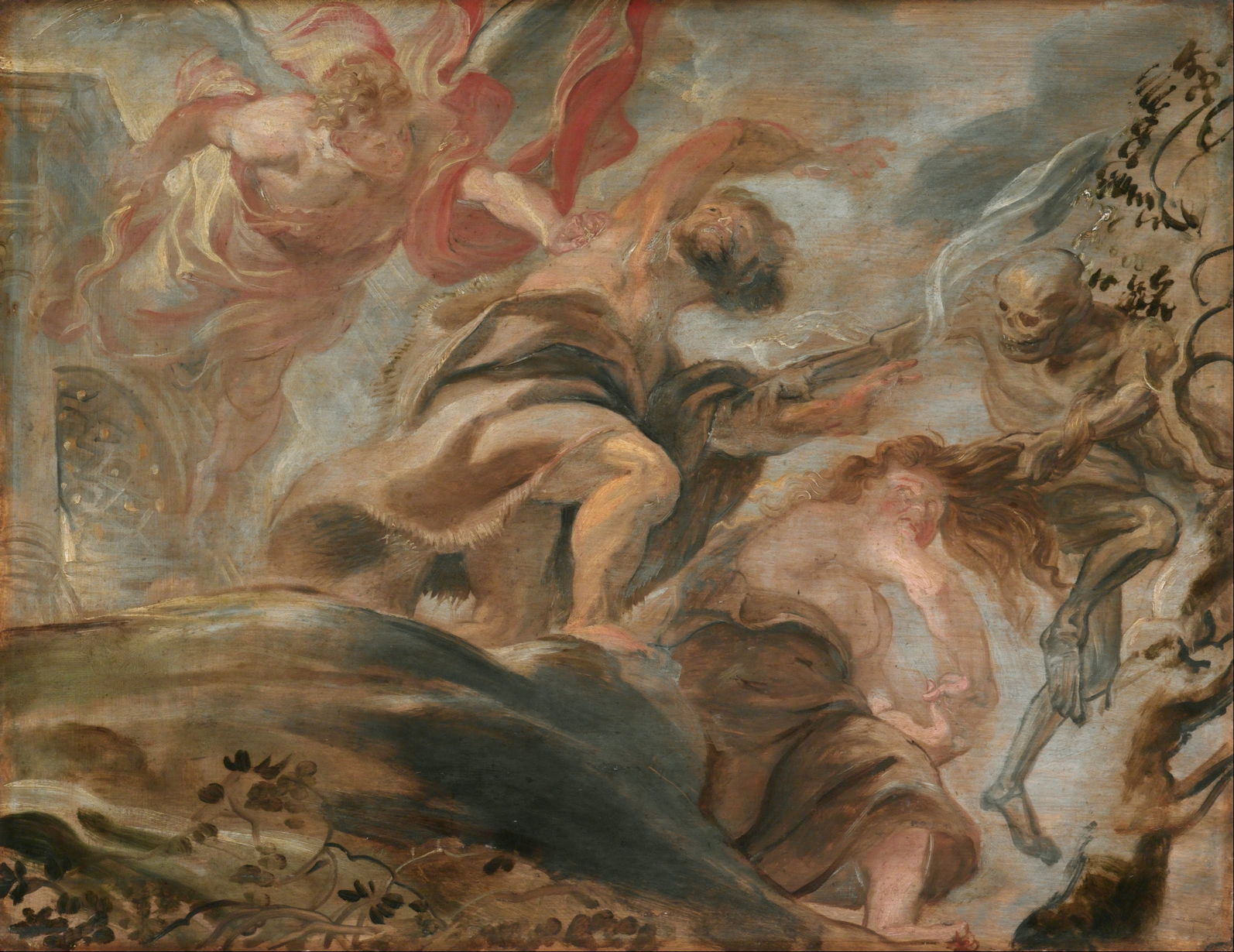
Although Rubens still painted in layers, in studies like this for his Expulsion from the Garden of Eden (1620), much of his paint seems to have been applied when in quite liquid form, and some has been brushed wet-in-wet. Highlights, such as those on flesh, and white fabrics, have been added last, using more viscous paint wet-on-dry.
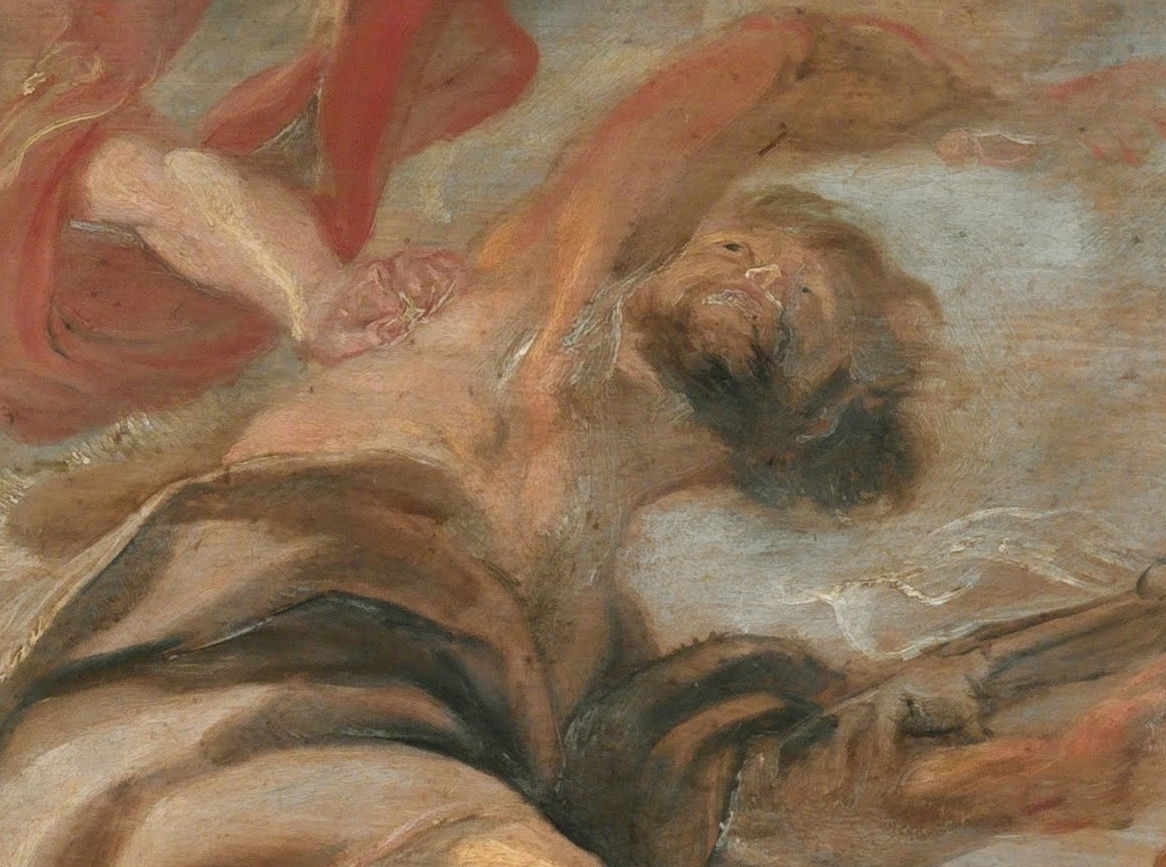
Adam’s right arm has indistinct edges. Most appear to have resulted from the application of wet oil paint to existing paint that hasn’t dried, allowing the edge to soften as the two different applications mix along their interface. In other places, what would have been a sharp edge has become indistinct because two or three strokes have been placed along that edge, but not in register. That’s true for some of the white highlights here. In other passages, Rubens has reinforced edges using contrasting tone, as in the upper edge of the black garments worn by Adam.
During the late nineteenth century, many oil painters abandoned painting slowly in layers, and adopted techniques of alla prima or au premier coup, in which most of the paint was applied in a rapid series of sessions, wet on wet. Careful examination of the painting is required to confirm whether any fresh paint was applied to dry paint.

Like many of Anders Zorn’s oil paintings, this self-portrait from about 1889 looks to have been sketched quickly in a single session. That’s almost certainly true of the right side of his jacket, where different paints appear to merge to create blur. It looks less likely on the sharp edge of his left lapel, where he has added black shadow to make the edge knife-like. Where it doesn’t look feasible is in the pink ribbon on that lapel, which was almost certainly added when the underlying paint was at least touch-dry.
Painting with an edge hierarchy is thus more complicated than traditional oil painting in layers, and requires fine control over paint viscosity and drying time, and a deep understanding of oil painting techniques.
 The Eclectic Light Company