
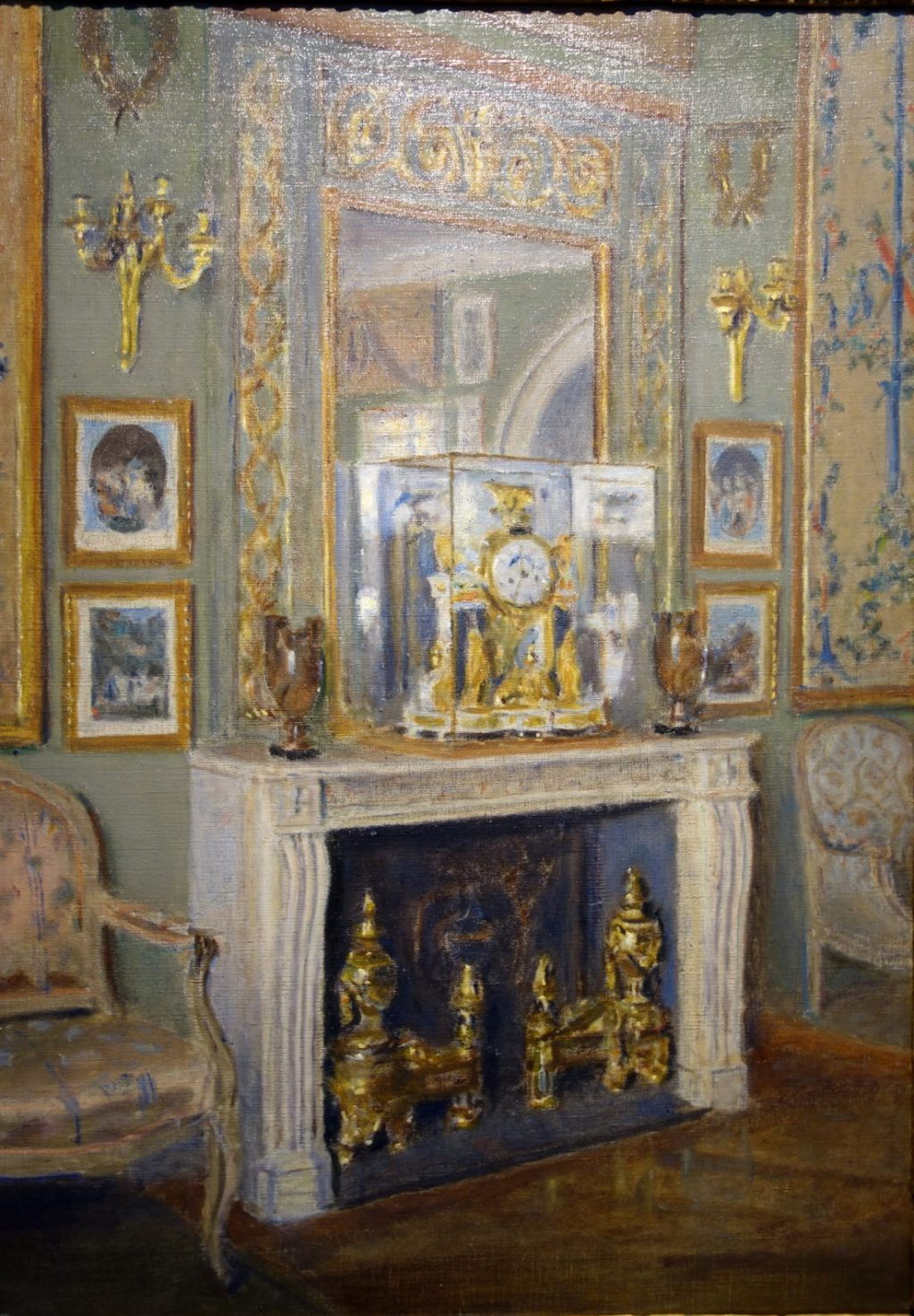
A hundred years ago today, on 19 October 1923, the American artist Eleanor Norcross (1854–1923) died. Little known today outside her home town of Fitchburg in Massachusetts, her work deserves revival. She was the first American painter to have had a retrospective exhibition in the Louvre, in 1924, and that was followed the next year by a show at Boston’s Museum of Fine Arts. How come she has been forgotten since?
Born Ella Augusta Norcross in Fitchburg, in 1854, she started her studies at what’s now Massachusetts College of Art and Design in Boston, where she earned her teaching certificate in 1876. When her father was elected to the House of Representatives, she moved with him to Washington, then went to New York City to study at the Art Students League under William Merritt Chase.
In 1883, on Chase’s recommendation, she crossed the Atlantic to Paris, to study under Alfred Stevens. She based herself there for the rest of her life, travelling in Europe and returning to Fitchburg. Among her close friends in France was Pierre Puvis de Chavannes. She exhibited regularly in Paris, and in 1893 in Chicago, at the World’s Columbian Exposition.
I’m afraid that, like most women artists, images of her paintings are hard to come by. The five that I show here are painterly Impressionist interiors, although she also painted portraits and still lifes.
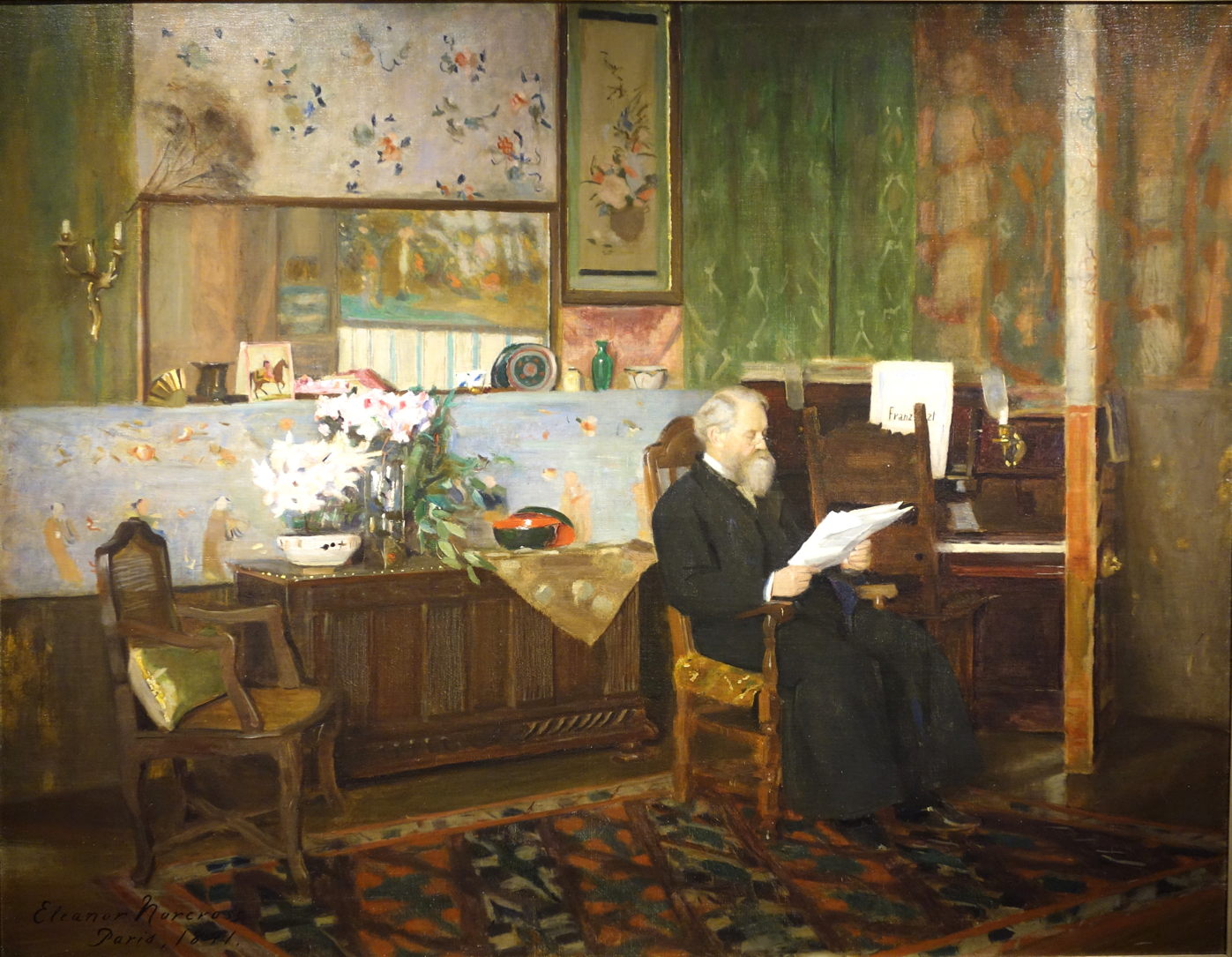
My Studio is dated 1891, and shows her studio in Paris, perhaps the same that she shared with Alix d’Anethan, who was influenced by Puvis de Chavannes. The man seated reading may have been Norcross’s father, who often stayed with her until his death in 1898.
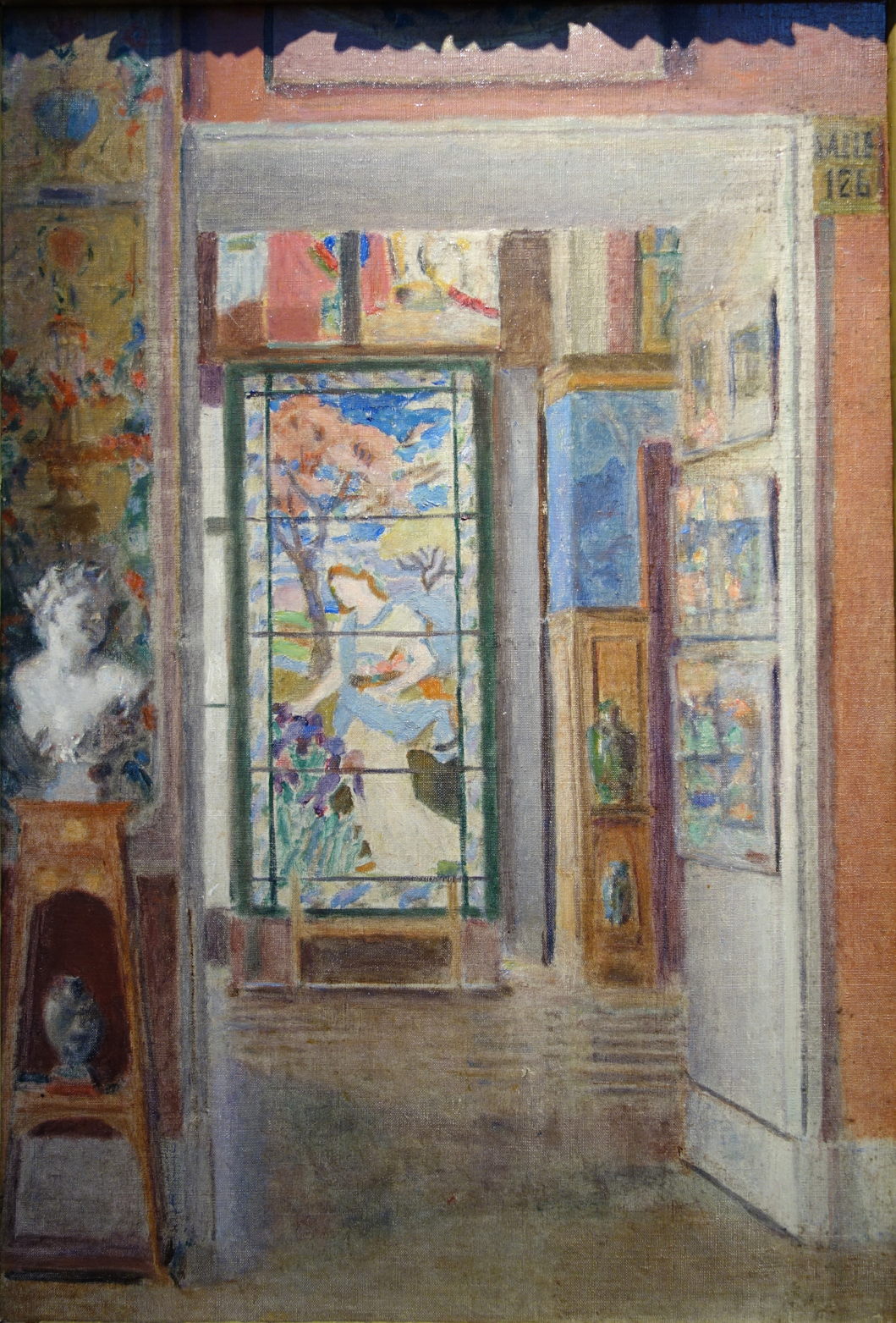
Her Art Moderne, also known as Sèvres Tiles, was painted in about 1920. The tiles referred to may form the image of a woman in the middle of the painting.
The remainder of her paintings are undated.

Fireplace is another interior featuring a mirror. Norcross seems to have had a particular fondness for mirror play in her works.

Furniture and Statuary might show some of her personal collection of artworks.

Mirror features yet another mirror, with reflected images of a collection of porcelain, and small paintings.
Norcross also copied paintings in the Louvre and other sites, and collected paintings, furniture, textiles, and other artworks to send back to New England. The major beneficiary was a centre in Fitchburg that she endowed in her will. Following her death in 1923, work proceeded on the centre, which opened in 1929, but was badly damaged by fire five years later. Now renamed the Fitchburg Art Museum, it holds several of her paintings, together with those of John Singer Sargent, William Merritt Chase, and others.
 The Eclectic Light Company