
In the first of these two articles commemorating the five hundredth anniversary of the death of the Netherlandish painter Gerard David (c 1450/1460–1523) I showed examples of his paintings up to 1510.
Like other masters of the time, David also painted miniatures.
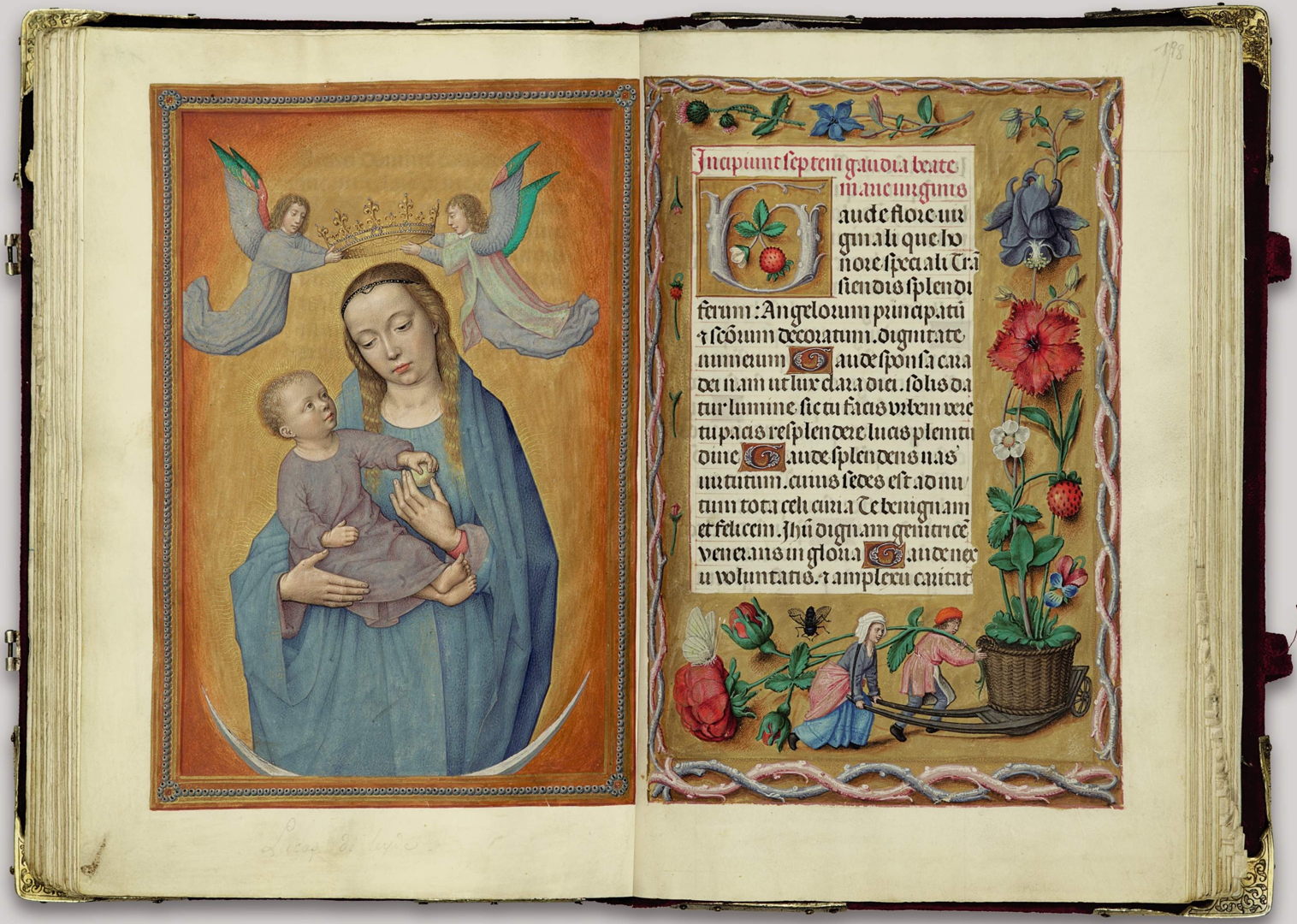
His exquisite miniature of the Virgin and Child on a Crescent Moon was probably painted in around 1510 for what’s now known as The Rothschild Prayerbook or the Rothschild Hours, which was compiled from the work of several artists between 1500-1520. This is another example of the unusual association of the Virgin Mary with a crescent moon.
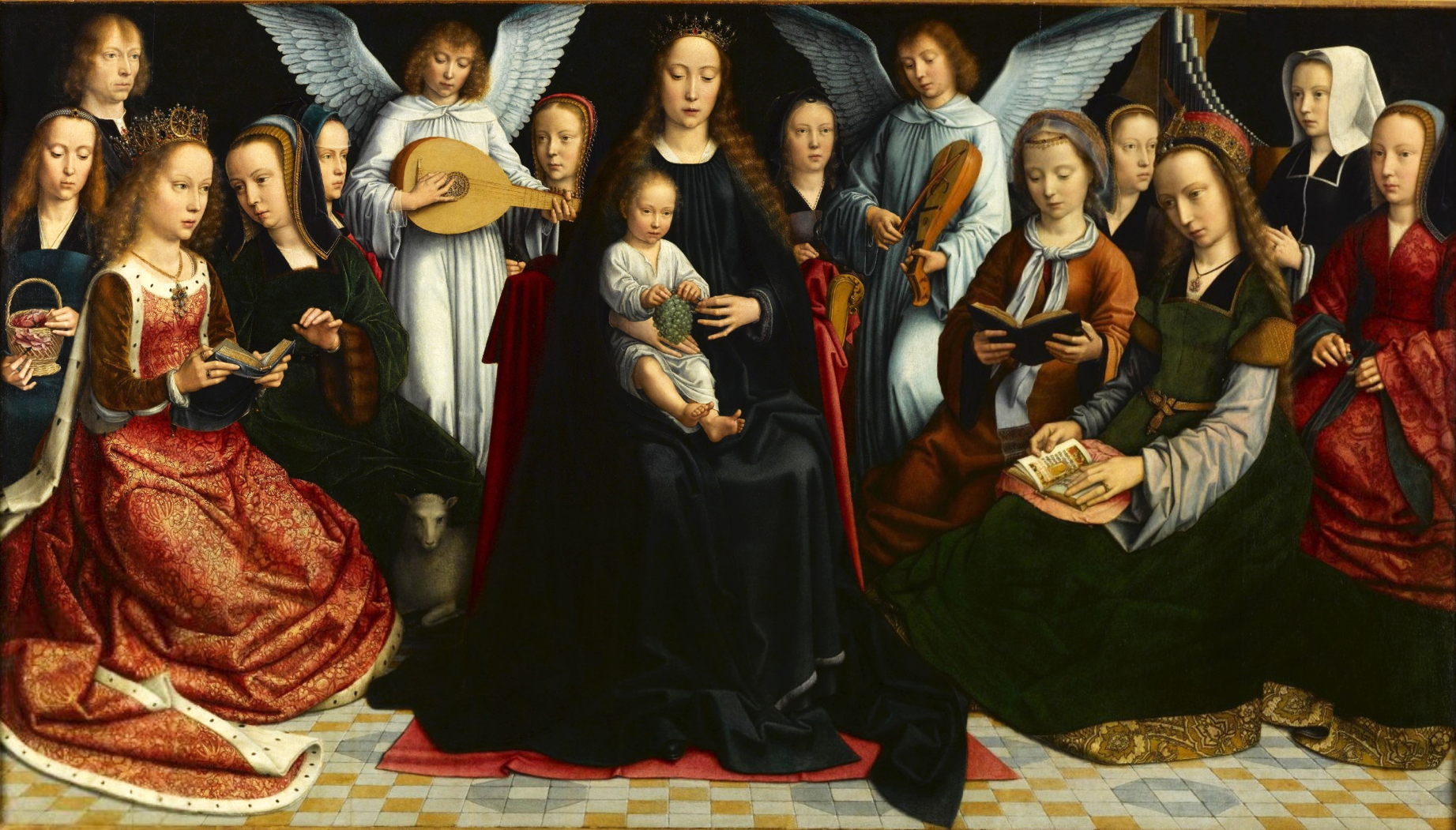
Painted at some time around 1510, David’s distinctive Virgin among the Virgins includes what’s believed to be a cameo self-portrait at the upper left, which has been used to estimate the artist’s date of birth. This unusual group portrait sets the Virgin Mary with the infant Jesus amid a gathering of chaste saints. These include Catherine of Alexandria, Dorothea of Caesarea, Agnes of Rome, Fausta of Cyzicus, Saint Apollonia, Godelina, Saint Cecilia, Saint Barbara, and Saint Lucy.
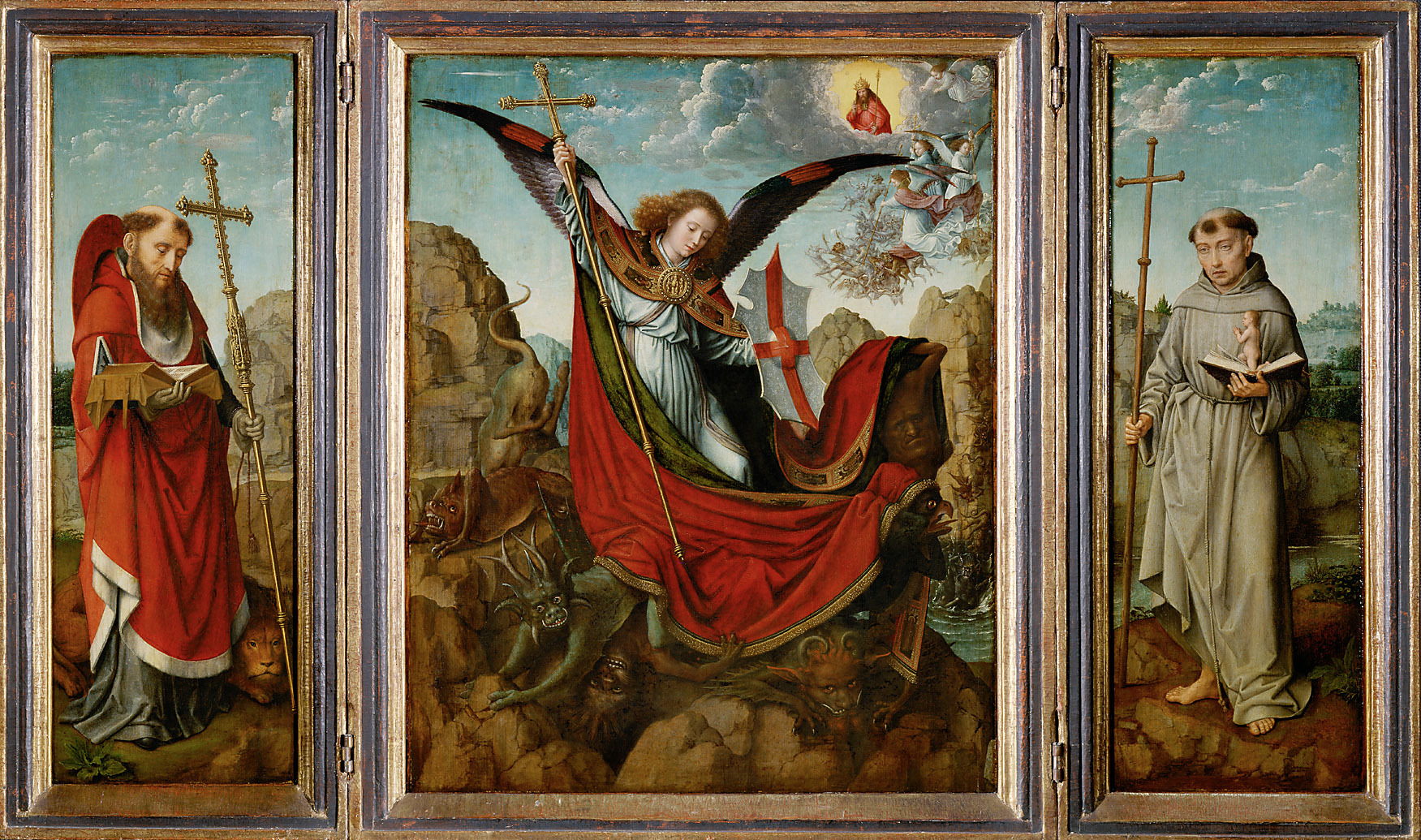
This triptych of the Altarpiece of St Michael comes from same period, and its central panel shows the saint conquering the devil. David’s colours are particularly brilliant here.

Also from about 1510 is this diptych of The Annunciation, painted in a style developed from the popular grisailles of the time. At the left is the Archangel Gabriel, with the The Virgin Mary on the right. Instead of constraining himself to a true grisaille, David uses colours sparingly to enhance the effect.
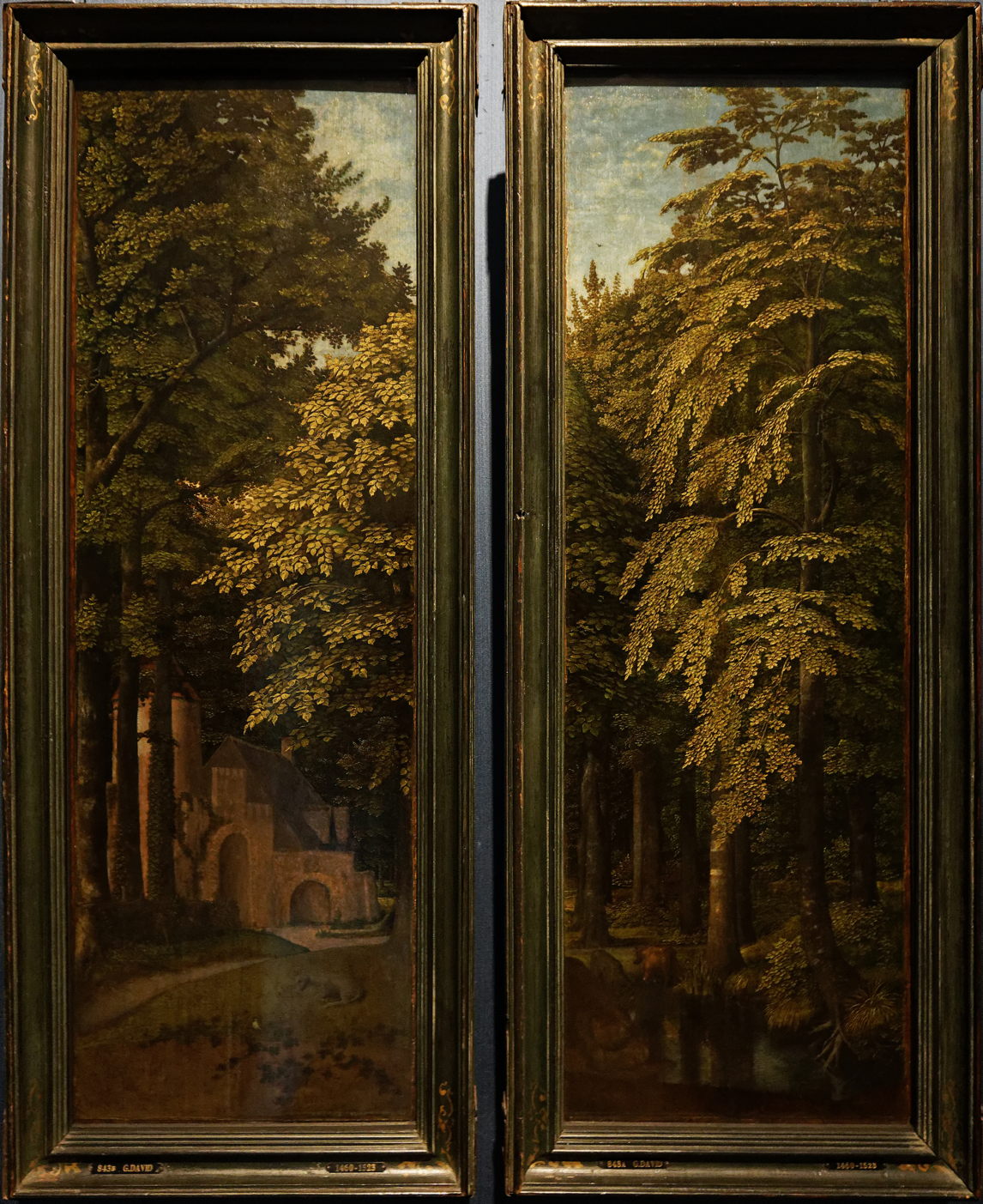
This remarkably realistic landscape painting of a Wooded Scene from 1510-15 forms the outer wings of a triptych of the Nativity. Its inner wings and central panel are now in the Met in New York.
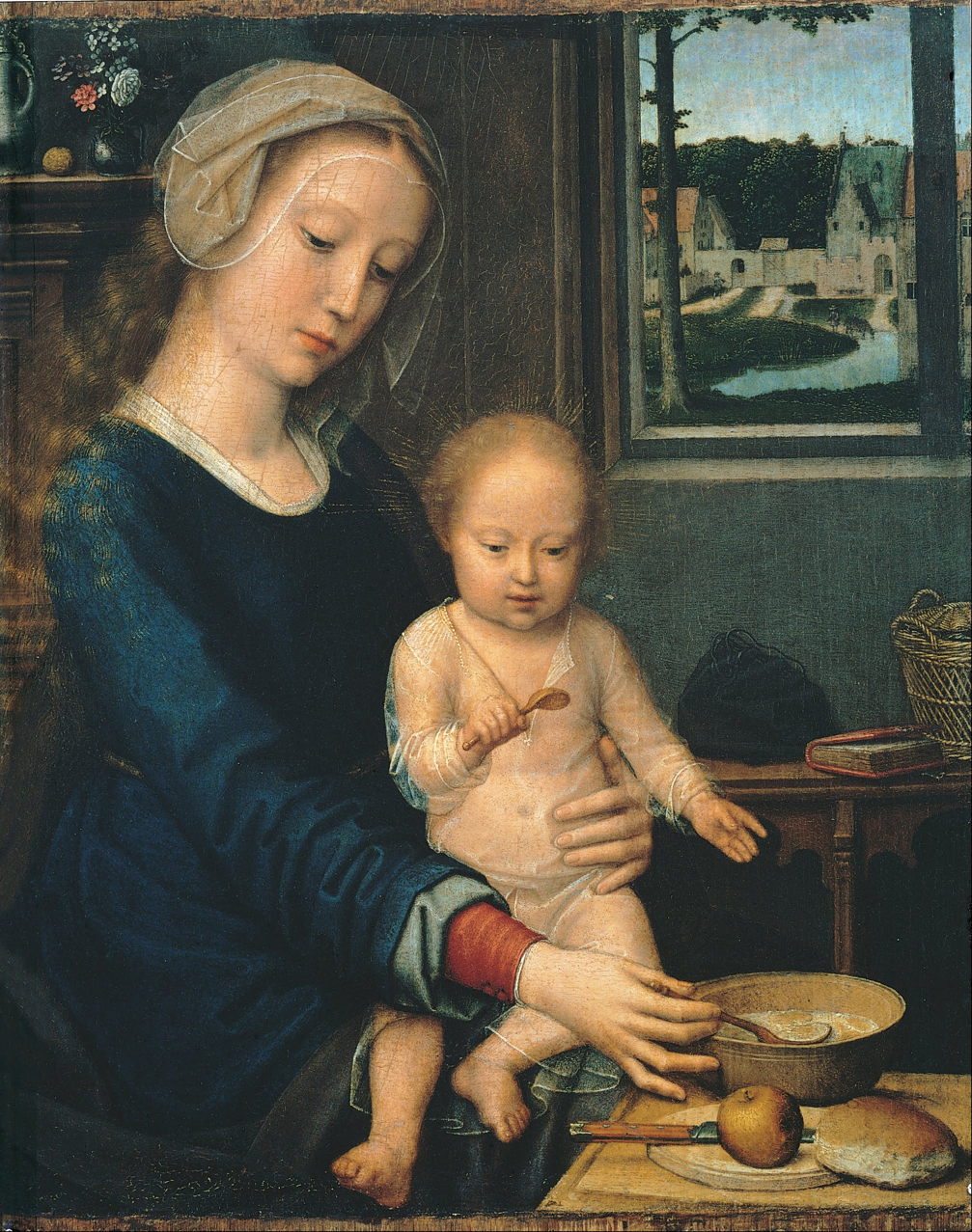
Also from 1510-15 is David’s unusual Madonna and Child with Milk Soup. David has added apposite details including a small floral still life at the upper left, a bread roll, apple and knife in the foreground, and a local view in its cameo landscape.
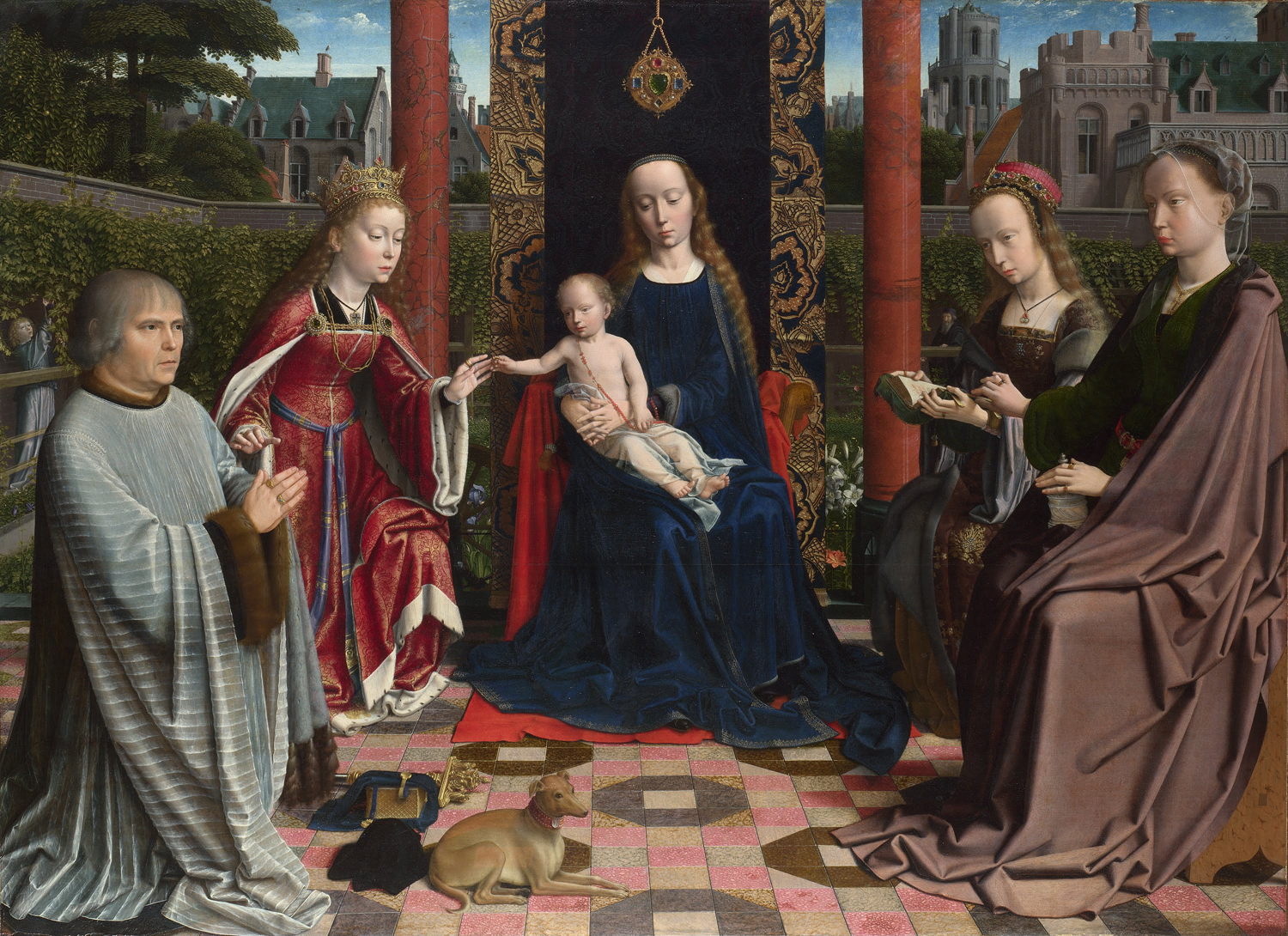
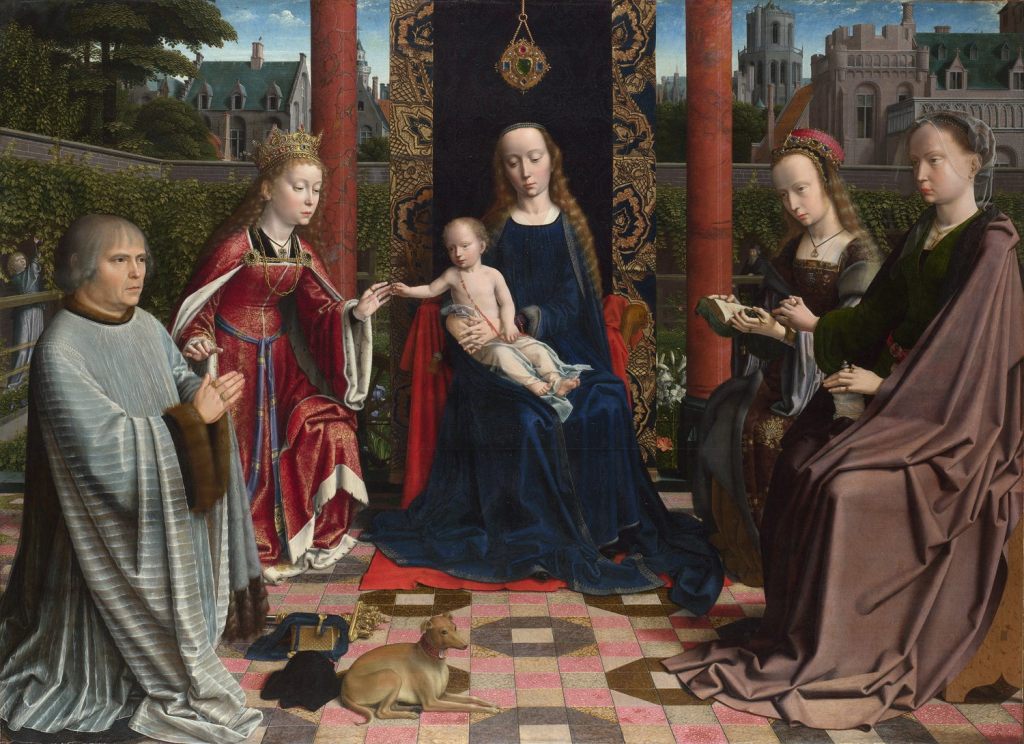
David’s Mystic Marriage of Saint Catherine is also more prosaically known as The Virgin and Child with Saints and Donor, which itemises its figures. At its centre are the Virgin Mary and the infant Jesus, who are seated in a walled garden symbolising her virginity. Around them are three women saints and the donor, Richard de Visch van der Capelle, another canon and cantor of the Collegiate Church of Saint Donatian in Bruges, where Canon Salviati was a colleague.
From the left, the saints are Catherine of Alexandria, whose wheel is just visible below and behind her left sleeve. She is receving a ring from the infant Christ in their mystic marriage or spiritual union. Seated to the right of Mary is Barbara, who was imprisoned in a tower as shown in her headdress. At the right is Mary Magdalene holding a pot of oil with which she anointed the feet of Christ.
Richard de Visch, who died in 1511, may not have seen this painting completed, and it’s feasible that it was Salviati who commissioned it in accordance with Richard’s will.
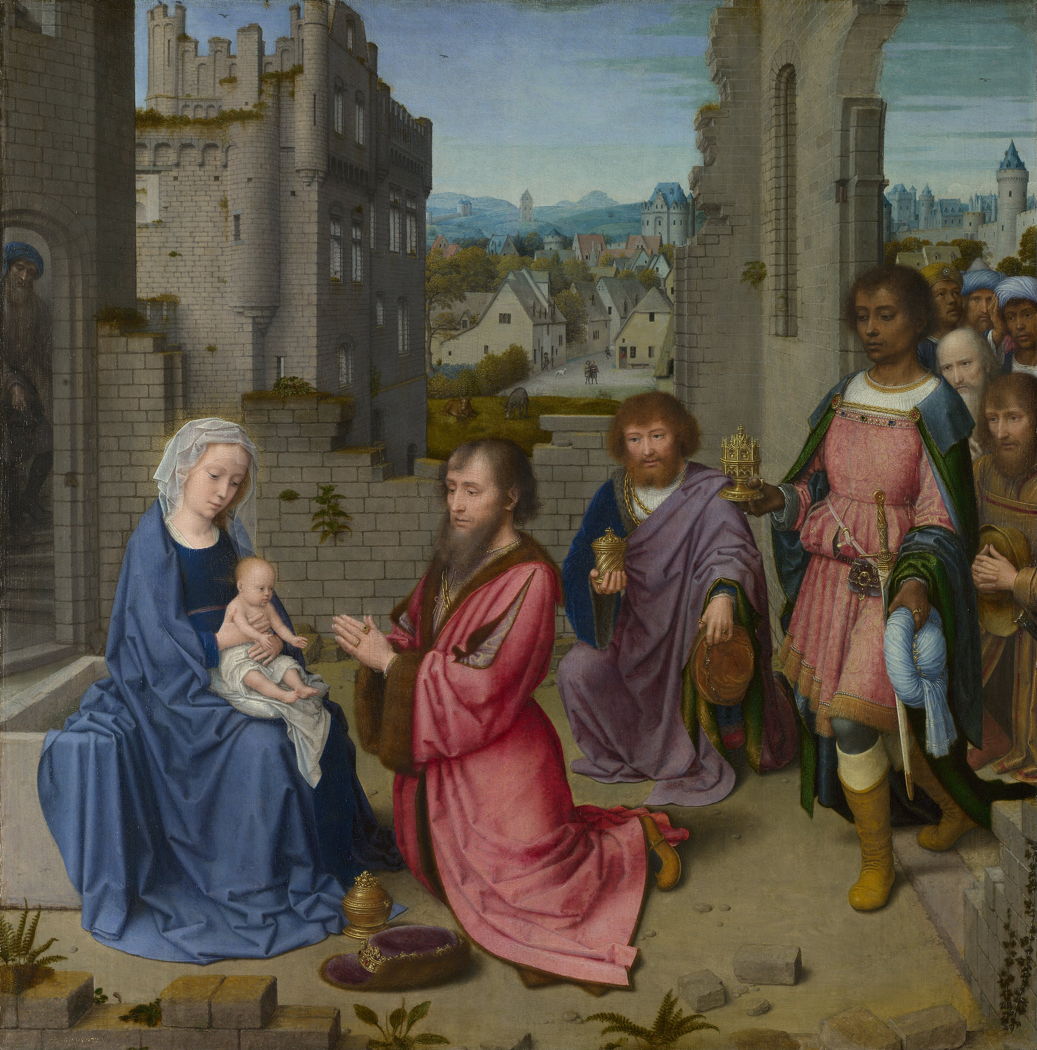
Finally, David’s Adoration of the Magi from about 1515 is reminiscent of that painted by Hieronymus Bosch, although this is set against the more conventional background of the city of Bruges, posing as a surrogate for Bethlehem.
In about 1519, David was owed a large debt by one of his former apprentices. The two then fell into dispute over a collection of paintings and drawings, the outcome of which was that David served time in prison. Not long after he was released, on 13 August 1523, David died in Bruges.
Reference
 The Eclectic Light Company