
Not all nineteenth century painters followed the mainstream. Some like Fantin-Latour broke their own ground with floral paintings, group portraits and other eccentricities. Two hundred years ago today, on 8 August 1823, another individualist was born, Théodule Ribot. In a quietly successful career lasting until 1891, he painted like no other in the nineteenth century.
He was born in Normandy, and started his studies in Châlons before moving to Paris in 1845. While there he seems to have worked in various jobs, then as an assistant to the obscure painter Auguste-Barthélémy Glaize. He spent a couple of years in Algeria from about 1848. He didn’t start painting seriously until the 1850s, when he began working in oils by lamplight in the evenings, after work.
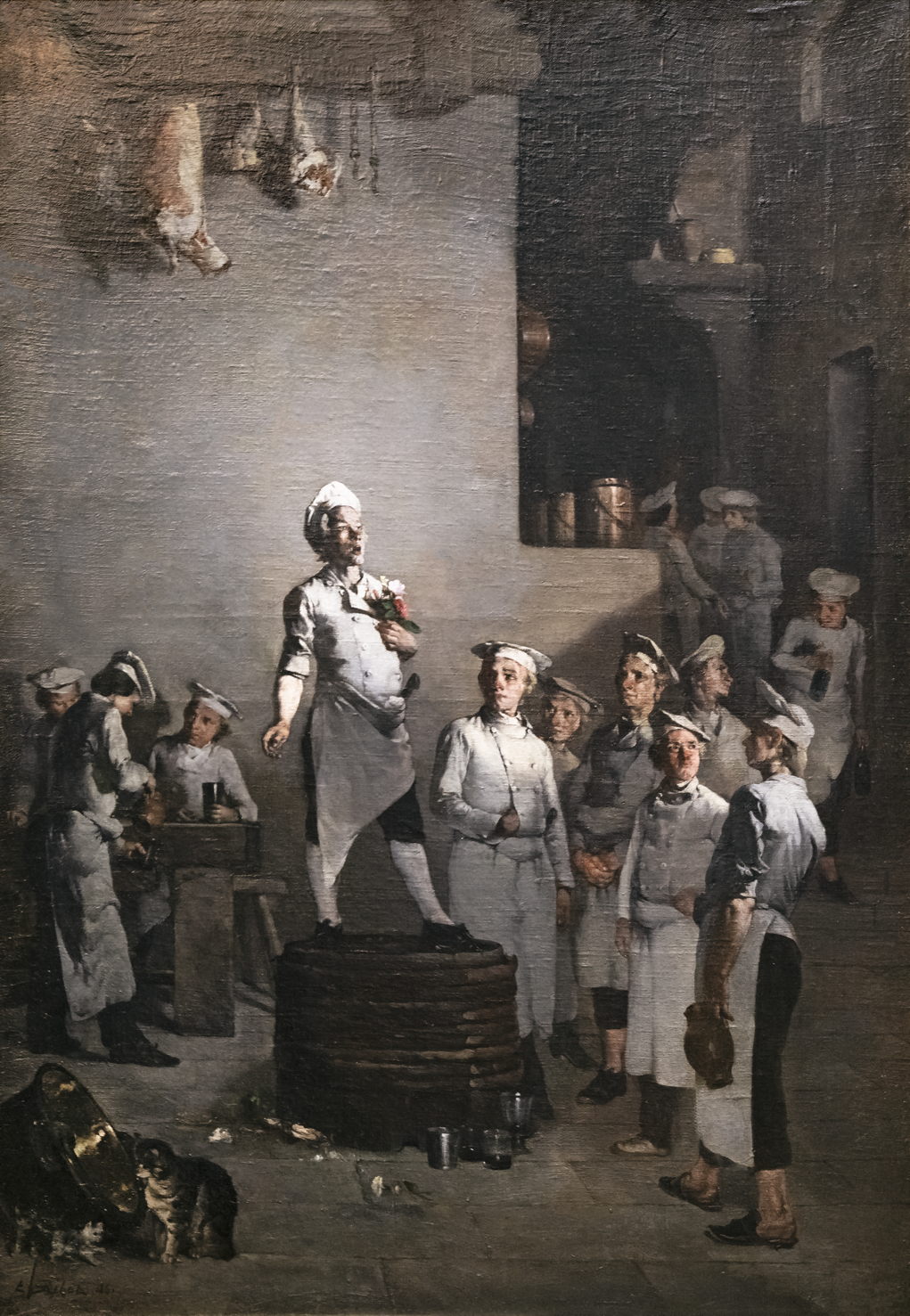
The Chefs’ Party, or the Happy Cook (1861) was one of the four paintings he had accepted at his first Salon that year. To his surprise, he sold them to collectors, and was awarded medals in subsequent Salons of 1864 and 1865. He came to specialise in portraits and genre works using the chiaroscuro more typical of Baroque masters such as Jusepe de Ribera and Rembrandt, with limited chroma that was the antithesis of those in the nascent Impressionist movement.
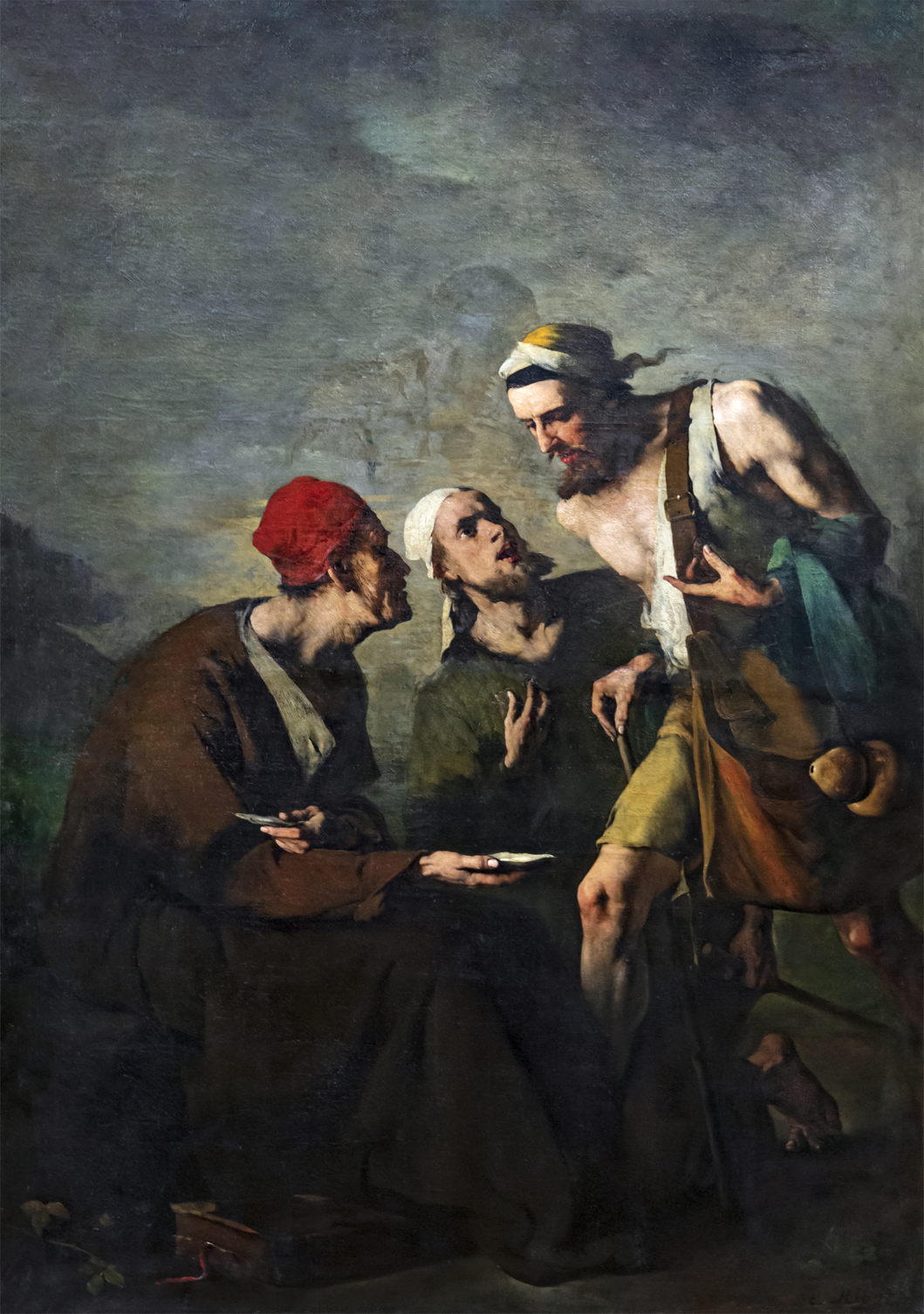
The Oyster and the Litigants from 1868 is based on one of La Fontaine’s fables, in which two pilgrims dispute the right to eat an oyster they found on a beach. They pursue this to a court, where the judge promptly eats the oyster himself and awards them each a share of its empty shell.
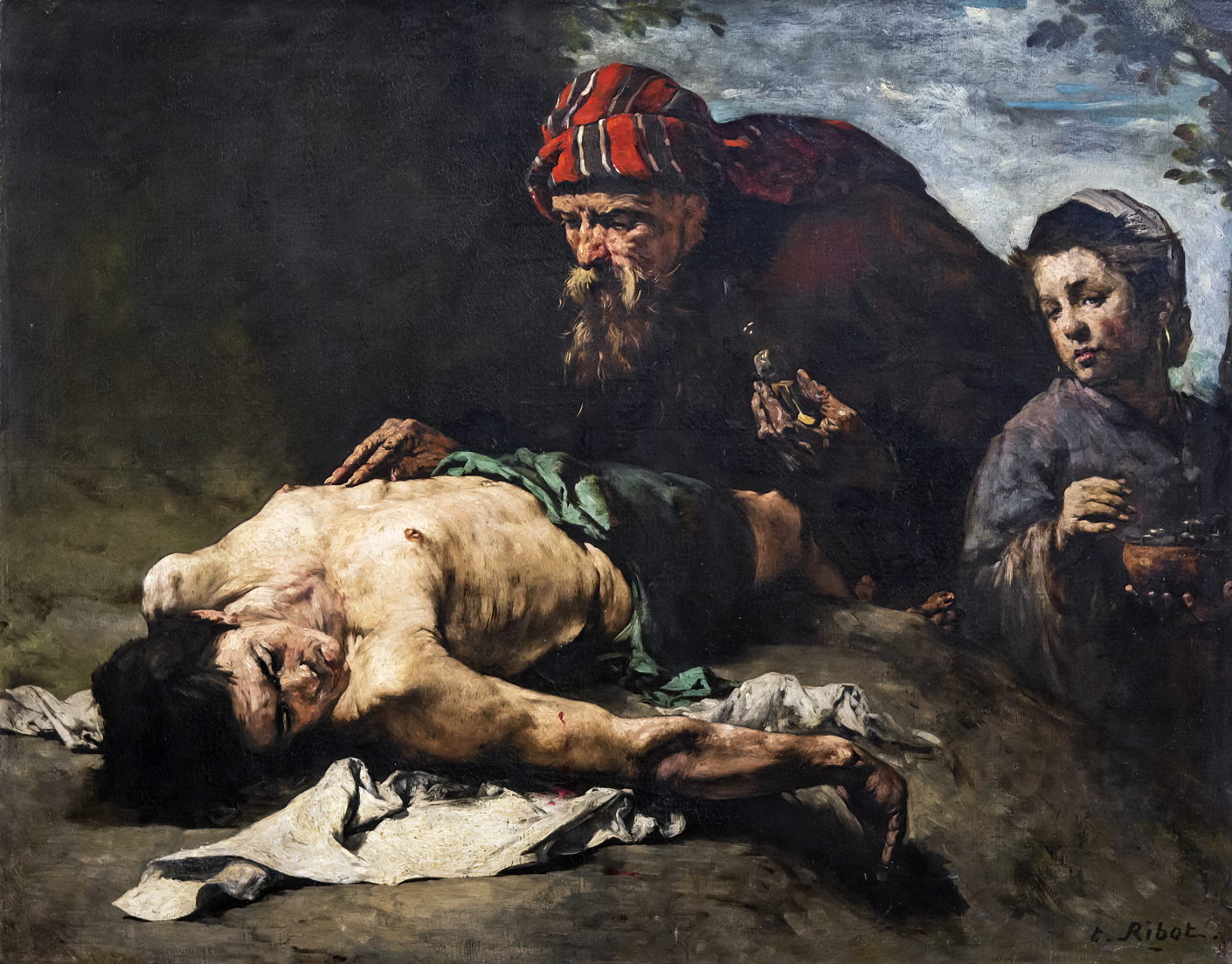
The Good Samaritan (1870) is one of several versions Ribot painted of this well-known parable from the New Testament. This shows the passing Samaritan tending to the unconscious traveller at the roadside.
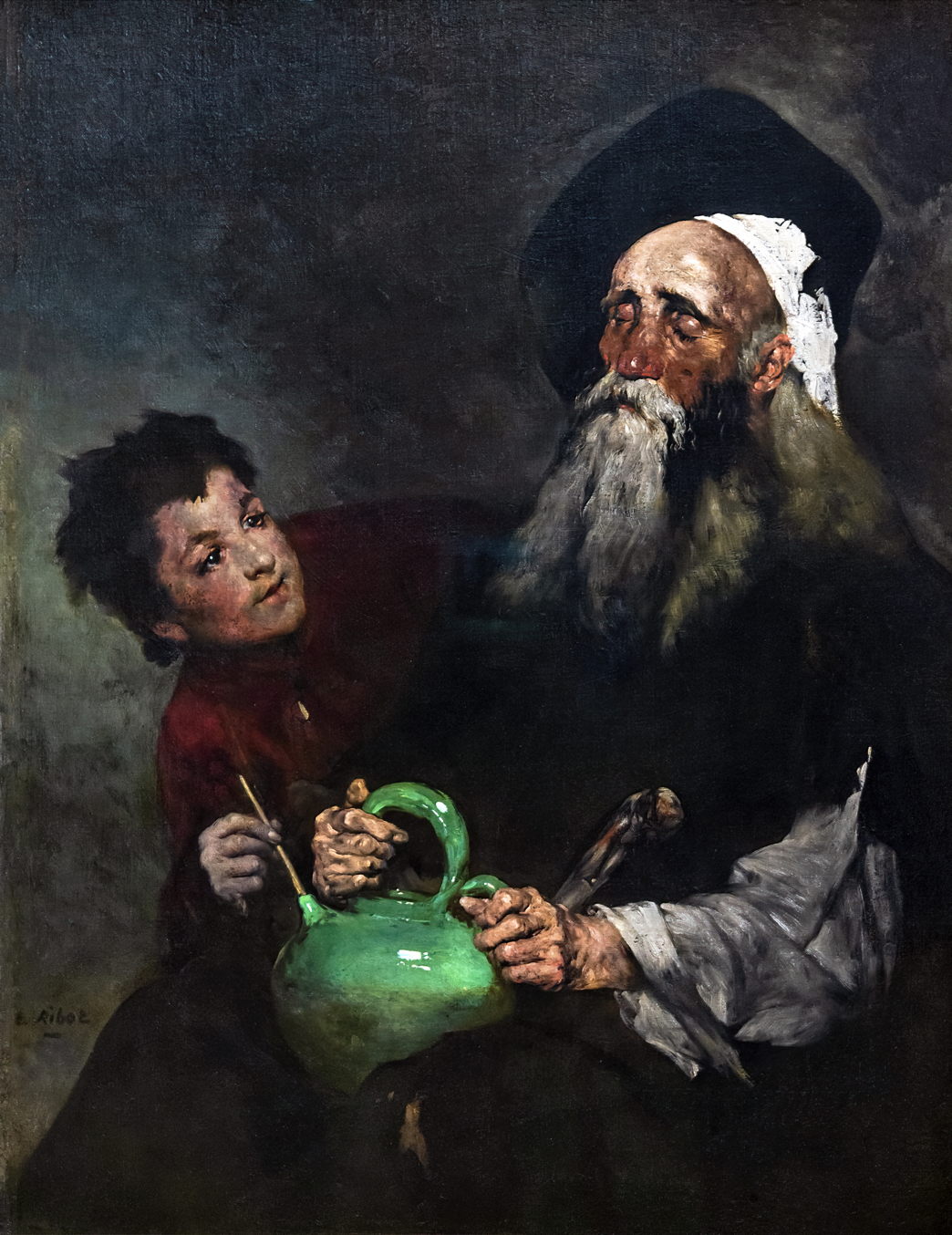
Lazarillo de Tormes and his Blind Master (1870-80) is drawn from the first chapter of one of the first picaresque satirical novels, published anonymously in Spanish in 1554. This tells the life story of a rogue anti-hero, in which he is apprenticed to a blind man. Although this book has been largely forgotten today, it was sufficiently radical and anti-clerical to be added to the Spanish Inquisition’s Index of Forbidden Books at the time.
In 1878 Ribot was awarded the Legion of Honour, but his painting started to decline because of increasing ill-health.

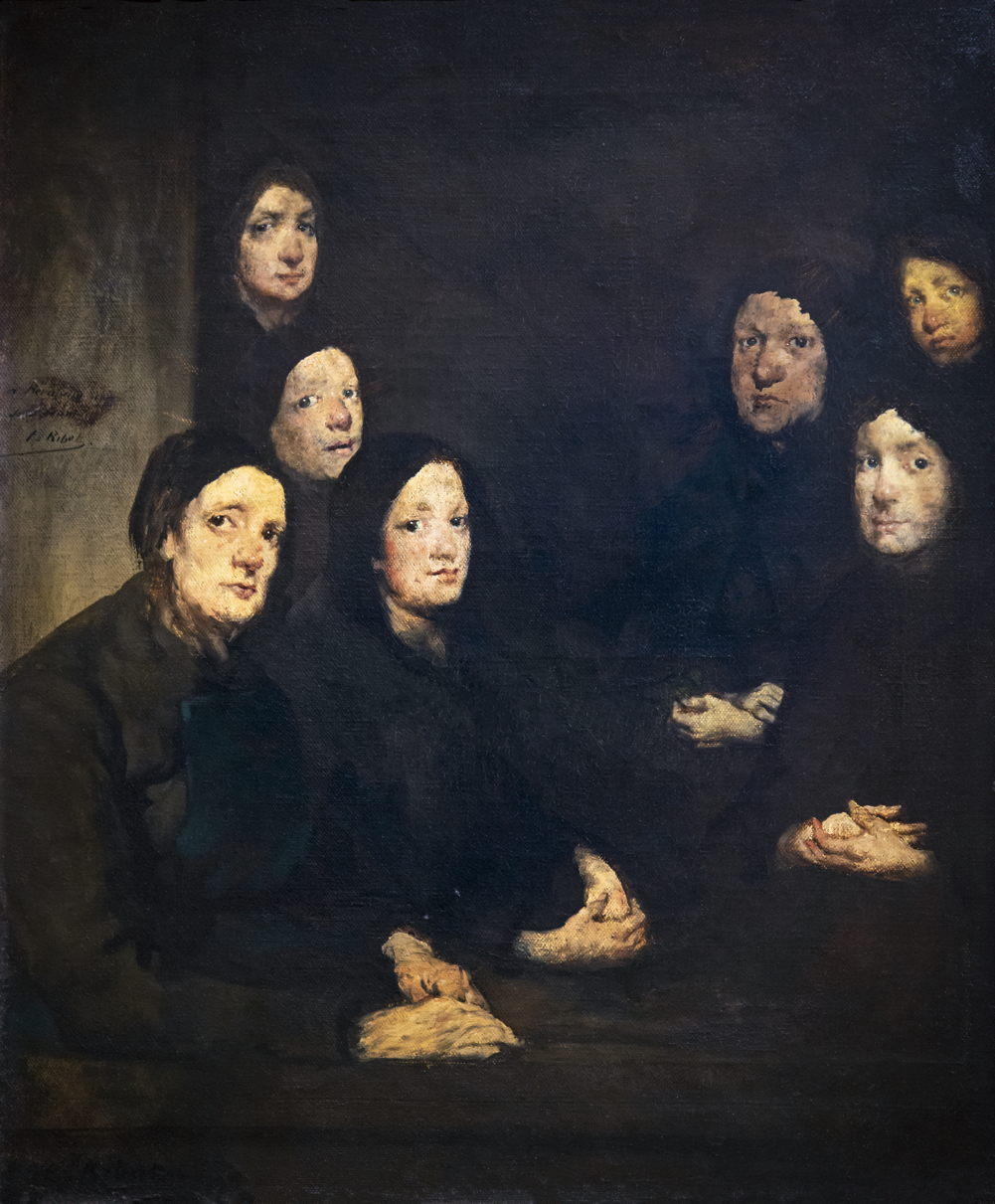
Breton Fishermen and Their Families (c 1880-85) is a gritty collection of faces from the coast of the north-west of France.
I also have several undated paintings that he is presumed to have made before about 1885.
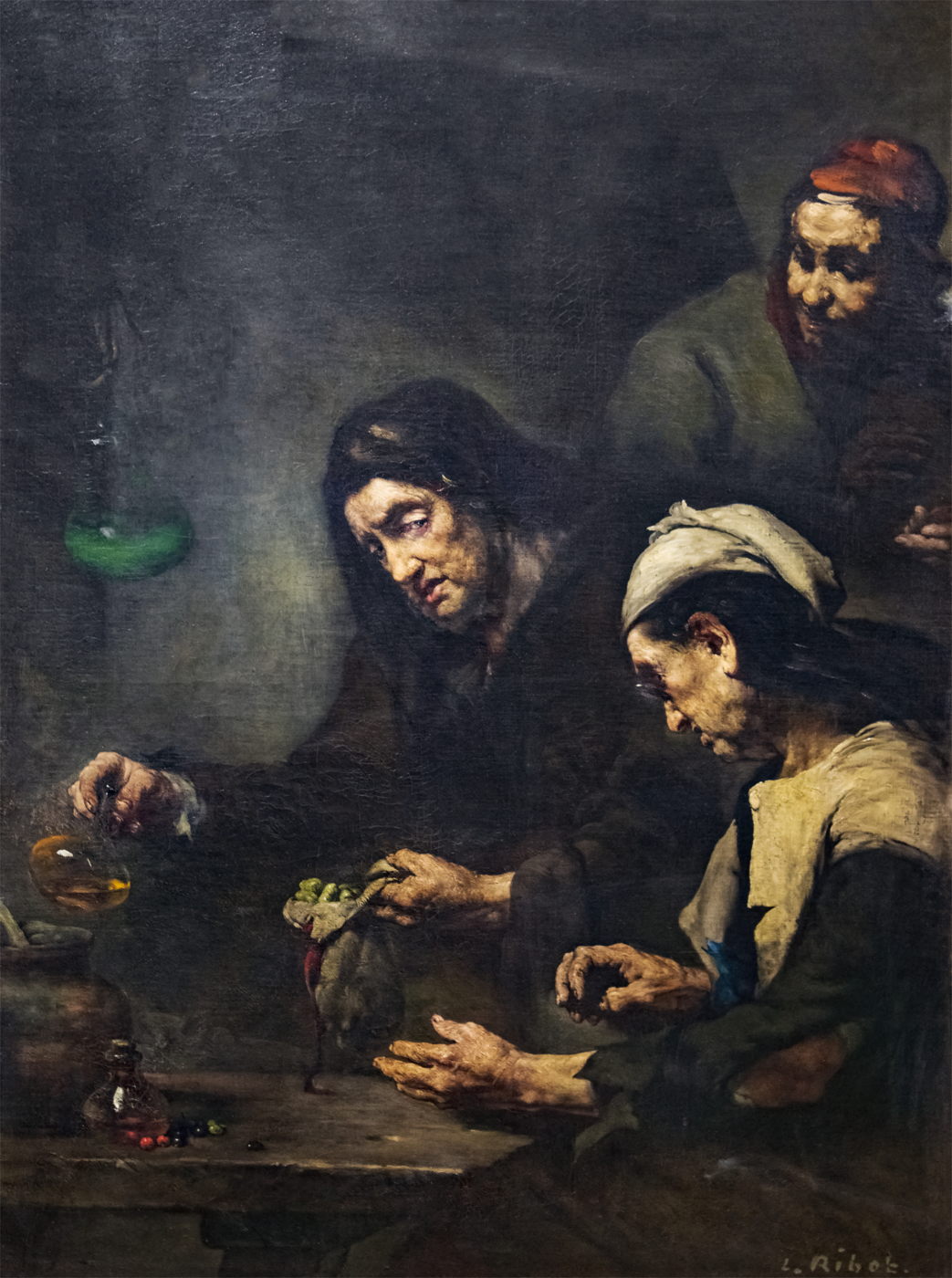
The Empiricists is one of a group of paintings showing different philosophical approaches to life, whose readings seem quite obscure.
At The Sermon is another collection of faces. He inscribed this as a gift to the dealer Alexandre Bernheim, who founded the Bernheim-Jeune gallery in Paris in 1863. Among the artists he represented were Delacroix, Courbet and Corot, and presumably he also sold Ribot’s paintings. In 1874, Bernheim-Jeune started to show and sell the paintings of French Impressionists.
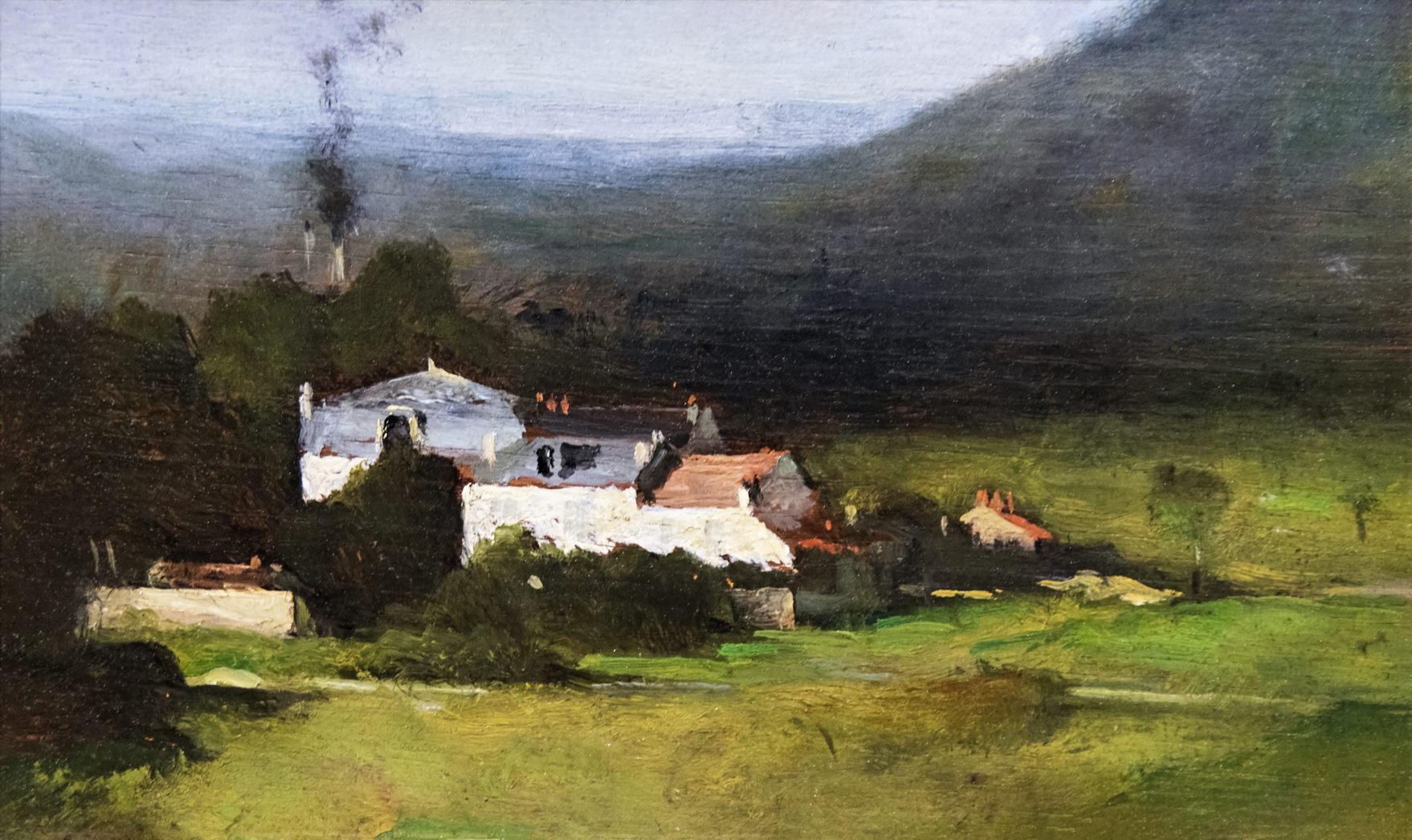
Ribot also painted a few landscapes in front of the motif. Landscape, Corot’s House in Ville-d’Avray appears to be an oil sketch on a pochard panel. Camille Corot’s father had bought this house in Ville-d’Avray, then a village on the outskirts of Paris, in 1817. Later in his career, this became Corot’s favourite country view, his equivalent of Fontainebleau Forest for artists of the Barbizon school.
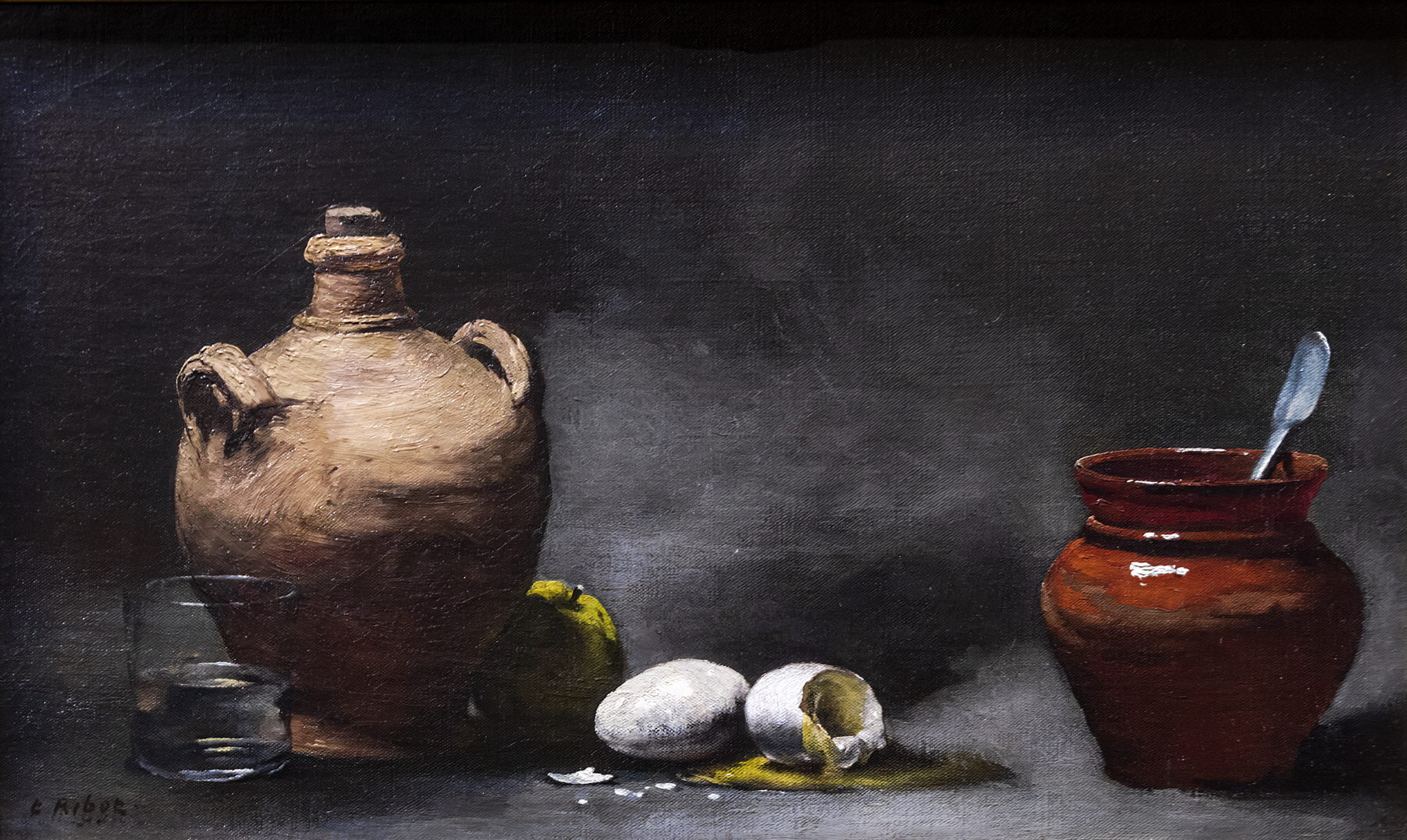
He painted several still lifes, among them this Still Life with Eggs. The facture of the earthenware jar on the left is particularly rough, and appears to have been painted using the fingers.
In the late 1880s Ribot moved to Colombes, to the north-west of Paris, where he died in 1891.
Ribot was one of the quietest and most unusual individualists of the late nineteenth century. Although many of his works are perhaps a little too uniform, they’re certainly distinctive and have an appeal of their own.
Most of his paintings shown above were exhibited at his first major retrospective exhibition held at Musée des Augustin in Toulouse, France, between October 2021 and January 2022, and were photographed there by Didier Descouens, to whom I’m particularly grateful.
Reference

