
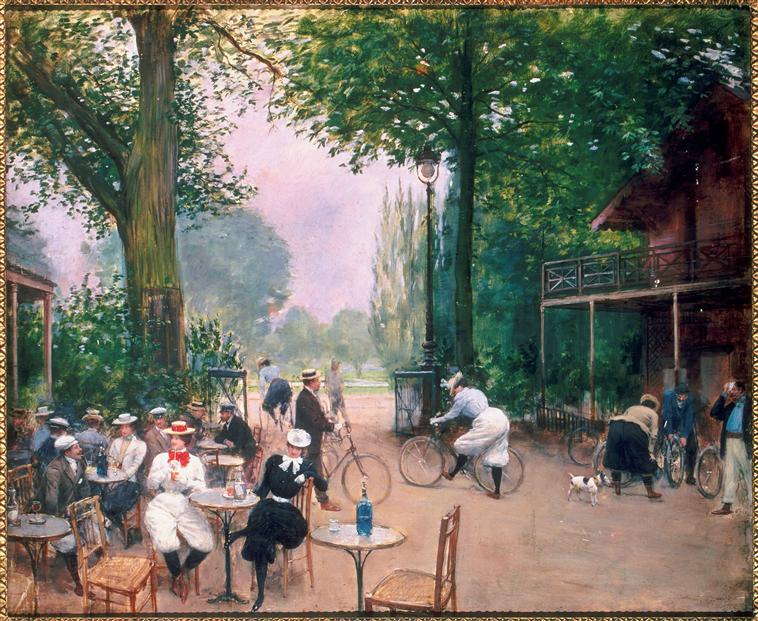
This weekend, the Tour de France is in the midst of its mountain stages in the Alps. To mark that, this article looks all too briefly at paintings of cycling.
Bicycles and cycling started to catch on in the middle of the nineteenth century, and by 1868 cyclists were racing against one another in parks in Paris.
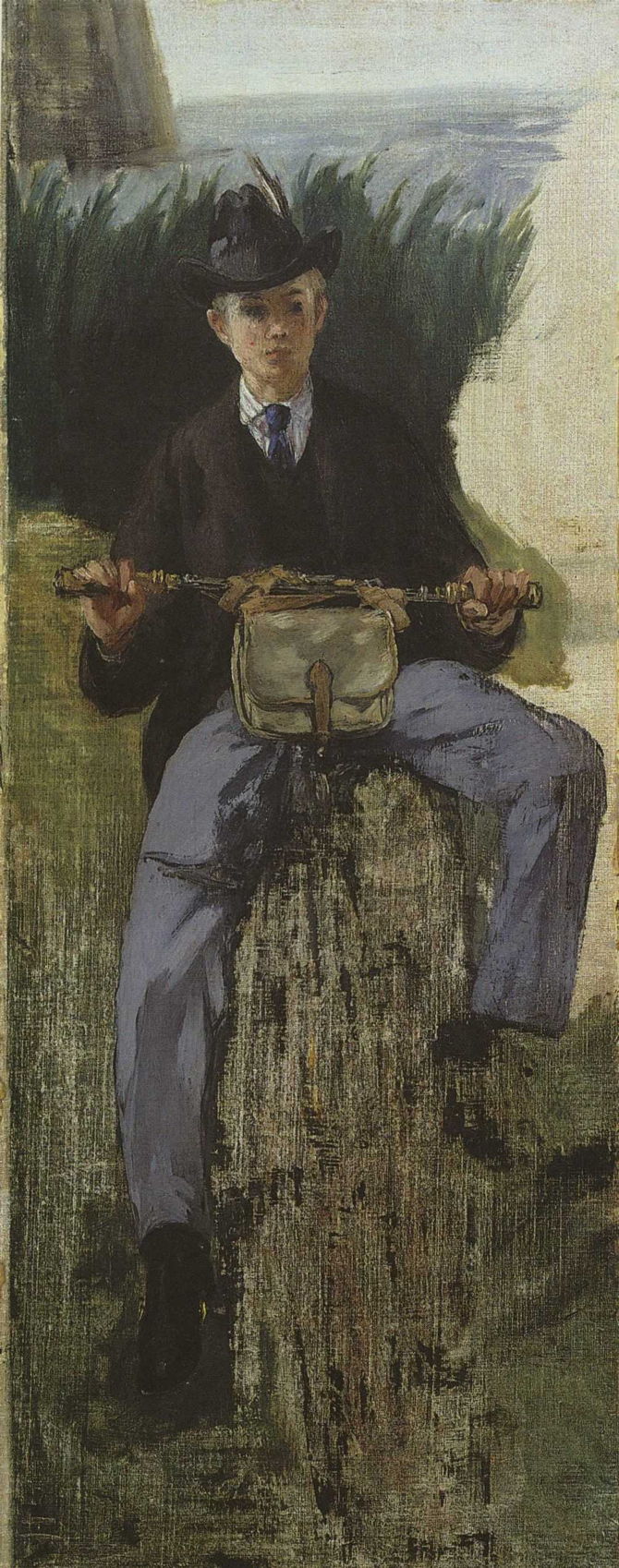
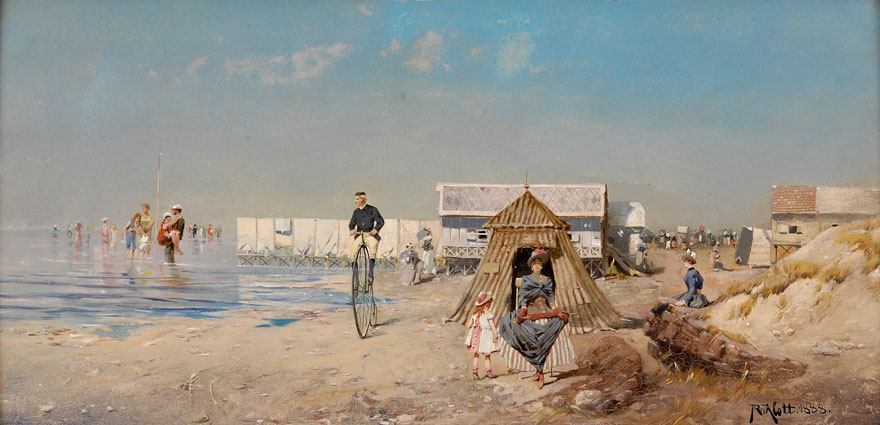
Manet’s remarkably early oil sketch Le Vélocipédiste (The Cyclist) from 1871 is probably the first depiction of a cycle by a major painter. Others like Robert Alott followed, still on their ‘penny farthings’ On the Beach at Ostende (1888), below.
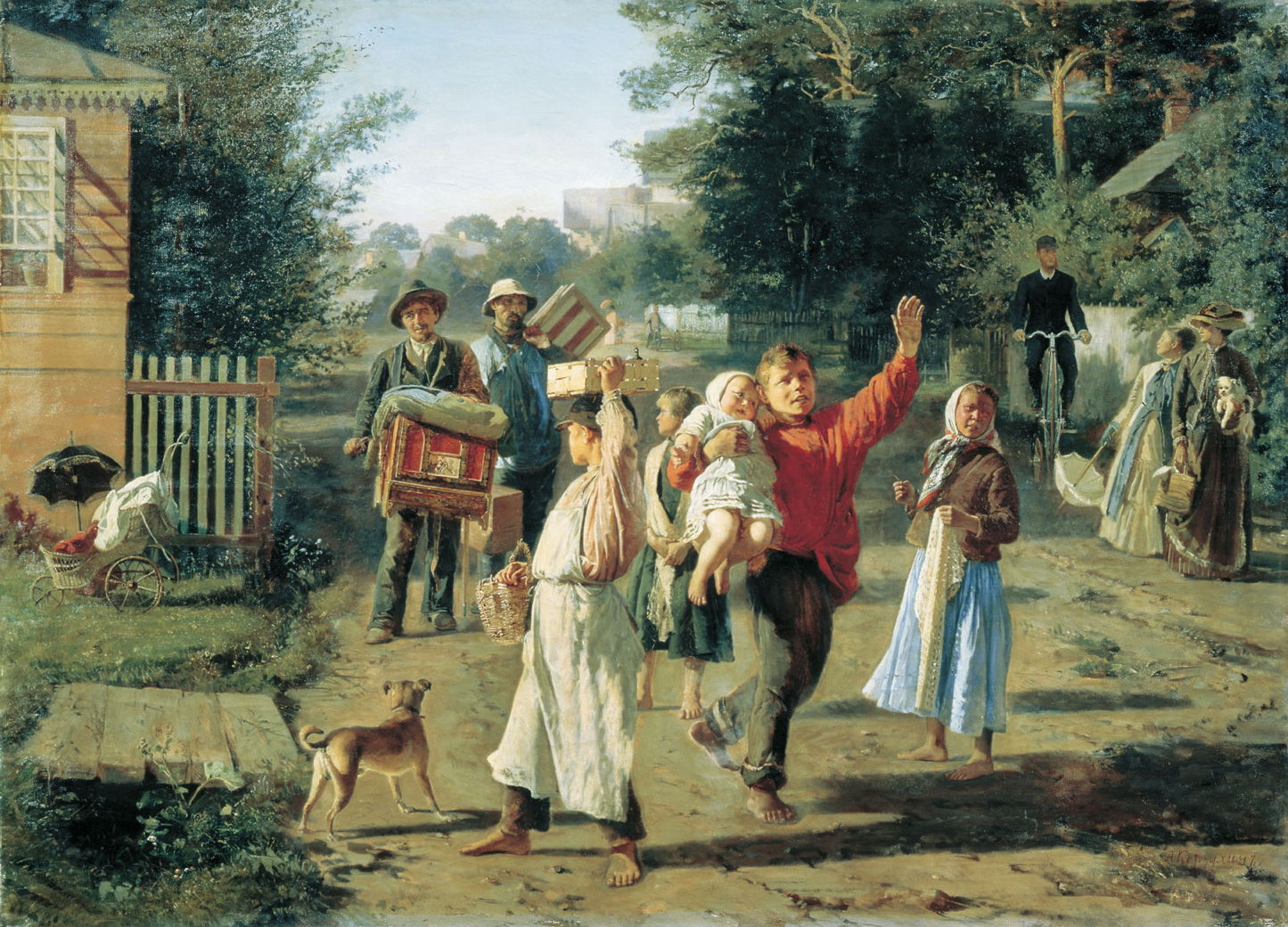
Alexey Korzukhin’s Petrushka Goes! from the same year shows another rider in the background.
Cycling proved a valuable means for the lightly-equipped plein air painter to get out into the countryside. Although trains were now able to move people at relatively high speed to country towns, watercolour painters in particular were able to travel far from a railhead on a bike. This wasn’t so practical, of course, for those painting in oils. By the early decades of the twentieth century, some artists were touring remote areas on their bikes, painting and sketching in locations that had previously been almost impossible to reach.
Bicycles reached their peak in the 1890s, rather too late to inspire the Impressionists, although given their normal attraction to the modern ways of life, it’s a little surprising that the mainstream Impressionists don’t appear to have painted cyclists or cycling, in the way that they did of recreational boating, for instance.
Renoir, at least, was a keen cyclist, and blamed some of his later arthritis on a cycling accident in 1897. In about 1895, Degas took a photograph of a young woman on a bicycle in the country, which is now in the Musée d’Orsay’s collection. Yet neither artist appears to have been moved sufficiently to paint anyone cycling, in the way that Manet did over twenty-five years earlier.
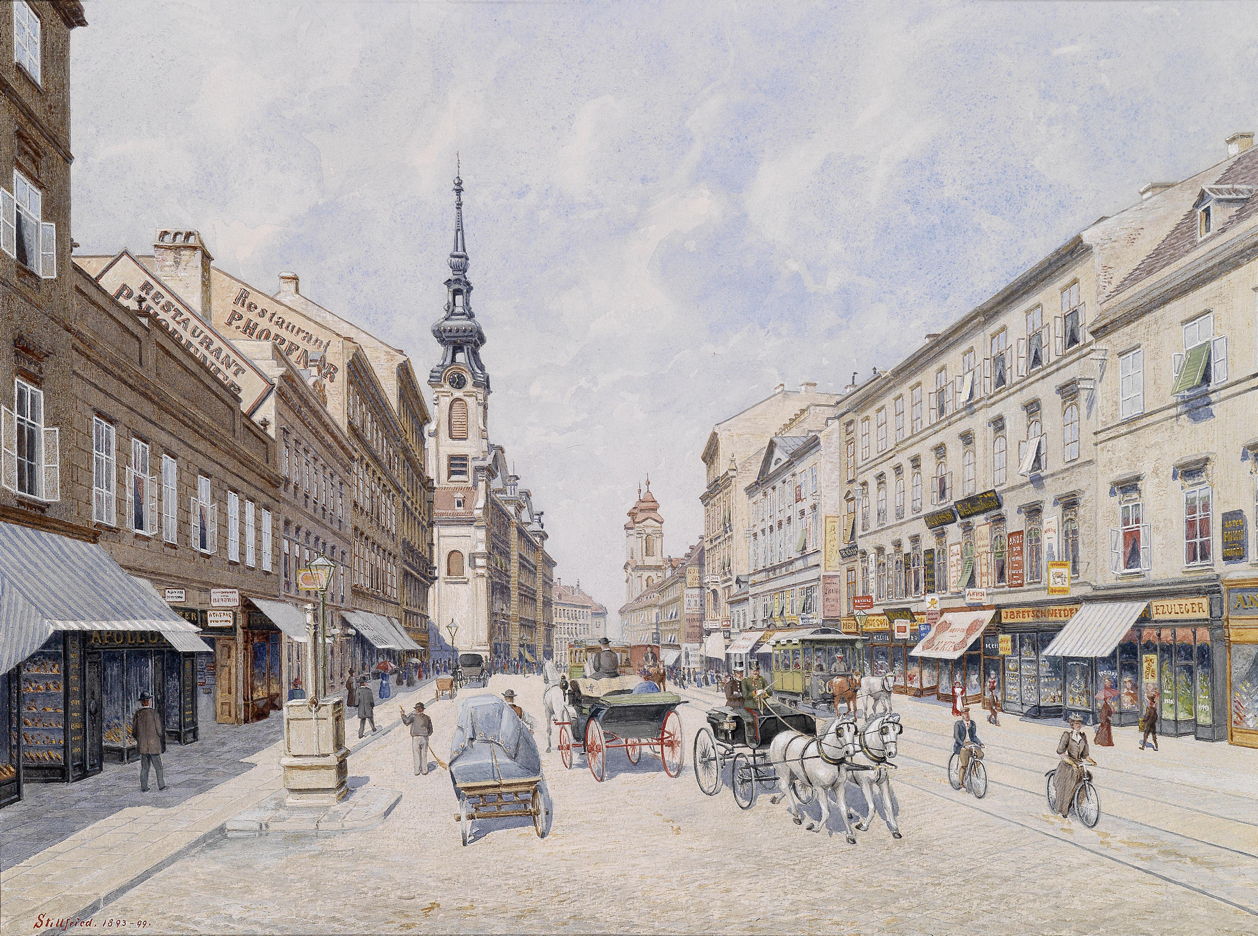
This careful watercolour of Raimund von Stillfried, of The Inner Mariahilferstraße (1893-99), captures cyclists sharing the road with trams, an extremely dangerous situation for the cyclists who could easily catch a wheel in the tracks.
When Cycle Madness broke out in Europe, races started to take place in city parks, and cafés were converted to cater for the wheeled customer. Jean Béraud shows this in his Cycle Hut on the Bois de Boulogne, probably painted around the turn of the century. The Tour de France, the greatest and most demanding sporting event in the world, started in 1903, originally as a ploy to increase sales of a newspaper. Apart from short breaks forced by two World Wars, it has run annually ever since. In its modern form, competitors all cover around 2,200 miles (3,500 km) over twenty-one days of racing.
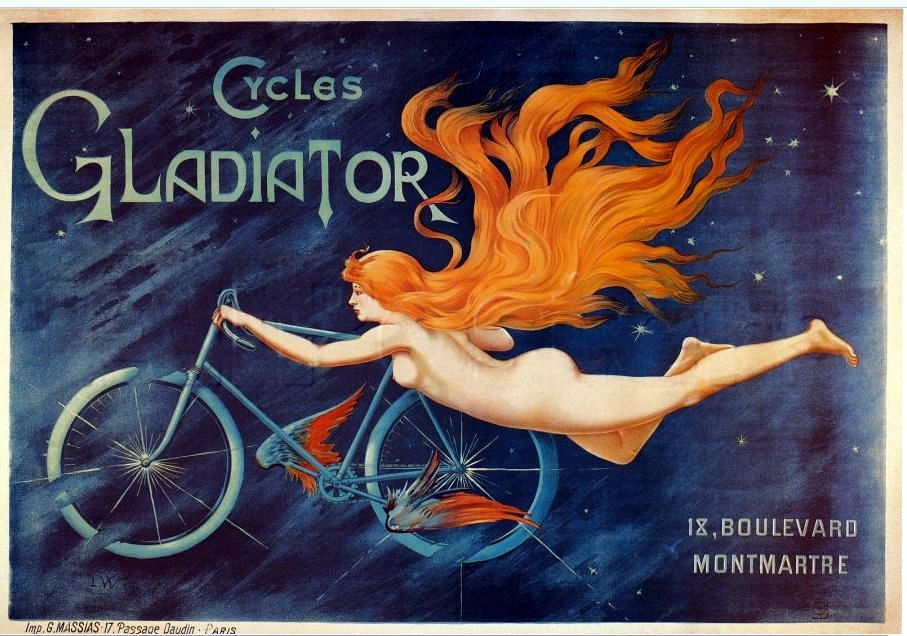
Promotional material such as posters became increasingly fanciful too.
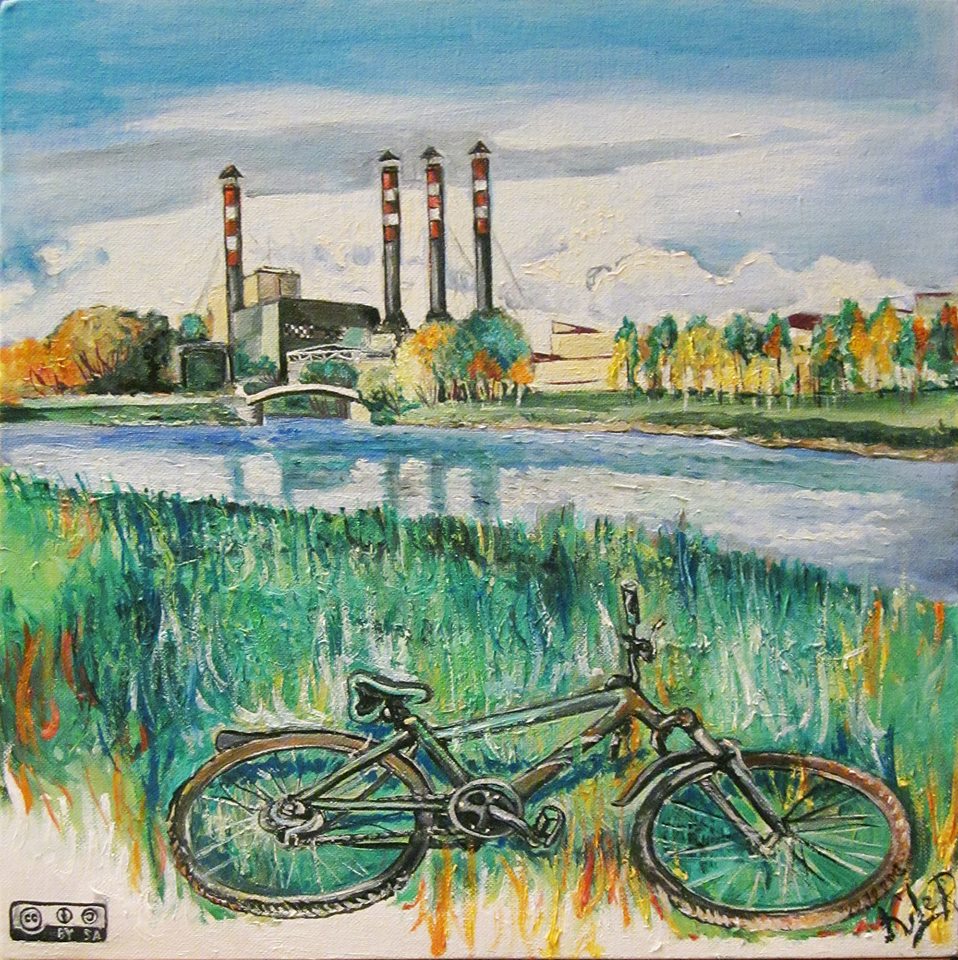
My last painting, though, is very recent, long after painting bikes had become commonplace. Sviatlana Jermakovič’s The Road to Serabranka District (2013) not only stars the bike in its foreground, but claims to have been the first artwork marked with the distinctive CreativeCommons license: one of this century’s innovations.
 The Eclectic Light Company