
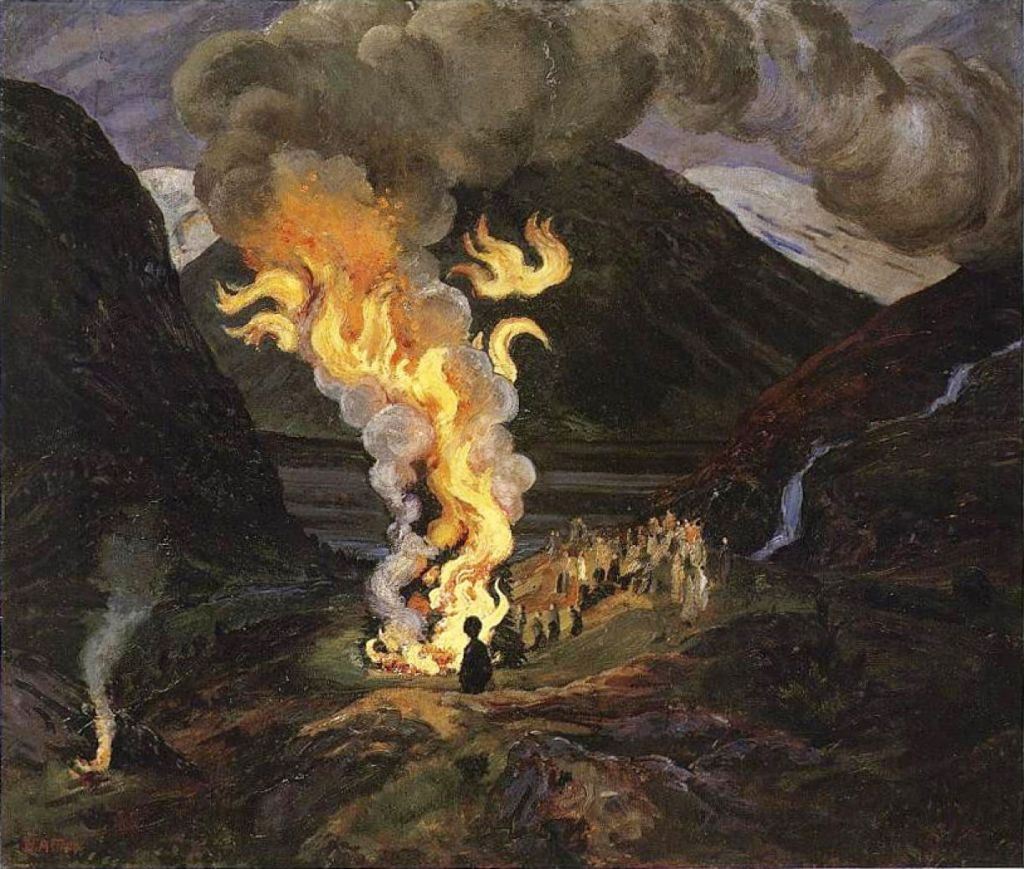
In the middle of next week, those of us in the north of Europe celebrate the longest day of the year at midsummer, or the shortest night of Midsummer Eve. Particularly popular with those in the Nordic countries, it should really be the Eve of the Feast of Saint John the Baptist, held on the night of 23-24 June, thus a couple of days after the summer solstice. And if you’re overwintering in the Antarctic it’s Midwinter’s Night. This weekend I celebrate the occasion in paintings.

One of Jules Breton’s major paintings from the 1870s is The Festival of Saint-Jean, which was shown in the Salon of 1875; I’ve been unable to locate a suitable image of that finished painting, but this study for it, The Feast of Saint John (1875) may give you an idea of its magnificence.
Like the Midsummer Eve paintings from Nordic lands, it shows the bonfires and dancing taking place on the eve of the feast of Saint John. I believe that this was painted at Courrières, in the far north-east of France, rather than in Brittany, judging by the distinctive church tower visible in the finished version. That was purchased from the artist by the dealer Goupil in March, before the Salon even opened in May, and by June had been sold on to another dealer in Britain for the huge sum of 45,000 francs.

Anders Zorn’s major painting of 1897 was Midsummer Dance, capturing the festivities in his home town, with women and men dancing outdoors in their uniform country dress.

Eva Bonnier’s Midsummer from 1900 is set in the magical twilight of the middle of a Nordic midsummer night. Bonnier lights memories of the past, perhaps: a young girl resting on the ground to listen to the music of a violin, or, when older, dancing on the grass.

Nordic Impressionists gathered each summer at Skagen in Denmark, where PS Krøyer painted this Midsummer Night’s Bonfire on the Beach at Skagen in 1903. He completed this as his eyesight started to fail, and he was forced to give up painting.
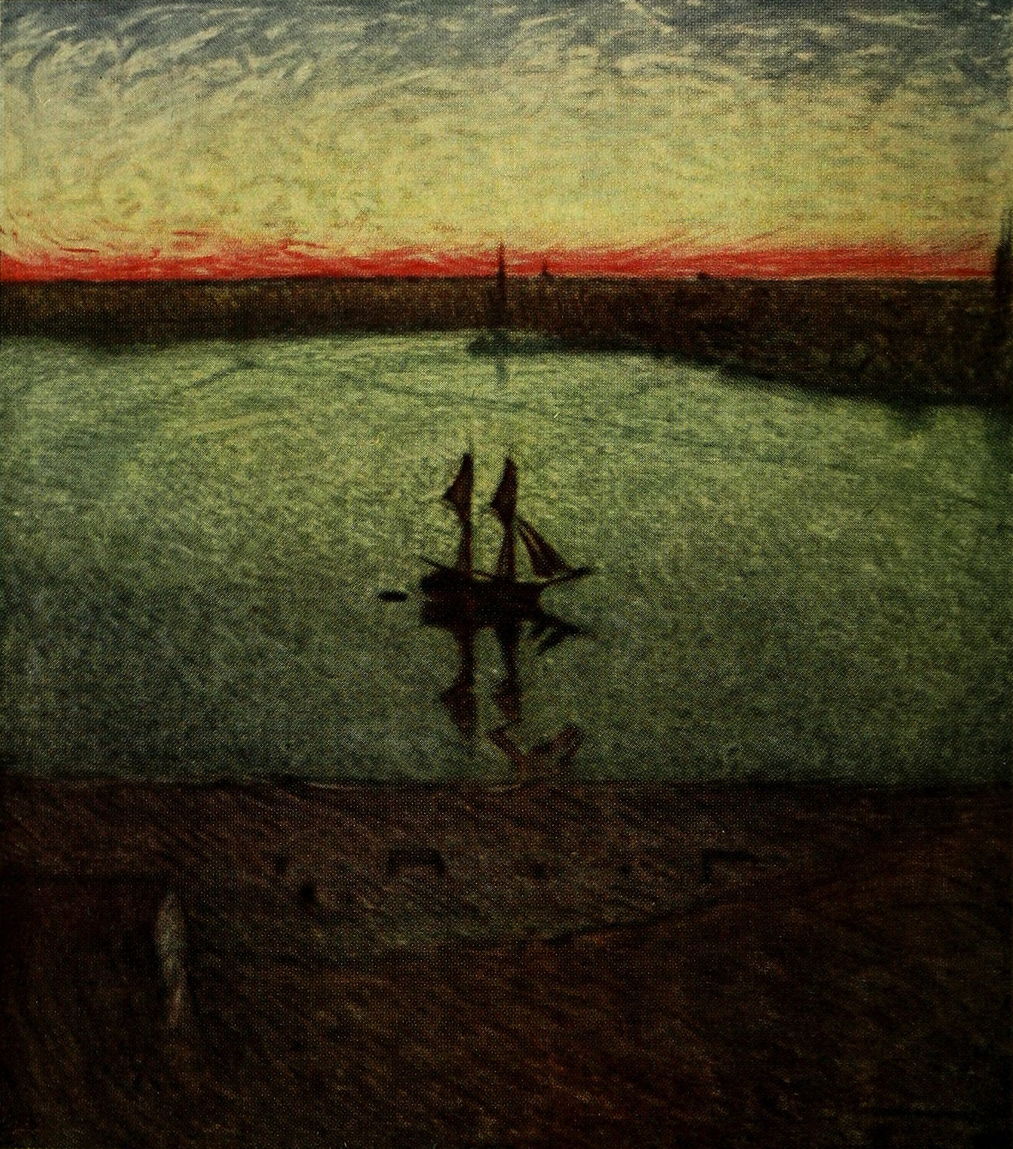
Midsummer Night at Riddarholmen shows a sailing ship anchored in the Riddarfjärden of Stockholm, just below Eugène Jansson’s studio, and is perhaps his painting most strongly suggestive of influence from Edvard Munch’s Despair-Scream series, with its blood red sky just above the horizon.
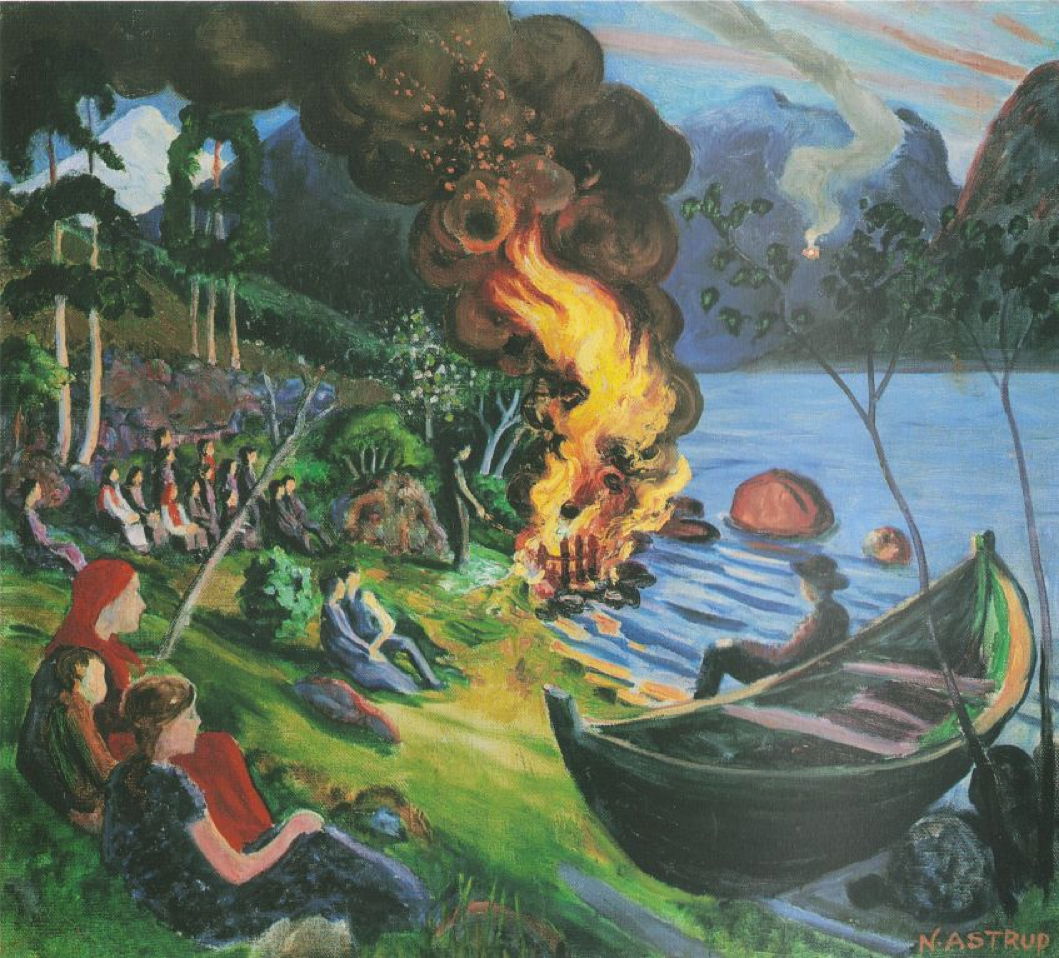
Nikolai Astrup’s most enduring and magical series of nocturnes show what’s known in Norway as Sankt Hansbål, celebrated here on the shores of Jølster Lake in his St. Hansbål ved Jølstravatnet from about 1909. This occasion is marked by a large bonfire in each community.
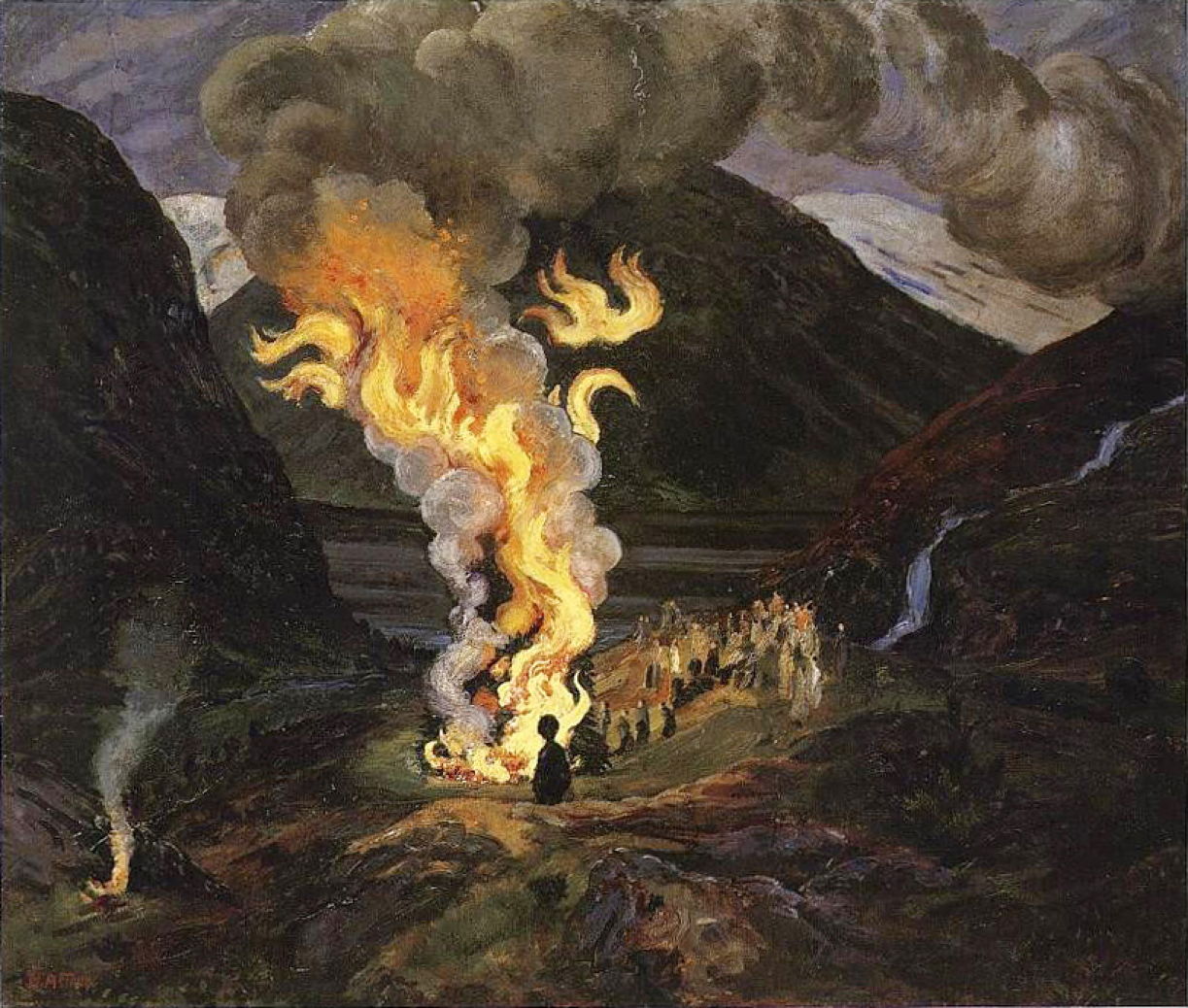
Jonsokbål (1912) is one of the finest of Astrup’s paintings of these celebrations. It has now grown quite dark, and this bonfire is well back from the lake shore, where the land is rough and rises into the hills. Clumps of flames are shown breaking away from the main column of fire, as if they have a life of their own. The event has become more magical, perhaps reverting to its pagan origins.
Tomorrow I’ll look at that other feature of this time of year, the Midnight Sun, and the month of June.
 The Eclectic Light Company