
Going to the beach for fun didn’t really happen until people could be transported from towns and cities to the coast, which awaited the advent of railways in the nineteenth century. However, the notion that going to the beach, even bathing in the sea, might be a healthy thing to do, dates from the Age of Enlightenment in the previous century. Around Europe, coastal villages and towns started to see a trickle of the wealthy keen try this new ‘cure’. Once places had received patronage from royalty and the nobility, the coast, its beaches and waters became progressively popular. This weekend I’m going to concentrate my attention on what our ancestors wore as they cast away all their cares and took to the sand and sea.
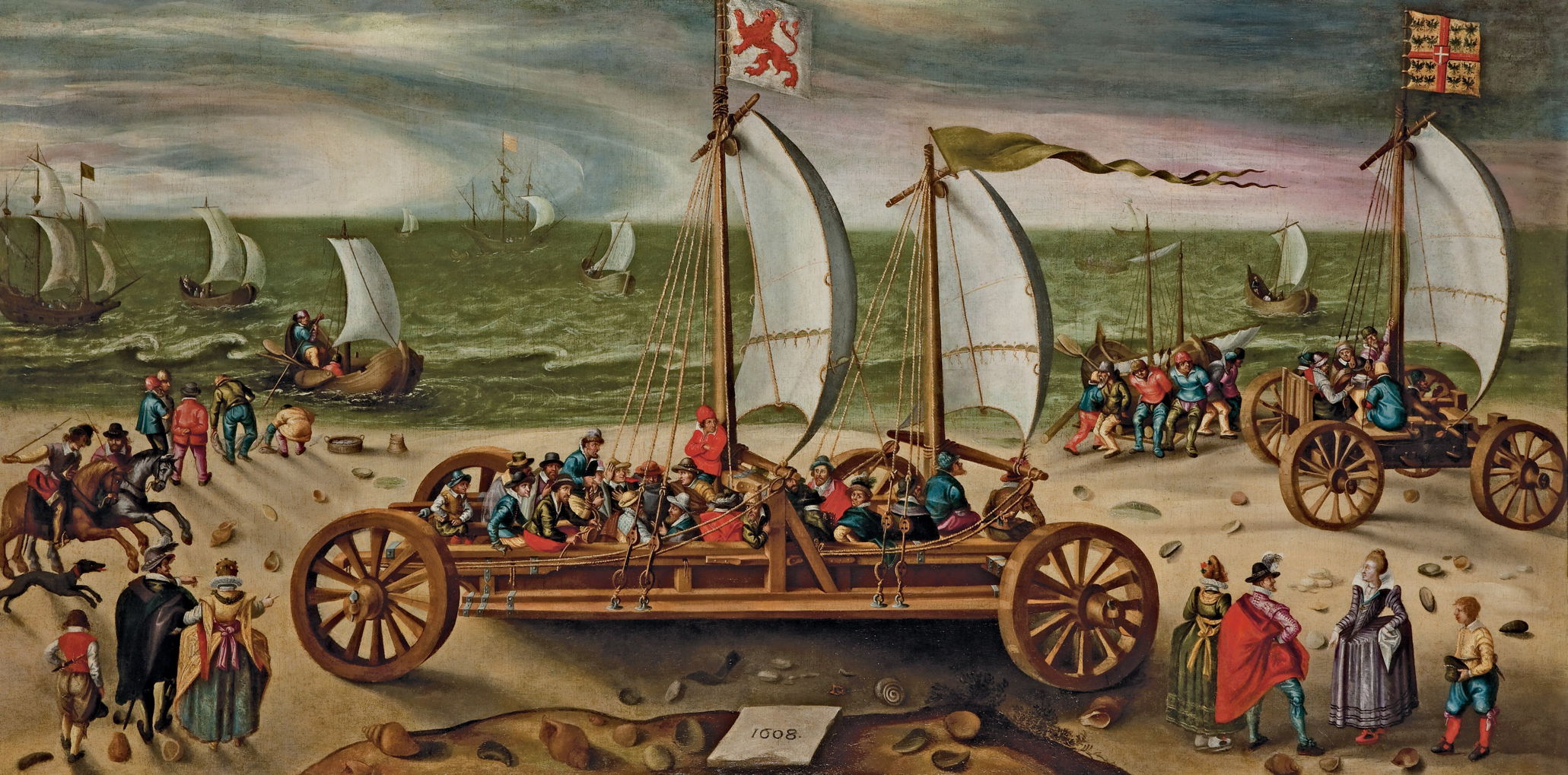
In this painting by one of the circle of Esaias van de Velde, we see a Sandyacht Race in the Presence of Prince Maurice of Nassau on the Beach at Scheveningen in 1608. The crews of those sandyachts and bystanders are wearing their everyday clothes, although the small group in the right foreground at least appear to have discovered sandals for their feet.
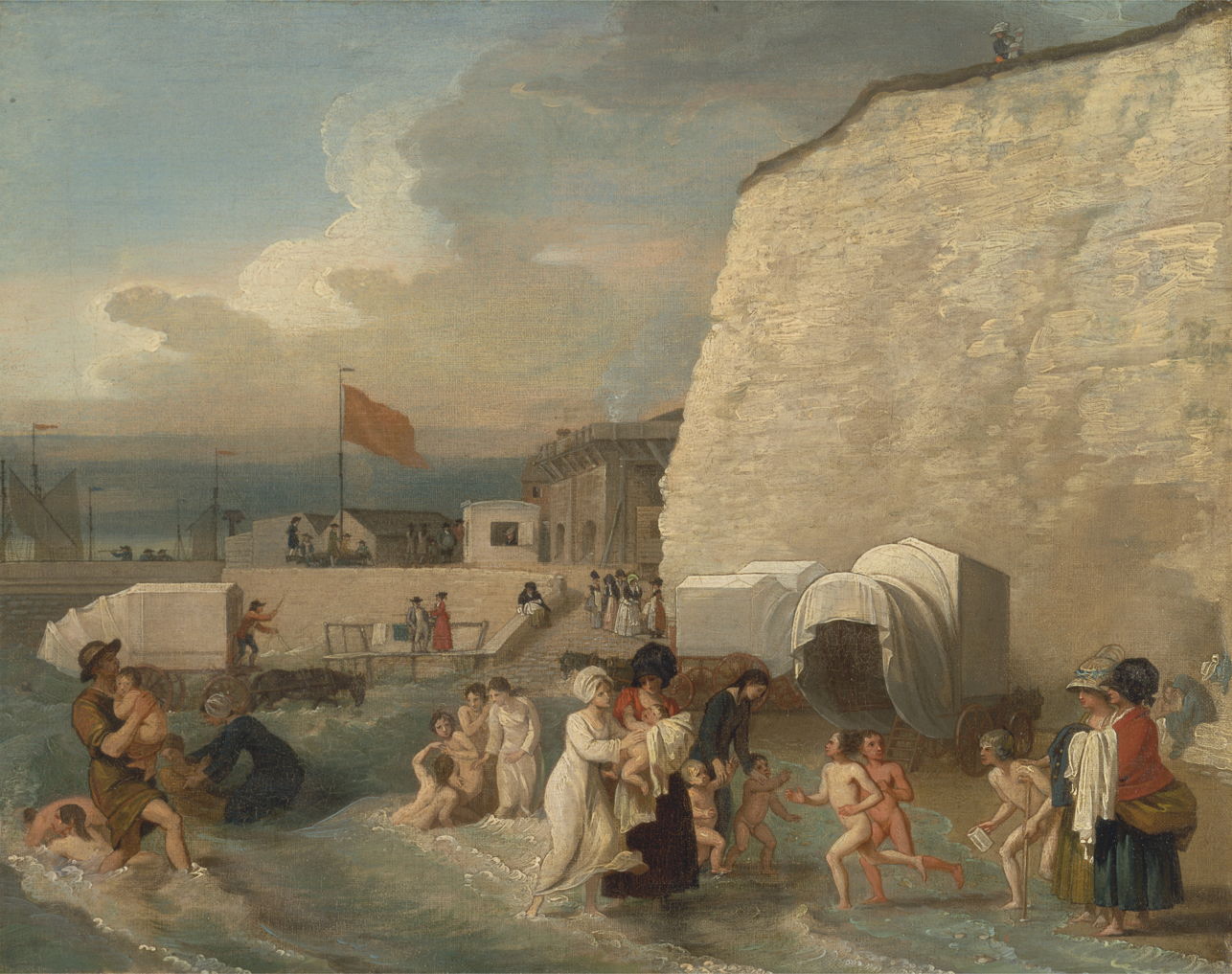
Benjamin West’s painting of The Bathing Place at Ramsgate, from about 1788, appears to have been commissioned by William Russell Birch (1755-1834) for a collection of engravings of British landscapes, published in 1790 under the title Délices de la Grande Bretagne. West shows the novel experience of bathing in the sea from one of the covered horse-drawn ‘bathing machines’, at the nascent resort on the Kent coast at Ramsgate. This had been growing in popularity following its adoption by members of the royal family and nobility, despite the typical English weather seen here. Although the children are happy to splash around naked, adults remain more modestly dressed and keen to cover up everything above ankle and wrist as well as wearing hats.
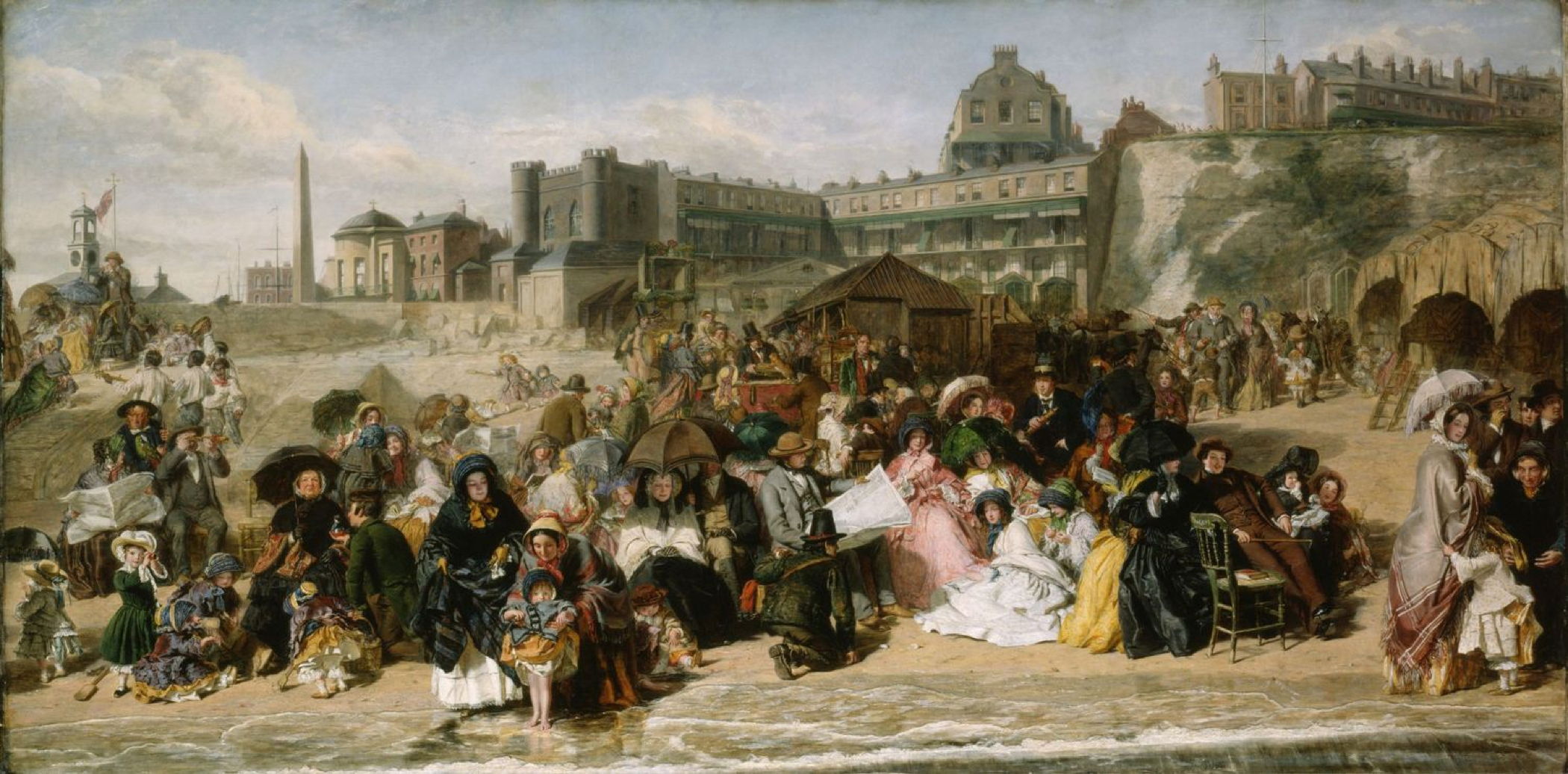
The railway came to Ramsgate in 1846, and with it the masses from London in search of a ‘cure’ from its waters. William Powell Frith holidayed there in 1851, when he made his first preparatory sketches. On its beach is an eclectic mixture of different classes, reflected in their clothing and activities. Many of these are stereotypes who became stock characters in his paintings, and Frith included himself as the man behind the group at the far right. Now not even the children are allowed to reveal any more bare flesh than is essential.

This is William Dyce’s finely detailed view of Pegwell Bay, Kent, on the coast of south-east England, out of season, at the end of a fine day in early October. Visitors to the beach are wrapped for warmth as well as modesty. In the distance, a group of donkeys are being taken to graze for the night, after the day’s work being hired out for children to ride. In the foreground, at the left, a child holds a spade, although there is precious little sand suitable for making sandcastles.
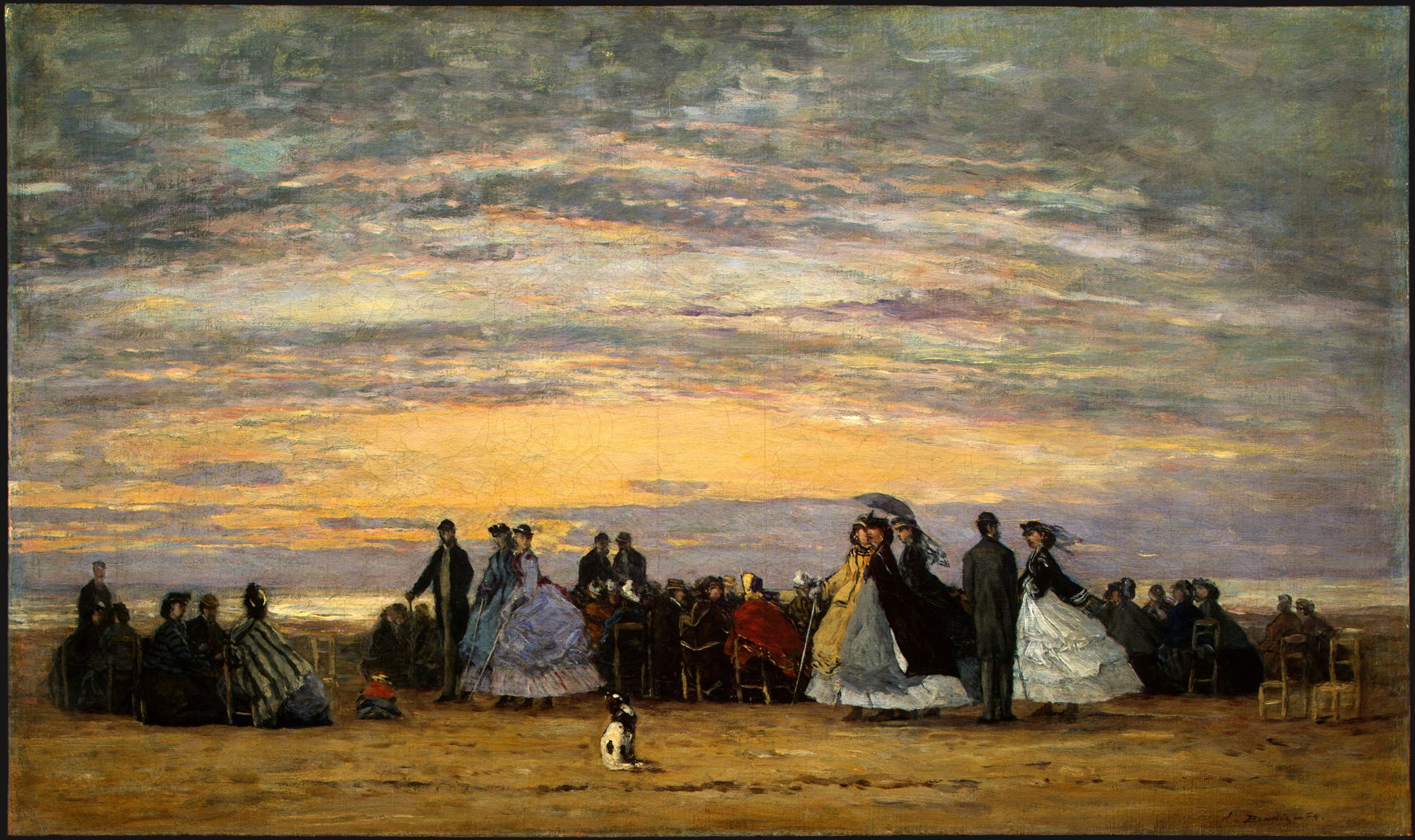
Meanwhile, on the southern side of the Channel, Eugène Boudin’s crowd on The Beach at Villerville in 1864 are not only properly dressed, but many are seated together, as if waiting for an entertainment to start, as the sun sinks in Boudin’s wonderful glowing sky.
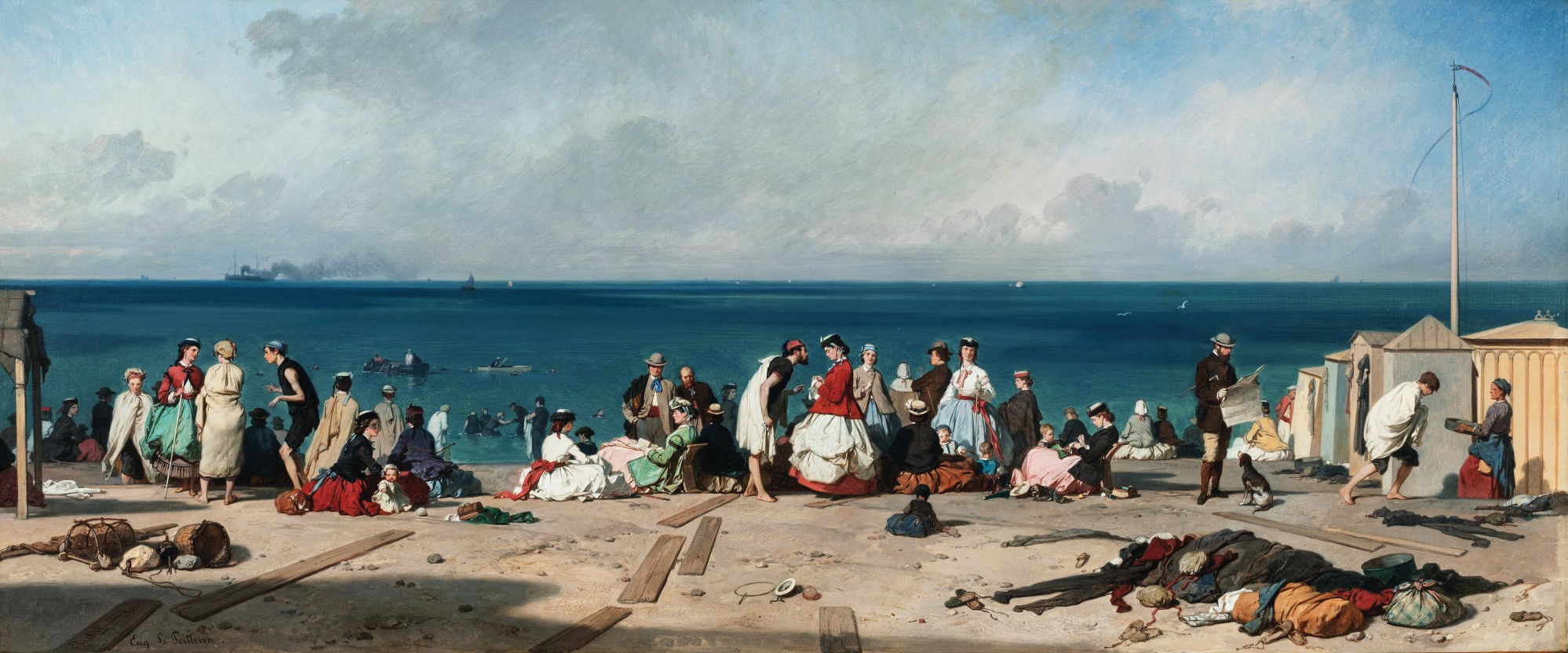
In the same year, Eugène Lepoittevin’s Bathing, Étretat Beach (1864) shows the French enjoying the beach, and their first tentative steps in the development of beach and swimwear. This painting was exhibited at the Salon in 1865, where it was so successful that it was bought by Emperor Napoleon III.
The idea of laying bare much of the body remained unconscionable, except, it seems, when bathing in the sea. A curious double standard emerged: it had long been accepted that discreet bathing could be undertaken naked, provided that the body was immersed, and therefore not visible; but when not in the water, full dress remained the norm.
Bathing resorts worked around this by running wheeled huts down into the water. Fully-clothed people got in, undressed, and carefully slipped into the water at the other end of the ‘bathing machine’. Modesty was preserved, well almost. Segregation of men and women on different sections of beach sometimes helped, but illustrators of the day made a steady trade from shocking depictions of the immoral antics of naked bathers.
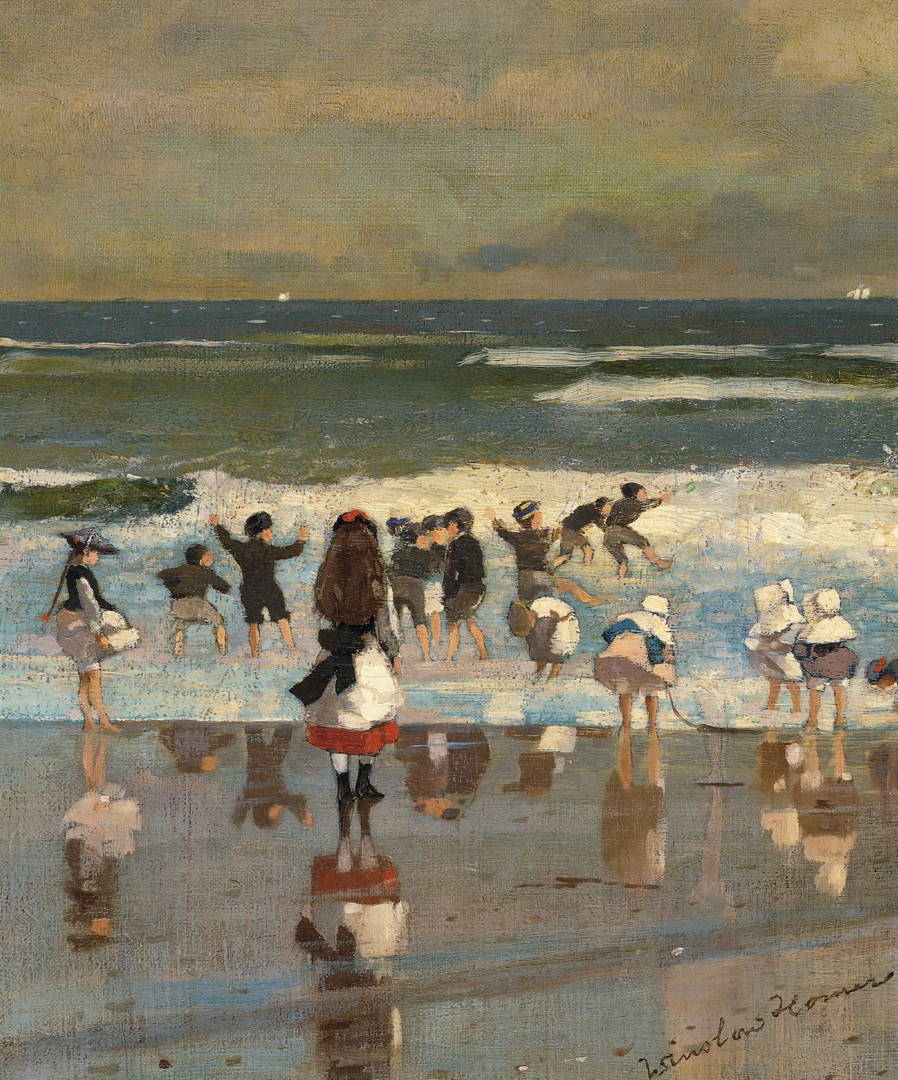
I suspect that this small oil sketch by Winslow Homer showing a Beach Scene in about 1869 was painted on the east coast of the USA, although he had visited France between 1867-68.
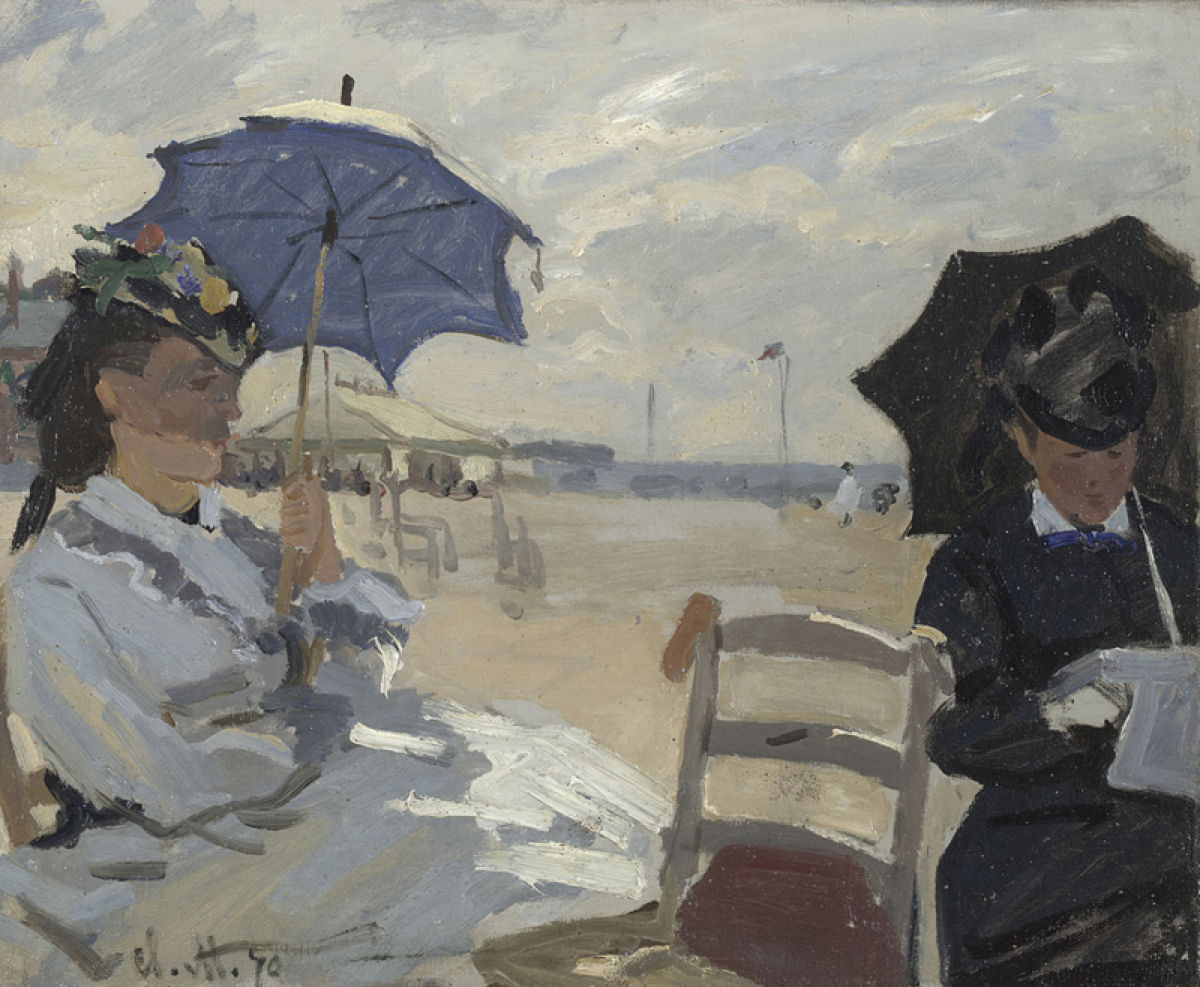
Little had changed when Claude Monet visited The Beach at Trouville in 1870. Monet, of course, was greatly influenced in his early paintings by Boudin’s beach scenes, and his early Impressionist style first became apparent in some of his paintings of the coast, including the series of five which he made at Trouville. The woman seen at the left here is Monet’s first wife, Camille, wearing white as was fashionable for the young, and the woman on the right is thought to be Boudin’s wife, still clad in black. This is also one of the best-attested plein air oil paintings in the Impressionist canon: grains of sand from the beach are locked in its paint layer.
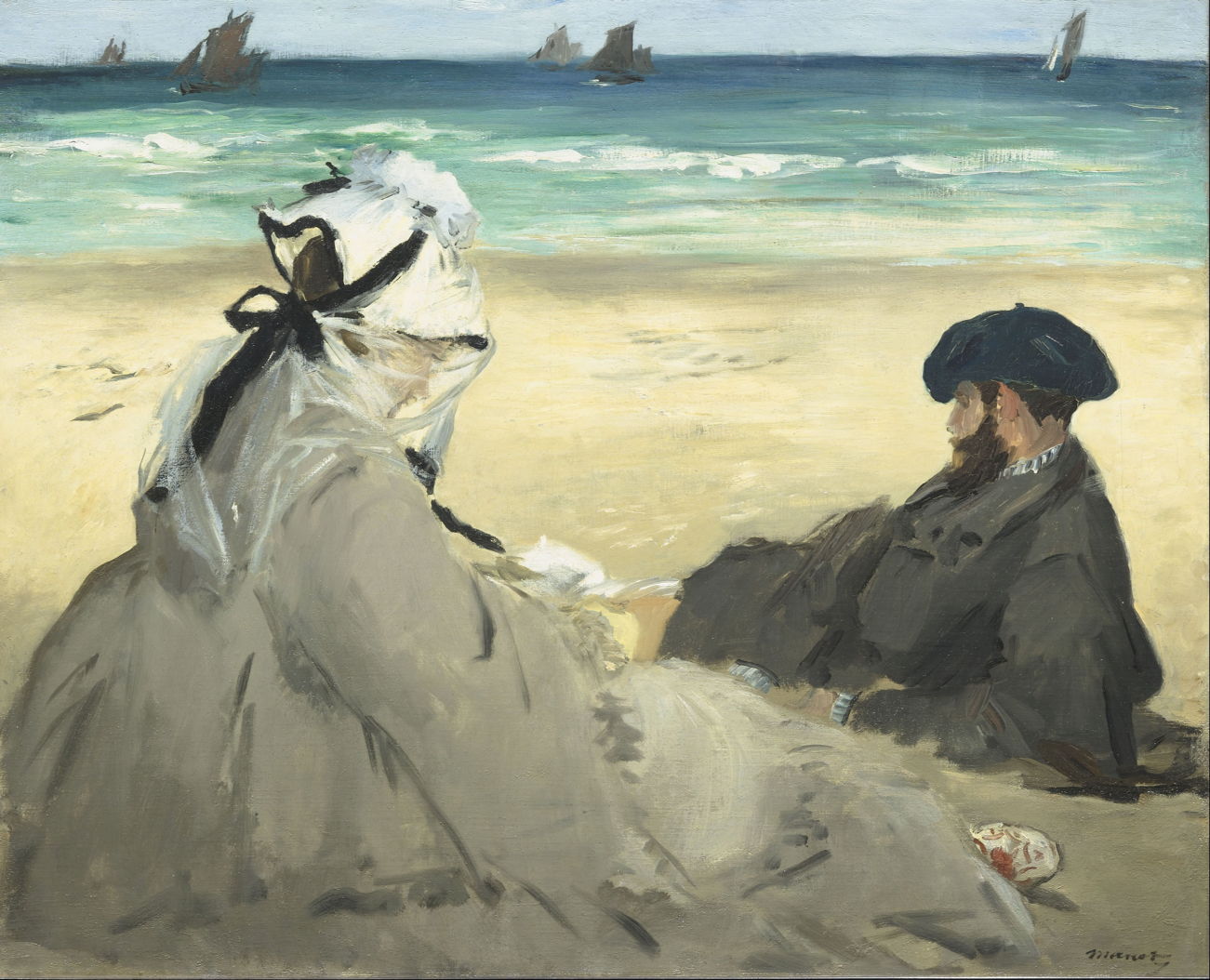
Édouard Manet’s On the Beach from 1873 follows the fashion.
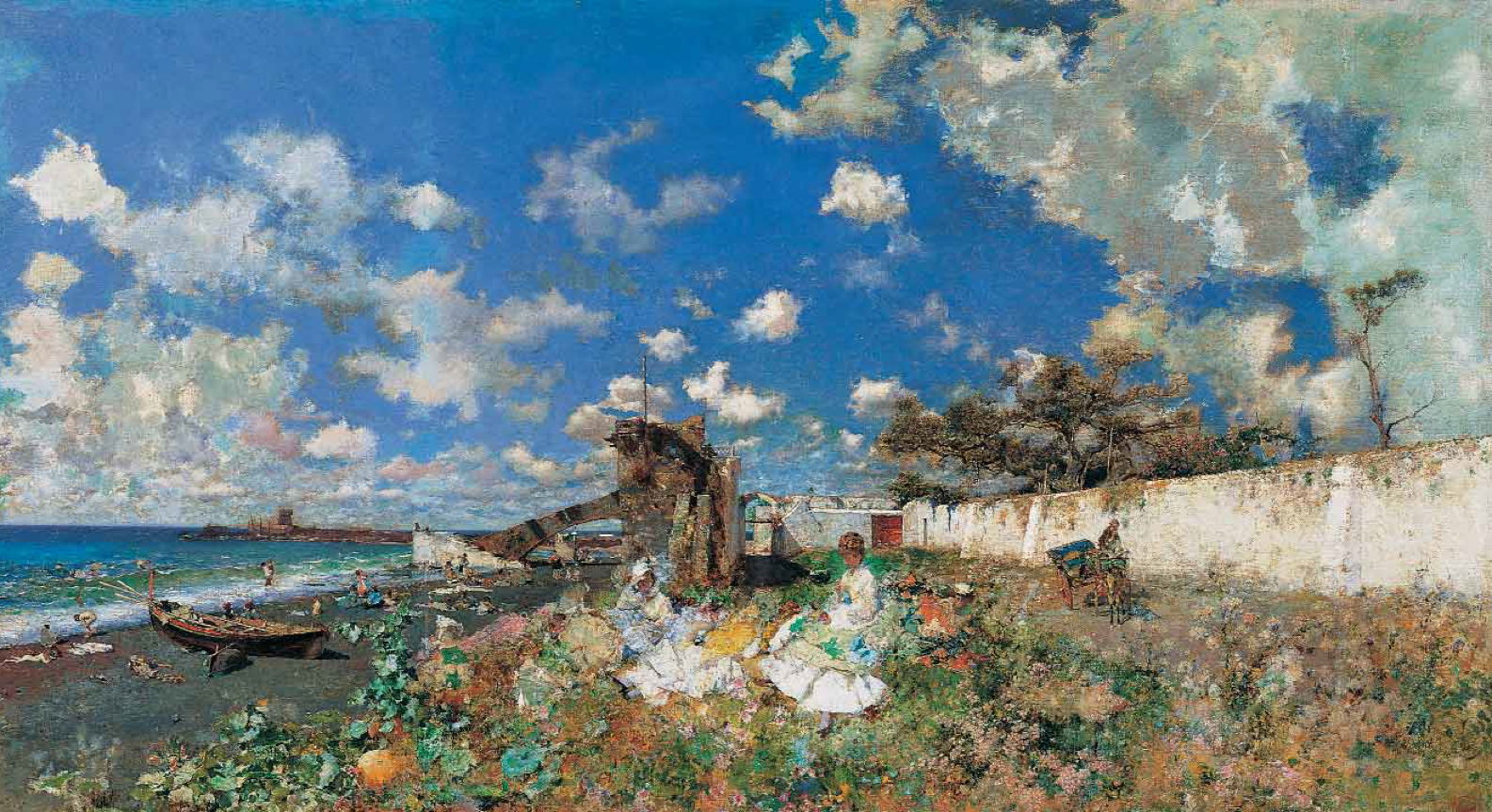
Travelling south to the heat of the Mediterranean, where Marià Fortuny painted Portici Beach in 1874, on the waterfront of Naples, little has changed for the grown-ups. At least here the kids are allowed to strip off to play in the water.
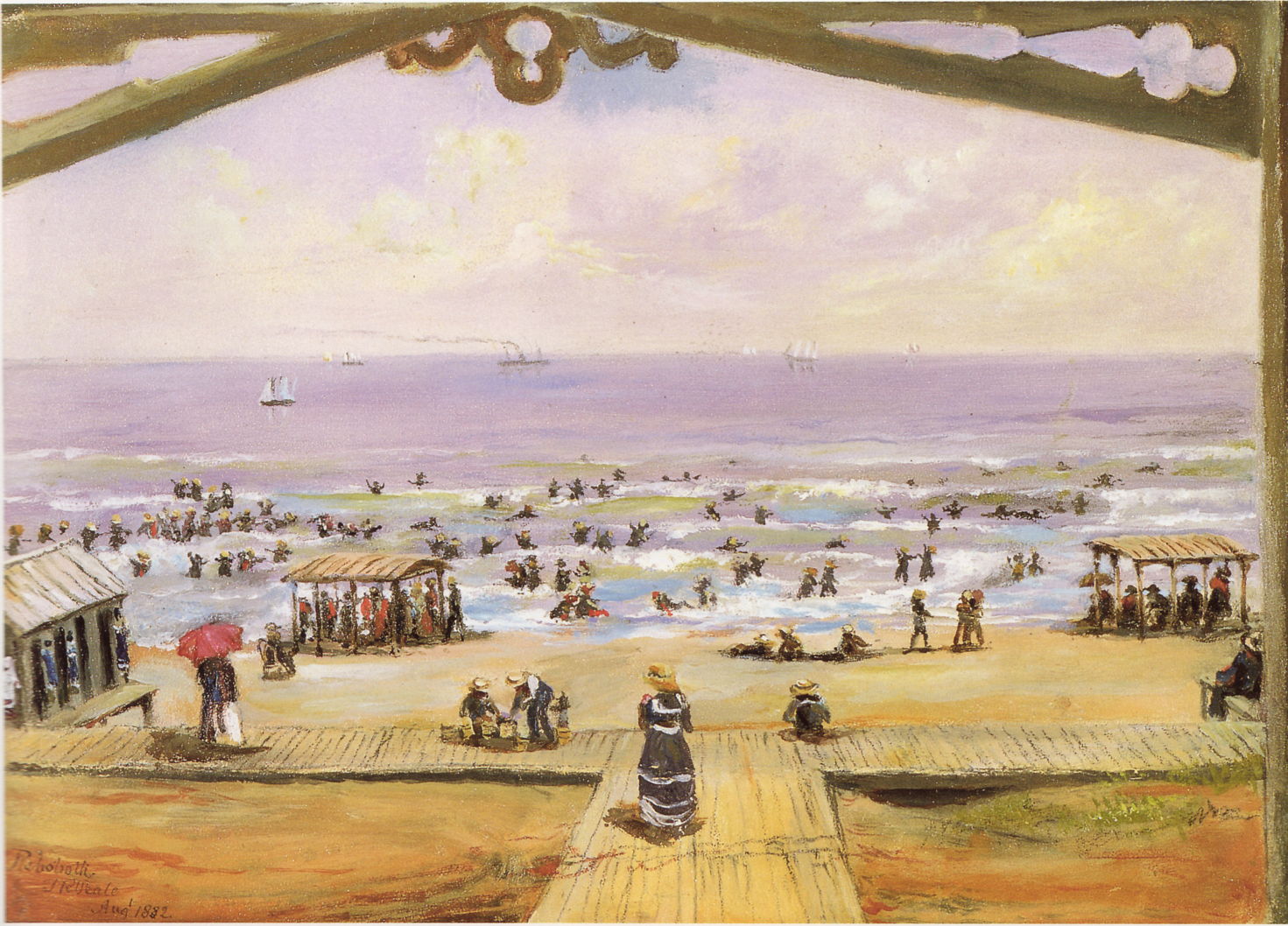
In 1882, the American artist and naturalist Titian Ramsay Peale painted Bright House, Rehoboth Beach, on the Atlantic coast of the USA, in Sussex County of Delaware state. Until the late nineteenth century, this had been poor farmland, but in 1873 was established as a site for Methodist camp meetings. Its name is the Biblical Hebrew for broad spaces, and by 1893 it was becoming a popular beach resort for those working in Washington, DC. Despite the clothing worn here, this beach has a subtropical climate.
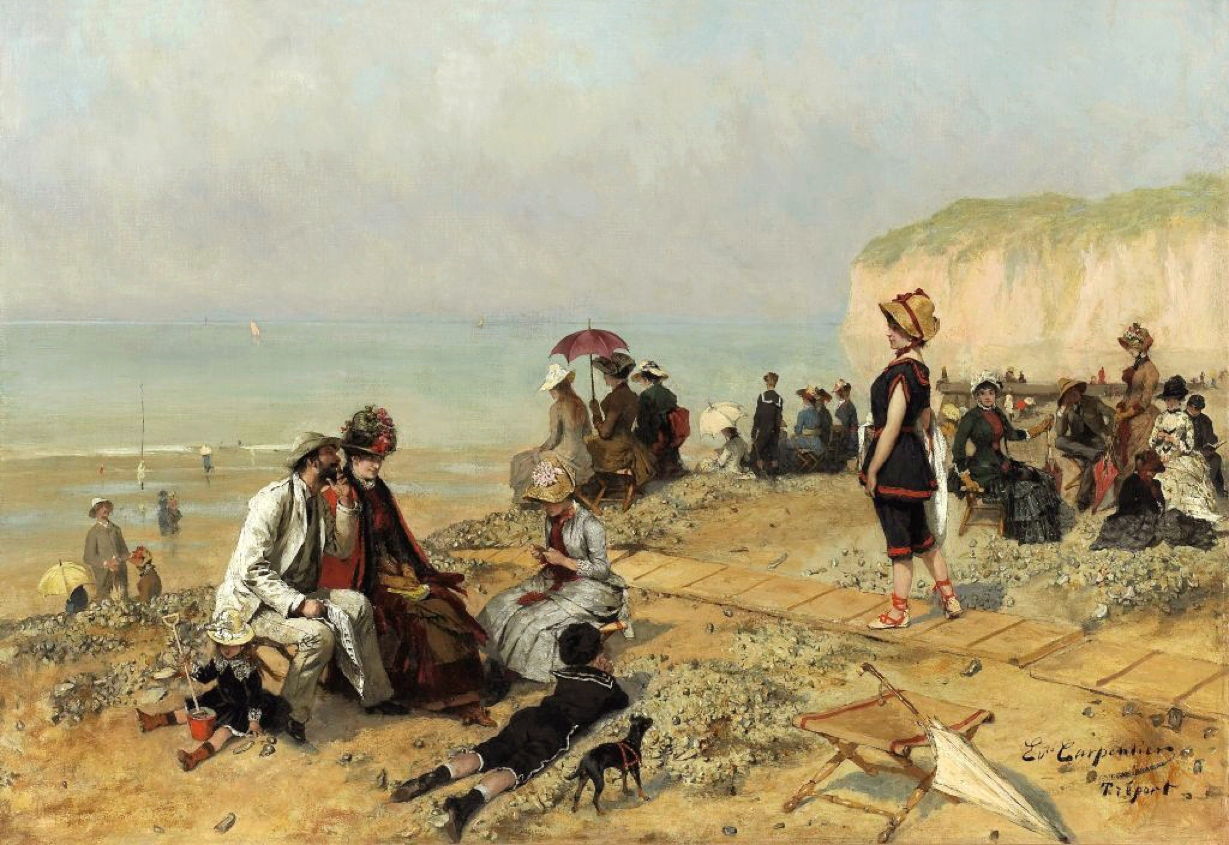
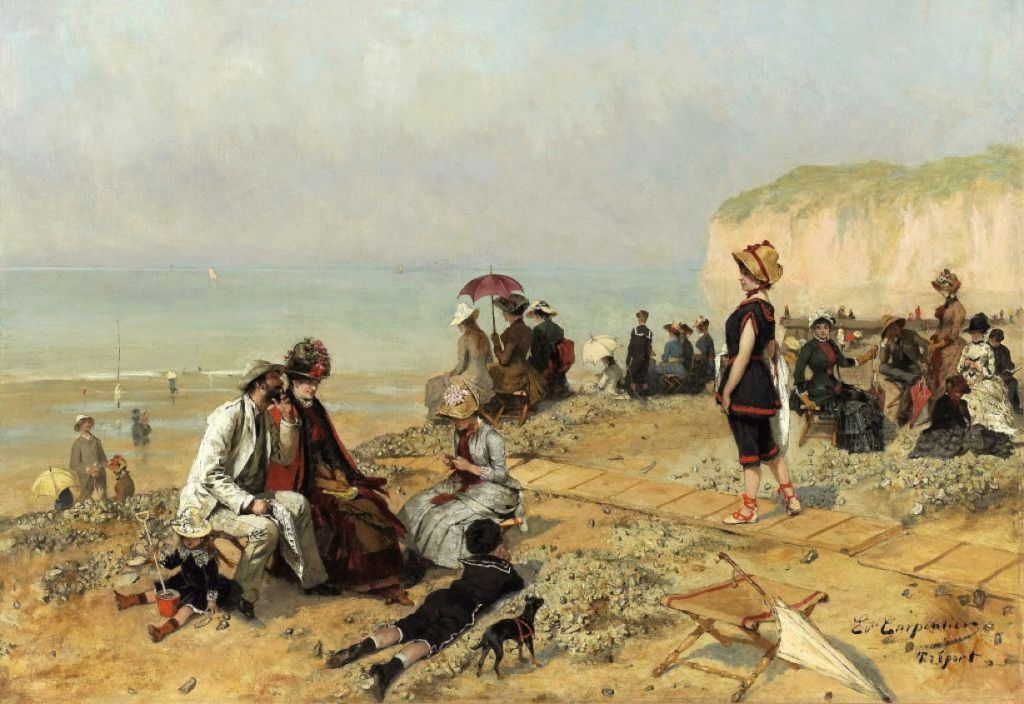
In the same year, at Le Tréport on the Channel coast of France near Dieppe, Évariste Carpentier’s Le Tréport, Bathing Time shows the younger adults progressing in the development of beachwear. The young woman to the right of centre may still have her head wrapped in a bonnet, but you can see her lower legs and all her arm, almost to the shoulder. It’s noticeable that several heads have turned to look at her, as she walks in her sandals along the wooden walkway.
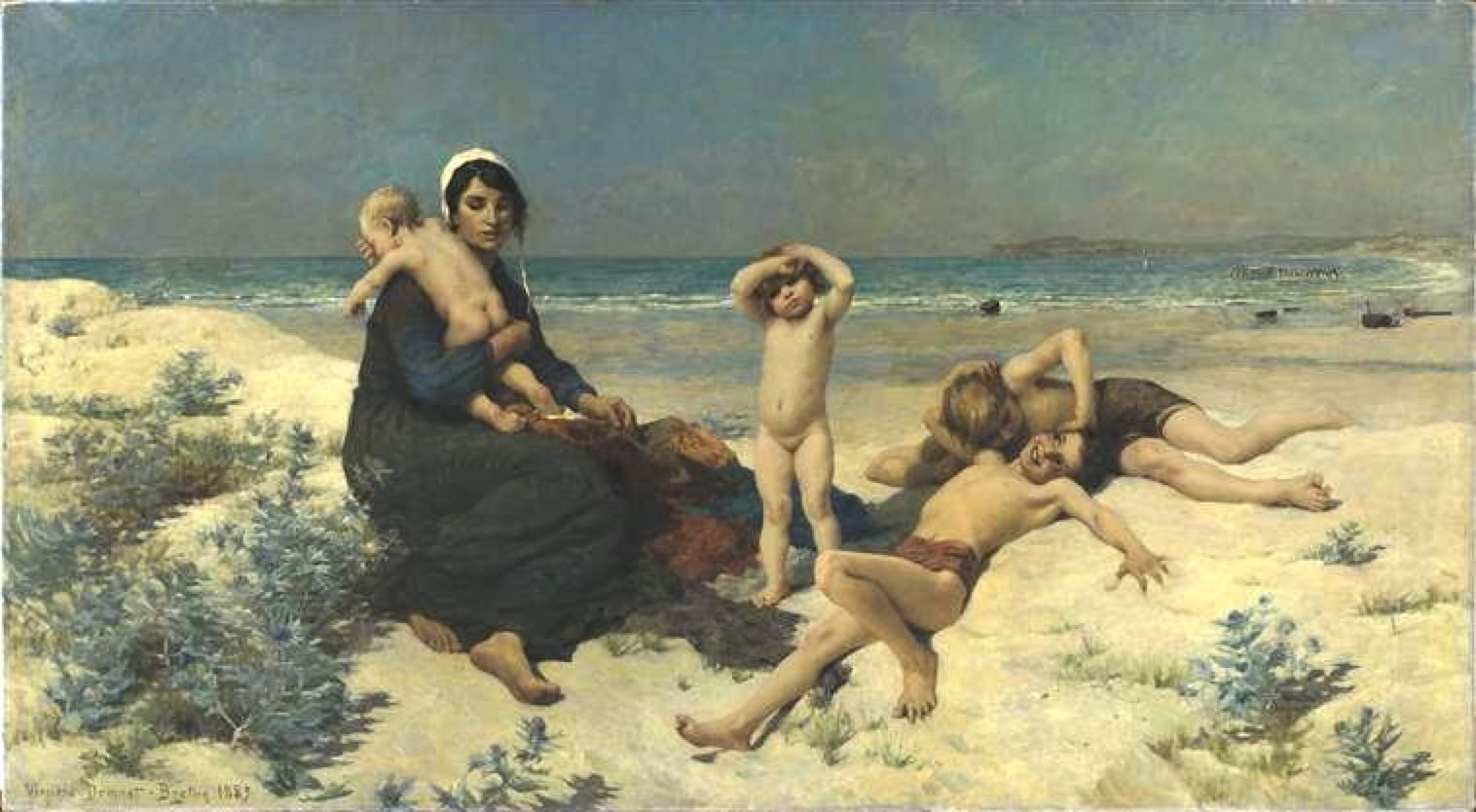
For Virginie Demont-Breton’s family, the wife and children of a fisherman further to the east along the Channel coast, fine weather was the opportunity for some fresh air, outdoor play, a natural bath, and adults still dressed modestly.
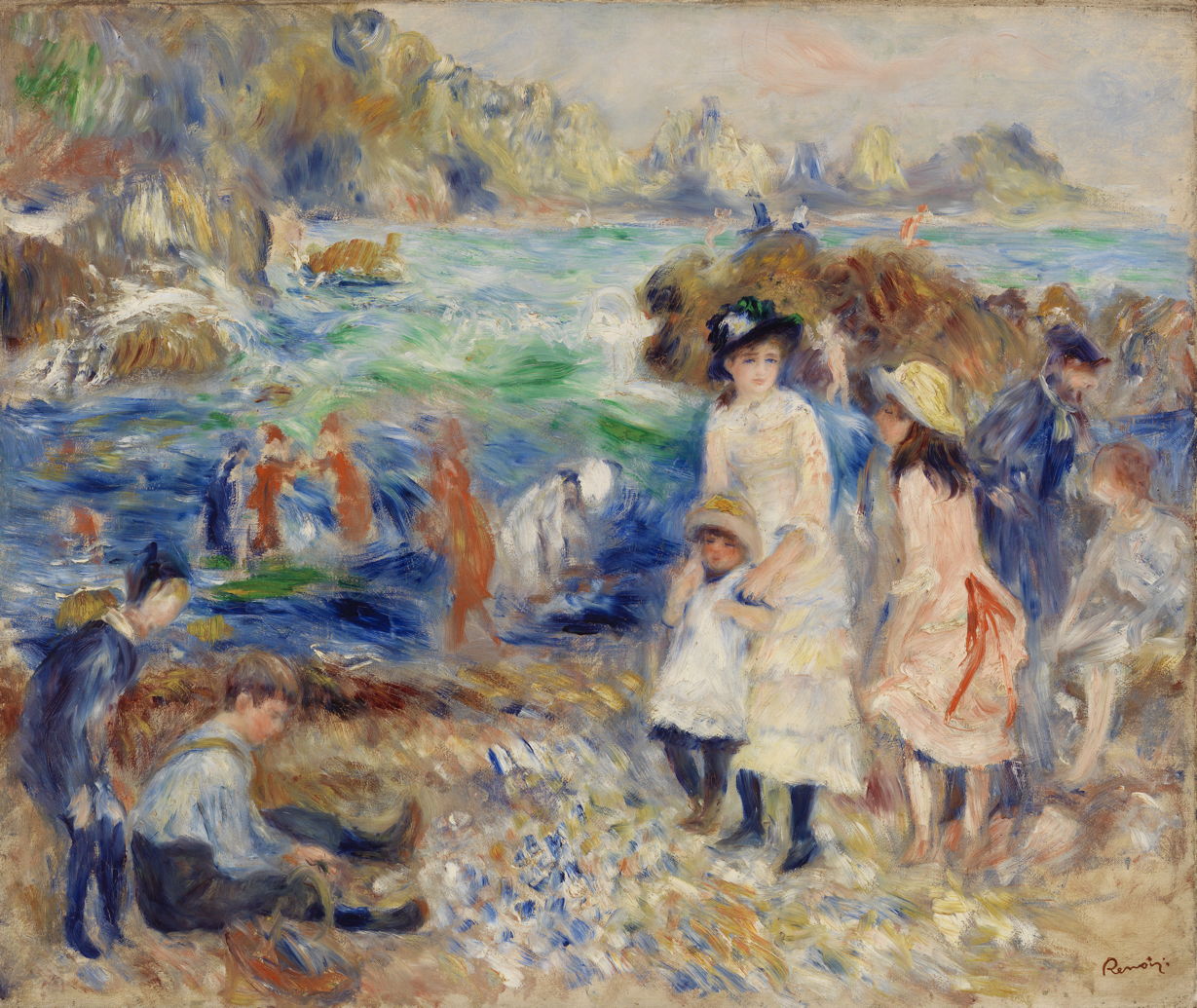
When Pierre-Auguste Renoir took a holiday on the small island of Guernsey in 1883, he made several oil sketches of beach scenes there, including Children on the Seashore, Guernsey. Although much closer to France than to the south coast of England, Guernsey, its larger sibling Jersey, and several smaller islands have remained steadfastly British, and hadn’t seen any shocking French fashion.
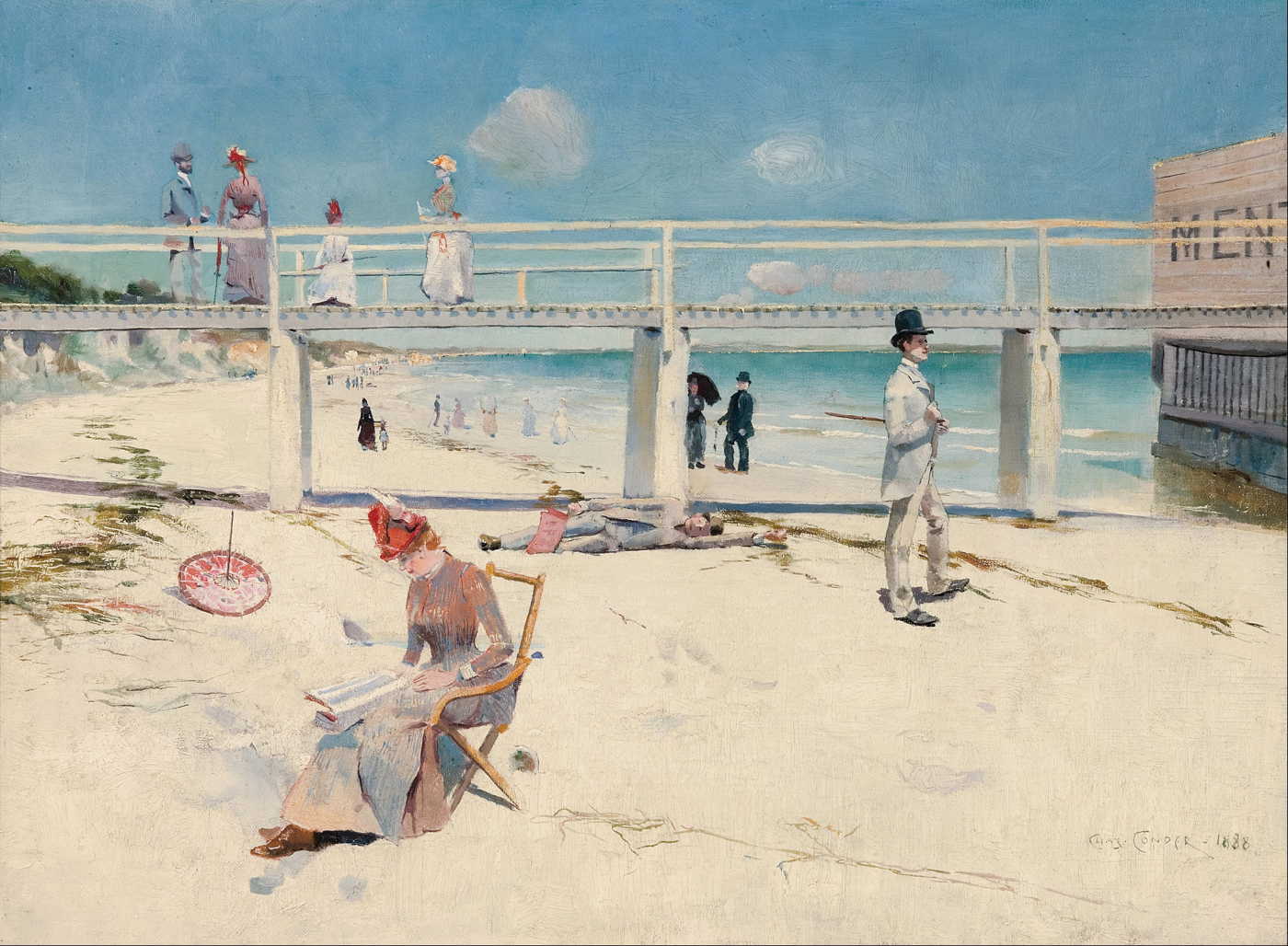
In the antipodes, the Australian Impressionist Charles Conder’s Holiday at Mentone (1888) is one of the earliest paintings showing Australians enjoying the beach. This has some distinctly unusual details: its elevated walkway has been claimed to add a Japanese air to an otherwise very Australian scene. A lone parasol rests on the sand in the left of the painting, although it doesn’t appear to have been missed by any of the people around.
Figures in the foreground are curiously dissociated from one another, and from the scene itself: a woman sits in a chair, reading; a man wearing a tall black hat (contrasting with his white suit) stares intently towards the right of the picture, at an unseen object; another man is sprawled asleep, his left arm reaching up at nothing. There appears to be an unresolved narrative, something others have noted gives the painting a surreal tone. To say nothing of their completely incongruous dress.
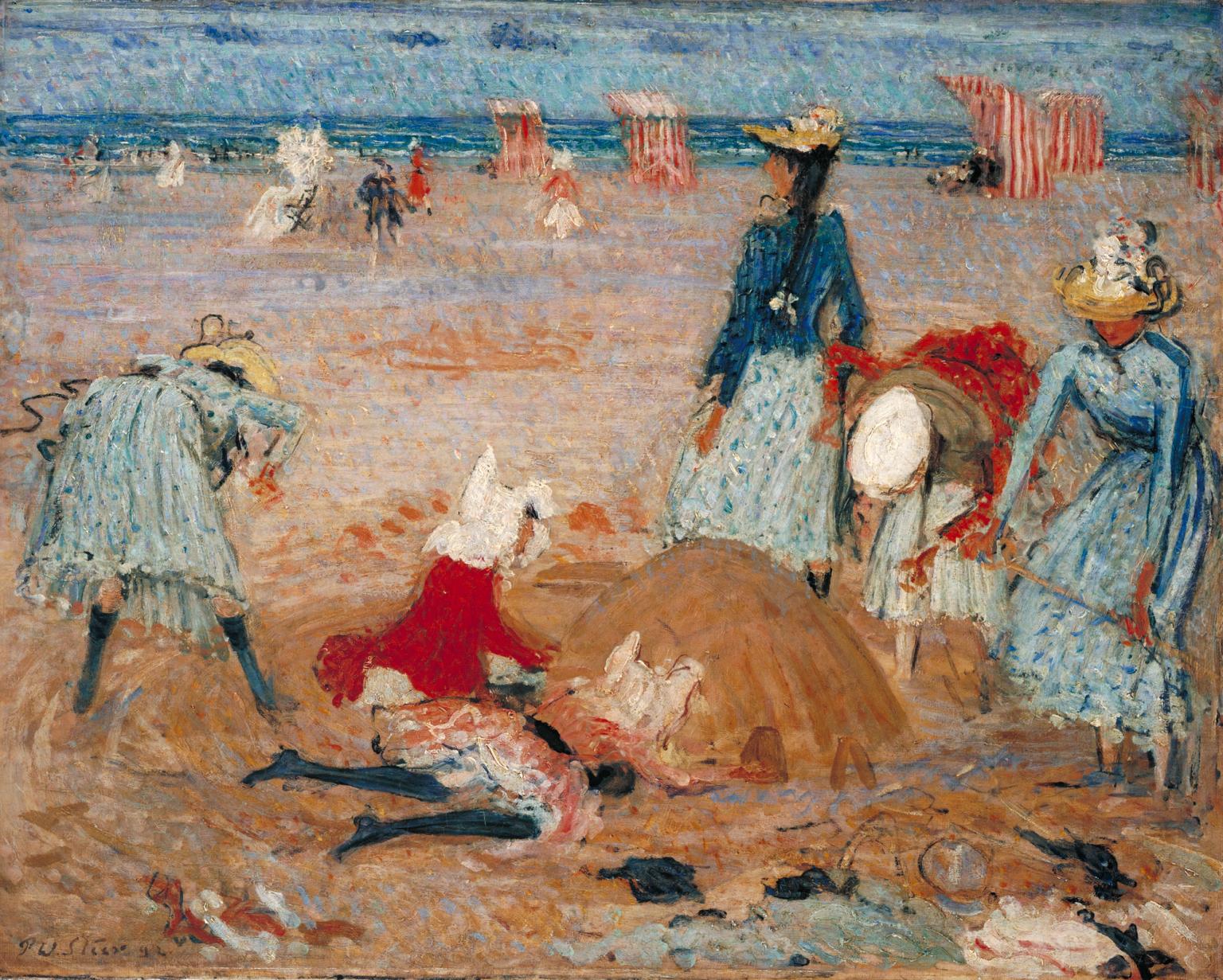
Philip Wilson Steer’s painting of Boulogne Sands (1888-91) on the north coast of France shows how you can still build a sand castle when dressed to the nines.
Brace yourself for tomorrow, when you’ll see more flesh.
 The Eclectic Light Company