
In this third and final selection of paintings made a hundred years ago in 1921, I come to the more avant garde landscape artists, and those launching themselves into more modern styles.
Lovis Corinth was well into his sixties, and ten years earlier had suffered a major stroke. Thanks to the prolonged encouragement and rehabilitation provided by his wife, he was still painting avidly, now up in his log cabin by Walchensee, in the middle of the Bavarian Alps, to the south of Munich, Germany.

Walchensee, Landscape with Cow is a view painted from Corinth’s ‘pulpit’ vantage point across from his chalet.

Throughout his career, Corinth had made very loose watercolour sketches, usually as preparatory studies for oil paintings. Now, he started to paint watercolour landscapes, such as his Walchensee, Evening Air, which captures the colours of dusk.

Pink Clouds, Walchensee is another watercolour showing the rich colours of land and sky as the sun sets.
Pierre Bonnard was at the height of his career as an independent artist, spending part of the year in the Midi on the coast, and the rest in northern France.

Bonnard’s By the Sea, Under the Pines is reminiscent of van Rysselberghe’s richly-coloured pines on the coast, but more sketchy in execution. Instead of van Rysselberghe’s bathing nudes, Bonnard populates the lower third of this painting with a family group: a woman, a dog, and a toddler are in the immediate foreground, and on the far side of a picnic table is the artist’s partner Marthe, under a parasol, talking to a man in a white hat.

Landscape with Green Trees is a rich twilight view towards the end of the harvest, most probably in central or northern France. There appears to be a solitary figure in the dead centre of the painting, under the prominent tree.

Bonnard painted this view of an almost deserted Port of Saint-Tropez on a breezy day, with small wavelets forming on the water surface. The mole at the right ends in a lighthouse, which merges visually with the sailing ship’s superstructure.

The Open Window is one of the best of Bonnard’s works using the picture-within-a-picture device of a window. The dark shadow of the blind, the window and curtain behind, and the striped wallpaper below form a strong frame for that view of trees. Bonnard has also just cropped in a pot of flowers, black cat, and a woman – perhaps the blonde Renée Monchaty – in the lowest few centimetres.
Others were moving towards newer styles and even sub-genres.
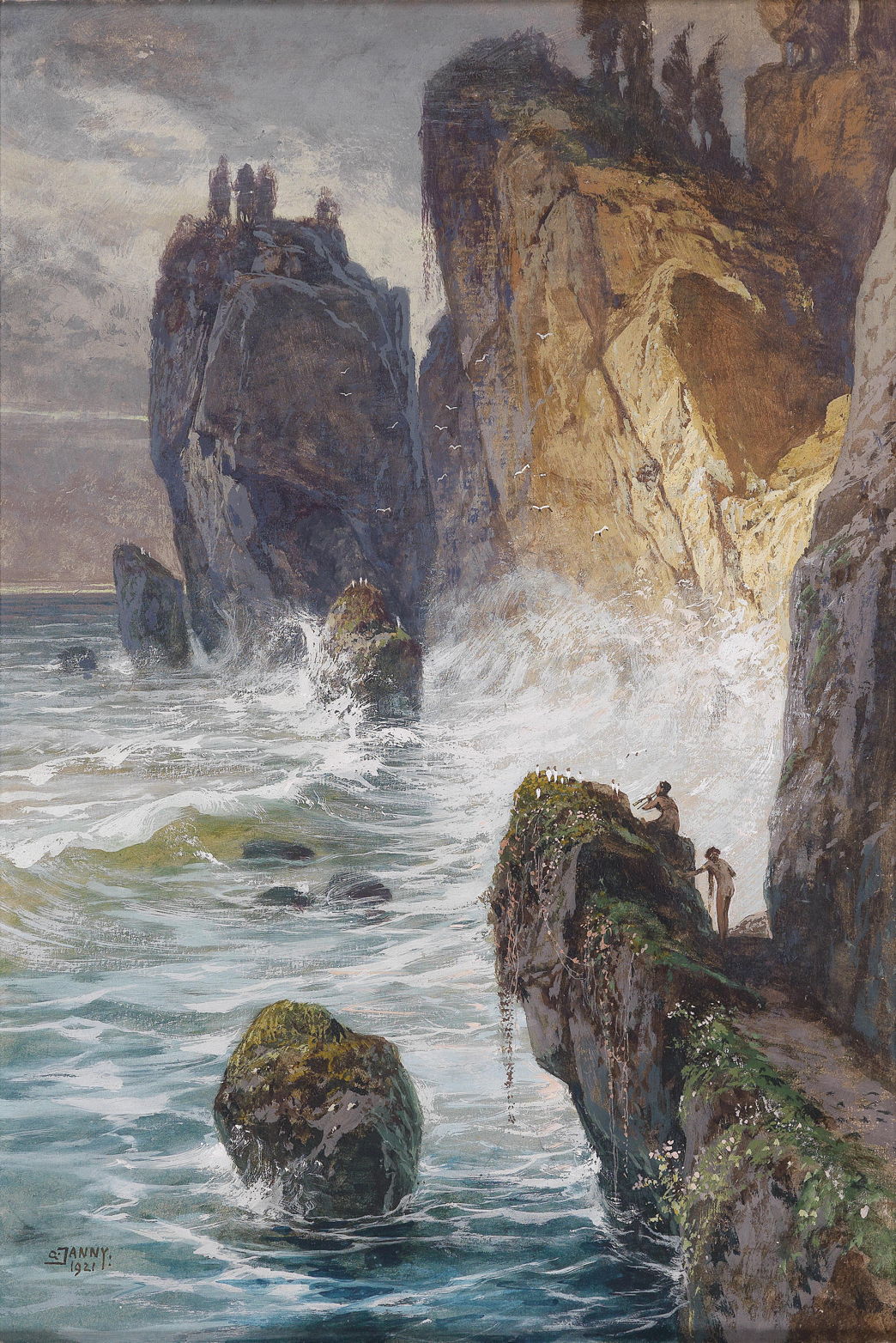
The Austrian painter Georg Janny was an early exponent of fantasy art, which is drawn in part from classical myth, as seen in the fauns in the foreground of his watercolour of a Mythological Scene with Fauns on a Rocky Coast. But these don’t appear to relate to any conventional or established mythical scene.
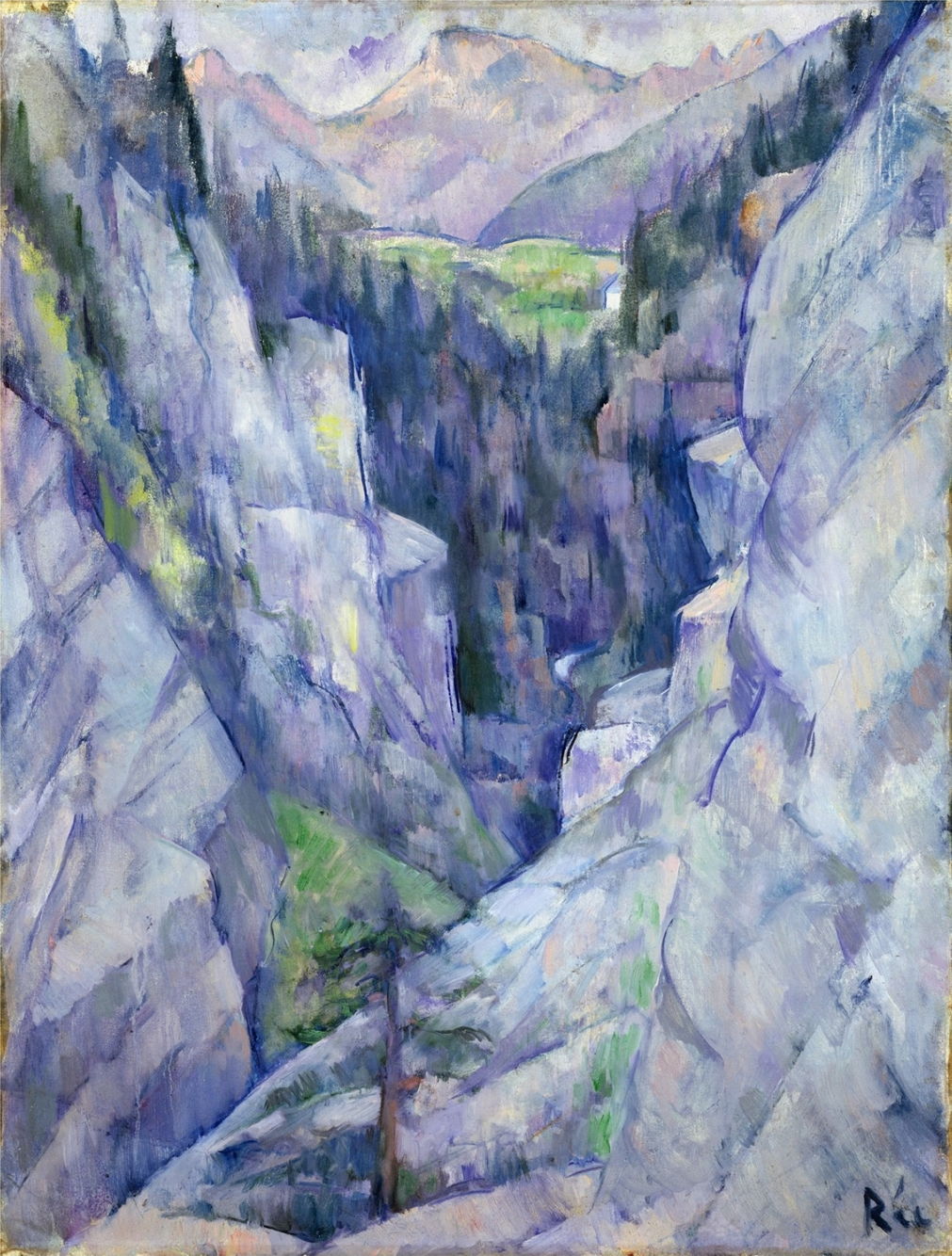
In the early summer of 1921, the brilliant German artist Anita Rée stayed in Grins, in the Austrian state of Tyrol. While she was there, she painted this Ravine at Pians, a location to the west of the city of Landeck, in the far west of Austria. Among the finest of her landscapes, it’s influenced by Cézanne’s late style and by Cubism.

She also painted several of the unusual local buildings, such as this House Made of Rock, which again reflects those influences.
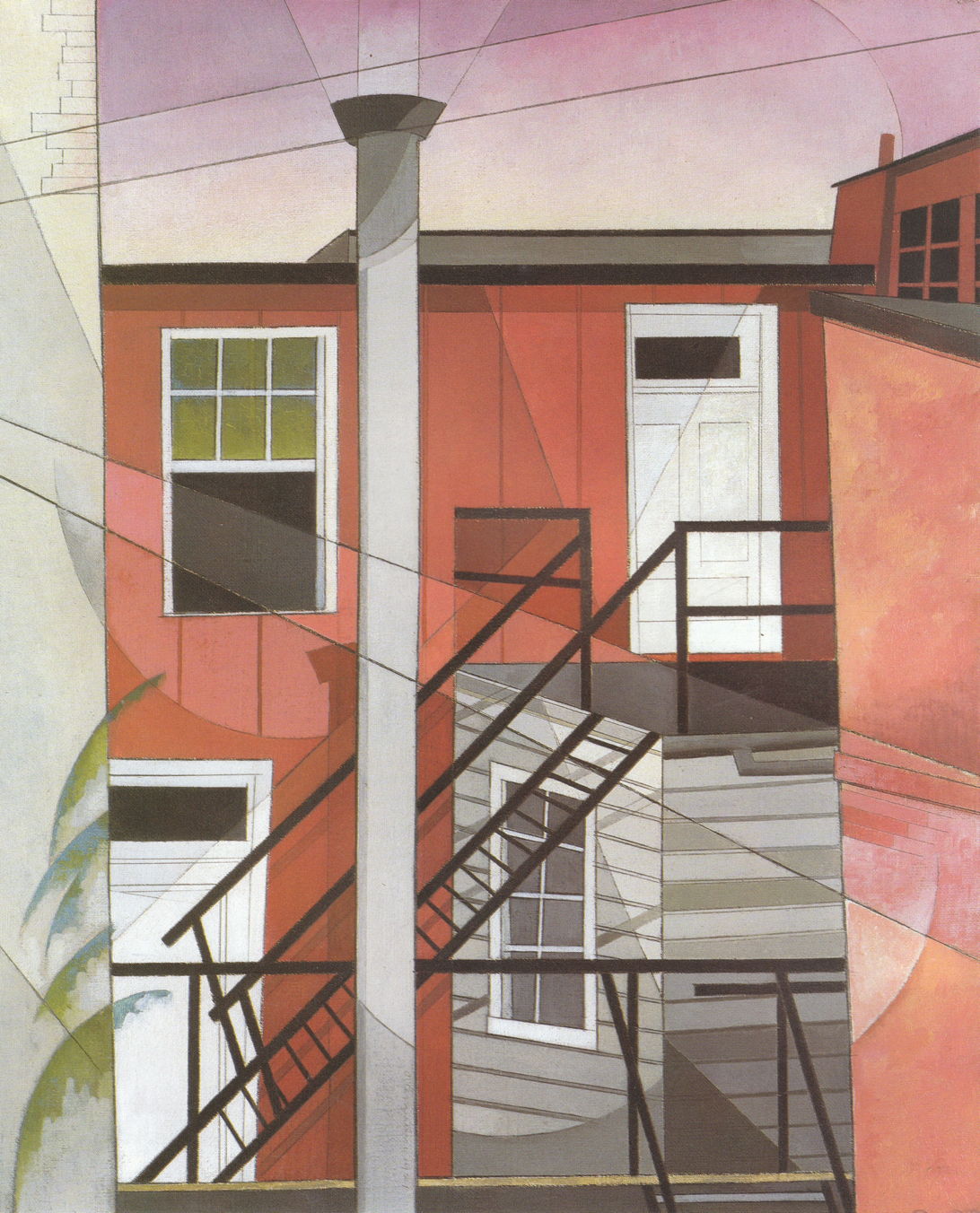
In 1919, the American artist Charles Demuth started painting a series of Precisionist landscapes/cityscapes in oils, which he continued intermittently until 1933. Part of that series, Modern Conveniences is based on the rear view of a building close to Demuth’s family home in Lancaster, Pennsylvania.
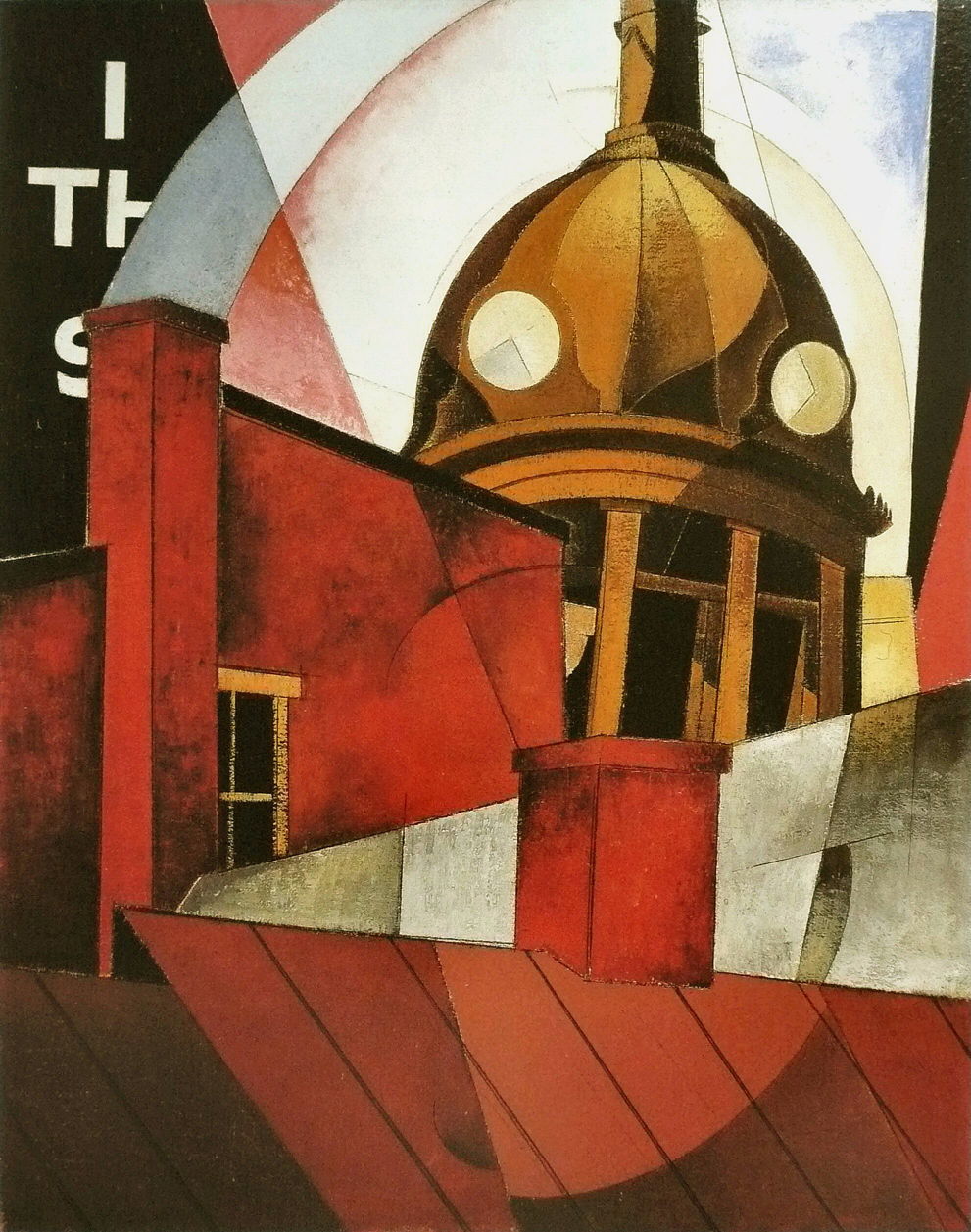
Demuth’s Welcome to Our City is also markedly Precisionist, its glimpsed and fragmented text suggestive of his later ‘poster portraits’.
More radical still were the changes occurring in the paintings of Piet Mondrian in the Netherlands. A realist landscape painter before the First World War, he moved away from representational painting during the war. When it ended he returned to Paris, where he started to paint his famous grids of coloured rectangles and straight black lines. These reached maturity by about 1921.
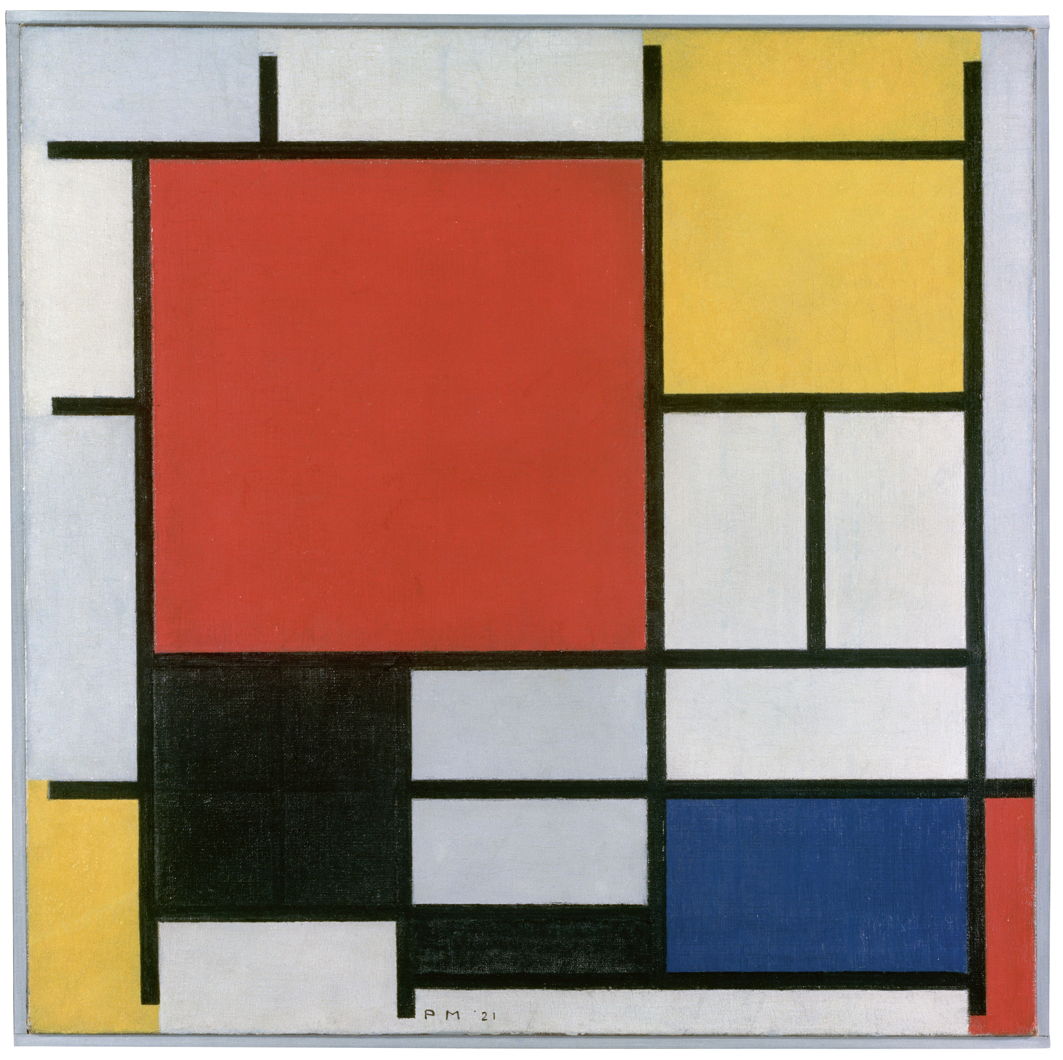
Composition with Red, Yellow, Blue, and Black is an example of the abstracts for which Mondrian remains best-known today. He moved from Paris to New York in 1938, where he continued to paint these characteristic abstracts until his death in 1944.
With that, this brief survey of paintings from 1921 has reached its natural end.
 The Eclectic Light Company