
The next time that you are brushed off by a doctor, nurse, teacher, or any other professional who seems to be following a flowchart or checklist, blame it on the cold night of 10-11 November 1619.
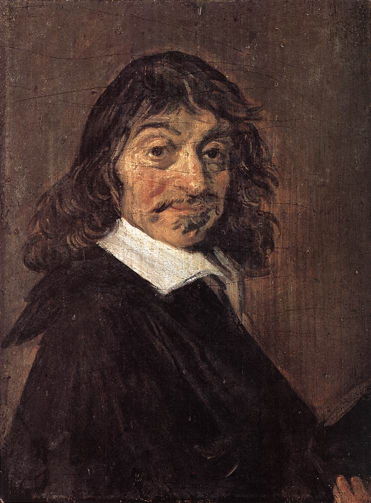
Would you trust this man to change the world?
For it was then, according to Adrien Baillet, that Descartes, taking shelter from the bitter cold, fell into a trance-like state by the stove. During this the founder of deductive rules of thought and proponent of the mechanistic view of life – the ultimate rational being – had a series of near-mystic visions, guiding him to the three cornerstones of his philosophy. It is his philosophy which is responsible for the dumbing down of today’s professions.
For all their faults, the Victorians built, nurtured, and empowered the professions. Huge changes in education and the universities saw them flourish during the nineteenth century. By the twentieth century, we started to worry that perhaps the system had become too paternalistic, the professions too powerful.
You can rest assured that they are no longer. Over-regulated and progressively deskilled, professionals of all persuasions are now driven to follow rules, which allow little or no opportunity for them to exercise the skills and judgement which were once the cornerstones of the professional.
Teaching is systematic and prescribed to the last detail, so that deviation from the delivery of standard lessons is penalised, even though good traditional teachers know it is necessary to tailor to the needs of individuals and each class. Having been taught uniformly to a universal curriculum, it is no small wonder that students seem happy to continue to follow the algorithms, flowcharts, and protocols of ‘best practice’. They have lost the ability to deal with those odd individuals who do not conform to this Cartesian concept.
Instead of doctors and nurses, we have health engineers, just as teachers have become learning engineers. Even engineers have lost the ability of the ‘back of the envelope’ calculation (which used to be by slide rule, a former mark of the trade) which keeps reality in view; now they have to run elaborate computer simulations, in which they place absolute faith even when the answer is absurd. And every professional is subjugate to the accountant and the administrator, the ultimately unprofessional.
What if Descartes had emerged from that night of vision proclaiming how the most creative thought resulted from inspiration, vision, and the irrational?
 The Eclectic Light Company