
Many problems with eyesight and vision worsen with age, so you’d expect painters who lived longer to be more likely to suffer from them, and Claude Monet is an example. Henri Harpignies continued to paint until his death at the age of 97, by which time it was claimed he was almost blind as a result of age-related macular degeneration. This article looks at how that affected his art.
Harpignies was born in 1819, and became a pupil of Jean-Alexis Achard at the unusually late age of twenty-seven. With the Revolution of 1848, he left Paris and travelled to Brussels and Baden-Baden in Germany. From there he went to Rome at the end of 1850, where he painted in the campagna just as Camille Corot had done twenty-five years earlier, before moving on to Naples and visiting the island of Capri. He eventually returned to France, and exhibited his first three landscape paintings in the Salon of 1852, by which time he was thirty-two. He continued to travel, and started to spend periods in and around the Forest of Fontainebleau, to the south-east of Paris, with the Barbizon artists.

When he was on the edge of the Forest of Fontainebleau, he painted largely en plein air, including this fine view of Fir Trees in Les Trembleaux, near Marlotte from 1854.
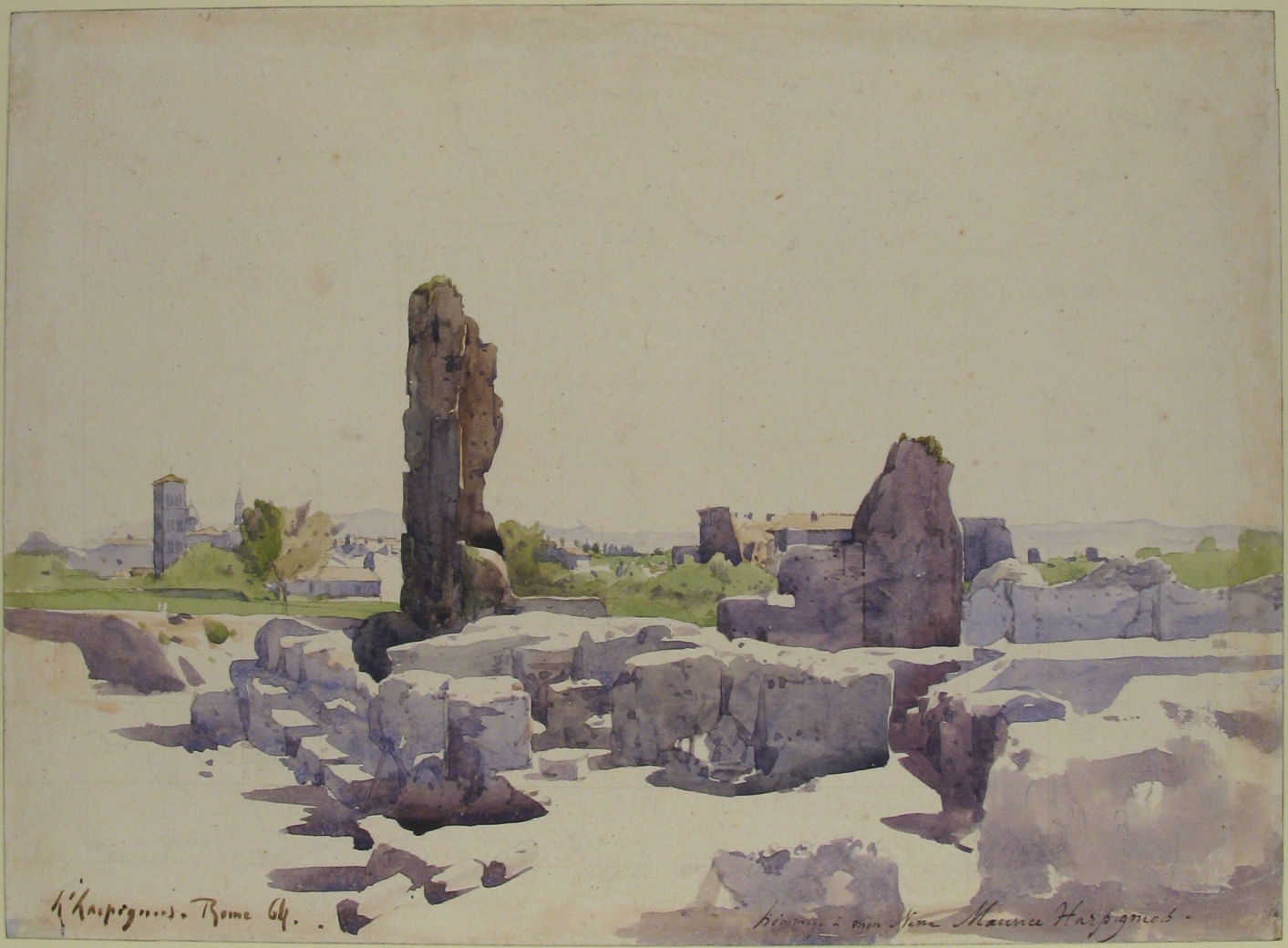
He returned to Italy to paint between 1863-65, during which he made this unusually stark watercolour View of the Colosseum from the Basilica of Domitian and the Flavian Palace, Rome (1864). Although the sun isn’t that high above the horizon, its light is intense and a challenge for the plein air painter.

Harpignies also travelled to some of the more rugged regions, where he painted The Rocky Path in the Morvan in 1869. This is to the west of the Alps and to the north of Lyon, in what is now a large National Park.

This unusual view of the River Seine in Paris shows the predecessor of the current Pont du Carrousel, known originally as the Bridge of Saint-Pères, Paris (1870). Details on the skyline in the far distance are pin-sharp.
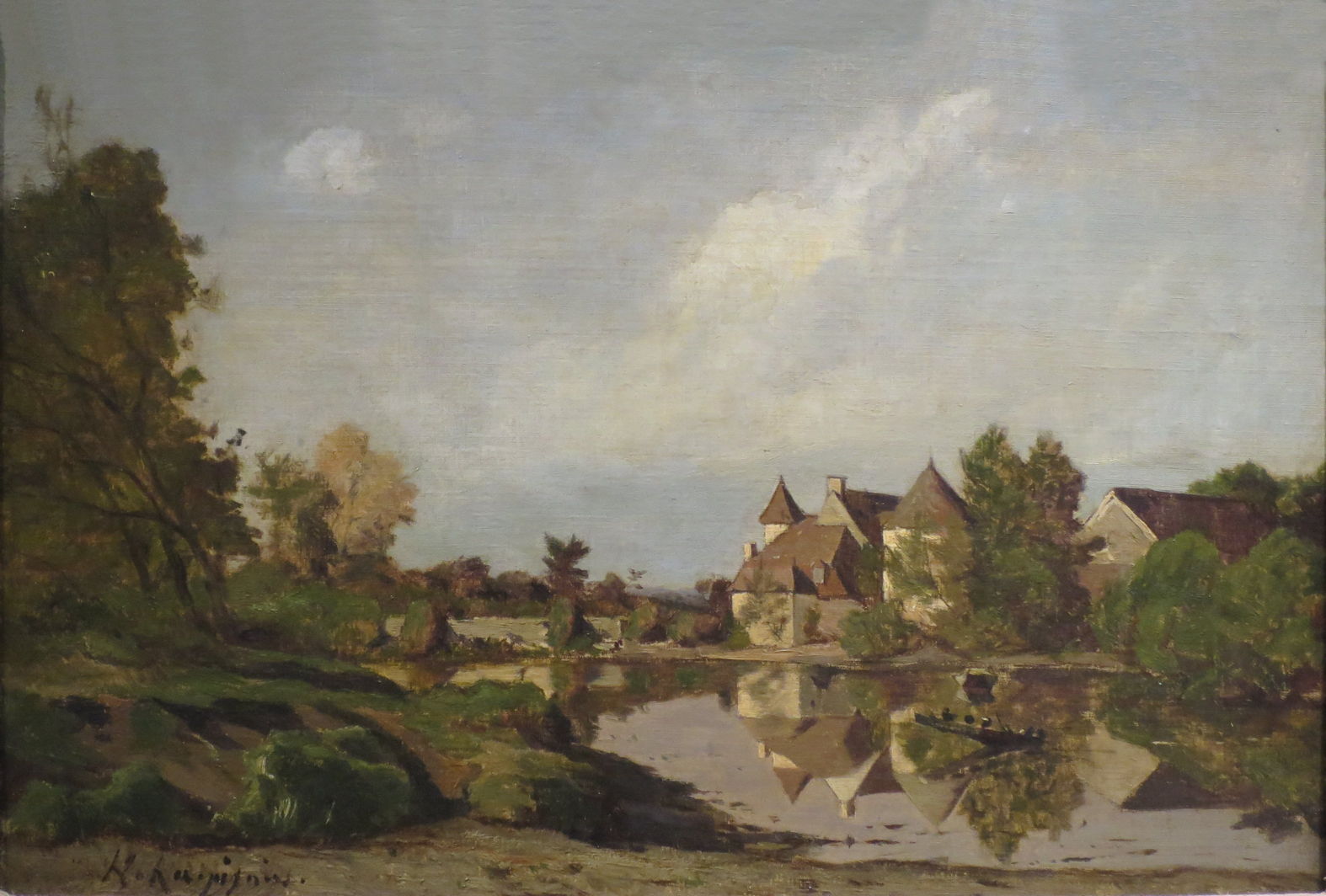
In the years after the Franco-Prussian war, Harpignies sought solace in the countryside, carefully mirroring this Farmhouse (1875) in its reflection.
From about 1885, he migrated south for each winter, spending his time in the more comfortable climate on the Côte d’Azur.

This marvellous photo taken between about 1885-90 shows Henri Harpignies in his Paris studio, playing his cello rather than working on one of his many landscapes. He was to continue painting for more than twenty-five years after this photo was taken. Note that he’s playing from sheet music propped up on a chair, and isn’t wearing spectacles here.
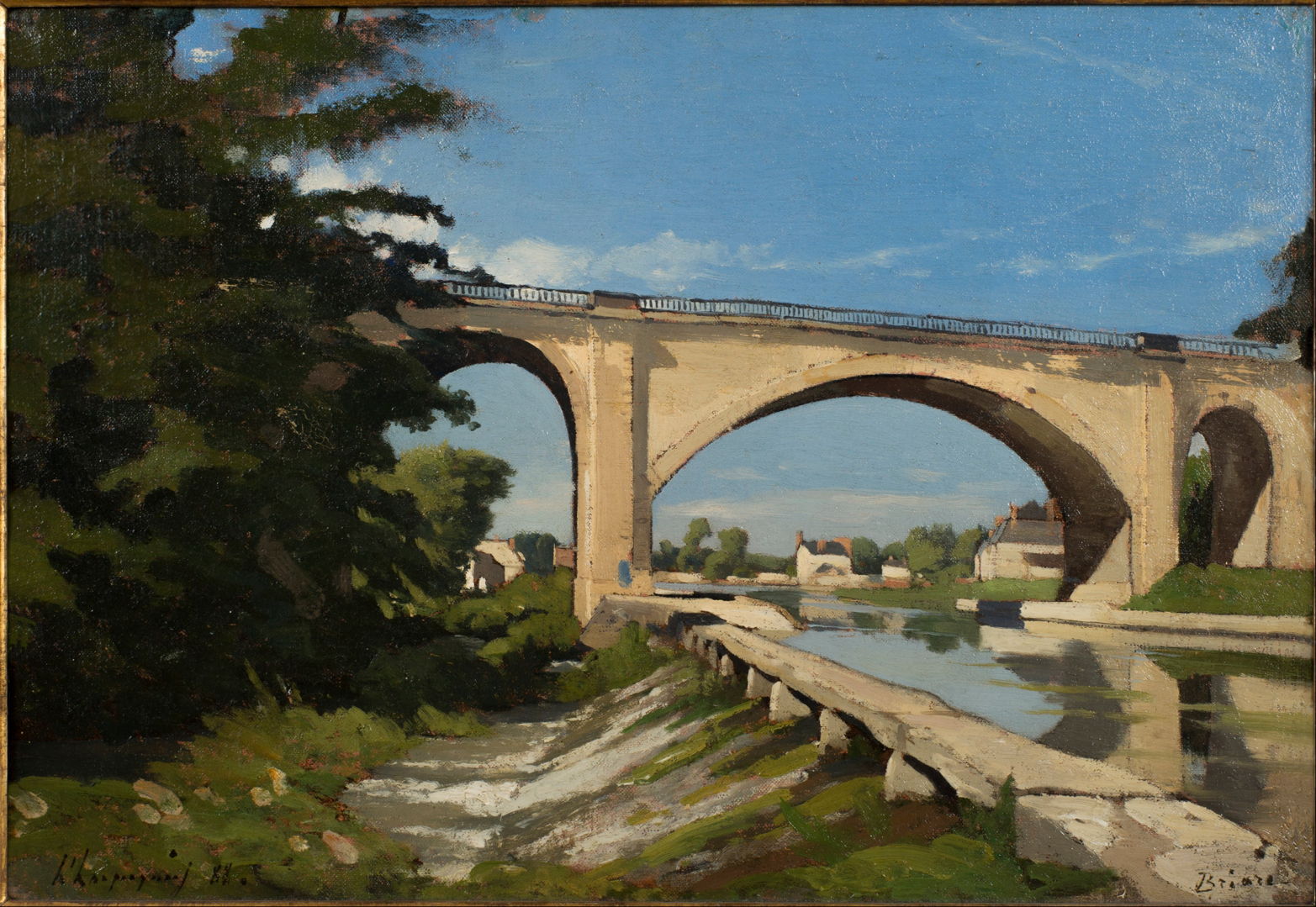
Railway bridges became a popular theme among the Impressionists, but not The Railway Bridge at Briare, seen here in 1888. Harpignies found this rather nondescript bridge in the quiet country town of Briare, well to the south of Paris and near his retreat at Saint-Privé, far beyond the stamping ground of other artists.

Harpignies had a reputation as the finest painter of trees of his time, and looking at this studio painting of Evening at Saint-Privé from 1890 I can see why. One reason that his trees appear so real and alive is his deep understanding of their anatomy, and of the subtle differences between species.

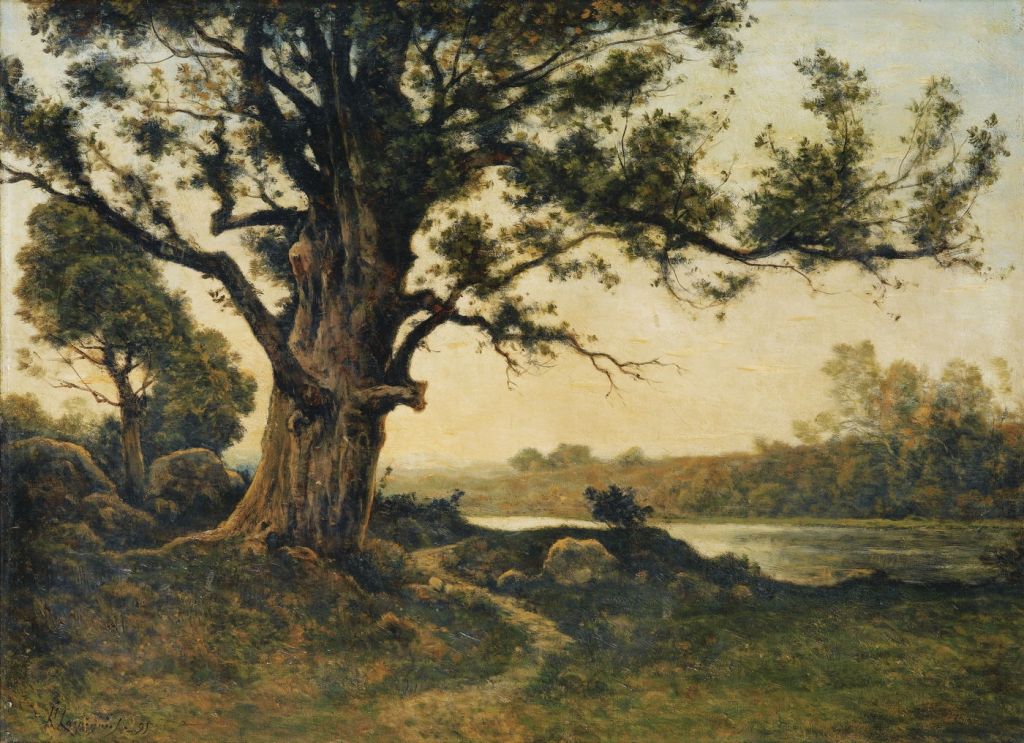
This depiction of The Old Oak from 1895 is rich in fine detail, although by this time Harpignies was in his mid-seventies.

The trees in his Landscape at Dusk from 1902 show his affinity with Corot’s distinctive style, although by this time he was complaining of dim vision. Marmor and Ravin consider this was most likely ‘dry’ age-related macular degeneration, rather than cataract which would have been treated surgically.
By all accounts, Harpignies enjoyed his long life, drinking two glasses of absinthe every day, enjoying fine cuisine, and had a taste for beautiful young women that lasted well into his old age.

As late as 1913, when he turned 94, he produced this brilliant chalk and wash sketch Study of Trees, complete with its plein air artists at work under the boughs.
But that proved the last year in which Harpignies submitted work to the Salon. His failing eyesight then prevented him from painting much, although he is said to have continued until his death on 28 August 1916, by which time he was almost blind.
Maybe good eyesight isn’t so important after all when you’re such an experienced painter.
Reference
Michael F Marmor & James G Ravin (2009) The Artist’s Eyes. Vision and the History of Art, Abrams. ISBN 978 0 8109 4849 5.

