
Most folk over fifty years old have evidence of developing cataracts in their eyes, and painters are no exception. Perhaps the most famous to battle through the blunted sight of cataracts is Claude Monet, who died a century ago this year. This article shows a small selection of the paintings from the later years of his career, to consider how his progressively impaired vision and its treatment might have affected his art.
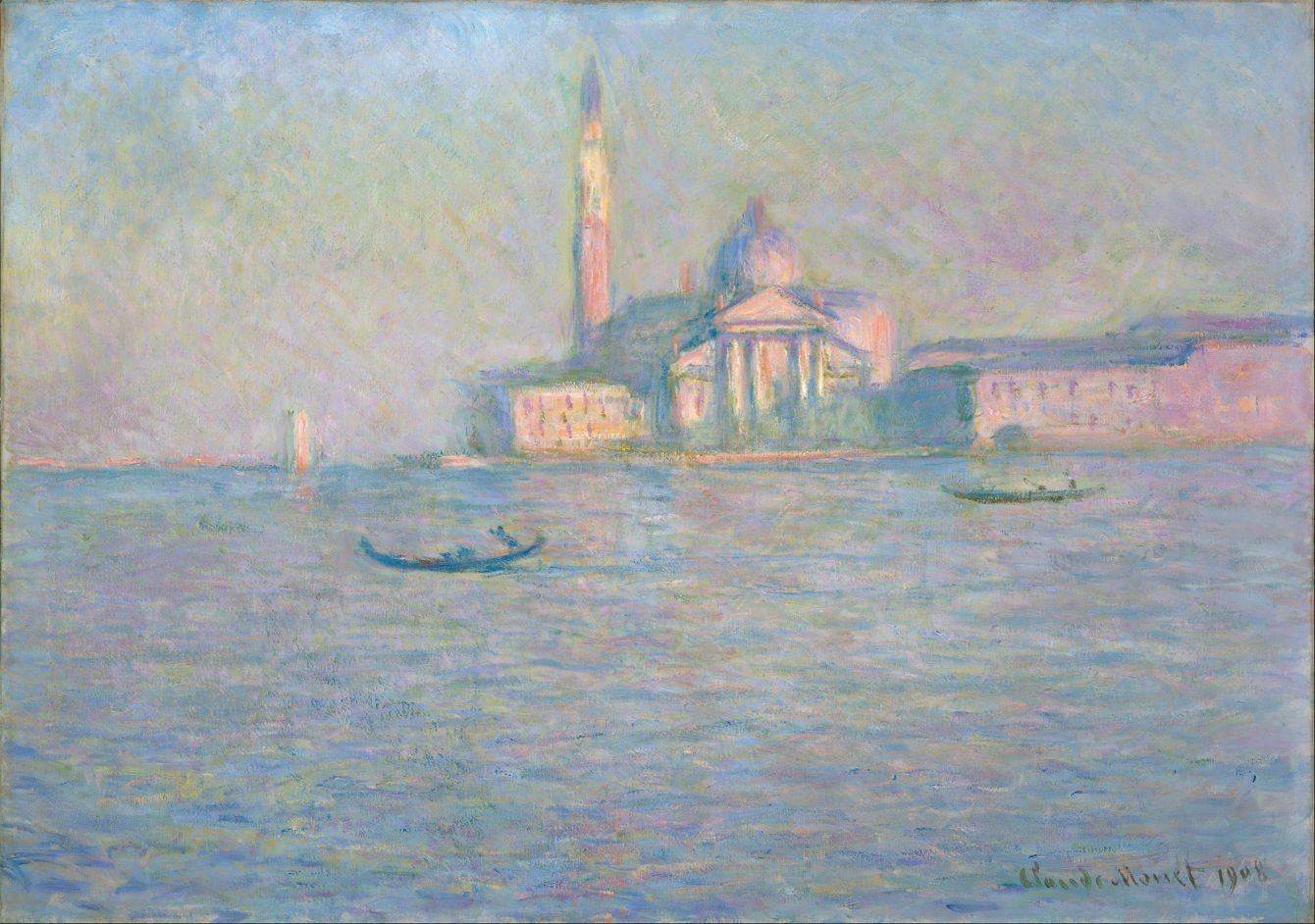
Monet visited Venice with his wife Alice for two months of painting from 1 October 1908, when he apparently began to have problems handling colours. Among the 37 paintings he started there The Church of San Giorgio Maggiore, Venice (1908) shows the famous facade of that church with its tower (not the Campanile in the Piazza San Marco) from the Grand Hotel Britannia. He painted six versions of this view, each illuminated by warm afternoon sunlight, and with different patterns of passing gondolas.
Each is composed with the line of the waterfront at the horizontal centre of the canvas, so the church and its tower occupy much of the upper half, and the water the whole of the lower. Sky and water are built from multiple orientated brushstrokes of different colours, resulting in oddly indeterminate hues. There’s little detail, and the buildings are seen as if in soft focus.
Although these were started en plein air, and have the appearance of brisk sketches, Monet spent many months adjusting and refining them when back in Giverny, and was reported at the time to have destroyed some of his canvases because he was dissatisfied with them.

In this different view of San Giorgio Maggiore at Dusk (1908) the church is backlit by the sunset, and is seen together with its tower in silhouette.
He was first diagnosed with bilateral cataracts by his family doctor in 1912. He was seen by a specialist ophthalmologist in Paris, who confirmed the diagnosis and advised that surgical removal of the cataracts should be deferred. Although that in his right eye was so severe that he could see little with that eye, Monet soldiered on using eye drops alone. The following year, another ophthalmologist prescribed him spectacles to correct the remaining vision in his left eye, although no correction was attempted for the right eye as it had no useful vision at all.
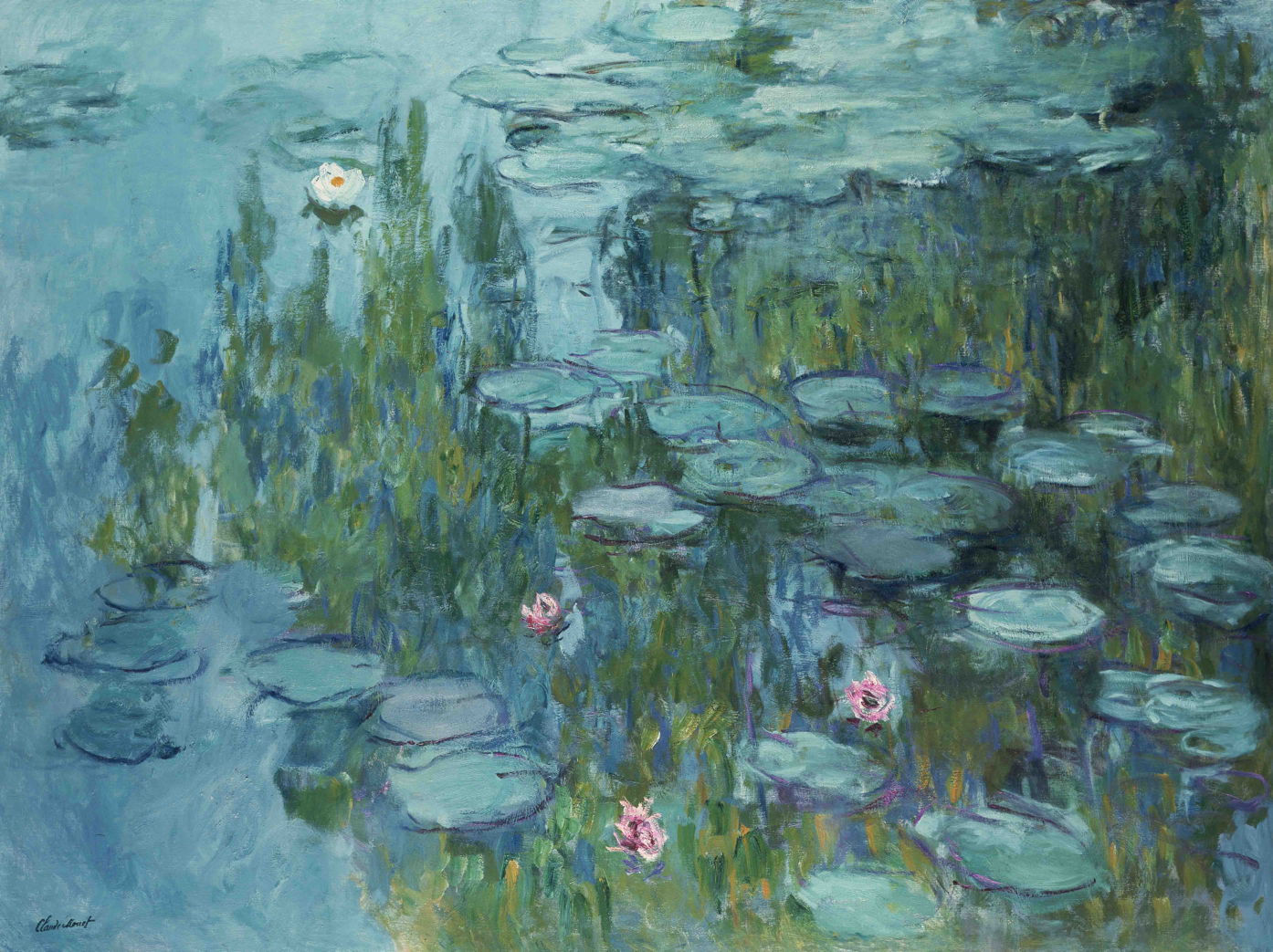
He painted these Water Lilies in about 1915. There are disparities between the coloured pads and their dark outlines, and the whole is thoroughly blue.
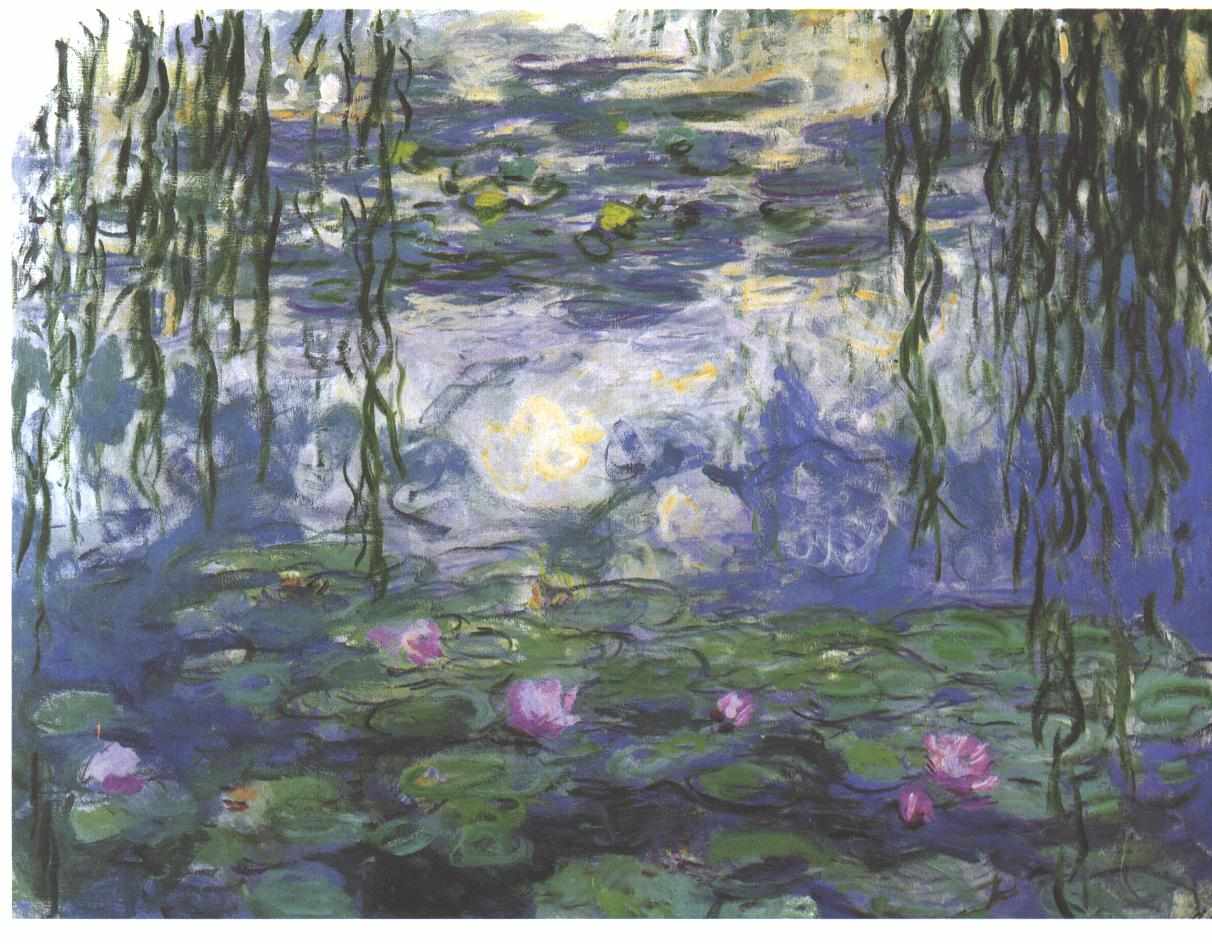
These Water Lilies from the same year are accompanied by vague highlights in white and yellow, and dangling willow leaves.
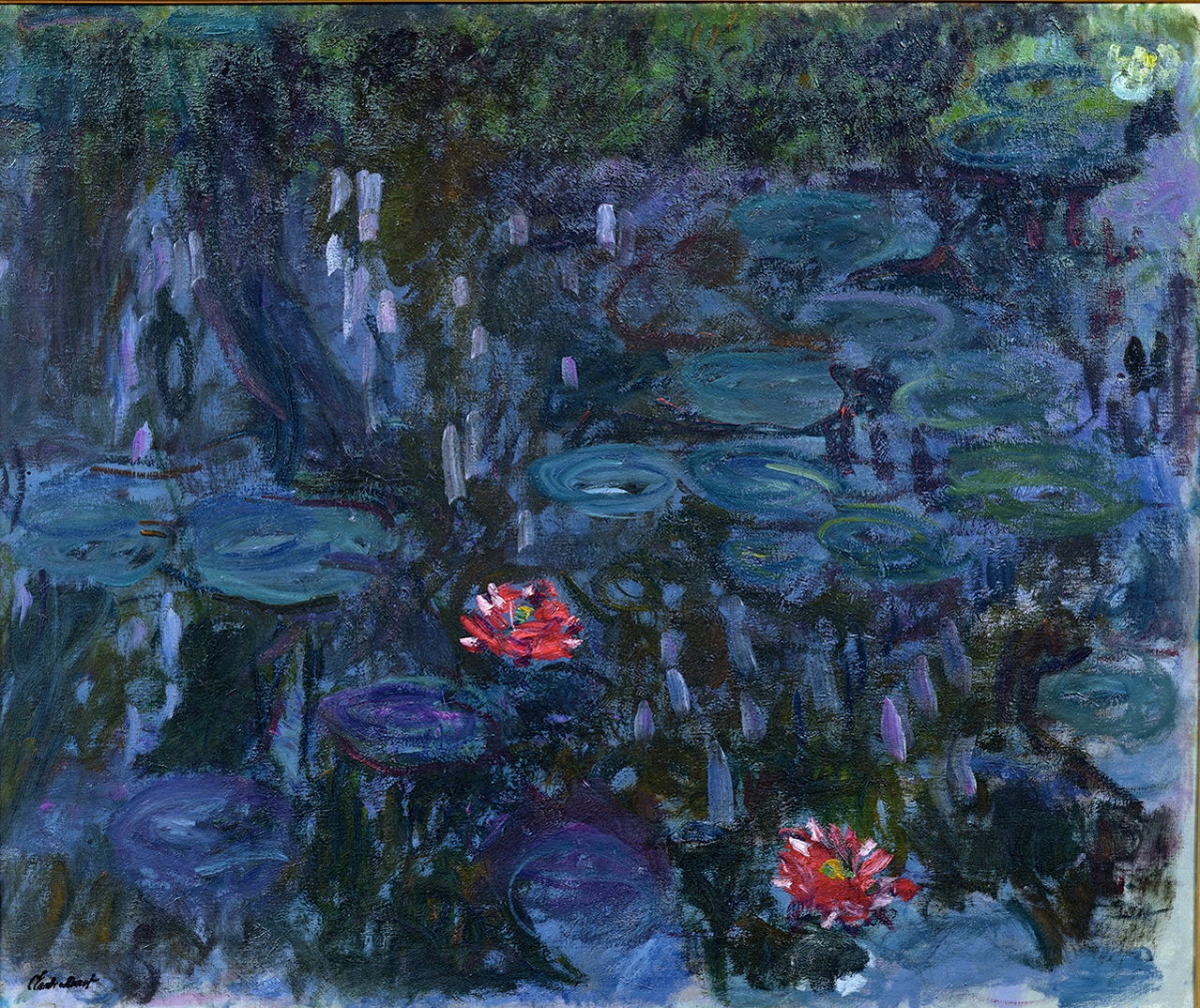
Water Lilies, Reflections of the Willows from 1916 is much darker, with vaguer lily pads.
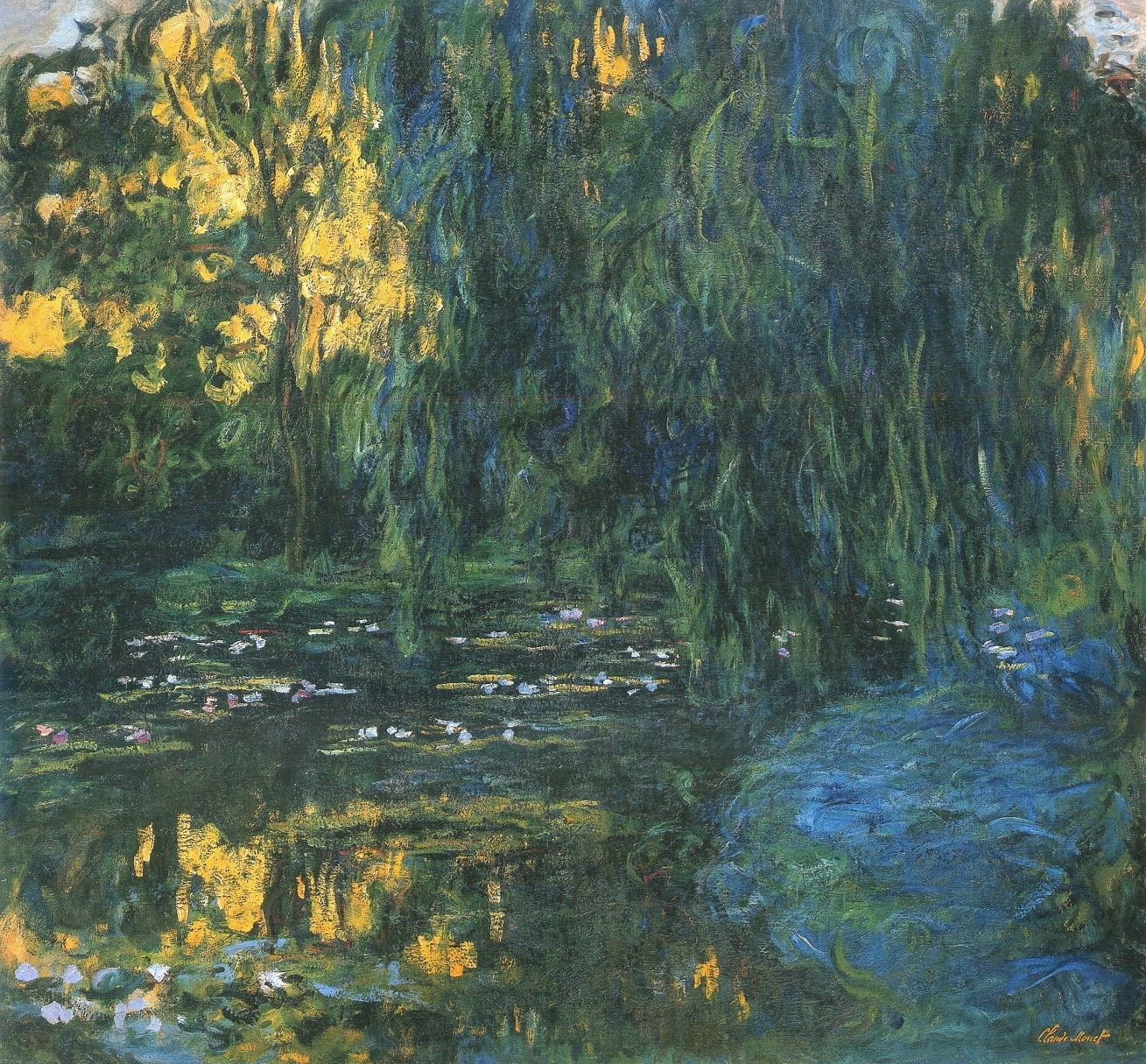
Water-Lily Pond and Weeping Willow (1916) is a broader view, with more visible depth and distinction between the lilies on the pond and the willows behind.
In 1918, Monet recognised that he could no longer perceive colours with the same intensity. Reds appeared muddy, pinks insipid, and more subtle colours escaped him altogether. However, he maintained that he could still see form clearly. As a result, he felt his paintings were becoming darker, and took to destroying some of his canvases in frustration. He stopped painting in bright sunlight, and read the labels on his paints to avoid confusing their colours.
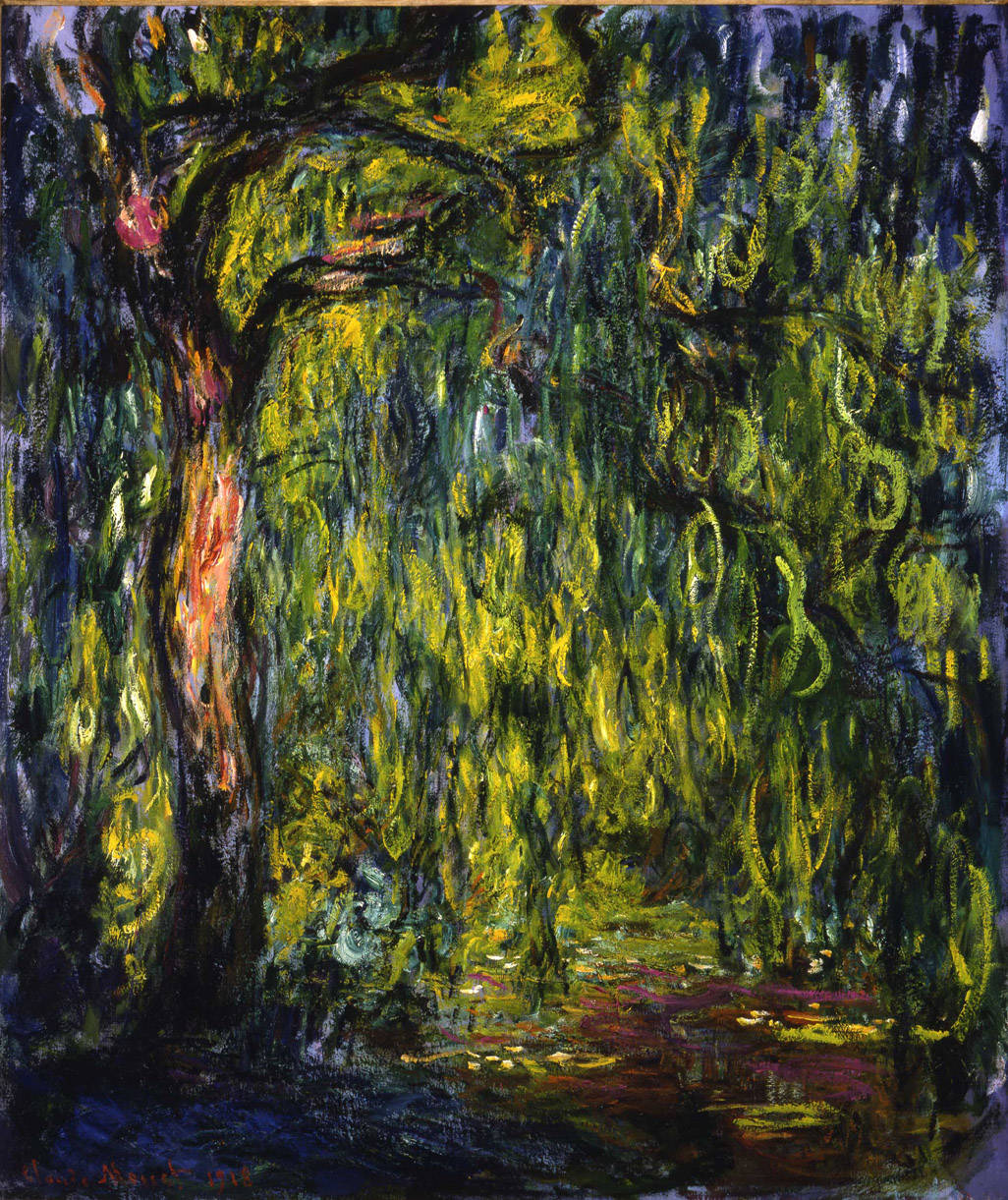
Weeping Willow from 1918 is less defined, with little distinction between the trunk on the left and the tangled mass of leaves.
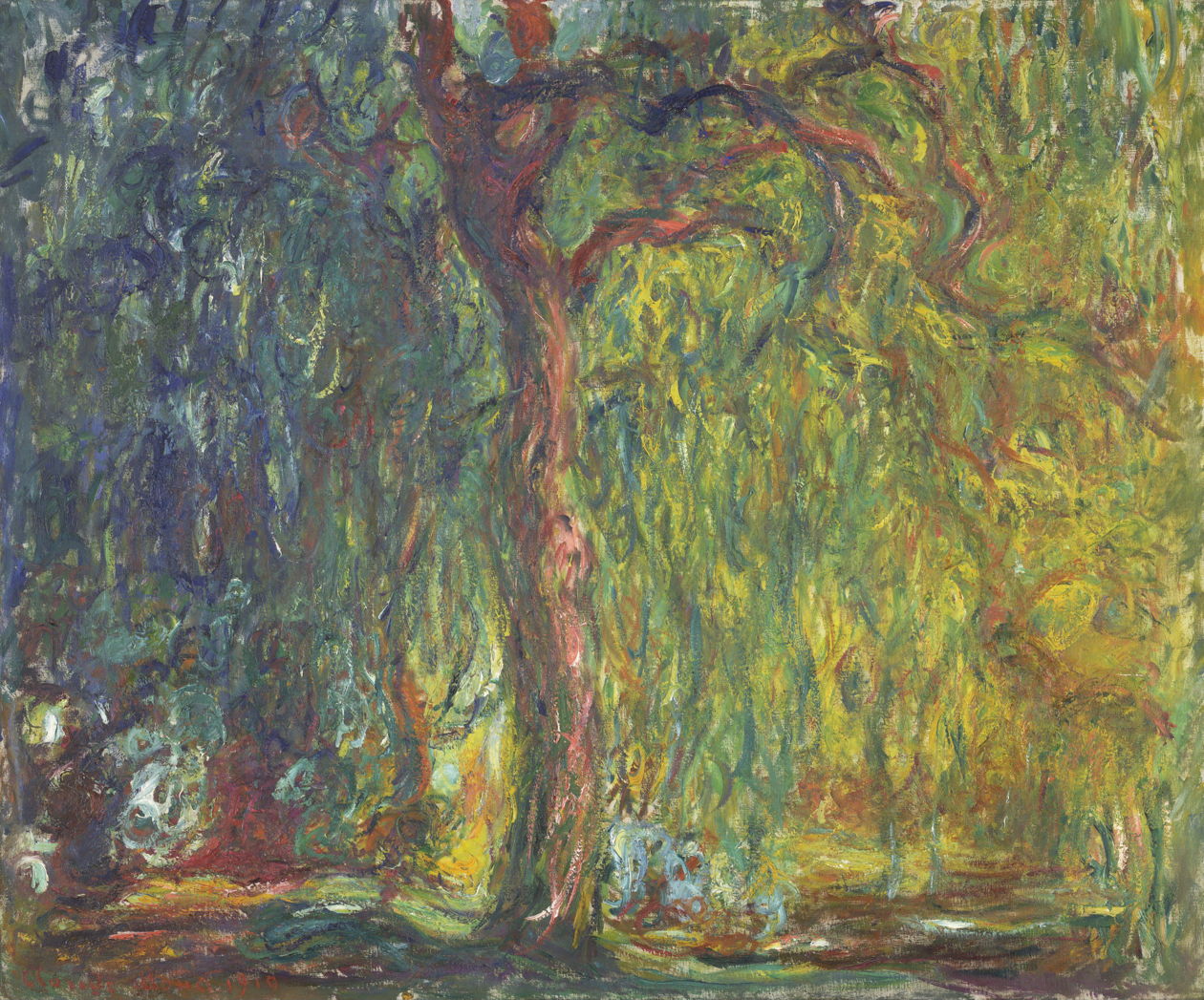
This Weeping Willow from the same year is brighter, but the form of the trunk in the centre is even more vague.
By 1921, Monet was finding painting so difficult that he was trying to get out of a contract he had made to donate a large group of his paintings of water lilies to the French state as part of its war effort. In 1922, he wrote that he was almost blind, and had to stop painting completely.
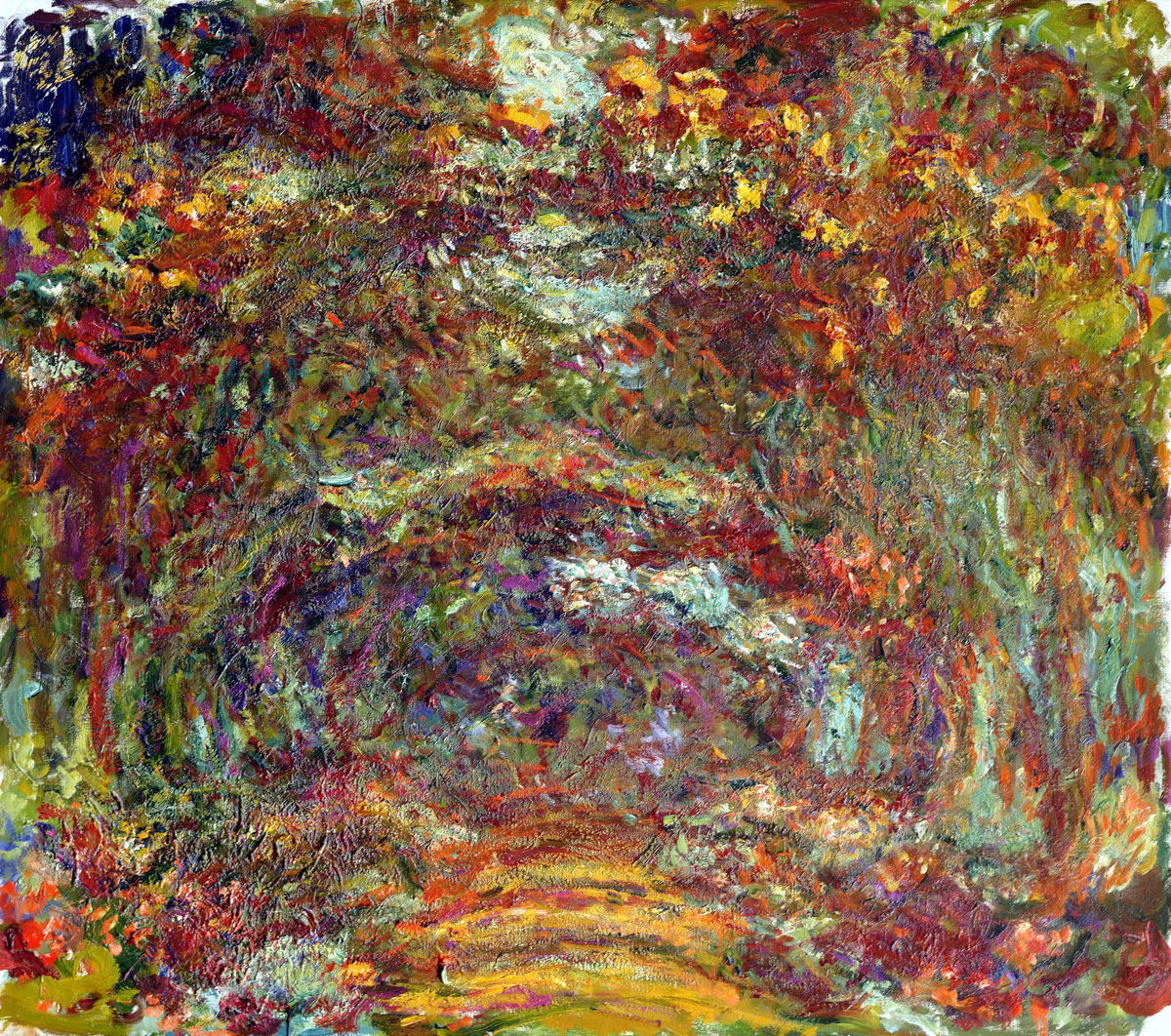
The Rose Walk in Giverny from 1920-22 is a riot of strange colours, the greens on the right appearing too pale, and the reds too dark. Little form is apparent.
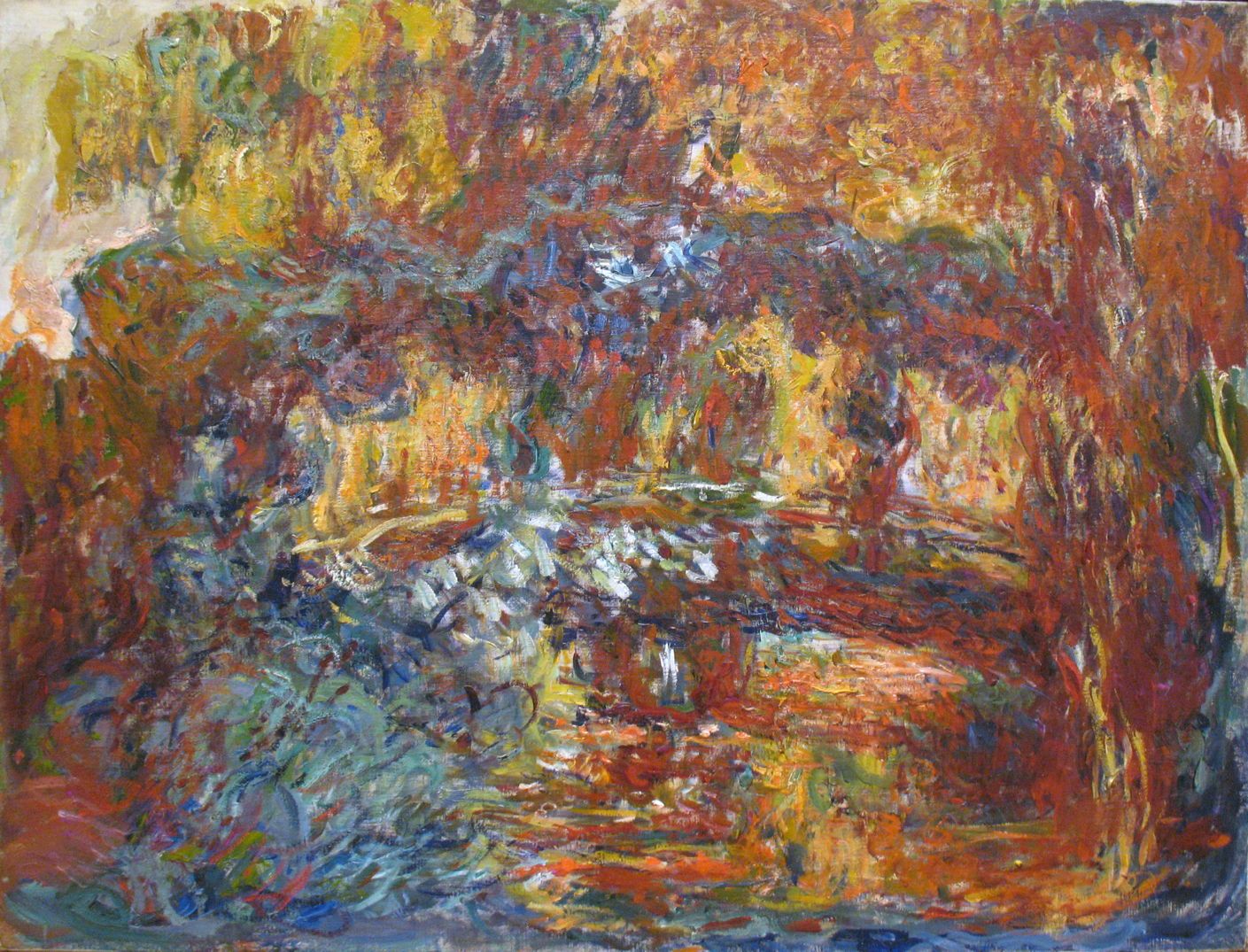
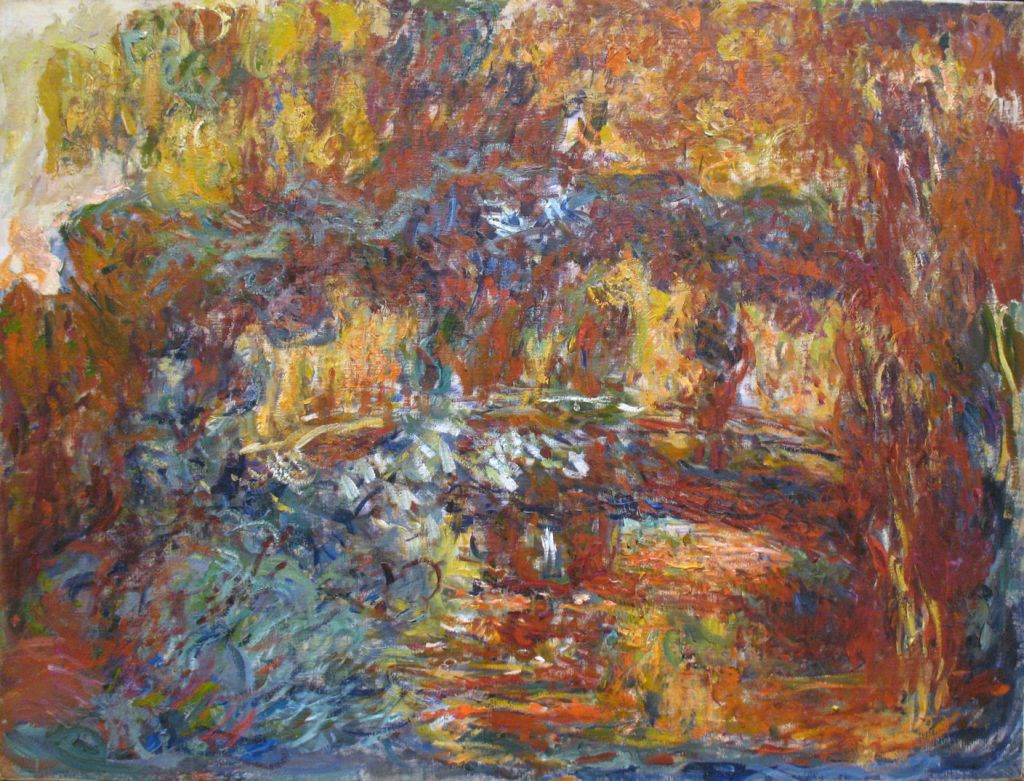
The Japanese Footbridge from the same period fails to develop the bridge as a discrete structure, and its colours again appear incongruous.
In January 1923, Monet finally underwent surgery to remove the cataract from his right eye. Further surgery was performed in July, and he was provided with special cataract spectacles, which did bring him substantial improvement. But his two eyes now differed in their colour vision: the left, with its cataract in place, blocked violets and blues, colours which could be sensed by his right eye. But he steadfastly refused to have surgery to his left eye.
He resumed painting in 1924, and continued almost to the day of his death in December 1926. Although he found this difficult at first, as he grew accustomed to his spectacles he felt his vision was much improved.
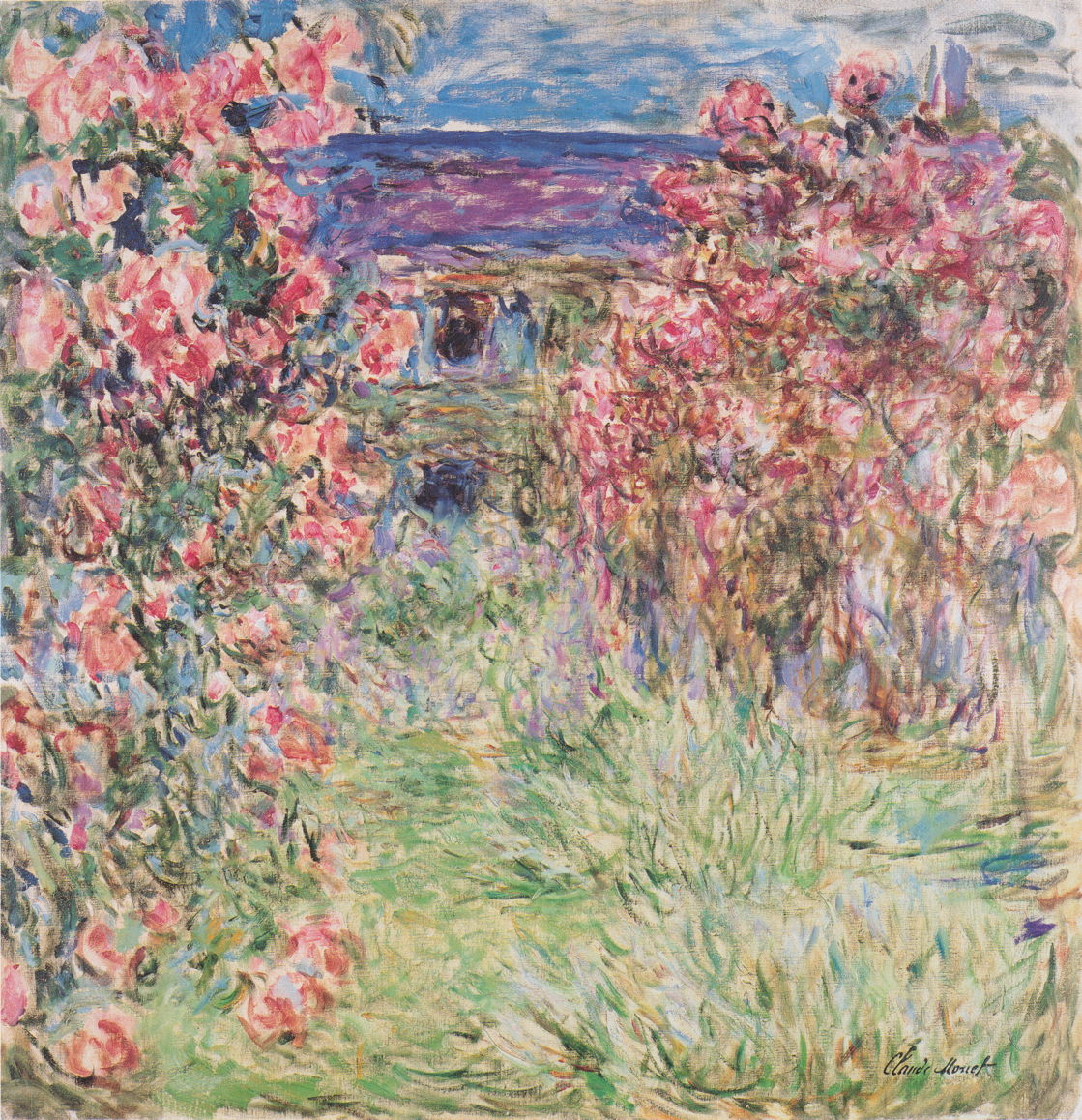
There are several versions of Monet’s The House among the Roses, all dated to 1925, after his surgery. Although lighter, form and distance have been lost to the point where there is little distinction between the distant house, roses and vegetation on the ground. The colours of the house, particularly its roof, are also odd, although consistent across the series.
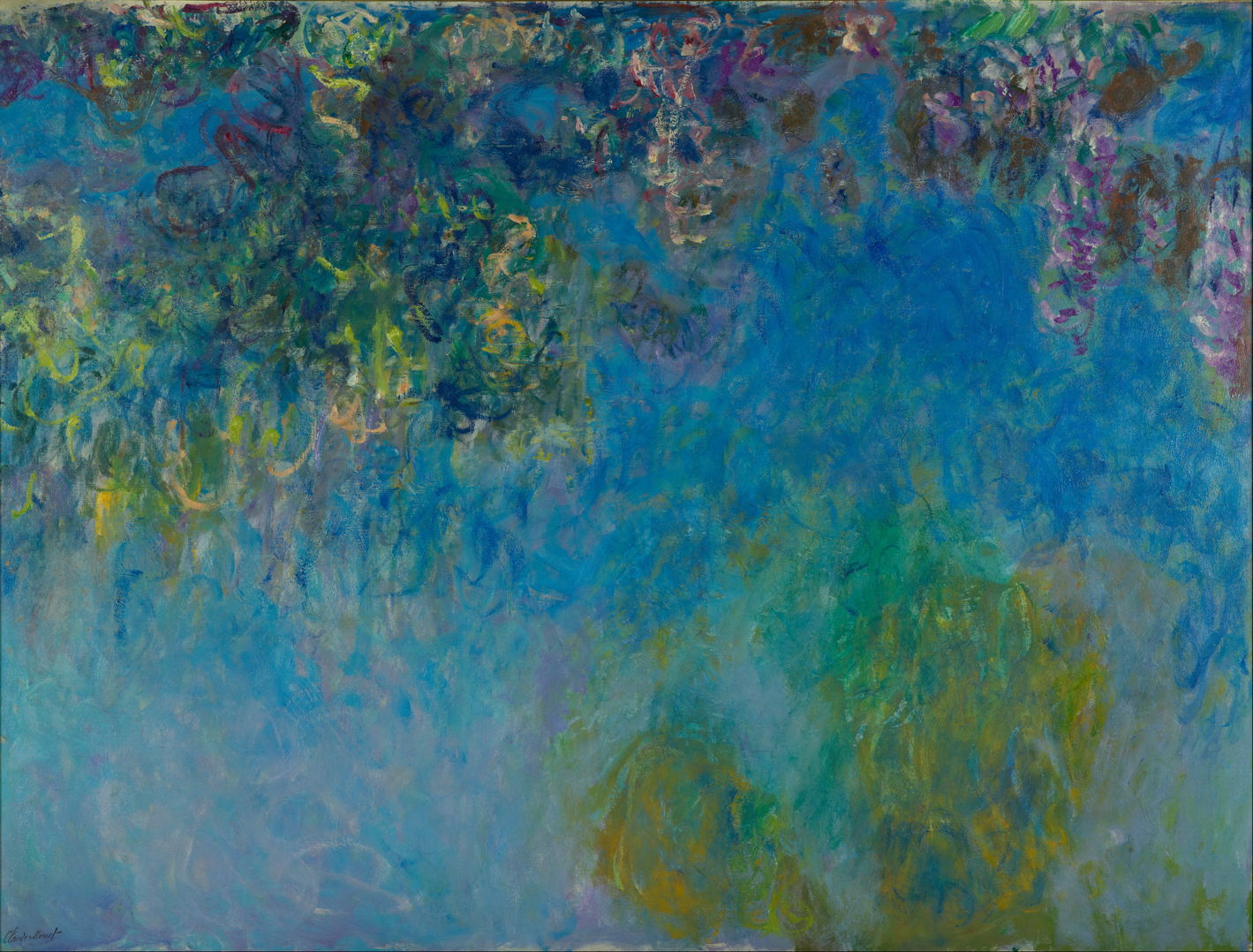
Also thought to have been painted in about 1925, Wisteria shows limited signs of improvement, with its indistinct colours suspended in a blue and green fog.
There can be little doubt about the severity of Monet’s cataracts, and their impact on his painting. These make it all the more remarkable that he continued to paint through those challenges and frustration, but it’s surely inappropriate to claim these as evidence of any tendency towards abstraction.
Reference
Michael F Marmor & James G Ravin (2009) The Artist’s Eyes. Vision and the History of Art, Abrams. ISBN 978 0 8109 4849 5.

