
Multi-frame narrative paintings consist of a single image containing two or more picture frames used to tell a story. Frescoes, the most common medium for older narrative paintings, can complicate, as they usually can’t separate images in the way that easel paintings can. For the sake of simplicity, I’ll only include those that incorporate framing within a whole, a technique that most recently has formed the basis of cartoons, comic books, graphic novels, bandes dessinées (BD) and manga.
Most multi-frame paintings adopt rectangular form.

Multi-frame narrative wasn’t at all unusual before the Renaissance, as in Margarito d’Arezzo’s The Virgin and Child Enthroned, with Scenes of the Nativity and the Lives of the Saints from about 1263-4. The panel in the top left corner shows the Nativity, followed by scenes from the lives of various saints, down to the lower right hand corner where Saint Margaret the Virgin (of Antioch) is swallowed by a dragon (the devil), and emerges from that dragon because the cross she is carrying irritates the dragon’s innards. This series of frames is not unlike a modern comic book.
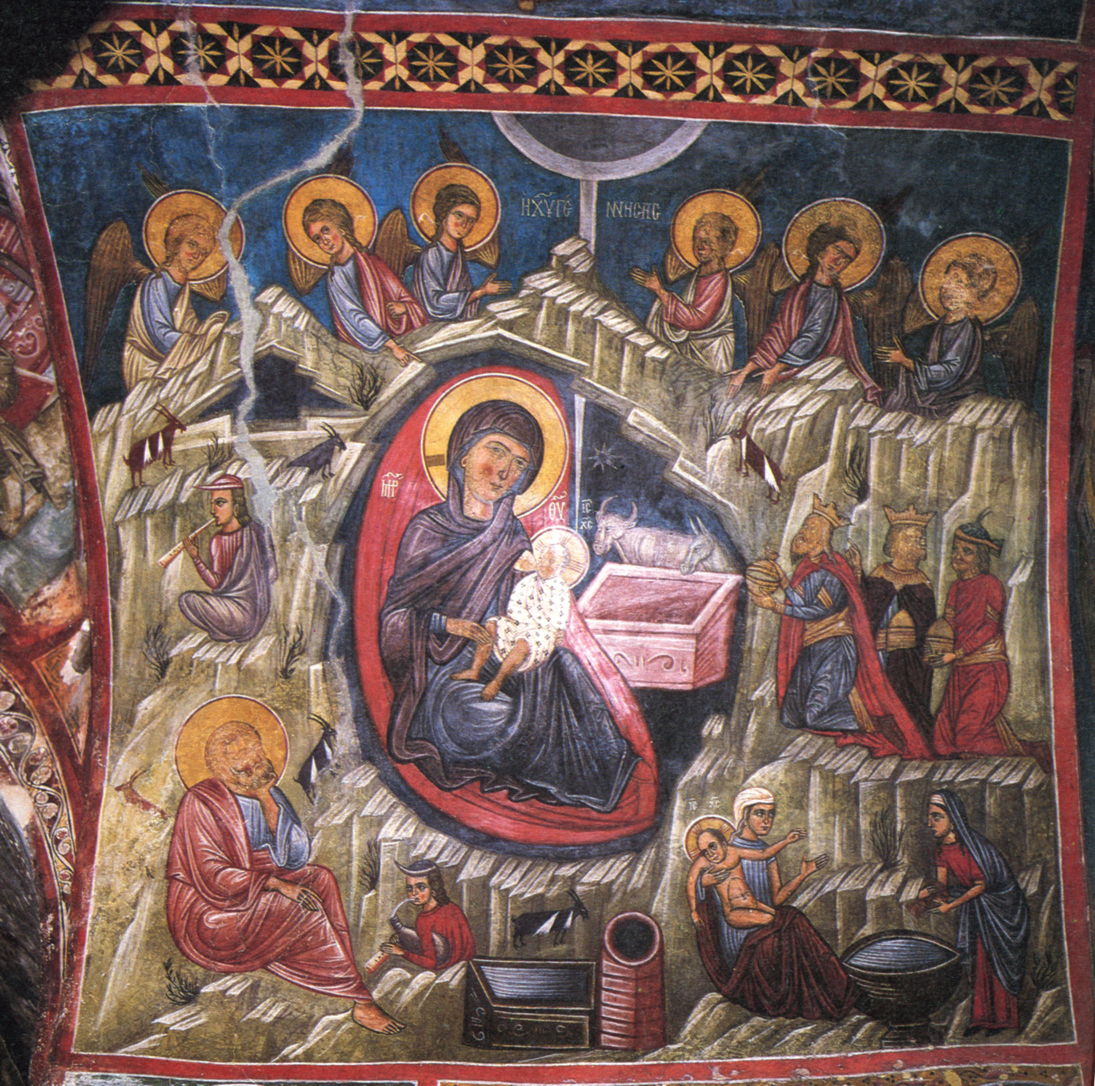
This fourteenth century fresco showing the Nativity of Jesus in Kakopetria, Cyprus, integrates a series of frames showing individual events in the full story, around a central image of the Virgin and Child. This avoids repetition of that central image for the adoration of the Magi, for example, shown at the three o’clock position, so uses its format to help tell the story.

Gaudenzio Ferrari’s Stories of The Life and Passion of Christ (1513) arranges twenty frames covering the life of Christ around a central frame four times the area of the others, showing the crucifixion. The frames are read from left to right, along the rows from top to bottom, although the crucifixion is part of the bottom row. This layout is commonly adopted in Western graphic novels, of course.

The four separate episodes making up Hans Sebald Beham’s Scenes from the Life of David (1534) are arranged in a square, so that each occupies a triangular frame, clearly separated from the others, and very different from a normal linear layout. The snag with this is that the panel is really only suitable for viewing when laid flat on a table, otherwise only one of the frames is correctly orientated. Beham clearly liked the symmetry this provided, and enhanced it in his composition of the two frames shown here at the top and bottom.

Frans Francken the Younger’s The Crucifixion of Christ, with Scenes from the Life of Jesus (1600s) puts the crucifixion scene at the centre of a rectangle, around which are twelve scenes from the life painted alternately in normal and brown grisaille. They appear to be read in a clockwise direction from the upper left, rather than linearly. The visual effect is impressive, but his use of grisaille and similar compositions doesn’t help in its reading.
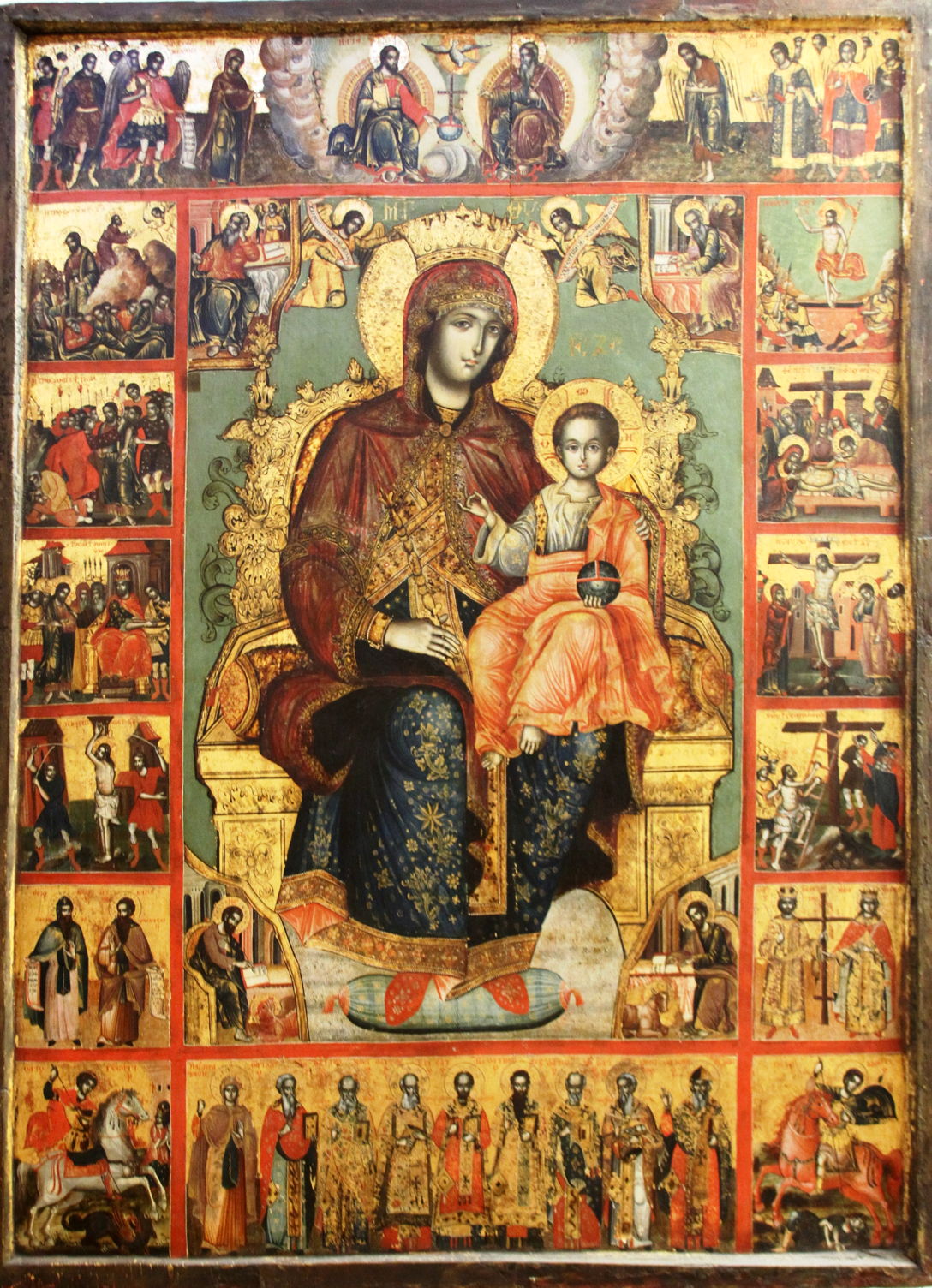
This painting of The Virgin Mary (1700s) in the Serbian Church of Szentendre, Hungary, uses a rectangular format with the Virgin and Child at its centre. Arranged around that are smaller frames, each showing an event in the life of Jesus. These appear to be read from the upper left in an anticlockwise sense, ending at the upper right with the resurrection, although only the ten frames on each side of the central image form the narrative sequence.
Multi-frame paintings arranged in the round are inevitably more common on porcelain and china, which often come in circular or oval plan.

Georg Kordenbusch’s painted baptismal bowl shows four Scenes from the Life of Christ (1750). As these are intended for viewing from above the bowl, and normally by a group gathered round it, the layout of the scenes shouldn’t be orientated for viewing from one position.
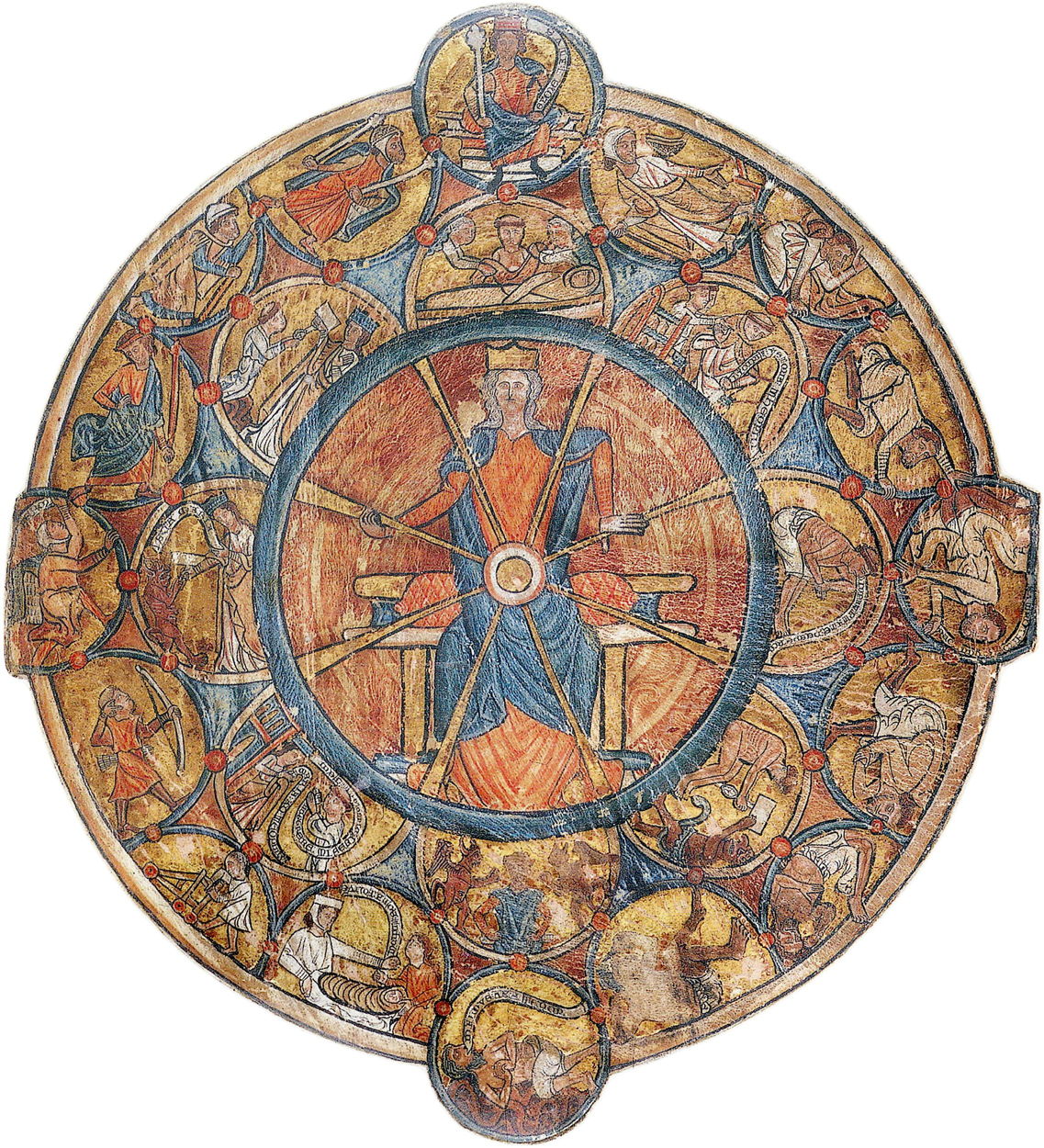
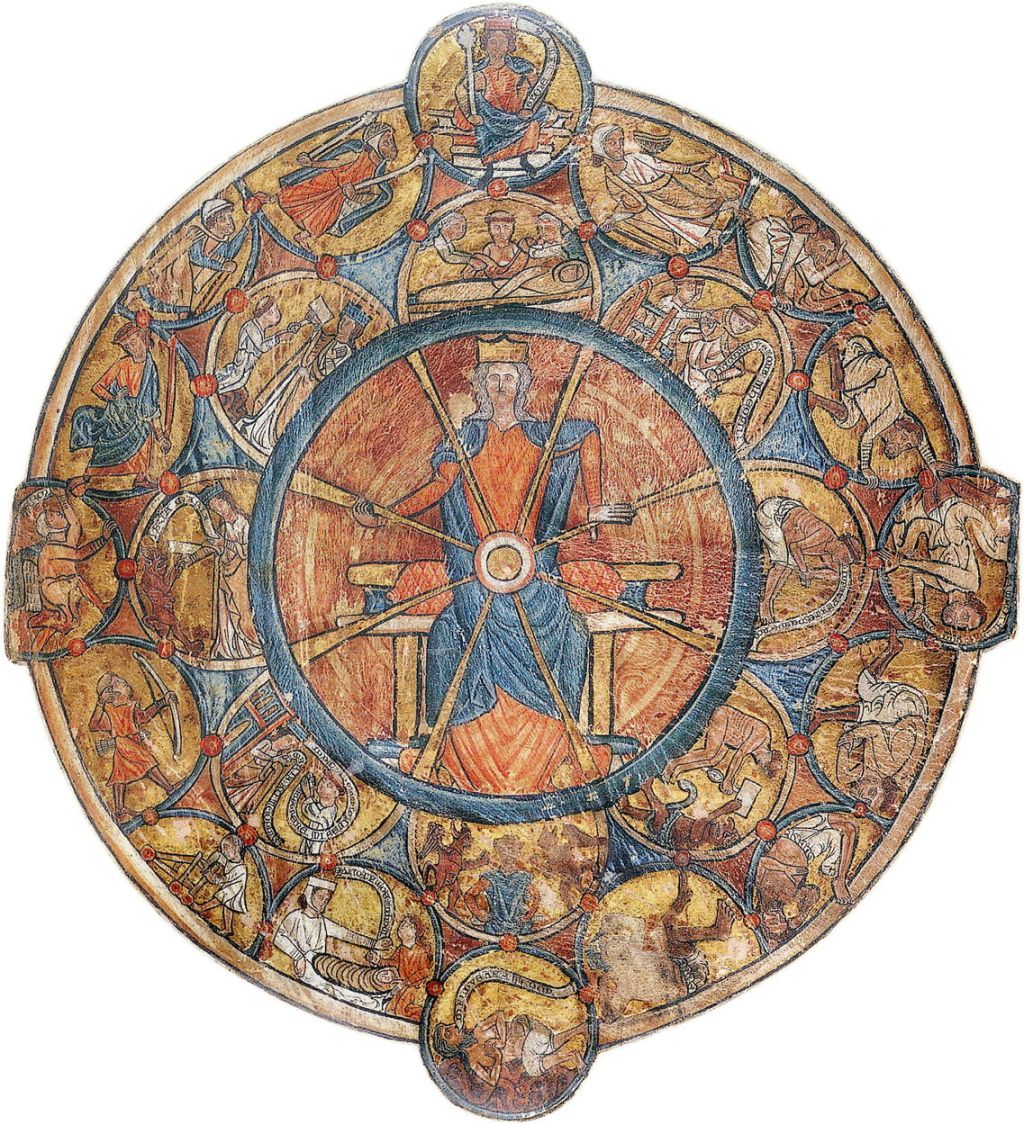
William de Brailes’ The Wheel of Fortune (c 1240) is based on a popular folk theme, but becomes more elaborate than most other depictions. At its centre is Fortuna, Roman goddess of fortune. The outermost ring of images – each with a circular frame – shows four different scenarios at the three, six, nine and twelve o’clock positions.
These are connected by half roundels showing twelve stages of life from the swaddled baby at seven o’clock to death at five o’clock. Inside those are inner half roundels showing scenes from the life of Saint Theophilus the Penitent, starting at one o’clock and ending at twelve o’clock. Each frame within each cycle has been carefully aligned to ensure its concentric cycles are in approximate synchrony, and the individual contents have been aligned to allow the page to be read in a single orientation.
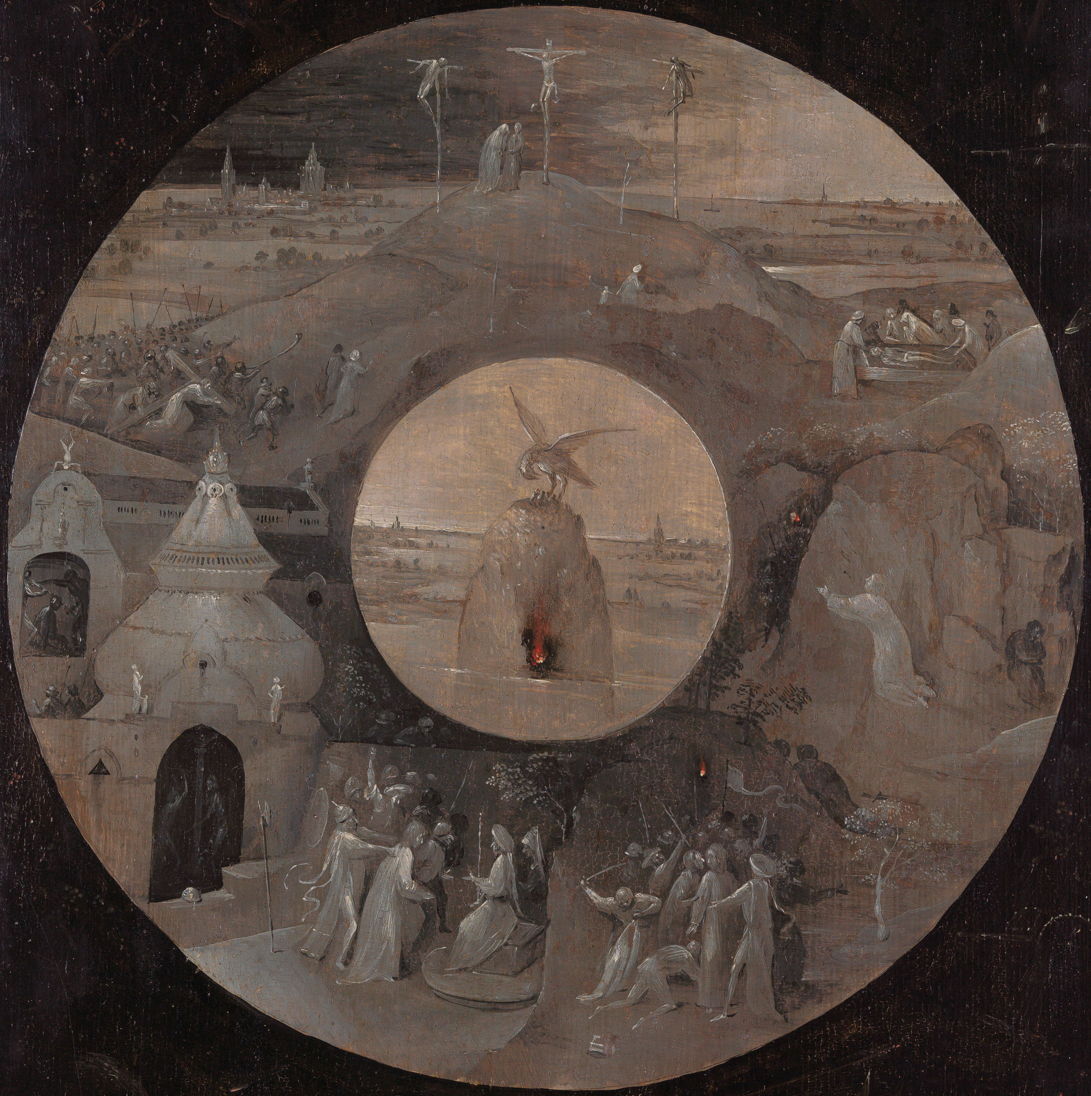
Hieronymus Bosch’s Passion Scenes (c 1490-95) consist of a dark outer background containing various figures, surrounding a circular area in which he has painted scenes from the Passion. As the reverse of a panel for an altarpiece, it could only be viewed in one orientation.
The lower two-thirds of the scenes are carefully divided into frames, five in total, but the upper third merges its three scenes into a single multiplex image, in which Christ appears three times: at the left carrying his cross up to Golgotha, at the top on the cross, and at the right his body being laid in a coffin for burial. This uses a common location for those three scenes in an ingenious composition.
The central image of a pelican feeding its young from its own blood not only sets the moral theme of self-sacrifice, but also solves the problem of how to bring the peripheral scenes together in the centre.
The peculiarity resulting from this otherwise ingenious composition is that the narrative sequence begins at the five o’clock position, in order to accommodate the resurrection scene at the tomb, at the right. Bosch leaves the viewer to work that out, which should have been an easy task in this case, given the familiarity of contemporary viewers with the stories shown.

Now believed to have been painted by one of Bosch’s workshop, or a follower, The Seven Deadly Sins and The Four Last Things (c 1510-20) is a later work, and makes the odd design choice of rotating the images within frames according to their position in the circle.

Some artists have used circular elements within paintings of overall rectangular form. Fedor Nikitin Rozhnov’s The Passion of The Apostles (1699) arranges circular images of well-known scenes of the martyrdoms of the twelve apostles, around a central circular image of Christ’s crucifixion.
Current consensus attributes the invention of comic narrative format to Rodolphe Töpffer (1799-1846) in the early nineteenth century, although the images here demonstrate its more ancient origins in multi-frame paintings.

