
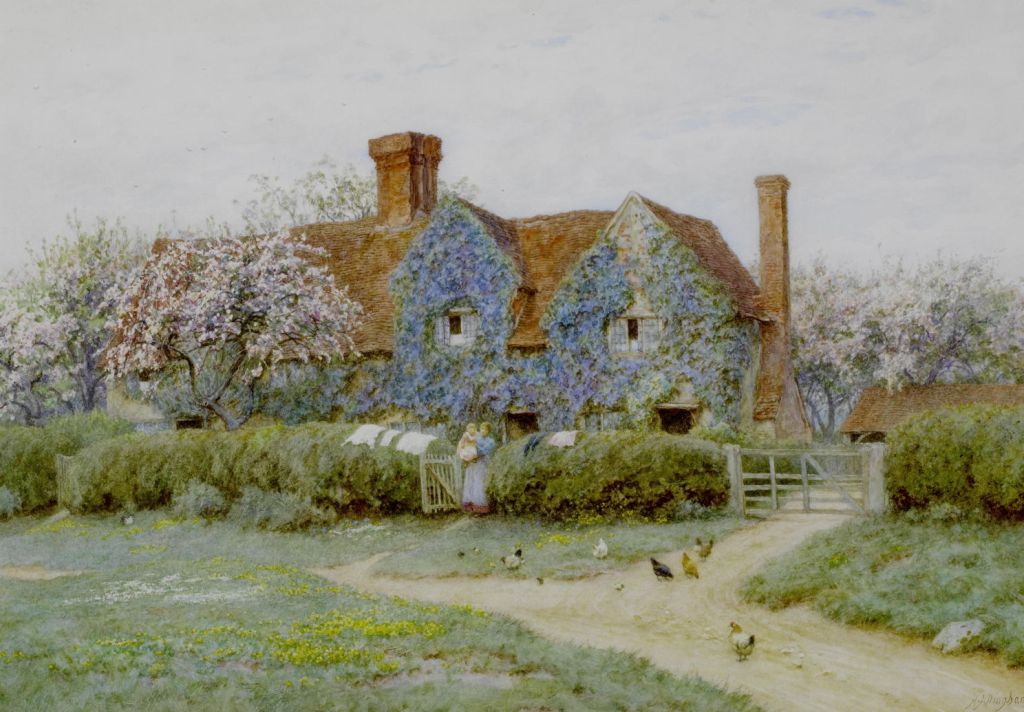
One hundred years ago today, on 28 September 1926, the major watercolour artist and illustrator Helen Allingham died. All too often dismissed as a ‘mere’ illustrator, she was one of the pioneering British women artists of the nineteenth century, and spent most of her career painting watercolours that weren’t associated with any text.
Born Helen Mary Elizabeth Paterson in Derbyshire, England, she was brought up first in Cheshire, then in Birmingham. Her mother’s relatives were artistic, and Helen soon showed talent for drawing. She started her training at the Birmingham School of Design, then in 1867 moved to London to study at the National Art Training School, now the Royal College of Art.
She struck success as an illustrator while still studying there, and was soon painting illustrations for The Graphic newspaper, magazines, and books. She abandoned her art studies to pursue that as a career, and in 1874 provided the illustrations for a serialised version of Thomas Hardy’s Far From the Madding Crowd for Cornhill Magazine, one of the leading British periodicals of the day. She developed her painting skills in evening classes at the Slade School of Fine Art in London, where she met Kate Greenaway (1846-1901), another pioneer too often dismissed as an illustrator rather than a fine artist in her own right.
She married William Allingham in 1874. He was an Irish poet, and she was able to stop her work as an illustrator and devote more time to painting. When the couple moved out of London to Witley in rural Surrey in 1881, she started painting the cottages and villages through the country to the south of London, across Surrey and Sussex in particular. In time she extended her coverage to include much of southern England, and as far afield as Ireland, even Venice, although her watercolours of Venice are less successful.
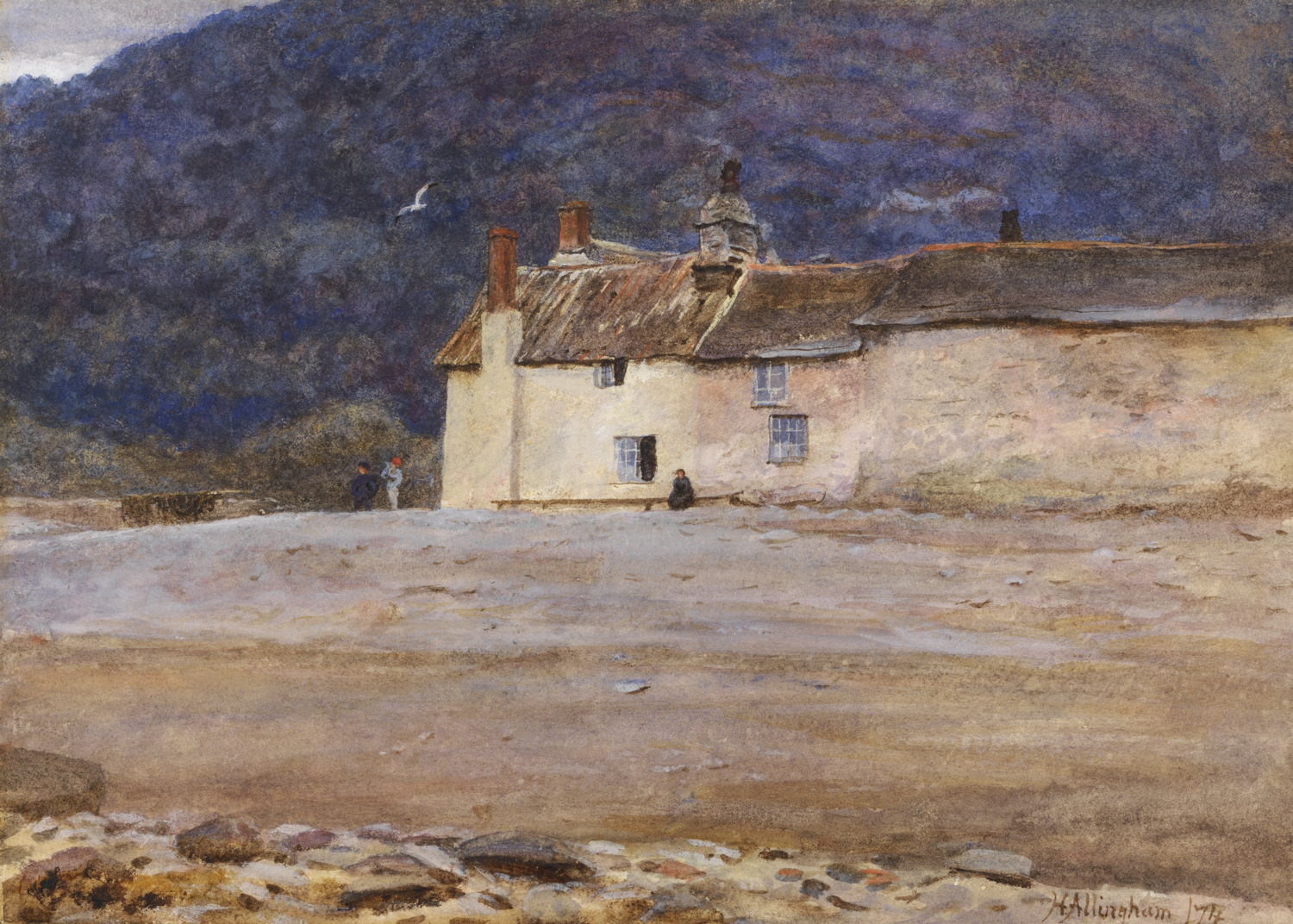
She painted The Last House in Lynmouth shortly after her marriage in 1874, perhaps when on honeymoon in the west of England. It shows the seafront fishermen’s cottages of the village of Lynmouth in Devon, on the north coast of Exmoor. Lynmouth is on the waterfront at the foot of a gorge descending from the larger town of Lynton, over 200 metres above Lynmouth. Gainsborough had honeymooned there, and it had become quite a popular resort during the nineteenth century. In 1952, following torrential rain over Exmoor, Lynmouth was largely washed away by a flood, which killed 34 of its residents.
The following year, 1875, she was awarded associate status in what is now the Royal Watercolour Society, a prestigious group that had seceded from the Royal Academy in 1804, and in 1890 she became the first woman to be admitted to full membership.
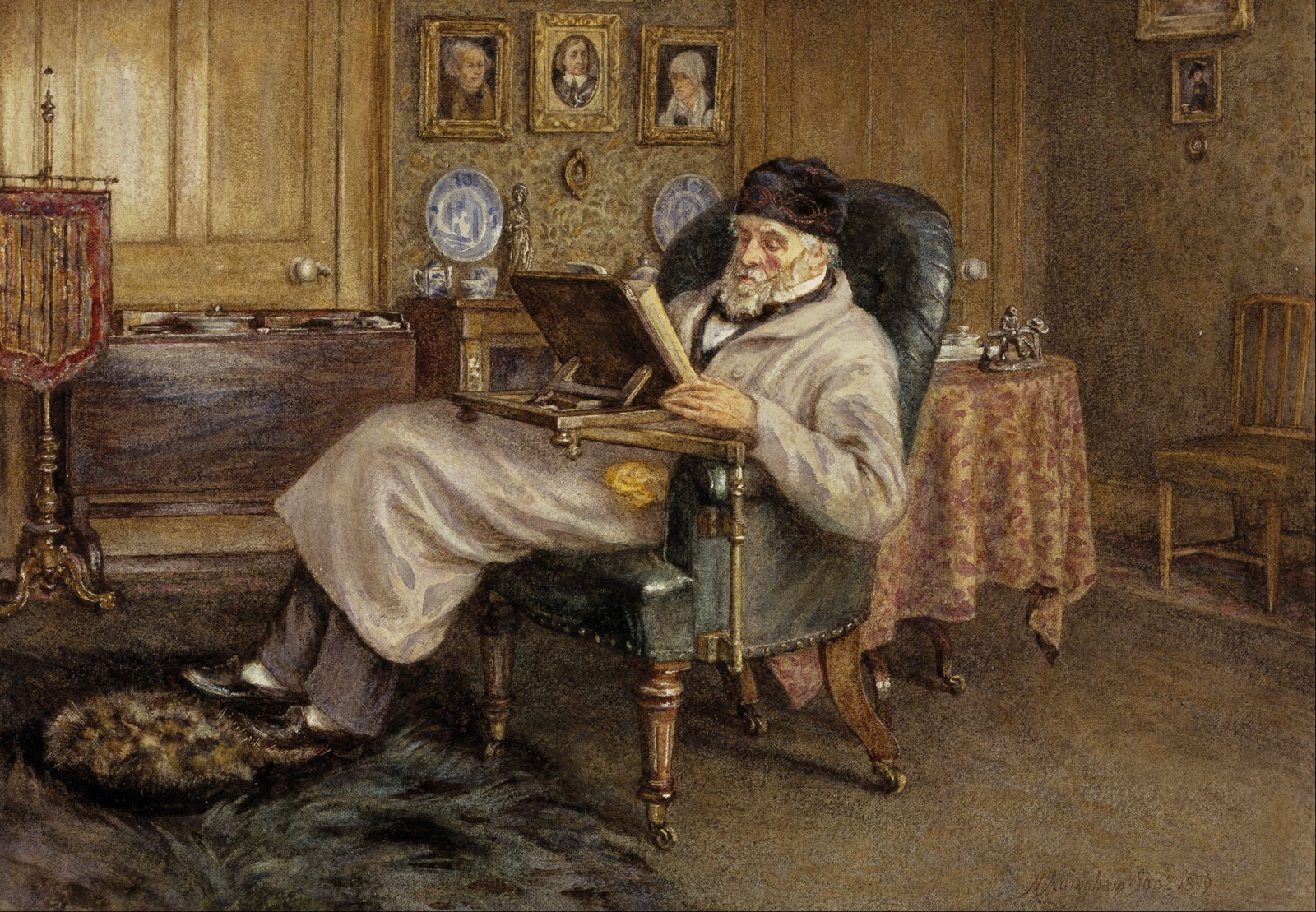
Allingham didn’t paint many portraits, but this of Thomas Carlyle, 1795-1881, the major Scottish philosopher, historian, and essayist, was completed just two years before his death, and is one of her most significant works.
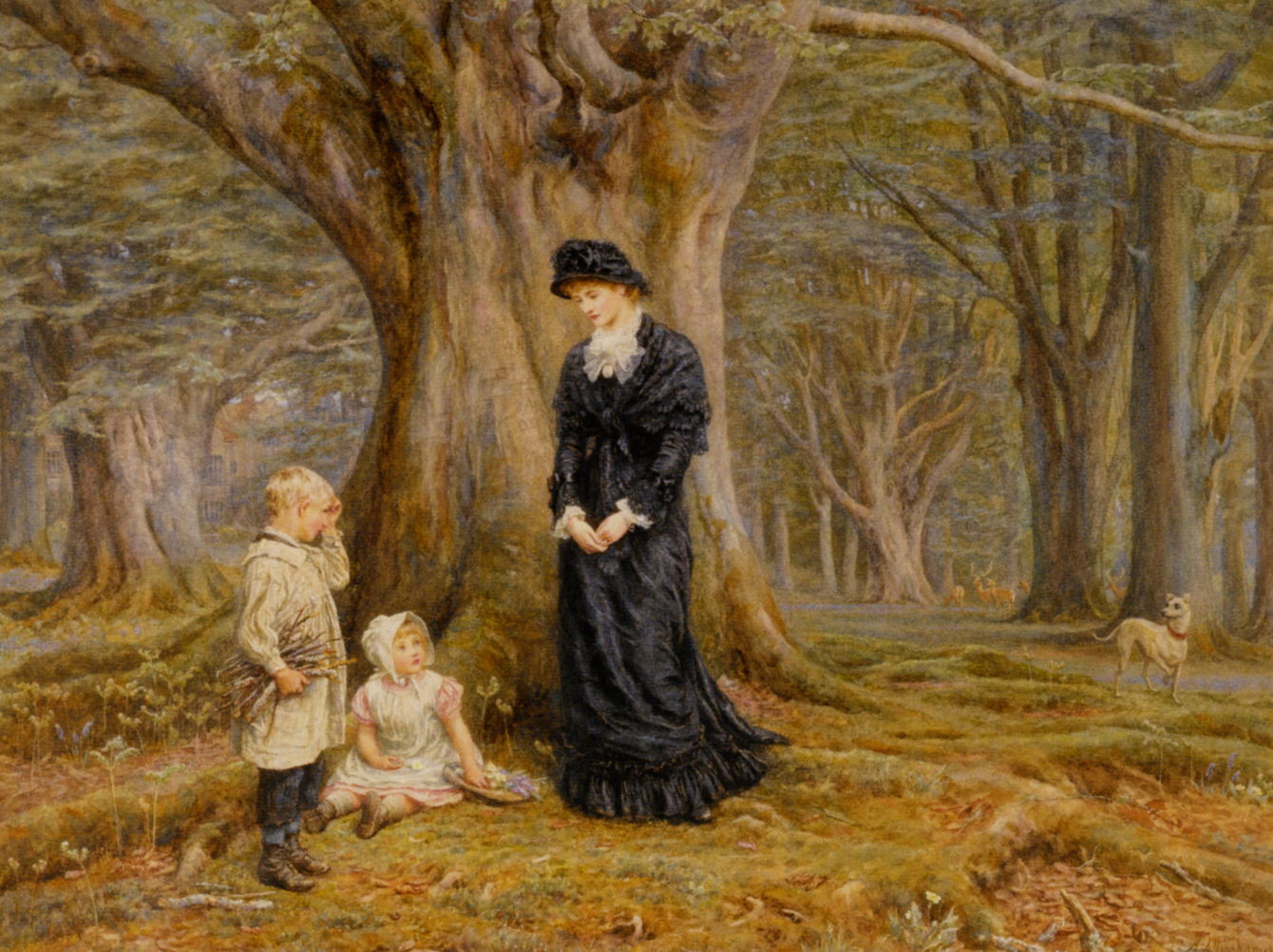
More typical of her mature work is this depiction of ancient woodland and The Lady of the Manor (1880). The manor house is just visible in the distance, behind the small boy’s head. Seen in a small clearing in the mid-right of the painting are deer, implying this was a deer park; even then, there were few deer parks remaining in the south of England.
Allingham and her family moved out of London in 1881 to live in the rural hamlet of Sandhills, near Witley in Surrey, where they remained until 1888. Her husband, who was twenty-four years older than her, died the following year, leaving her to earn sufficient to support her young children.
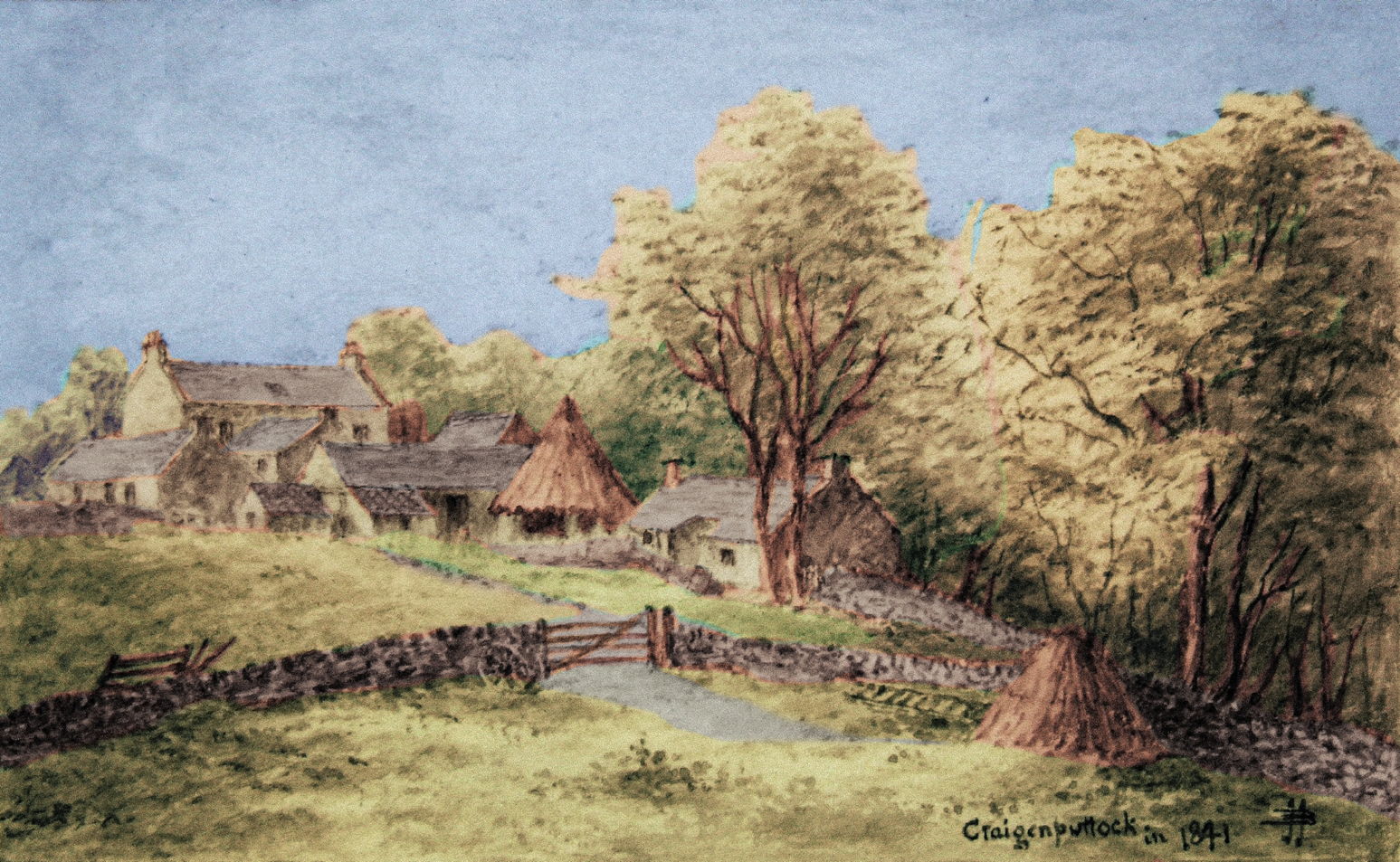
Rear view of Craigenputtock (1891) shows Thomas Carlyle’s widow’s farming estate in Dumfrieshire, Scotland, which became his spiritual home even though he lived there for only limited periods. Unlike the rest of her works shown here, this appears to have been painted (or at least started) in front of the motif, and may well have been signed there too.

A Buckinghamshire house at Penstreet (c 1900) shows a house in the hamlet of Penn Street, which together with Knotty Green and Forty Green surround the village of Penn, near Amersham, Buckinghamshire, England. This remains a relatively unspoilt part of the Chilterns, to the north-west of London.
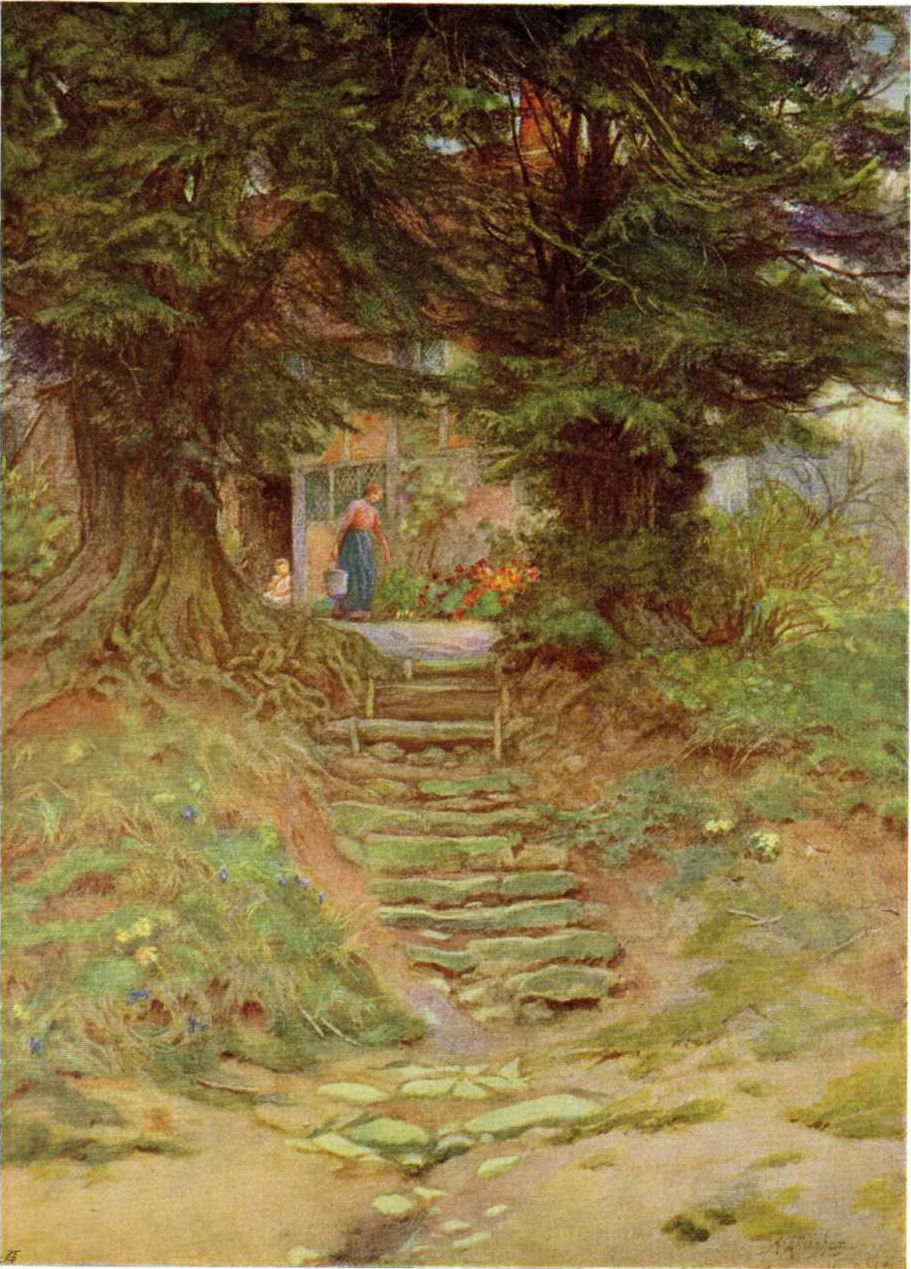
A Cottage Near Crocken Hill (before 1905) shows what used to be a small village not far from Sevenoaks in Kent, England. Although this cottage may still stand, this area has been swallowed up into the sprawling south-eastern suburbs of London, and is now only just outside the Greater London border, and heavily populated if still leafy.
The remaining paintings are all undated, but most appear to be from the period 1874-1914.

Baking Bread shows a traditional farmhouse baking oven being used to bake the bread for an extended family or a small village shop. These ovens can still be found in many remaining period dwellings, but seldom remain in use. The loaves seen in the foreground consist of two stacked round cobs, known as cottage loaves. Note the high mantelpiece above.

In the Nursery shows a young woman employed as a nurse to a middle-class family, in their dedicated nursery. The fire has a guard, which would have been unusual in rooms used by adults. There are fans on the mantelpiece, signs of the Japonisme that swept Europe and America during the late nineteenth century.

Drying Clothes is one of several watercolours Allingham painted of this everyday domestic activity, invariably undertaken by one of the servants.
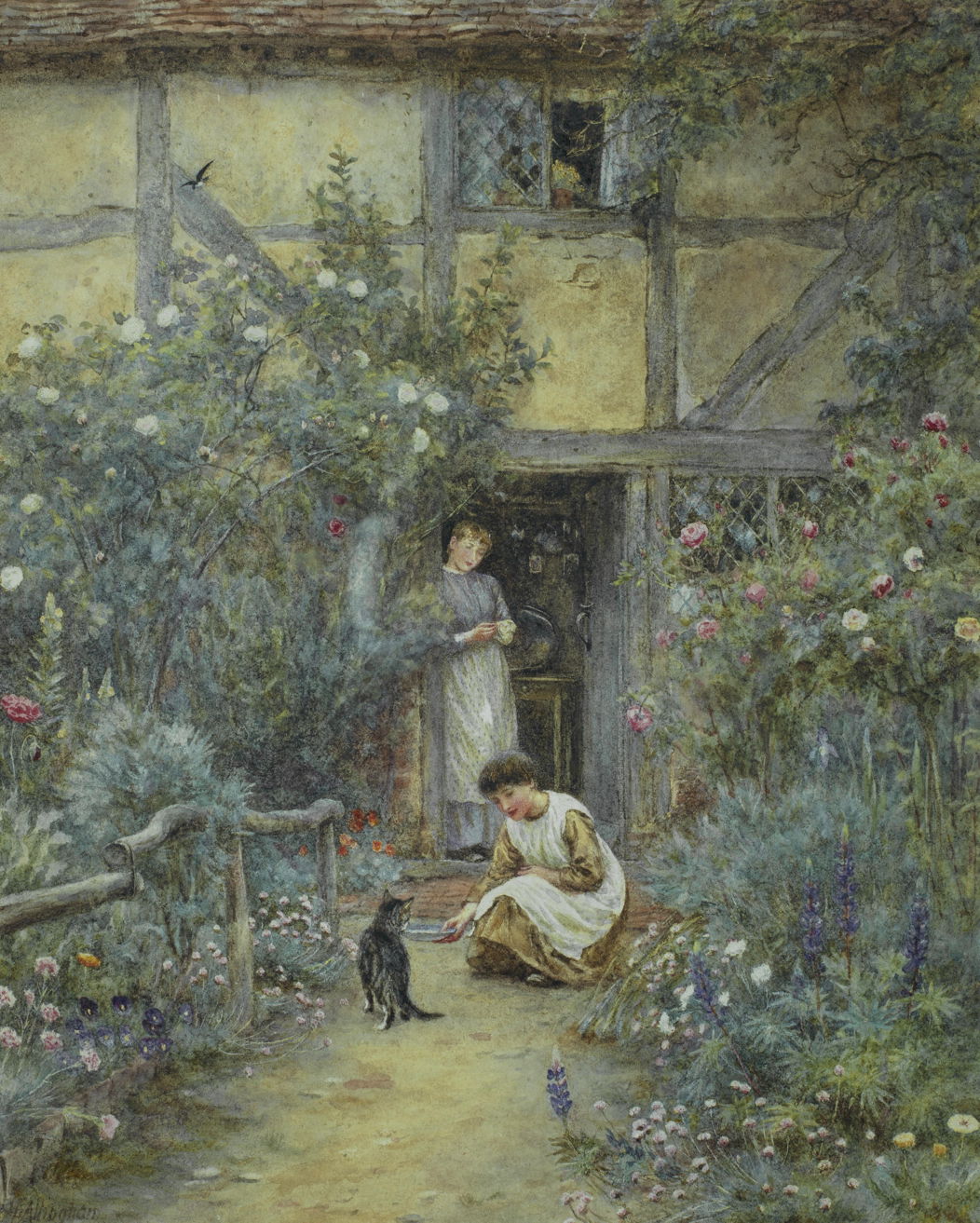
The Saucer of Milk shows another popular domestic scene, attending to household pets. In country cottages, cats had the important task of keeping the population of mice under control, so pampering them wasn’t just an innocent pastime. Allingham’s paintings are also valuable in documenting traditional cottage gardens, which went into decline after the First World War.
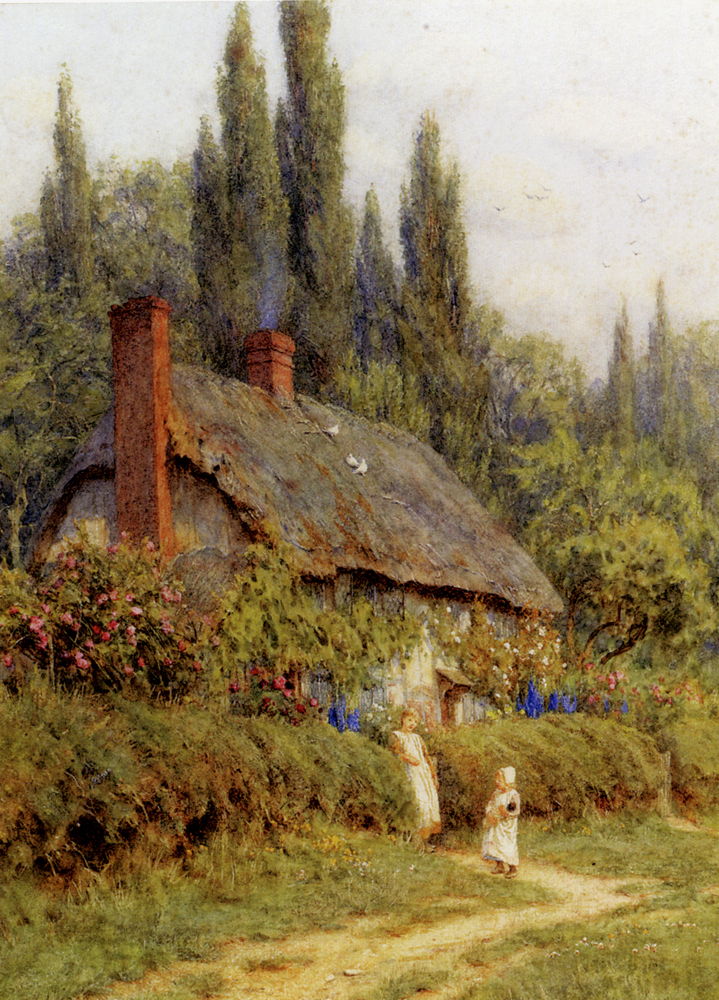
Children On A Path Outside A Thatched Cottage, West Horsley, Surrey shows another small village which has since changed dramatically. Not far from the Allingham home in Surrey, West Horsley is between Guildford and Leatherhead, an area heavily developed through the twentieth century and now described as semi-rural.
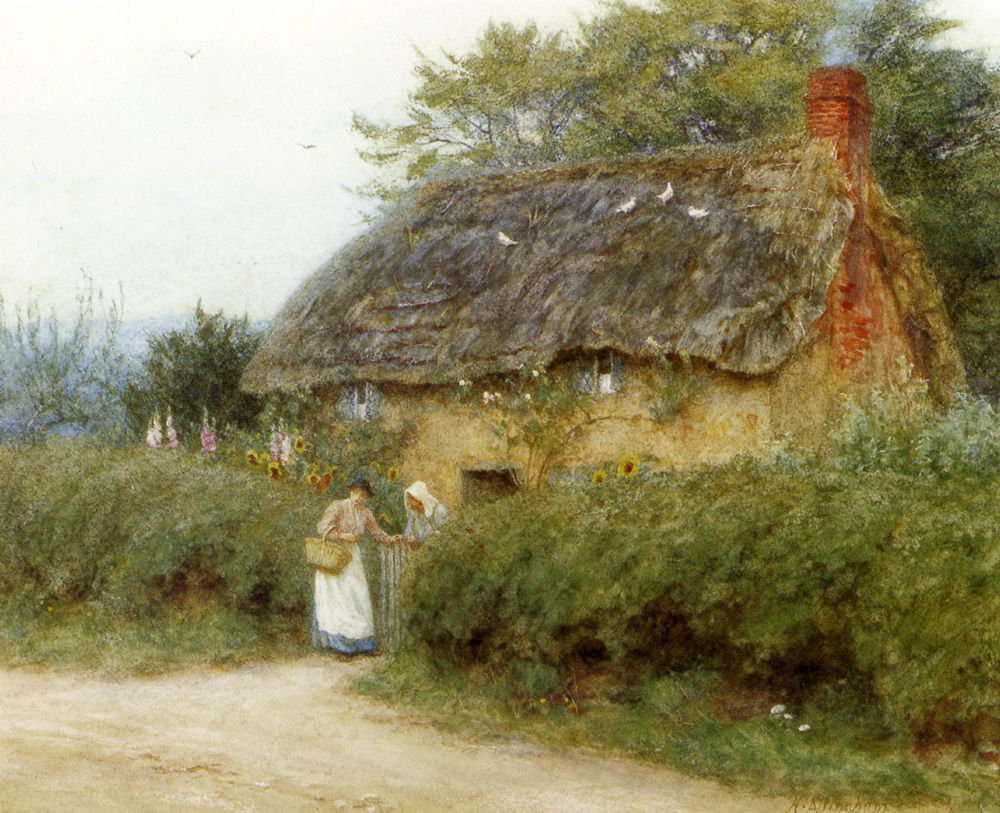
A Cottage With Sunflowers, Peaslake is not far away, about five miles to the east of Guildford. Although much of this area has been preserved, its roads are now extensive and very busy, particularly in the summer. It’s not far from the location used by John Brett for his masterpiece The Stonebreaker (1857-58).
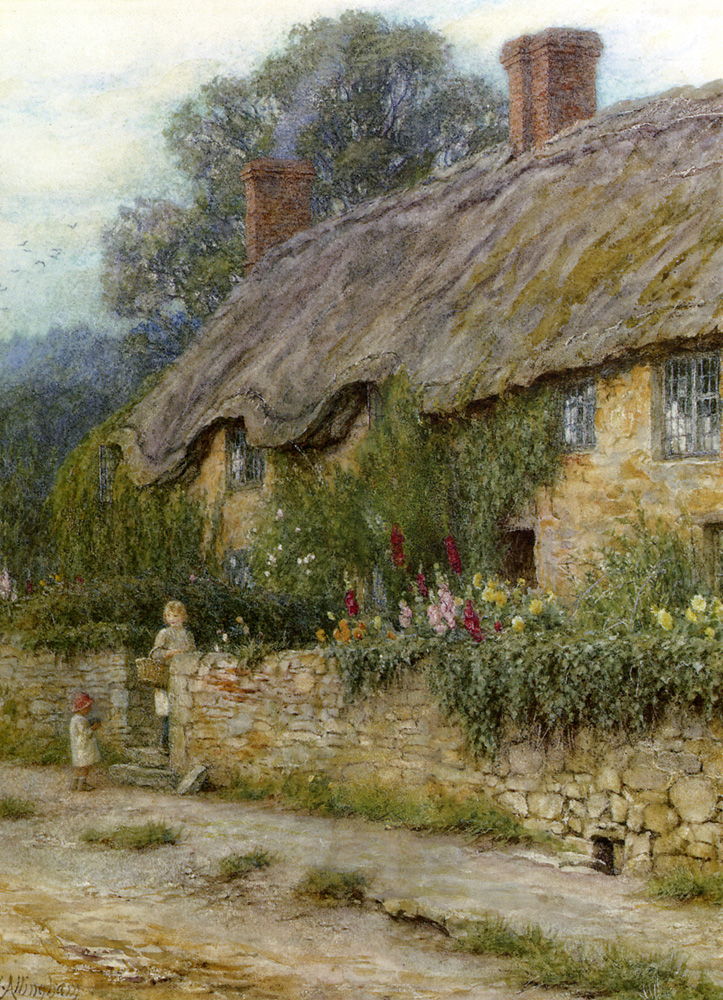
A Mother And Child Entering A Cottage is another view of a cottage somewhere in the south of England.

A Village Street is a view soon lost when motor vehicles took to the roads in the twentieth century. As usual, Allingham is honest in her depiction of the neglected state of most rural buildings, but this doesn’t show the drainage ditch (open sewer) which still ran through the centre of most villages, nor the mud and excrement covering the roads and pavements for much of the year.
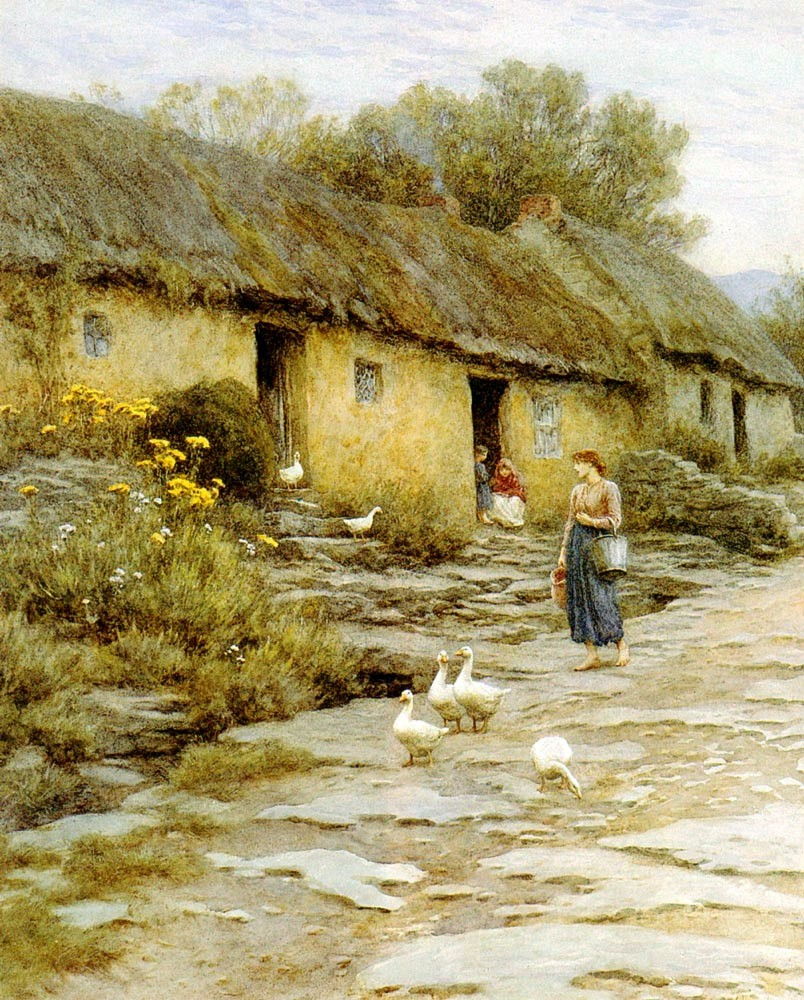
Irish Cottage is again a faithful representation of the motif, but tells nothing of the squalor in which most occupants of these cottages had to endure.
Helen Allingham died suddenly while visiting a friend in her beloved and leafy Surrey on 28 September 1926, at the age of 78.
Her countryside is idyllic, it’s forever summer, with the banks of flowers in perpetual bloom, and the occupants clean, healthy, and happy. It’s a world long lost, indeed it may never really have existed except in her imagination. The harsh reality was that even affluent middle-class families such as her own (her father was a medical practitioner) commonly faced tragedy: her father and three year-old sister died in 1862 during an epidemic of diphtheria. You couldn’t imagine something like that happening in her eternal countryside.
Reference

