
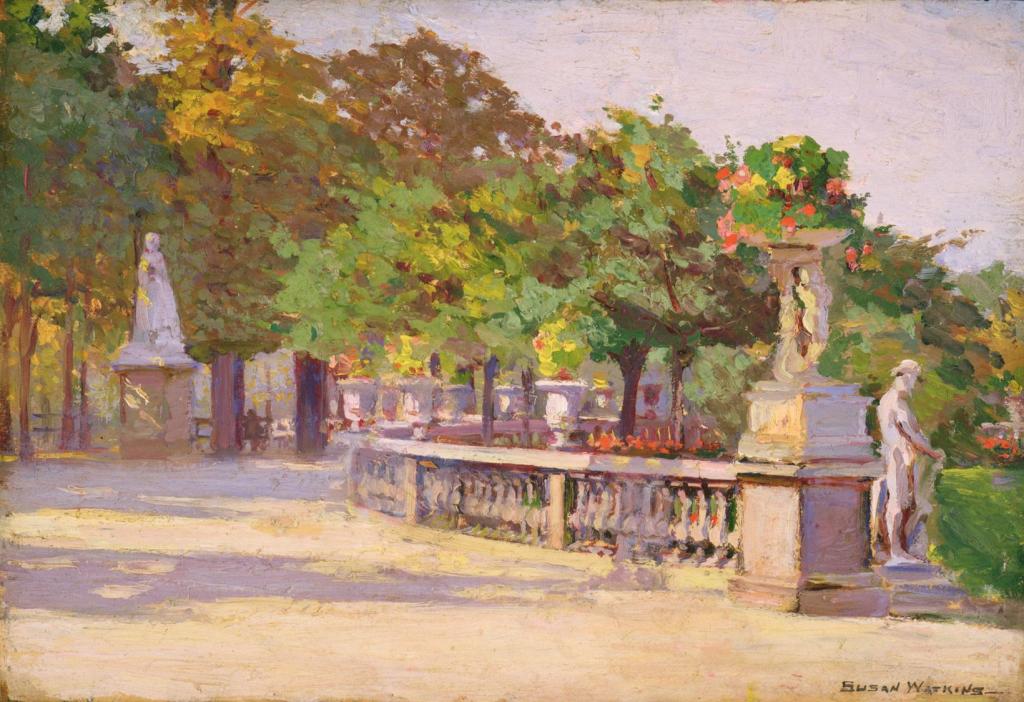
Susan Watkins (1875–1913) had such a tragically brief career that her art was soon forgotten. In the first decade of the twentieth century she was one of the most successful American painters in Paris, and a friend (and relative by marriage) of William Merritt Chase.
She was born in California, but her family moved to New York, where her father was an editor for The New York Sun newspaper. She started her training at the Art Students League at the age of only fifteen, where she probably first met William Merritt Chase. Her father died in 1896, so she and her mother moved to Paris, where she resumed her training under Raphaël Collin (1850-1916) in an academic style.
She submitted her first works to the Salon in 1899, and continued to exhibit there regularly while she remained in France. She also exhibited her work in American galleries, including the Art Institute of Chicago, and the Corcoran in Washington, DC.
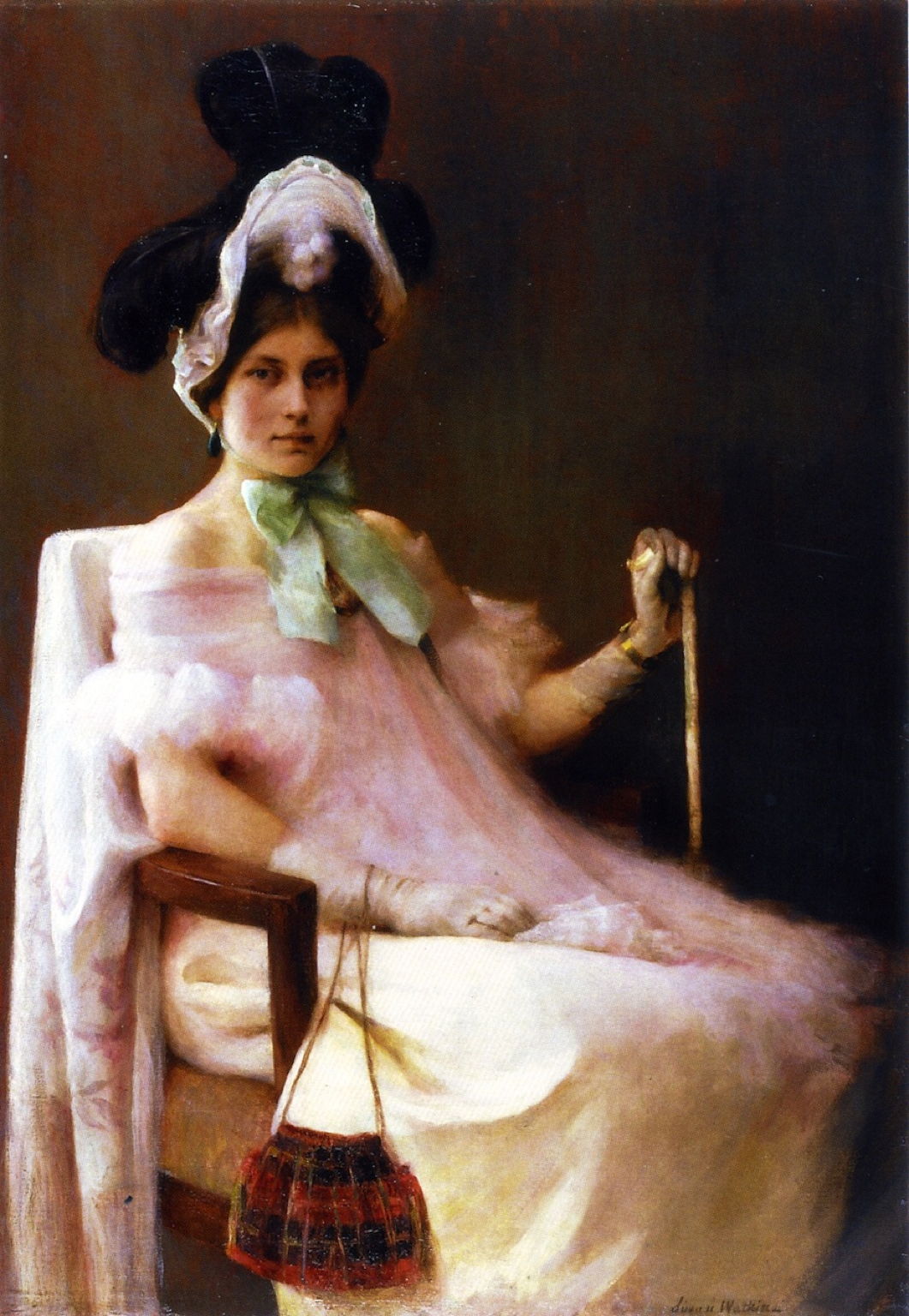
The 1830 Girl (Portrait of Miss M.P. in Louis Philippe Costume) from 1900 refers to the style of dress popular in the reign of King Louis Philippe I (1773-1850), nicknamed the Citizen King.
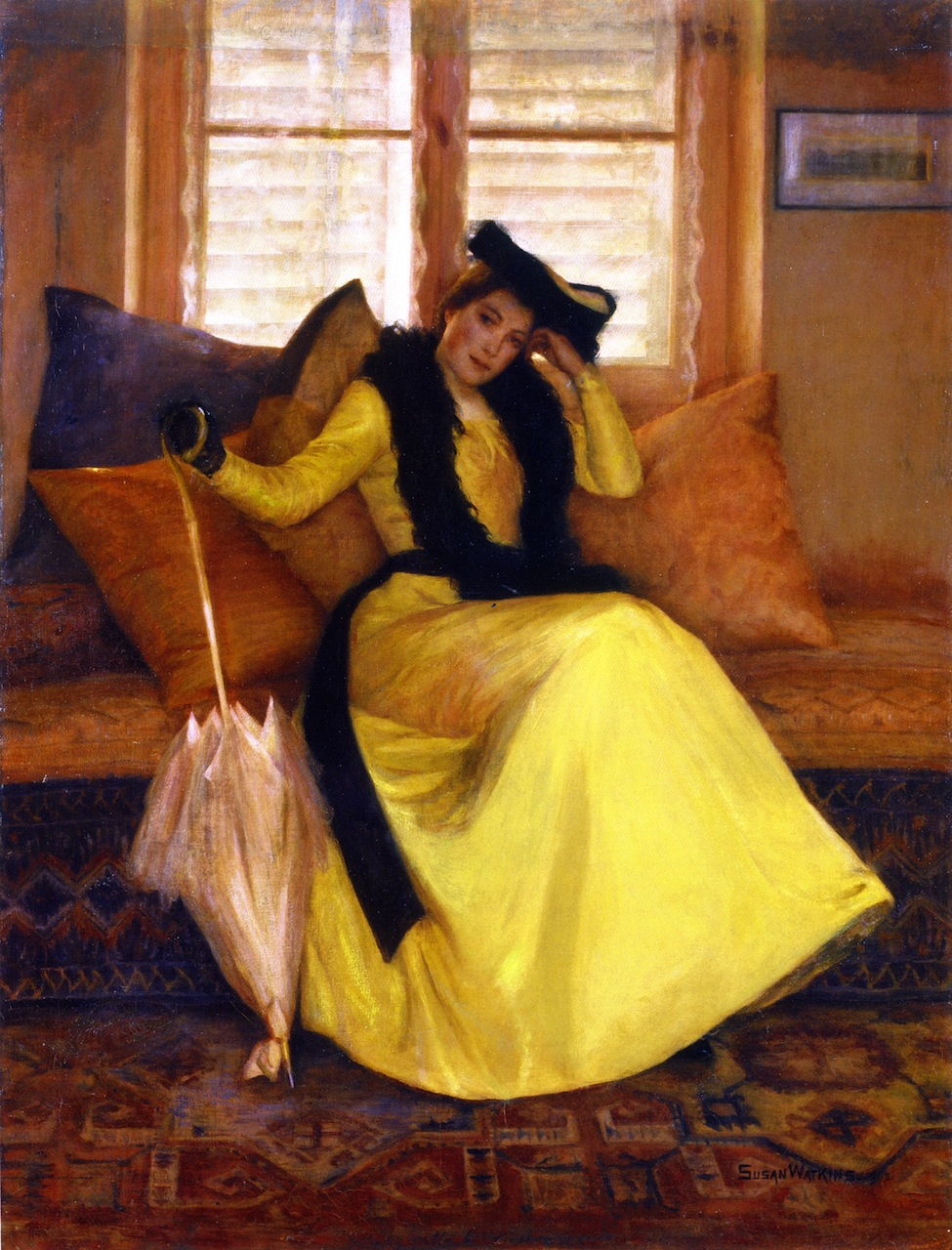
Watkins’ Lady in Yellow from 1902 is in more contemporary dress, with a fashionable parasol.
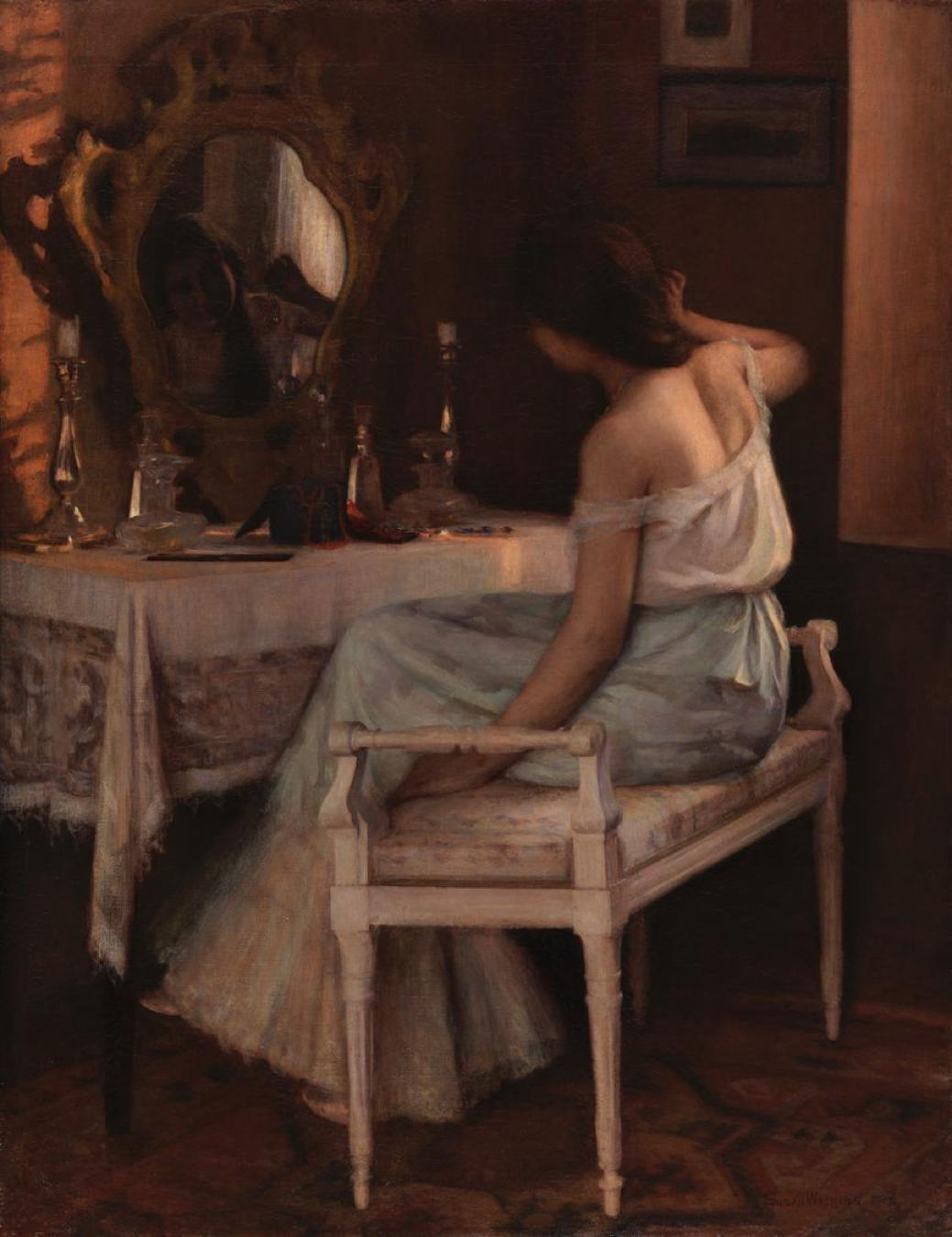
The Necklace (1902) is suspended from this woman’s right hand and only visible in her reflection, as she sits lit from behind at her dressing table.
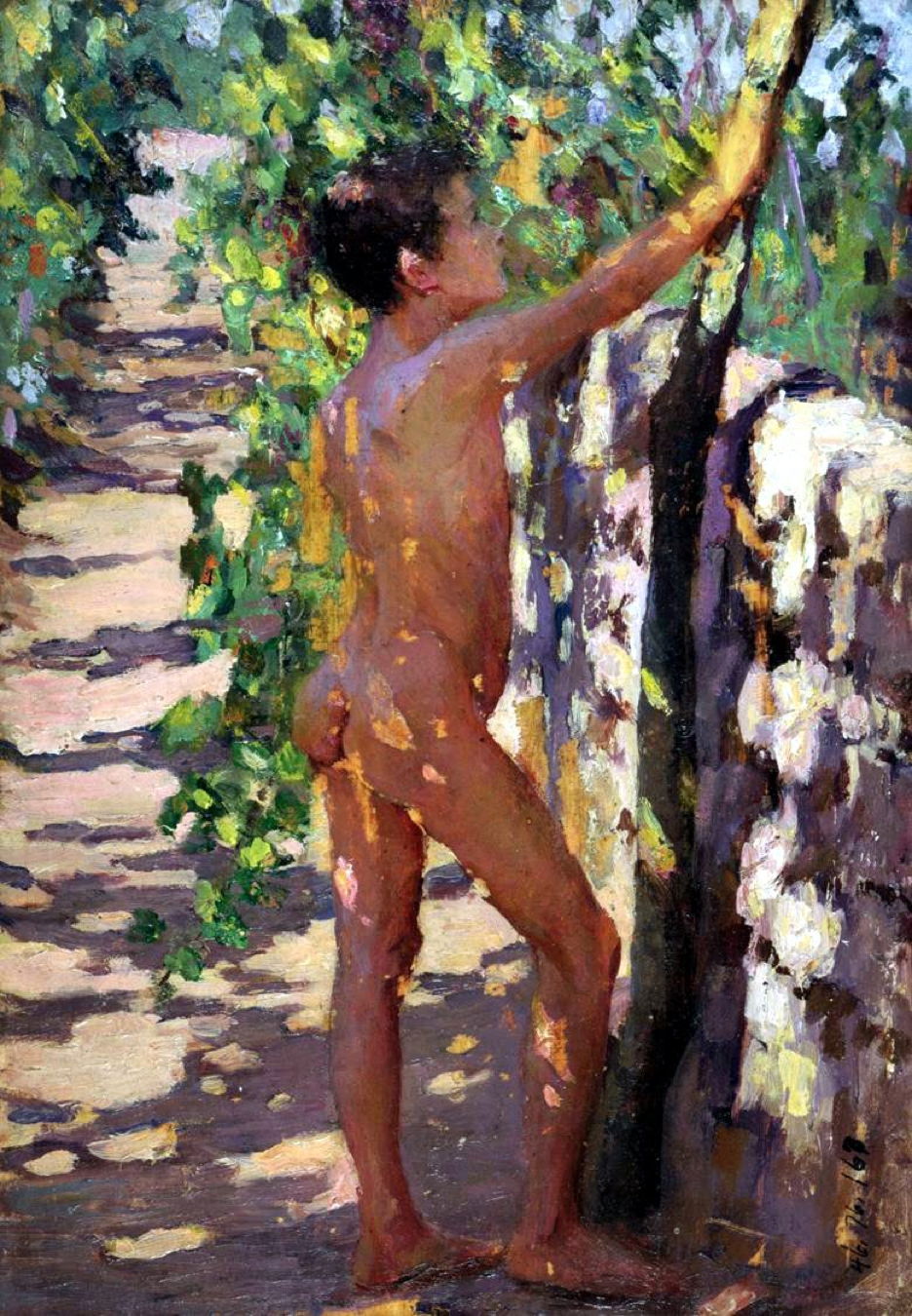
In about 1906, Susan Watkins visited Italy and the island of Capri, in the Bay of Naples. When there, she painted two superb studies for one of her finest works, showing local boys picking grapes on the island. The studies are above and below, and the finished painting with two boys is below that.
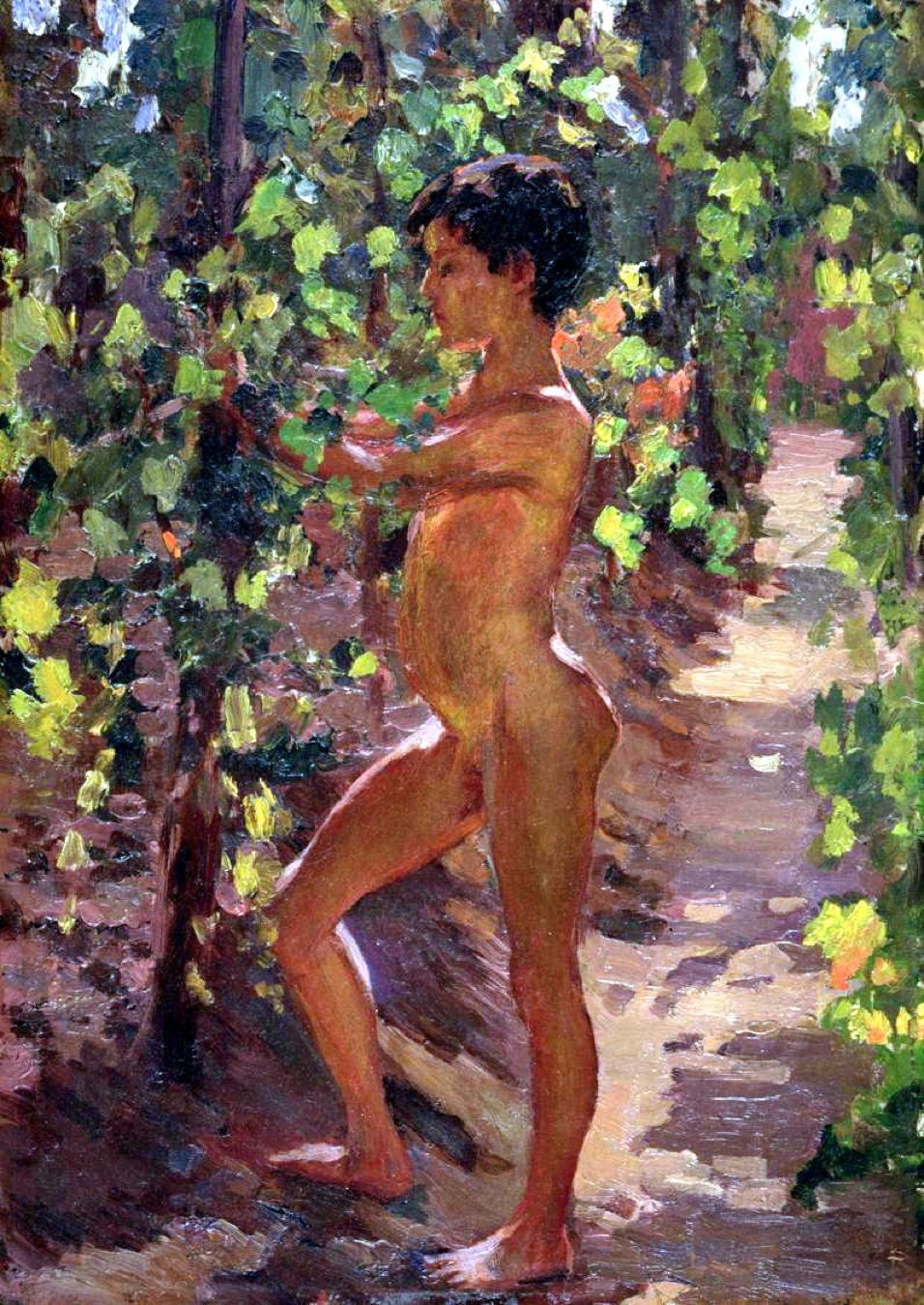
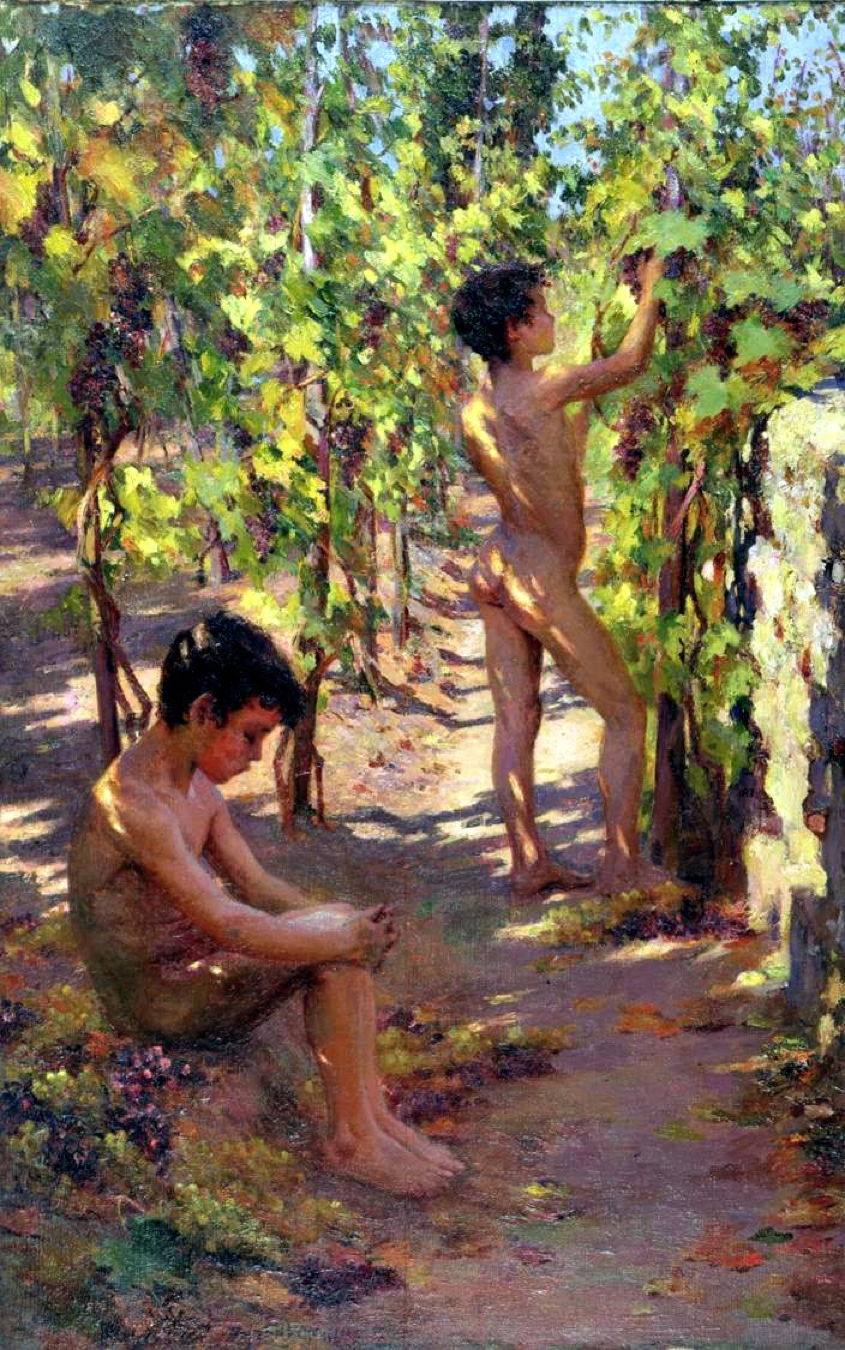
Her finished painting of Boys Picking Grapes at Capri (c 1906) shows the much looser, more painterly, and richly chromatic style of her mature work.
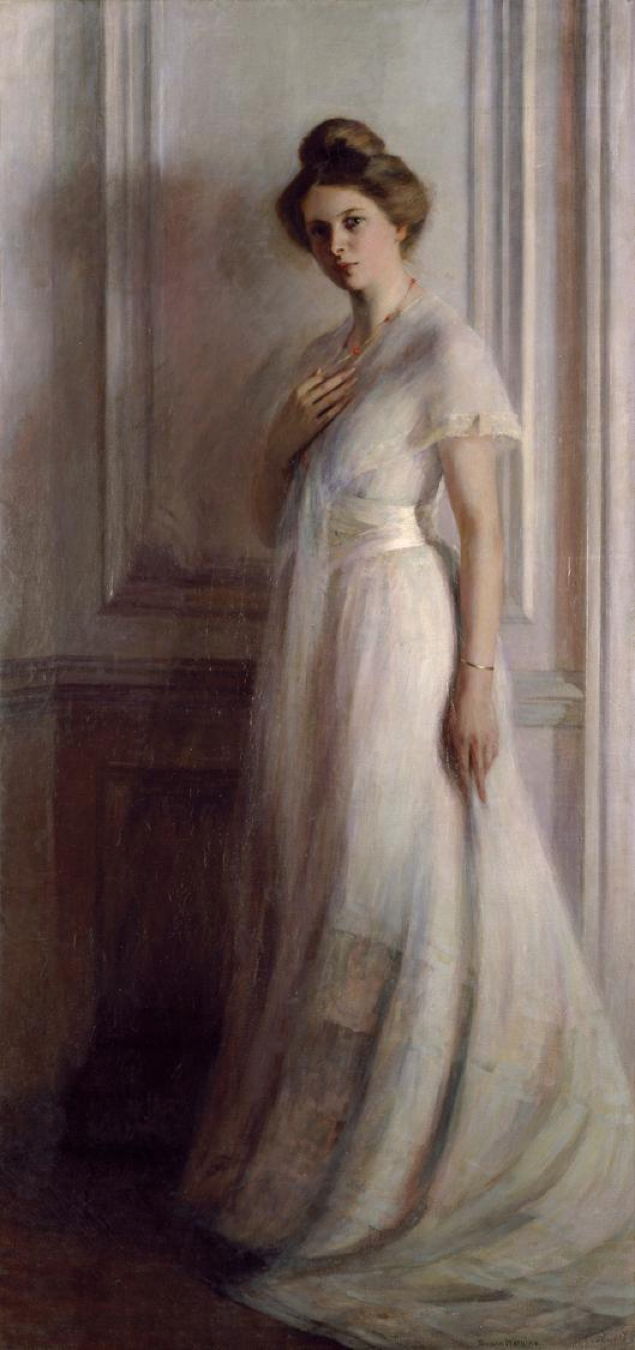
Marguerite (c 1906) stares at the viewer from a bare white interior.
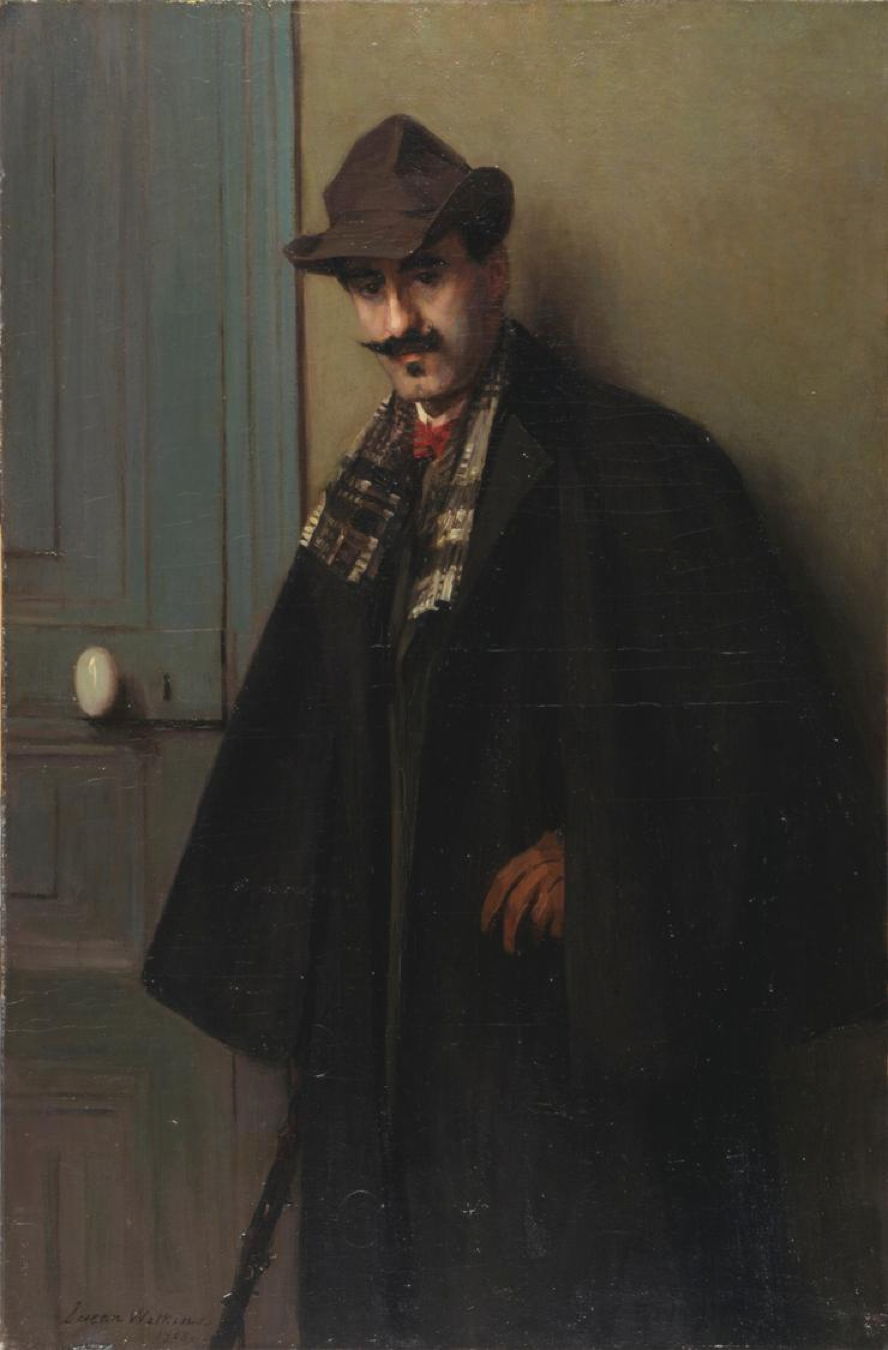
Watkins’ Portrait of Alfred Maurer (1908) is a major work, showing this American modernist painter, who lived from 1868-1932. He too had studied with William Merritt Chase in the 1890s, and went to Paris in 1897, where he seems to have spent much of his time copying in the Louvre. He returned to the US in about 1901, and apparently went back to Paris in about 1904.
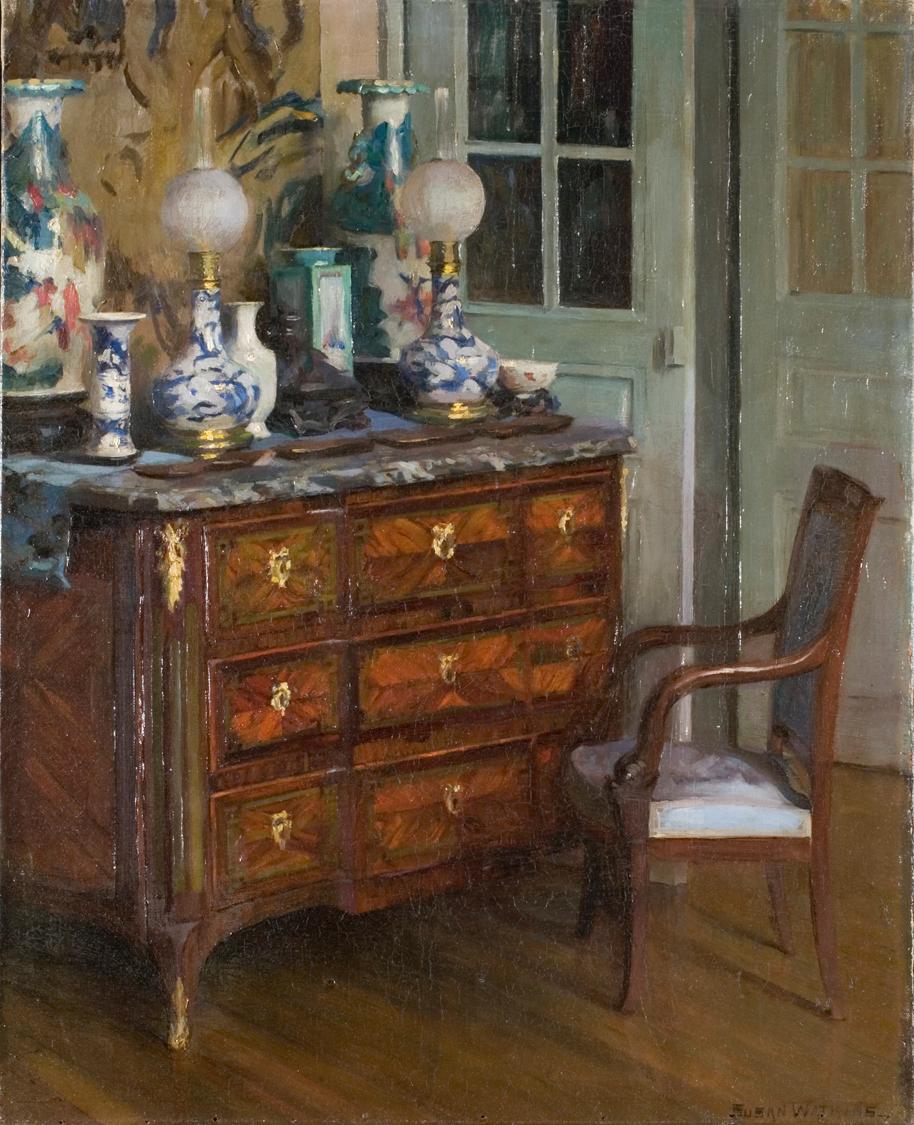
French Interior from 1908 includes a contemporary and thoroughly bourgeois collection of porcelain.
Watkins also appears to have been an enthusiastic and accomplished landscape painter. All the examples I have been able to find date from 1908, when she painted a series of plein air views of the centre of Paris.
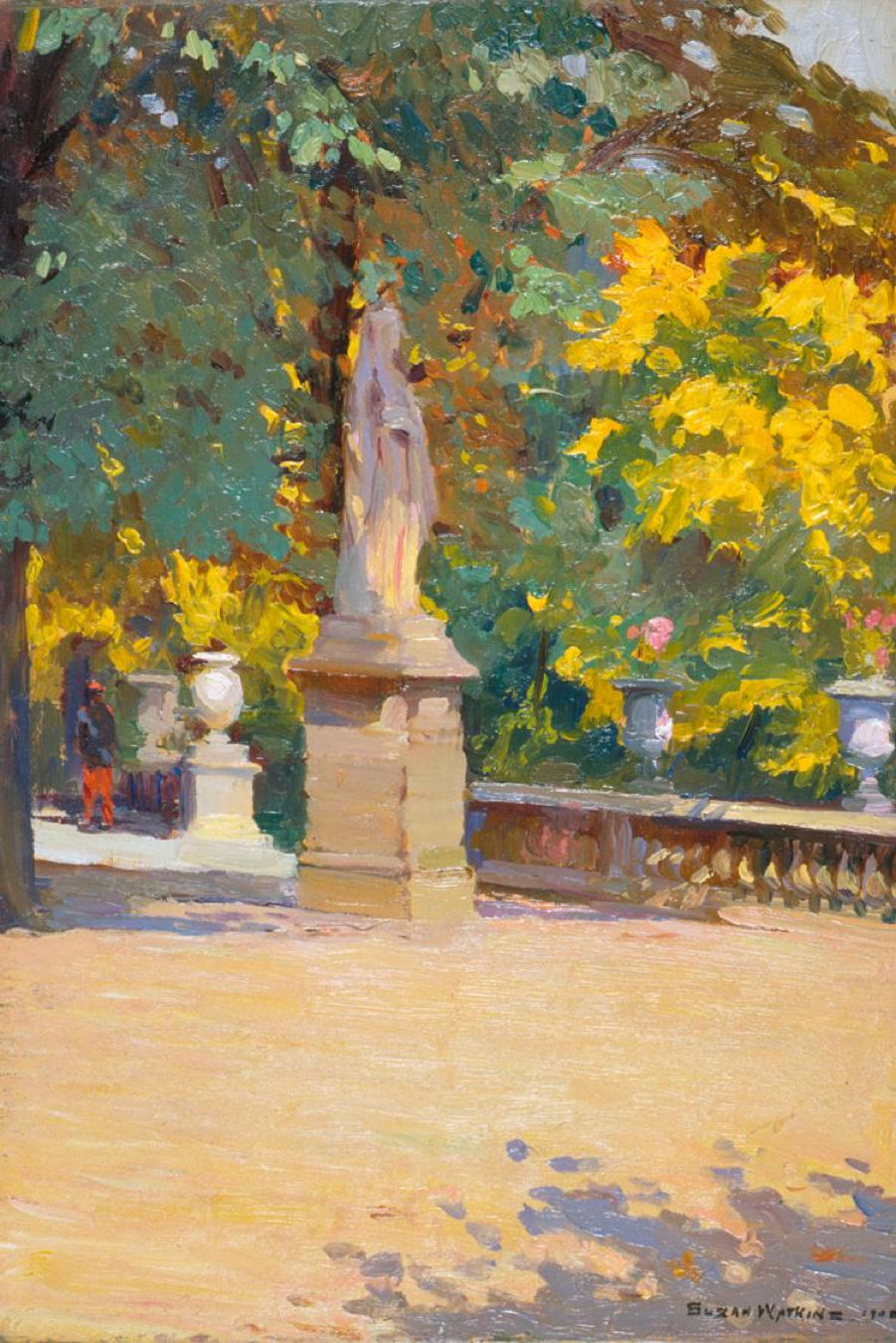
This is her first View of the Jardin du Luxembourg from about 1908.
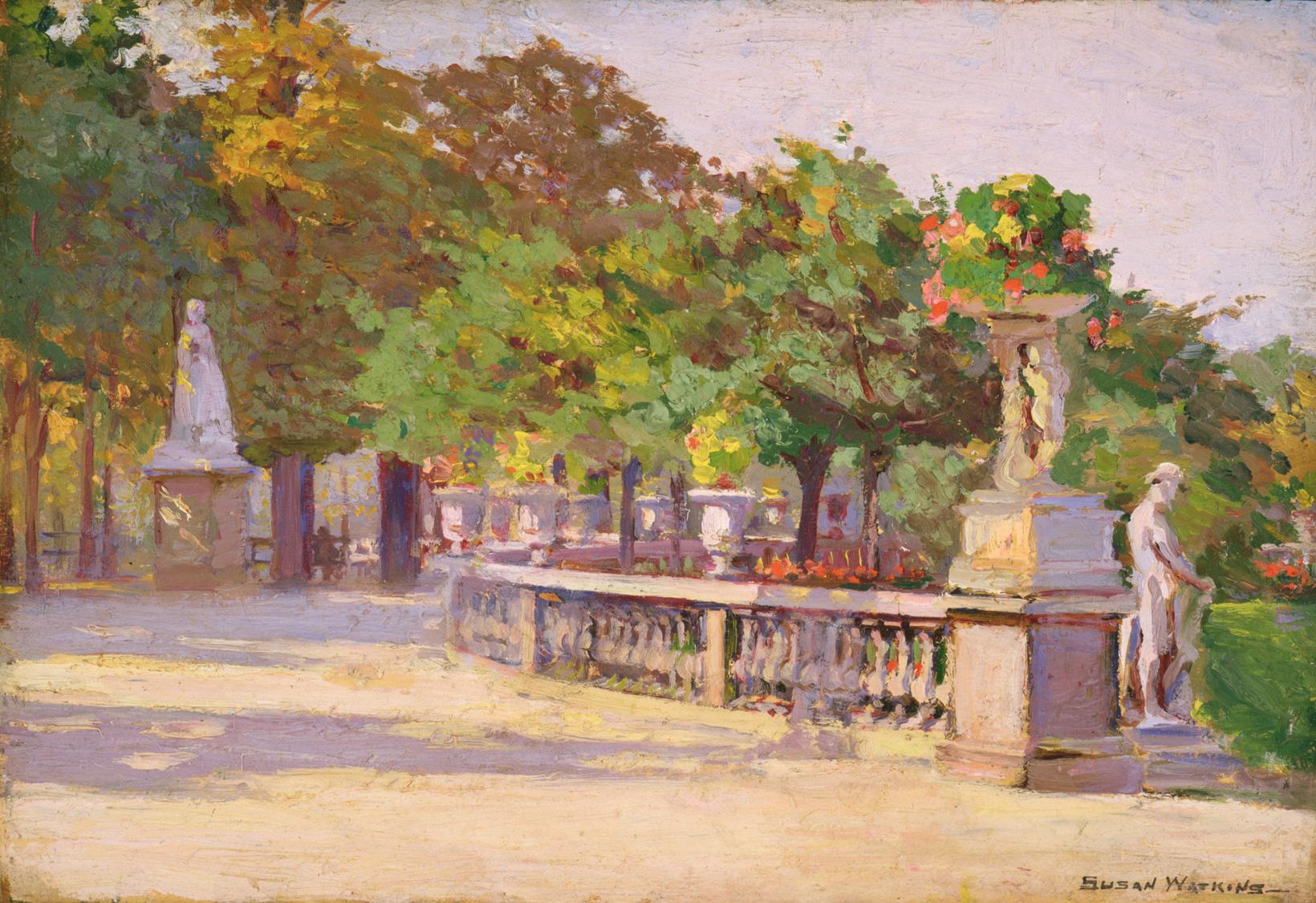
This is a second View of the Jardin du Luxembourg from the same year.
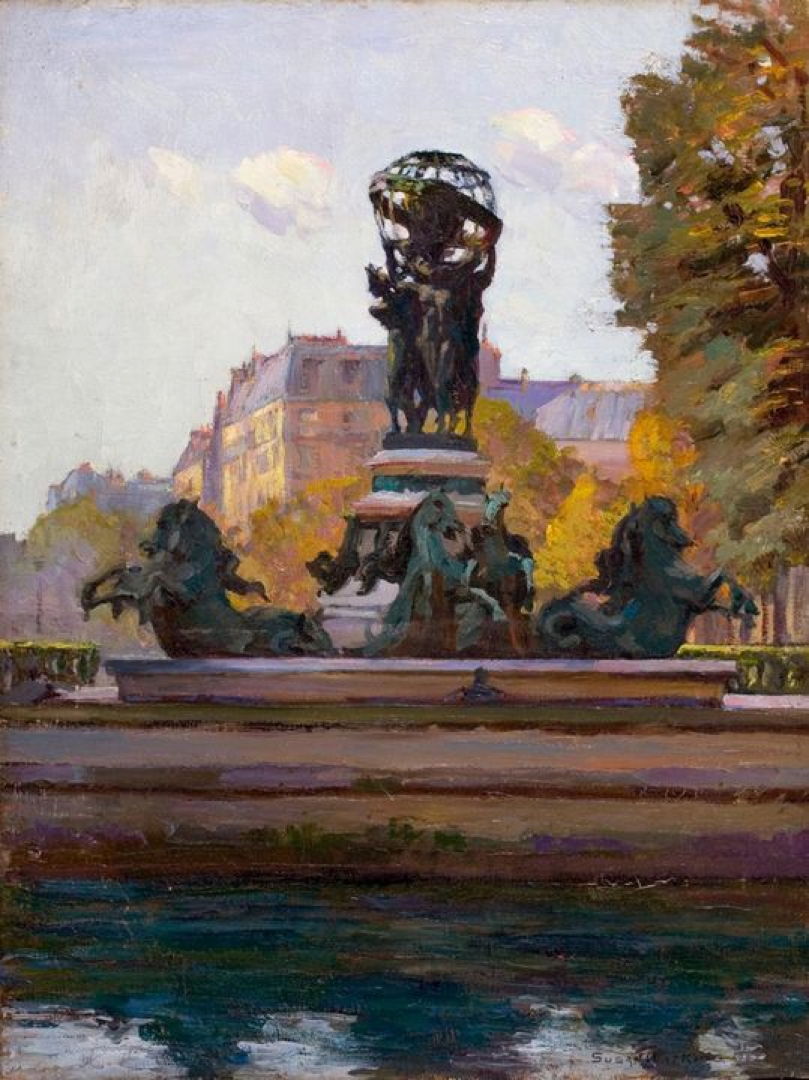
She also painted this View of the Fontaine de l’Observatoire, Jardin du Luxembourg, Paris in 1908.
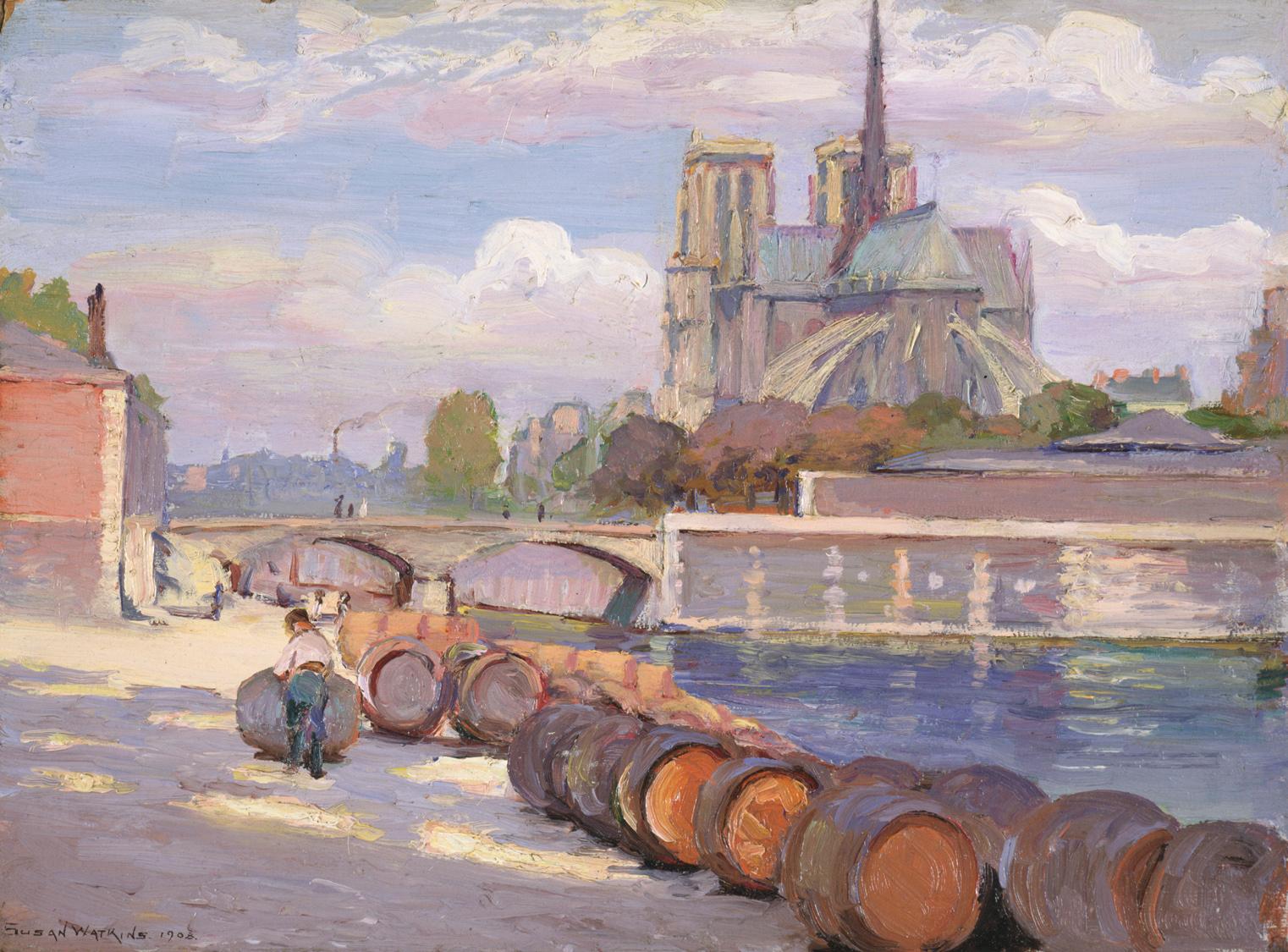
View of the Seine and Notre-Dame from the Quai de la Tournelle, Paris also dates from about 1908.
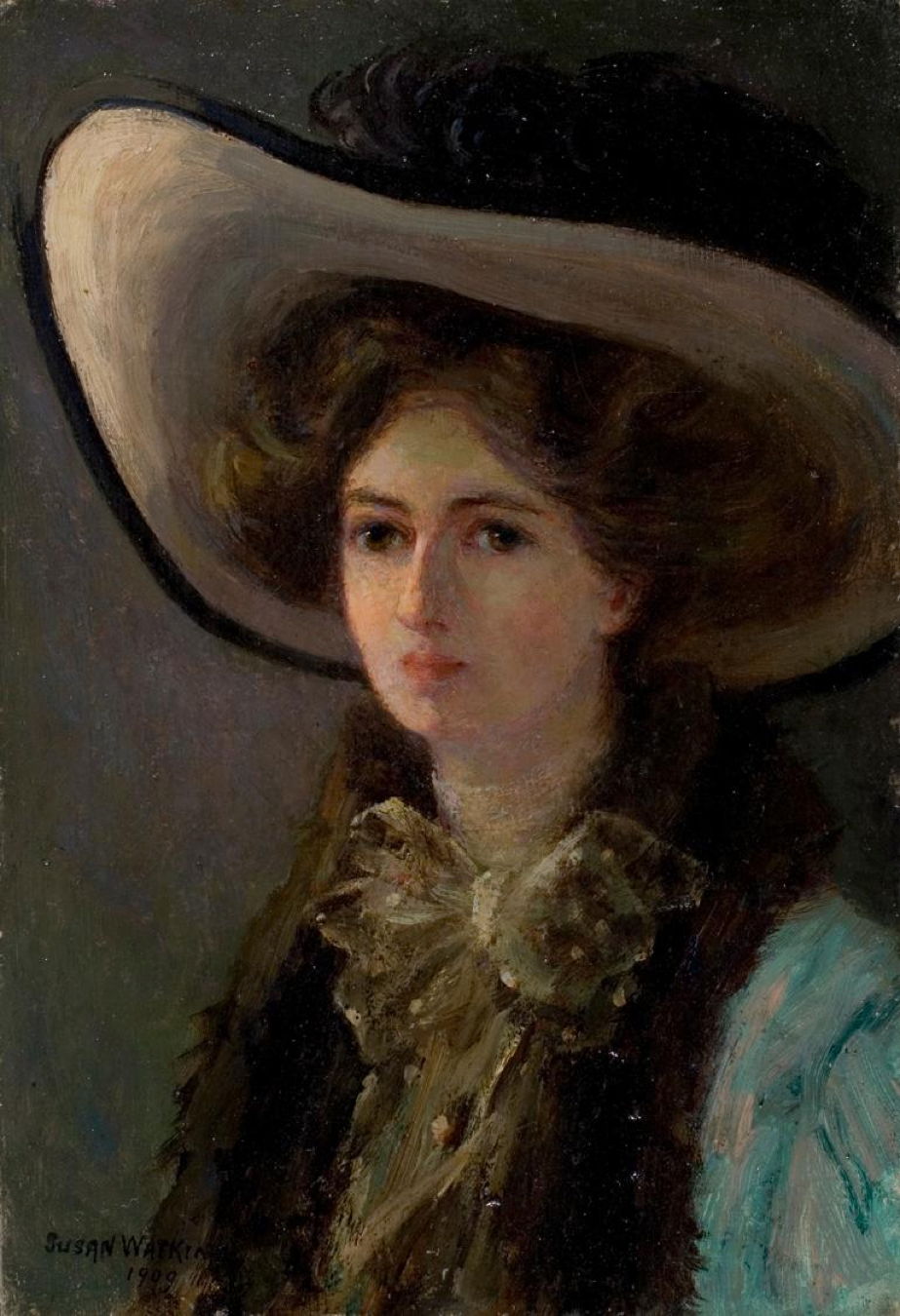
This is her Self Portrait from the following year.
In 1910, Susan Watkins returned to New York, where she continued her career as an acclaimed portraitist, and exhibited Post-Impressionist landscapes and genre scenes. That year she was awarded the Julia A Shaw Memorial Prize, for the best painting or sculpture by an American woman, by the National Academy of Design in New York.
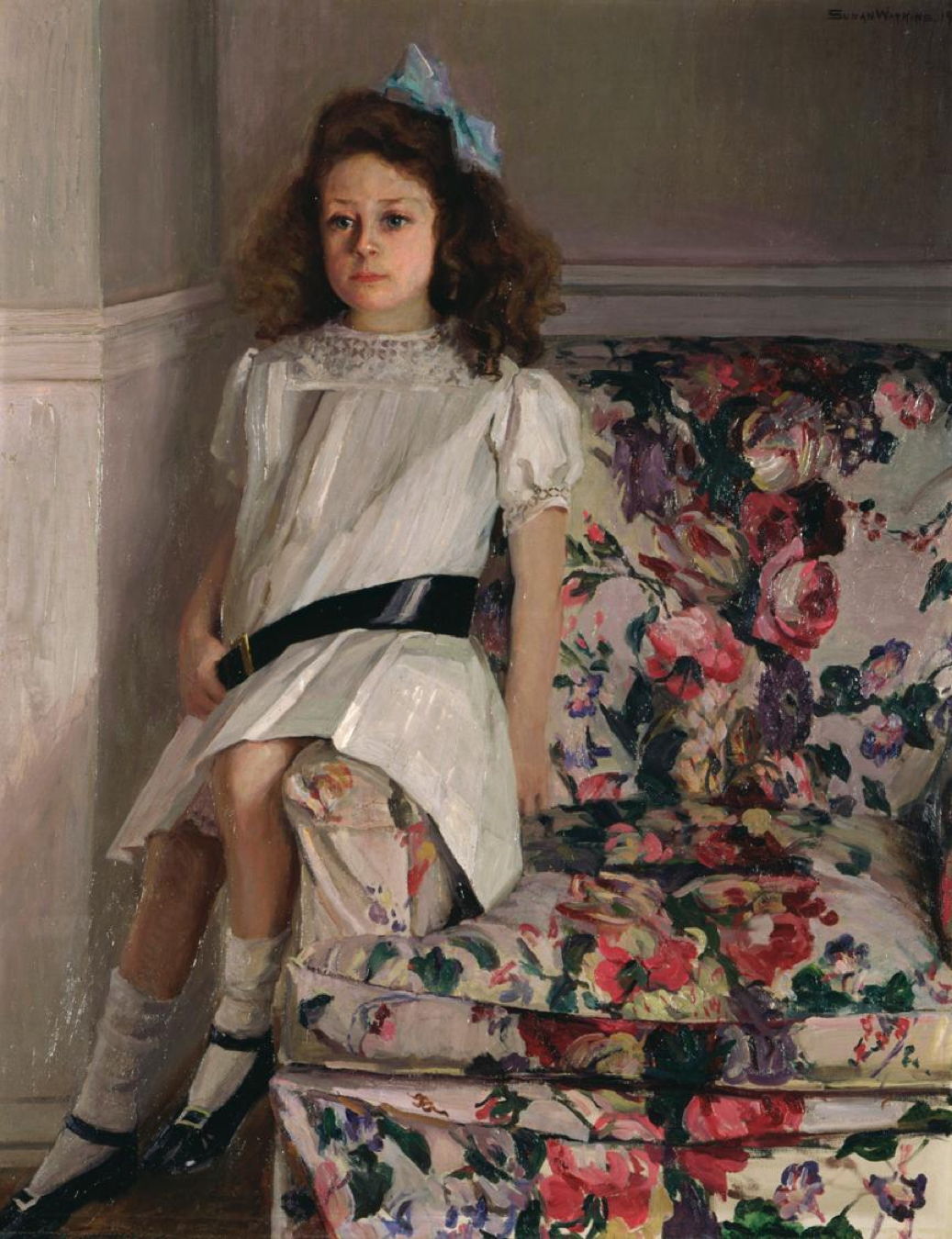
She painted this portrait of A Young Girl (Daughter of Walter S. Martin) in 1910.
By 1912 she had become unwell, and her health began to fail rapidly. She married the Norfolk banker Goldsborough Serpell, and died in June 1913 at the age of only 37. When her husband died in 1946, he left her paintings to the Chrysler Museum of Art; most, though, remain in private collections.
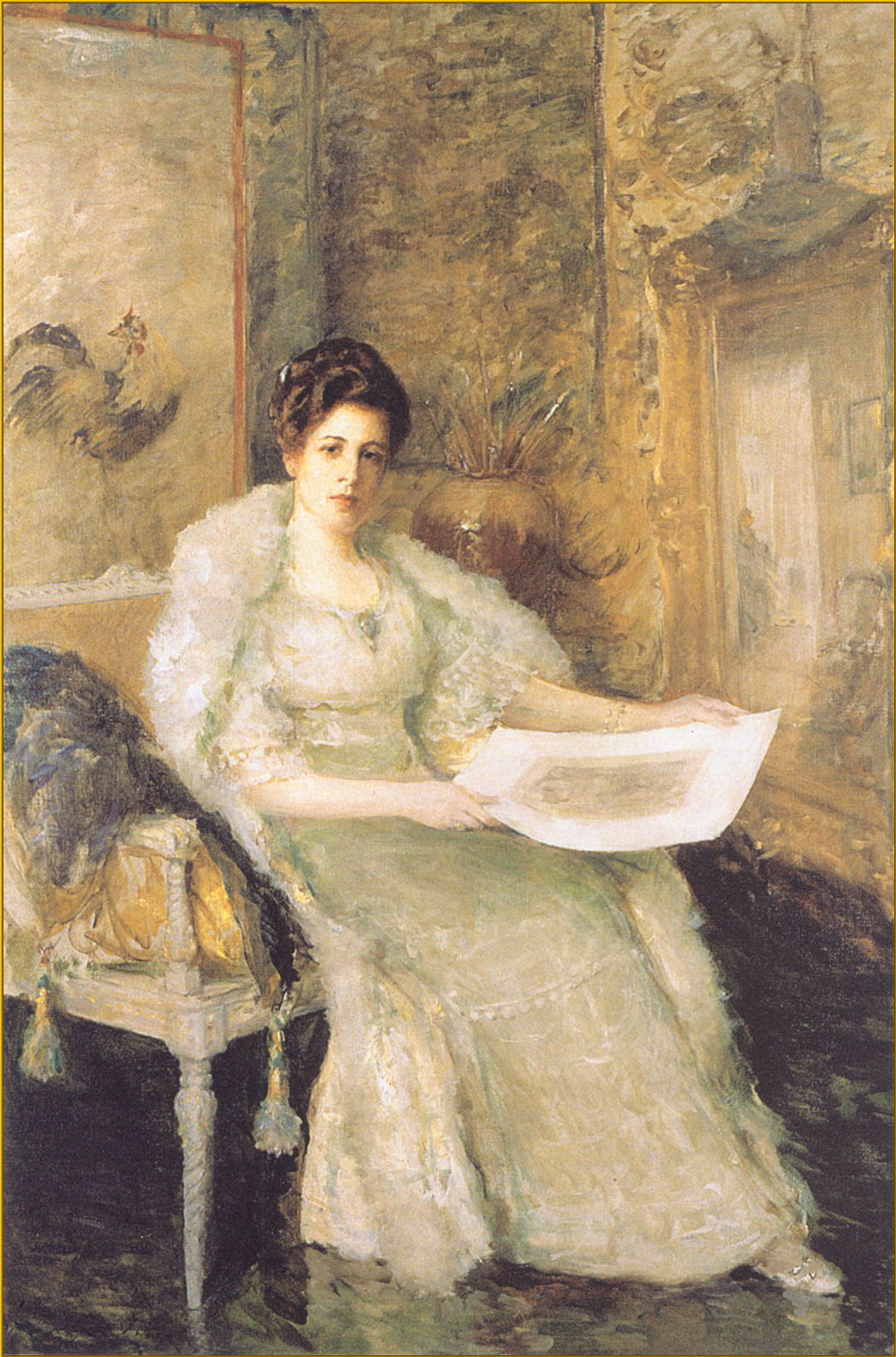
William Merritt Chase painted his posthumous Portrait of Susan Watkins a year after her death, in her memory, and only a couple of years before Chase himself was to die. She holds a print, an allusion to one of her paintings, The Engravings (1910). On her easel, at the right, is another of her works, Morning Room (1910), and beside her head is a large jar of brushes.
All the above paintings including Chase’s portrait are in the collection of the Chrysler Museum of Art, in Norfolk, VA.

