
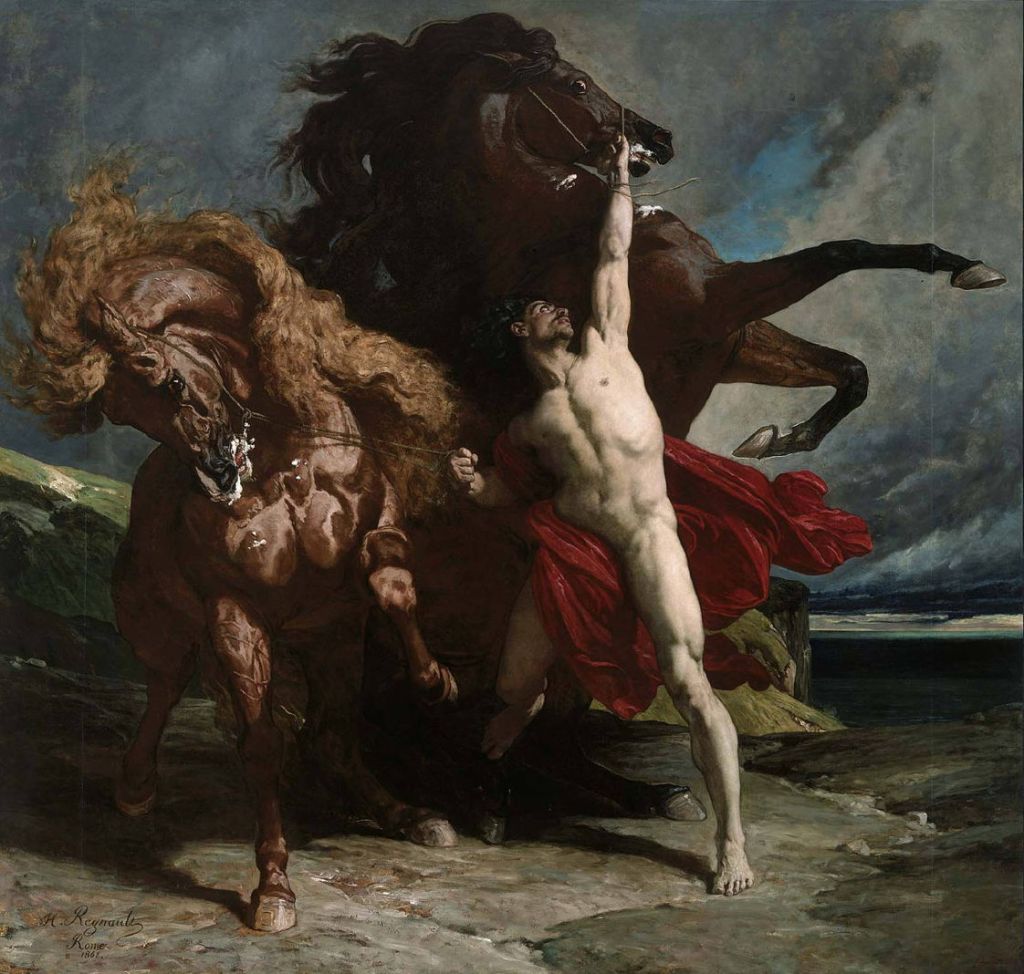
Today the best-known artist to die in the Franco-Prussian War is the French Impressionist Frédéric Bazille, but he wasn’t the only promising young painter to fall victim to that brief conflict: also killed was Alexandre-Georges-Henri or just plain Henri Regnault (1843–1871).
Son of Henri Victor Regnault (1810-1878), one of France’s most distinguished chemists and physicists, he trained with Montfort, Lamothe, and Alexandre Cabanel, and first competed for the prestigious Prix de Rome in 1863, when he was unsuccessful.
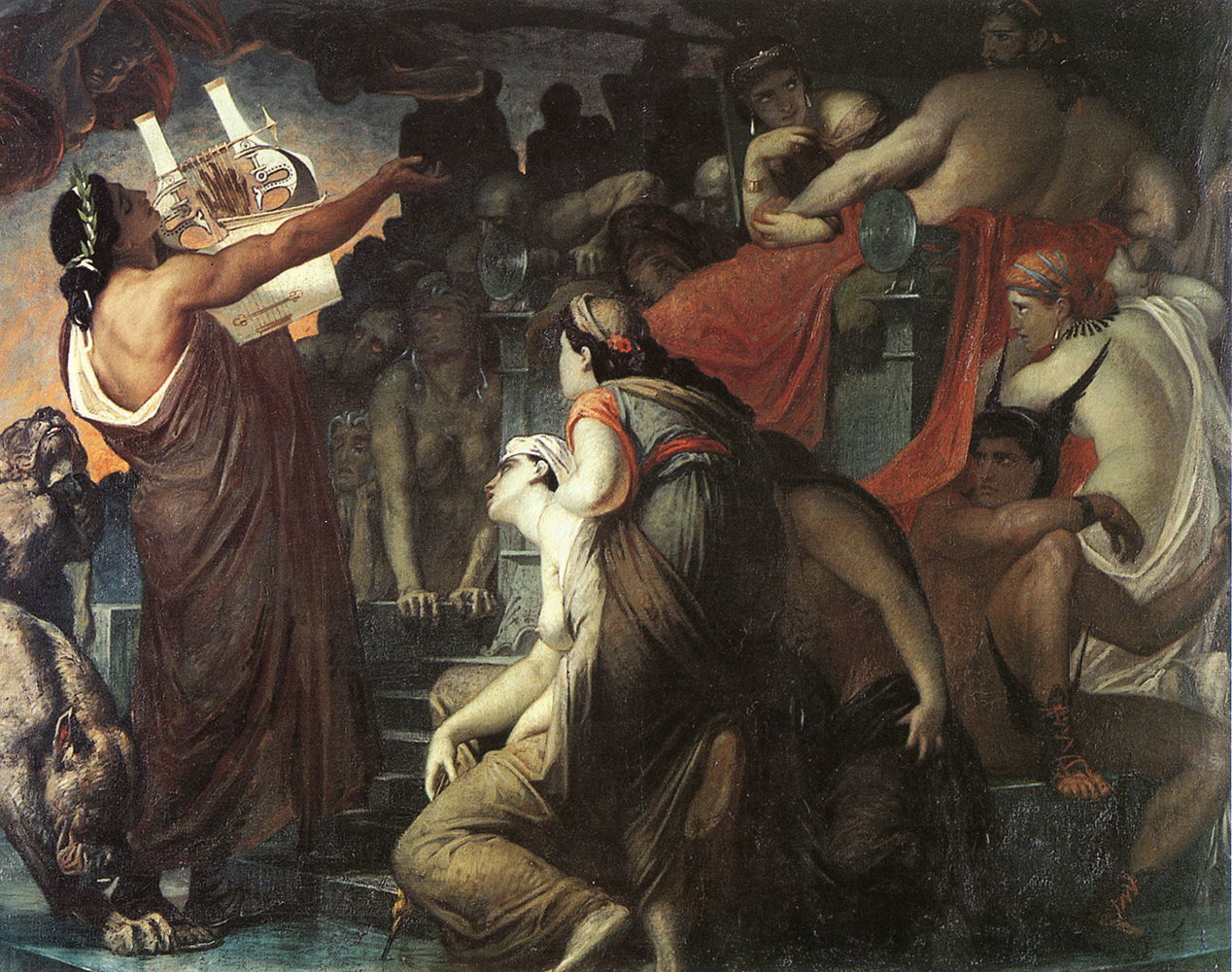
His Orpheus in the Underworld (1865) appears to be based on the popular opera by Offenbach, first performed seven years earlier. Orpheus is seen at the left, his lyre in his hand, singing to the dead. Behind him, at the left edge, are two of the heads of Cerberus, guarding the entrance to the underworld.
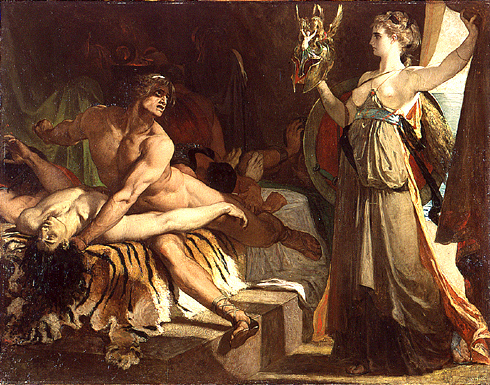
In 1866, Regnault competed again for the Prix de Rome, and won it with his Thetis Bringing Achilles the Weapons Forged by Vulcan, its title taken from a famous painting from 1630-32 by Anthony van Dyck. This shows a scene from the story of the Shield of Achilles, drawn from Homer’s Iliad, book 18, lines 478-608. The sea nymph Thetis, Achilles’ mother, here pleads with Vulcan for replacement weapons for Achilles in the Trojan war, after his original armour and weapons were taken by the Trojans from the corpse of Patroclus. The bare-breasted Thetis is bringing those impregnable weapons to Achilles, among them his famous decorated shield.
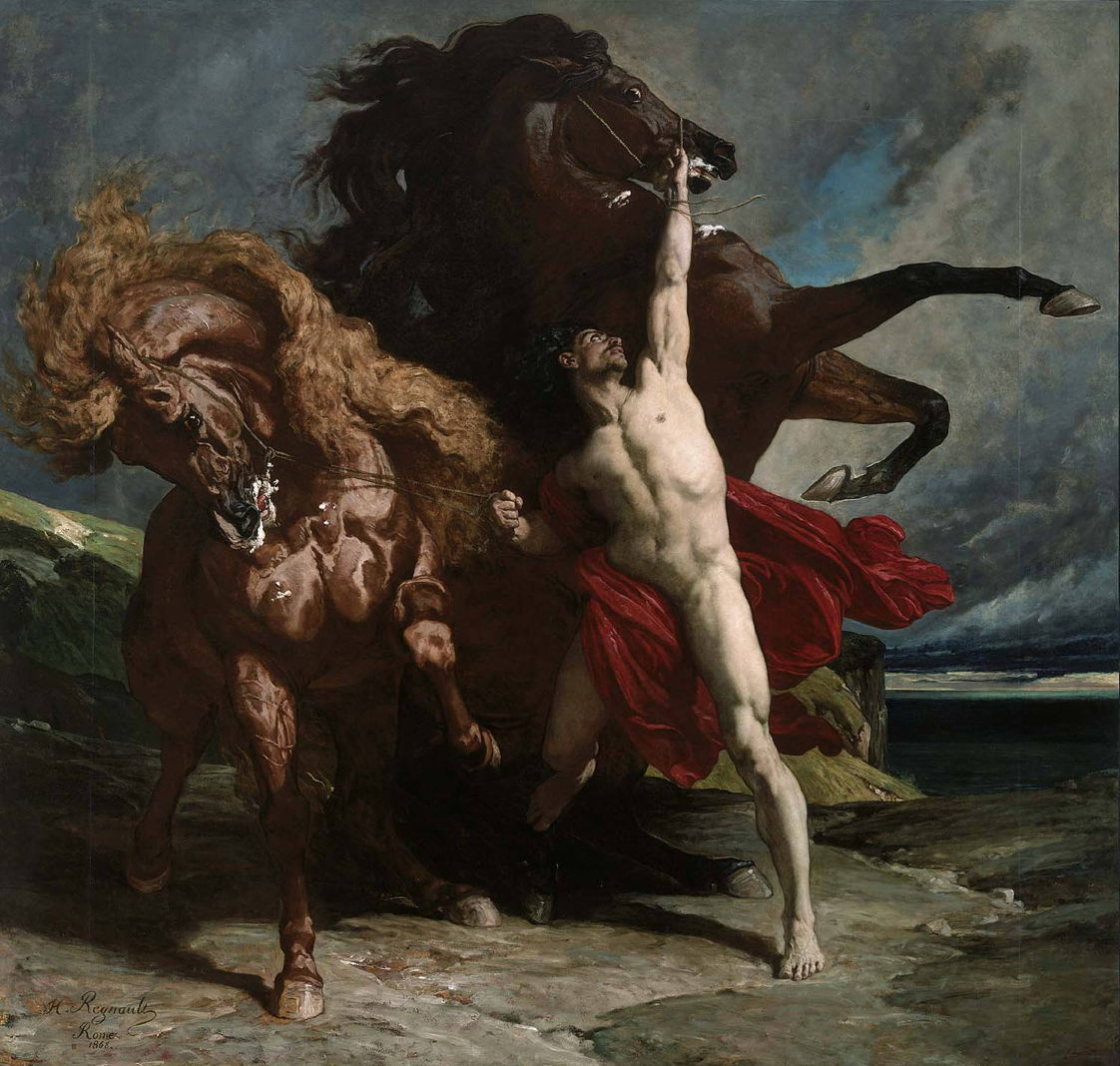
Automedon with the Horses of Achilles (1868) also draws from the stories about Achilles during the Trojan War, in the Iliad. Automedon was Achilles’ charioteer, who rode into battle in command of Achilles’ horses Balius and Xanthos to support Patroclus, when he was wearing Achilles’ armour. When Patroclus was killed, Automedon was driven to the rear of the fighting, where he tried to console the bereaved horses, as shown here. Regnault doesn’t associate the horses’ names with their appearance, though: Balios probably means dappled, and Xanthus means blonde.
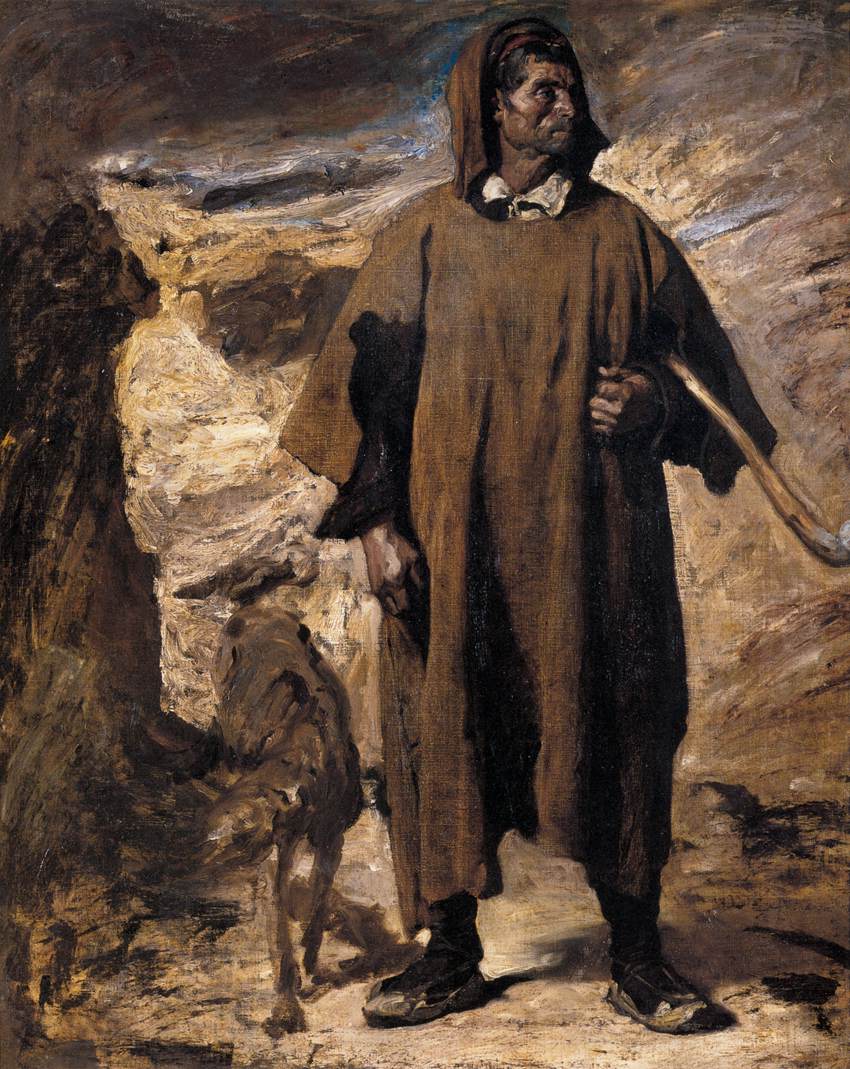
Regnault was probably the first winner of the Prix de Rome to be given dispensation to not spend the obligatory three years in Rome. Instead he travelled to Spain and North Africa for the latter years, where he painted this fine portrait of a Castilian Mountain Shepherd (1868).
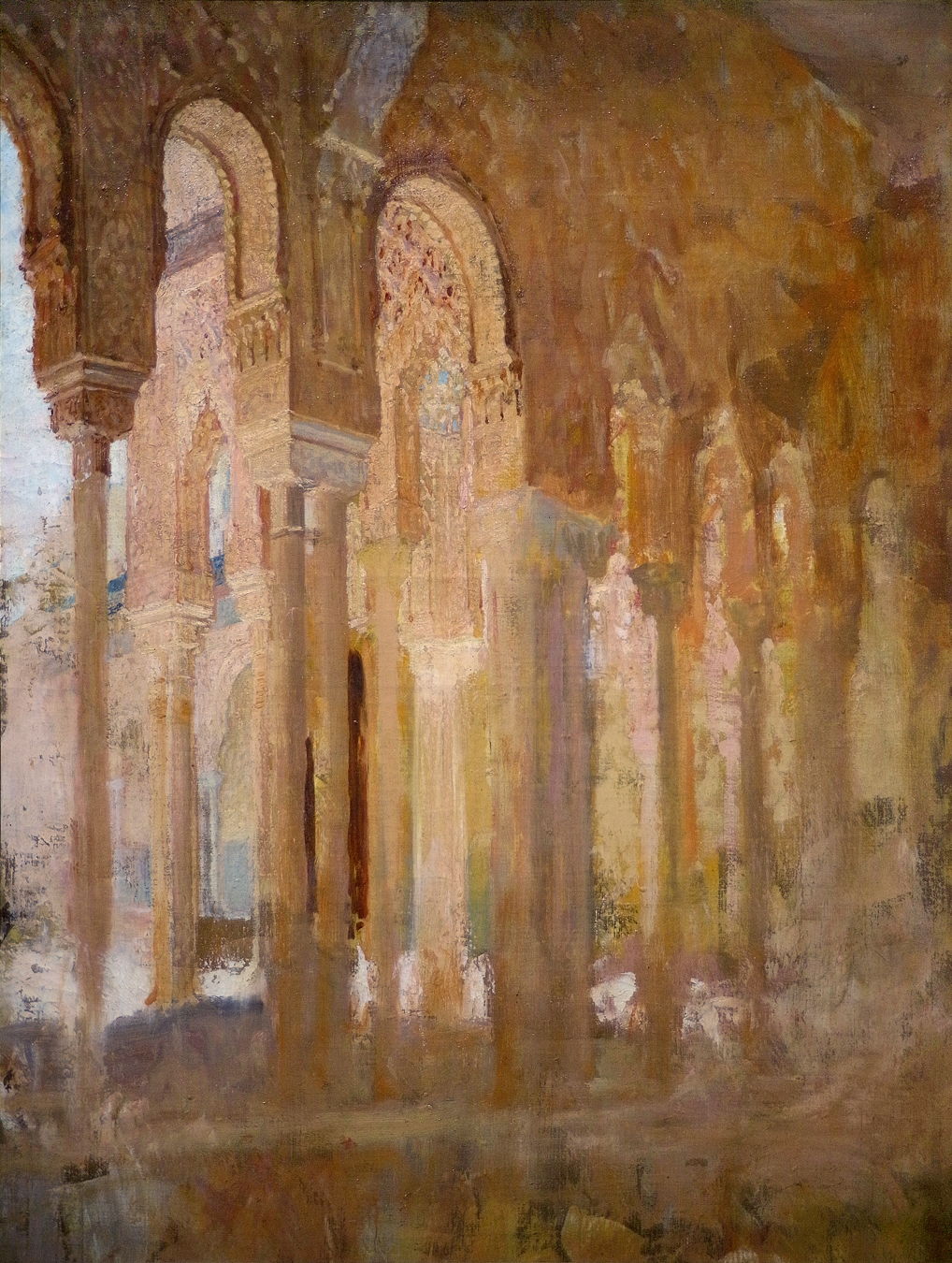
When he was in Granada, he painted this view of the Colonnade of the Court of the Lions at the Alhambra (1869). I suspect this was unfinished, and he intended to complete the detail in its lower half.
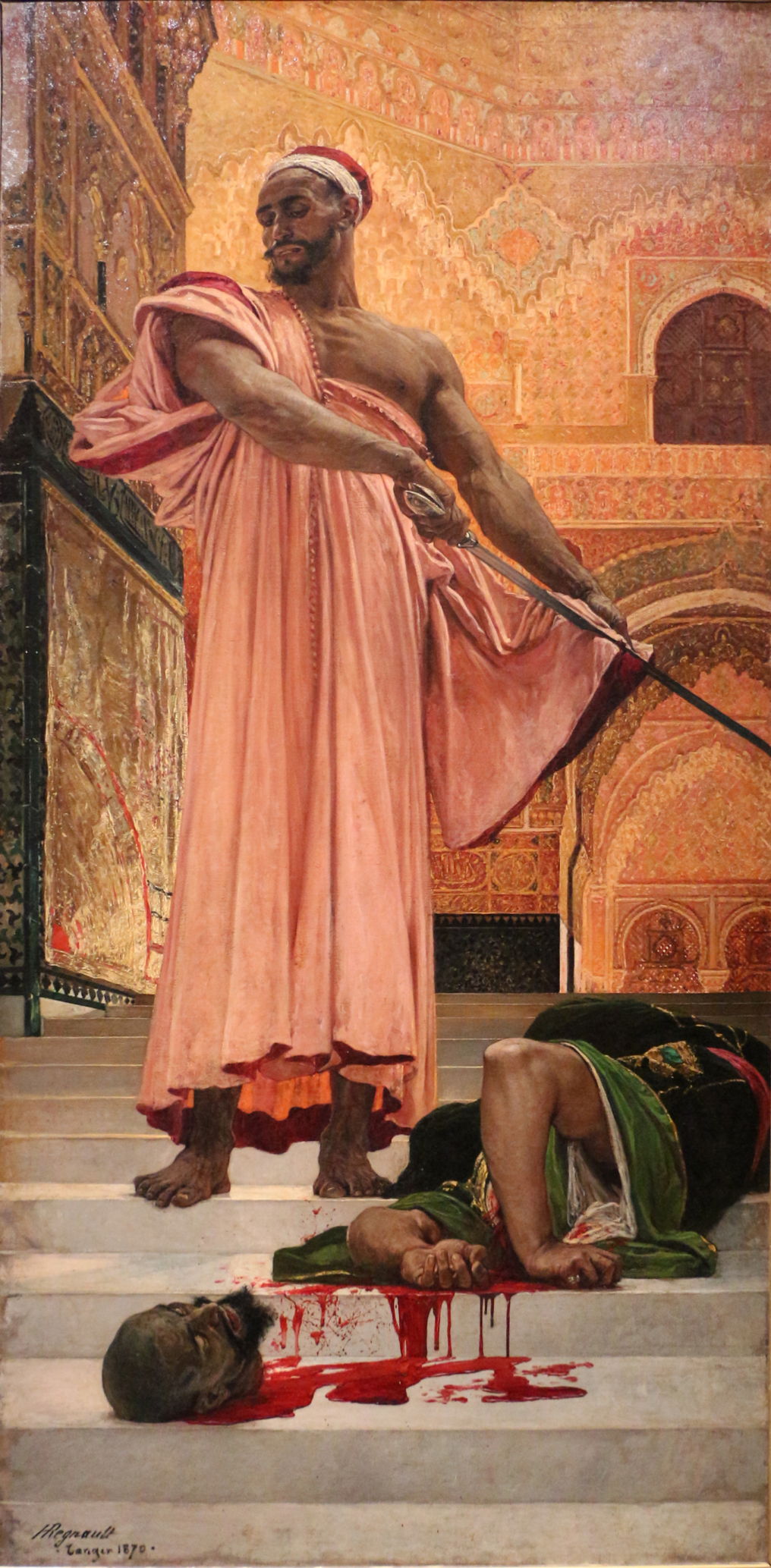
More famous was his Summary Execution under the Moorish Kings of Grenada (1870), catering for the growing public taste for spectacular gore. This shows the immediate aftermath of a summary beheading performed on the steps of the Alhambra, during the Moorish kingdom prior to the Christian Reconquista of 1492. Regnault uses contrasting colours to great effect, with the green robes of the victim making the blood intensely red. The low angle of the view also enhances the stature of the executioner and gives immediacy.
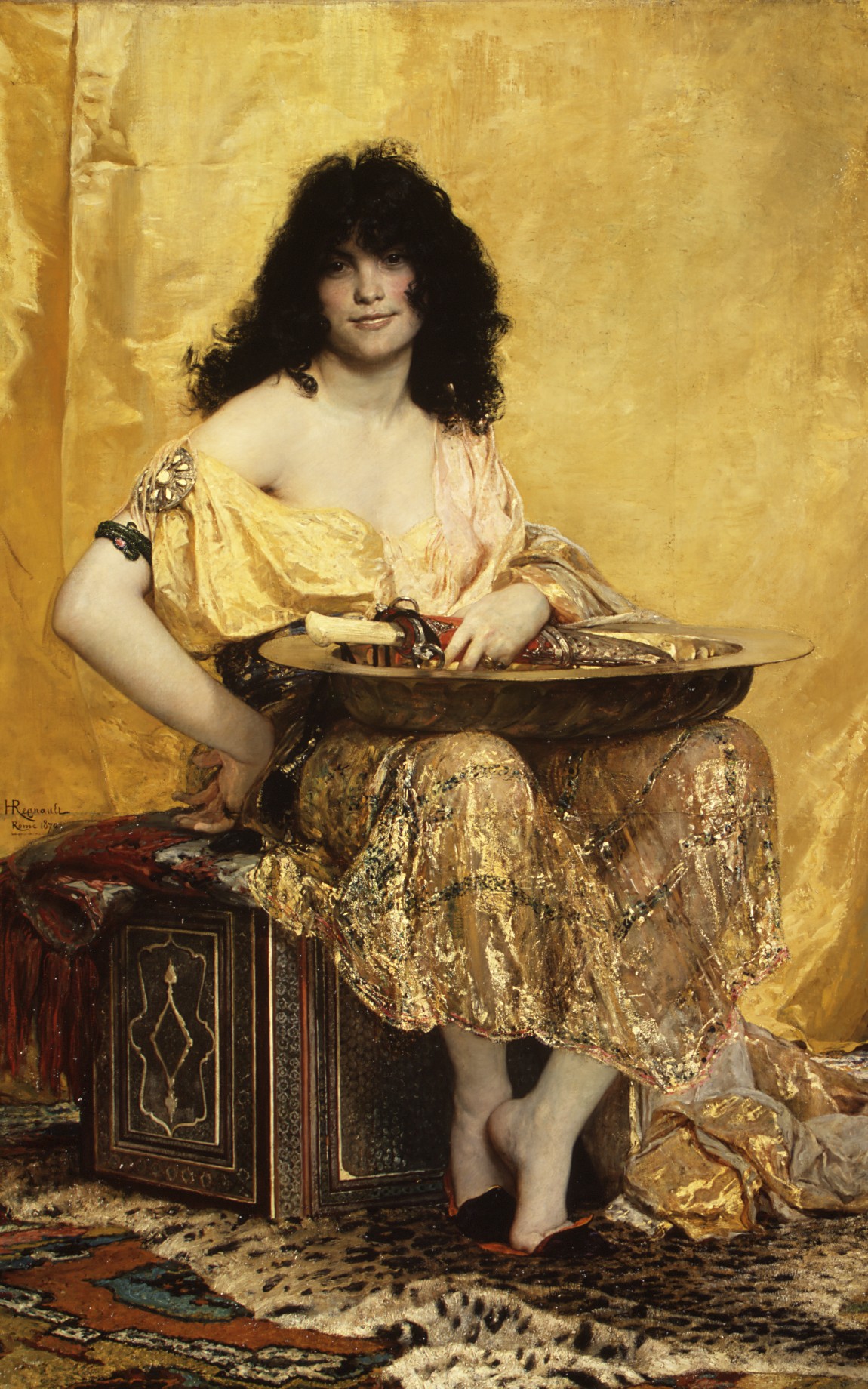
Regnault’s other painting shown in the Salon that year caused even more of a sensation: Salome (1870). Most unusually, he shows Salome alone, equipped with a short sword to behead John, and a large platter for his head. She is dressed as an ‘oriental’ (North African) dancing girl, and Regnault had originally intended to make her appear North African too. On her face is a knowing smile, of someone who is about to get exactly what they wanted. Although it questioned the Biblical account, Regnault was careful not to contradict it.
Many of those who have won the Prix de Rome never had flourishing careers. In Regnault’s case, he was clearly destined for much greater paintings in the future, and promised to be just what history painting most needed. Then on 19 January 1871, during the second Battle of Buzenval, near St Cloud to the west of the city of Paris, he was among the defenders who was killed in battle. He was 27.
His death was commemorated by other artists who fought in the war.
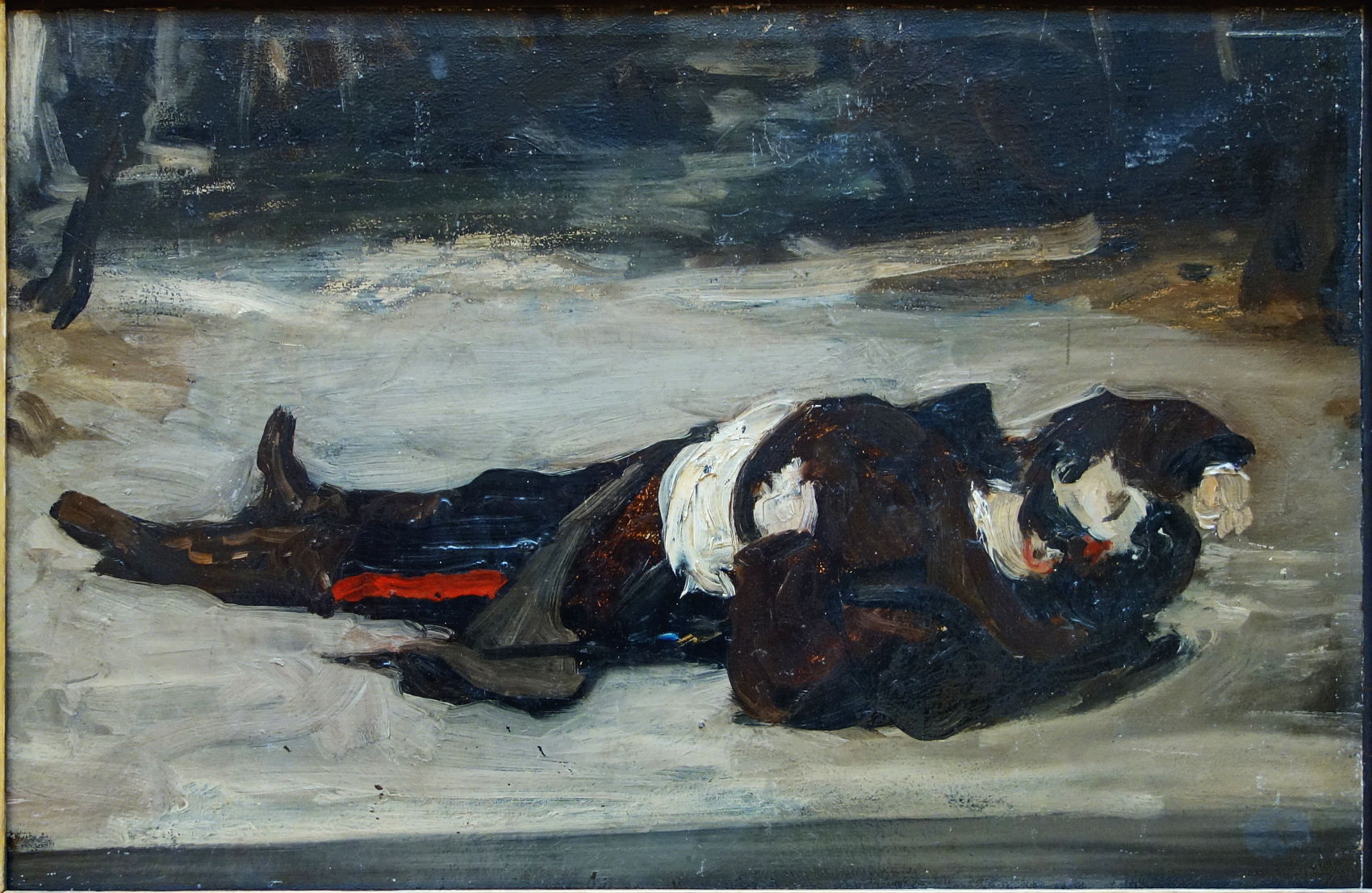
Carolus-Duran, who had fought in the same battle, painted this oil sketch of Henri Regnault Dead on the Battlefield in 1871.
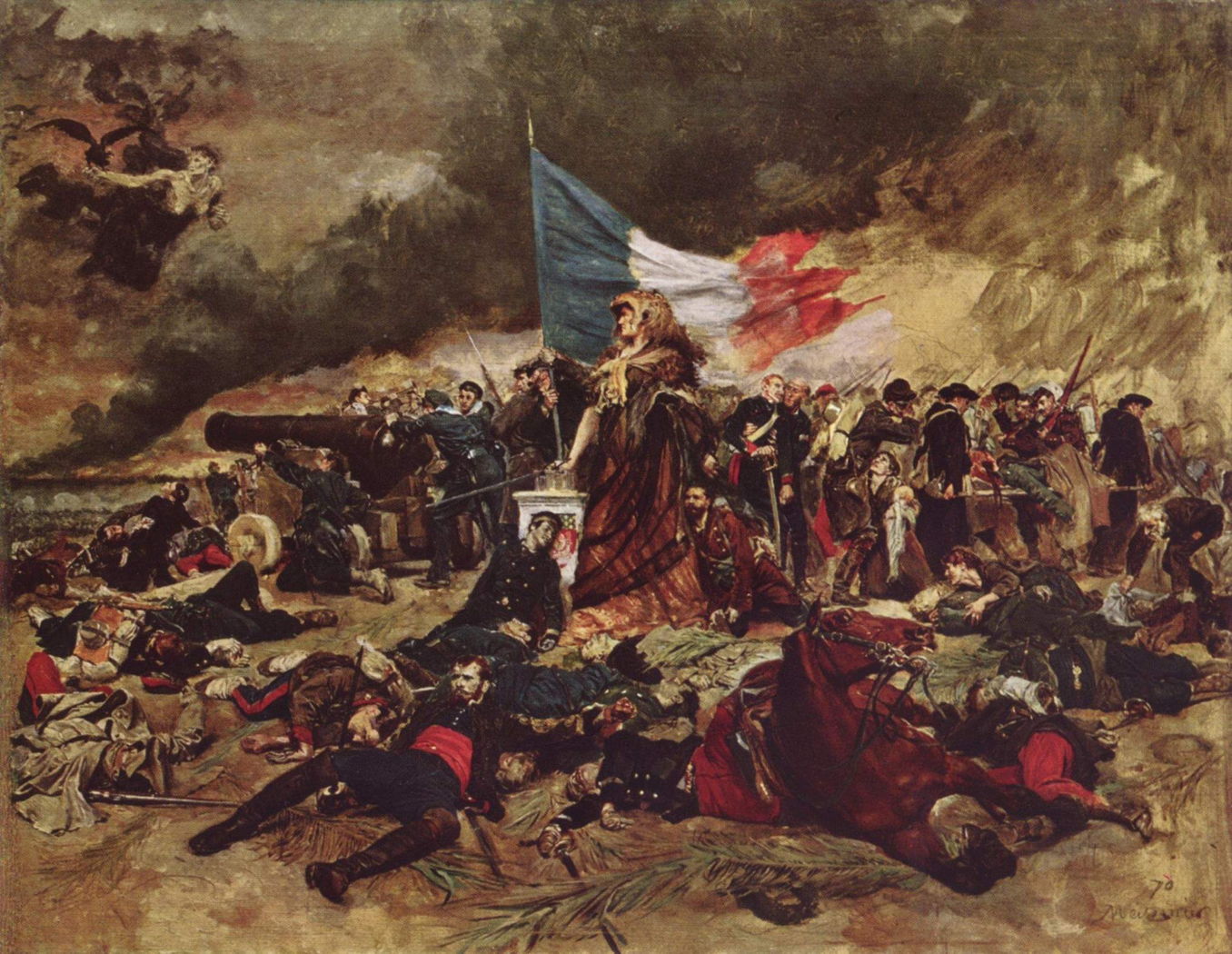
Jean-Louis-Ernest Meissonier, who commanded an infantry regiment which defended Paris during the war, included Regnault as the soldier slumped on the white plinth in The Siege of Paris in 1870 (1884). The composer Camille Saint-Saëns, another veteran of the defence of Paris, dedicated his Marche Héroïque (1871) to Regnault’s memory.
Reference

