

Several of the American Impressionists are now little-known, but one of the most promising of them, Dennis Miller Bunker (1861-1890), has become almost completely forgotten. Few of his paintings are in major public collections, and the last good book about him was published over thirty years ago.
Bunker was born in New York City in 1861, and started his training in art at the age of only fifteen, when he enrolled at the Art Students League and the National Academy of Design. Within a few years his paintings were being accepted for annual exhibitions of the National Academy.
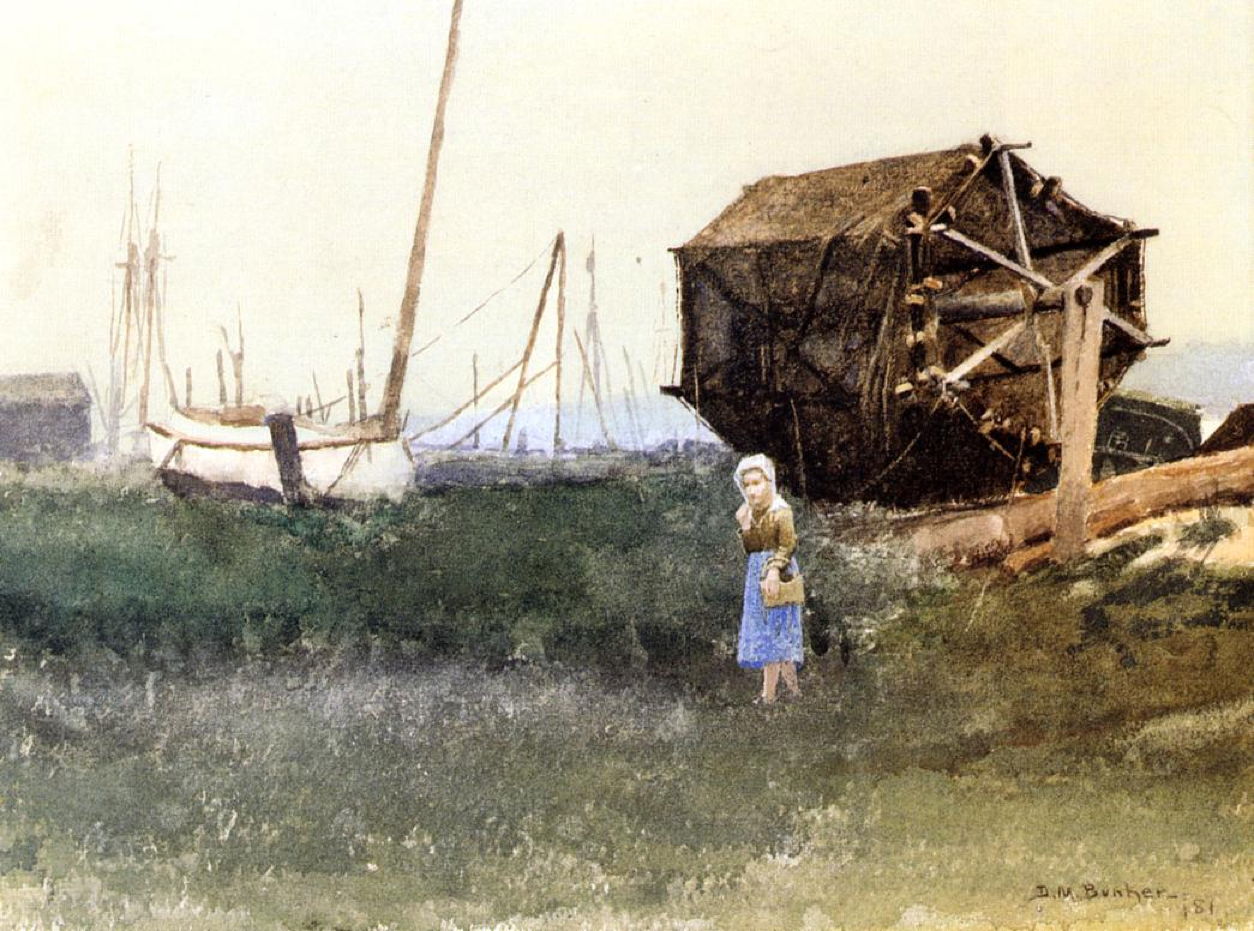
The Fisher Girl, Nantucket (1881) is clearly an early painting, in which the figure has the appearance of a collage, and isn’t well-proportioned. Although claimed to be in oils, this painting looks more like a watercolour, as were many of his early works.
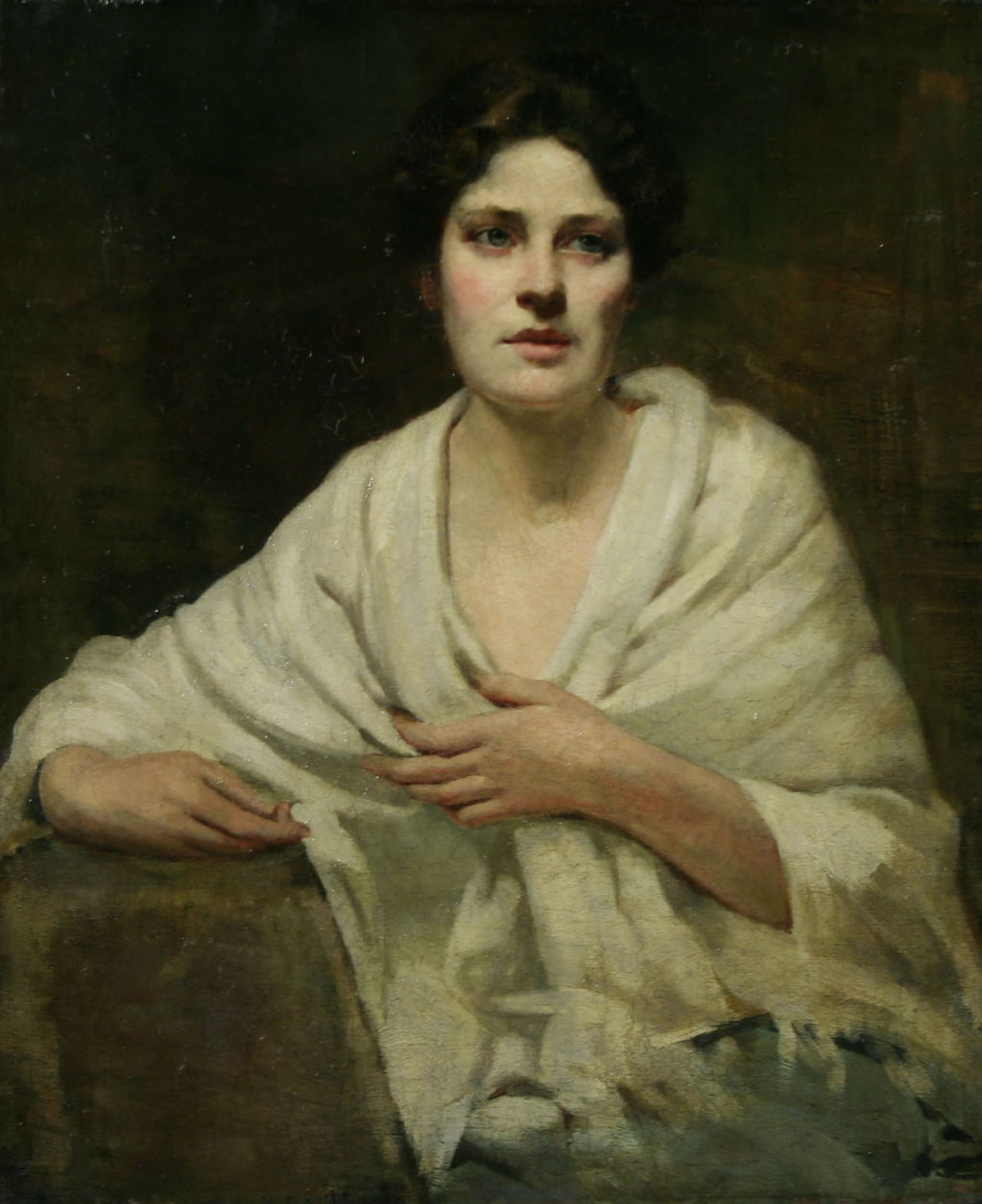
Portrait of a Woman is an undated but most probably early portrait of an unknown woman, showing his developing modelling of the figure, and subtle insight.
In 1882, Bunker travelled to Paris, where he studied at the École Nationale Supérieure des Beaux-Arts (better-known as the École des Beaux-Arts) under Jean-Léon Gérôme.
With two fellow students, he painted in northern France and on the Normandy coast during the summer of 1883. The following year the trio travelled in Brittany, where some of his best early landscapes were painted.
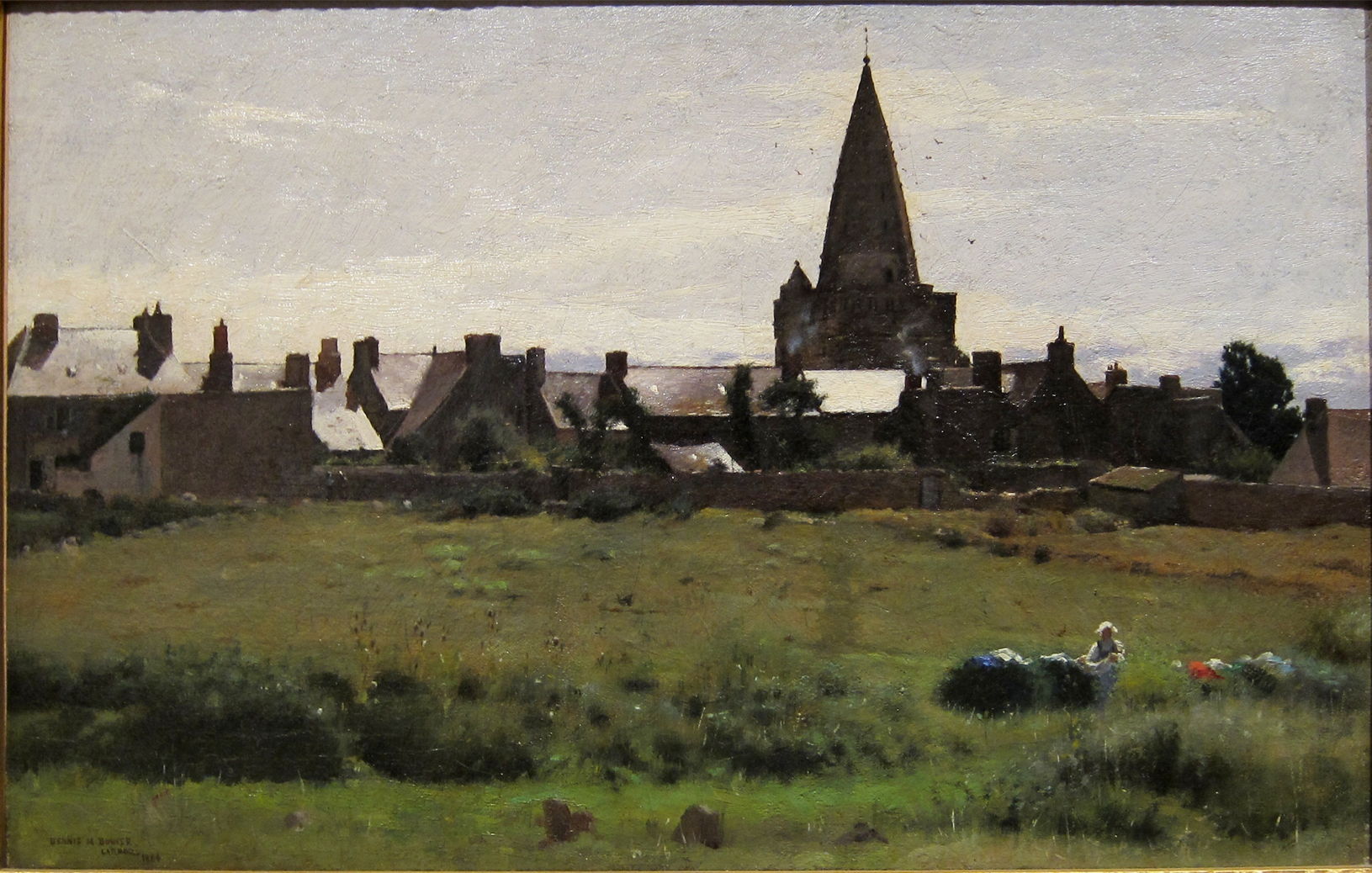
Brittany Town Morning, Larmor (1884) is a view of the town of Larmor, on the south coast of the Breton peninsula, not far from the area in which Jules Breton was active at the time. Most probably painted largely en plein air, its careful detail in the buildings must have taken several sessions, but there’s sketchiness in the sky and the field in the foreground. The brilliant highlights on the woman with her washing in the right foreground are particularly effective, as are delicate wisps of smoke against the church tower.
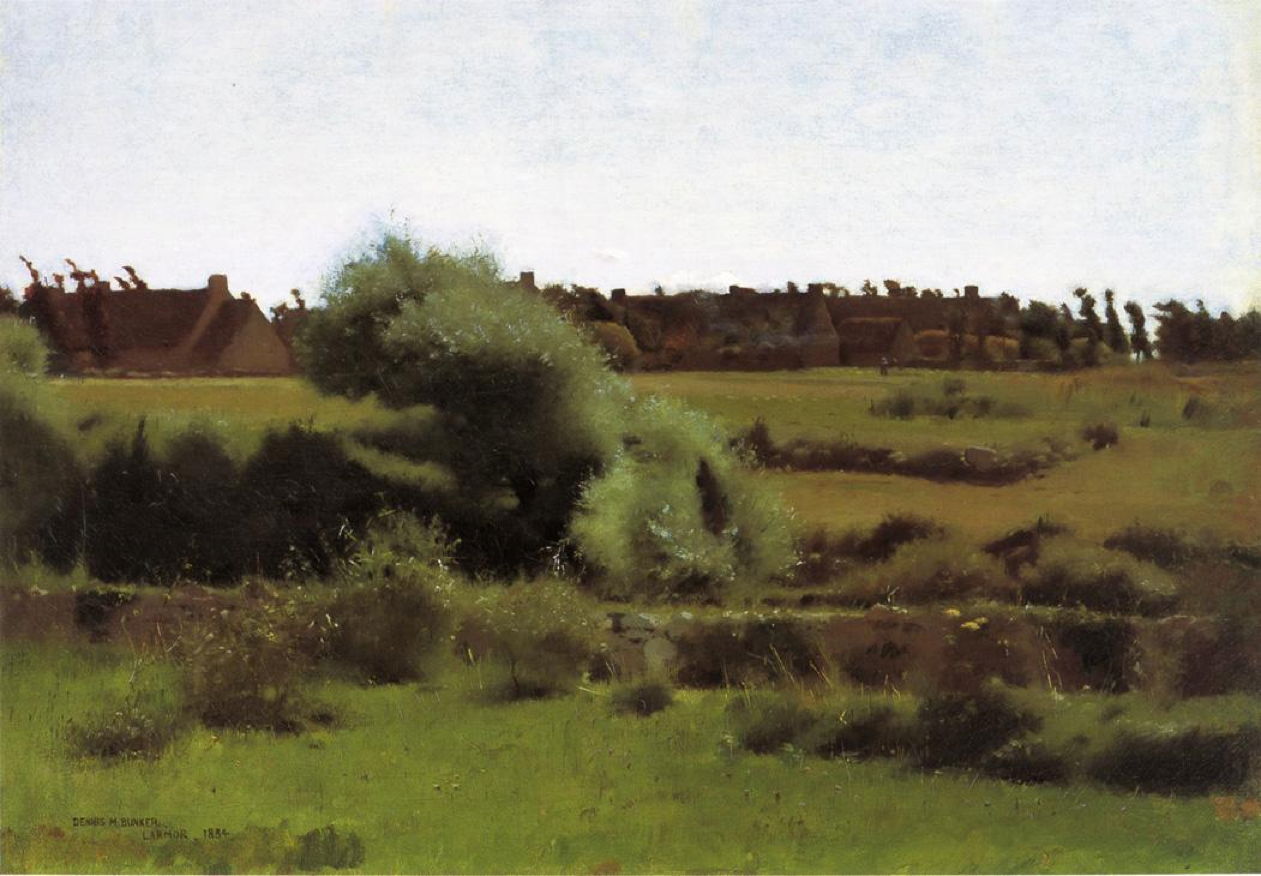
This view of the town of Larmor (1884) demonstrates his distinctive early approach to painting vegetation, with small bright details laid over more diffuse forms of bushes and plants, reminiscent of Corot’s late style.
Bunker was back in New York City by the start of 1885, and later that year was elected to the Society of American Artists. With the support of James Carroll Beckwith, he then moved to Boston to teach at the Cowles Art School. The following year, he painted in South Woodstock, Connecticut, and met Isabella Stewart Gardner, who became his patron.
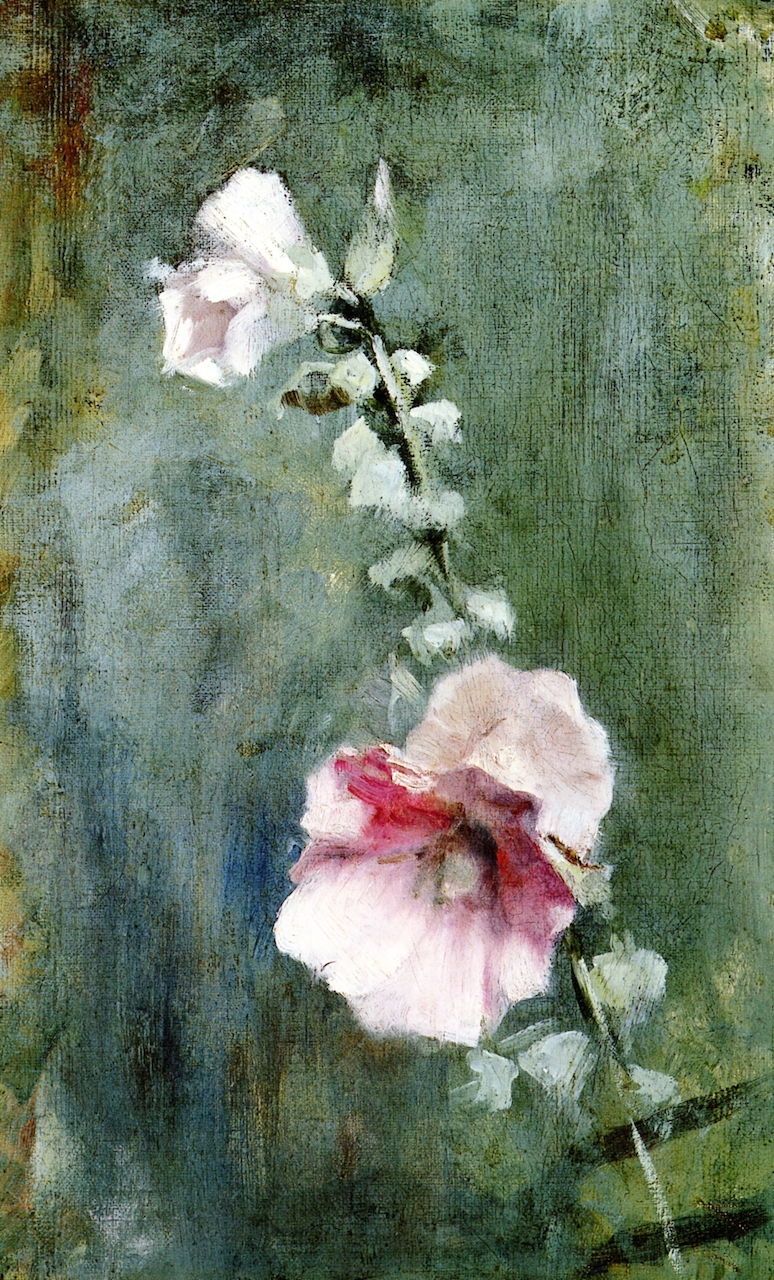
Bunker painted this single stem of Hollyhock in about 1886, with a remarkable looseness, its smaller buds being indicated gesturally.
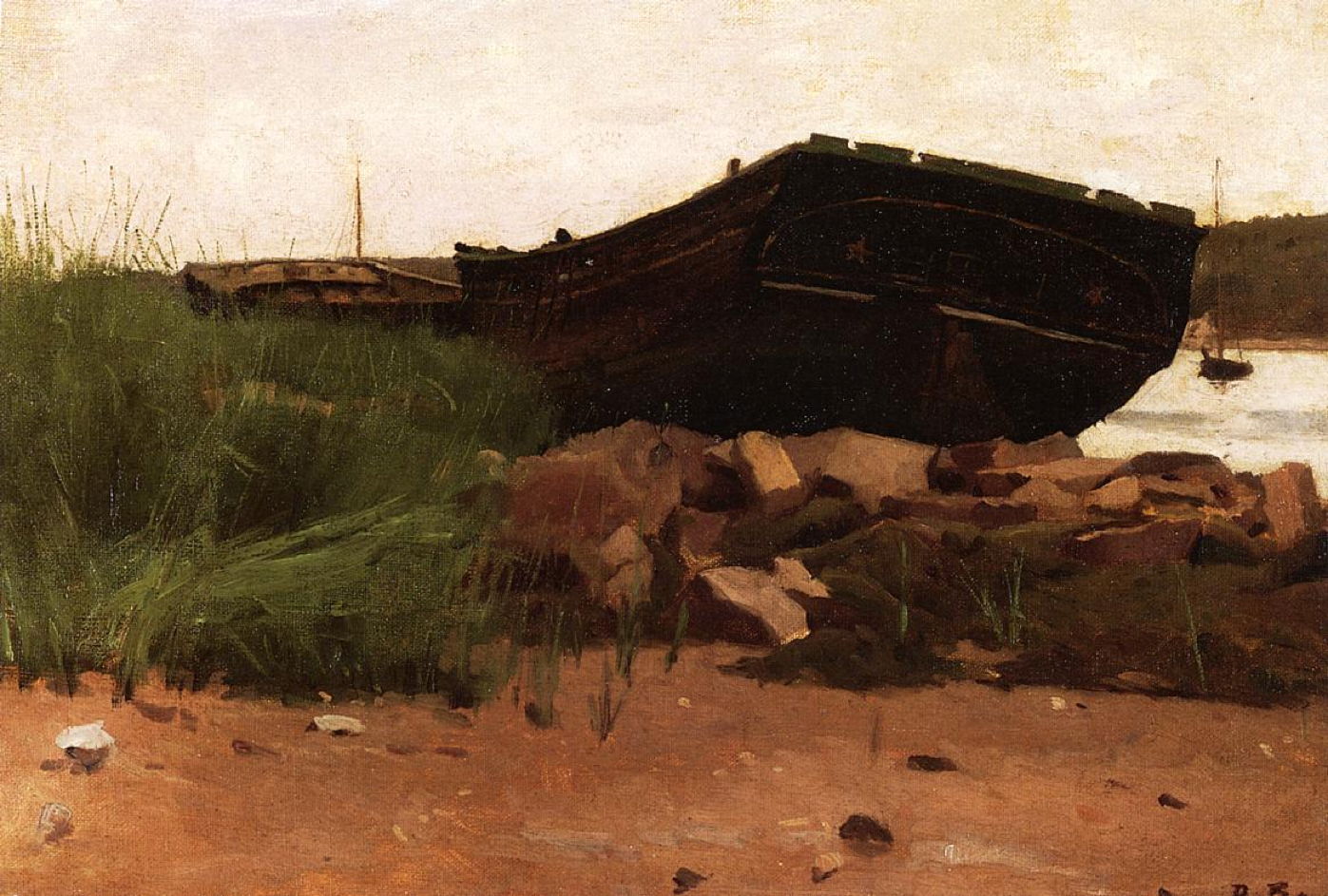
Bunker also painted several views of boats in various stages of decay around the East Coast, including Old Hulks in about 1887.
During the late 1880s, he made his living from painting the portraits of wealthy and important Bostonians, but he made his art when painting in the countryside. He first met John Singer Sargent in Boston in November 1887, and they became good friends. In the summer of the following year, Bunker stayed with Sargent in Calcot, England, although none of Bunker’s surviving paintings appears to have been made during that visit.
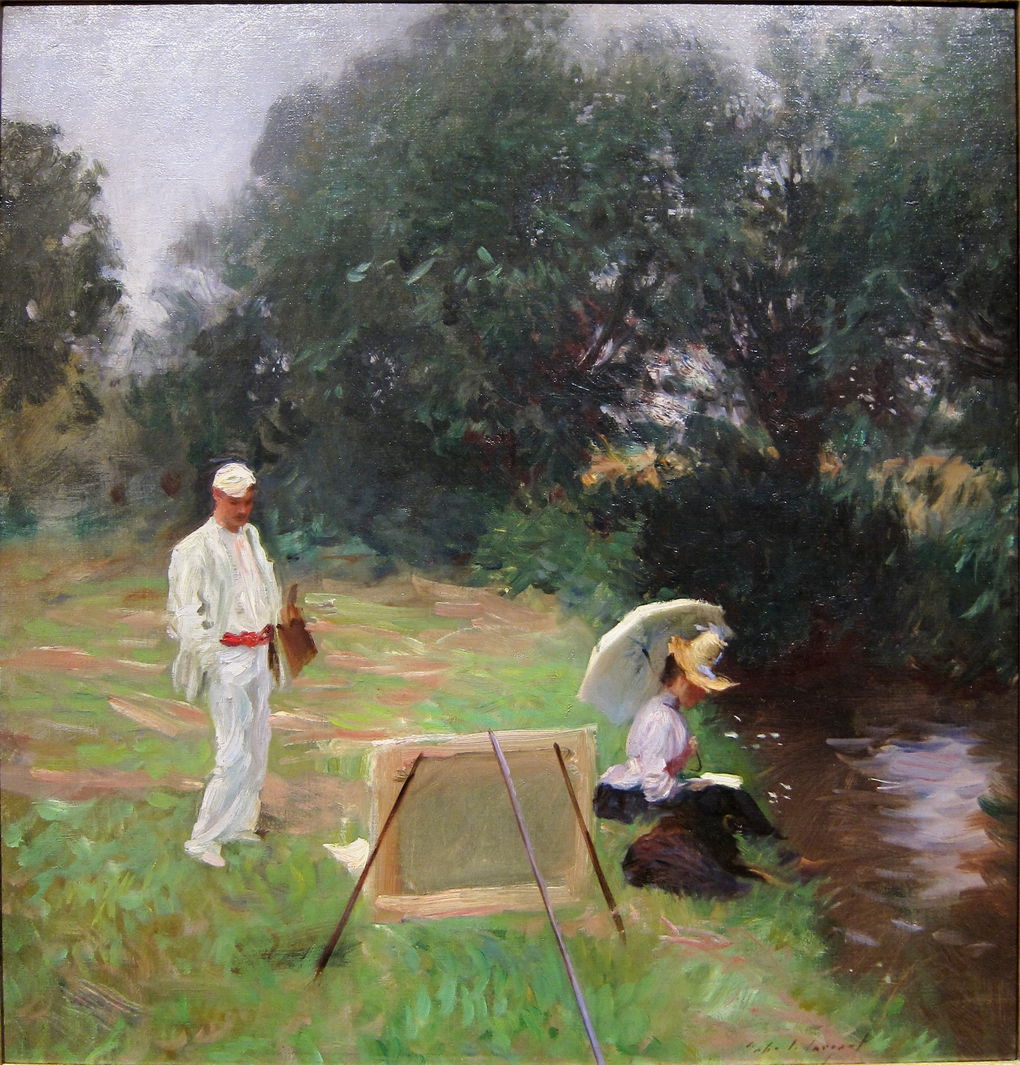
This is John Singer Sargent’s painting of Bunker at work during the summer of 1888.
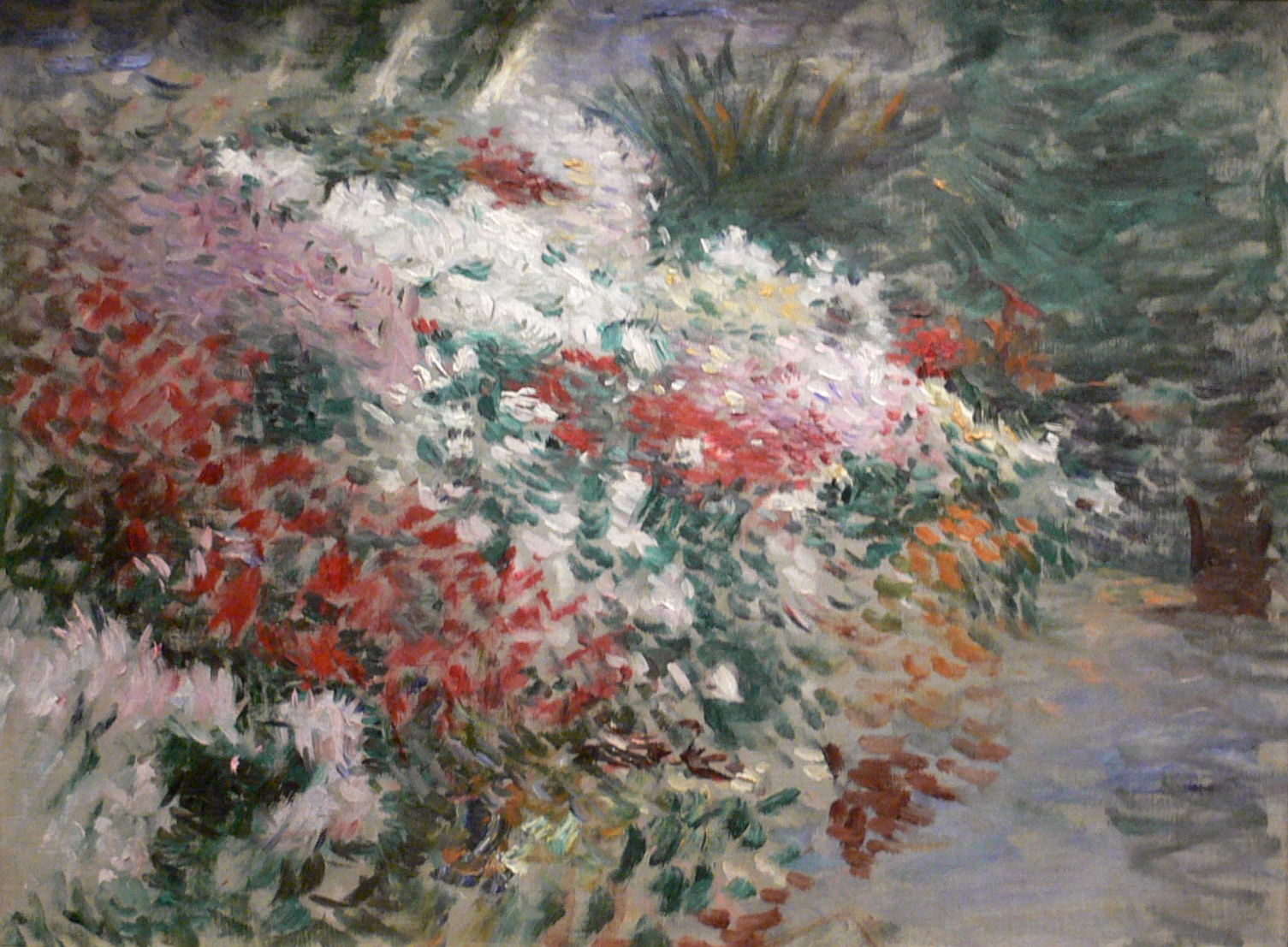
At about this time, his brushstrokes became more prominent, and started to organise when forming flowers and vegetation. This is striking in his In the Greenhouse (above) and Chrysanthemums (below), both from 1888. Comparing these two works, that above appears to have been a quick sketch which he later developed in the studio into that below.
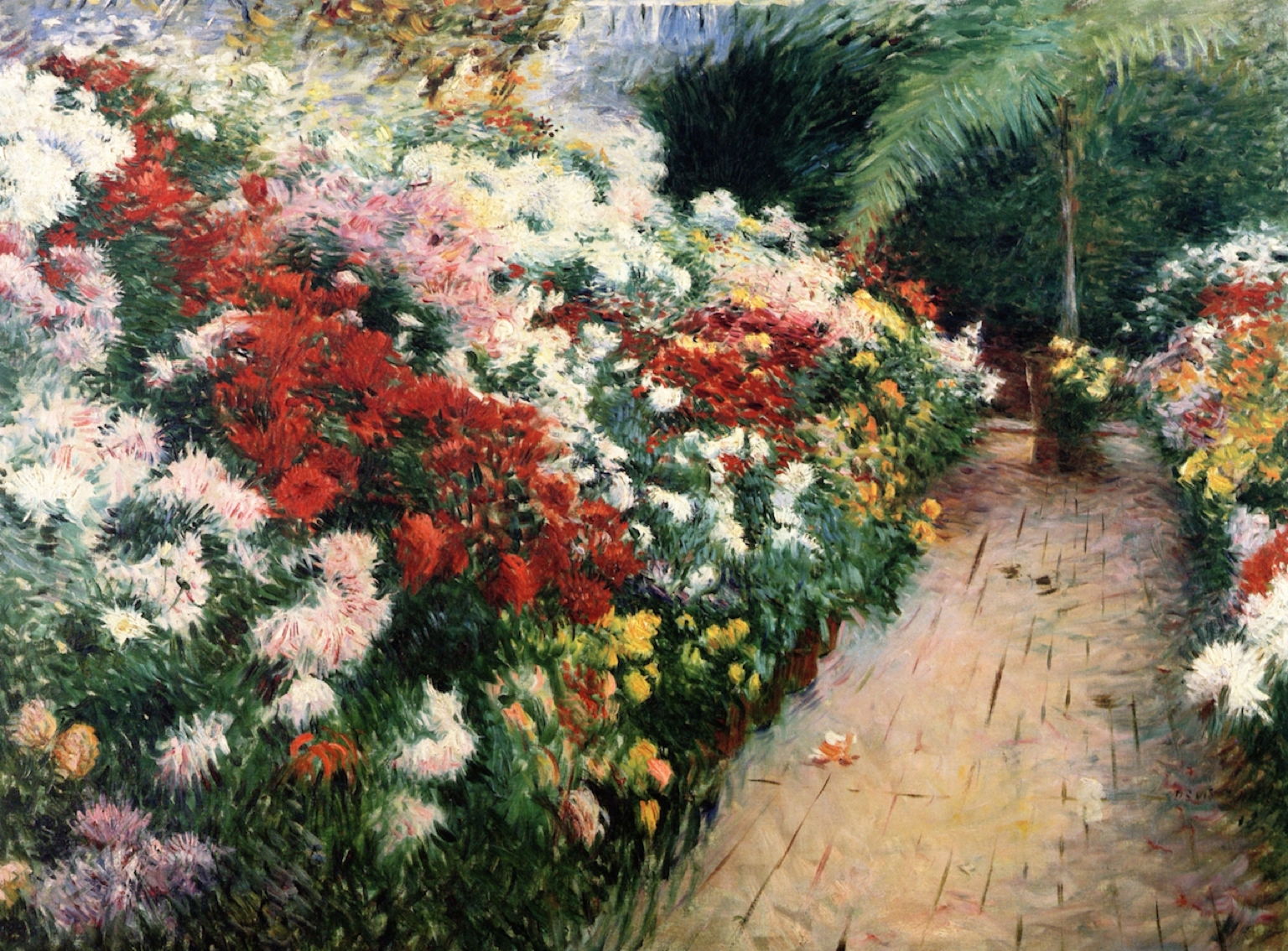
Early in 1889, Bunker resigned from teaching at the Cowles Art School, and first met his future wife. He lodged that summer in Medfield, MA, where he painted several of his finest landscapes.
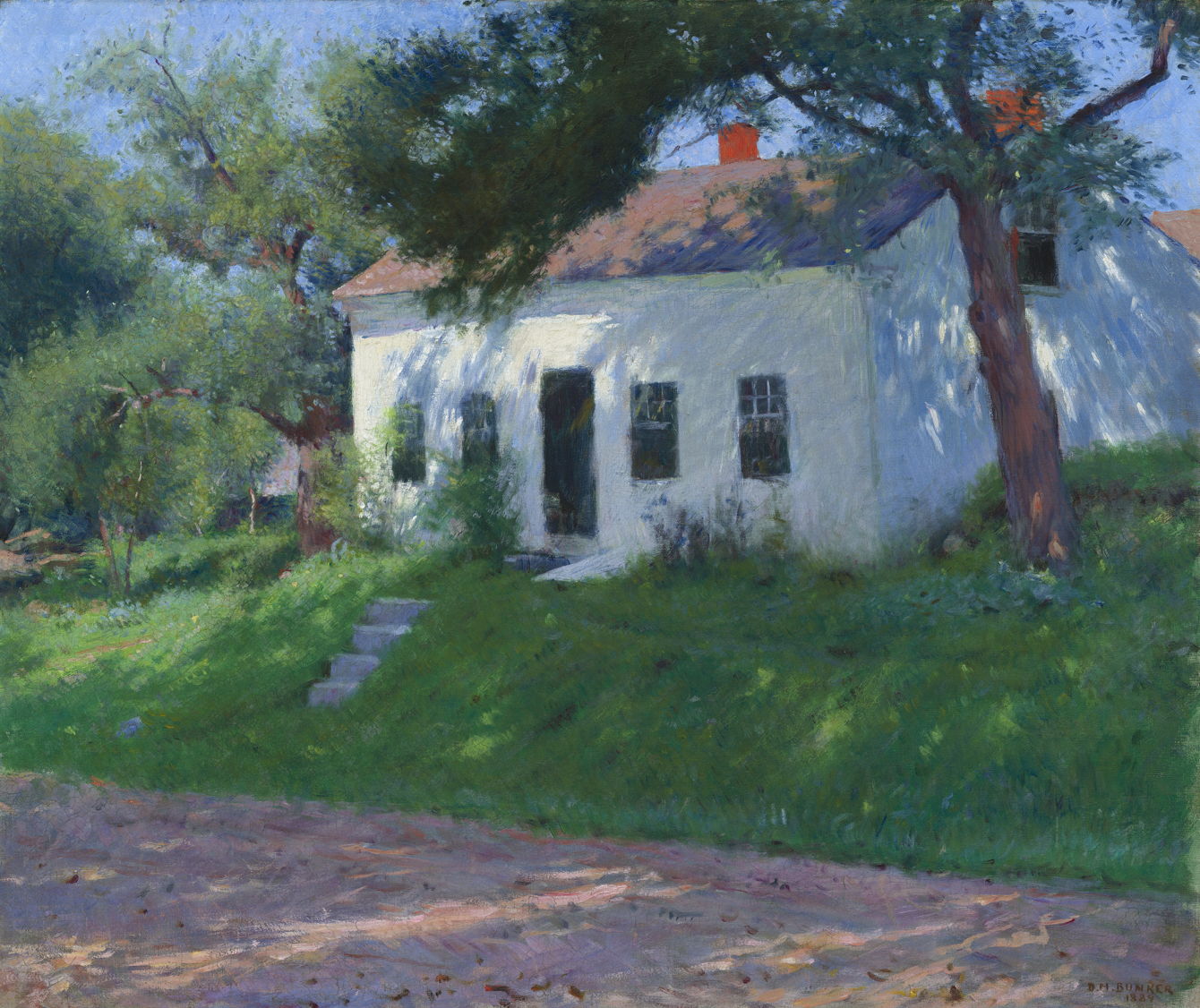
Roadside Cottage (1889) shows Bunker at peak Impressionism, with its high-chroma colours and textures built from brushstrokes. The trees are carefully constructed from anatomical principles, though, and the picture space is traditional, demonstrating his classical training.
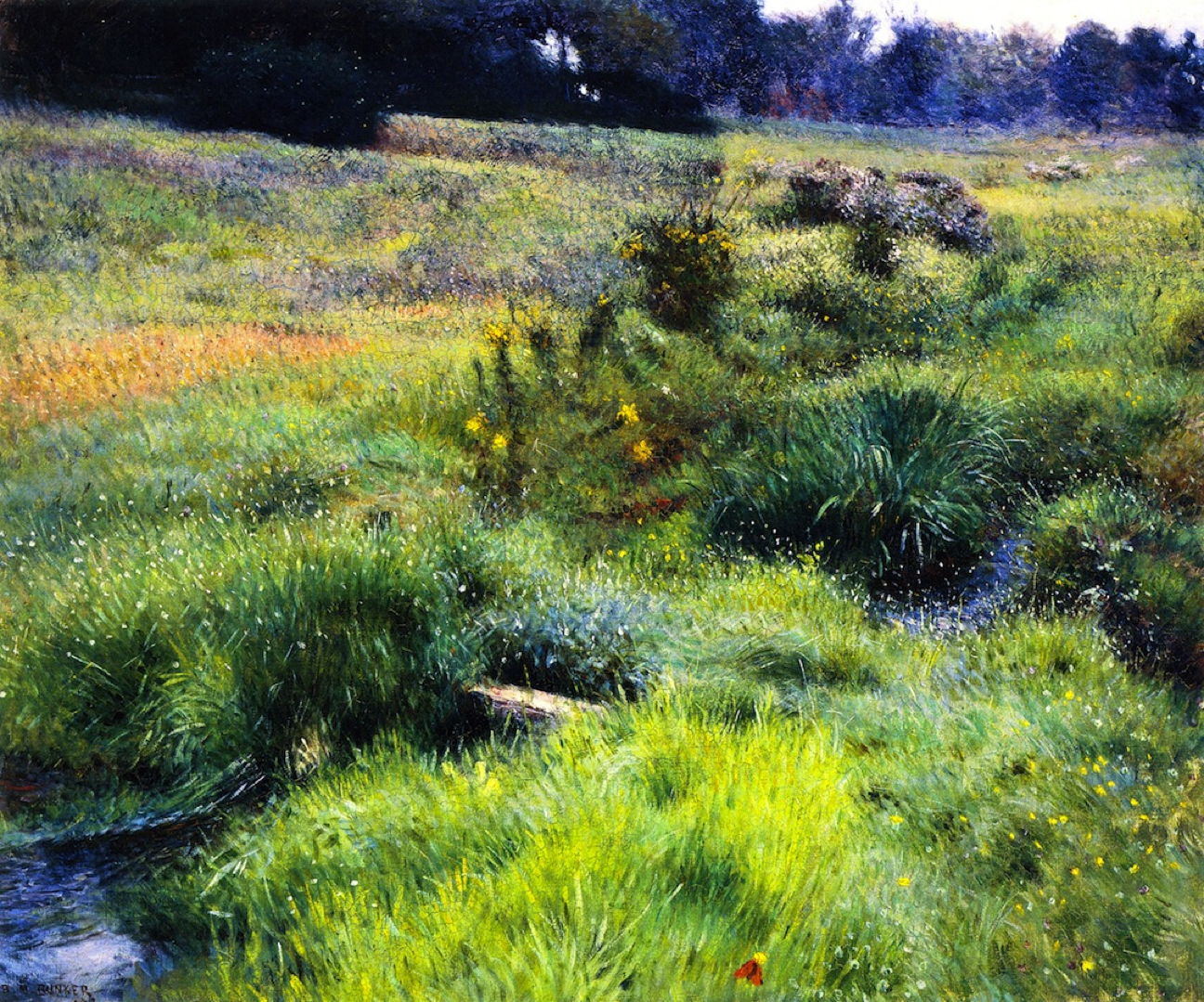
The Brook at Medfield (1889) is one of Bunker’s most vivid landscape paintings. Its vegetation has emerged from his earlier diffuse and vague masses, with fine-formed brushstrokes building richly varied textures. In places these become sharply defined, and contrast with the deep blues of the water. A few small patches of red, such as the small butterfly at the lower edge, add contrasts.
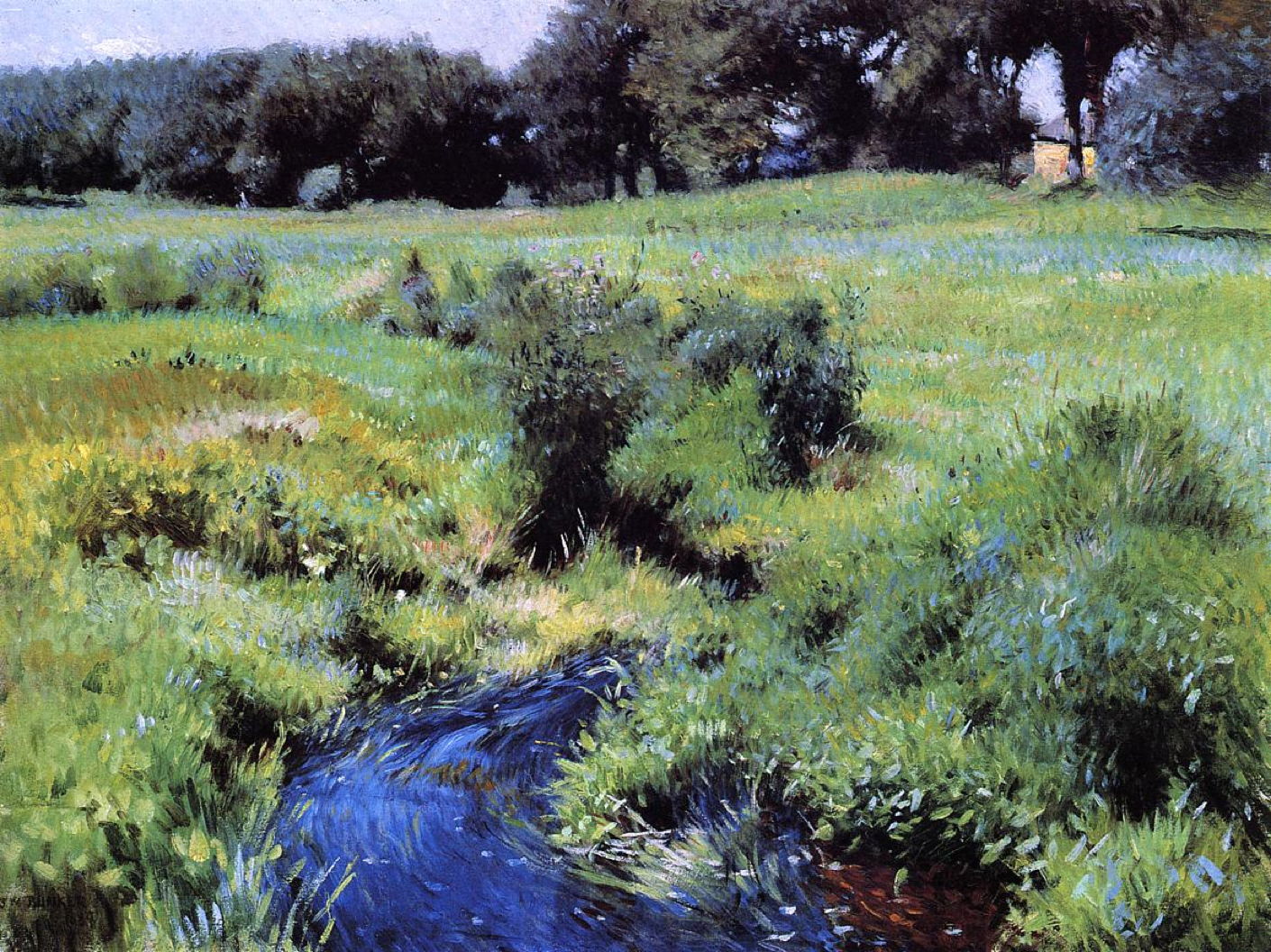
The Pool, Medfield (1889) is remarkable for its even greater organisation in brushstrokes, swirling with the water flowing in the foreground, and coordinate into stands of thistles and other wild plants.

Wild Asters (1889) is another brilliant assembly of different types of mark, from the sinuous curves in the stream to the fine blotches of aster flowers.
By 1890, Bunker was a rising star in the East Coast art scene, and rapidly becoming America’s most prominent Impressionist. He was invited to teach at the Metropolitan Museum of Art, and hoped to take over William Merritt Chase’s teaching in Brooklyn later that year. He spent the summer painting in Cornish, NH, and again in Medfield, before marrying in October.
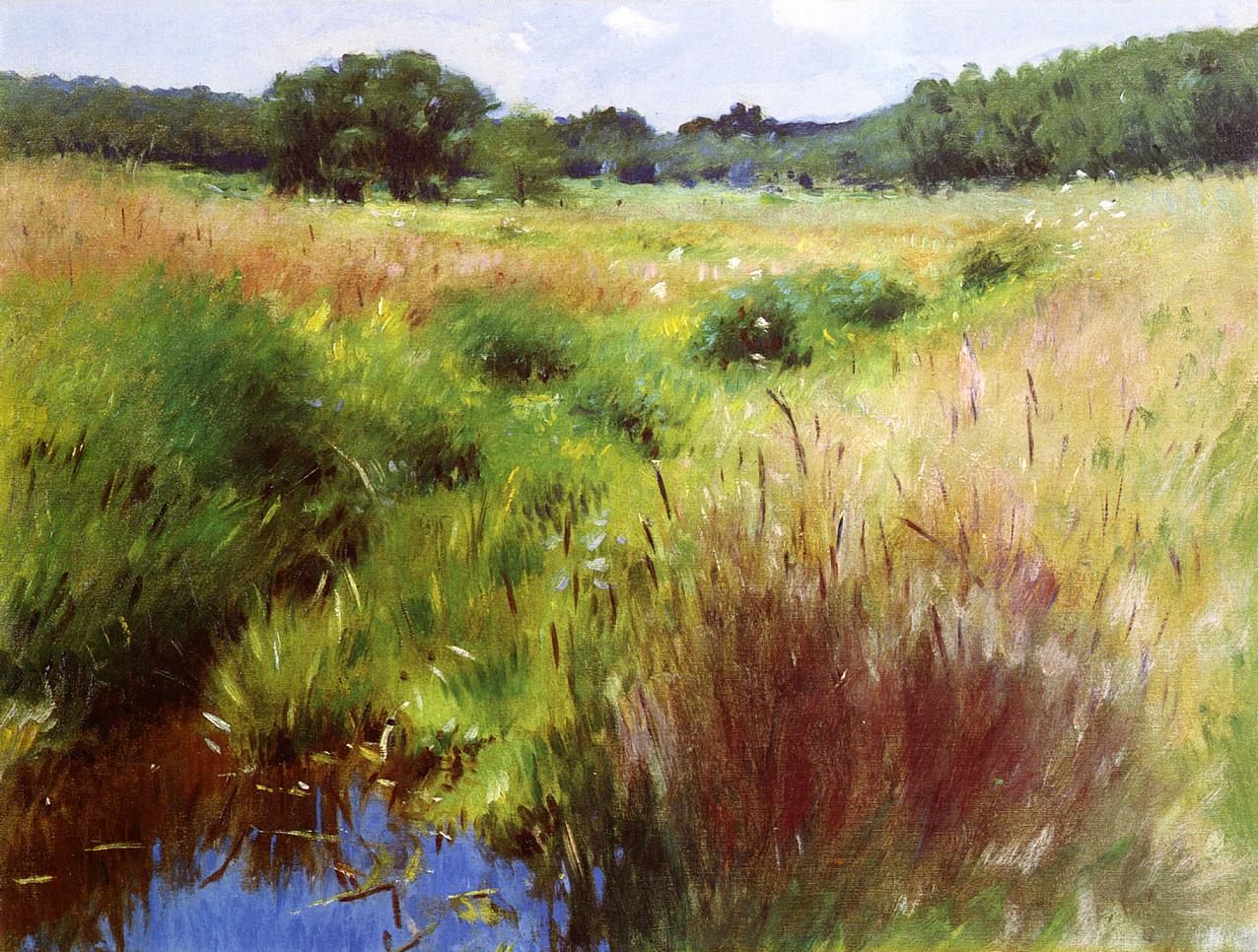
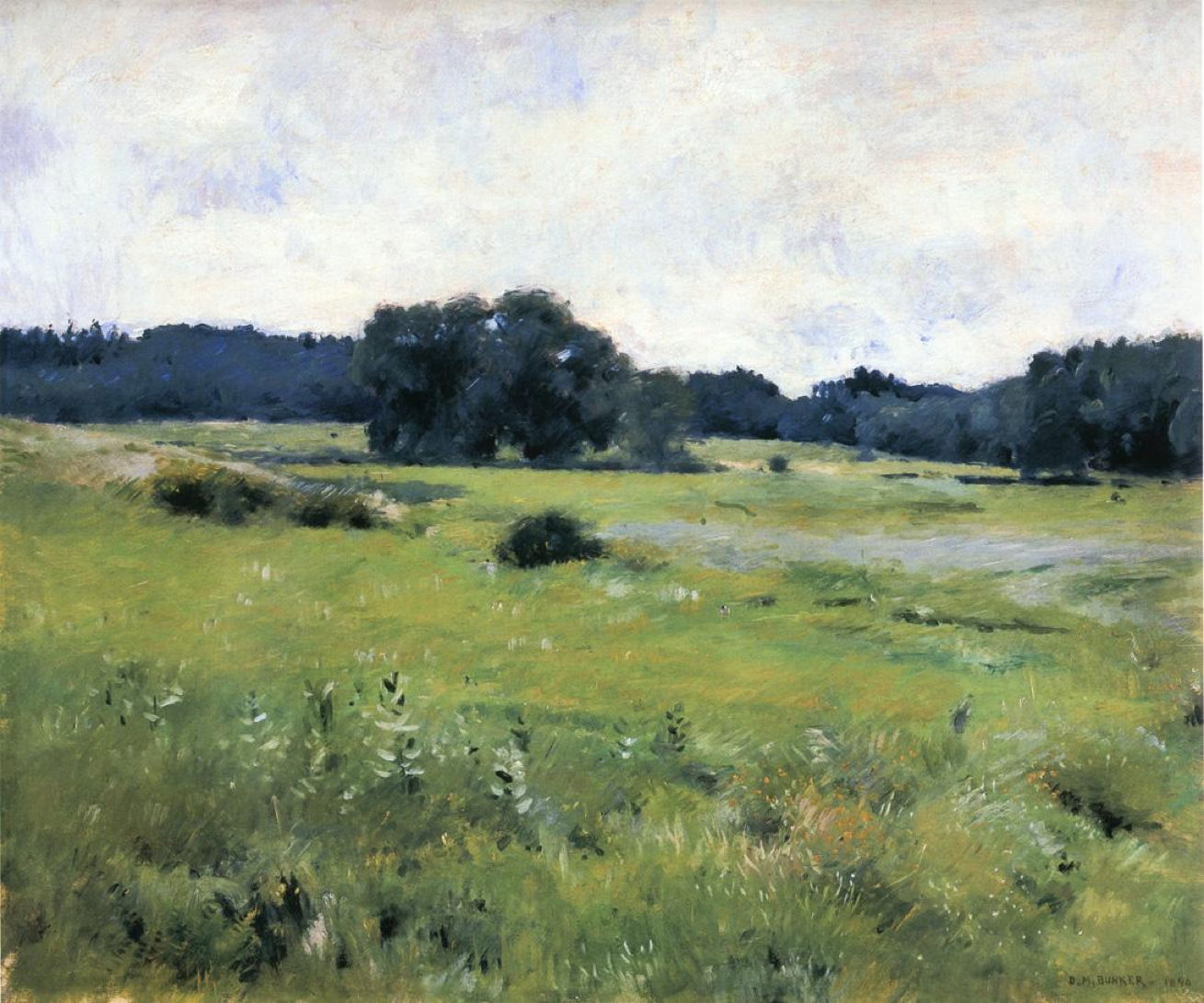
Marshland, Medfield (1890, above) appears to have been a more rapid sketch of a similar combination of water, reeds, meadow, and distant trees as in the previous summer at this location. Meadow Lands (1890, below) is a similar quick study, probably painted en plein air.
When Bunker returned to Boston for Christmas with his wife’s family, he fell ill, and died of meningitis on 28 December 1890, at the age of only 29.
By the early twentieth century, American art had moved on, and Bunker’s brief but brilliant career was forgotten. Later in the century it was re-appraised, and arguments have raged over whether he was progressive or traditional.
Reference
Wikipedia – a good, detailed account.

