
Visible brushstrokes that are so characteristic of Impressionism arose in the late 1860s, most prominently in the paintings of Renoir and Monet in the summer of 1869. A decade later they were changing again, eventually heading in several different directions.
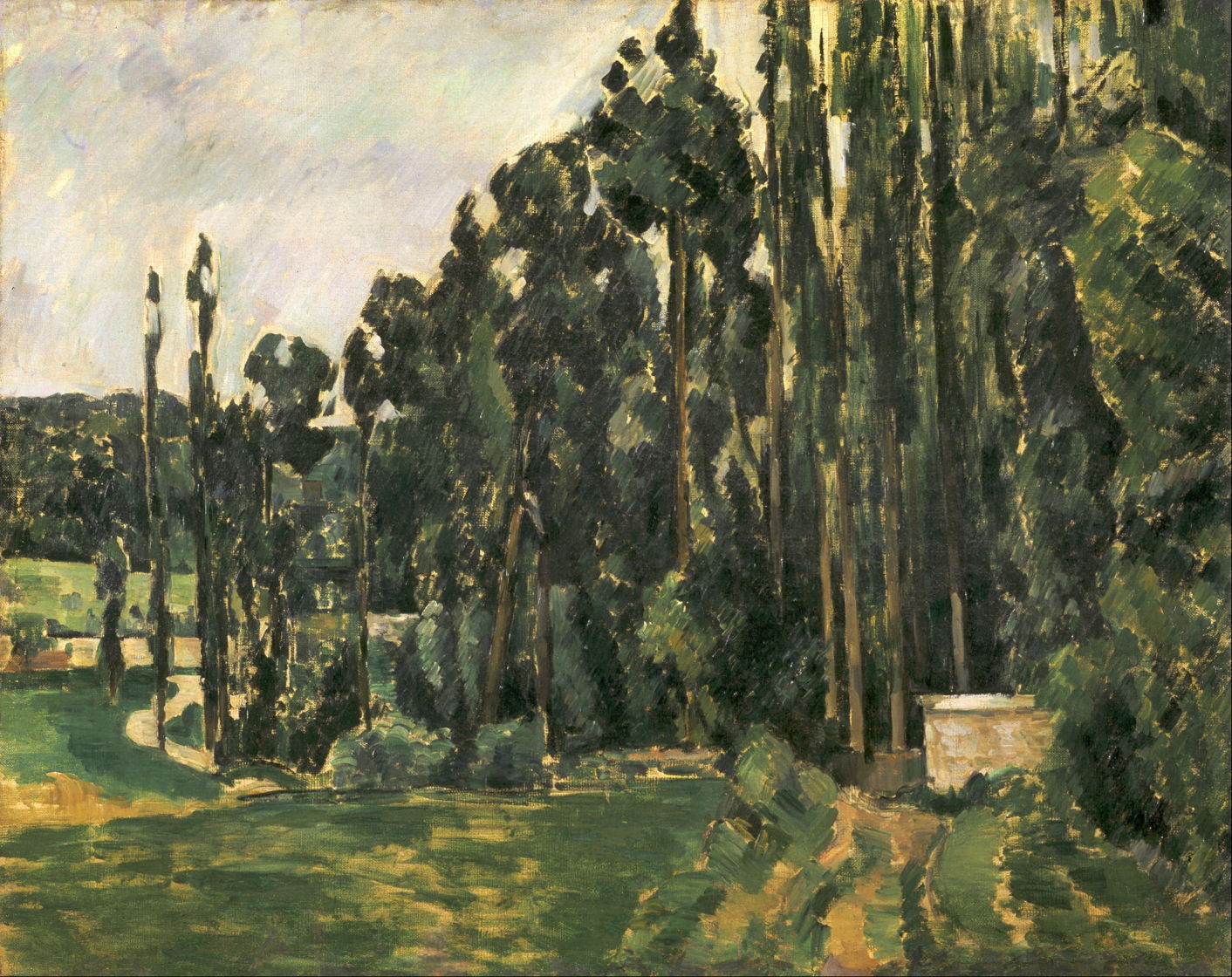
During Cézanne’s Impressionist phase, his brushstrokes were fairly conventionally formative, as were those of his mentor, Pissarro. By the end of this phase, though, Cézanne started to use his ‘constructive stroke’, in which arbitrarily patterned marks are used to form patches of colour, from which the painting is composed.
In his Poplars (1879-80), Cézanne uses different orientations of mark, but most of those used for foliage of the poplars are orientated diagonally, at an angle of about 45˚, irrespective of underlying form. Indeed, their independence of form tends to make his constructive stroke a central part of the dissolution of form seen in his later work.
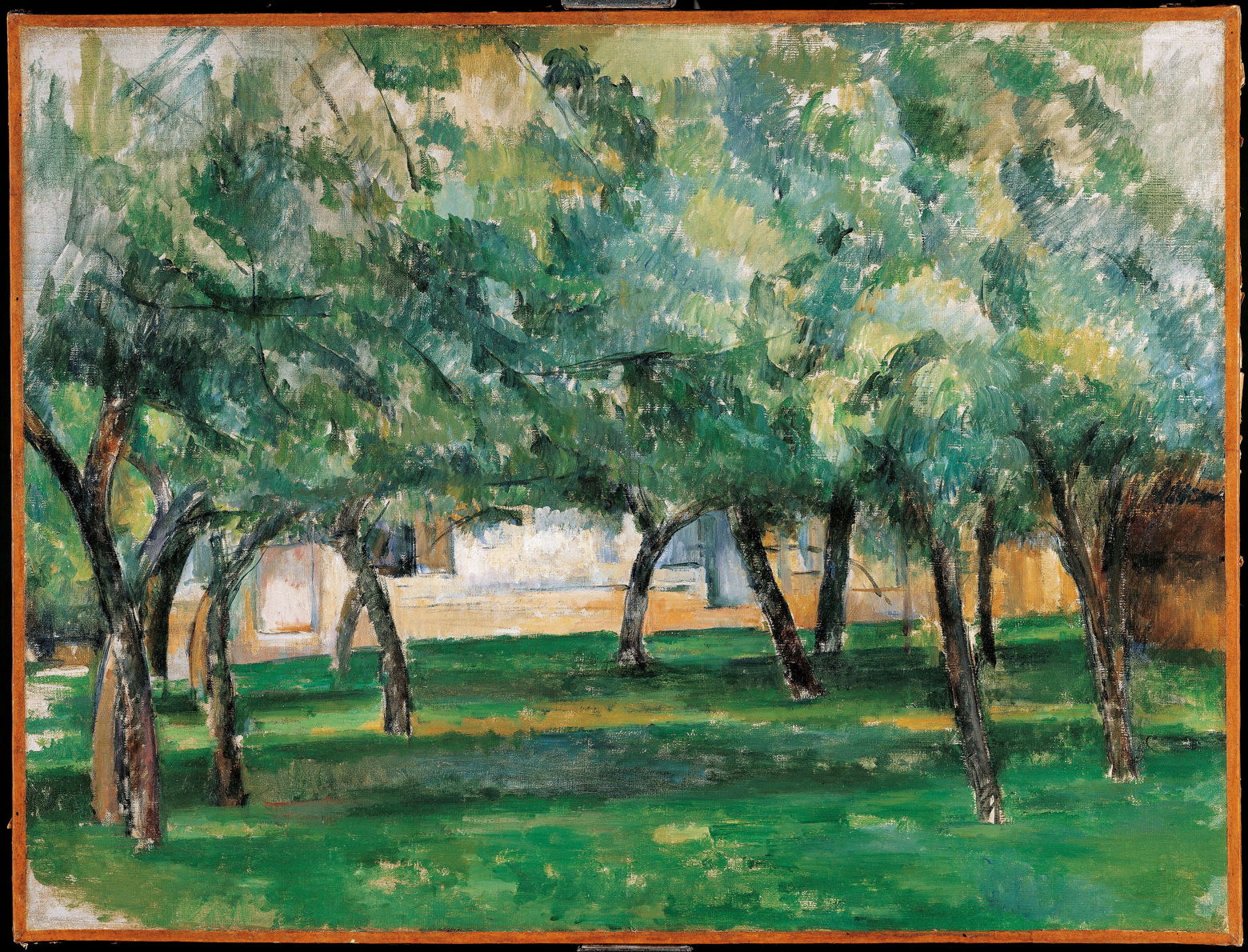
This dense canopy of trees seen at a Farm in Normandy (1882) is again assembled using the constructive stroke, with greater variation in tone, but keeping similar hue. Their orientation is here less consistent, but still predominantly downward.
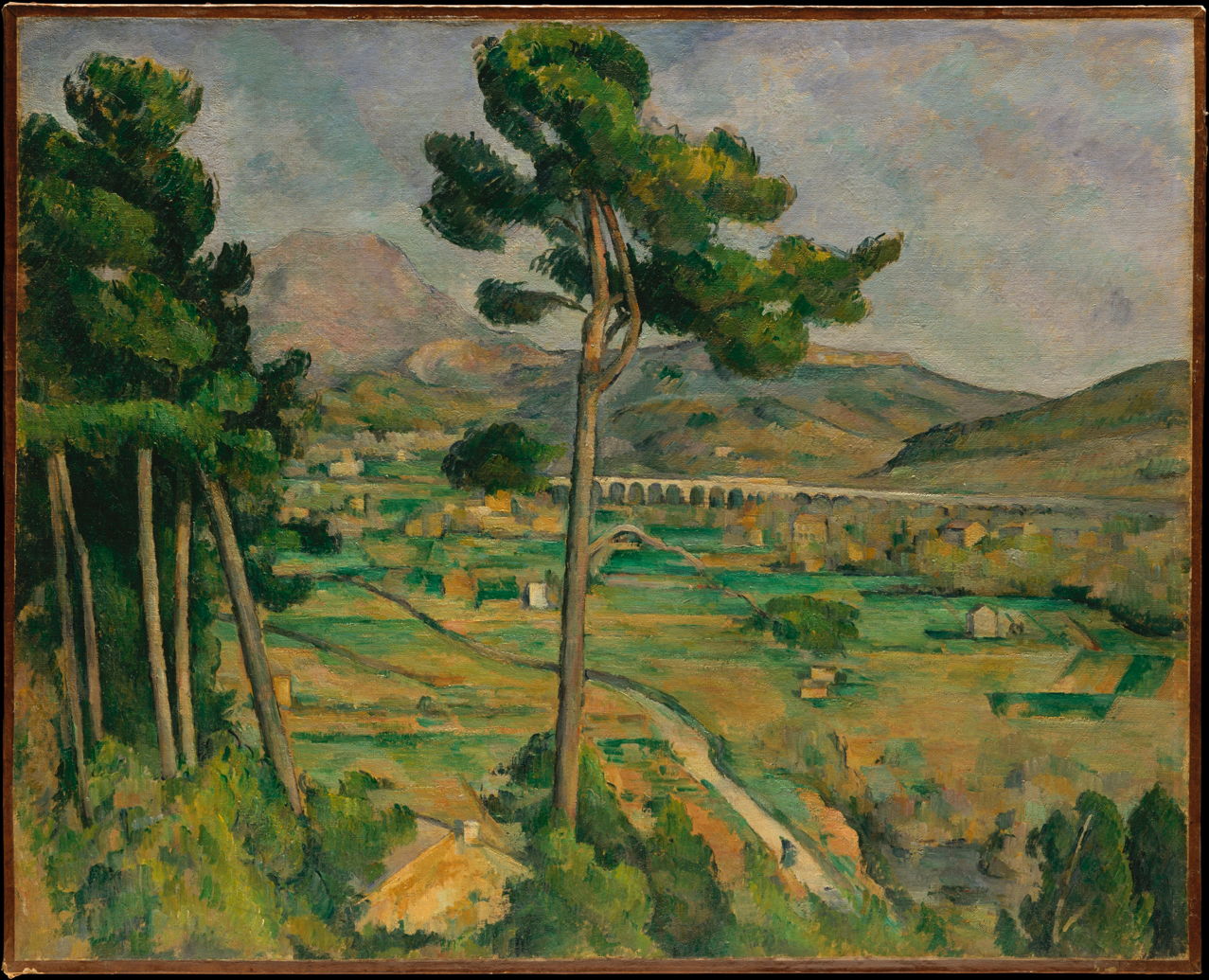
For the final twenty years of his life, Cézanne was obsessed with a number of motifs around Aix, most prominently views of Mont Sainte-Victoire to the south-east of the city. In this version, Mont Sainte-Victoire, View from Montbriand (1882–85), one tree has escaped from the wood at the left and positioned itself to form a midline to the painting, framing the mountain in the left half, and the long railway viaduct in the right. Its trees are constructed typically for his mature style, with relatively featureless and texture-free trunks, and solid canopies built using constructive strokes.
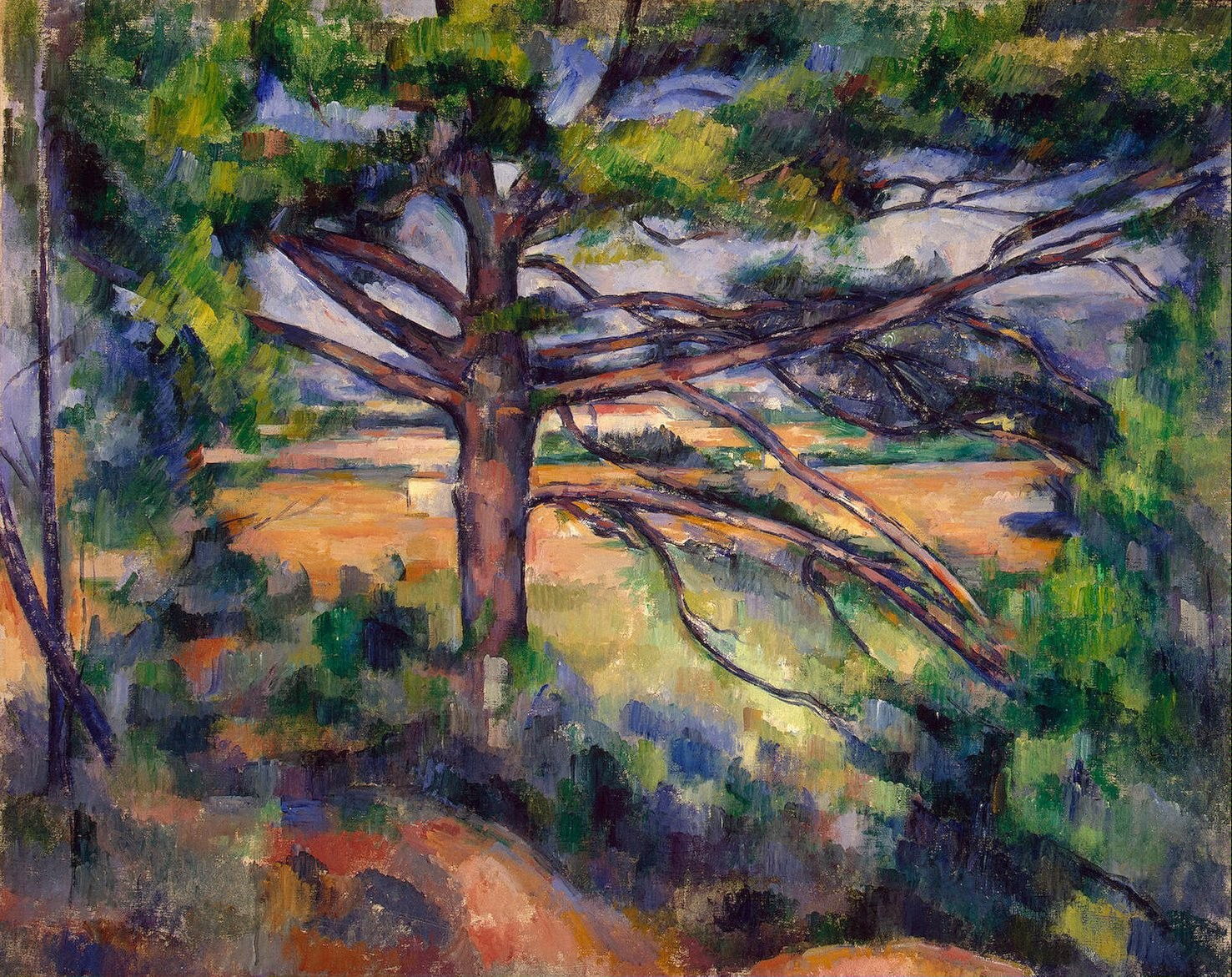
His constructive stroke became more prominent and came to dominate the structure of his oil paintings after 1890. In Large Pine and Red Earth (1890–5) it’s used throughout the foreground foliage and vegetation, and even starts to appear in patches on the trunk.
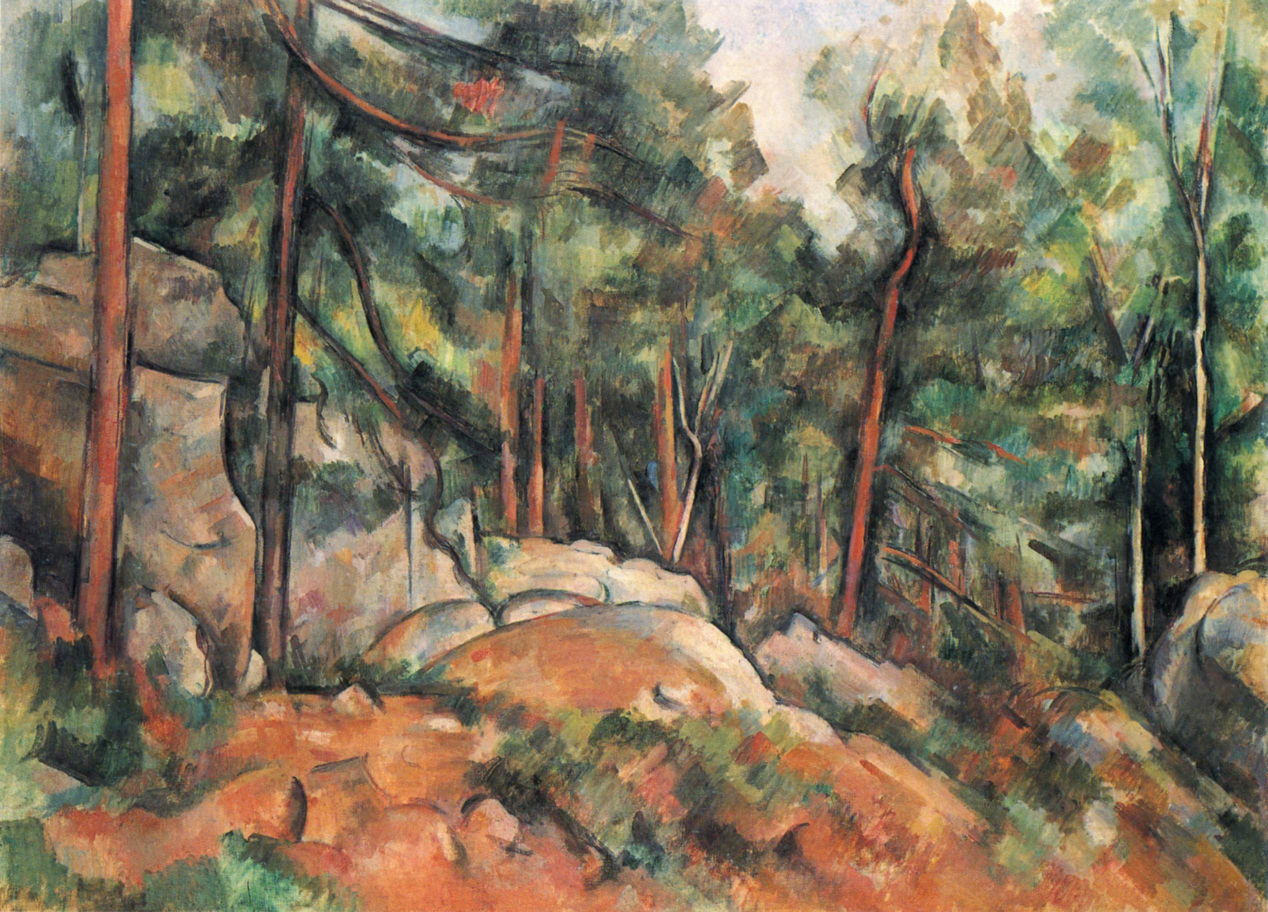
In the final few years of his career, branches became almost dissociated from the structure of the foliage, which was largely determined by patches of colour. Although many have seen this as increasing abstraction, Cézanne remained adamant he was continuing to strive to paint his sensations; the meaning of this word in French is broader than in English, but it was also used by Impressionists including Monet, and by no means unique to Cézanne.

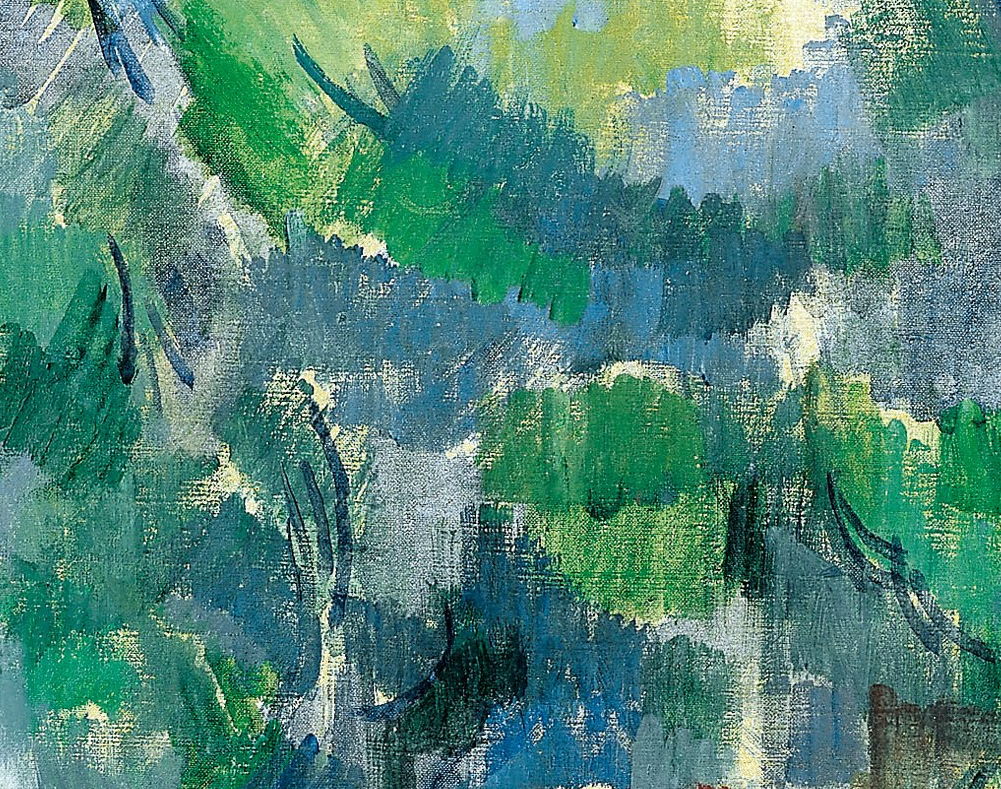
In Cézanne’s Forest Scene (Path from Mas Jolie to Château noir) (1900–2), the whole picture has become a patchwork of shapes formed from constructive strokes, as revealed in a series of details.
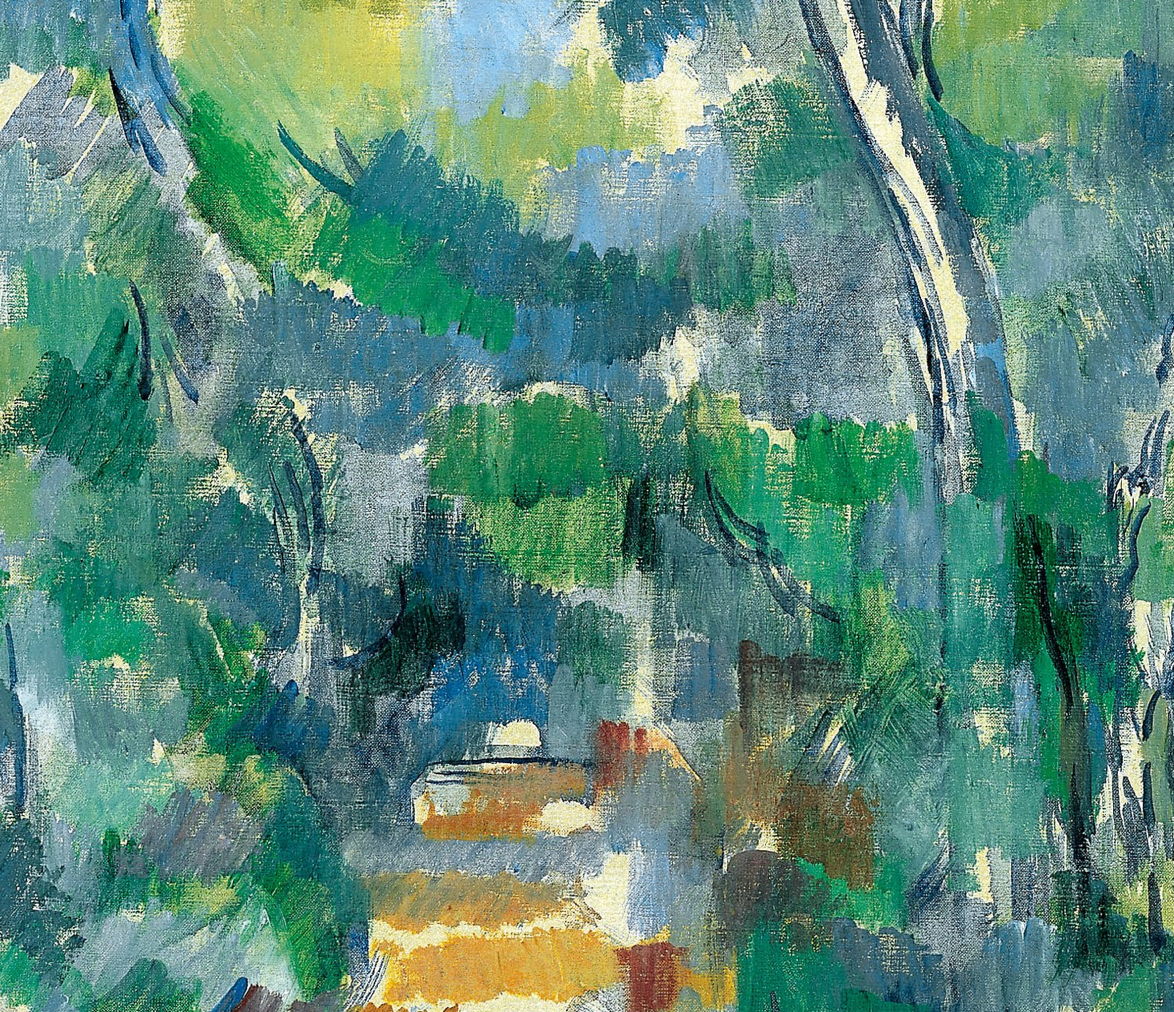

Paul Cézanne was not the only artist to have adopted the constructive stroke at this time. Émile Bernard, who doesn’t appear to have met Cézanne until later, went through a period in which he too used them.
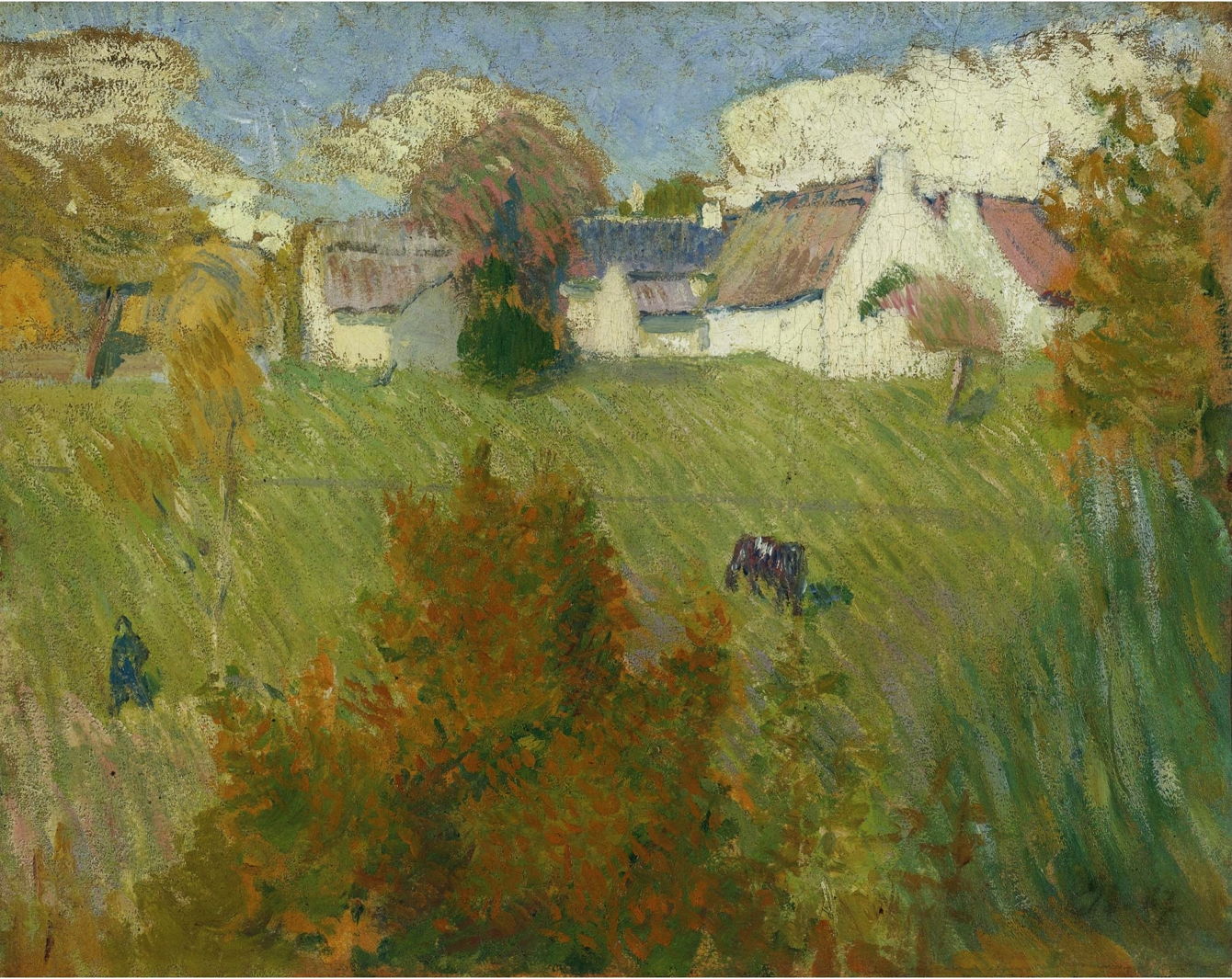
Farm at Pont-Aven (1887) shows Bernard’s highly structured brushstrokes. If this is dated accurately, this work was painted after Bernard had left Pont-Aven.
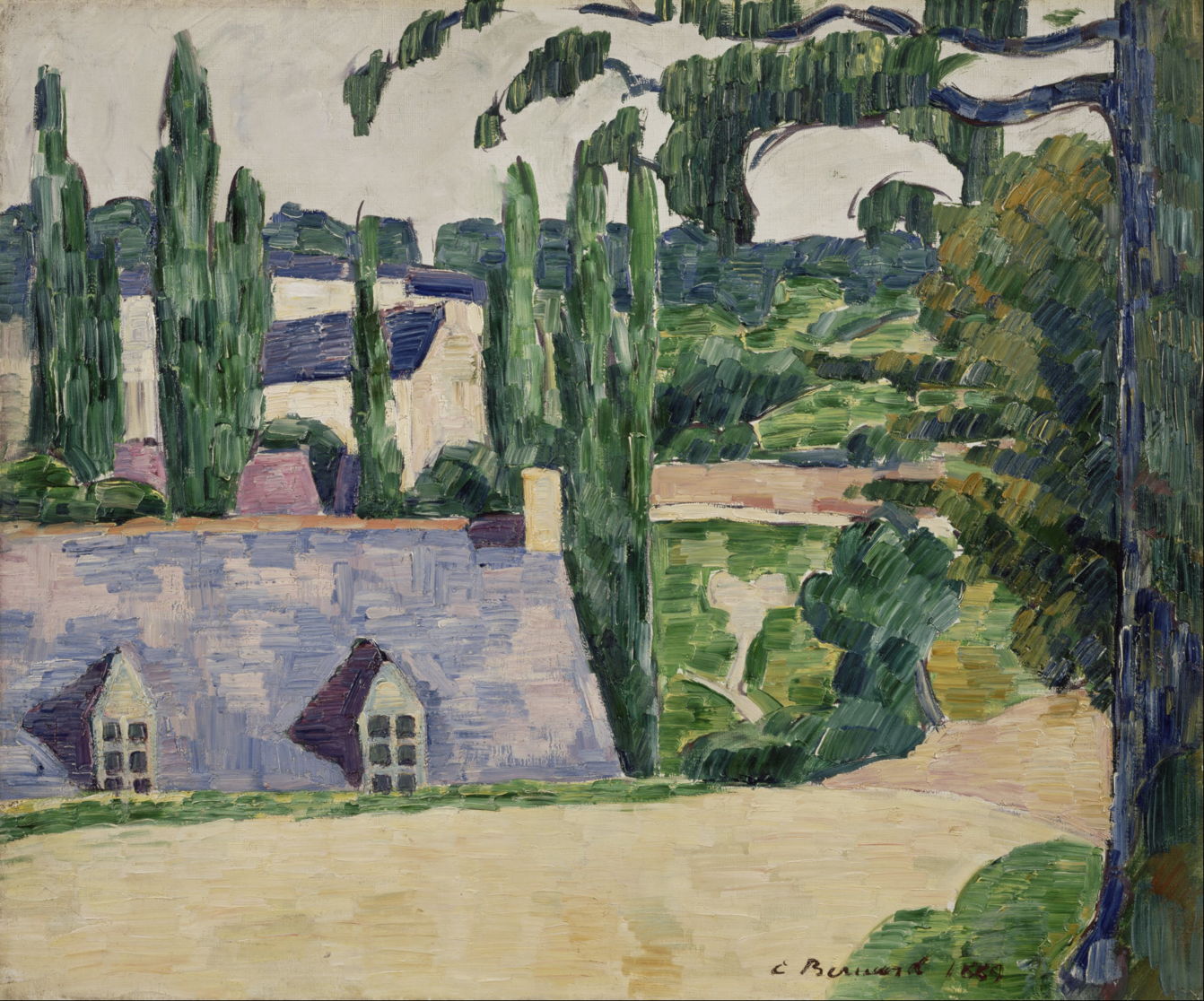
In Bernard’s Landscape at Pont-Aven from 1889 the similarity of his brushstrokes with those of Cézanne’s late oil paintings is obvious, although he seems to have settled for close-packed vertical strokes rather than diagonals.
Over this same period, Georges Seurat was heading in a different direction.
 The Eclectic Light Company