
By 1895, Ohio-born painter Elizabeth Nourse had lived and painted in northern France for eight years. Her travels had taken her as far afield as Italy and the Netherlands, and she was exhibiting her work successfully in Paris and at international events.

The Sewing Lesson from 1895 shows a Dutch mother teaching her daughter to sew, against the backlight from the doors filling much of the painting. It’s possible that this was also painted at Volendam, and suggests she may have returned there following her first visit in 1892.

Motherhood (1897) is a superb study of the gaze of a mother and her baby, but the woman isn’t a conventional subject for such a portrait. Her face is tanned from outdoor work, and her hands have clearly toiled long and hard on the land. Nourse’s social realism may appear subtle, but is real. This hasn’t been invented in a studio for effect.
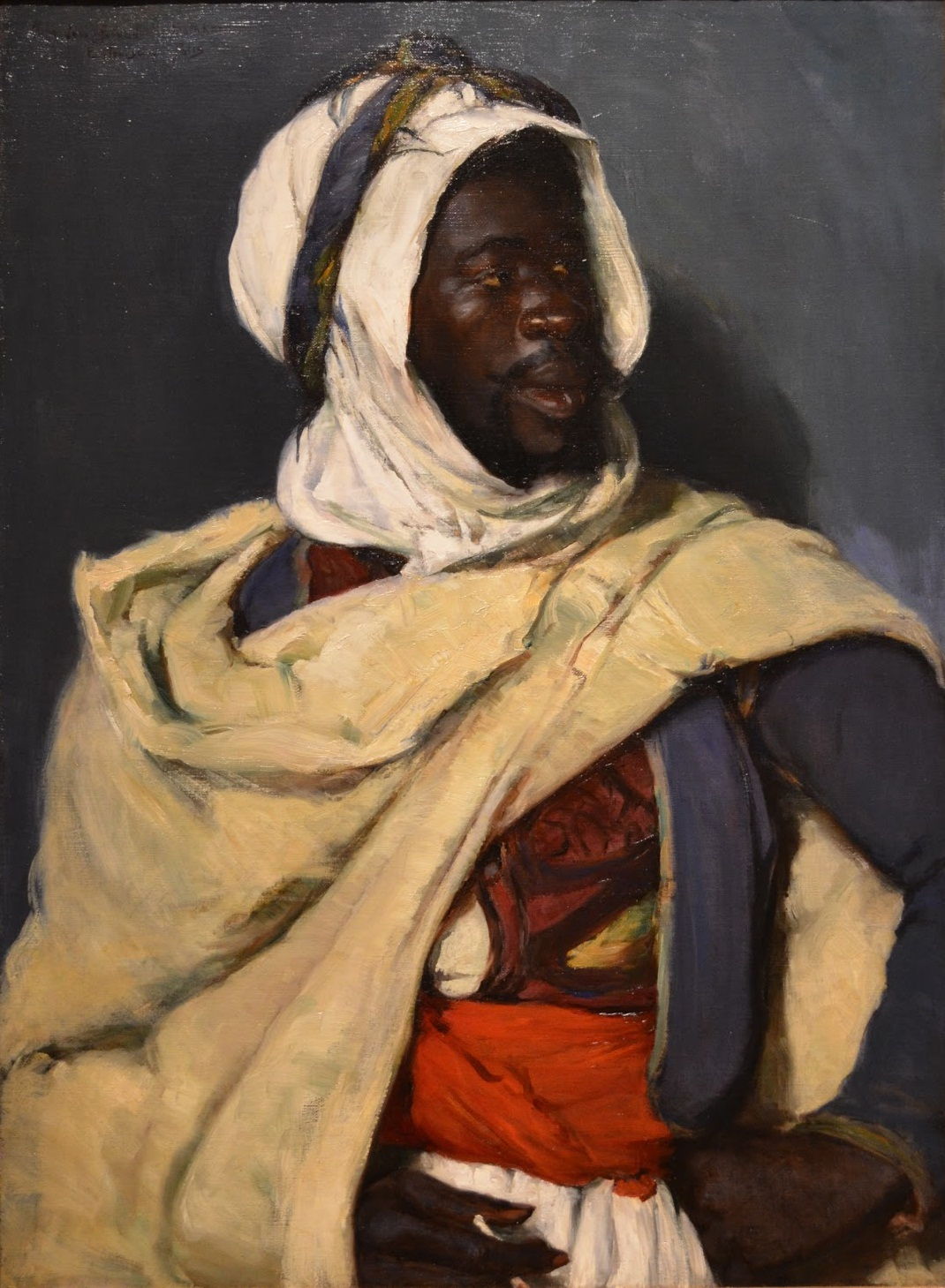
One of her best-known works, Head of an Algerian (Moorish Prince) from about 1898 suggests she may have visited North Africa. Her brushwork is now wonderfully loose in his clothing.
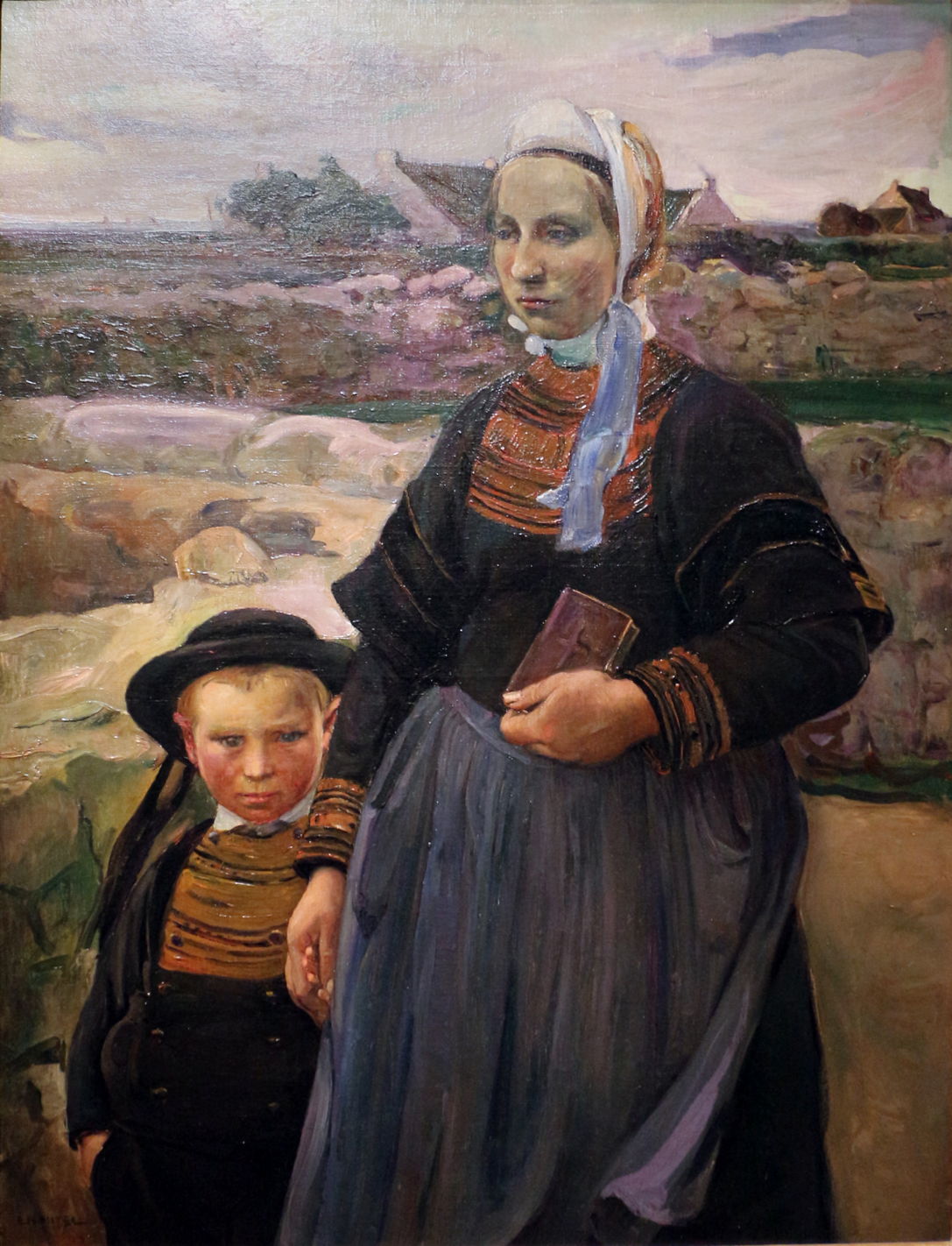
Around the turn of the century, Nourse visited the extreme west coast of Brittany, where she painted this mother and her son as they made their Return from Church, Penmarc’h in 1900.
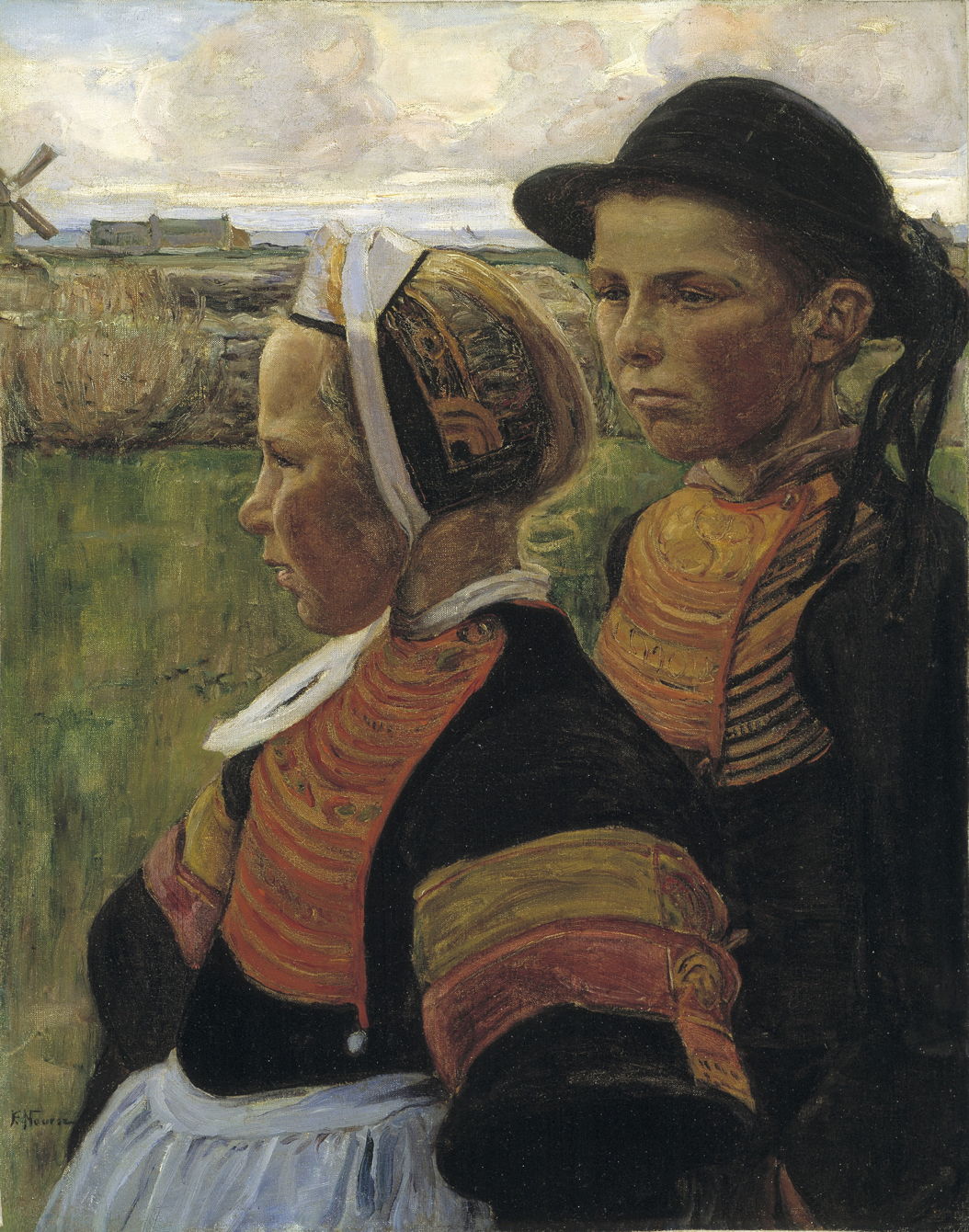
This double portrait of Brother and Sister, Penmarc’h (c 1901) is more sketchy, but looks to be in an almost identical location.
In 1900, she was awarded a medal for her paintings exhibited that year at the Exposition Universelle in Paris. Among other Americans whose paintings were shown there were William Merritt Chase, the Impressionist, and Henry Ossawa Tanner, the early Symbolist.

Most of Nourse’s surviving paintings were made in oils, but she also painted en plein air using watercolours and gouache, as in this sketch of Belgian Flower Vendors, Gravensteen Castle (1902). This castle is a famous landmark in the Belgian city of Ghent.
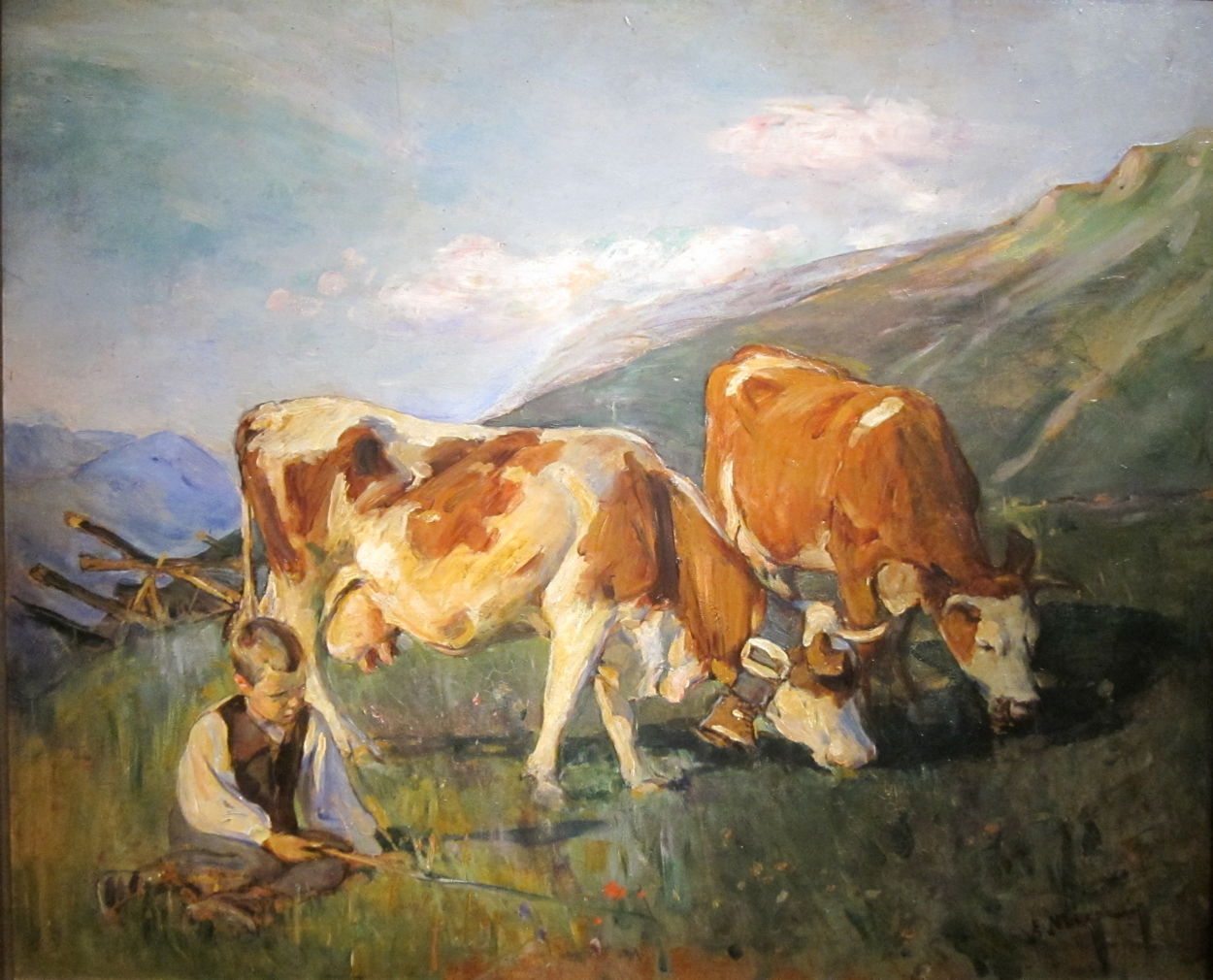
In 1904 she painted The High Meadow probably in front of the motif in the foothills of the Pyrenees, in the south-west of France, or in central eastern France near the Alps. At that time, families split to take their livestock up into the higher pastures for the summer grazing, in what is known as the transhumance, an annual migration that dominated life in those areas.
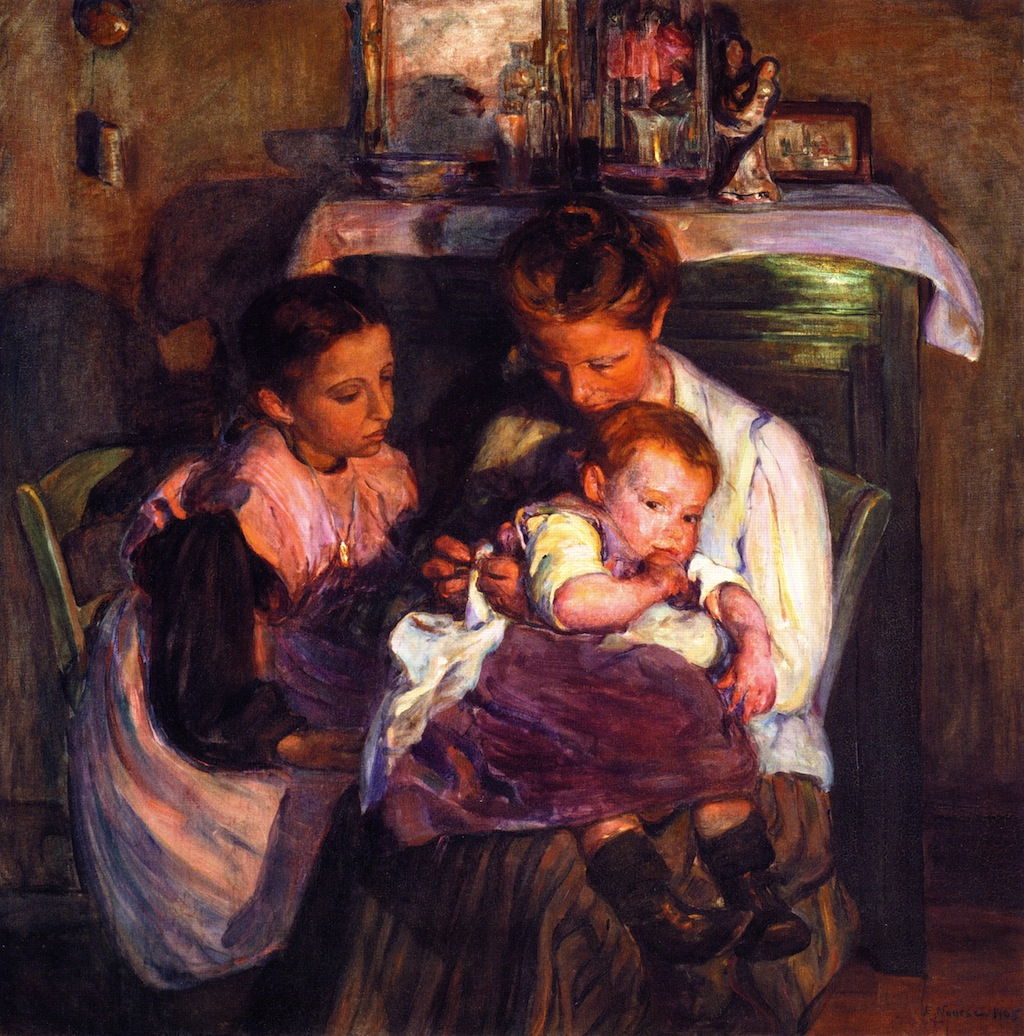
Happy Days is another of her tender and insightful scenes from family life, here in 1905. A mother is carrying out running repairs with needle and thread on the clothing of her child. The collection of objects on the mantlepiece behind suggests they aren’t in abject poverty, but still far from well off.

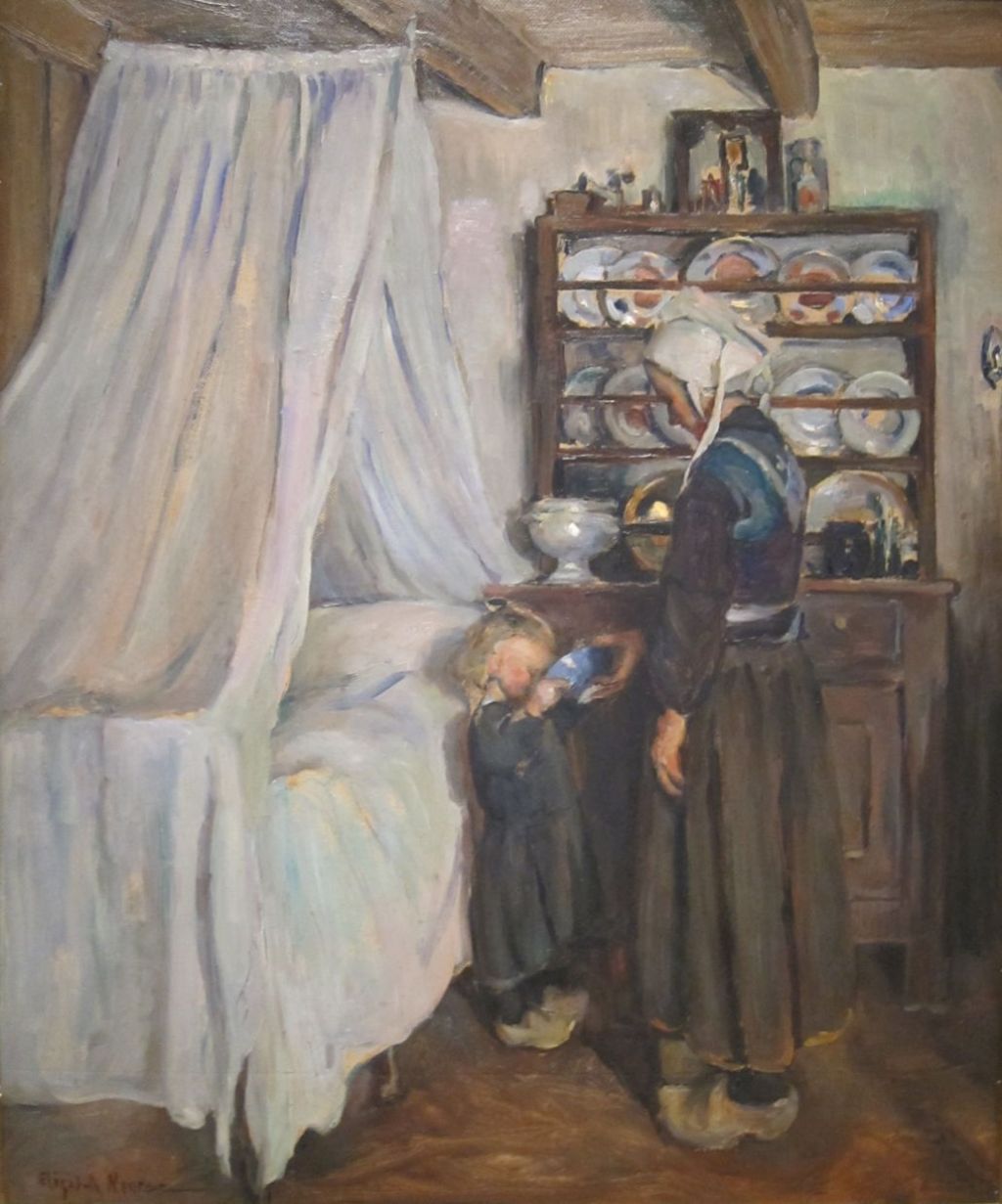
The signs in Nourse’s painting of a Breton Interior from about 1907 are more ambiguous. This little girl’s bed, and the well-stocked dresser beside it, appear quite comfortable. But she is draining the last of a bowl, and both mother and daughter are wearing wooden clogs.
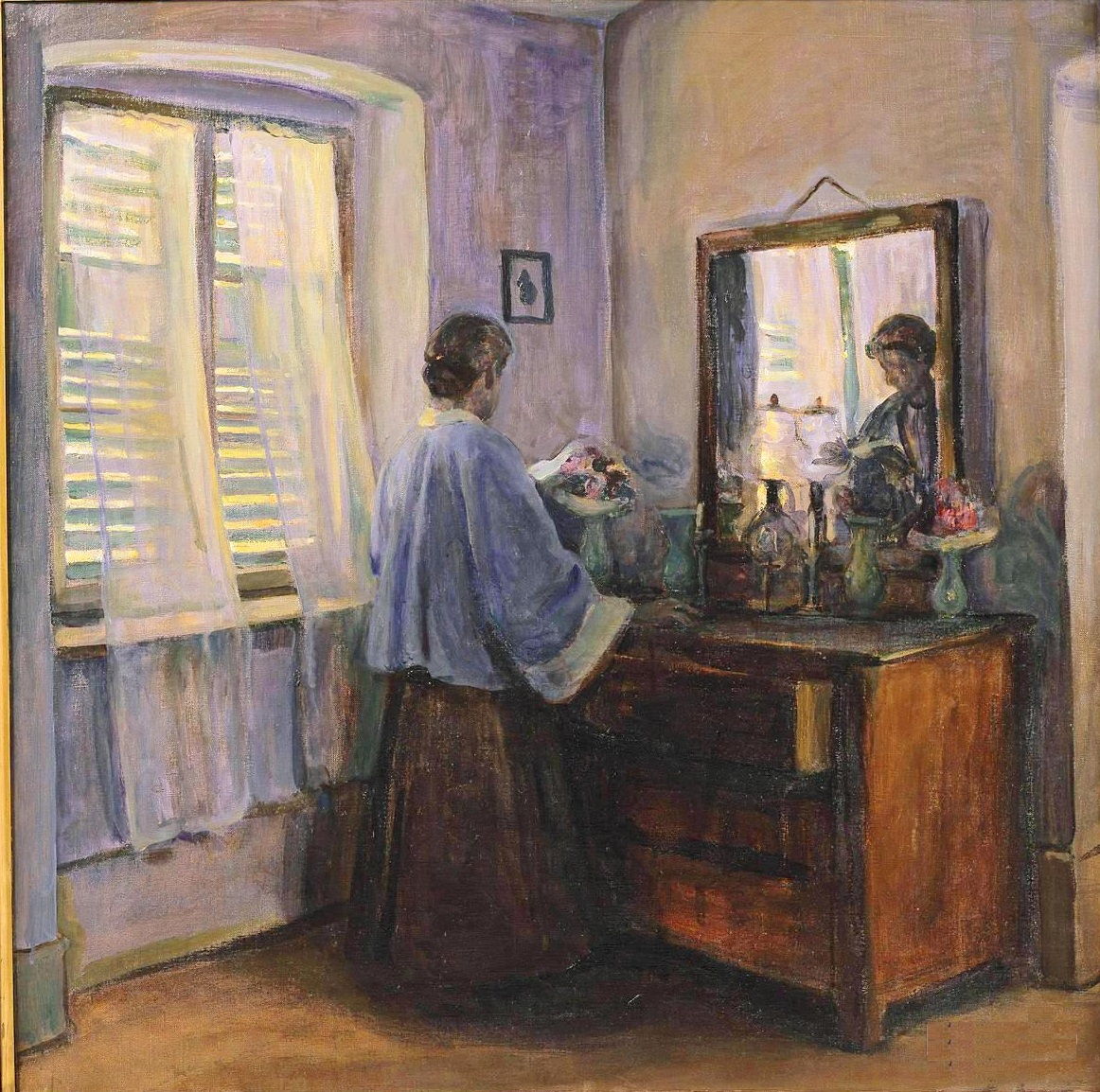
The last painting that I have to show for the life and work of Elizabeth Nourse is the most puzzling. Closed Shutters, painted in quite modern style in 1910, shows a woman standing in front of a vase of flowers and the mirror hanging above a large chest of drawers. The shutters are closed over the window beside her, and the top drawer partly open, as is its reading.
In 1915, Nourse was awarded a gold medal at the Panama-Pacific Exhibition in San Francisco.
She continued to paint until her sister died after the First World War. During that war, she distinguished herself by working for the relief of refugees in Paris, rather than fleeing Europe to shelter in the USA. Her services to humanity were recognised in 1921 by the award of the Laetare Medal by Notre Dame University in Indiana.
Elizabeth Nourse died in Paris in 1938, at the age of 78. She had been the first American woman to be elected to the Société Nationale des Beaux-Arts, and during her lifetime was recognised as the leading American woman painter. Many of her works are on display in the Cincinnati Art Museum, and there have been a few exhibitions of her work, but only in the US, as far as I can see.
Reference

