

During the late nineteenth century there were several major American women painters working in Paris, including the Impressionist Mary Cassatt (1844–1926) and Elizabeth Jane Gardner (1837-1922), an academic painter who later married her former teacher William-Adolphe Bouguereau. Among the best-known at the time was the younger Elizabeth Nourse (1859–1938), who came from Ohio.
Nourse was born and brought up in Mount Healthy, now a suburb of Cincinnati, Ohio, one of twin girls who were the youngest of a family of ten. Her artistic talents were recognised early, and at the age of only fifteen she started studying at what has become the Art Academy of Cincinnati. She was one of the first women to be admitted to its life classes, and after seven years of study there was offered a teaching position, which she declined, preferring to devote herself to her art.
Although both her parents died in 1882, she was given financial support to continue her studies at the Art Students League in New York City, but the following year returned to work as a portraitist and interior decorator in Cincinnati.

One of her earliest surviving paintings is this remarkable Flock of Geese from about 1883, painted either just before or after she returned from New York.
Nourse spent her summers in the Appalachian Mountains, where she apparently concentrated on painting their landscapes in watercolour.

The painting I have found from this period of her career shows a Tennessee Woman (c 1885) weaving at a large loom, with her cat for company, a precursor for her later portraits of the rural poor in Europe.
In 1887, Nourse travelled to Paris with an older sister, where she settled and attended the Académie Julian, under Gustave Boulanger, a close friend of Jean-Léon Gérôme, and Jules Lefebvre, both of whom were renowned for their Salon style and rejection of Impressionism.
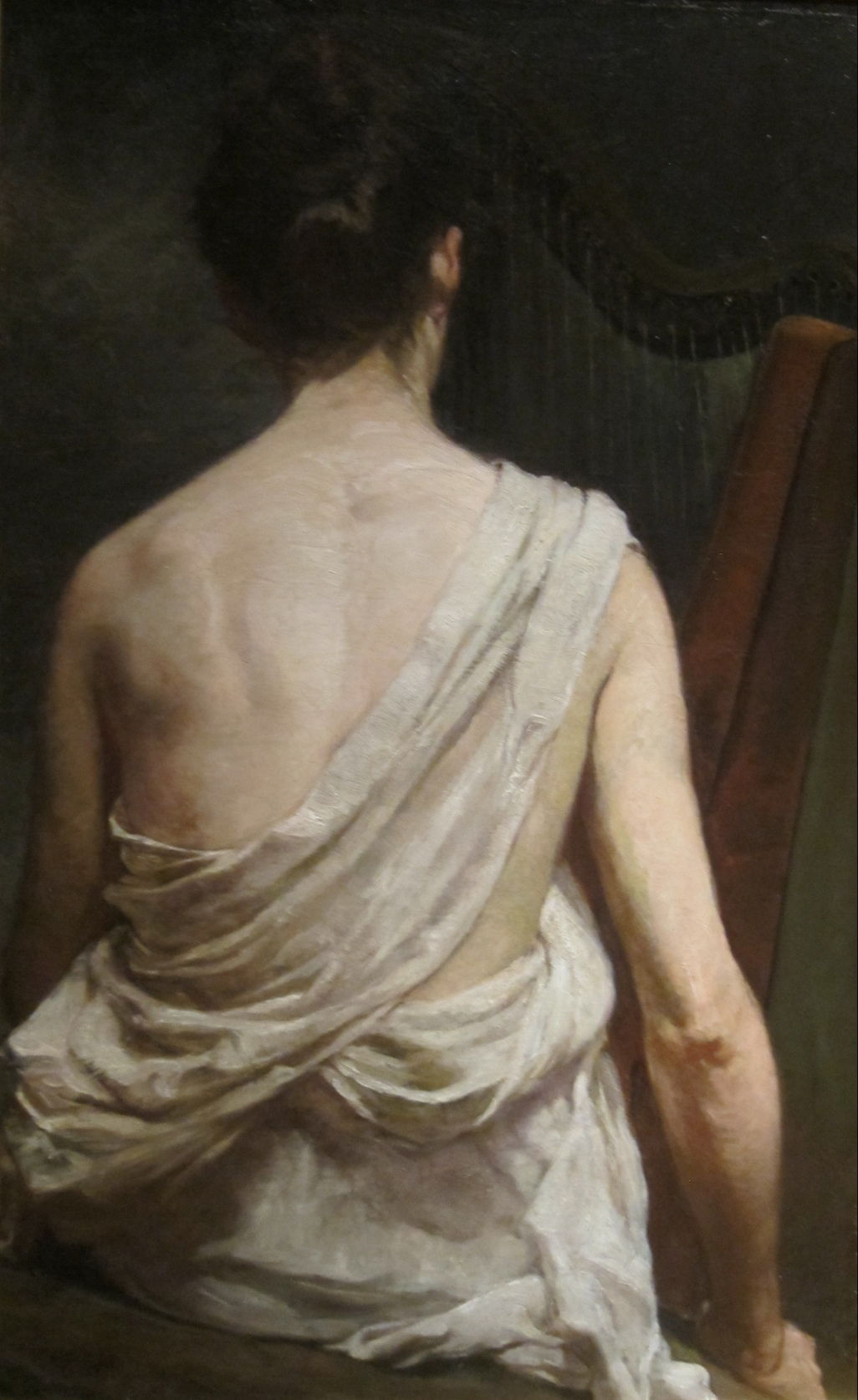
Their influence is visible in Nourse’s Woman with a Harp (1887), which is more traditional in its tone and brushwork than her earlier work completed while she was still in the USA.
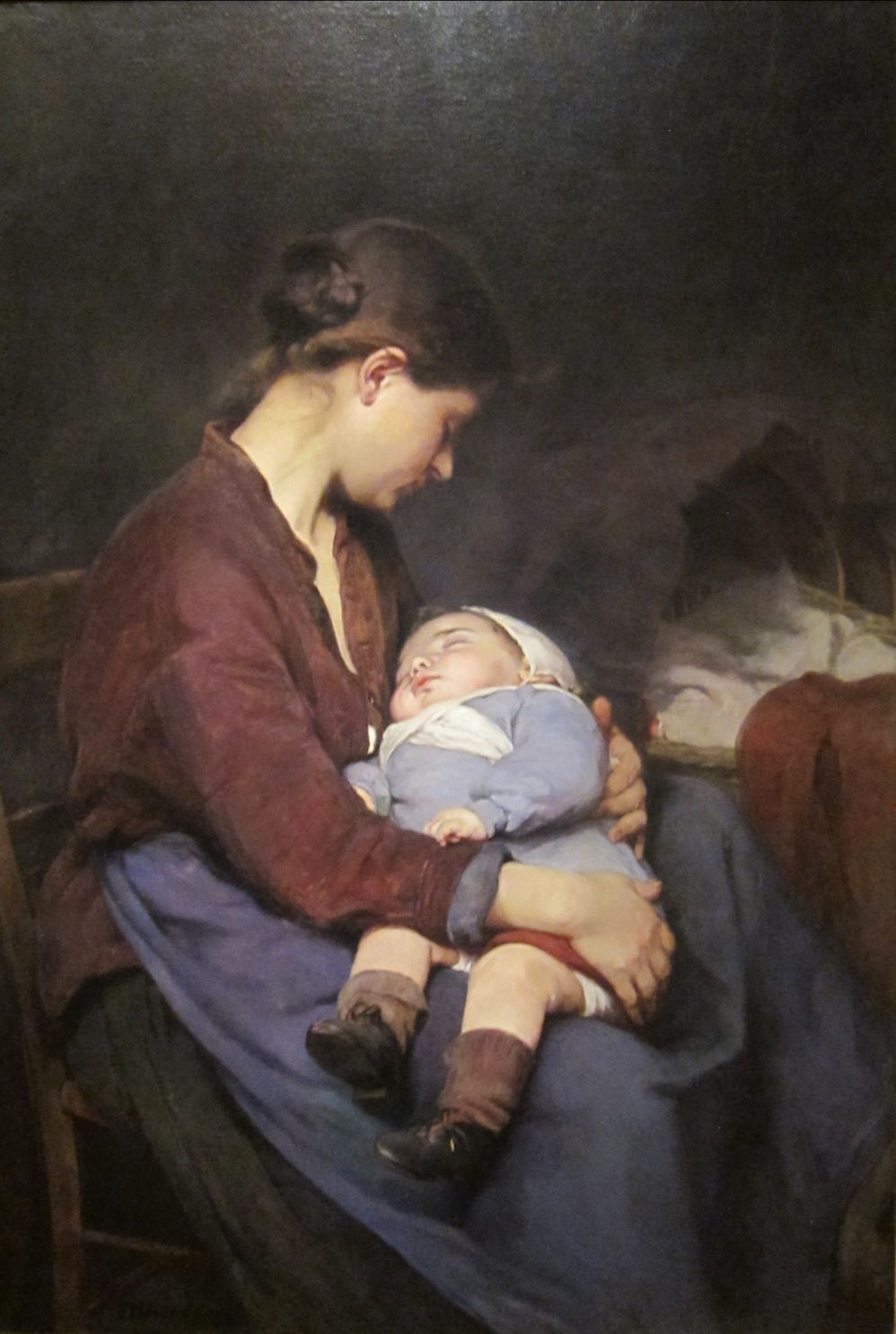
Although Nourse never married, and lived with her sister until after the First World War, many of her portraits featured mothers and their children, as in The Mother from 1888. That same year, she exhibited her first paintings with the Societé Nationale des Artistes Français, and started travelling more widely through France and Europe.
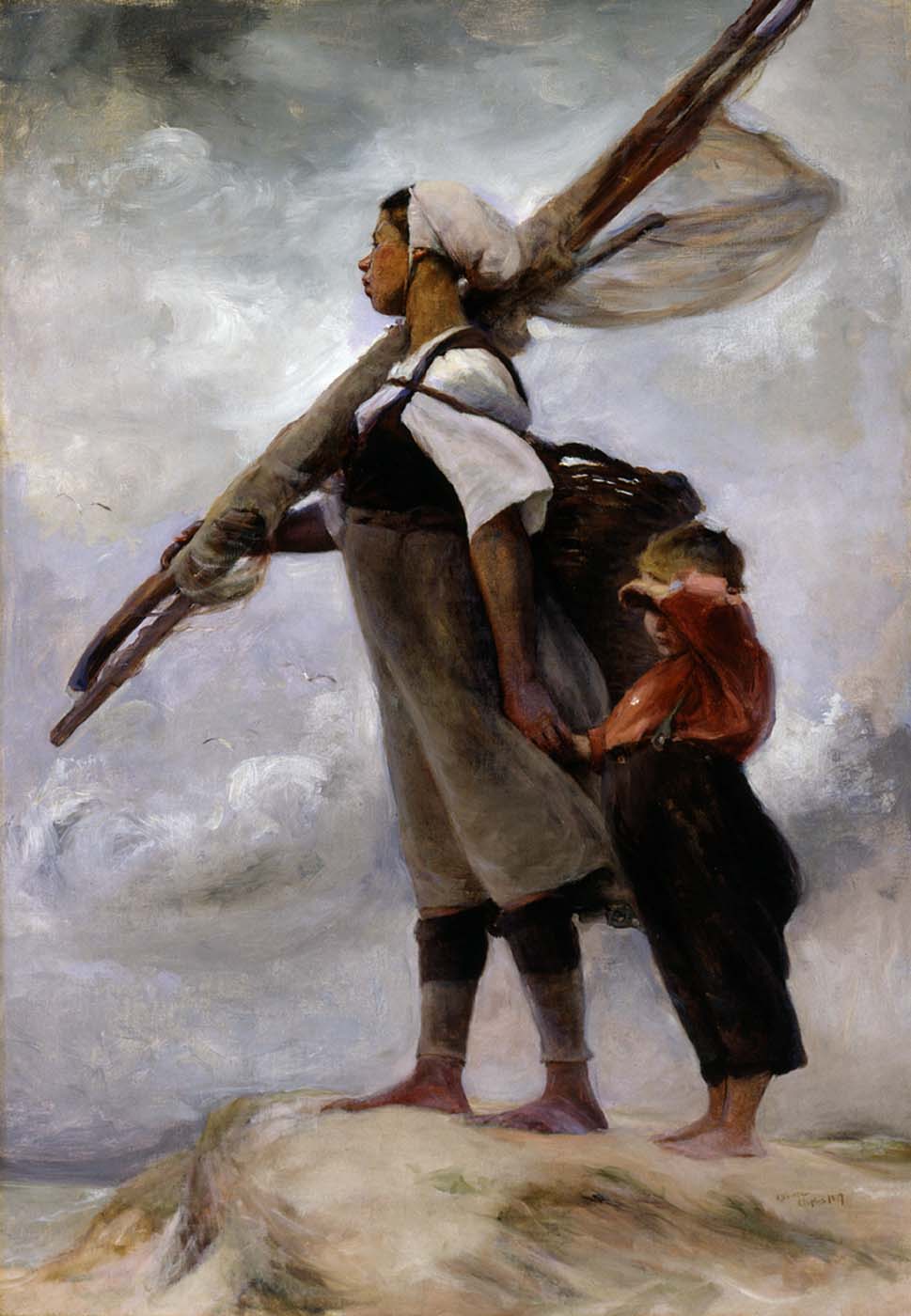
One of her early trips took her north to the Channel coast of France, where she painted this Fisher Girl of Picardy in 1889. It appears to have been influenced by the paintings of Winslow Homer made during his stay at Cullercoats in the north-east of England from 1881, although I am unsure whether she ever saw any of his works. Her style has become more modern and painterly.

Nourse had been born into a Catholic family, and appears to have remained a devout believer all her life. At this time, she must have visited central Italy, where she painted the renowned frescoes in the Papal Basilica of Saint Francis of Assisi, in The Church of Saint Francis of Assisi from 1890. The focus of her attention is on the young girl kneeling in prayer at the left.

Nourse also painted many social realist works looking at the lives of the rural poor. Among those is The Family Meal from 1891, which was awarded a medal at the World’s Columbian Exposition in Chicago in 1893, and is seen here as an engraving in its catalogue. Parents sit with their two young children at an almost bare table. Their meal consists of a pot of soup and the remains of a loaf of stale bread. The older child looks expectantly at her mother, who stares despondently at the table. Her husband looks down at his empty bowl.
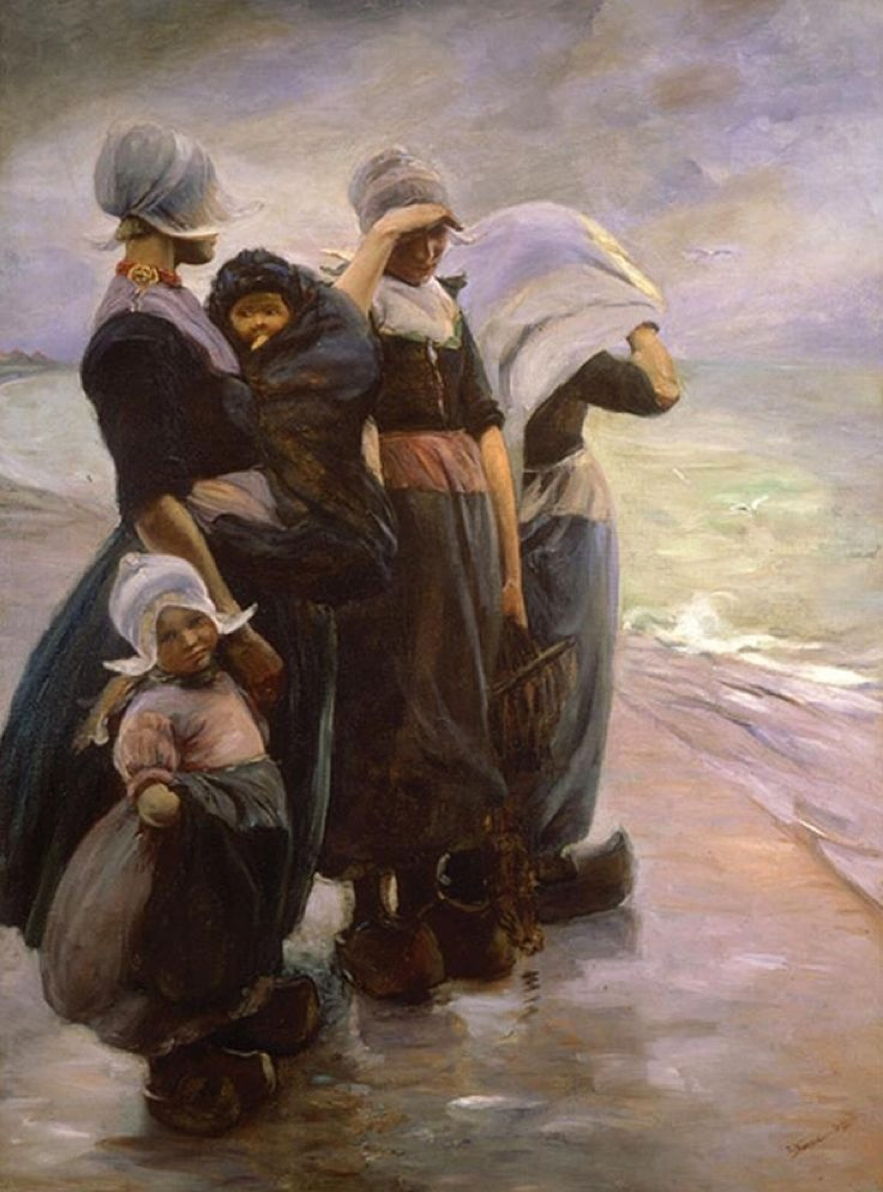
In 1892, Nourse stayed in the artists’ colony at Volendam, to the north-east of Amsterdam in the Netherlands. Known as a picturesque fishing village, it had become popular with artists from across Europe during the late 1870s. On the Dyke at Volendam (1892) is what Winslow Homer might have painted had he visited a decade earlier, with fisherwomen and their children looking out at the rough sea.
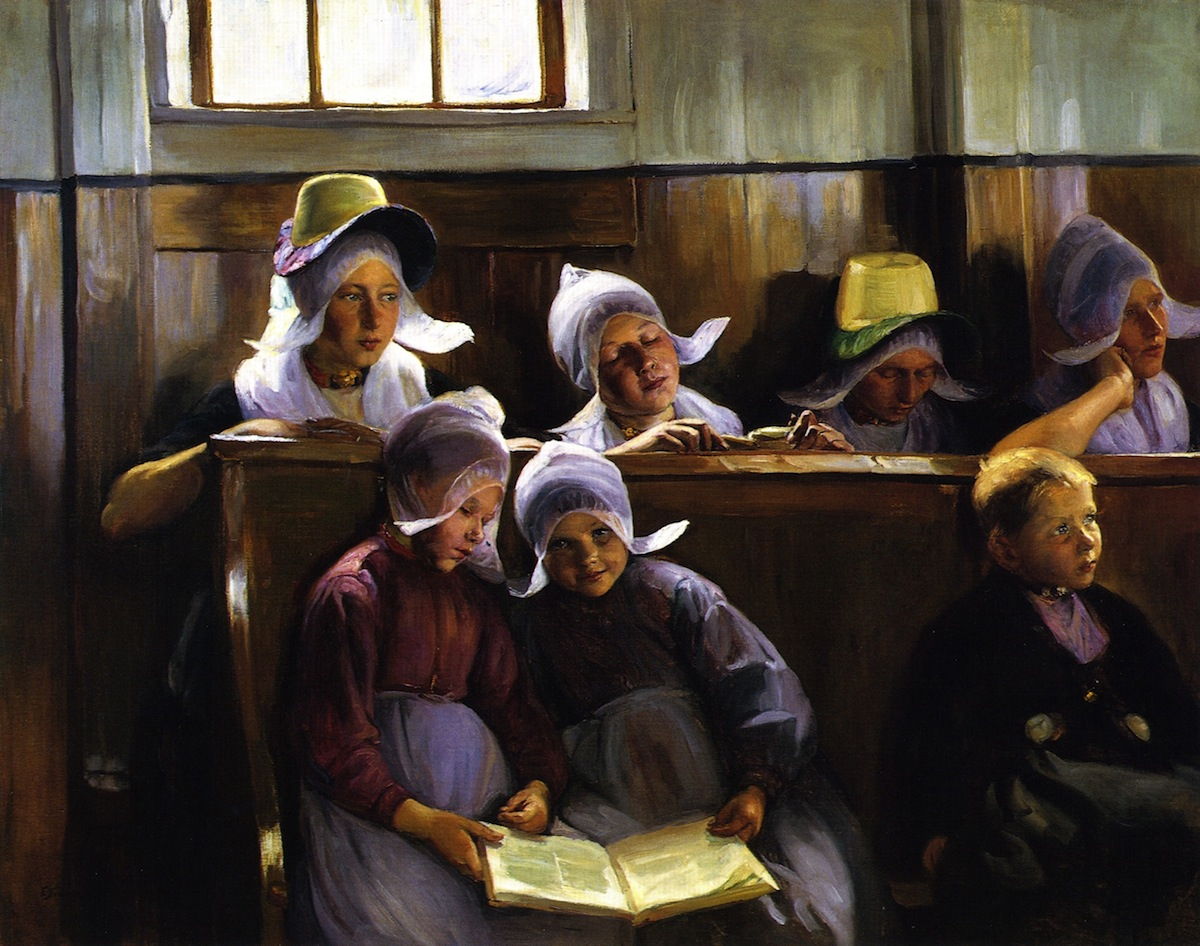
Nourse appears to have been particularly interested in local traditional dress, both here and in her travels in France. In the Church at Volendam from 1892 is a delightful family portrait in Sunday best, and anticipates her paintings in Brittany.
Reference

