
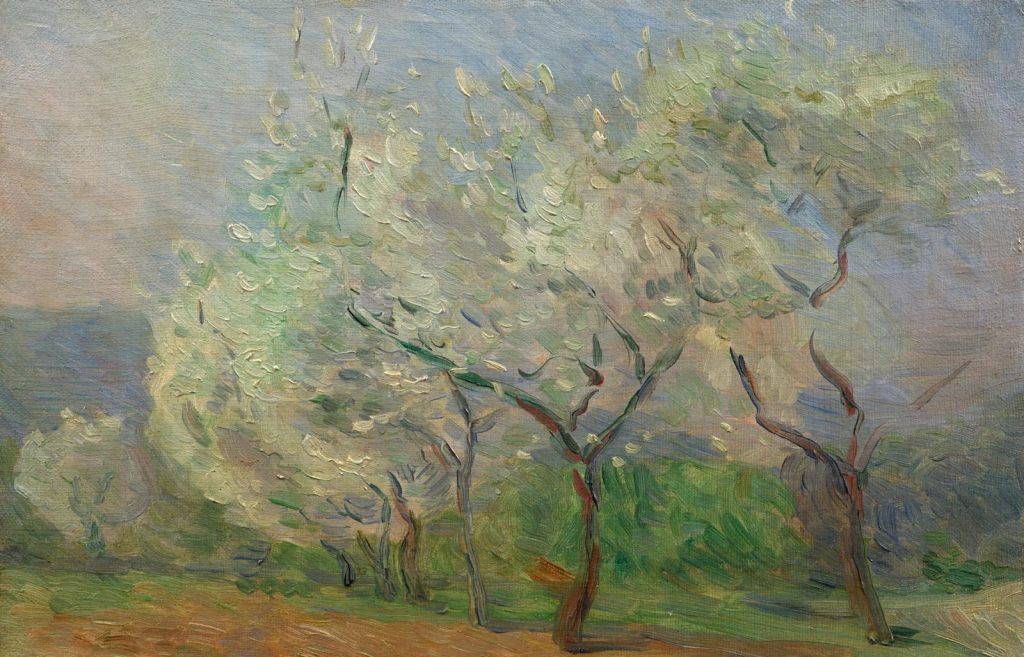
Following Berthe Morisot, the second of my four great ladies of Impressionism is Marie Bracquemond (1840–1916)
Marie Anne Caroline Quivoron was a precocious artist, entered training at the age of 17, and soon had her first painting accepted for the Salon. She then trained in the studio of JAD Ingres and copied in the Louvre, where she met Fèlix Bracquemond, who fell in love with her. They married in 1869, and worked together designing for porcelain.
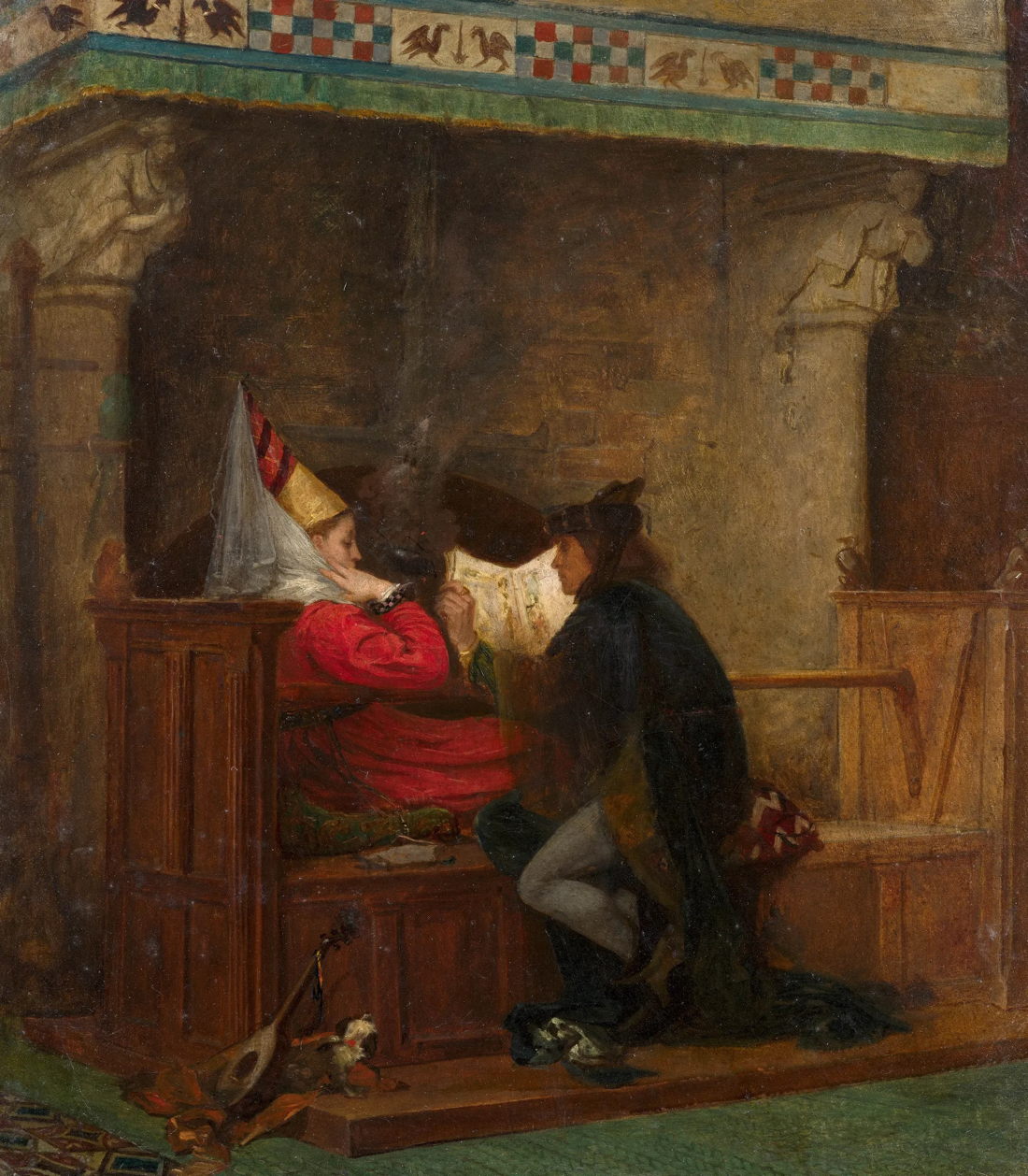
Some of her earlier paintings explore a fairy-tale view of the mediaeval world, seen here in Reading from about 1870. A courtier and musician is seen reading to a princess wearing a hennin conical headdress, his small lute resting against the woodwork below.
In 1879 she showed her paintings for the first time at the fourth Impressionist Exhibition.
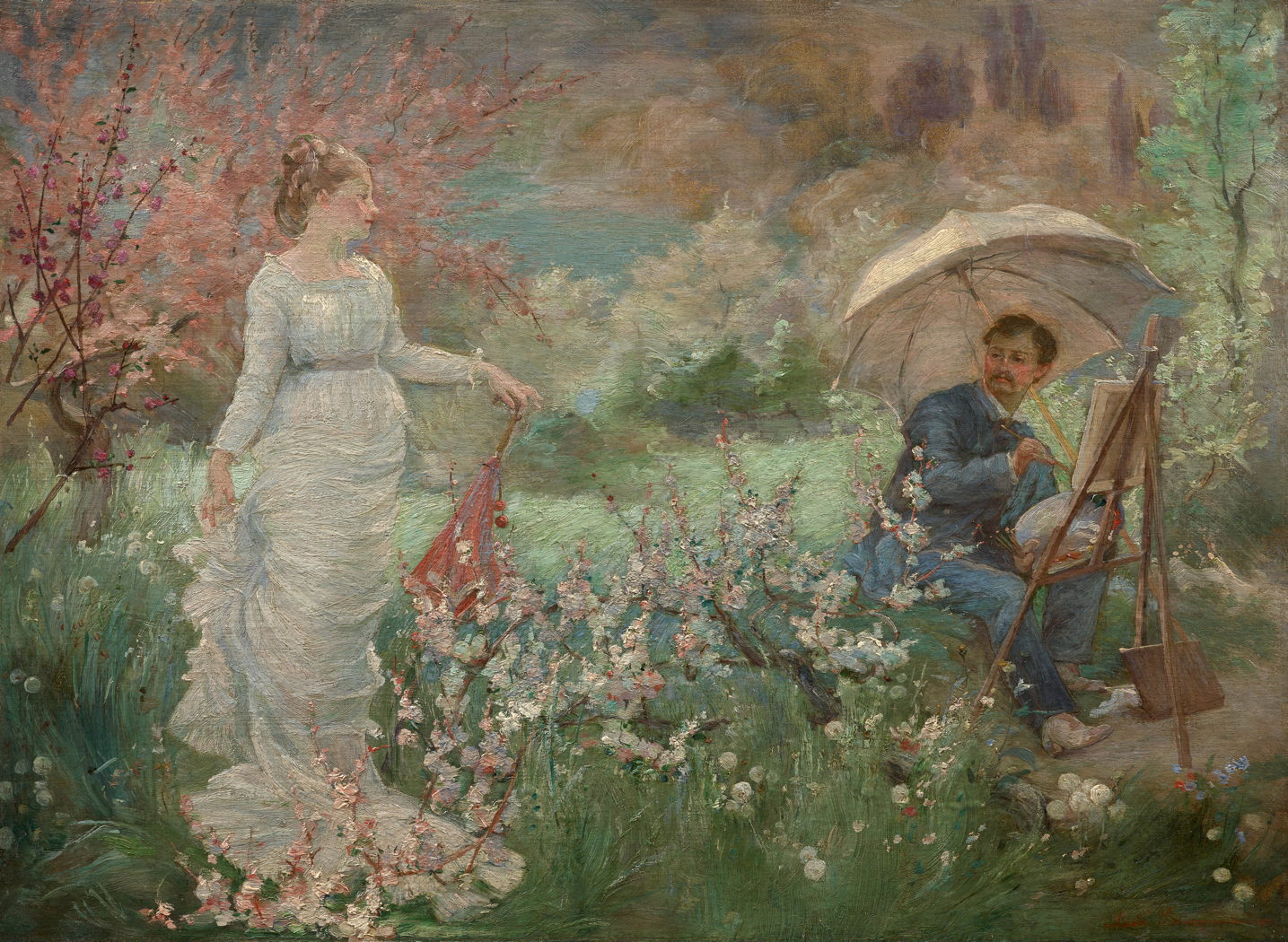
The Painter and his Model from 1880 shows her half-sister Louise modelling for James Tissot. This was one of her three paintings exhibited at the fifth Impressionist Exhibition of that year, and was favourably received.

Under the Lamp, from 1887, shows Alfred Sisley and his wife dining in the Braquemonds’ house at Sèvres, and is an outstanding but almost unknown Impressionist oil painting.
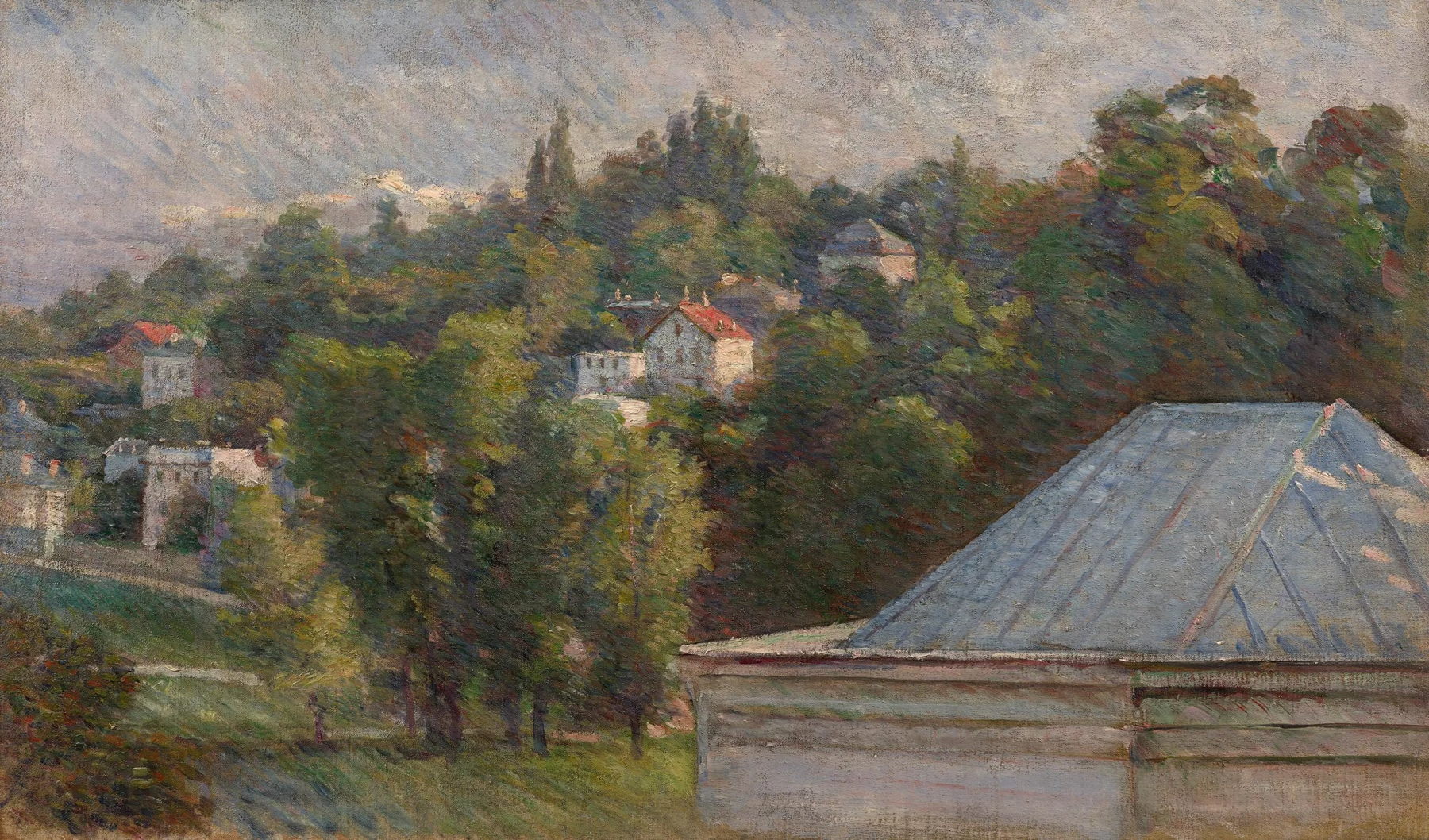
Her undated View of Sèvres shows what was then a wooded town outside Paris, and the centre for manufacture of fine porcelain, with painted decorations designed by the Bracquemonds. This also shows one of the distinctive features of some of her paintings, her diagonal brushstrokes.
Although her husband had earlier been supportive of her painting, he disliked her choice of mentors, Monet and Degas, and repeatedly attacked her Impressionist work.
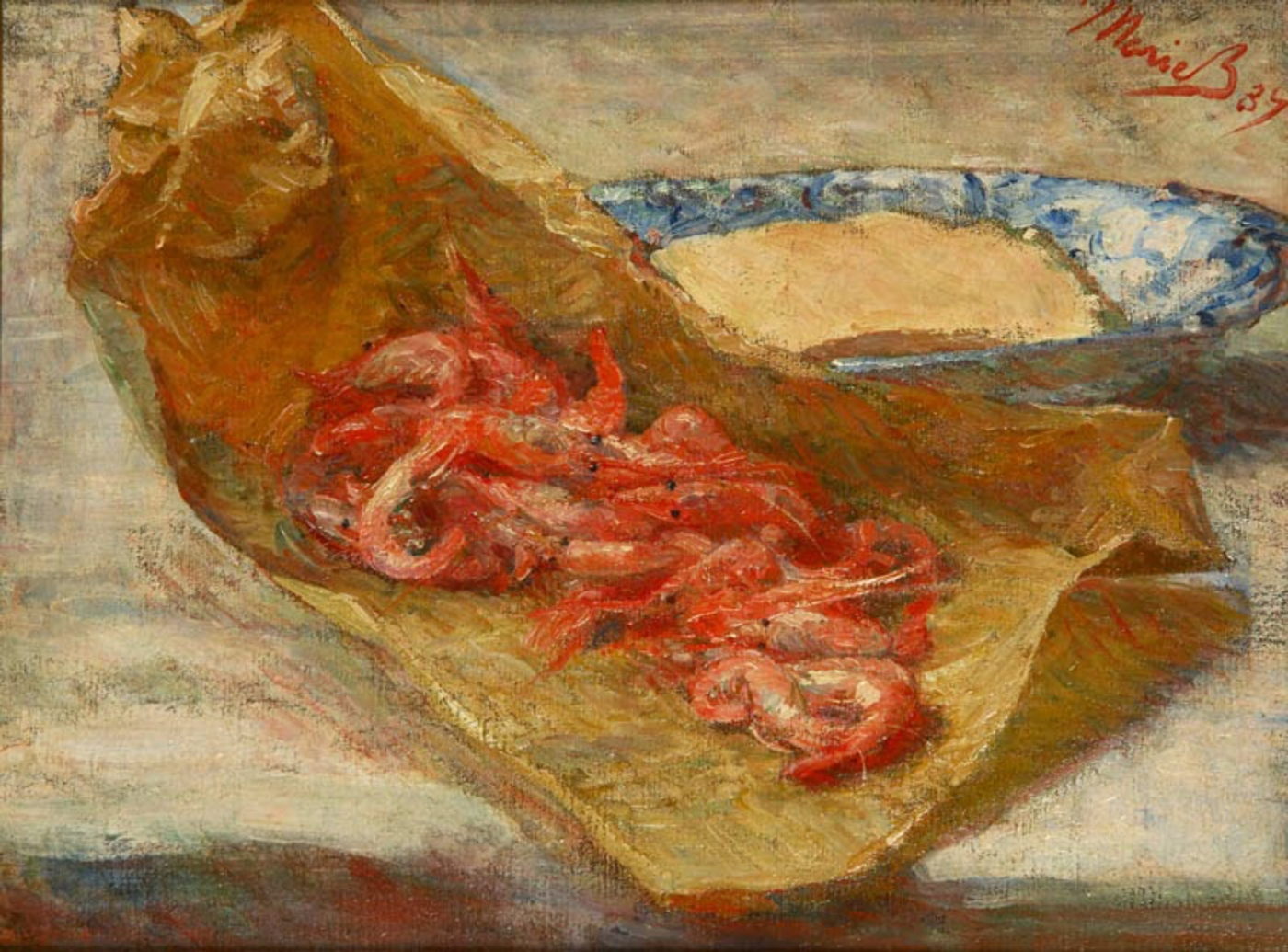
Shrimps, from 1887, is an unusual still life of fresh shellfish on a brown paper bag, and a pie crust behind.
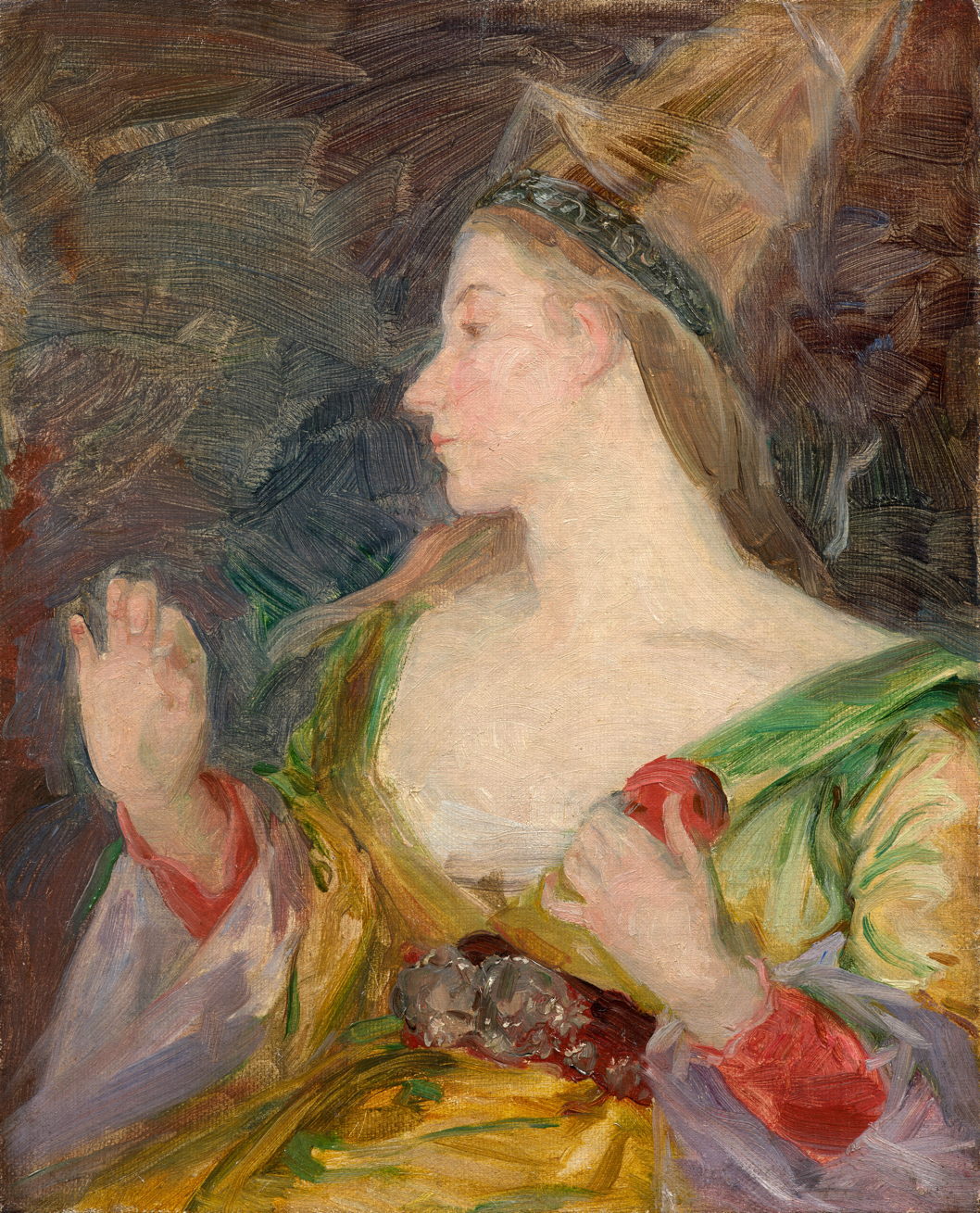
Her undated portrait of a Lady with a Hennin refers to her earlier Reading and its fairy-tales. Hennin is a French term used to describe this headdress from the fifteenth century, in which a conical hat is worn with a veil and headband. Although the figure’s flesh is smooth, the rest of this painting is exceedingly sketchy with florid brushstrokes.
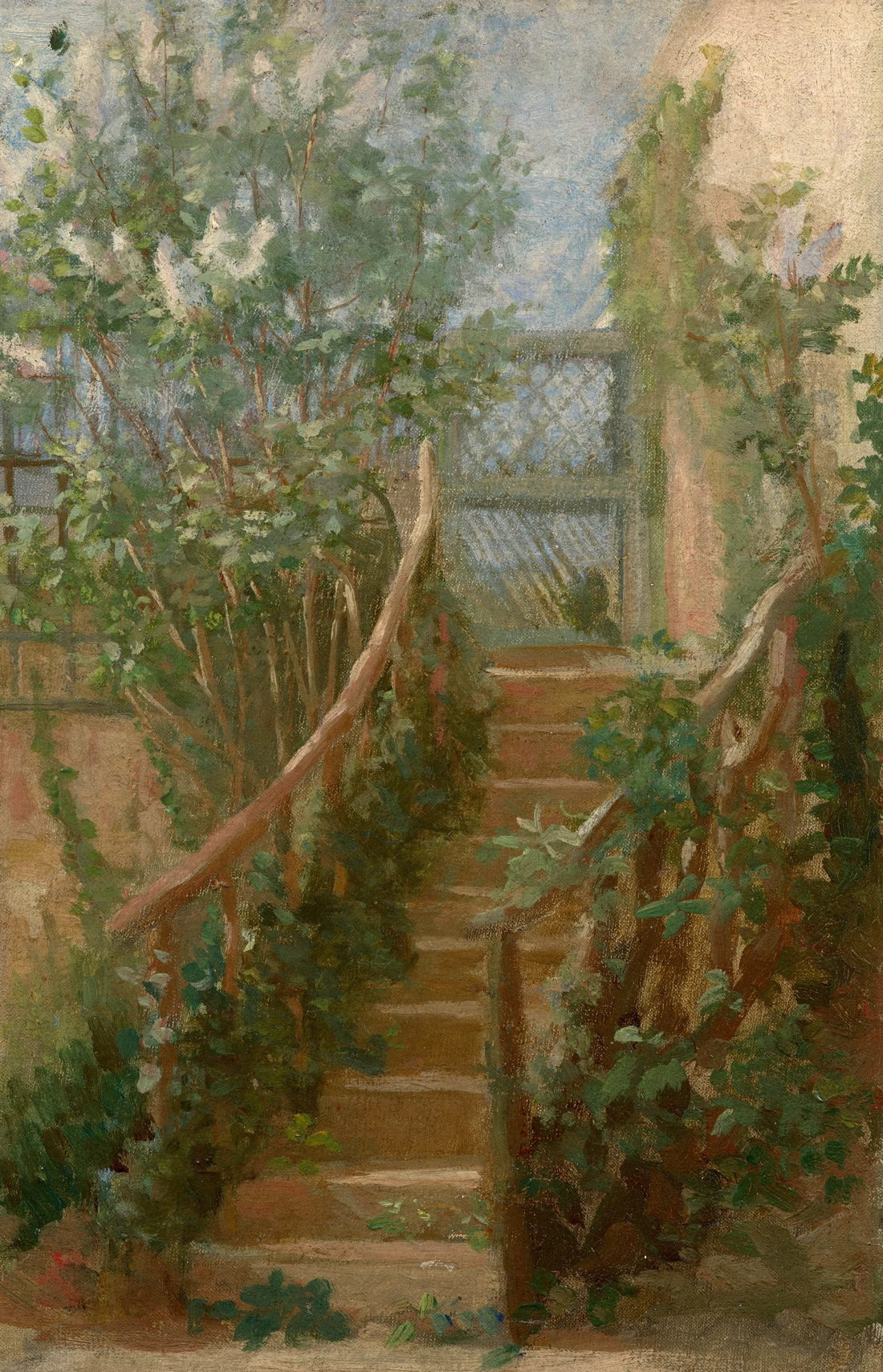
More overtly Impressionist is this undated painting of a garden Staircase. Although Bracquemond painted in front of the motif, she was also known for undertaking extensive preparatory studies, more usual for traditional studio paintings.
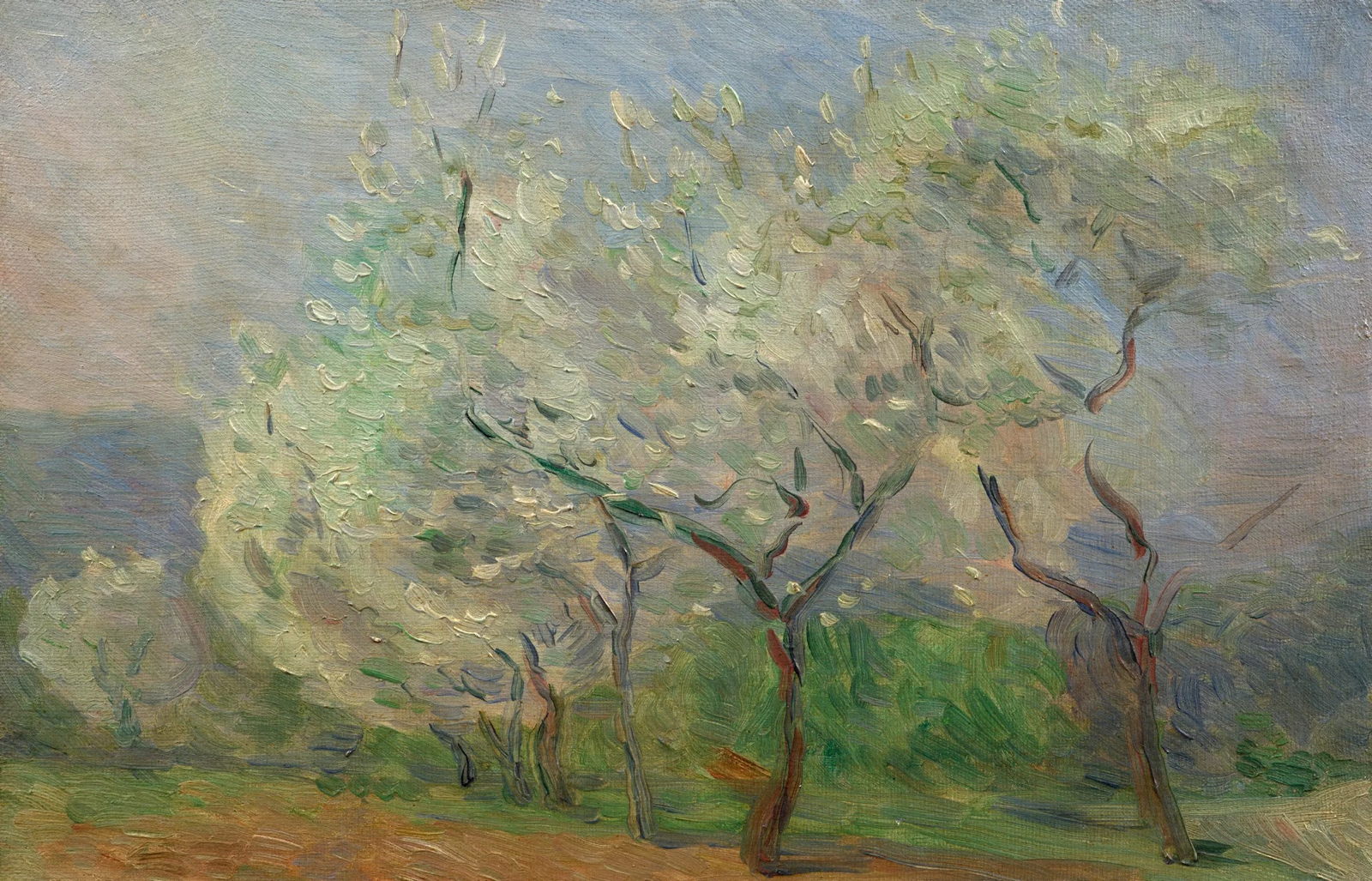
She sketched her undated Impressionist Study of Trees in the Light of the Rising Sun in oil on canvas.
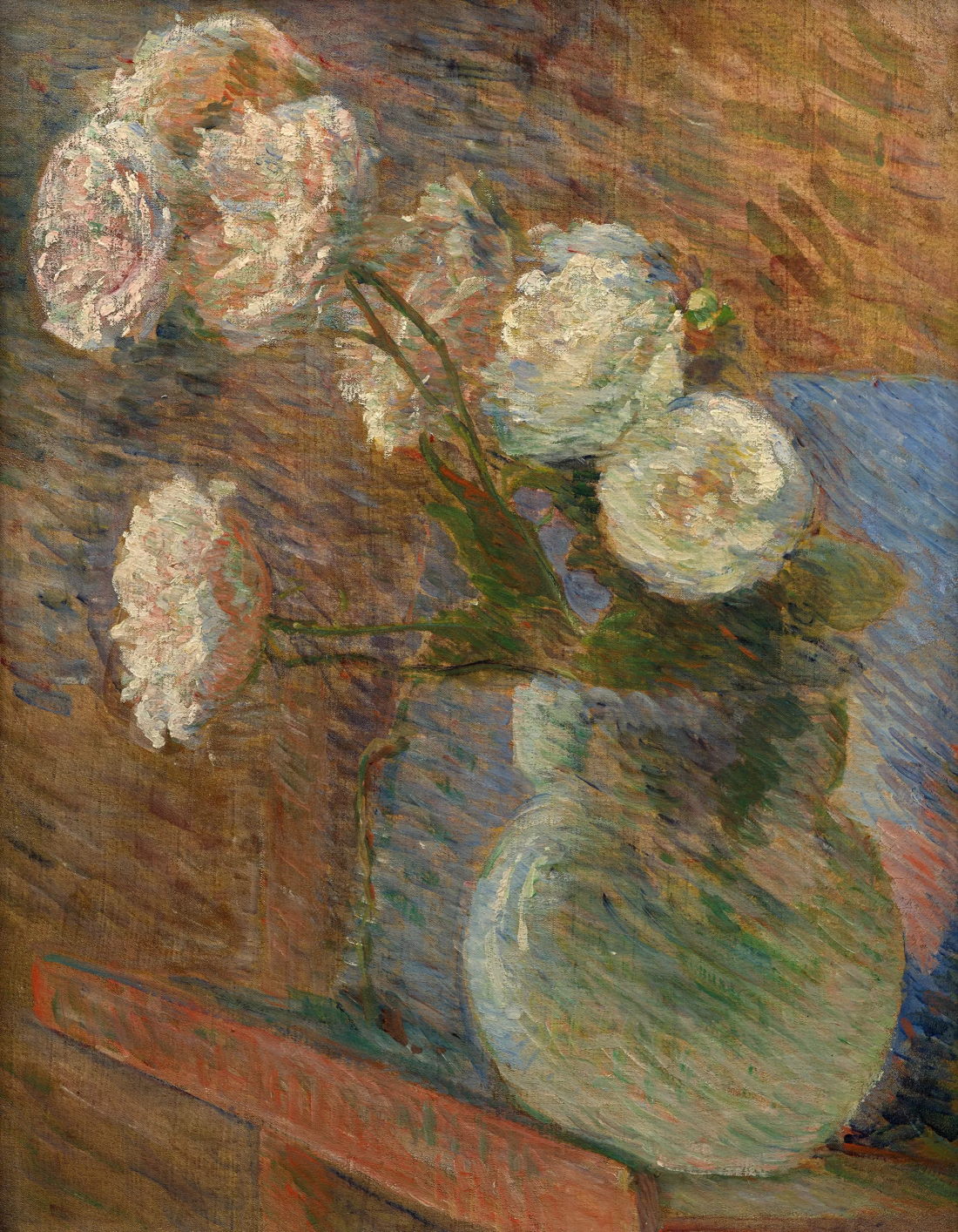
This undated Bouquet of White Roses in a Vase on an Easel is rich in diagonal brushstrokes.
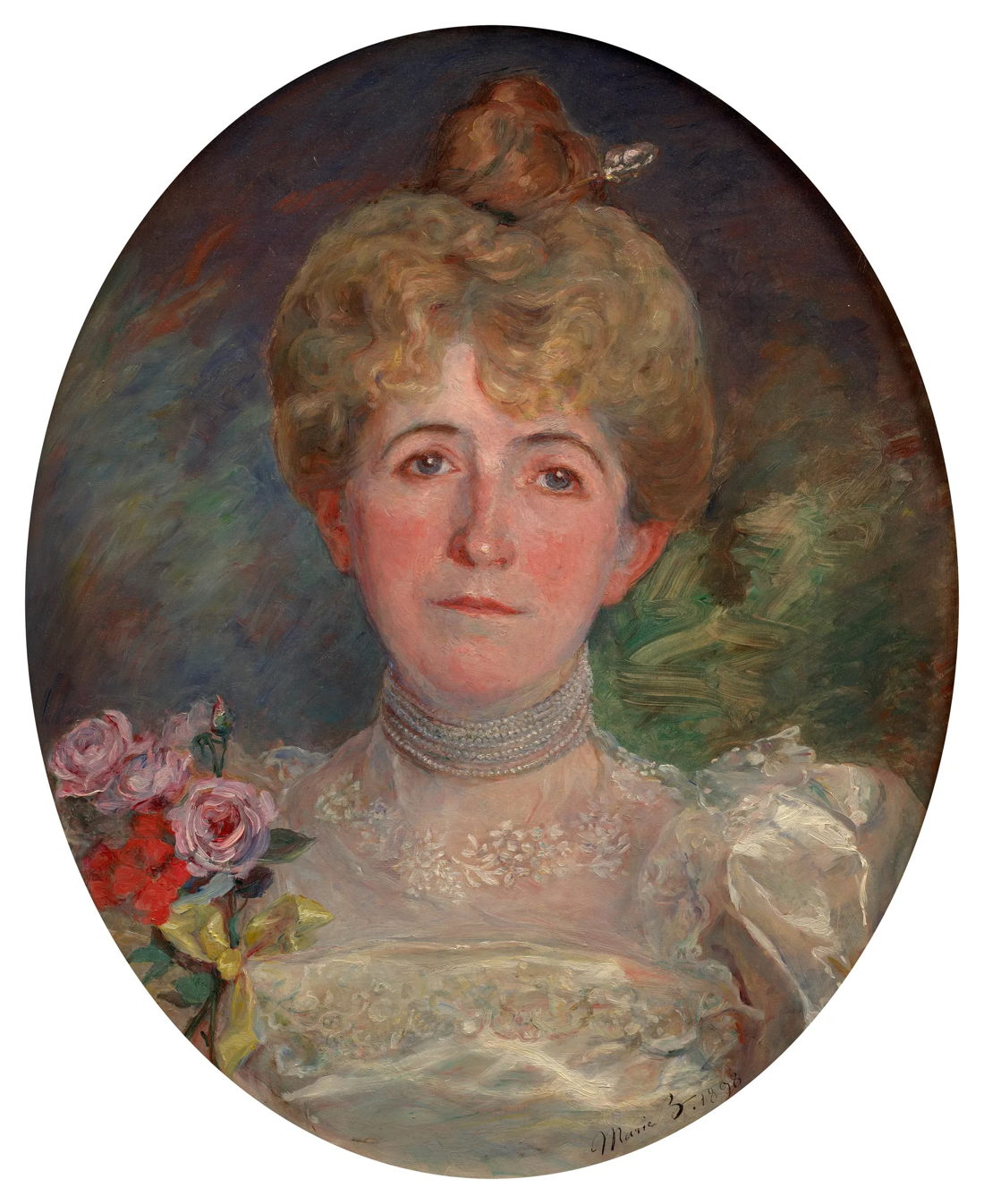
In 1898, in what must be one of her last works, she painted this Portrait of Louise Langlois Quiveron, her half-sister who had modelled for James Tissot eighteen years earlier. By this time she had largely abandoned painting as a result of her husband’s sustained attacks on her work.
Marie Bracquemond died in 1916, her art never having achieved the recognition it deserved.

