

Tomorrow we commemorate the centenary of the death of the best-known woman Impressionist, the American painter and print-maker Mary Cassatt. She was one of four women accorded the honour of being the great ladies of Impressionism. At the time of the First Impressionist Exhibition in 1874, there was only one woman artist who was part of the new movement, Berthe Morisot (1841–1895). Three more were to join later: Eva Gonzalès (1849–1883) possibly in the mid-1870s, Mary Cassatt in 1877, and Marie Bracquemond (1840-1916) after 1887.
This article is a brief review of their art to set the context for tomorrow’s concluding article about Mary Cassatt, and as a preface to a short series about them.
Berthe Morisot
She was born into an affluent and artistic family, and copied in the Louvre, where she became friends with Manet and Monet, and was introduced to Corot. Until 1874, when she joined the Impressionists, she exhibited regularly in the Salon. That year she married Édouard Manet’s brother Eugène, and went on to paint successfully until she died in 1895.

In the summer of 1875, the Manets stayed in Cowes, on the Isle of Wight, where she painted many oil sketches of the yachts in the harbour, and this portrait of her husband Eugène Manet on the Isle of Wight.

Hanging the Laundry out to Dry (1875) shows a communal drying area at the edge of a town. The women have a large black cart which they use to transport the washing, and are busy putting it out on the lines to dry in the sunny spells. Next to that area is a small allotment in which a man is growing vegetables, and in the distance are the chimneys of the city.

Her Reading from 1888 is light, colourful, and tranquil. Abundant brush strokes are visible, forming the folds in the woman’s clothes, the palm fronds, and giving a sketchy, spontaneous feel to the work. Although many of her paintings feature her daughter Julie, born in 1878, the model in this case was Jeanne Bonnet.
Marie Bracquemond
Marie Anne Caroline Quivoron was a precocious artist, entered training at the age of 17, and soon had her first painting accepted for the Salon. She then trained in the studio of JAD Ingres and copied in the Louvre, where she met Fèlix Bracquemond, who fell in love with her. They married in 1869, and worked together designing for porcelain. Although her husband was supportive of her painting, he disliked her choice of mentors, Monet and Degas, and repeatedly attacked her Impressionist work.
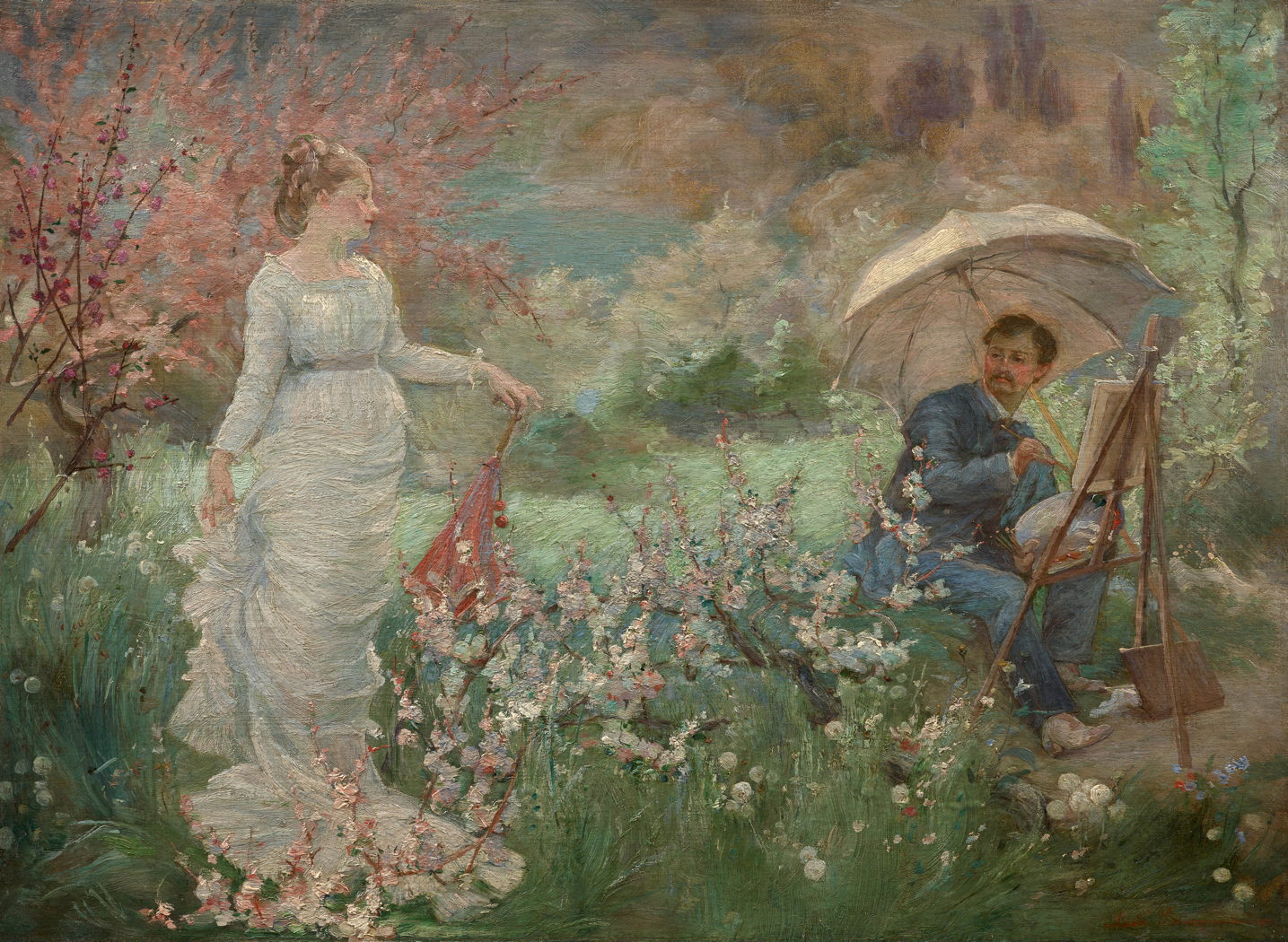
The Painter and his Model from 1880 shows her half-sister Louise modelling for James Tissot. This was one of her three paintings exhibited at the fifth Impressionist Exhibition of that year, and was favourably received.

Under the Lamp, from 1887, shows Alfred Sisley and his wife dining in the Braquemonds’ house at Sèvres, and is an outstanding Impressionist oil painting.
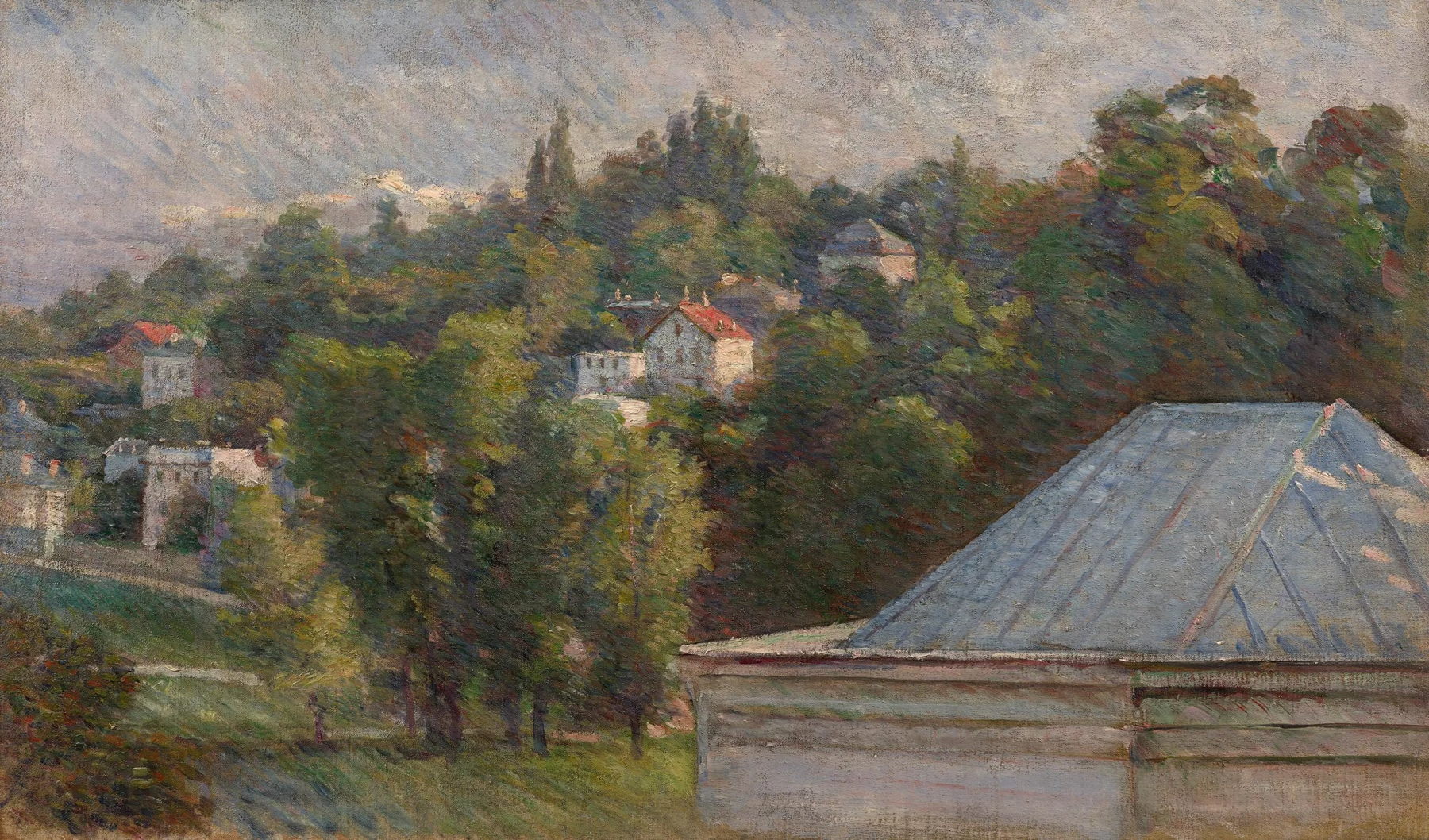
Her undated View of Sèvres shows what was then a wooded town outside Paris, and the centre for manufacture of fine porcelain, with painted decorations designed by the Bracquemonds. This shows one of the distinctive features of some of her paintings, her diagonal brushstrokes.
Bracquemond also exhibited in the fifth Impressionist Exhibition in 1880, but finally abandoned painting after about 1890 as a result of her husband’s sustained attacks on her work, and died in 1916.
Eva Gonzalès
Of the four, Gonzalès was the youngest, died first, and in her brief career was probably the most prolific. She trained with Charles Chaplin, a society portraitist (not the famous actor), and met Manet. She first modelled for him, then in 1869 became his student. A decade later she married Manet’s engraver.
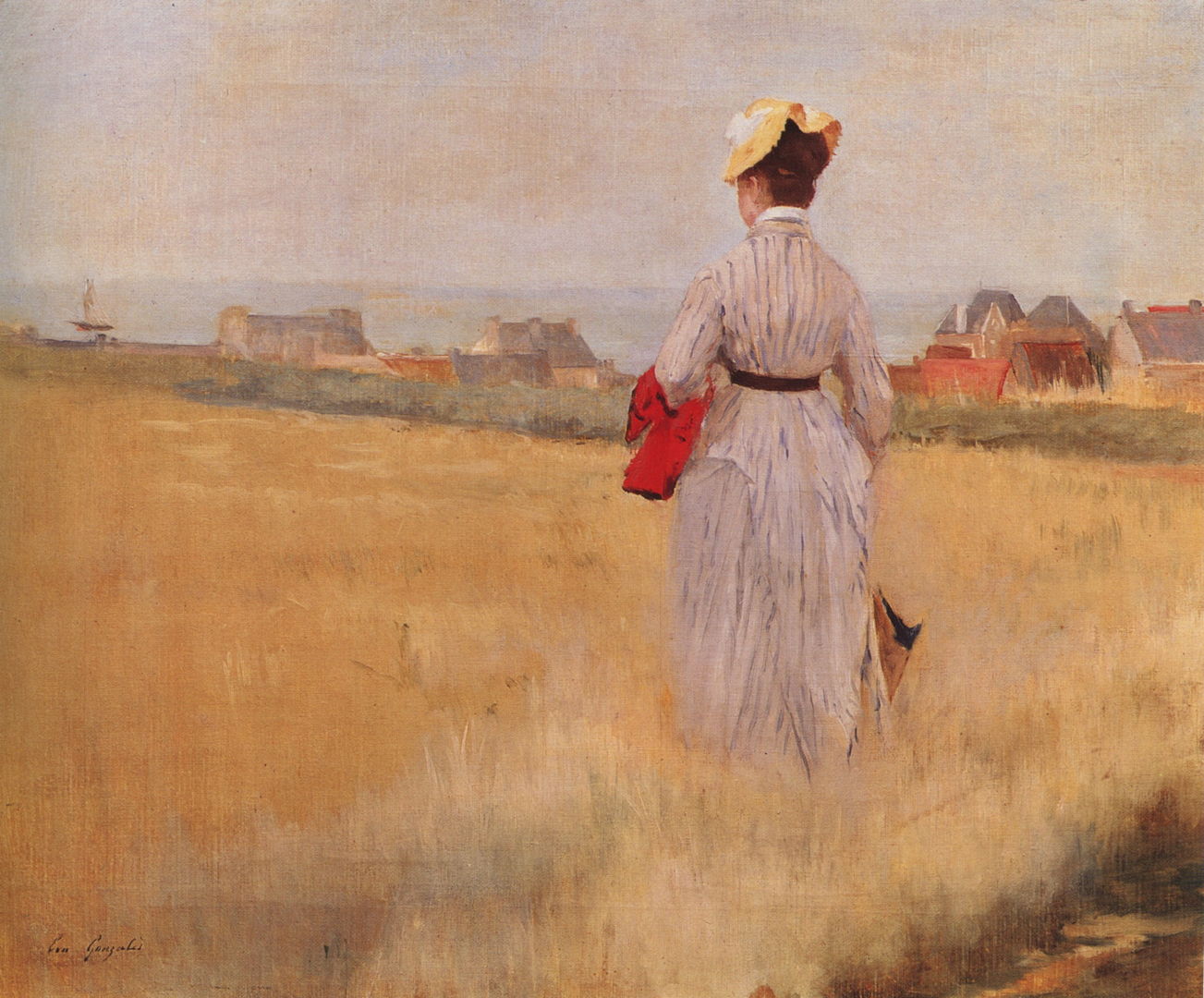
During the Franco-Prussian War of 1870-71, Gonzalès took refuge in the north French port of Dieppe, where she seems to have returned in later years. In about 1875-76, she painted this thoroughly Impressionist view In the Wheat (Dieppe). It has been painted thinly, with fine strokes suggesting the ripe stand of wheat, and a brilliant red jacket draped over the model’s arm. The woman looks over the roofs of the small port towards the waters of the Channel.
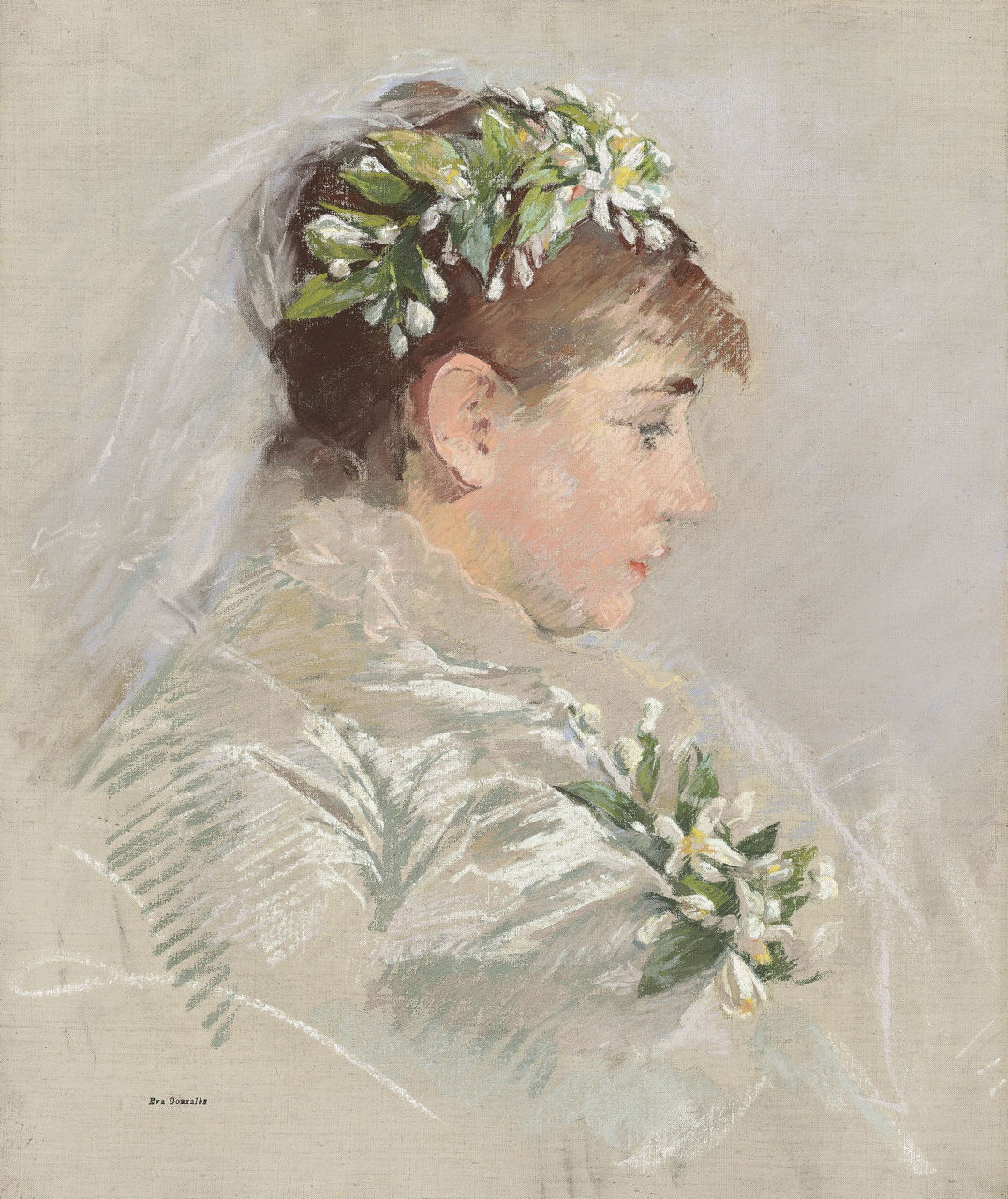
She painted The Bride (Jeanne Gonzalès) in 1879, a portrait of her sister in pastels. This is a curious painting, though, as it was Eva who married that year, to Henri Guérard, and Jeanne didn’t marry until after Eva’s death.
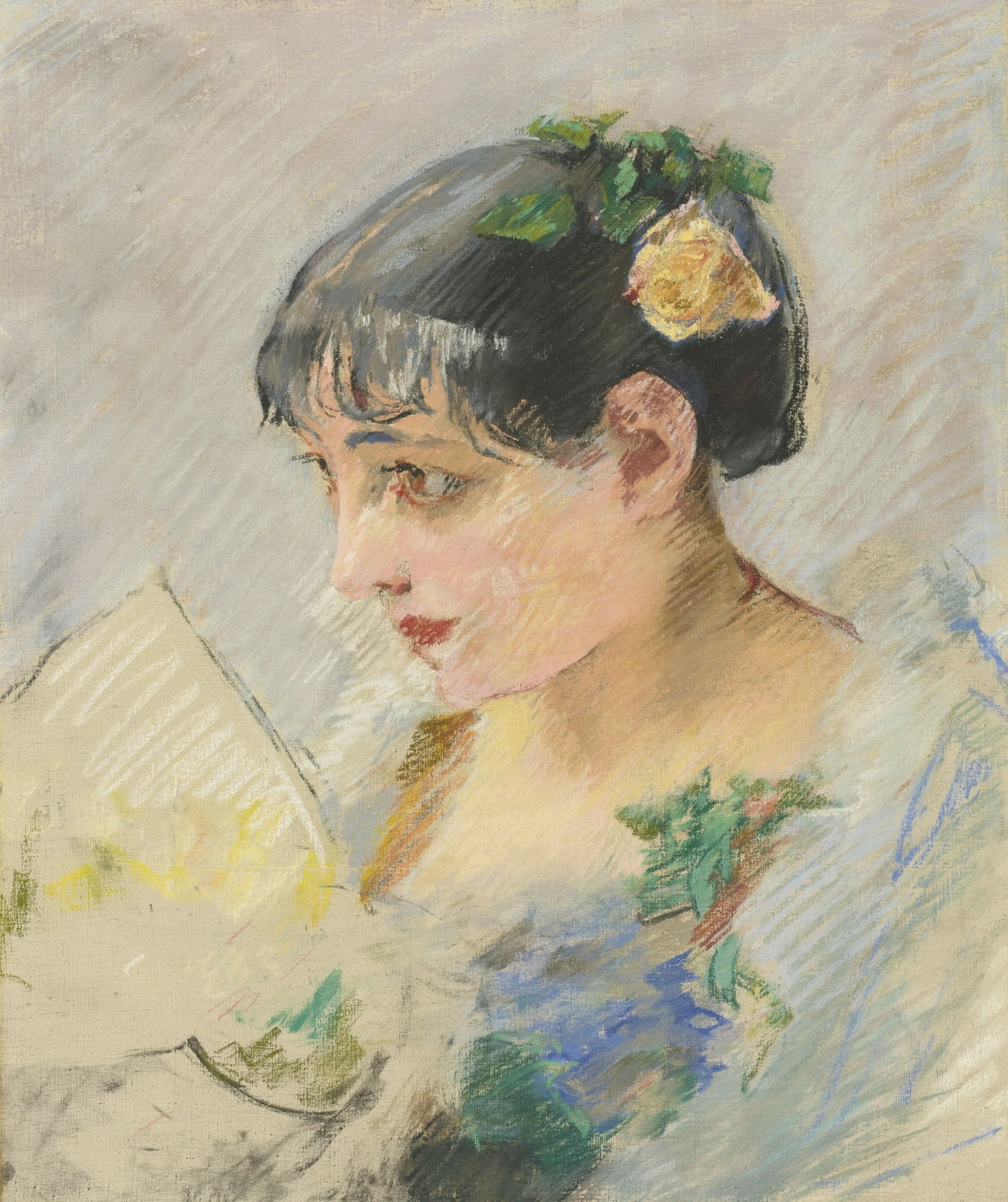
In 1882, she painted this Spanish Woman (Portrait of the Milliner) in pastels, using similar technique.
Five days after the death of her teacher Édouard Manet in 1883, Eva Gonzalès died of complications following the birth of her son. Her catalog raisonné lists 89 oil paintings and 22 pastels, but may well be incomplete. She is today better known not for her art, but for the portrait of her painted by her teacher in 1869-70.

