
The other three-dimensional objects that are commonly painted more or less artistically are drinking vessels, pots and plates make from clay. With the total loss of paintings from classical Greece, those now form its only record of visual art, and those decorated pots are in many of the best collections of art.
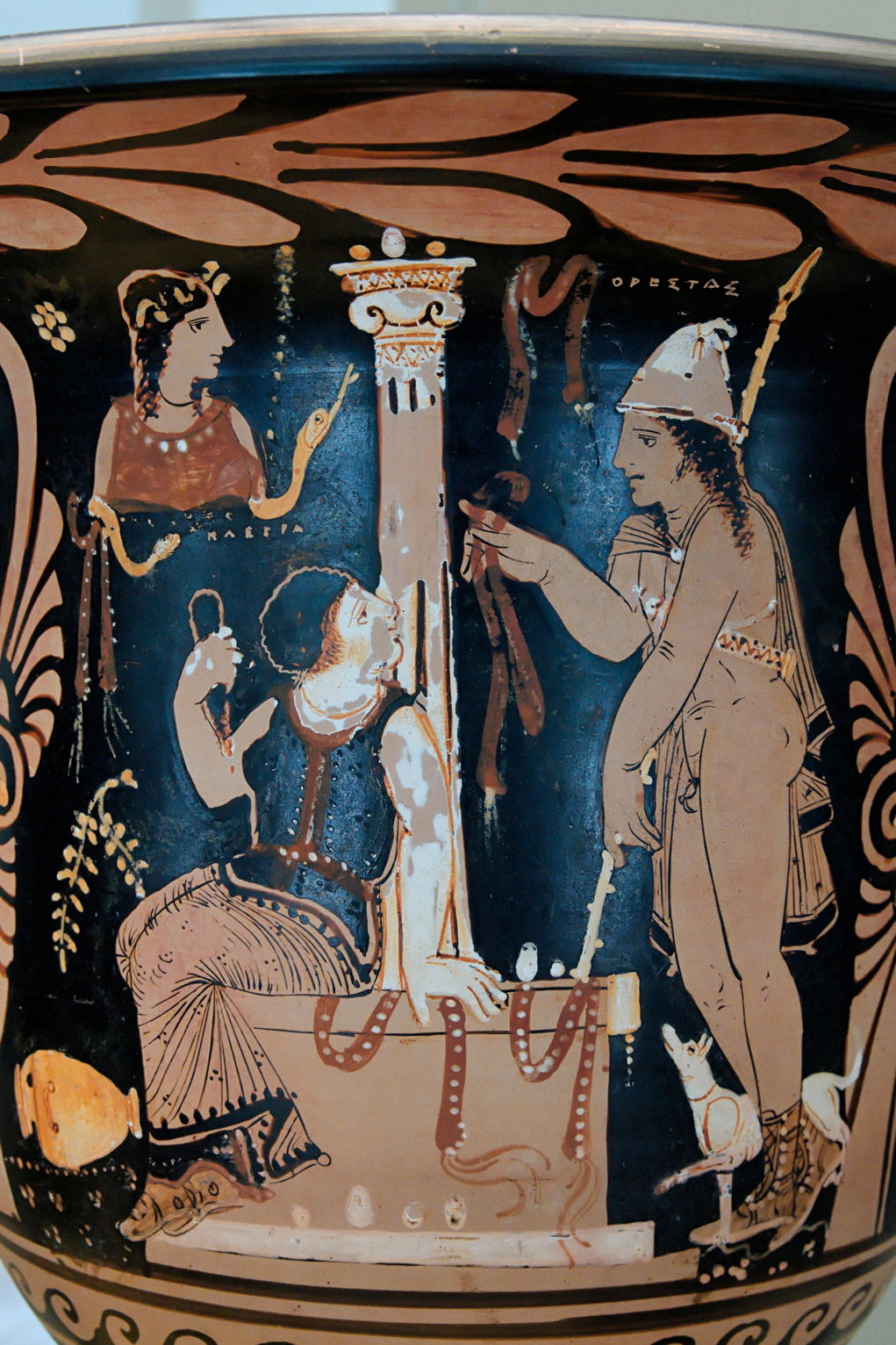
For example, this depiction of the Meeting of Electra and Orestes at the Tomb of Agamemnon from 340-330 BCE shows Orestes meeting his sister Electra at their father’s tomb, on a bell-krater. This type of vessel was used to mix water with wine, and was introduced in the early fifth century BCE. Although not obvious from this view, it has the form of a bell.
Greek pottery was painted using fine-grained clay slip, in either of two techniques. Earlier black-figure technique applied the slip to the areas of the figures, which turned black during three-phase firing. This krater is painted using the later red-figure technique, where the slip is used to turn the background black. Other colours including red and white were also used, as seen here.
During the Middle Ages, Arabic cultures developed a new technique based on glazing the surface of the pottery using tin compounds, to produce an opaque white surface that could be painted using a wide range of coloured glazes. When adopted in Europe, this became known as maiolica, and flourished in the Renaissance.

This maiolica plate painted by Francesco Xanto Avelli in 1537 shows Hypermnestra Watching Lynceus Take Her Father’s Crown. Lynceus (labelled here as ‘Lino’) has taken Danaus’ crown, and is about to put him to the sword. Hypermnestra stands at a window, most probably not that of a dungeon. Below its lintel is a Cupid bearing the famous saying omnia vincit amor, love conquers all, which actually comes from Virgil’s last Eclogue and is unrelated to the narrative.

Virgiliotto Calamelli’s ceramic telling of Cadmus and Harmonia from around 1560 is a brilliant depiction of Ovid’s story. He chooses a late moment, in which Cadmus’ transformation into a snake is complete, and Harmonia’s has reached her abdomen.
This was followed by the painting of porcelain following existing conventional paintings.

In about 1736, Nicolas Lancret painted the story of Brother Philippe’s Geese in oil on copper, as one of a pair, among a larger group of his paintings of La Fontaine’s fables.
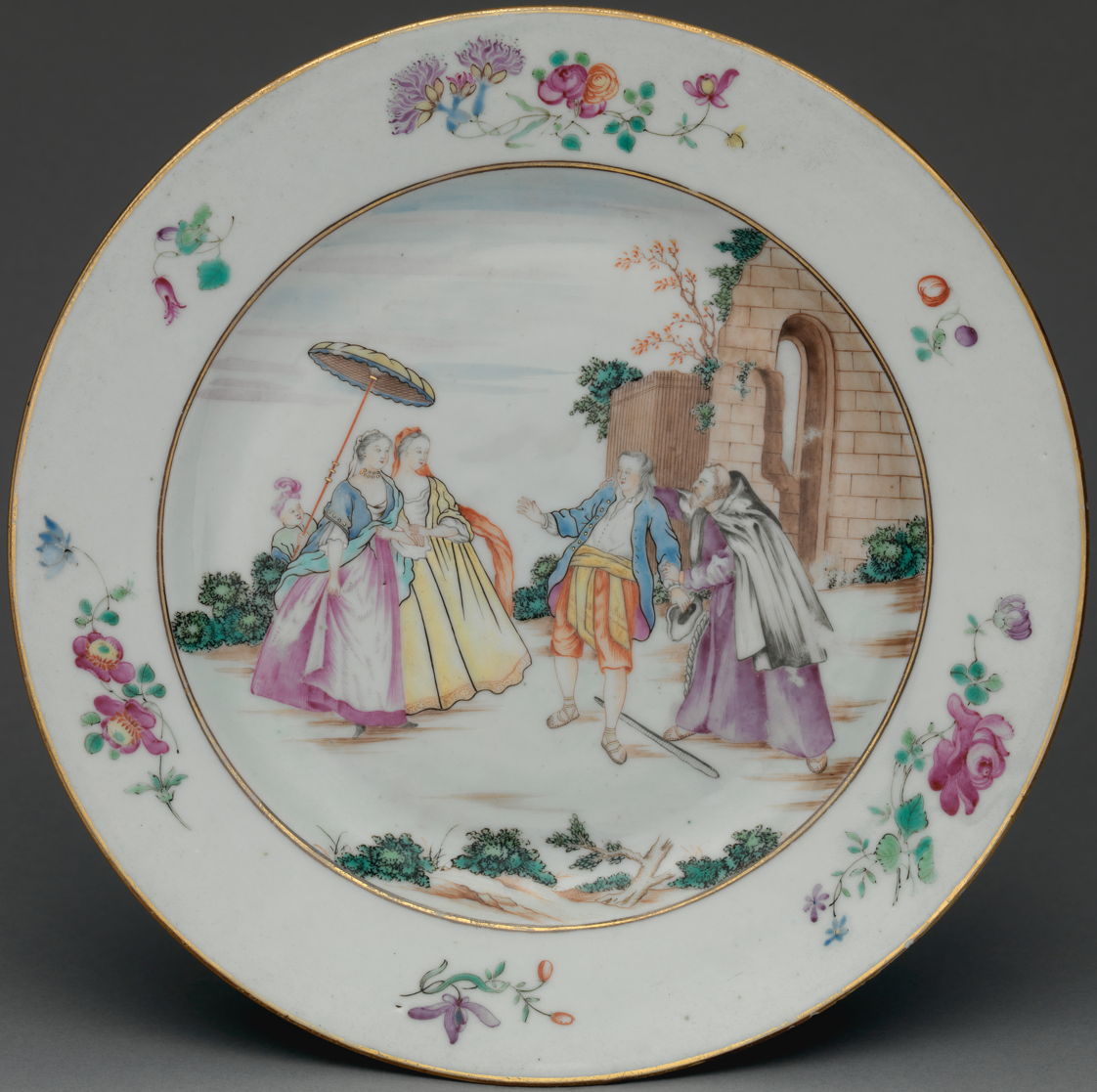
That became so popular that it was reproduced in prints, such as those by Nicolas de Larmessin (1684–1755) in which the image is naturally reversed, and here on a porcelain plate exported from China in 1745. This artist could only have worked from one of those prints.
During the eighteenth century, painted porcelain became popular for a wide range of objects.

Georg Kordenbusch’s painted baptismal bowl shows four Scenes from the Life of Christ (1750). As these are intended for viewing from above the bowl, and normally by a group gathered around it, the layout of the scenes shouldn’t be orientated for viewing from a single position.
In his earlier years, the great British equestrian painter George Stubbs started painting on enamel, and during the 1770s produced some larger works for Josiah Wedgwood, the successful pottery entrepreneur.

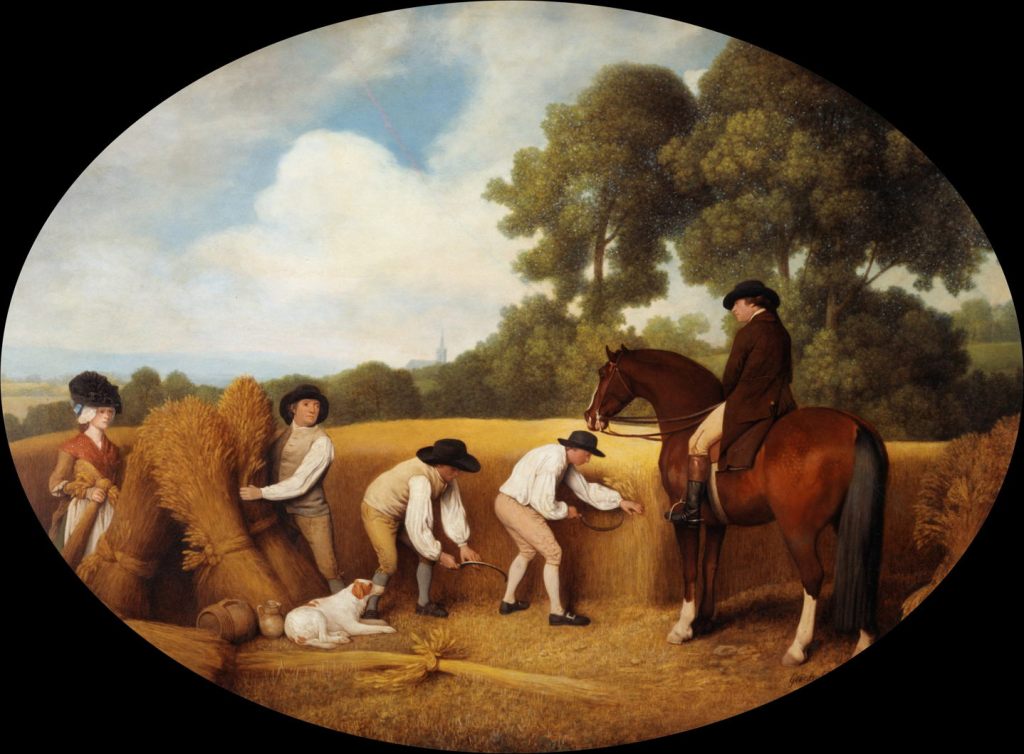
Stubbs’ Reapers from 1795 is painted in enamel on Wedgwood biscuit earthenware, and is strongly reminiscent of early harvest paintings of the Brueghels.

Manufactured by Lakin & Poole in the Staffordshire pottery district in England around 1791-95, this moulded lead-glazed earthenware, enamelled in colours, celebrates a scene from Tasso’s epic Jerusalem Delivered, which was being revived at the time.
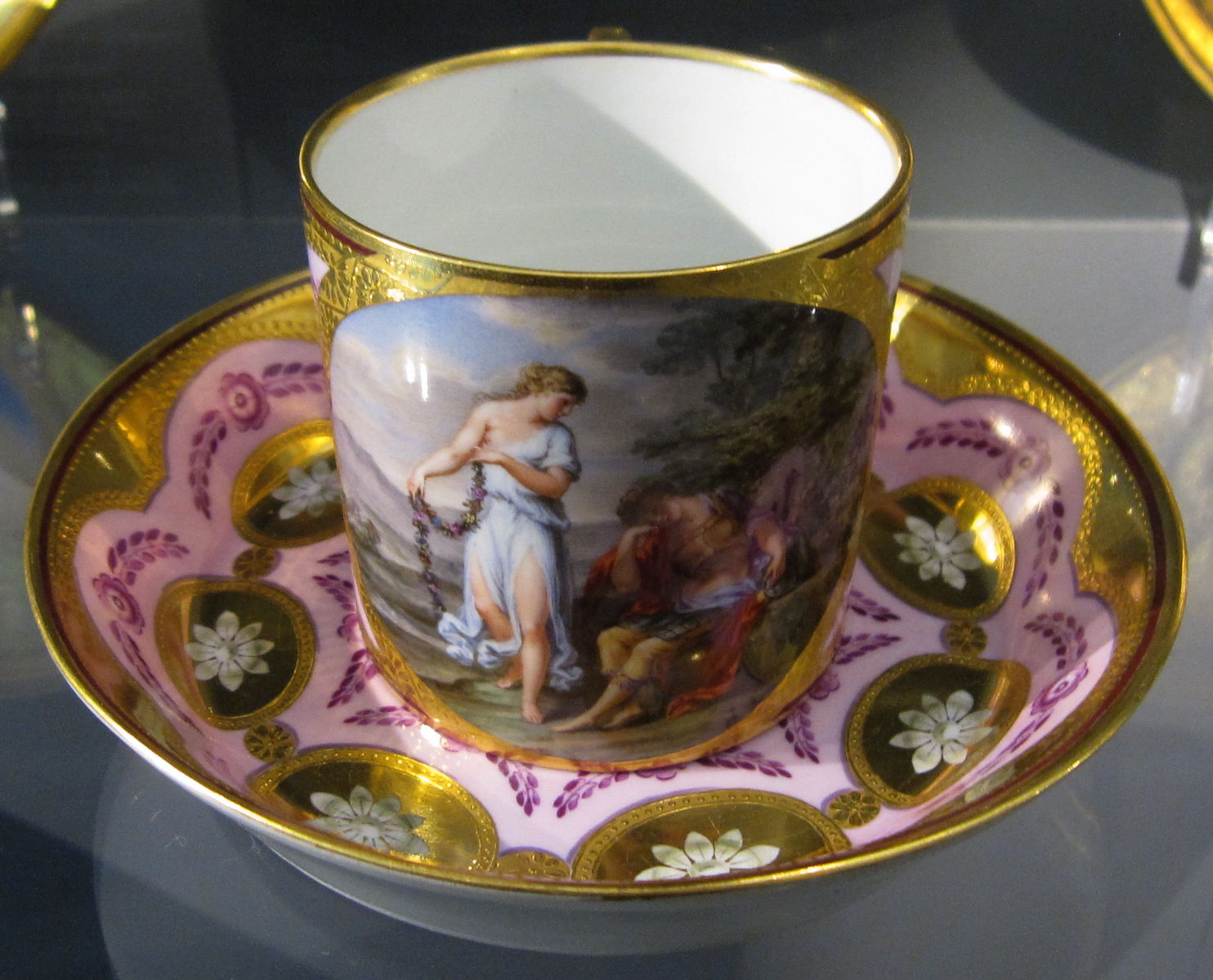
Here a painting of a similar theme by the enormously popular Angelica Kauffmann has been enamelled onto a porcelain cup and saucer by Kaiserliche Porzellanmanufaktur, Wien, in about 1798. The image of a Saracen witch entrancing, seducing, and abducting a warrior from the First Crusade may seem strange to accompany your cup of coffee.
Among those who exhibited at the First Impressionist Exhibition in Paris in 1874 was the highly accomplished painter in enamel Alfred Meyer. He first exhibited in the Salon of 1864, and two years later was awarded a medal for his work shown there. He was an active member of the Impressionist’s company, and following its winding up he joined with Pissarro and others in establishing an alternative group, l’Union, in August 1875, which was structured as a trades union rather than a company.
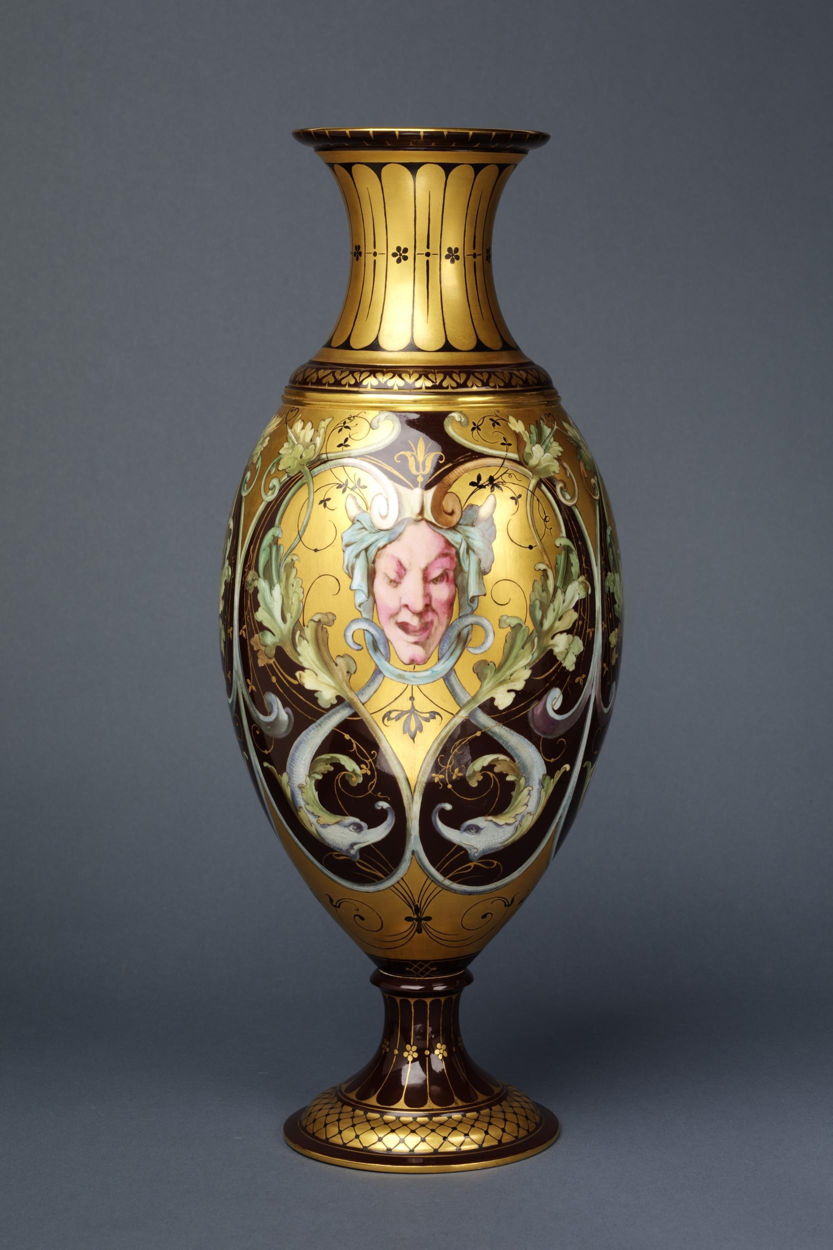
He painted and gilded this on Sèvres porcelain in 1866. He was later appointed Professor at the École Bernard Palissy in Paris, where he rediscovered processes used by the ancient enamelers of the Limousin. He also worked for the Sèvres porcelain factory, the houses of Vever and Falize, as well as independently, and continued to exhibit his work at the Salon.
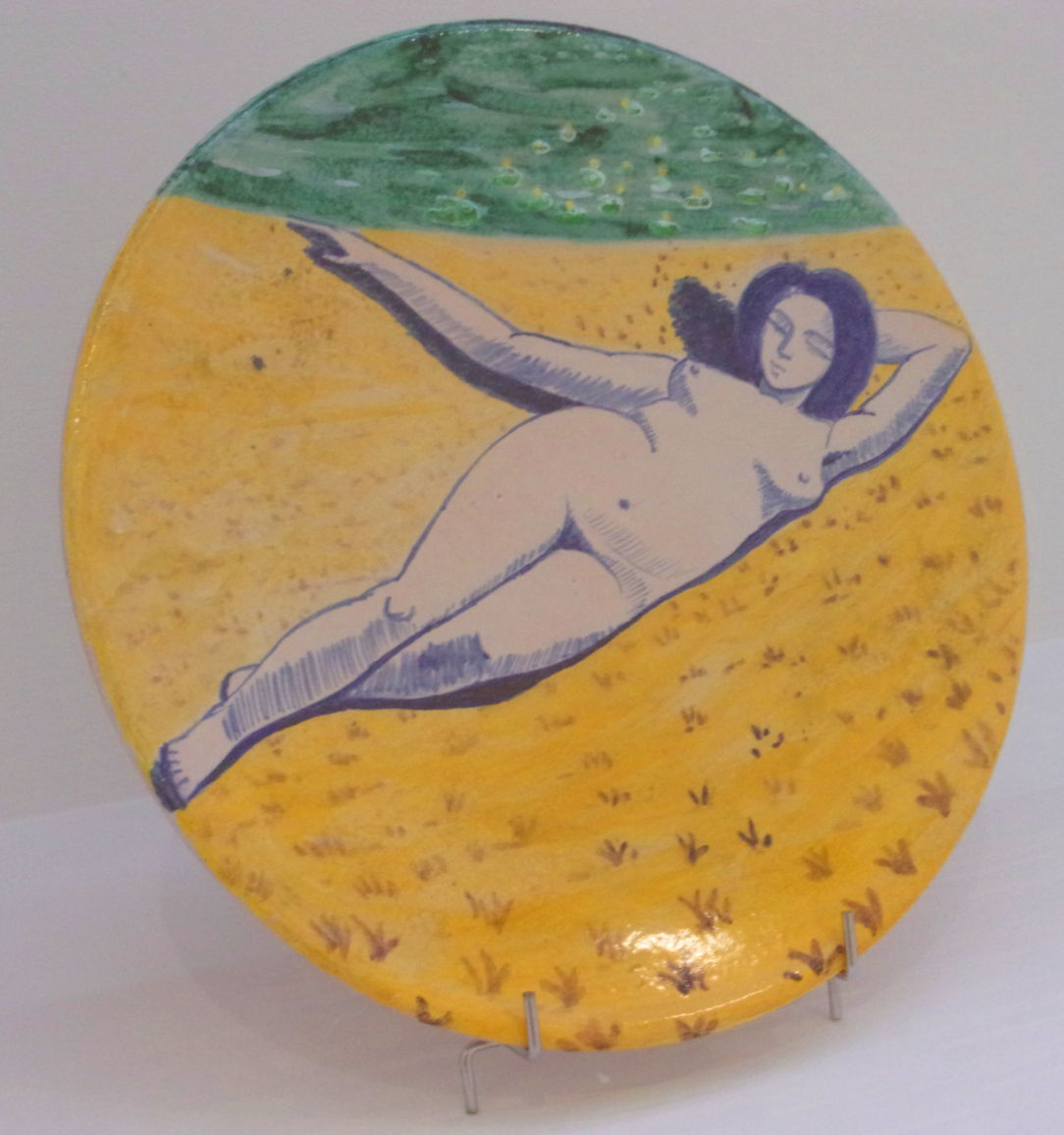
Although never popular among painters, there have always been a few who have continued to paint pottery. This nude on a decorated plate was painted by Georgette Agutte in 1909.

