

Several civilisations have ancient histories of manuscript books with illustrations, initially limited to what is termed illumination. In Europe, these developed into what are formally known as miniatures by the fifth and sixth centuries CE. The word doesn’t refer to their size, although they are smaller than contemporary paintings, but is derived from the Latin verb meaning to colour with the red lead pigment minium, originally used to paint the box outlining the illustration.

This example from the Vergilius Vaticanus is very special, as one of the oldest surviving sources for the text of the Aeneid, and one of only three ancient illustrated manuscripts containing classical literary works. At one time it belonged to Pietro Bembo, an Italian scholar commemorated in the font name.
This shows the transformation of burning Trojan ships into nymphs during the war between Aeneas and Turnus. Three ships are seen already transformed into the head, arm, and body of nymphs at the far right, although there is no sign of any fire or hailstorm. The left and centre show Aeneas fighting Turnus.
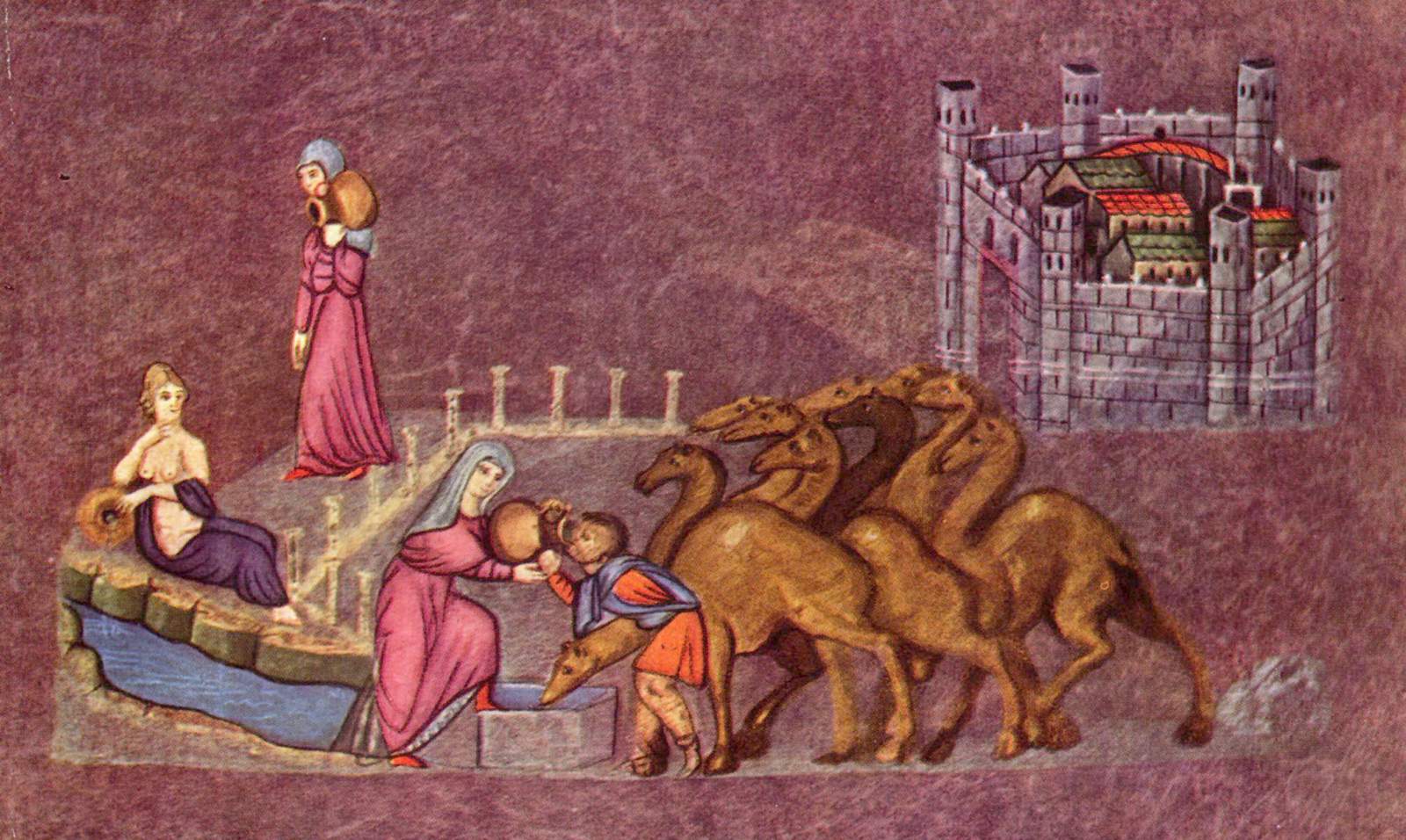
This detail from the foot of a page in the Vienna Genesis dates from about a century later, around 525 CE, and tells the story of Rebecca and Eliezer at the well, from a Greek Septuagint translation of Genesis chapter 24. Like other miniatures, it’s painted using a water-based medium, here thought to use glue as its binder, on calfskin that has been dyed purple, hence the colour of its background. It’s thought the original contained about 192 such miniatures.
More and better-preserved examples come from across Europe in the thirteenth to sixteenth centuries.
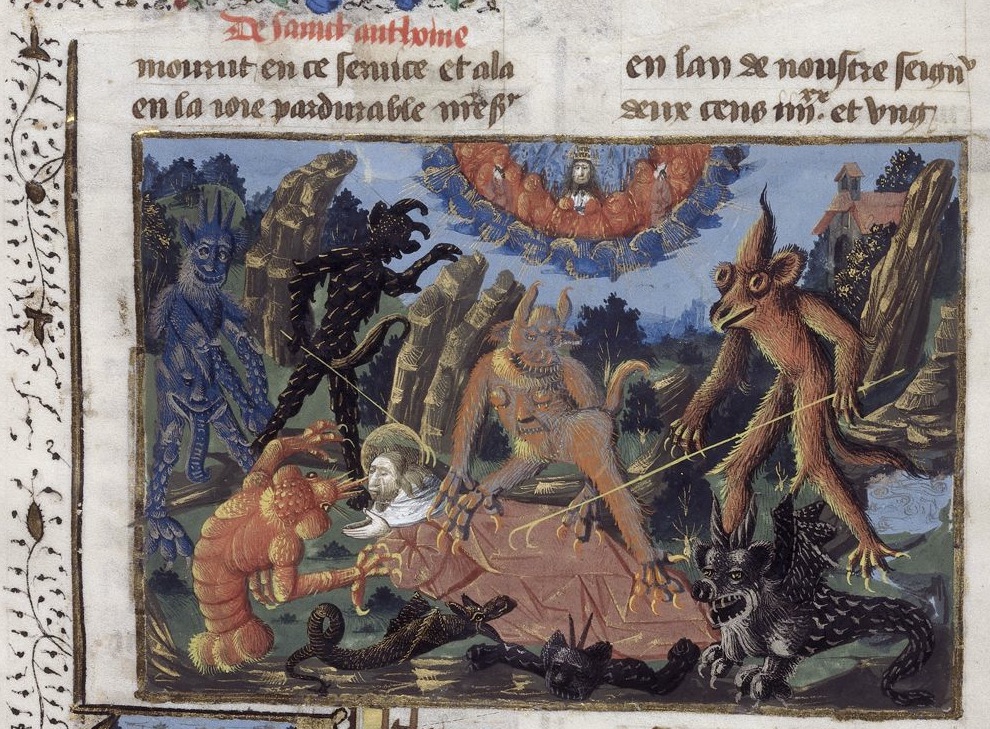
This miniature of Saint Anthony and the Lobster Devil illustrates the source of many hagiographies, Jacobus de Voragine’s La Légende Dorée (Legenda aurea, Golden Legend), often used as a reference by artists. The devils shown tormenting the saint are imaginative in form, one being based on a lobster, while two have accessory faces in their abdomens.

This miniature of The Death of Hercules is taken from Raoul Le Fèvre’s Histoires de Troyes from about 1470. This shows Hercules still wearing the tunic impregnated with poisoned blood from Nessus, as he throws himself onto his own funeral pyre as a result of the intense pain it caused him.

There are many miniatures showing scenes from the Crusades. Those of Jean Colombe are among the finest, and The Siege of Antioch from about 1474 is one of the very best. This was painted in Sébastien Mamerot’s Les Passages d’Outremer.

Miniatures such as Jean Bourdichon’s Bathsheba Bathing, from 1498-99, led more private lives than contemporary paintings and could be considerably more explicit. This is the most frequently painted moment of the story of King David and Bathsheba, with a nude Bathsheba bathing in the foreground, and David in his crown and regal robes watching her from a window in the distance.

Another classical work featured in illustrated books of the period is Ovid’s Heroides. This beautiful miniature accompanies Octavien de Saint-Gelais’ translation from about 1510, and shows Hercules’ wife Deianira handing the fateful tunic to his servant.
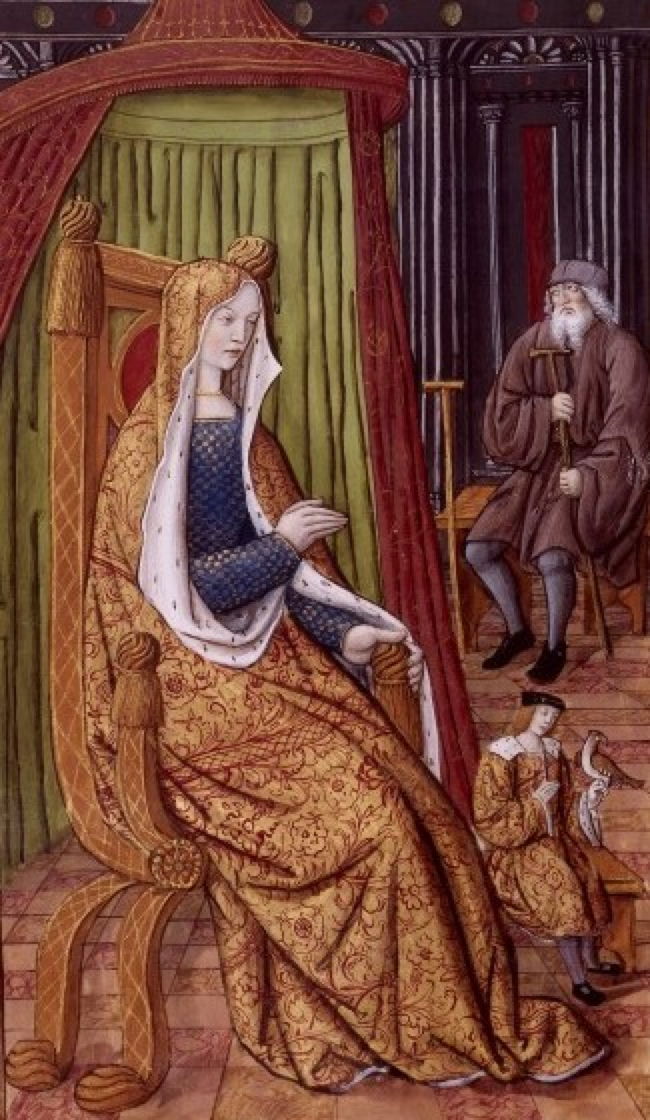
Robinet Testard’s miniature showing those left at home – Penelope, Laertes and Telemachus (c 1510) – may seem a little quaint to modern eyes, but is a succinct summary. Penelope, as the wife of the now absent King of Ithaca, had to try to rule in his lieu. Odysseus’ aged father, Laertes, was unlikely to see his son’s return. The young Telemachus needed his father to guide him to adulthood, and to learn how to be a king in contemporary society.

This is another fine miniature painted by Jean Pichore for the same edition of the Heroides.
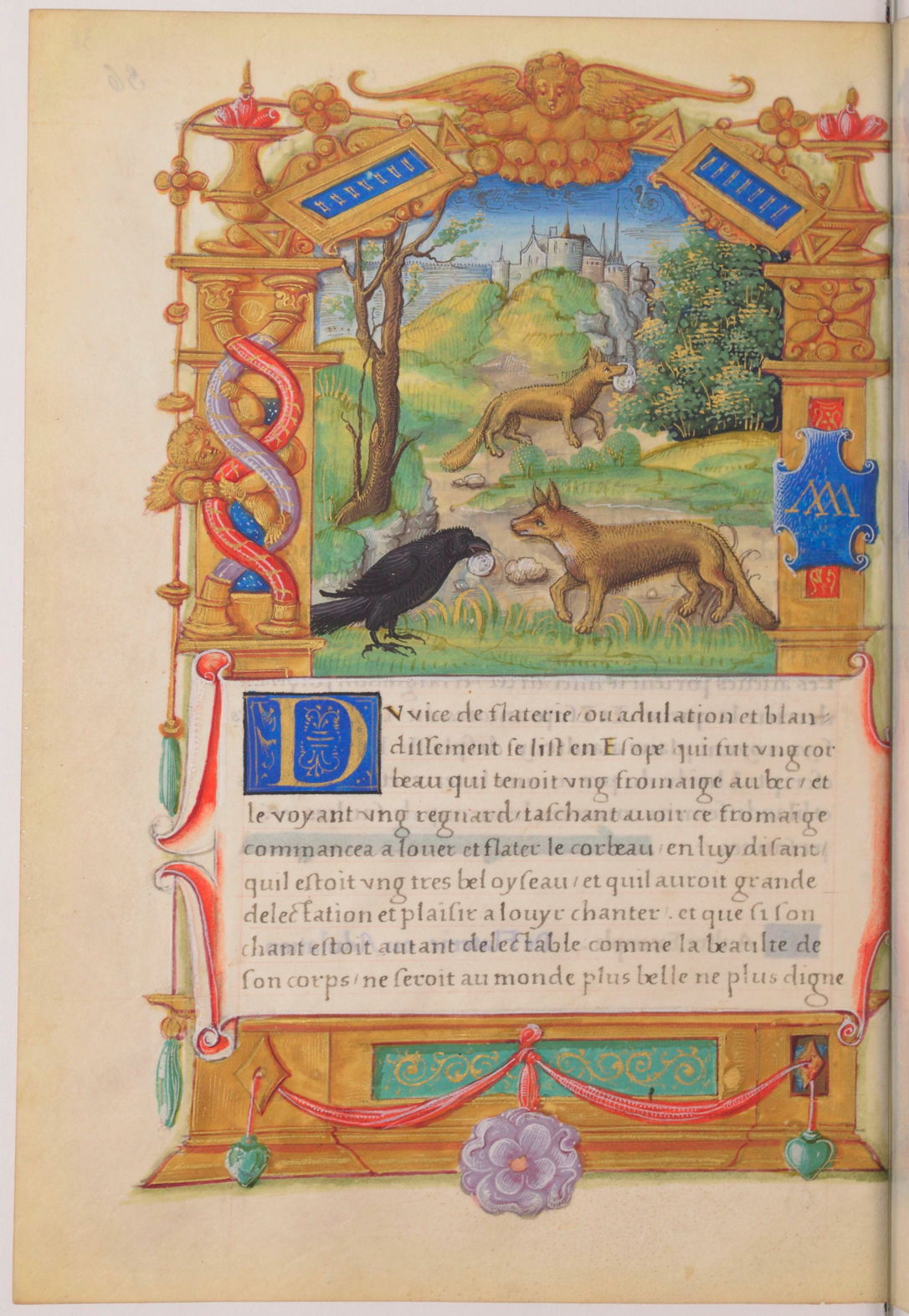
Before the advent of woodcut prints, Aesop’s Fables were popular with those who painted miniatures, here the ‘Master of François de Rohan’, who painted the story of the Crow and the Fox in his Flower of Virtue, Vice and Flattery from about 1530.
Miniatures also flourished outside Europe over this period.

This exquisite watercolour miniature showing a Mongol Chieftain and Attendants from the Gulshan Album now in the Freer and Sackler Galleries is a good example, from around 1600. Its yellows and greens have lasted those four centuries very well, and careful testing by Elisabeth FitzHugh has shown them to be one of the few examples of the use of genuine Indian yellow pigment.
As printed books displaced manuscripts during the sixteenth century, miniatures vanished with them.

