

Several other Naturalist painters achieved acclaim alongside Jules Bastien-Lepage and sustained the movement after his untimely death in 1884. Jean-Eugène Buland (1852–1926) was among them, and continued painting into the twentieth century. He died one hundred years ago today, and this article gives a brief overview of his career with a small selection of his paintings.
Buland trained at the École des Beaux-Arts in Paris under Alexandre Cabanel, and with his teacher’s influence turned first to history painting. In 1878 and 1879 he was second in the contest for the Prix de Rome, but then switched to painting genre scenes of modern life, classical Naturalist motifs inspired by the literary Naturalism of Émile Zola in particular.
His meticulous realism was well-received at the Salon, and after winning a series of medals there, in 1889 he was awarded a silver medal at the Exposition Universelle in Paris.
Buland settled in the village of Charly-sur-Marne, to the east of Paris, and steadfastly refused to become part of the art scene in the capital. He only seems to have ventured into Paris for the annual Salon, and to paint commissions in the Hôtel de Ville (City Hall).

From the outset, Buland took on challenging motifs with equally challenging readings. In Alms of a Beggar (1880), a young woman dressed immaculately in white is sat outside a church seeking charity. Approaching her, a coin in his right hand, is a man who can only be a beggar himself. His clothes are patched on patches, faded and filthy, and he wears battered old wooden shoes, yet he is about to give the young woman what is probably his last coin.
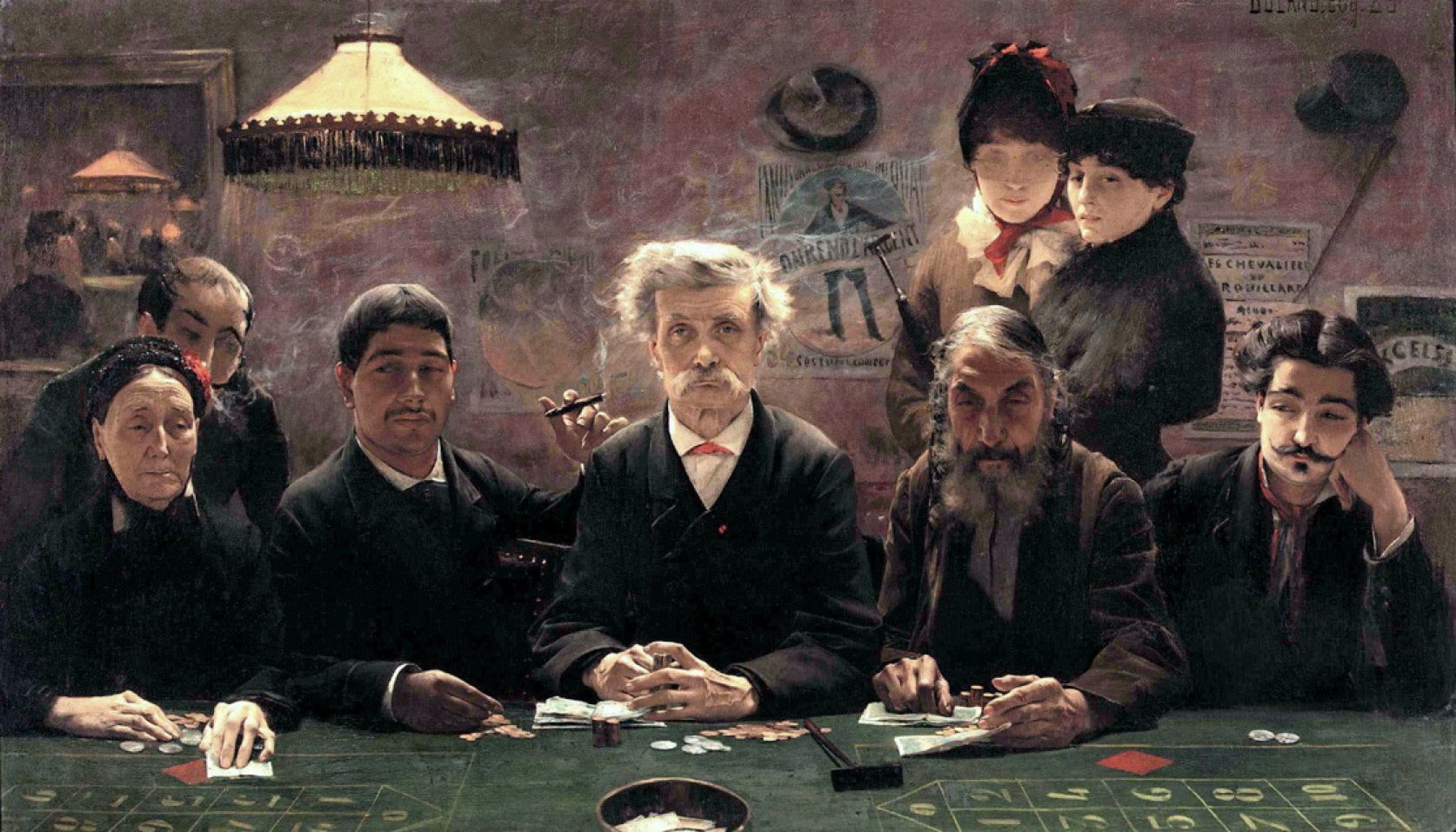
Le Tripot (The Dive) (1883) is one of my favourite paintings of this period. Set in a seedy, downmarket gambling den, it’s a group portrait of five hardened gamblers at their table. Each is rich in character, and makes you wonder how they came to be there. A little old widow at the left, for example, looks completely out of place, but is resolutely staking her money. Looking over her shoulder is a man, whose face is partially obscured. Is he, perhaps, a son, or a debtor? A young spiv at the far right is down to his last couple of silver coins, and looks about to lose them too. The air is thick with smoke, the walls in need of redecoration, and a pair of young streetwalkers prowl behind them, looking for a winner who will spend some of their cash on them.
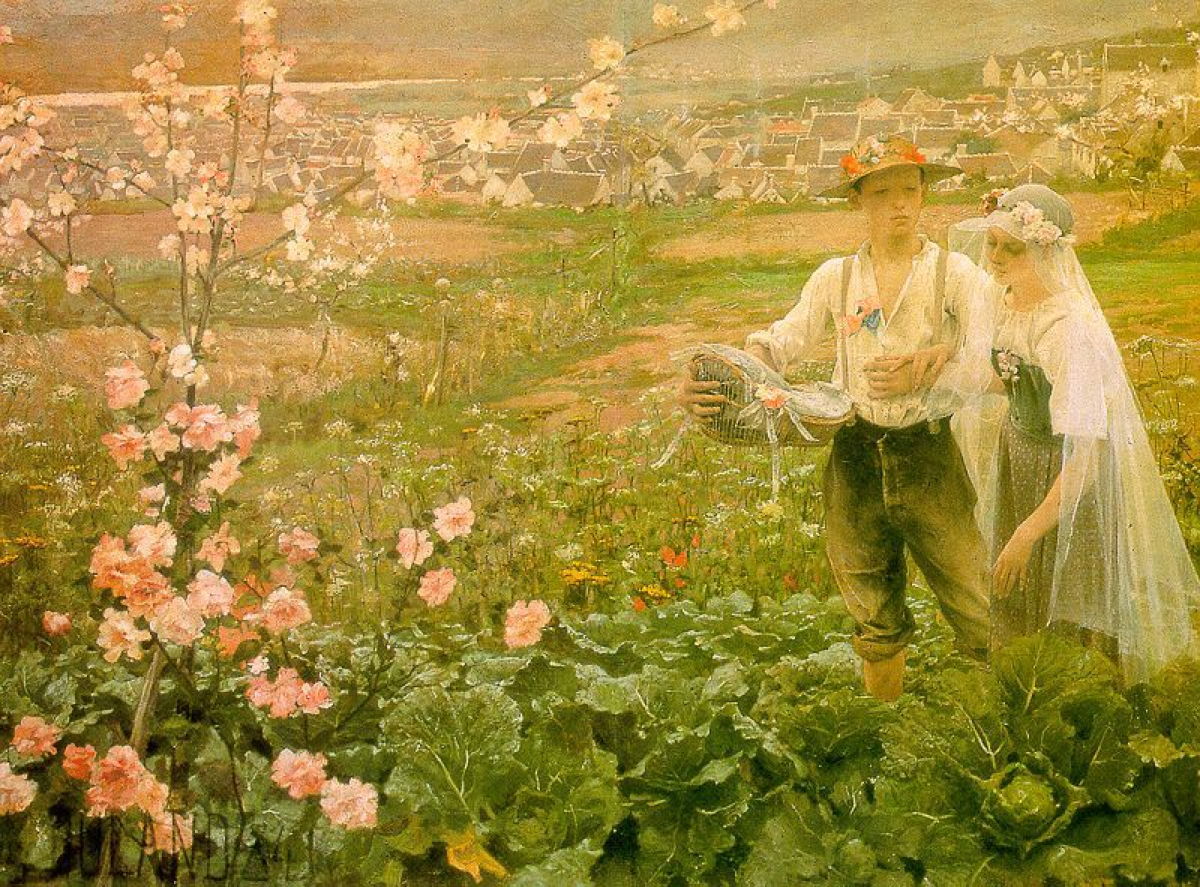
Buland also seems to have painted some unashamedly populist works, including this idyllic Innocent Wedding (1884). With the distant village, blossom, and a young couple arm in arm, it’s deeply romantic, and a far cry from the works above.
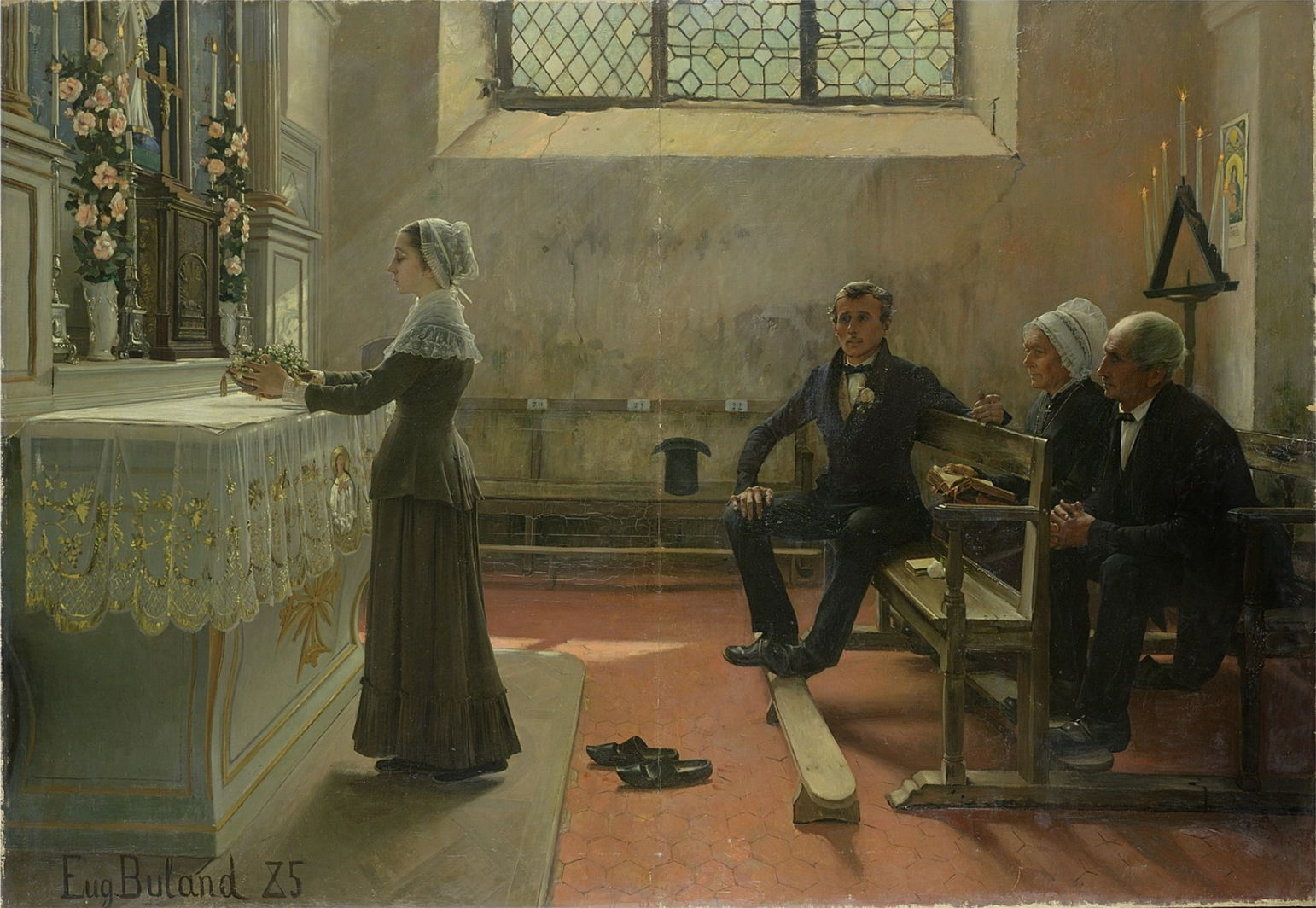
That led to a series of paintings showing events the day after the wedding, including this of the newlywed bride Offering to the Virgin the Day After the Wedding (1885). There’s a crisp formality in these figures, who appear stilted and posed as they go through the rites and processes of life.

Buland went to the factory for Un Patron, or The Apprentice’s Lesson (1888). A young boy is being trained by his foreman to make a cogwheel, when many might have preferred him still to be at school. Buland used photographs extensively in the preparatory work for this painting, to capture its wealth of detail.
This also marks an overt politicisation in his work: the apprentice was part of the nation’s efforts to advance in industry and manufacturing after the disaster of the Franco-Prussian War.
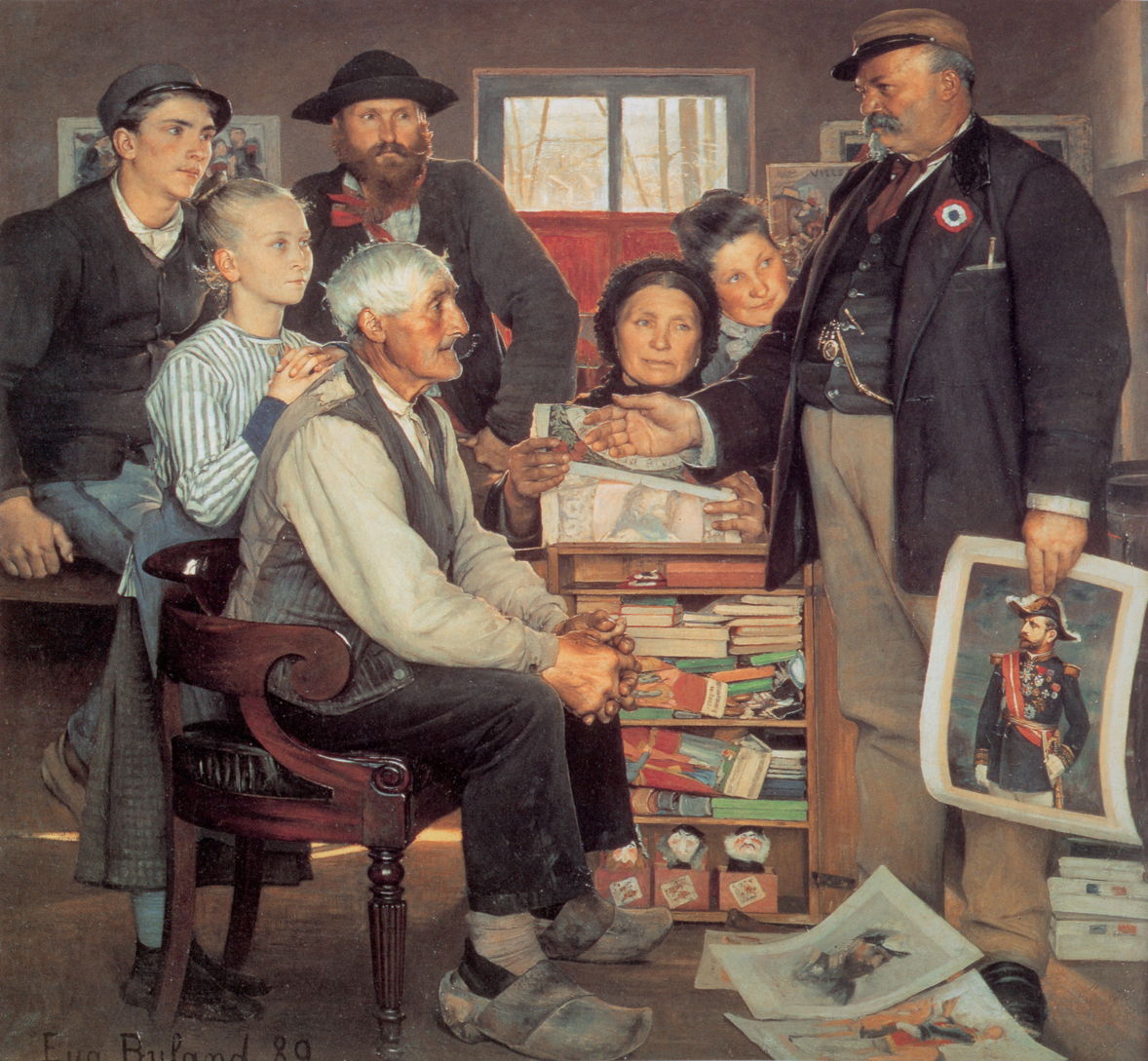
Propaganda Campaign (1889) is even more political, and Buland’s stark rendering of its figures makes them pop out, almost like cut-outs. A travelling salesman is in the home of a poor family, selling books and coloured prints to the head of the household. That in his left hand shows the populist politician General Boulanger, and the salesman’s motives combine politics with business. His buttonhole rosette declares his role as a canvasser for the General.
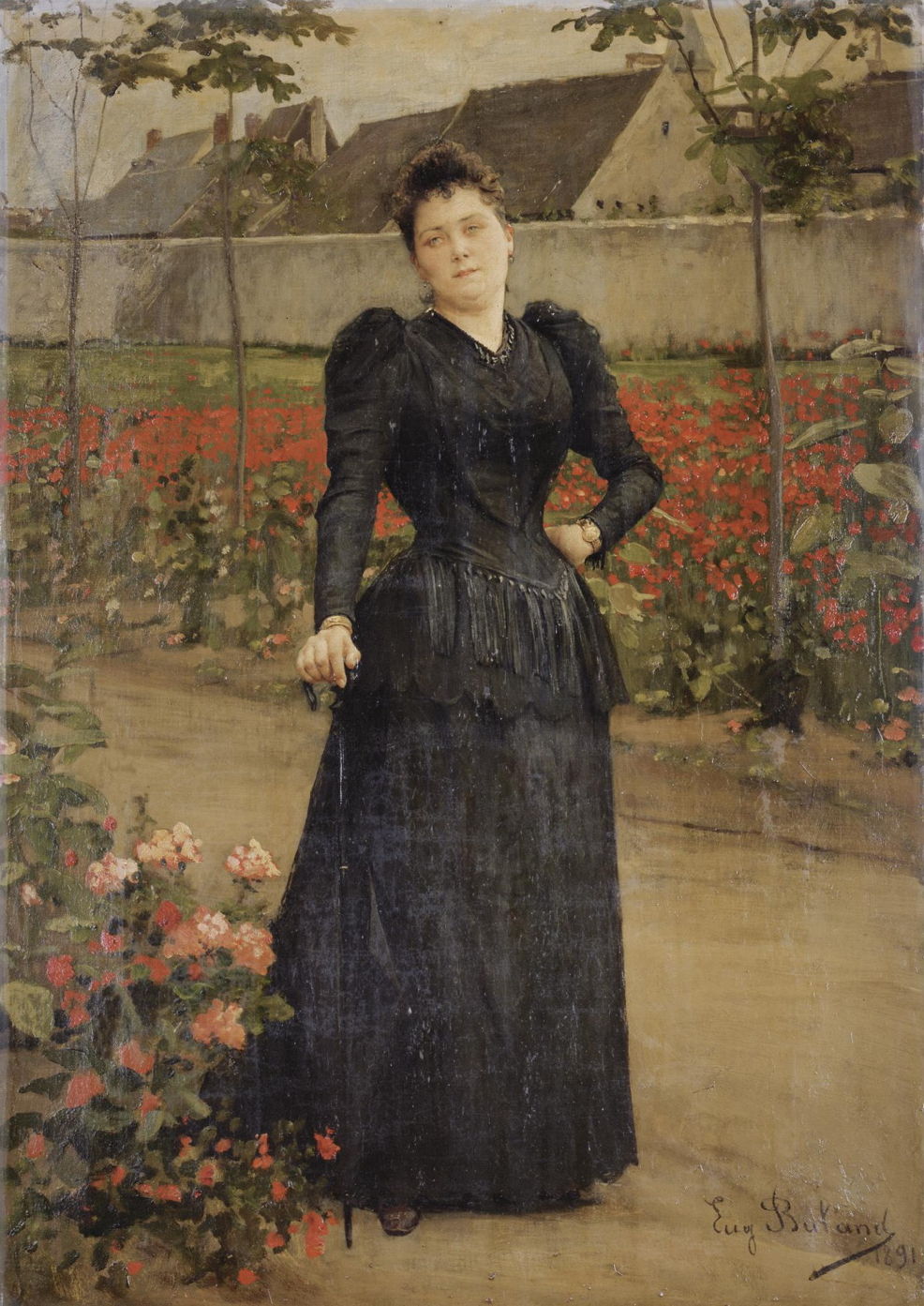
A Stroll in the Park (1891) seems a more innocent full-length portrait of a woman, although I have been unable to discover her identity or any reason for the painting.

Municipal Council and Commission of Pierrelaye Organizing a Festival (1891) is another fascinating painting with much contemporary relevance, an example of provincial municipal art. It’s a group portrait of the council of this village to the north-west of Paris, clearly commissioned by them to record their great deeds. It has a similar stiff formality to Propaganda Campaign, rather than the more insightful approach of Rembrandt’s group portraits.
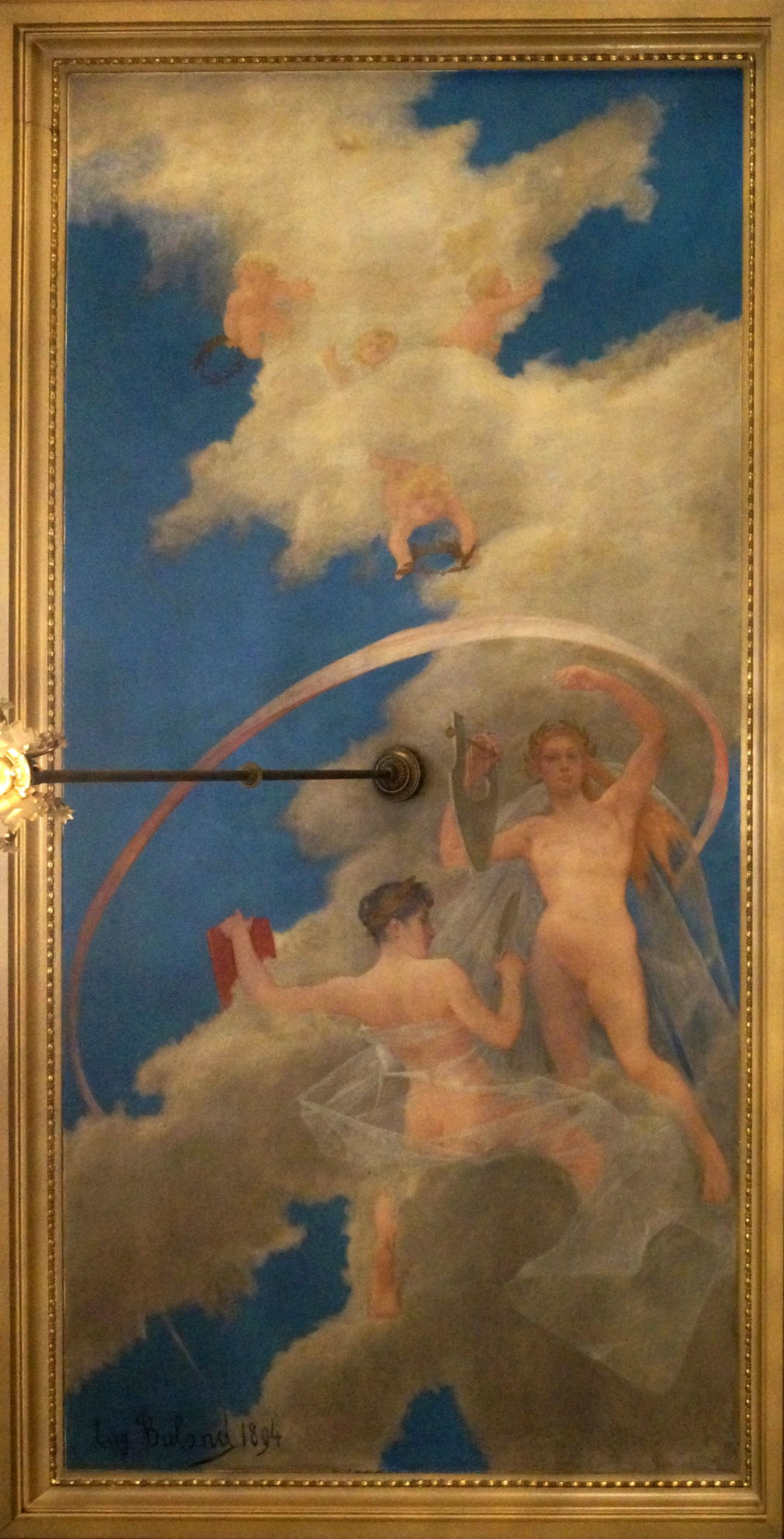
I suspect that Buland’s romantically painted ceiling of Marriage was one of his commissions for the rebuilt Hôtel de Ville in Paris, and completed in the 1890s.
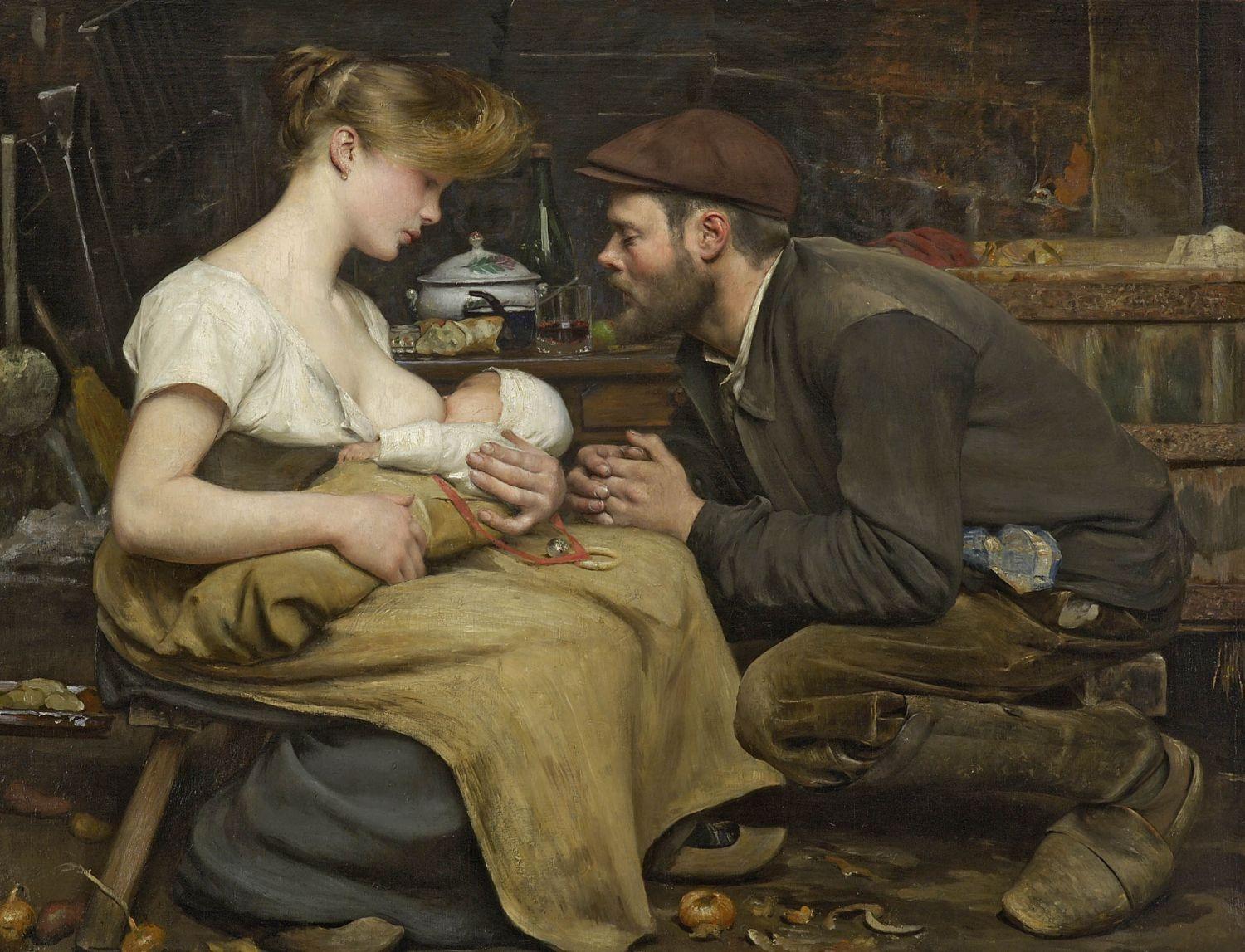
He returned to poor working families in his Parental Happiness from 1903. A young couple are nursing their first baby, and appear to be living in an agricultural outhouse. The floor is strewn with vegetables and their parings, and the husband is dressed as a labourer, with worn working shoes, and his wife in wooden clogs.

Buland’s The Tinker (1908) is busy at his cottage industry, repairing damaged pots, pans, and domestic metal objects. The stone wall at the left glistens with the damp.
Jean-Eugène Buland died in his home village of Charly-sur-Marne on 18 March 1926, at the age of 73.
This century has brought something of a revival for Buland. His first solo retrospective exhibition was held at Carcassonne in 2007-08, and his prices at auction are moving steadily upwards. I hope it doesn’t prove too late to conserve and document what remains of his work.
Reference
Richard Thomson (2012) Art of the Actual, Naturalism and Style in Early Third Republic France, 1880-1900, Yale UP. ISBN 978 0 300 17988 0.
 The Eclectic Light Company