

As landscape painters increasingly came to rely on studies made in front of the motif, and their views came closer to reality, faithful depictions of reflections on water increased. But the fundamental challenges of painting accurate reflections remained. Both John Constable and JMW Turner started their careers drawing, trained in the Royal Academy Schools, and should have had a thorough grounding in 3D projection and reflections, as well as ample experience recording what they saw.
Several of Constable’s major works include reflected passages, painted slowly in the studio following extensive studies made of the motif.
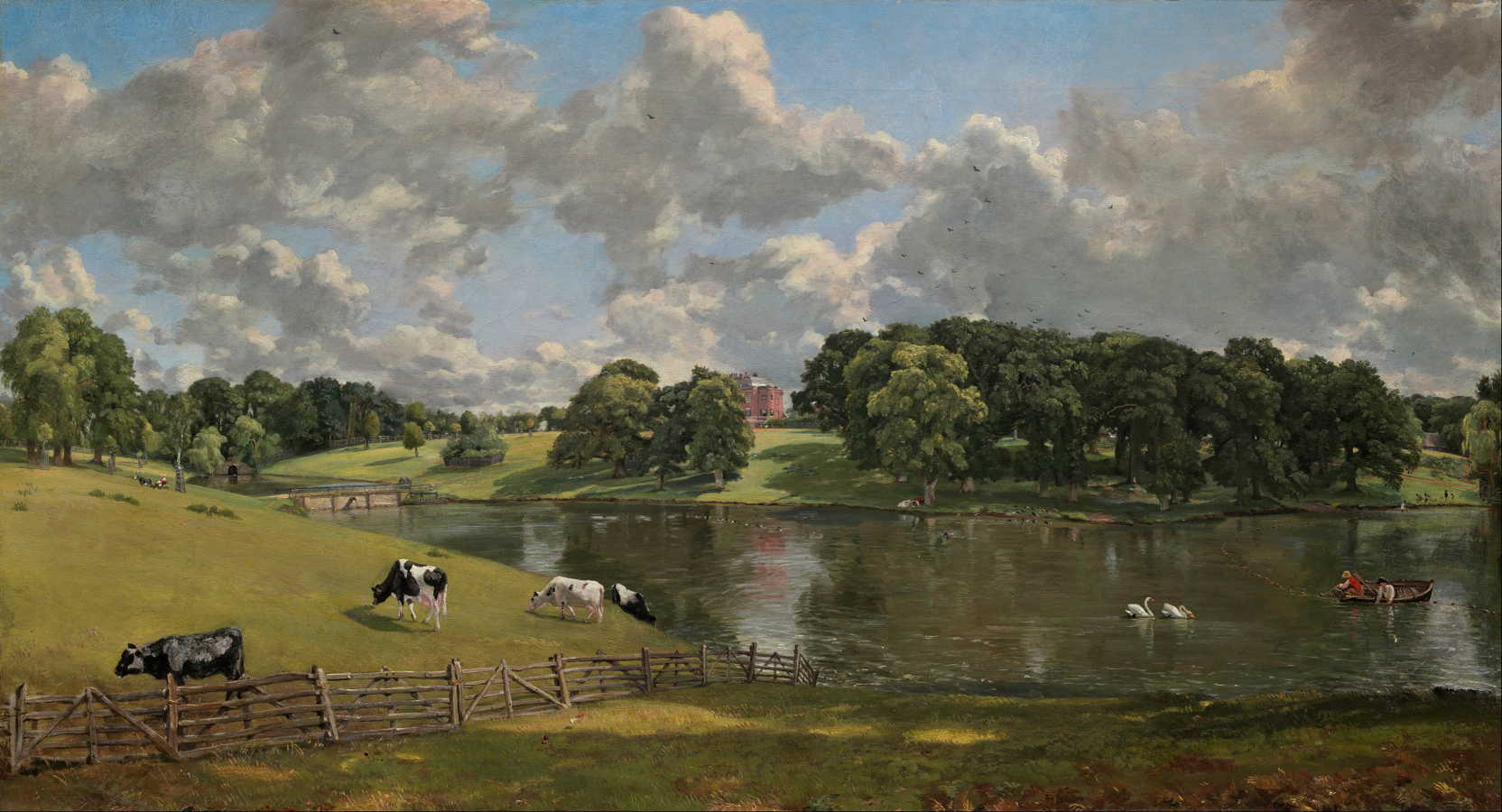
Constable’s commissioned painting of the house and estate at Wivenhoe Park, Essex from 1816 is an oddly distant view of Major-General Francis Slater-Rebow’s country seat. Given the expanse of mirror-like lake, he might have been expected to include meticulous reflections. There are obvious anomalies, such as the brick-red reflection of the modest section of the house visible through a break in the trees in the centre of the canvas. The house is sufficiently distant that little or none of it would have been visible in reflection, let alone the two large areas of brick red stretching well over half way across the water. That was in all probability painted for effect.

Reflections of the pair of swans and boatmen are also out of kilter. Constable may well have neither seen nor sketched them from life, and then struggled to envision their reflections in the studio.
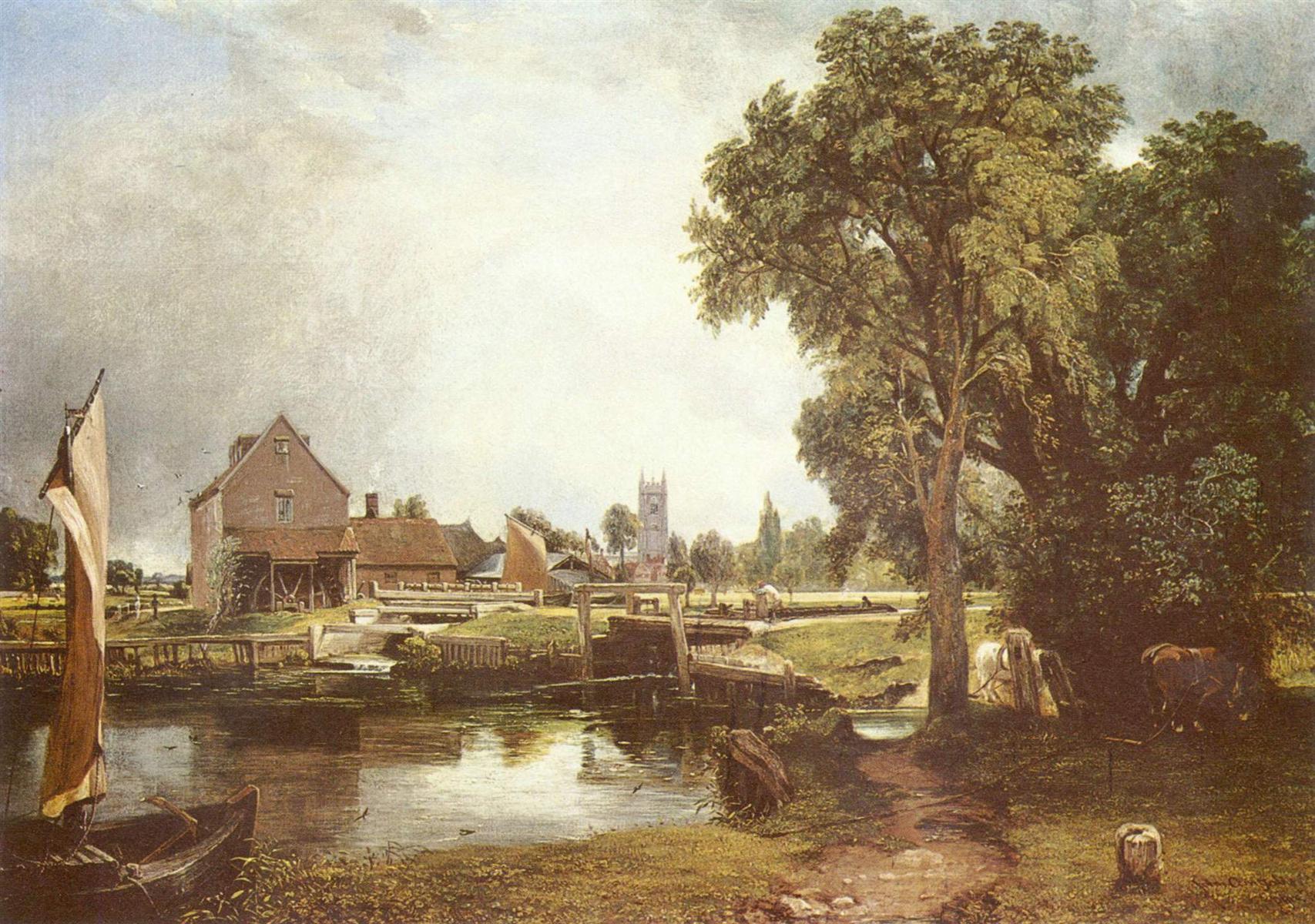
Four years later, this painting of Dedham Lock and Mill (1820) is more familiar territory from the artist’s home ground. His family owned this lock on the River Stour, and he would have worshipped in the village church of Dedham seen in the distance. His reflections here appear accurate throughout.
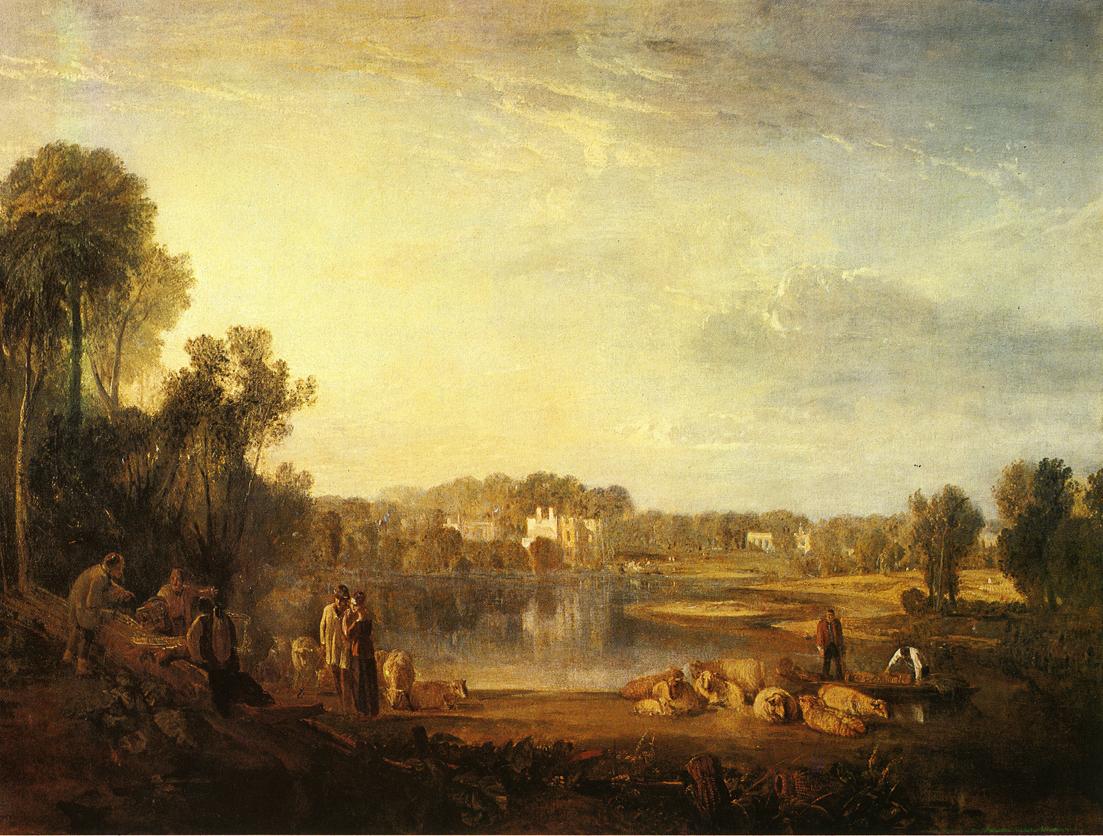
Turner’s approach to reflections changed over the course of his career. In Pope’s Villa, at Twickenham from 1808, he depicted complex and intricate reflections in careful detail.
I’ve previously considered the relatively small anomalies in another of his early oil paintings, Crossing the Brook from 1815.
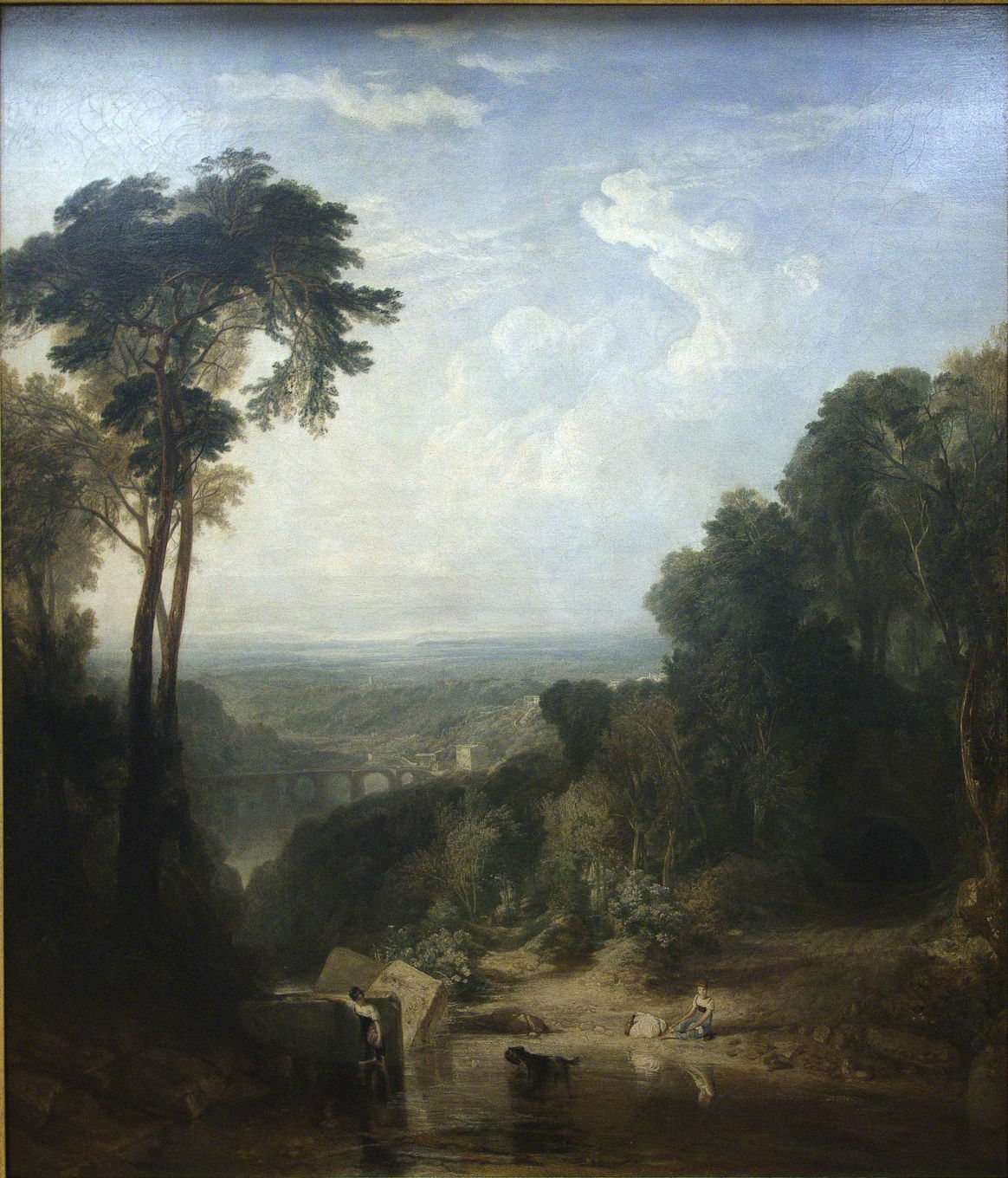
These could be accounted for by the figures being staffage added in the studio without the benefit of plein air studies.
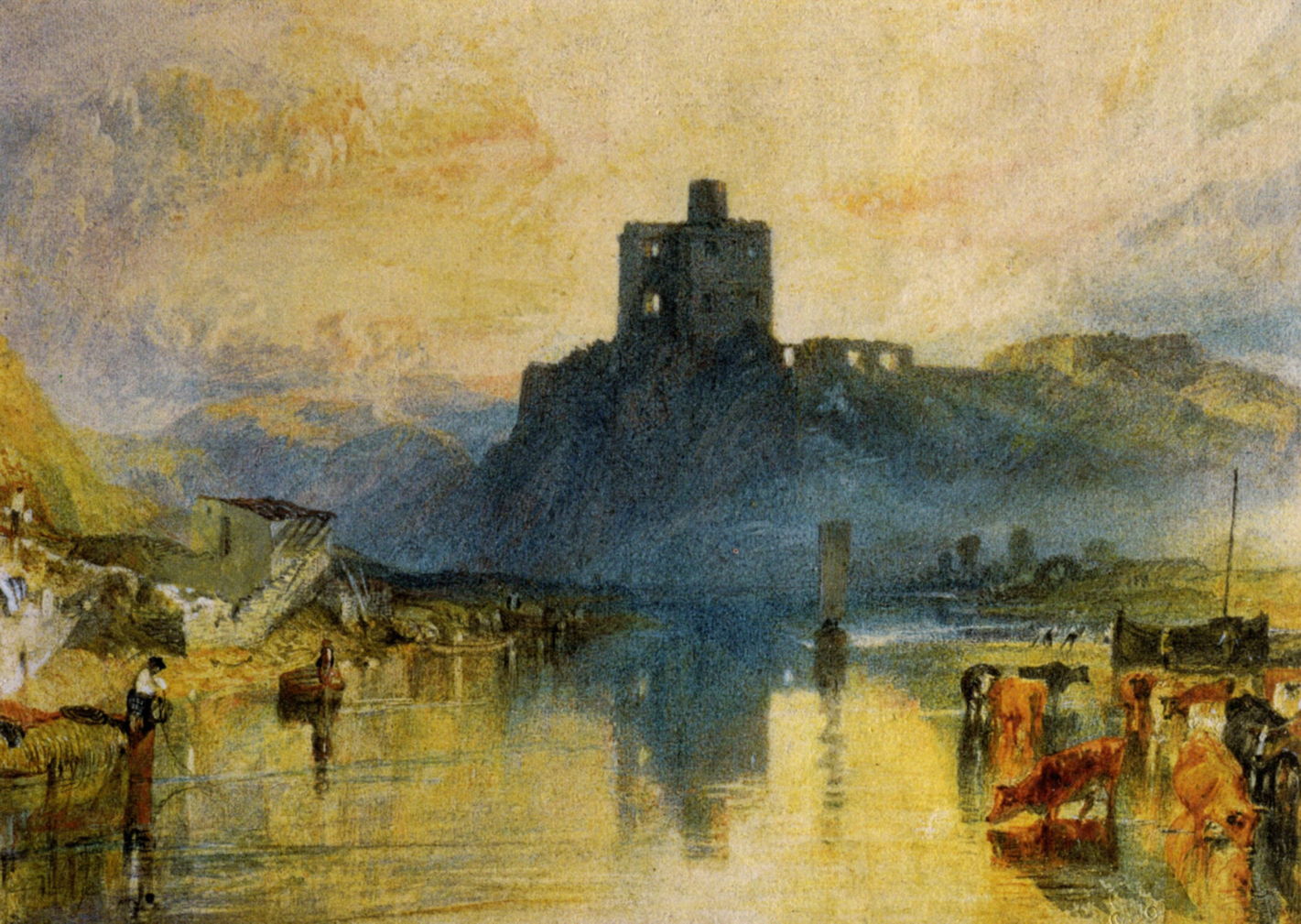
Some of his later watercolours, such as Norham Castle, on the River Tweed (1823), have obvious quirks in their reflections: here the reflection appears to show another high point at the left edge of the castle that isn’t matched by an equivalent high point in the real castle.
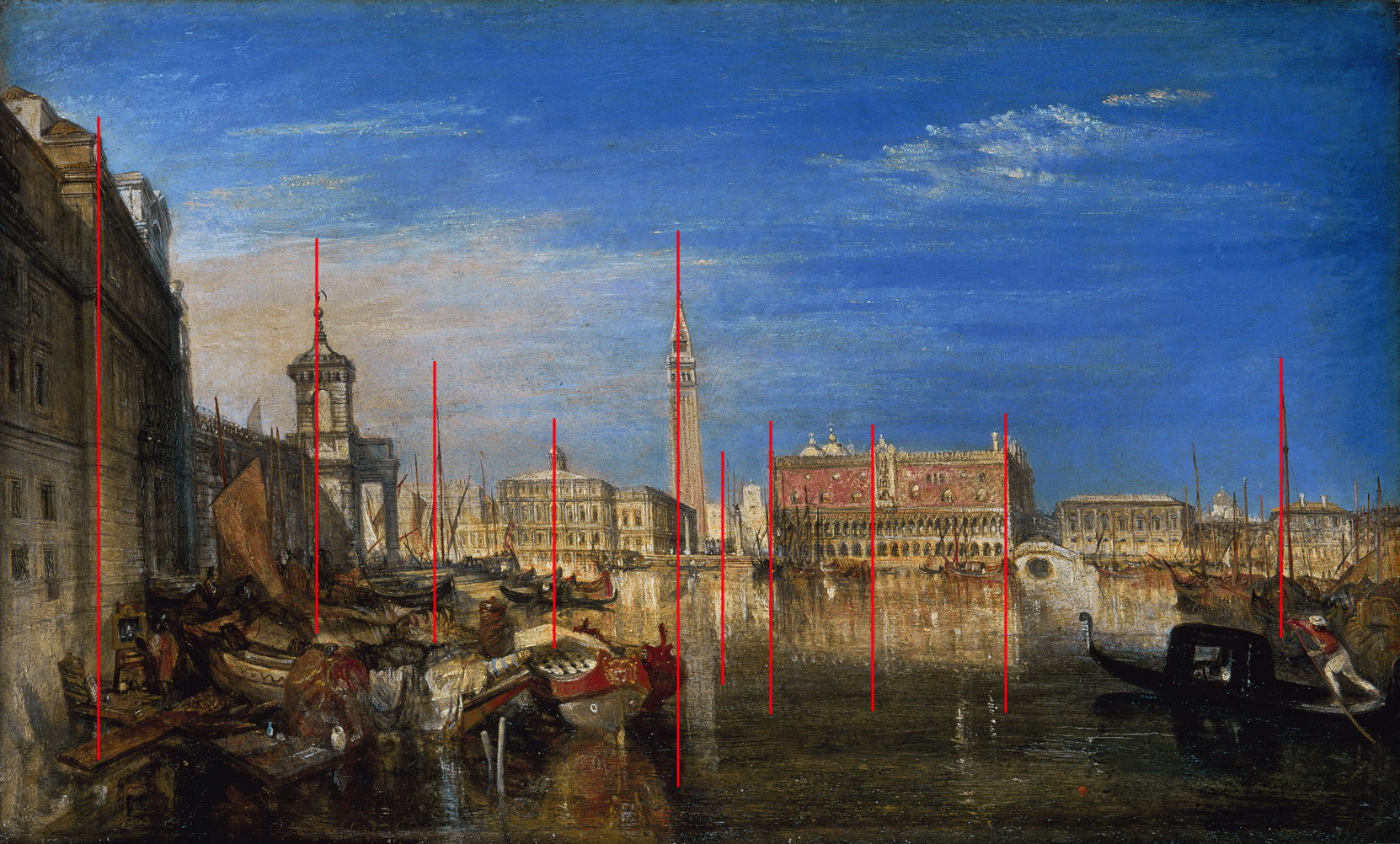
Some of his paintings show other optical oddities. His Bridge of Sighs, Ducal Palace and Custom-House, Venice: Canaletti Painting (1833), his first oil painting of Venice, places all the buildings leaning to the left, with their reflections leaning in the opposite direction. Had this painting been on a canvas support, there might have been distortion applied by its stretching or subsequent treatment, but unusually Turner painted this on a mahogany panel. I have checked this image matches those from other sources, to ensure this isn’t a photographic artefact.
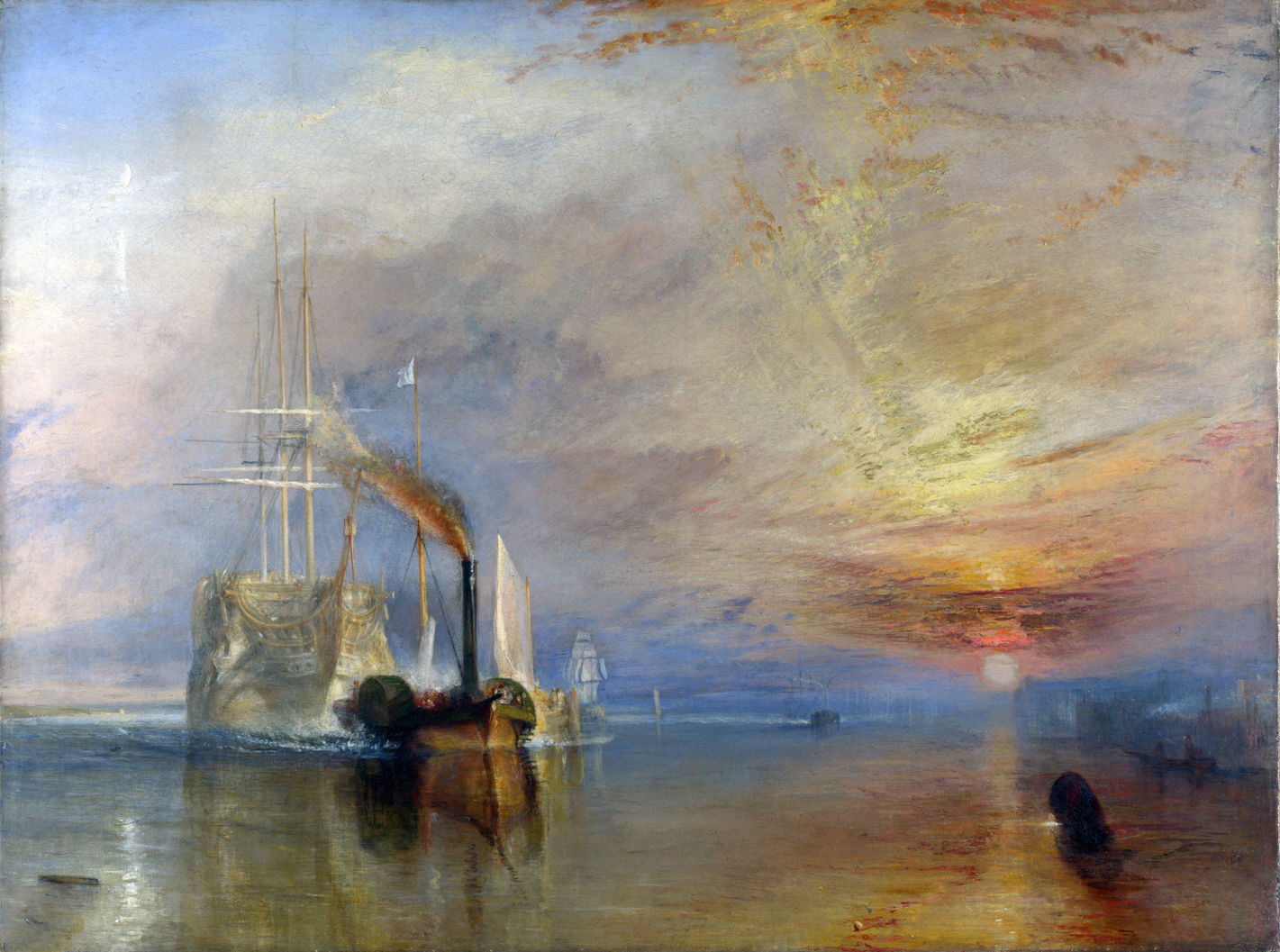
Turner’s famous Fighting Temeraire from 1839 breaks most of the optical rules of reflections, most obviously in the extraordinary reflected image of the tug’s prow. The tip of the bowsprit isn’t vertically aligned between original and reflection, and there’s gross vertical exaggeration, as there is in the ghostly reflection of the Temeraire under tow.

Several of Turner’s later paintings appear founded in sound optical principles, then exaggerated for artistic effect. While many of the reflections in his Campo Santo, Venice from 1842 appear faithful, he has grossly exaggerated the vertical axis of the reflections of the white sails to the left of centre. But the effect is wonderful.

The Dogano, San Giorgio, Citella, from the Steps of the Europa, from the same year, takes a few gentle liberties with optics without becoming too obviously inaccurate. Again this is mainly in vertical scaling, and Turner has been careful to ensure good vertical alignment throughout.

I have already pointed out some of the apparently deliberate optical anomalies seen in the reflections in Turner’s late oil painting War. The Exile and the Rock Limpet (1842).
Given Turner’s experience and record, I don’t think those discrepancies are errors, but are devices he has successfully used for their effect.
 The Eclectic Light Company