
The turn of the nineteenth to twentieth centuries brought a great change to many cities, as horse-drawn cabs were replaced by motor vehicles. In Stuttgart, Germany, for example, the first motorised taxi was licensed in 1897, electric vehicles followed shortly, and in the 1920s small motorcycle cabs known as a Motax were all the rage in Berlin. This weekend I celebrate this revolution with the oil sketches made on the streets by the German Post-Impressionist Lesser Ury (1861–1931).
Ury was born in what was then Birnbaum in Prussia, and is now Międzychód near Poznań in Poland. He was eleven when his father died and his family moved to Berlin. When he was eighteen, he gained a place at the Academy of Art in Düsseldorf, then travelled around Europe before returning to Berlin in 1887.
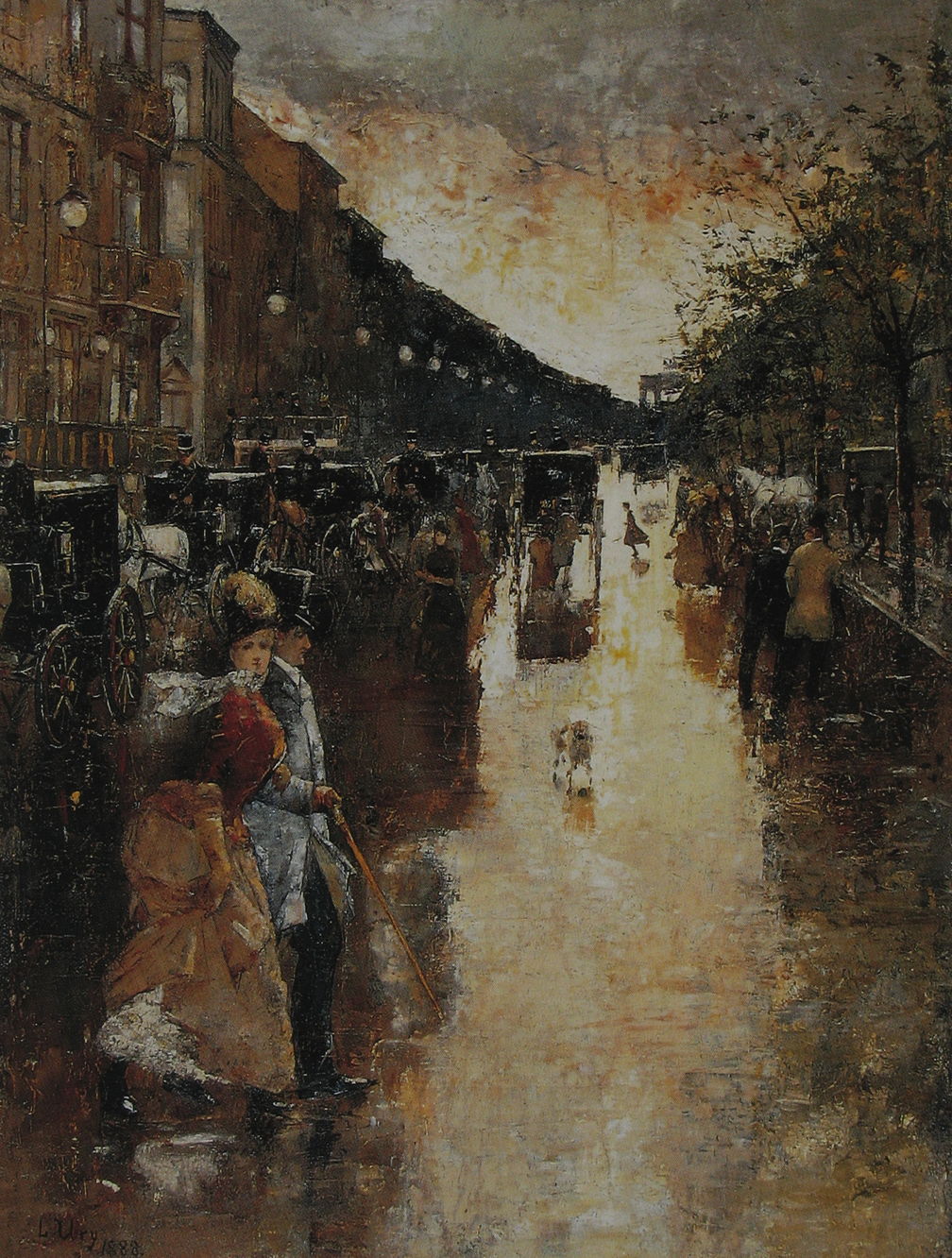
Early in his career, he discovered the theme that was later to bring him fame. In 1888, he painted this work showing Unter den Linden After the Rain. This avenue, lined with lime or linden trees, is probably the most famous street in the heart of Berlin. Ury shows that brown half-light so common in wet autumn weather, with a solid rank of horse-drawn cabs running down the left, to a glimpse of the Brandenburger Tor just above the vanishing point.

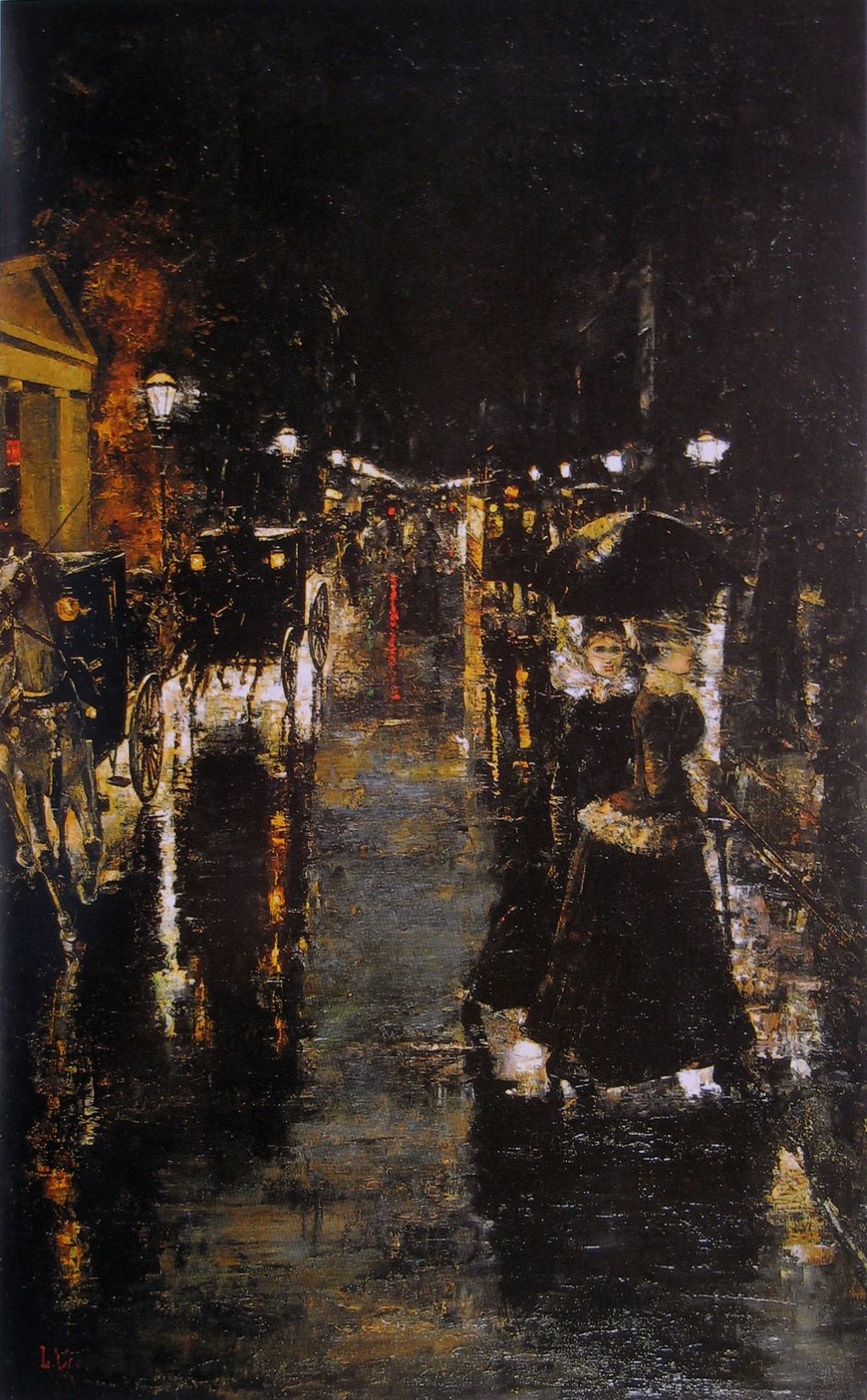
In Leipziger Straße, painted the following year, he tried a similar scene from a nearby street in Berlin, this time at night. The columnar reflections of lights are highly effective, but once again his style and formula didn’t quite reach the sweet spot.
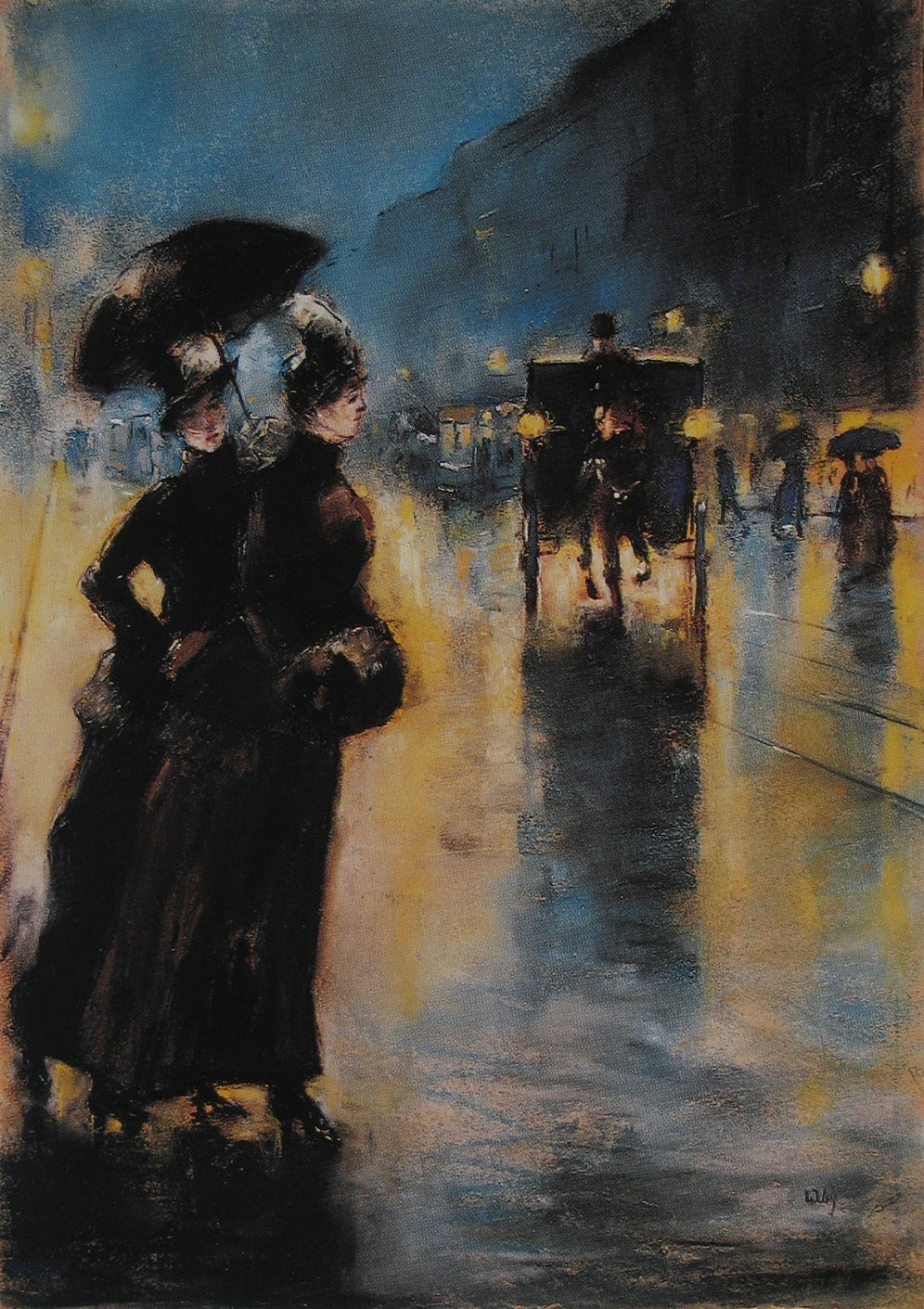
He tried a different approach that same year in Night Lighting. This finely fractured image has been simplified and eased into more consistent areas of colour. He has dropped much of the detail, bringing strength to the image, but it still isn’t quite right.

Ury tried some more conventional motifs, such as this beautiful pastel of Tiergarten in Winter from 1892. This shows the large park to the west of the Brandenburger Tor, with its river frozen over and a good covering of snow.
In 1893, he joined the Munich Secession, then in 1901, when he returned to Berlin he joined its Secession.
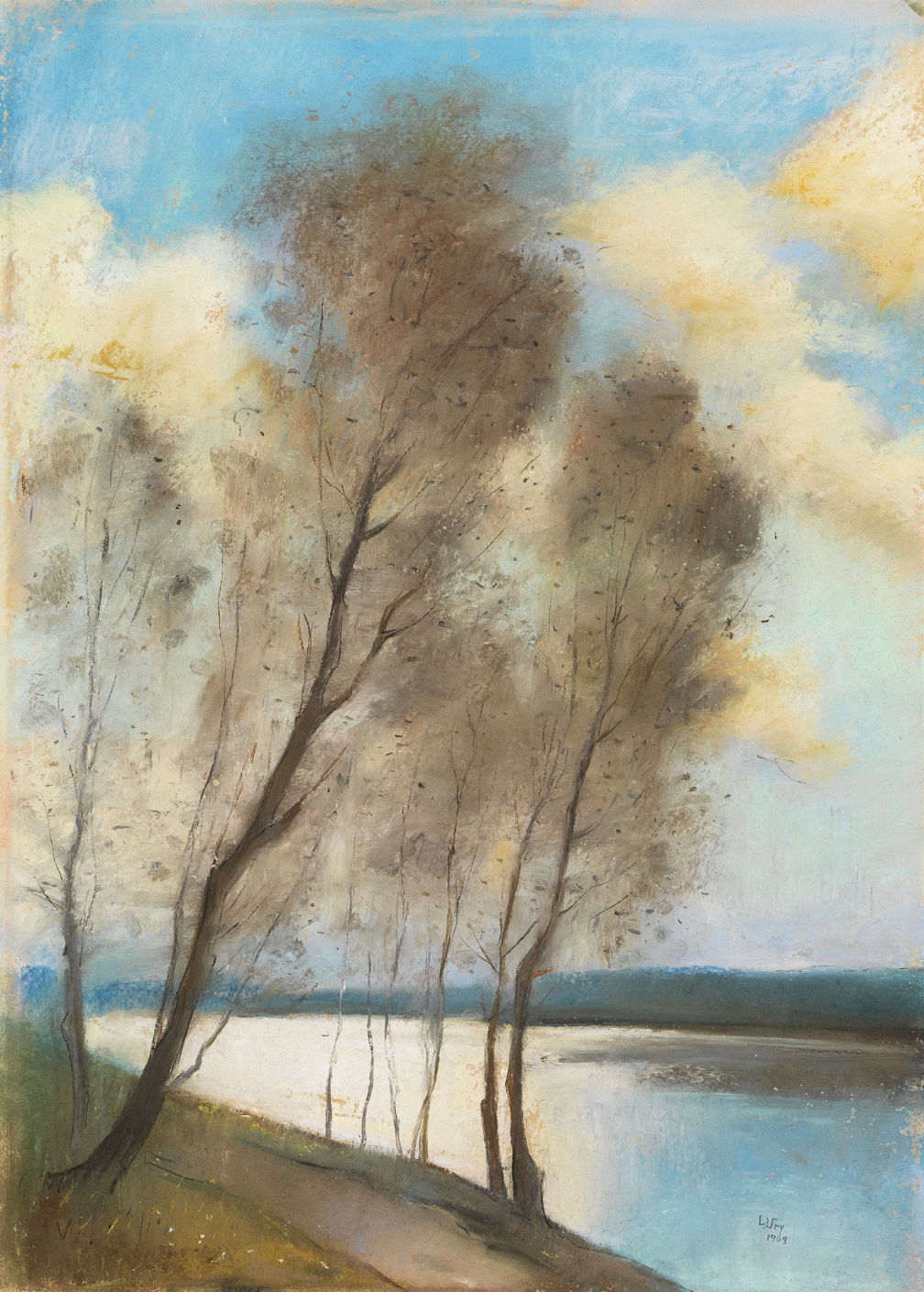
He continued to paint landscapes, including this fine pastel of Spring from 1903, and his reputation grew steadily, but it wasn’t until he took to the streets again that he found form.
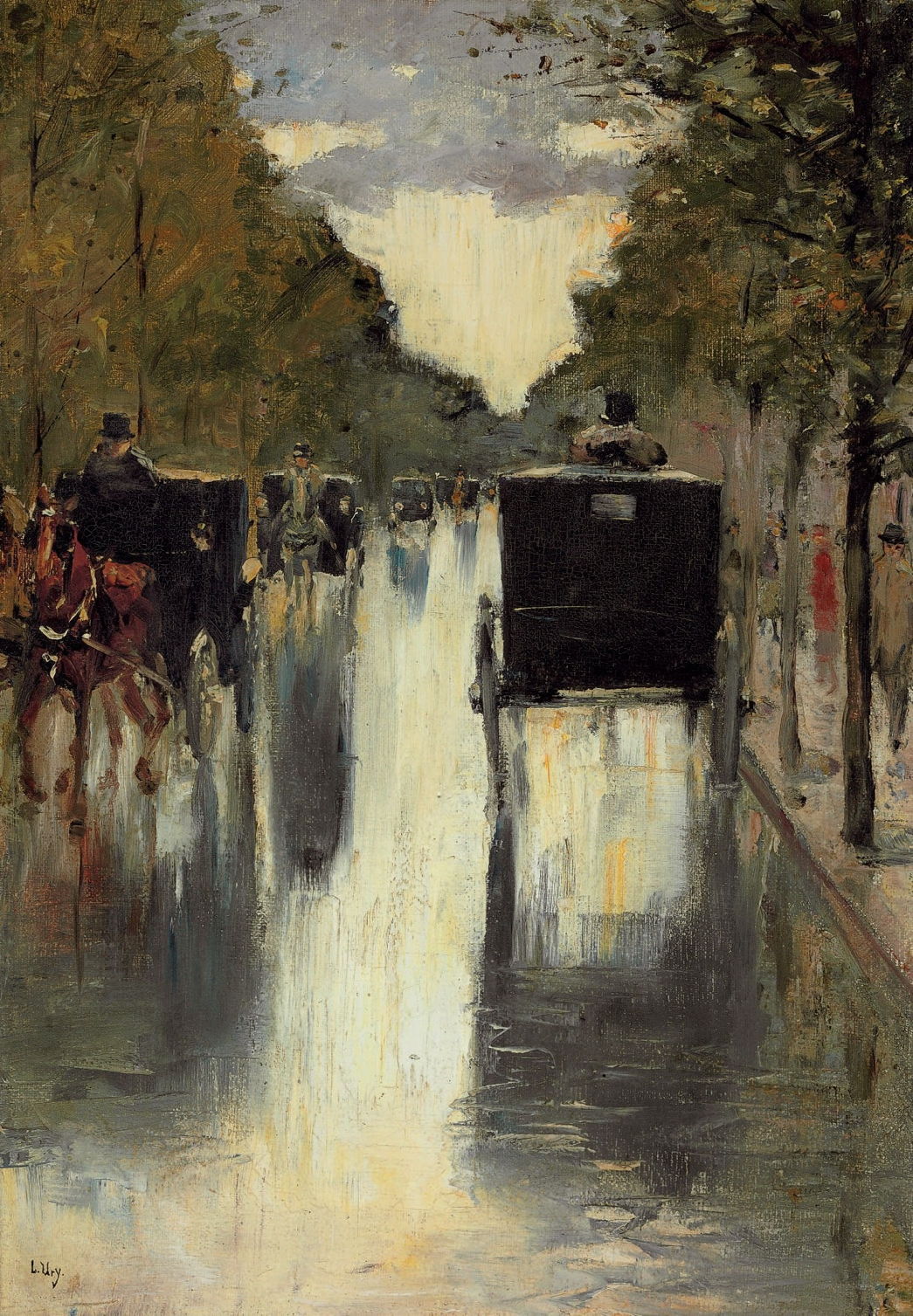
Painted sometime during the first decade of the twentieth century, Ury’s Berlin Street Scene with Horse-Drawn Cabs closes in on his formula for success. Although he retains considerable detail in the trees and horse-drawn cabs, the wet road now looks like a real water surface, with its reflections perfect. The dull daylight makes it hard to simplify the image any further, though.

His other landscapes of this period were also becoming more distinctive and memorable. Evening at a Lake with a Pine Forest is thought to have been painted at the Grunewaldsee in 1909, and is one of his most highly chromatic works.
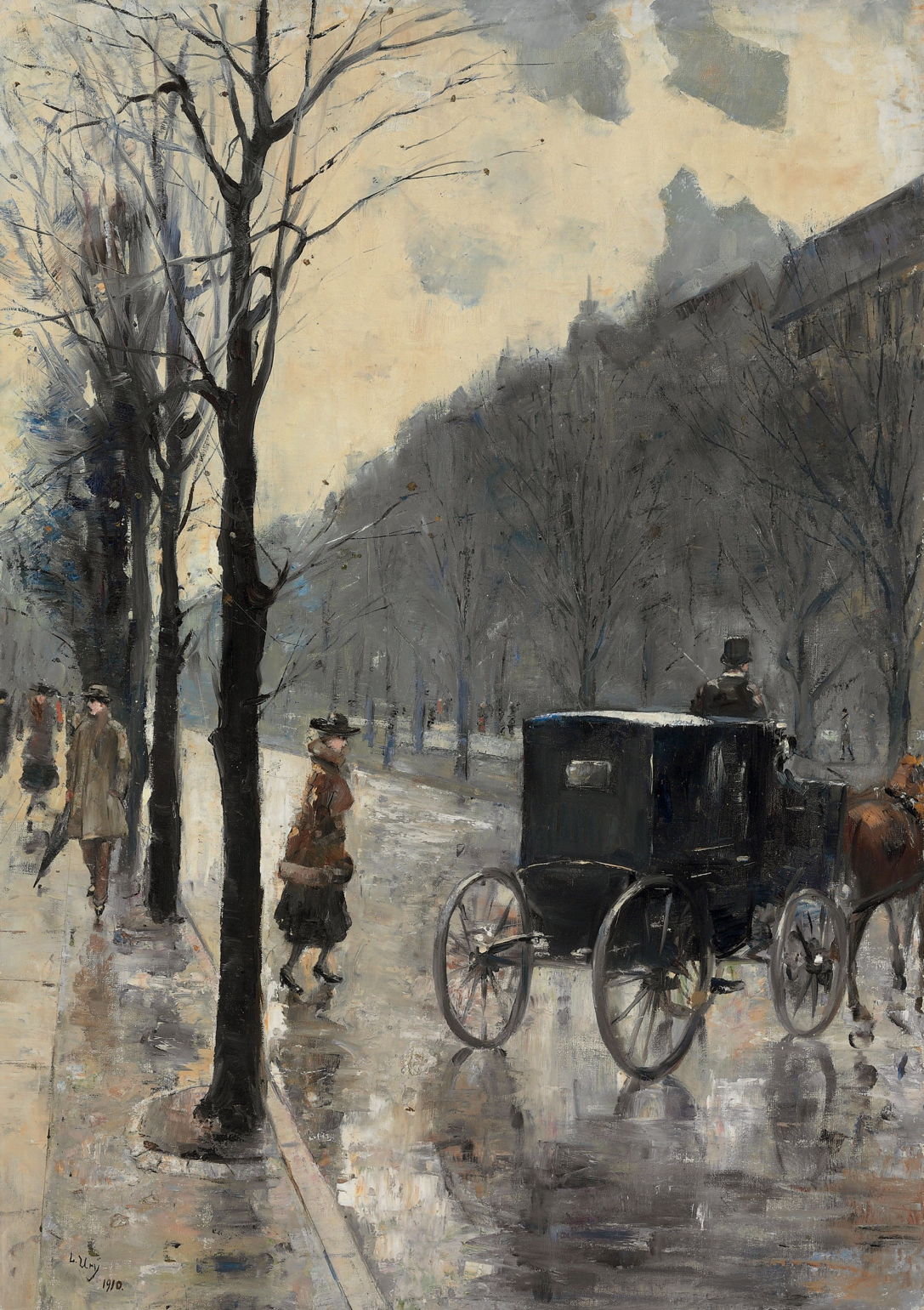
Kurfürstendamm, also from 1910, shows what is probably Berlin’s most famous avenue of shops, on the western side of the Tiergarten. It’s a wet winter day, and for once the street is relatively deserted, with just one of the old horse-drawn carriages, and no motor taxis at all.
 The Eclectic Light Company